
REVIEW · KYOTO RAMEN TOURS
Ramen Gyoza Onigiri Japanese Cooking Class in Kyoto
The best part of this Kyoto class is the three-dish haul: in about 90 minutes, you learn ramen broth, gyoza wrapping, and onigiri shaping, then sit down to eat it all. Chef Nori, Ryho, Minori, and their team keep the pace lively and the instructions clear.
I like the focus on ramen soup rather than noodle-making, since dried or fresh noodles are easy to buy, while a good broth takes more know-how. I also like the small maximum of eight people, which gives you a better chance to see what is happening and ask for help. The main caution is dietary: the vegetarian option replaces pork with tofu, but the class cannot handle vegan, pescatarian, gluten-free, halal, kosher, or other special diets.
In This Review
- Key points to know before booking
- A Fast Start With Two Ramen Broths
- Wrapping Gyoza Without Losing the Filling
- Shaping Onigiri, the Simple Japanese Rice Ball
- Lunch Made by You, Not Just Served to You
- The Teaching Style and Small-Group Advantage
- What You Can Take Home
- Dietary Limits You Need to Take Seriously
- Timing, Location, and Cancellation
- Is the $92.47 Price Fair?
- Who Should Book This Kyoto Cooking Class?
- Should You Book It?
- FAQ
- How long does the cooking class last?
- Where does the activity take place?
- What dishes will I make?
- Do I eat the food I prepare?
- Is there a vegetarian menu?
- Can the class accommodate vegan, pescatarian, gluten-free, halal, or kosher diets?
- What is the cancellation policy?
Key points to know before booking
- Two ramen styles in one class: You prepare two kinds of broth, then serve them with ready-made noodles.
- Hands-on gyoza and onigiri: You practice wrapping dumplings and shaping Japanese rice balls yourself.
- A full meal is included: You eat the ramen, gyoza, and onigiri you make after cooking.
- Small Kyoto class: The group is capped at eight people, with English-speaking instruction.
- Vegetarian means tofu for pork: Other ingredients remain the same, so check the menu carefully.
- Easy-to-recreate recipes: The seasonings and ingredients are chosen with home cooking in mind.
Kyoto has no shortage of temples, gardens, and polished tea experiences. This class gives you something different: a practical look at everyday Japanese cooking, followed by lunch.
For $92.47 per person, you are not paying only for a meal. You are paying for instruction, ingredients, kitchen use, and the chance to make several dishes in a tight 90-minute session. That makes the price reasonable for anyone who values a hands-on activity, though it may feel high if you mainly want an inexpensive bowl of ramen.
The class takes place at Manryo Japanese Cooking Class in the Sakyo Ward, at 841 Chōshōji Monzenchō, Life Building B1, Kyoto 606-8366. It is near public transportation, and the activity ends where it begins. You receive a mobile ticket, so keep the booking details easy to access on your phone.
A Fast Start With Two Ramen Broths
The class begins with ramen, but not with noodle-making. That distinction matters. You will not knead, roll, or cut noodles here. Instead, you learn how to prepare the soup, which is often the part home cooks find harder to reproduce.
The instructors focus on ingredients and seasonings that you can usually find and use at home. You learn how to build the broth, then combine it with purchased ramen noodles. This is a smart use of limited class time. Making noodles from scratch would be fun, but it would leave less room for gyoza and onigiri.
The class teaches two types of ramen, according to the detailed descriptions from people who took part. The exact broth styles are not specified in the booking information, so you should not expect a particular regional recipe unless the team explains it on the day.
Chef Nori also gives a short introduction to ramen before the cooking begins. That small bit of background helps place the dish in context without turning the class into a lecture. The focus stays on doing the work and understanding what goes into the bowl.
You will likely move at a good pace. The class covers a lot in an hour and a half, and the staff have organized the steps carefully so that several dishes can come together without long pauses. That is useful if your Kyoto schedule is tight, but it also means this is not a slow, meditative cooking lesson.
More Kyoto ramen crawls:
- Kyoto: Ramen Cooking Class at a Ramen Factory with Souvenir
★ 4.9 · 532 reviews - Kyoto: Ramen, Gyoza, and Onigiri Cooking Class
★ 5.0 · 445 reviews - Kyoto Ramen and Gyoza Cooking Class with Professional Chefs
★ 5.0 · 282 reviews
Wrapping Gyoza Without Losing the Filling
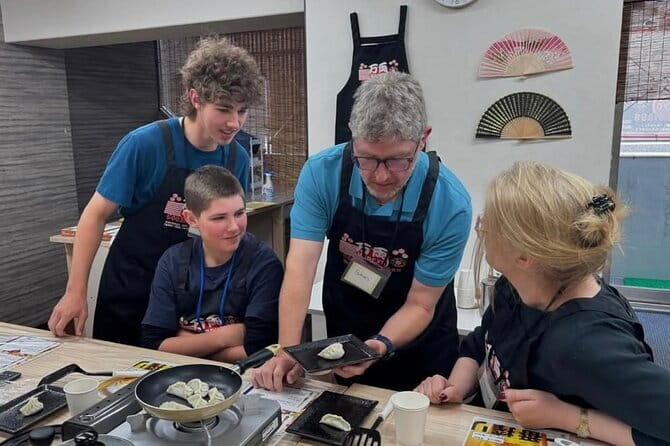
Gyoza brings the most tactile part of the class. You prepare the filling, place it in the wrapper, and learn the folding technique. If your first dumpling looks a little lopsided, that is part of the fun. The point is to leave with a method you can repeat, not to produce restaurant-perfect pleats on the first attempt.
The class uses pork gyoza on the regular menu. If you choose the vegetarian menu, pork is replaced with tofu. The rest of the ingredients remain the same, so vegetarian diners should read the menu details carefully rather than assume the dish has been redesigned around a fully plant-based diet.
The instruction is in English, and the team is described as friendly, patient, and easy to follow. Nori’s teaching style appears to mix clear demonstrations with humor. That can make the fast pace feel less formal, especially if you are cooking with children aged 13 or older or with friends who are new to Japanese food preparation.
The group limit of eight is important here. Gyoza folding is a technique you need to see up close, and a small group gives you more access to the demonstration. It also makes it easier to get a quick correction if your wrapper is too full or your fold is not holding.
Shaping Onigiri, the Simple Japanese Rice Ball
Onigiri may look simple, but shaping a rice ball neatly takes a little practice. In class, you learn the basic technique and how to handle the rice so it forms properly. This is the kind of skill you can use at home for a quick lunch, picnic food, or a small meal made from leftovers.
The appeal of including onigiri is that it rounds out the class. Ramen gives you broth work, gyoza gives you wrapping and filling, and onigiri gives you a simple Japanese staple that depends on touch and shape. You get three different kinds of kitchen practice rather than three versions of the same task.
The class is especially useful for cooks who want recipes they can repeat without specialist equipment. The instructors aim to use ingredients and seasonings that are easy to obtain at home. You may still need to adjust quantities or substitute based on what is available where you live, but the basic methods are meant to travel well.
Lunch Made by You, Not Just Served to You
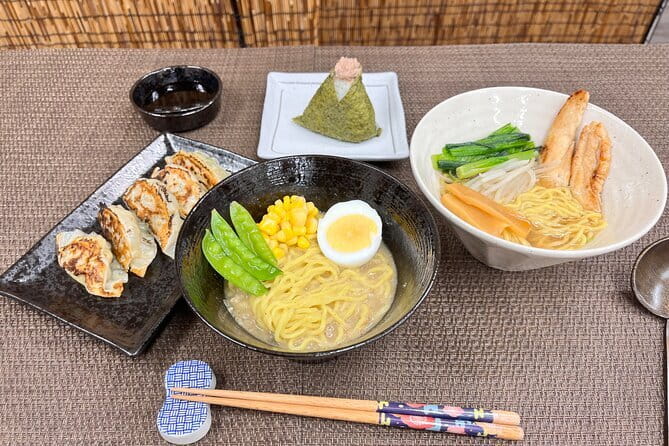
After cooking, you sit down and eat what you have prepared. That includes the ramen, gyoza, and onigiri, and the portions appear generous enough that you should arrive hungry.
This meal is part of the value. A cooking class can feel expensive when the food is only a small tasting, but here the cooking leads directly to lunch. Several detailed accounts describe enough food to make the final meal feel like a feast, especially after working through the recipes.
You also get to taste the results while the methods are still fresh in your mind. If the broth needs more seasoning or your gyoza fold was uneven, you can connect the cooking step with the finished dish. That makes the class more useful than simply watching a demonstration.
Still, do not book this as a quiet restaurant meal. You will be eating food you have just prepared, and the timing depends on the class. The reward is participation, not the polished service of a dedicated ramen shop.
More gyoza nights:
- Gyoza Cooking Class in Kyoto: Traditional Japanese Dumplings
★ 5.0 · 210 reviews - Home style Ramen and Homemade Gyoza in Kyoto
★ 5.0 · 152 reviews - Kyoto Ramen & Gyoza Cooking Class with Professional Chefs
★ 4.8 · 100 reviews - Private Ramen or Gyoza Cooking Class in Kyoto with Chef Midori
★ 5.0 · 18 reviews
The Teaching Style and Small-Group Advantage
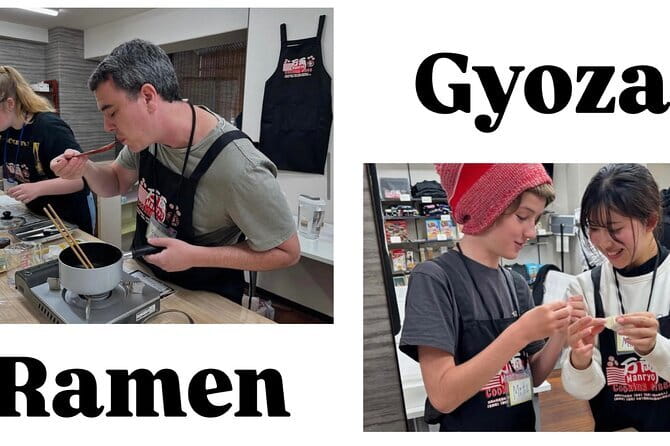
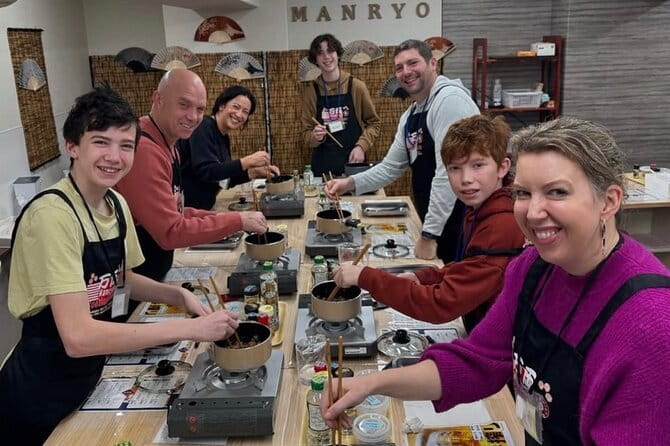
The class uses friendly English-speaking instructors, with Chef Nori leading the session and team members including Ryho and Minori helping with the cooking. The staff are described as patient, funny, and well prepared, with instructions that are easy to follow.
That combination matters because the class has a lot to cover. You move from broth to dumplings to rice balls in a short period. Clear staging and active help keep the session from becoming confusing.
A maximum of eight people is a strong feature for a practical lesson. You are not standing at the back of a large room trying to see a demonstration. The small setting should give you better access to the instructor, though the exact seating arrangement is not specified.
Families can use the class as a shared activity, but children must be at least 13 years old. The food also makes it a good pick for friends, couples, and solo cooks who would rather learn a skill than spend another hour sightseeing.
What You Can Take Home
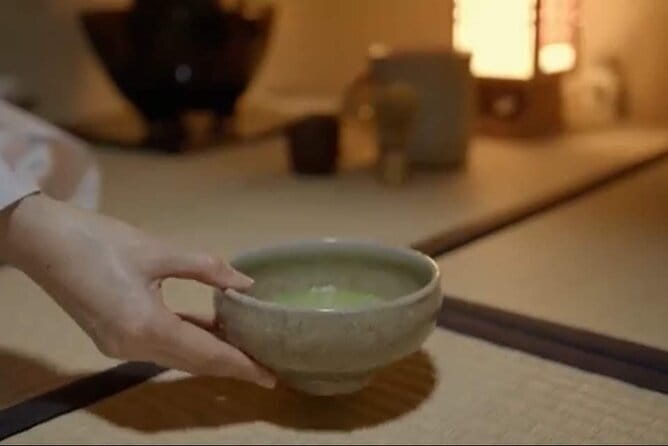
The recipes and experience are intended to help you make the dishes for family or friends after returning home. That is most useful with the ramen broth, since the class specifically focuses on seasonings and ingredients available for home cooking.
You will not leave knowing how to make ramen noodles, but that is a fair trade for the range of dishes covered. Buying noodles is easy in many places. Learning how to create a satisfying soup base is the more practical lesson.
Gyoza and onigiri also adapt well to home kitchens. You can practice the folds again, make a batch for several people, and shape rice balls without needing a long list of tools. The class gives you a taste of Japanese home-style cooking rather than a restaurant chef’s highly specialized routine.
If you hope to learn advanced knife work, fermentation, noodle production, or a long simmered stock made from scratch, this is not that kind of class. It is a compact introduction to three familiar Japanese foods, designed for a visitor who wants useful techniques and a meal in one sitting.
Dietary Limits You Need to Take Seriously
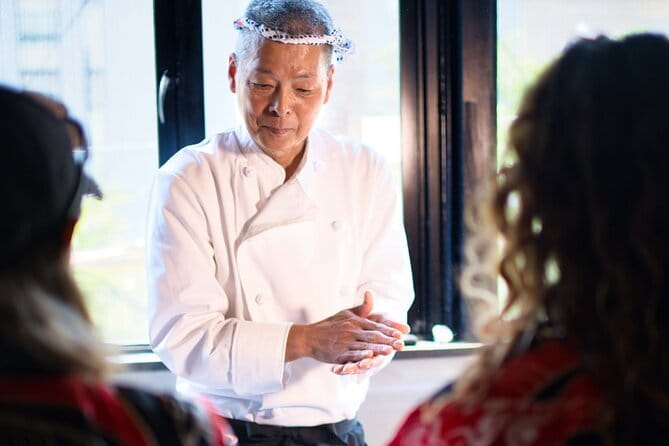
The menu choice is either Regular or Vegetarian. The vegetarian version substitutes tofu for pork, but other ingredients remain unchanged.
The class cannot accommodate vegan, pescatarian, gluten-free, halal, kosher, or other special diets. This is not a minor footnote. If you have an allergy or religious dietary requirement, contact the provider before booking and read the post-booking email carefully. The supplied information says that the email contains important details.
The vegetarian option also deserves a close look. It is not described as a fully separate menu, and tofu replaces only the pork. If you avoid fish-based seasonings, wheat, or other common ramen ingredients, this class may not suit you.
Timing, Location, and Cancellation
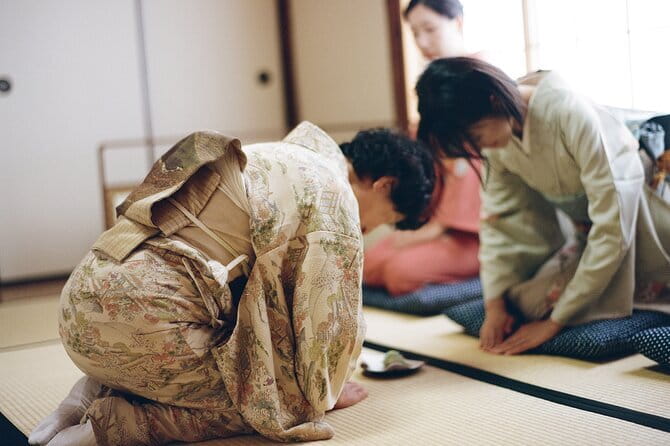
The activity lasts about one hour and 30 minutes. That makes it easy to fit between sightseeing plans, though you should allow extra time to find the Life Building B1 meeting point in Kyoto’s Sakyo Ward.
The class starts and ends at the same location. Private transportation is not included, but the meeting point is near public transportation. Check the confirmation email for the exact arrival instructions and read any follow-up message from the provider before setting out.
You can cancel for a full refund up to 24 hours before the start time. Cancellations or changes made less than 24 hours before the start time are not accepted for a refund, and the cut-off follows Kyoto local time.
The experience has received a 5 out of 5 rating from 44 published ratings, with 100 percent recommending it. That is a strong record, though you should still match the class to your own needs, especially if you have dietary restrictions or want a slower lesson.
Is the $92.47 Price Fair?
I see the price as fair for a visitor who wants an activity and lunch combined. You get instruction from a small team, several dishes, all the ingredients, and the meal you prepare. The class also gives you recipes and methods you can repeat at home.
The value is weaker if you are comparing it only with the cost of eating ramen in Kyoto. A restaurant meal will usually be cheaper and faster. The extra money here pays for access to the kitchen, the guidance, and the satisfaction of making your own food.
The short duration helps justify the cost for a busy itinerary. You cover a lot without giving up half a day. On the other hand, the packed schedule may not suit you if you want long explanations or plenty of time to experiment.
Who Should Book This Kyoto Cooking Class?
I would recommend it to you if you want a practical food experience, enjoy eating several Japanese dishes, and like the idea of taking home methods you can use again. It is also a good fit for a family with older children, provided everyone is at least 13, and for friends who want a social activity that ends with lunch.
It suits first-time cooks because the instructions are designed to be clear and the staff provide hands-on help. You do not need to arrive with advanced kitchen skills.
I would skip it if you are vegan, pescatarian, gluten-free, halal, kosher, or managing another special diet. I would also skip it if your main goal is making ramen noodles from scratch. This class teaches broth, not noodles.
Should You Book It?
Book this class if you want three Japanese cooking lessons in one compact Kyoto activity. The strongest reasons are the two ramen broths, the small group, the friendly English-speaking team led by Chef Nori, and the full lunch at the end.
Before paying, confirm that the Regular or Vegetarian menu works for you, then read the provider’s email carefully. Arrive ready to cook and hungry enough to enjoy a substantial meal. For the right eater, this is a useful and cheerful break from temple visits, with skills that can follow you home.
FAQ
How long does the cooking class last?
The class lasts approximately one hour and 30 minutes.
Where does the activity take place?
It takes place at Manryo Japanese Cooking Class, 841 Chōshōji Monzenchō, Life Building B1, Sakyo Ward, Kyoto 606-8366, Japan.
What dishes will I make?
You will learn to prepare ramen broth, gyoza, and onigiri. The class teaches two types of ramen, and the noodles themselves are not made during the session.
Do I eat the food I prepare?
Yes. Lunch is included, and you eat the ramen, gyoza, and onigiri made during the class.
Is there a vegetarian menu?
Yes. The Vegetarian Menu replaces pork with tofu. Other ingredients remain the same.
Can the class accommodate vegan, pescatarian, gluten-free, halal, or kosher diets?
No. The class cannot accommodate those diets or other special dietary requirements.
What is the cancellation policy?
You can cancel at least 24 hours before the start time for a full refund. Cancellations or changes made less than 24 hours before the start time are not accepted for a refund.
More Workshops in Kyoto
- Kyoto: 45-Minute Tea Ceremony Lesson Experience
★ 4.3 · 2,378 reviews - Kyoto : Chopsticks Making Workshop in Gion with Engraving Option
★ 5.0 · 958 reviews - Kyoto: Samurai Sword Class by Experts in Traditional Arts
★ 4.9 · 657 reviews - Ninja 1-hour Hands-on Lesson by Japanese master in Kyoto -Entry
★ 5.0 · 489 reviews
More Cooking Classes in Kyoto
- Kyoto: Japanese Washoku Bento Small Group Cooking Class
★ 5.0 · 380 reviews - Kyoto: Afternoon Japanese Izakaya Cooking Class
★ 4.9 · 241 reviews - Izakaya Style Cooking Class
★ 5.0 · 219 reviews - Bento Box Cooking Class
★ 5.0 · 171 reviews
Recently added around Kyoto
- Higashiyama | Kyoto: Sakura Season Private Rickshaw Tour★ 5.0 · 3 reviews
- Kyoto Kimono Rental CHAMATSU|Kimono/Yukata Rental FamilyPlan★ 5.0 · 3 reviews
- Kyoto: Half-Day Private Guided Tour to the Old Town of Gion★ 4.4 · 3 reviews
- Nara Private Customizable Half Day Tour★ 5.0 · 3 reviews
- Kansai Region Hiking Adventure in Nara Kobe Kyoto and More★ 5.0 · 3 reviews
- Full Day Nara Deer, Temple, Shrine, Activities & Tea Ceremony★ 5.0 · 3 reviews
- Nara: Essential Private Tour with Deer Park and Temples★ 5.0 · 3 reviews
- Hiking Tour for Sacred Sites in Kyoto with a Guide★ 5.0 · 3 reviews
Kyoto Ramen Tours, compared.
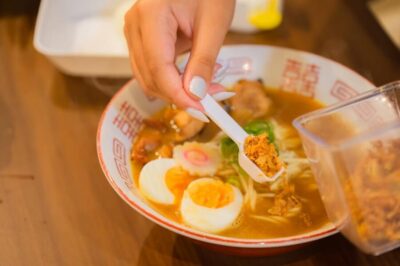
Ramen Cooking Class at a Ramen Factory with Souvenir
Read our review →
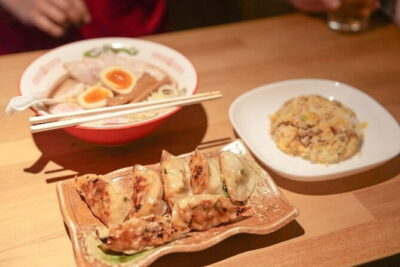
Kyoto Ramen and Gyoza Cooking Class with Professional Chefs
Read our review →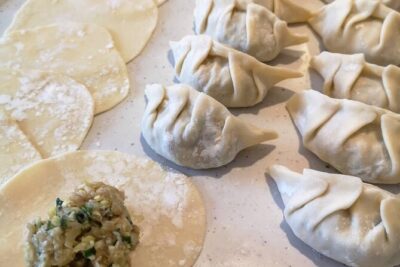
Kyoto Michelin Ramen Workshop or Painting Ramen Essentials
Read our review →Kyoto Ramen & Gyoza Cooking Class with Professional Chefs
Read our review →
Browse the lists this tour appears in