
REVIEW · KYOTO RAMEN TOURS
Kyoto: Ramen Cooking Class at a Ramen Factory with Souvenir
Making ramen from flour, dough, and a pile of toppings is the real draw here. At Ramen Factory Kyoto, you punch and knead your dough, fold it more than 100 times, turn it into noodles, season chicken, and build a bowl to your taste. It is part cooking class, part cheerful food lesson.
I like the fresh noodle work, since you can feel the dough change under your hands. I also like the choice of miso, salt, or soy sauces, plus the useful recipe sent by email. The main catch is the price: at $127 per person for 90 minutes, this is far more than a bowl of ramen at a shop.
In This Review
- What makes this Kyoto ramen class worth considering
- What happens during the 90-minute ramen class
- Turning flour into noodles by hand
- Preparing chicken instead of pork
- Choosing between miso, salt, and soy
- Building the bowl and eating what you made
- Souvenirs that add value after the meal
- Is $127 a fair price?
- Who will enjoy this class most?
- Location near Demachiyanagi Station
- Dietary needs, photos, and booking details
- My take: book it if you want more than lunch
- FAQ
- Where is the Ramen Factory Kyoto class held?
- How do I find the entrance?
- How long does the ramen cooking class last?
- What languages are available?
- What types of ramen sauce can I choose?
- Do I make the noodles from scratch?
- Is a meal included?
- Can dietary needs be accommodated?
- What is included with the booking?
What makes this Kyoto ramen class worth considering
- You make noodles from flour, rather than simply assembling a prepared meal.
- You choose your own flavor combination from miso, salt, and soy sauces.
- Chicken chashu replaces pork, making the class workable within a short 90-minute schedule.
- Dietary needs can be discussed in advance, with tofu and fish broth provided for one pescatarian participant.
- Your take-home package is more than a trinket, with a choice of four souvenirs, a recipe by email, and, in some sessions, a printed photo or certificate.
- The class works well for families, solo visitors, couples, and beginners, with English and Japanese instruction.
What happens during the 90-minute ramen class
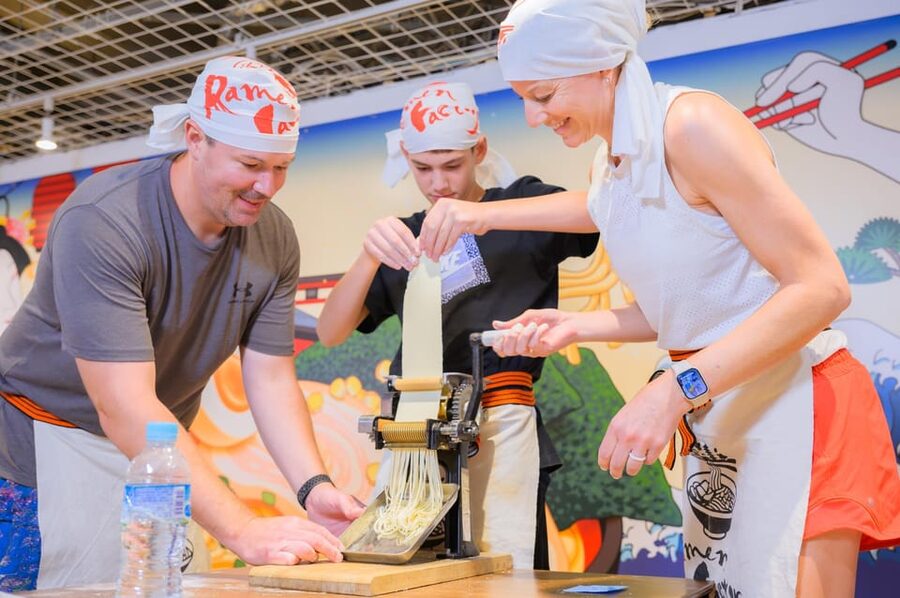
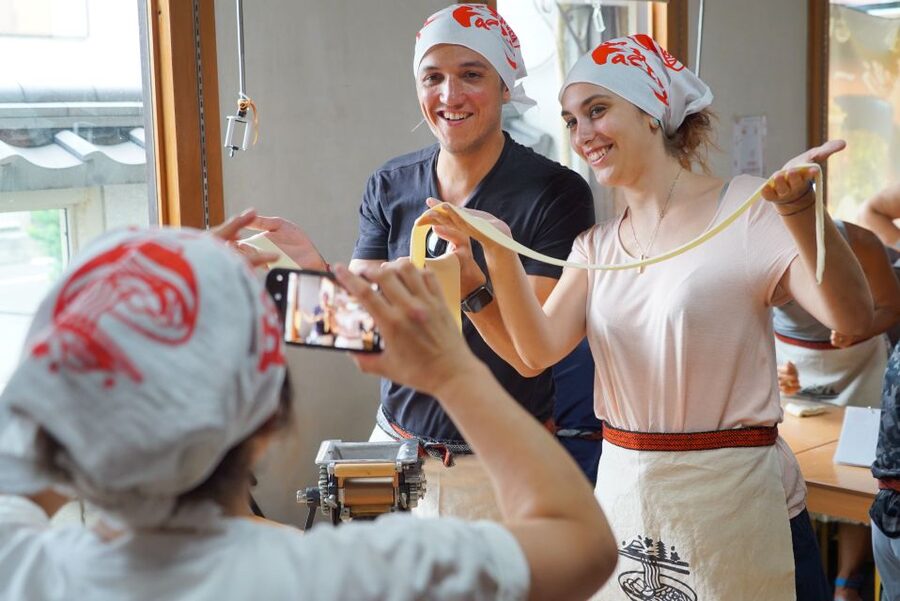
The experience begins with a welcome, an apron, and a headscarf. You then watch a short overview video that explains the main stages before you start cooking. This opening matters because ramen has several parts, and the video gives you a clear picture of where the class is heading.
The pace is lively, but the process is broken into simple tasks. Instructors such as Sakura, Fuku, Moeka, Akemi, Haruka, and Kazuma have guided sessions, and the teaching style is energetic rather than formal. You are not expected to arrive with cooking skills.
The staff also help take photos and videos during the class. That is useful if you are visiting as a couple or family and do not want one person left behind the camera. A few sessions also include a printed photo or certificate, though you should treat those as possible extras rather than guaranteed parts of every booking.
More Kyoto ramen crawls:
- Kyoto: Ramen, Gyoza, and Onigiri Cooking Class
★ 5.0 · 445 reviews - Kyoto Ramen and Gyoza Cooking Class with Professional Chefs
★ 5.0 · 282 reviews - Home style Ramen and Homemade Gyoza in Kyoto
★ 5.0 · 152 reviews
Turning flour into noodles by hand
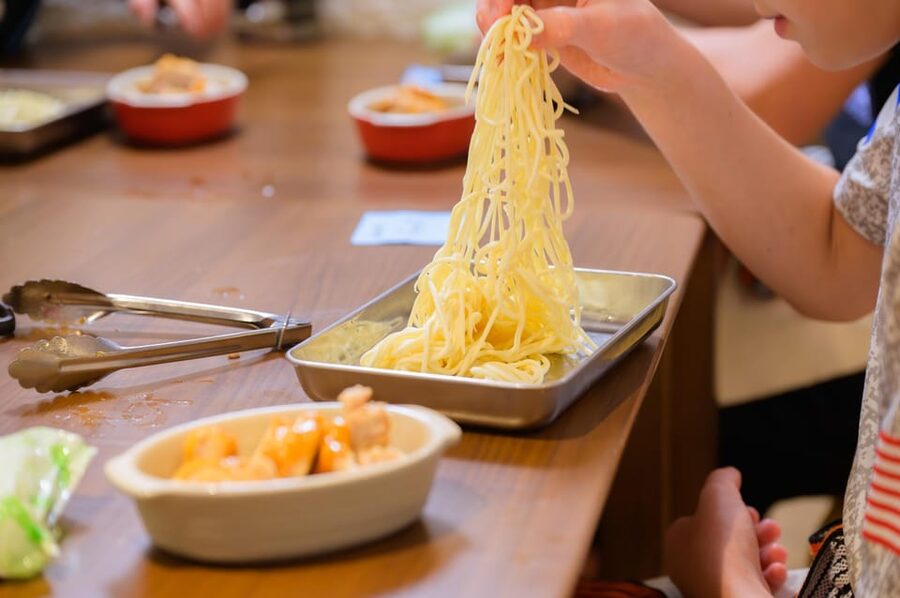
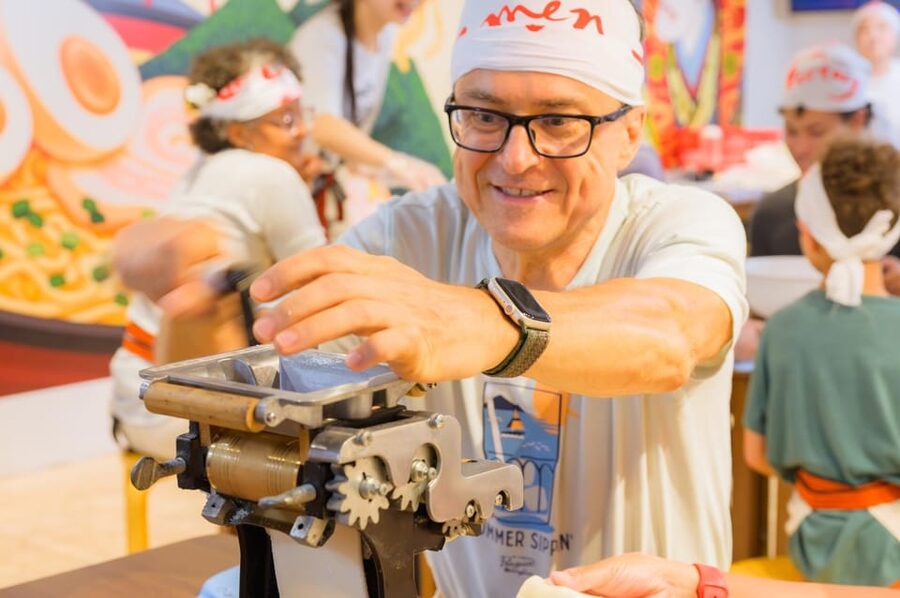
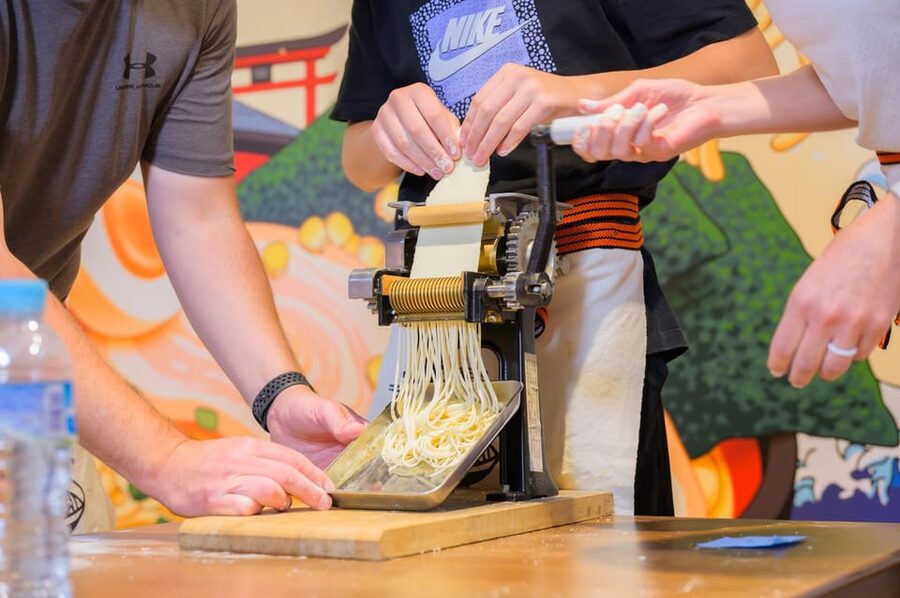
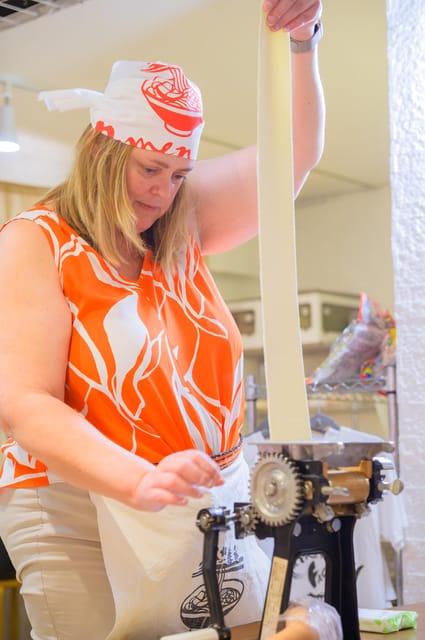
The most memorable part is the noodle making. You begin with flour and work the mixture into dough. The class has you mix, punch, knead, fold, drain, and shake the dough until it becomes noodles.
The instruction says the dough is folded more than 100 times. That sounds grander than it feels in practice, since the work is guided and divided into clear movements, but it does give you a better sense of ramen as a craft. You learn that the noodles are not just a background item beneath the soup. Their texture affects the whole bowl.
This is also where the class feels different from a standard cooking demonstration. You are not standing at the edge of a kitchen watching a chef do the important work. Your hands are involved, and your finished noodles will have the small irregularities that come with being made by a beginner.
That said, this is not a long noodle-making workshop. The 90-minute schedule means ingredients and equipment are prepared in advance, and some parts of a full ramen process are handled behind the scenes. A good broth takes days to prepare, so the class focuses on the steps you can realistically complete during one short visit.
Preparing chicken instead of pork
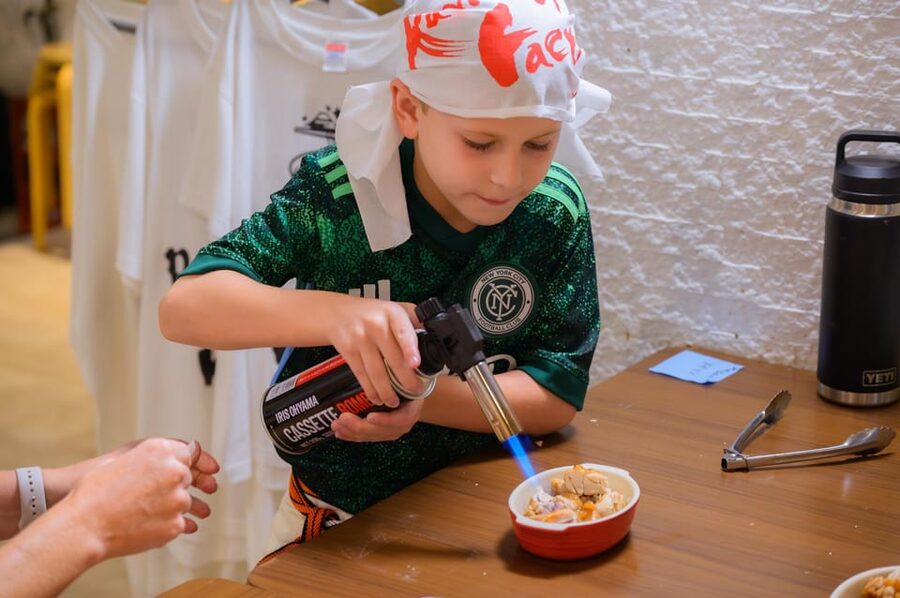
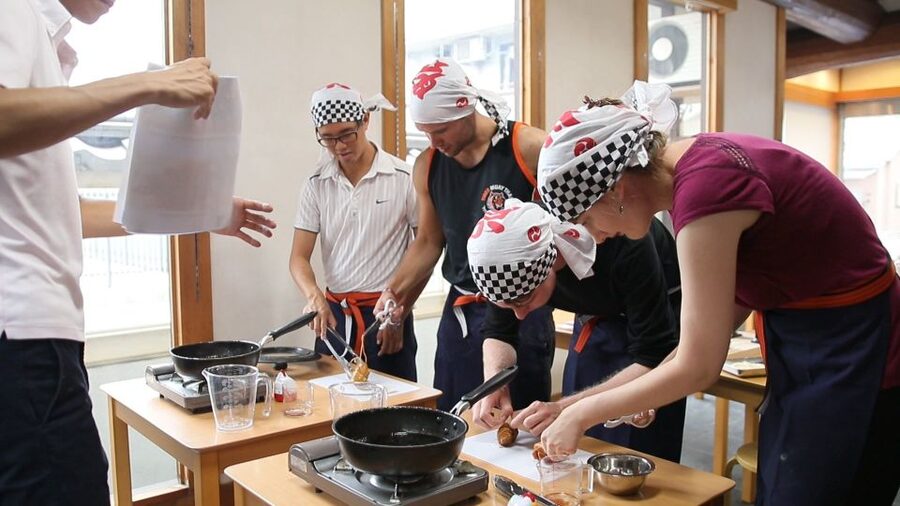
You also season and prepare chicken for your bowl. The class uses chicken chashu, which makes sense for a compact course because it can be cooked and served within the session.
This choice has two advantages. First, it avoids the long cooking time needed for some traditional pork preparations. Second, it gives the finished ramen a lighter profile that works well with the broth choices.
The chicken is not simply placed on top at the end. You season it as part of the cooking process, giving you another chance to work with the ingredients. If you do not eat meat, contact the local supplier after booking to discuss an alternative. The class has accommodated non-meat diets, and tofu and fish broth have been provided for a pescatarian participant.
Do this before arriving, not when the class is already underway. The activity information specifically asks you to contact the supplier about dietary options, so advance notice is the sensible approach for allergies, vegetarian meals, or other restrictions.
Choosing between miso, salt, and soy
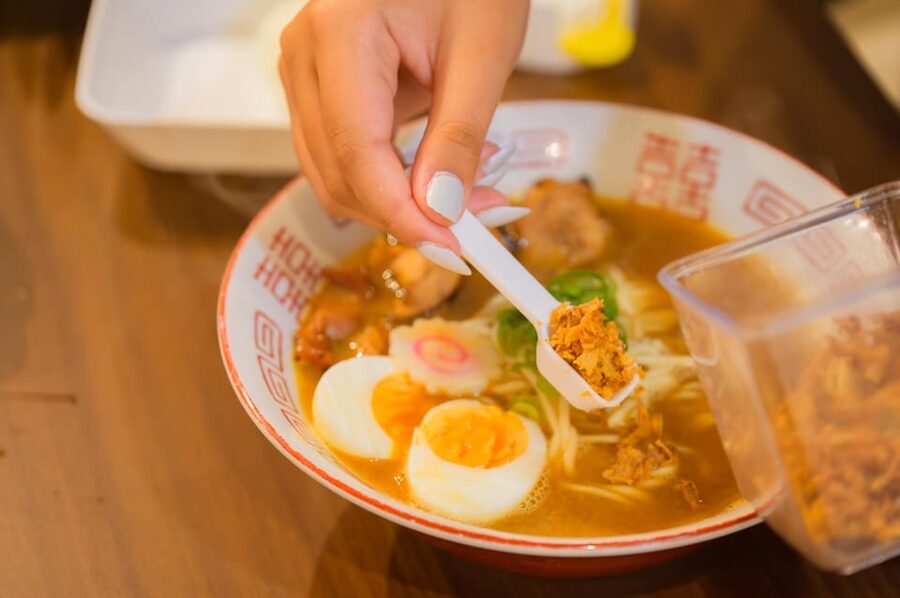
Once the noodles and main ingredients are ready, you choose the soup and sauce combination for your bowl. The featured sauces are miso, salt, and soy. You can taste and mix them, then decide which direction suits you.
This is a small but valuable lesson in ramen. A bowl can change greatly depending on the seasoning base, and the class lets you compare the main profiles rather than handing you one fixed recipe. Miso gives a fuller, more savory character, while salt and soy offer different ways to keep the broth more direct. The exact result depends on your choices and how you balance the sauces and oils.
You also select oils and condiments to complete the bowl. The freedom is beginner-friendly because you can follow suggestions from the instructor, but it still gives you a meal that feels personal.
For someone who has eaten ramen across Japan, this part adds a little food education without turning the class into a lecture. For someone new to ramen, it explains why two bowls with similar noodles can taste completely different.
More cooking classes in Kyoto:
- Kyoto: Japanese Washoku Bento Small Group Cooking Class
★ 5.0 · 380 reviews - Kyoto: Afternoon Japanese Izakaya Cooking Class
★ 4.9 · 241 reviews - Izakaya Style Cooking Class
★ 5.0 · 219 reviews - Gyoza Cooking Class in Kyoto: Traditional Japanese Dumplings
★ 5.0 · 210 reviews
Building the bowl and eating what you made
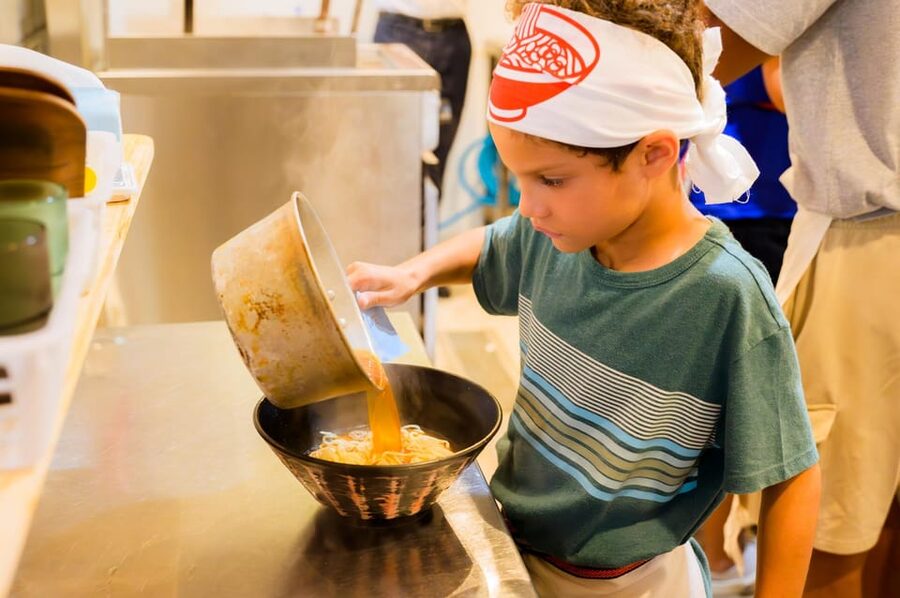
After the cooking is finished, you arrange the noodles, broth, chicken, toppings, egg, and condiments. The class encourages you to display the bowl according to your own taste, so the final presentation becomes part of the experience.
Then you eat. This is not a sample portion or a token tasting. The finished ramen serves as the meal at the end of the class, making the activity a practical lunch or early dinner option.
The final bowl has earned its place. You have worked the dough, chosen the seasoning, and assembled the toppings, so the meal becomes a short record of what you learned. Many participants have found the ramen surprisingly good, even when it was their first attempt.
The result will not turn you into a professional ramen chef in an hour and a half. It will, however, show you which parts matter and give you a recipe to try again at home. The recipe is sent by email, and that is one of the better inclusions because it turns a one-time Kyoto activity into something you can repeat.
Souvenirs that add value after the meal
You can choose one souvenir from four options. The precise choices are not specified in the activity details, but the take-home item is part of the Chef Course rather than a separate purchase.
Past sessions have also included useful memory items such as a ramen bowl, a kept bandana, a printed photograph, a gift, or a certificate. Since the package can vary, confirm the current choices when you arrive.
The souvenir matters because the class costs $127. A small item does not erase that cost, but it gives you something tied to the activity instead of leaving you with only a meal and a few phone photos. The email recipe adds more lasting value.
Is $127 a fair price?
The price is high if you measure the experience against the cost of eating ramen in Kyoto. You can buy excellent ramen for a fraction of this amount, and the class lasts only 90 minutes.
The better comparison is with other cooking classes and food activities. Here you receive instruction, ingredients, a full ramen meal, a choice of souvenir, and a recipe for home cooking. You also get staff help with photos and a structured activity that fits neatly into a sightseeing day.
I see the value most clearly for families and couples. Four people at $127 each is a serious expense, but the class gives everyone a task and a shared meal. It can be a good choice when you want something more active than another restaurant stop.
For a solo visitor, the value depends on your interest in cooking and ramen. One solo participant ended up with a private lesson because of the group arrangement, though that should not be expected. The staff are used to helping solo visitors and can take photos during the process.
If your main goal is simply to eat ramen, skip the class and spend the money at a restaurant. If you want a food activity, a recipe, a souvenir, and a story to take home, the price is easier to defend.
Who will enjoy this class most?
This is a strong match for first-time cooks. The tasks are explained step by step, and the class is designed so you can succeed even if you are not confident in the kitchen.
It also suits families with older children and teenagers. Several families have found the activity easy to share, and the hands-on work gives children something to do beyond watching a guide talk. Younger children may need help with the dough, hot ingredients, or bowl assembly, but the information specifically presents the class as suitable for all ages.
Ramen fans will appreciate the chance to compare sauces and work with fresh noodles. Couples can divide the tasks and finish with two customized bowls. Solo visitors should not worry about being ignored, since the staff have been accommodating and helpful with photos.
You should think twice if you need a quiet, slow-paced cooking lesson. The guides are deliberately upbeat and funny. Instructors such as Fuku and Sakura are often praised for keeping the energy high, while Moeka and Akemi have also led clear, friendly sessions. That style makes the class fun, but it may feel a little performative if you prefer a calm culinary workshop.
Location near Demachiyanagi Station
The Ramen Factory is about a five-minute walk from Demachiyanagi Station on the Keihan Line. That makes it a useful side trip from nearby Kyoto sights, especially if you want a meal and an activity without giving up half a day.
The entrance can be confusing. The venue is on the basement floor, and you should take the staircase to the right of the supermarket, then go down. One helpful arrival tip is to look for the street-side stairs behind the bus stop, since the entrance is not always the same point shown by Google Maps.
Transportation is not included, so you make your own way there. English and Japanese instruction is available. Check the starting time when booking, since the exact class schedule depends on availability.
At 90 minutes, the activity is short enough to fit between sightseeing stops, but allow extra time for walking and finding the entrance. Arriving rushed would take some of the fun out of the opening video and noodle work.
Dietary needs, photos, and booking details
Contact the local supplier after booking if you need a dietary option. Tofu and fish broth have been used for a pescatarian meal, and another participant with allergies received suitable accommodation after the needs were confirmed.
Drinks are not included, so plan to buy one separately if you want something with your meal. Transportation is also not included.
You can cancel up to 24 hours before the activity for a full refund. The reserve-now, pay-later option lets you hold a place without paying immediately, which is useful when your Kyoto schedule is still shifting.
There is also a media notice. You may be filmed or photographed during professional video, photo, or 360-degree camera work. Those images may be used for media coverage, the company website, advertising, or promotion around the world. If that concerns you, ask the supplier about the current arrangements before attending.
My take: book it if you want more than lunch
I would book this class if you want a social, practical food activity that gives you a real meal at the end. The fresh noodles, customizable broth, friendly English instruction, and recipe make it more substantial than a quick demonstration.
I would not book it solely for value in food terms. At $127, you are paying for the teaching, preparation, shared fun, and souvenir as much as for the ramen itself.
For families, couples, first-time cooks, and ramen fans, this is an easy activity to recommend. For a short Kyoto break from temples and museums, it offers a different way to spend 90 minutes. Just allow time to find the basement entrance, arrange dietary needs ahead of time, and decide if the experience is worth the premium over a restaurant meal.
FAQ
Where is the Ramen Factory Kyoto class held?
The Ramen Factory is in Kyoto on Honshu, about a five-minute walk from Demachiyanagi Keihan Line Station. It is on the basement floor.
How do I find the entrance?
Take the staircase to the right of the supermarket and go down to the basement. The entrance may not match the location shown by Google Maps, so also look for the street-side stairs behind the bus stop.
How long does the ramen cooking class last?
The class lasts 90 minutes.
What languages are available?
Instruction is available in English and Japanese.
What types of ramen sauce can I choose?
You can taste and mix three featured sauce types: miso, salt, and soy.
Do I make the noodles from scratch?
Yes. You work from flour to dough and then to finished noodles by mixing, punching, kneading, folding, draining, and shaking the dough.
Is a meal included?
Yes. You eat the ramen you prepare during the class. Drinks are not included.
Can dietary needs be accommodated?
Dietary options may be available, but you should contact the local supplier after booking. Tofu and fish broth have been used for a pescatarian meal.
What is included with the booking?
The booking includes the 90-minute Chef Course Ramen Making experience and one selected souvenir. The recipe is sent by email, and transportation and drinks are not included.
More Workshops in Kyoto
- Kyoto: 45-Minute Tea Ceremony Lesson Experience
★ 4.3 · 2,378 reviews - Kyoto : Chopsticks Making Workshop in Gion with Engraving Option
★ 5.0 · 958 reviews - Kyoto: Samurai Sword Class by Experts in Traditional Arts
★ 4.9 · 657 reviews - Ninja 1-hour Hands-on Lesson by Japanese master in Kyoto -Entry
★ 5.0 · 489 reviews
Recently added around Kyoto
- Higashiyama | Kyoto: Sakura Season Private Rickshaw Tour★ 5.0 · 3 reviews
- Kyoto Kimono Rental CHAMATSU|Kimono/Yukata Rental FamilyPlan★ 5.0 · 3 reviews
- Kyoto: Half-Day Private Guided Tour to the Old Town of Gion★ 4.4 · 3 reviews
- Nara Private Customizable Half Day Tour★ 5.0 · 3 reviews
- Kansai Region Hiking Adventure in Nara Kobe Kyoto and More★ 5.0 · 3 reviews
- Full Day Nara Deer, Temple, Shrine, Activities & Tea Ceremony★ 5.0 · 3 reviews
- Nara: Essential Private Tour with Deer Park and Temples★ 5.0 · 3 reviews
- Hiking Tour for Sacred Sites in Kyoto with a Guide★ 5.0 · 3 reviews
Kyoto Ramen Tours, compared.
Kyoto Ramen and Gyoza Cooking Class with Professional Chefs
Read our review →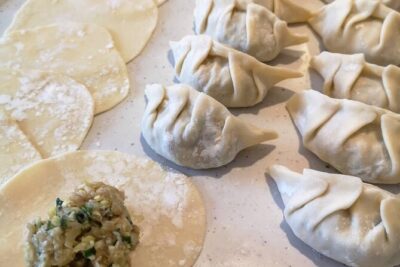
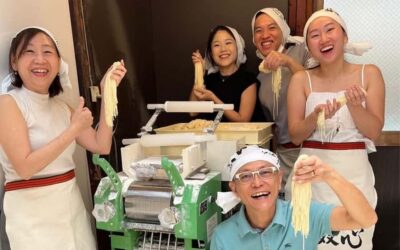
Kyoto Michelin Ramen Workshop or Painting Ramen Essentials
Read our review →Kyoto Ramen & Gyoza Cooking Class with Professional Chefs
Read our review →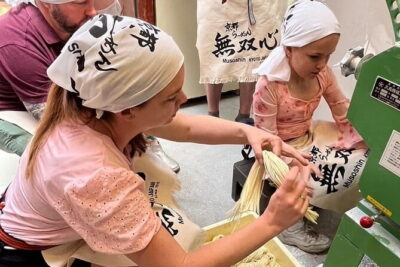
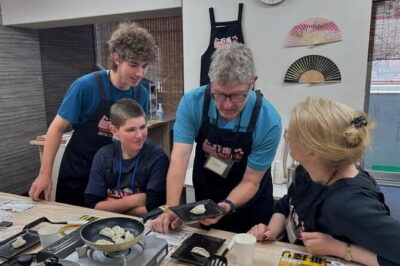
Ramen Gyoza Onigiri Japanese Cooking Class in Kyoto
Read our review →Browse the lists this tour appears in