
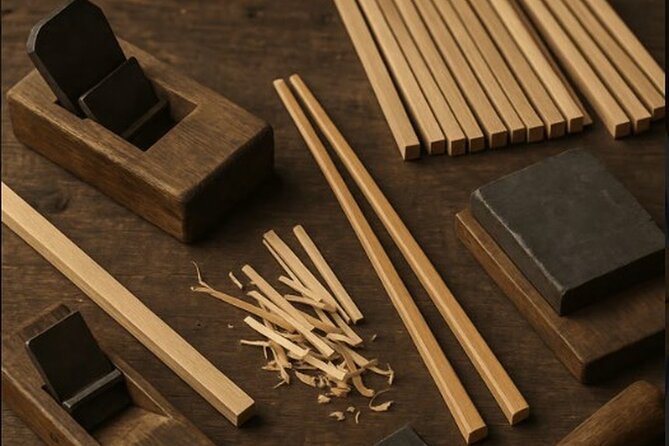
REVIEW · GION GEISHA DISTRICT TOURS
Kyoto : Chopsticks Making Workshop in Gion with Engraving Option
The best part of this Gion workshop is that you do not simply buy a Kyoto souvenir. You make one. Starting with plain wooden blanks, you use a traditional kanna hand plane to shape your own chopsticks, then sand and oil them until they feel smooth in your hand.
I like the calm, tactile work and the useful result. I also like the engraving option, which can turn a small pair of chopsticks into a personal keepsake. The main consideration is that the session can feel a little production-line in its setup, and wood choices may not always match the advertised selection.
In This Review
- Key points at a glance
- Making a souvenir instead of buying one
- Choosing the wood in Gion
- Using the traditional kanna hand plane
- Sanding the edges for a comfortable pair
- Finishing the chopsticks with natural oil
- Adding your name by engraving
- Why the $15.25 price offers good value
- A one-hour activity with a practical location
- The teaching style and workshop atmosphere
- Who should book this chopstick workshop
- How this fits into a Kyoto day
- Cancellation and booking details
- Should you book it?
- FAQ
- Where does the chopstick-making workshop begin?
- Where does the activity end?
- How long does the workshop last?
- How much does the experience cost?
- Is the workshop suitable for beginners?
- Are English-speaking staff available?
- Is engraving included?
- Can I cancel for a full refund?
Key points at a glance
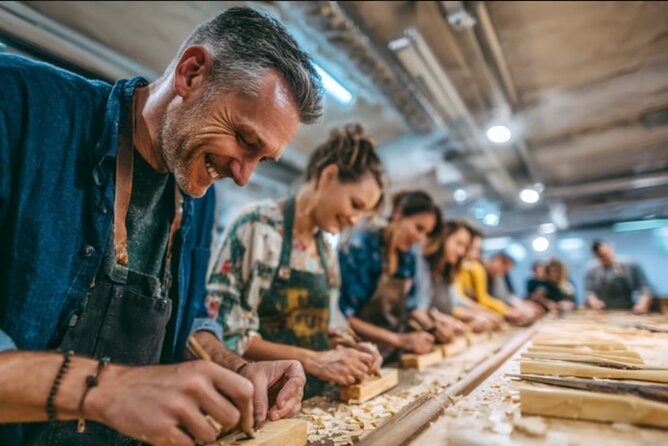
- Shape chopsticks from raw wood: Use a traditional Japanese hand plane rather than simply decorating a finished pair.
- Beginner-friendly instruction: English-speaking staff explain each step, from rough shaping to oiling.
- Choose from Japanese woods: Two wood types are included, with premium options available for an added fee.
- Add a personal engraving: Request your name in Japanese or your native language for an extra touch.
- One hour in central Gion: The workshop begins and ends at ZEN Chopsticks Making Workshop near Yasaka Koji.
- Good value at $15.25: The price includes a hands-on activity and a usable souvenir, though engraving and premium wood may cost extra.
Making a souvenir instead of buying one
Kyoto is full of shops selling attractive crafts, but making something yourself gives the souvenir more meaning. At ZEN Chopsticks Making Workshop, you start with simple wooden blanks and gradually turn them into a pair you can use at home.
This is not a full woodworking course. In about an hour, you learn a focused set of traditional techniques: shaping, sanding, and oil finishing. That limited scope is part of the appeal. You get the pleasure of working with wood without committing half a day to a serious craft class.
I especially like that the result is practical. Your finished chopsticks are not just something to pack into a suitcase and display on a shelf. They are made for eating, and the natural wood can remind you of Kyoto each time you use them.
The process also slows the pace of a sightseeing day. Gion can be crowded and highly scheduled, with temples, lanes, shops, and restaurants all competing for your attention. Here, you sit down and focus on the feel of the wood. It is a small change of gear, and a welcome one.
More evenings in Gion:
- Kyoto Geisha Walking Tour: Gion District & Hidden Gems
★ 4.7 · 3,273 reviews - Kyoto: Gion Magical Night Walking Tour with Geisha Trivia
★ 4.9 · 2,393 reviews - Kyoto: Gion Geisha District Walking Tour – Stories of Geisha
★ 4.7 · 2,187 reviews
Choosing the wood in Gion
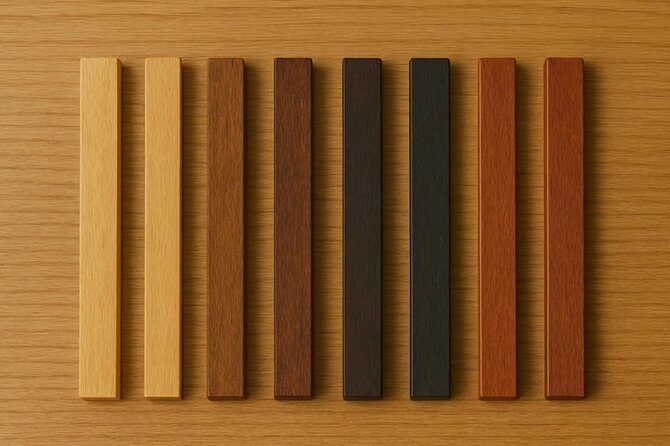
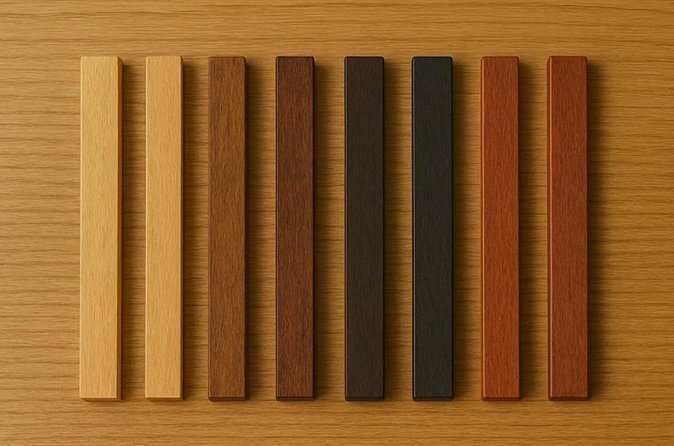
Your first important decision is the wood. The workshop offers several Japanese woods with different colors, grain patterns, textures, and aromas. You can look for a lighter or darker tone, or choose something between the two.
Two wood types are included in the standard price. Premium woods may be available for an added charge if you want a more distinctive appearance or feel. Since the whole point is to make a pair that suits you, take a moment to compare the blanks before you begin.
Availability may vary. One participant found that only one of the two advertised wood choices was available at the time of the visit. That is worth keeping in mind if you have your heart set on a particular color or species.
I would treat the wood selection as a pleasant choice rather than a promise of a precise material. If a certain wood matters to you, ask what is available when you arrive. You may still find a beautiful option, but flexibility will make the experience more enjoyable.
Using the traditional kanna hand plane
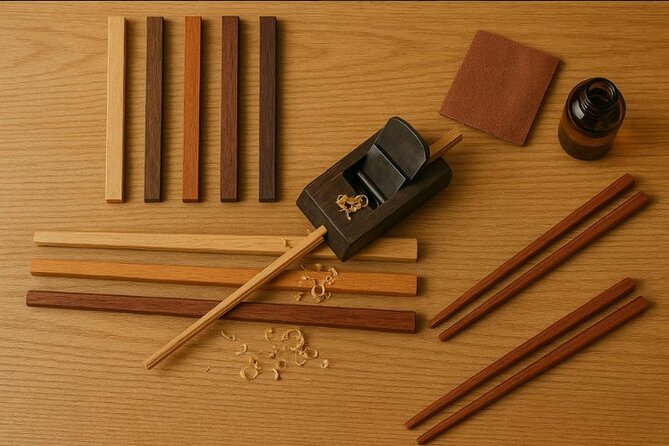
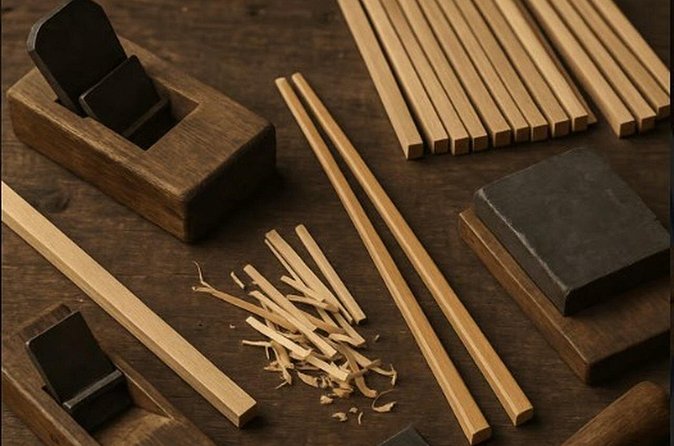
The central task is shaping the chopsticks with a traditional kanna, a Japanese hand plane. You place the blanks on a stand and carefully remove thin shavings until the pieces begin to take their final form.
This is the moment when the workshop feels most connected to Japanese craftsmanship. You can feel the grain and warmth of the wood instead of working with a mass-produced object. The motion is simple, but it rewards patience. Press too hard and you may remove more material than intended. Move carefully and the shape develops little by little.
You do not need woodworking experience. The instructor explains the technique and helps you through the process, so first-time makers can take part without feeling lost. The tools and setup are provided, and the work is structured enough to keep you moving.
The class is hands-on, but you are not left to figure everything out alone. English-speaking staff are available to assist, which matters when you are using a traditional tool for the first time. The instruction is aimed at beginners, families, and people who want to try something creative during a short stay in Kyoto.
Sanding the edges for a comfortable pair
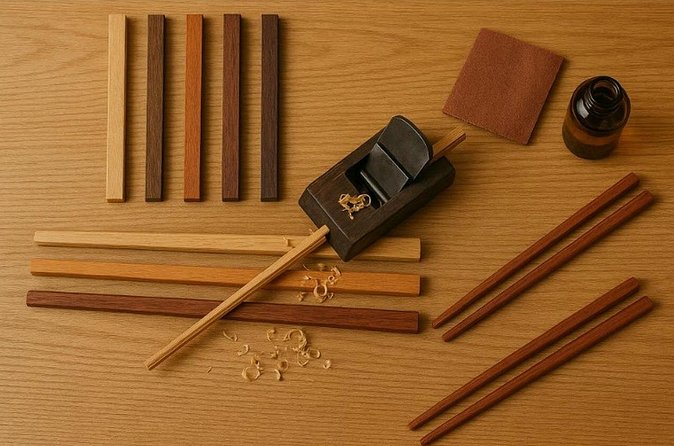
After the rough shaping, you use sandpaper to smooth the surfaces and edges. This step may sound less exciting than using the hand plane, but it has a real purpose. Small rough patches disappear, and the chopsticks become more comfortable to hold.
Sanding also lets you refine the look of the pair. You can work toward a soft, smooth finish and pay attention to the shape in your fingers. Since chopsticks are handled close to your face and used with delicate food, comfort matters as much as appearance.
The activity is forgiving in the sense that you work through several stages rather than trying to create a perfect finished object immediately. The hand plane forms the basic shape, while sanding improves the feel.
Parents should find this section manageable for children who can follow simple instructions and handle the tools with care. The activity has been described as a good family experience, with patient teaching and an engraving step that adds extra interest.
More workshops and classes in Kyoto:
- Kyoto: 45-Minute Tea Ceremony Lesson Experience
★ 4.3 · 2,378 reviews - Kyoto: Samurai Sword Class by Experts in Traditional Arts
★ 4.9 · 657 reviews - Kyoto: Ramen Cooking Class at a Ramen Factory with Souvenir
★ 4.9 · 532 reviews - Ninja 1-hour Hands-on Lesson by Japanese master in Kyoto -Entry
★ 5.0 · 489 reviews
Finishing the chopsticks with natural oil
Once the surface is smooth, you apply natural oil. This protects the wood and brings out its color and grain, giving the chopsticks a soft, polished look.
The oil finish is a satisfying final stage because it changes the appearance quickly. Wood that looked plain at the start can show more warmth and character after the surface is prepared and treated.
This finish also reinforces the difference between making your own pair and purchasing one from a souvenir shop. You see the material change at each stage: rough blank, shaped wood, smooth surface, then finished chopsticks.
You should still think of the result as a handmade item rather than a factory-perfect product. Small variations are part of the point. The finished pair may not look identical to a professionally produced set, but it carries the marks of the time you spent making it.
Adding your name by engraving
Engraving is optional, but it is one of the strongest reasons to consider adding an upgrade. You can have your name engraved in Japanese or in your native language, creating a personal souvenir rather than a generic one.
The engraving is particularly useful if you are making the chopsticks as a gift. A name gives the pair a clear owner, and it can make the object feel tied to the trip long after you return home.
The basic activity price is $15.25 per person, but the engraving is an optional touch rather than something you should assume is included. Ask about the current cost and available language choices before committing.
One practical point: the engraving may become the detail you remember most, so decide what you want before the final stage. If you are traveling with children, it can also give them a clear sense that the finished pair belongs to them.
Why the $15.25 price offers good value
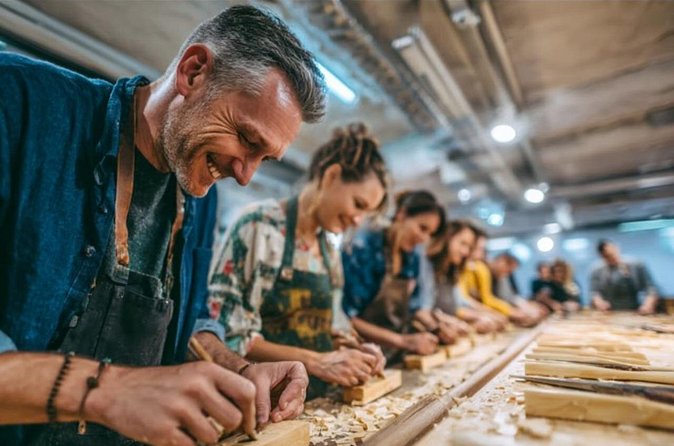
At $15.25, this is an inexpensive Kyoto activity. The price is not just for a souvenir. It covers a guided, hands-on hour in which you use workshop tools, work with Japanese wood, and finish a pair of chopsticks to take home.
That makes it a good choice for a short gap between larger sightseeing plans. You do not need to set aside a whole morning, and the meeting point is near public transportation in Gion.
The value is strongest if you enjoy making things. Someone who only wants a cheap pair of chopsticks may find them easily in Kyoto shops for less effort. You are paying for the process, the instruction, and the story attached to the finished object.
Premium wood and engraving can raise the final cost. If you want to keep the activity close to the advertised price, use one of the included woods and skip optional additions. If personalization matters, the extra expense may be reasonable because it changes the souvenir from a simple craft item into something made specifically for you.
A one-hour activity with a practical location
The workshop is held at 禅, or ZEN Chopsticks Making Workshop, at Yasaka Koji South, machi-71-13 Tamamizu, Higashiyama Ward, Kyoto, 605-0851. The activity ends at the same location where it begins.
That location makes this easy to fit into a Gion day. You can plan it as a break from nearby sightseeing rather than as a separate trip across the city. Since the meeting point is near public transportation, it is also practical for reaching the workshop from other parts of Kyoto.
Allow enough time to find the exact entrance. Gion streets can be confusing, and the workshop name may appear in Japanese as well as English. A mobile ticket is provided, which helps keep your booking details close at hand.
The stated duration is approximately one hour. That is enough time for the main stages, but you should not expect a leisurely full-day craft lesson. The group may include as many as 32 people, so the atmosphere can depend on the session size. Smaller groups may feel more personal, while a full class may have a busier, more organized rhythm.
The teaching style and workshop atmosphere
The instruction is designed for first-timers. You are shown how to shape the wood, smooth it, and apply the oil, with staff available to help as needed.
The strongest part of the teaching is its patience. You are not expected to arrive with tool skills, and the steps are broken down into manageable tasks. That makes the workshop suitable for families and couples who want to do an activity together without a steep learning curve.
There is one trade-off. The organized setup can feel somewhat like a production line, especially during a busy session. You move through a set sequence, and the experience is built to serve many people efficiently rather than to offer a long, private lesson.
I would not choose this class if you want quiet, one-on-one instruction in a traditional master’s studio. I would choose it if you want clear guidance, a friendly setting, and a short introduction to Japanese woodworking that ends with something useful.
Who should book this chopstick workshop
This activity suits you best if you want a souvenir with a personal story. It is a good fit for:
- Families looking for a simple creative activity in Gion
- Couples who want matching or personalized chopsticks
- Solo visitors who enjoy working with their hands
- First-time woodworkers
- Anyone seeking a short break from temple and shrine sightseeing
- Shoppers who prefer making a keepsake to buying a ready-made object
It may be less suitable if you need a completely quiet experience, want a private class, or care strongly about one specific wood type. The possible shortage of advertised wood choices is the main practical issue to consider.
The workshop is open to most participants, and no woodworking background is required. Since the session uses hand tools, follow the instructor’s directions carefully, especially if you are attending with young children.
How this fits into a Kyoto day
I would pair the workshop with other plans in Gion rather than travel across town only for the class. The central location makes it a natural addition to a day built around the neighborhood.
You might schedule it before lunch, after a morning of sightseeing, or later in the day when you want a calmer activity. The one-hour format leaves room for meals and other stops, but check your timing carefully if you have a fixed reservation immediately afterward.
The workshop also gives your day a different texture. Kyoto sightseeing can involve a lot of walking and looking. Chopstick making asks you to sit, concentrate, and use your hands. That contrast is valuable, especially during a busy trip.
Since the activity ends back at the meeting point, you do not need to plan for a separate drop-off. You can continue exploring Gion from there.
Cancellation and booking details
Confirmation is provided at booking, and the experience uses a mobile ticket. You can cancel for a full refund if you do so at least 24 hours before the start time.
Cancellations made less than 24 hours before the experience are not refunded, and changes within that period are not accepted. The cut-off follows Kyoto local time, so check the time difference if you are booking from abroad.
Should you book it?
Book this workshop if you want a low-cost, beginner-friendly activity that gives you a useful souvenir and a small taste of Japanese handcraft. The $15.25 starting price is fair for an hour of instruction, materials, tools, and a finished pair of chopsticks.
Go in with flexible expectations about wood availability and the group atmosphere. The class may feel organized rather than intimate, and premium wood or engraving can cost extra. Still, the combination of hand-planing, sanding, oil finishing, and optional engraving gives you more than a standard souvenir purchase.
For families, couples, and first-time craft makers in Gion, this is an easy activity to recommend. If the idea of shaping your own chopsticks appeals to you, the modest price and short duration make it a sensible addition to a Kyoto itinerary.
FAQ
Where does the chopstick-making workshop begin?
It begins at 禅, or ZEN Chopsticks Making Workshop, at Yasaka Koji South, machi-71-13 Tamamizu, Higashiyama Ward, Kyoto, 605-0851, Japan.
Where does the activity end?
The activity ends back at the meeting point.
How long does the workshop last?
The workshop lasts approximately one hour.
How much does the experience cost?
The listed price is $15.25 per person.
Is the workshop suitable for beginners?
Yes. The activity is designed for first-timers, and no woodworking experience is required.
Are English-speaking staff available?
Yes. English-speaking staff are available to assist during the workshop.
Is engraving included?
Engraving is an optional addition. You can request your name in Japanese or your native language, but the supplied details do not state that it is included in the base price.
Can I cancel for a full refund?
Yes. You can receive a full refund if you cancel at least 24 hours before the experience start time. Cancellations made less than 24 hours before the start time are not refunded.
Recently added around Kyoto
- Higashiyama | Kyoto: Sakura Season Private Rickshaw Tour★ 5.0 · 3 reviews
- Kyoto Kimono Rental CHAMATSU|Kimono/Yukata Rental FamilyPlan★ 5.0 · 3 reviews
- Kyoto: Half-Day Private Guided Tour to the Old Town of Gion★ 4.4 · 3 reviews
- Nara Private Customizable Half Day Tour★ 5.0 · 3 reviews
- Kansai Region Hiking Adventure in Nara Kobe Kyoto and More★ 5.0 · 3 reviews
- Full Day Nara Deer, Temple, Shrine, Activities & Tea Ceremony★ 5.0 · 3 reviews
- Nara: Essential Private Tour with Deer Park and Temples★ 5.0 · 3 reviews
- Hiking Tour for Sacred Sites in Kyoto with a Guide★ 5.0 · 3 reviews
Gion Geisha District Tours, compared.

Kyoto Geisha Walking Tour: Gion District & Hidden Gems
Read our review →
Gion Magical Night Walking Tour with Geisha Trivia
Read our review →
Gion Geisha District Walking Tour – Stories of Geisha
Read our review →
Best of Kyoto: Gion, Geisha, Pagodas & Cobblestones
Read our review →

Kyoto Night Foodie Tour in Gion (9+ dishes + 6 Sake tastings)
Read our review →
Kyoto Gion Geisha District Walking Tour – The Stories of Geisha
Read our review →
Kyoto Gion: 2-Hour Geisha Culture & History Walking Tour
Read our review →Browse the lists this tour appears in