
REVIEW · KYOTO NINJA EXPERIENCES
Ninja 1-hour Hands-on Lesson by Japanese master in Kyoto -Entry
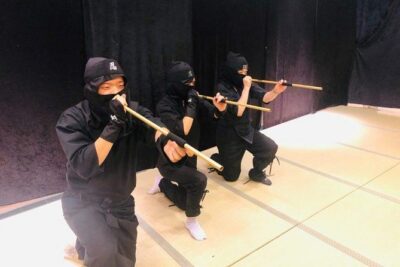
Kyoto’s one-hour ninja lesson is part martial-arts class, part history lesson, and part good-natured theater. You put on rented ninja clothing, learn how to breathe and walk quietly, then try a sword, kunai, shuriken, and blowgun under close instruction. Secret doors and a trick-house demonstration add a playful edge.
I like the small maximum group of six, which gives you real practice time instead of watching from the back. I also like the clear English instruction and the mix of tradition and fun, especially the chance to learn Kuji-In meditation before handling the weapons. The main consideration is depth: one hour gives you a lively introduction, not serious ninja training or a detailed course in Japanese history.
In This Review
- Key points to know before you book
- Inside the Kyoto ninja dojo
- Kuji-In meditation, breathing, and the ninja walk
- The trick house and secret-room demonstration
- Sword training with a Japanese sensei
- Kunai, shuriken, and blowgun practice
- What the small group changes
- How much history will you learn?
- Is $80.58 a good value for one hour?
- Who will enjoy this most?
- Practical planning for your Kyoto day
- Should you book the one-hour ninja lesson?
- FAQ
- Where does the ninja lesson take place?
- How long does the activity last?
- Where does the activity end?
- What activities are included in the lesson?
- Can I use a sword during the class?
- Can I throw ninja stars?
- Is ninja clothing provided?
- Is the lesson taught in English?
- How many people can join the class?
- What is the cancellation policy?
Key points to know before you book
- You handle several traditional-style tools: The lesson includes sword practice, kunai, shuriken, and a ninja blowgun.
- The class starts with quiet skills: Expect meditation, controlled breathing, and ninja walking before the weapon work.
- Groups are capped at six: You should have room to participate and receive guidance.
- English-speaking instructors lead the lesson: Sho and Jack are among the instructors named in the experience feedback.
- Children and adults can join: Families with children around seven and older have found the activity especially enjoyable.
- The lesson lasts about one hour: Choose the longer version if you want more time for practice and explanation.
Inside the Kyoto ninja dojo
The experience takes place at NINJA DOJO and STORE KYOTO, on the second floor at 528 Hakurakutencho in Kyoto’s Shimogyo Ward. It is near public transportation and ends where it begins, so you do not need to plan a second pickup point.
The dojo setting matters. This is not simply a photo stop with a costume rack. The room contains ninja artifacts and includes features linked to a ninja trick house, such as secret spaces and trap demonstrations. That gives the lesson a physical setting for the ideas being taught.
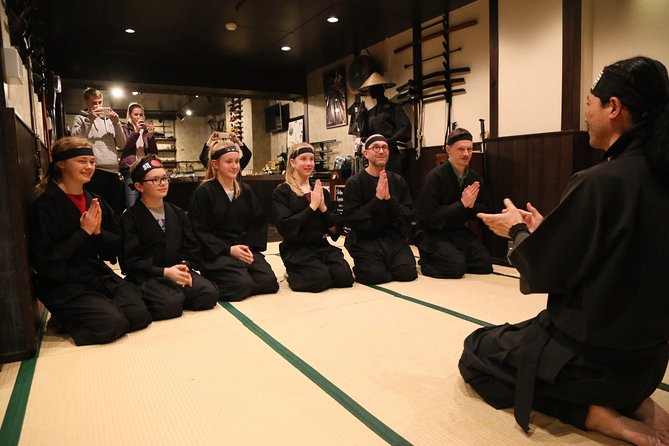
You begin by changing into rented ninja clothing. This is an easy way to shift out of ordinary sightseeing mode, and it also makes the class fun for families and groups of friends. Photos and videos may be taken and shared at no extra cost, according to the experience details provided by participants, though you should still follow the instructor’s directions about when cameras are safe.
The atmosphere is playful, but the instructors place rules around the weapons. That balance is important. You get the thrill of throwing a star or using a sword, while the lesson remains controlled and suitable for beginners.
More ninja experiences:
- Skip the lines Basic Ticket at SAMURAI NINJA MUSEUM KYOTO
★ 4.5 · 632 reviews - Kyoto: Ninja Weapon Forging Experience
★ 4.8 · 478 reviews - Ninja 2-hour Hands-on Lesson by Japanese master in Kyoto -Medium
★ 5.0 · 218 reviews
Kuji-In meditation, breathing, and the ninja walk
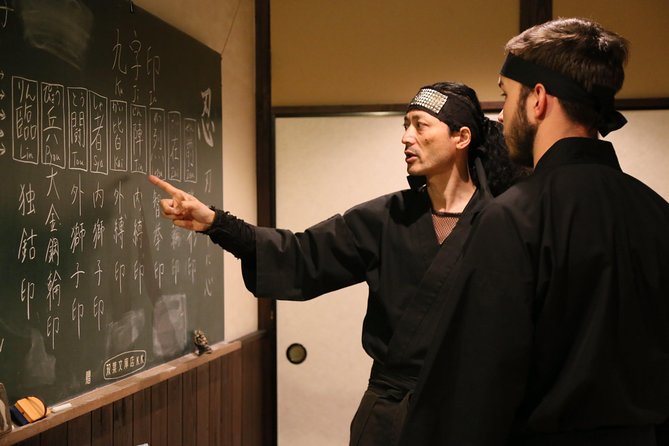
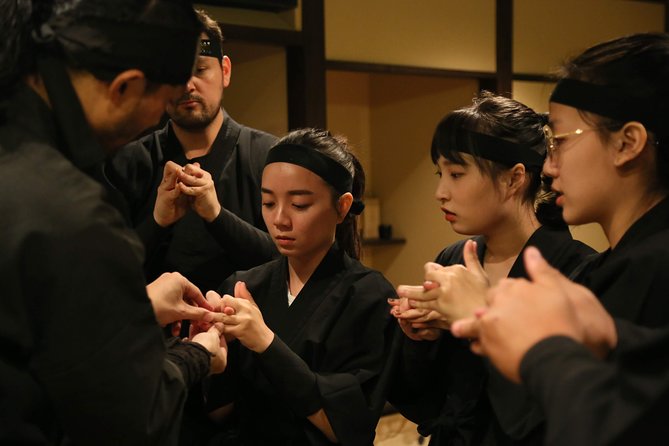
The first physical section is quieter than many people expect. You learn about ninja meditation, known as Kuji-In, along with breathing and walking methods.
These skills help explain the practical side of the ninja image. Stealth is not only about black clothing and dramatic poses. It also involves body control, calm movement, and awareness of how you place your feet. The lesson gives you a simple, hands-on way to think about those skills.
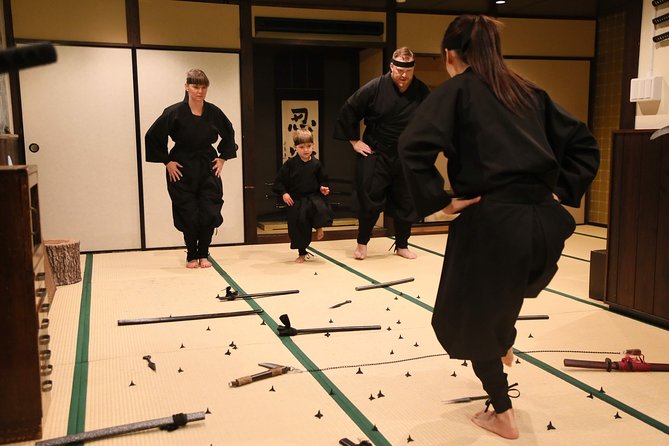
The walking exercise is one of the more memorable parts for children, but adults can enjoy it too. A demonstration involving a dark floor with spikes shows why careful foot placement matters. The instructor guides you through the technique, so you are not left to guess how to perform it.
Do not expect a long meditation session or a formal spiritual retreat. The lesson moves quickly, and this section is designed as an introduction before the weapons appear. Still, it gives the class more substance than costume dressing and staged photographs alone.
The trick house and secret-room demonstration
The dojo includes an introduction to ninja gimmicks and traps. You might see secret doors or hidden openings in the walls, along with a demonstration of how a trick-house feature works.
This section is especially useful for families because it turns an abstract story into something you can see and touch. A child who has been waiting for the sword and throwing stars still gets a short lesson in how ninjas used concealment and surprise.
The trick-house portion also adds variety. The class does not keep you in one stance or repeat one exercise for an hour. You shift from meditation to movement, then to demonstrations and target practice.
The trade-off is that no single topic receives much time. If you want a detailed study of historical ninja architecture, this is not the right format. Think of it as a clear, entertaining sample of several ideas.
Sword training with a Japanese sensei
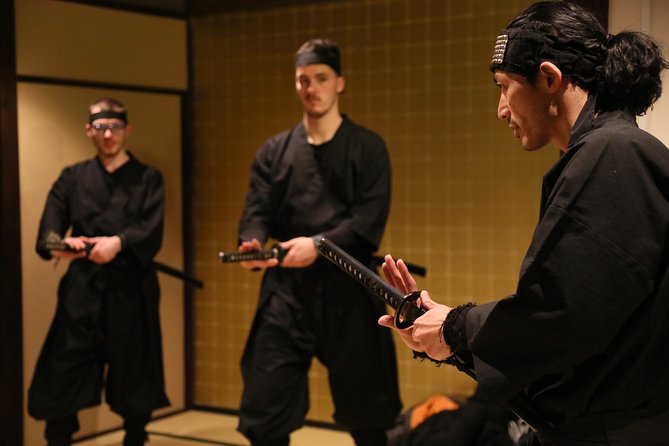
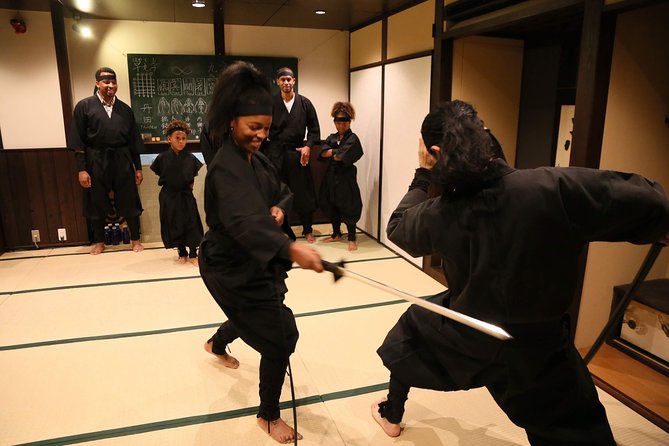
The sword section is one of the main attractions. The instructor demonstrates basic handling and movement, then guides you through simple practice.
You are not signing up for a full martial-arts qualification. The value here is the chance to understand how controlled movement, posture, and attention shape sword work. Even a short practice can change the way you view the sword as a tool rather than a film prop.
Instruction is given in English by a Japanese sensei who has trained in ninja arts. Several instructors have been singled out for their humor, patience, and easy communication, including Sho and Jack. The teaching style appears to be encouraging rather than severe, which is helpful when your first attempt looks less than stealthy.
Families should listen carefully during this part. The experience is hands-on, but weapons still require discipline. Most people can participate, and service animals are allowed, yet everyone needs to follow the dojo’s safety directions.
More workshops and classes in Kyoto:
- Kyoto: 45-Minute Tea Ceremony Lesson Experience
★ 4.3 · 2,378 reviews - Kyoto : Chopsticks Making Workshop in Gion with Engraving Option
★ 5.0 · 958 reviews - Kyoto: Samurai Sword Class by Experts in Traditional Arts
★ 4.9 · 657 reviews - Kyoto: Ramen Cooking Class at a Ramen Factory with Souvenir
★ 4.9 · 532 reviews
Kunai, shuriken, and blowgun practice
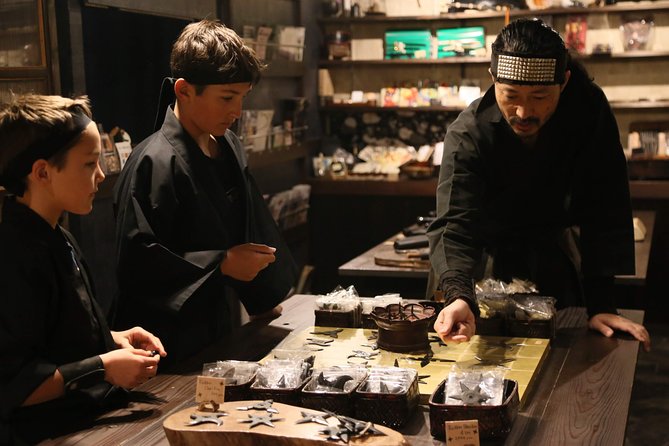
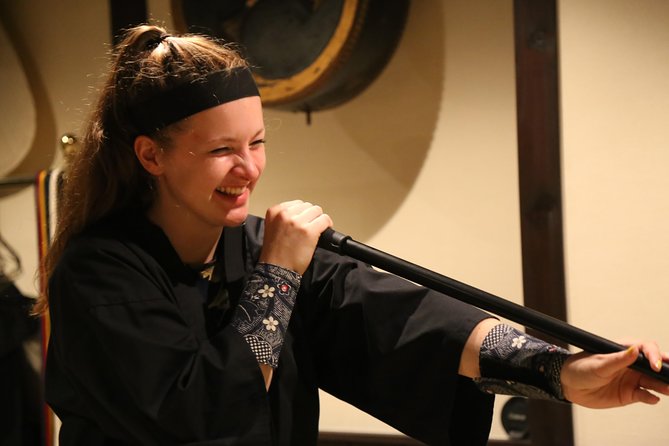
The weapon practice gives the class its biggest burst of energy. You learn about kunai, a dagger-style tool, and try throwing it at a target. You also practice shuriken, commonly called ninja stars, and use a ninja blowgun with darts.
The instructors explain the purpose and handling of the different tools before you practice. That small amount of context improves the experience. Instead of simply tossing objects, you get a basic idea of why each tool was part of the ninja image and how technique affects the result.
Shuriken throwing is a clear favorite with children and teenagers. Adults often find the blowgun unexpectedly challenging and entertaining. You may discover that one tool suits you better than another, and that success depends more on careful form than brute strength.
The activity is structured for beginners, but do not expect every throw to land perfectly. That is part of the fun. Instructors encourage you, correct your position, and keep the pace moving so you have several chances to try.
Because the class includes several different weapons, the hour passes quickly. This is also the chief limitation. You get an introduction to each item, not extended repetition with one weapon.
What the small group changes
The group limit of six is one of the strongest practical features. A large class can turn a hands-on activity into a demonstration where you wait for your turn. With six or fewer people, you have a better chance to practice each movement and ask a question.
A small group also suits mixed ages. A family can participate together without a child disappearing into a crowd. Couples and friends get plenty of chances to laugh, take photos, and compare their attempts without losing the instructional side.
Some sessions may feel almost private when only a few people book. That can make the experience more personal, though the exact group size will depend on the date. The stated maximum is six, not a promise that every session will have six or fewer than that.
The instructors also appear to adjust their approach to the group. Children can focus on the visual and active elements, while adults can ask about ninja customs, weapons, and history. English instruction makes that exchange easier for international visitors.
How much history will you learn?
You will receive an introduction to ninja history and methods, but the lesson is not a museum seminar. The emphasis is on doing: breathing, walking, handling equipment, and trying techniques.
That is enough to give the activity context without slowing the pace. The instructor explains why you are practicing a movement and gives background on the tools. The result is a short cultural lesson built around physical participation.
If your goal is a detailed understanding of ninjas, samurai, or Japanese military history, you should pair this class with a museum or historical site. Some adults may find the information too high-level, especially if they arrive hoping for a serious training course.
If your goal is to spend an hour learning something unusual in Kyoto, the balance works well. The class avoids being only a costume photograph, while keeping enough playfulness for children and first-time participants.
Is $80.58 a good value for one hour?
At $80.58 per person, this is not a budget activity. The price makes more sense if you value the combination of instruction, clothing rental, dojo admission, and access to several hands-on activities in a small group.
You are paying for a guided experience rather than a simple entry ticket. The lesson includes a Japanese sensei teaching in English, rented ninja clothing, a series of demonstrations, and practice with several weapons. A small group also gives the price more weight because you are not merely standing in a crowd watching someone else perform.
For a family, the activity can be a useful break from temples and shrines. It is indoors and air-conditioned, according to the experience feedback, which gives you a comfortable change of pace during a busy Kyoto day.
The price is harder to justify if you mainly want a souvenir photograph or expect deep martial-arts instruction. You may leave wishing the lesson lasted longer, particularly after enjoying the sword and weapon sections. The two-hour option is worth considering if you want more practice time.
Food, drinks, hotel pickup, and hotel drop-off are not included. Plan to reach the dojo independently and allow enough time to find the second-floor location.
Who will enjoy this most?
This lesson is a strong match for families, especially those with children interested in ninja stories, Japanese culture, or hands-on activities. Children around seven, ten, and twelve have enjoyed the format, and teenagers can take the skills seriously enough to stay engaged.
It also works well for couples and adult friends. The setting gives you something to do together, and the instructor’s humor keeps the class from feeling stiff. You do not need previous martial-arts experience.
Ninja fans will get extra pleasure from the costume, secret spaces, and weapon practice. Even a casual fan can enjoy the novelty, but people who have watched ninja-themed films or anime may recognize some of the ideas and get more out of the playful references.
I would be less likely to recommend it to someone seeking formal training, advanced sword study, or a long history lecture. The lesson is broad and brisk. It introduces many skills, but it does not develop one skill in depth.
Practical planning for your Kyoto day
The meeting point is near public transportation in Shimogyo Ward, making it practical to place alongside other central Kyoto plans. The activity returns to the same dojo, so you do not need to arrange transportation from a separate finishing point.
The confirmation arrives when you book, and the experience uses a mobile ticket. Wear something that allows comfortable movement, even though ninja clothing is provided for the training. Food and drink are not part of the activity, so plan those before or after class.
The experience is listed as requiring good weather. If poor weather causes cancellation, you can choose another date or receive a full refund. A minimum number of participants is also required, and if that minimum is not reached, you are offered another date or experience, or a full refund.
Cancellation is free up to 24 hours before the start time. Cancellations or changes made inside that 24-hour window are not accepted for a refund, so check the local start time carefully.
Should you book the one-hour ninja lesson?
Book it if you want an active Kyoto experience that combines costumes, simple cultural background, unusual props, and plenty of participation. The small group, English instruction, and variety of activities make it a good choice for families and first-time visitors.
I especially like that the class begins with breathing, meditation, and walking before moving to the weapons. Those opening exercises give the activity a little more meaning, while the sword, shuriken, kunai, and blowgun keep the hour lively.
Skip it if you want serious martial-arts training or an in-depth history lesson. For everyone else, especially families looking for a break from sightseeing, this is a memorable hour with real hands-on appeal. If you already know you will want more practice, choose the two-hour version rather than wishing for extra time once the class ends.
FAQ
Where does the ninja lesson take place?
It takes place at NINJA DOJO and STORE KYOTO, 528 Hakurakutencho, second floor, in Kyoto’s Shimogyo Ward, postal code 600-8422.
How long does the activity last?
The entry-level lesson lasts approximately one hour.
Where does the activity end?
The activity ends back at the meeting point, the NINJA DOJO and STORE KYOTO.
What activities are included in the lesson?
The lesson includes Kuji-In ninja meditation, breathing and walking practice, an introduction to ninja tricks and traps, sword training, kunai training, shuriken training, and ninja blowgun practice.
Can I use a sword during the class?
Yes. The lesson includes a demonstration and basic training with a ninja sword.
Can I throw ninja stars?
Yes. Shuriken, commonly called ninja stars, are included in the weapon practice.
Is ninja clothing provided?
Yes. Ninja clothes are rented for use during the training.
Is the lesson taught in English?
Yes. A Japanese sensei trained in ninja arts teaches the lesson in English.
How many people can join the class?
The activity has a maximum of six participants.
What is the cancellation policy?
You can cancel up to 24 hours before the start time for a full refund. Changes or cancellations made less than 24 hours before the start time are not accepted for a refund. If the activity is canceled because of poor weather or because the minimum number of participants is not reached, you can choose another date or experience, or receive a full refund.
More 1-Hour Experiences in Kyoto
- 1 Hour Geisha Show in Kyoto
★ 5.0 · 452 reviews - One Hour Geisha Show in Kyoto
★ 5.0 · 64 reviews - One Hour Geisha Show in Gion Kyoto
★ 5.0 · 59 reviews - Kyoto: Hands-on Takoyaki and Okonomiyaki Cooking (1 Hour)
★ 4.7 · 25 reviews
Recently added around Kyoto
- Higashiyama | Kyoto: Sakura Season Private Rickshaw Tour★ 5.0 · 3 reviews
- Kyoto Kimono Rental CHAMATSU|Kimono/Yukata Rental FamilyPlan★ 5.0 · 3 reviews
- Kyoto: Half-Day Private Guided Tour to the Old Town of Gion★ 4.4 · 3 reviews
- Nara Private Customizable Half Day Tour★ 5.0 · 3 reviews
- Kansai Region Hiking Adventure in Nara Kobe Kyoto and More★ 5.0 · 3 reviews
- Full Day Nara Deer, Temple, Shrine, Activities & Tea Ceremony★ 5.0 · 3 reviews
- Nara: Essential Private Tour with Deer Park and Temples★ 5.0 · 3 reviews
- Hiking Tour for Sacred Sites in Kyoto with a Guide★ 5.0 · 3 reviews
Kyoto Ninja Experiences, compared.
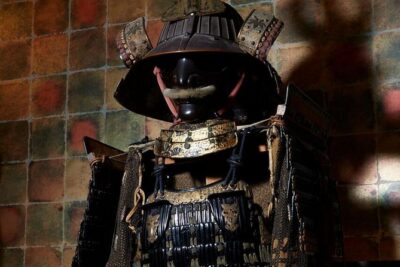
Skip the lines Basic Ticket at SAMURAI NINJA MUSEUM KYOTO
Read our review →
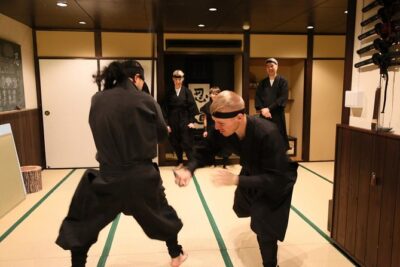
Ninja 2-hour Hands-on Lesson by Japanese master in Kyoto -Medium
Read our review →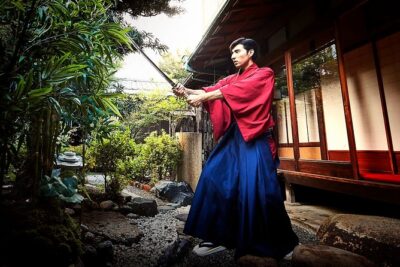
Kyoto Sword Experience – includes Museum Ticket/Ninja Experience
Read our review →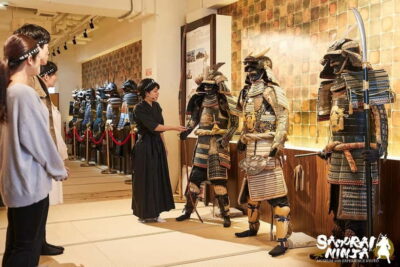
Ninja Experience (Family Friendly) at Samurai Ninja Museum KYOTO
Read our review →
Forge Your Own Ninja Weapon with Japanese Tin Casting
Read our review →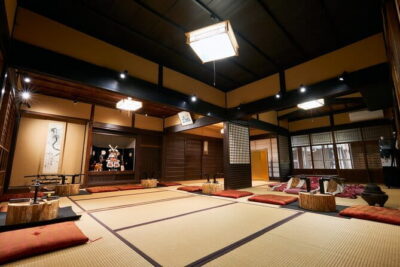
Authentic Ninja Weapon Forging Experience in Kyoto
Read our review →Browse the lists this tour appears in