
REVIEW · KYOTO IZAKAYA NIGHTS
Kyoto: Afternoon Japanese Izakaya Cooking Class
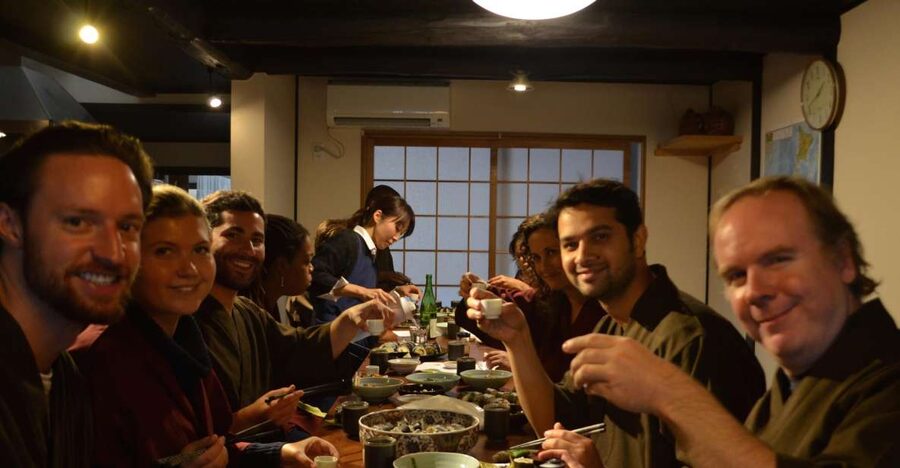
Kyoto’s best food lesson may not be about sushi at all. This afternoon izakaya class teaches the everyday Japanese dishes found at home and in casual over-the-counter restaurants, from dashi-based preparations to savory favorites such as okonomiyaki. You cook, eat, and talk with the chef in the same relaxed rhythm used at an izakaya.
I especially like two things here: the recipes are simple enough to repeat at home, and the class gives you a practical look at Japanese ingredients and cooking habits. The English instruction is clear, and instructors such as Yumi and Yumiko have been praised for their warmth and patience. The one consideration is pace. Preparing as many as six dishes in three hours means the lesson can move quickly, especially for complete beginners.
In This Review
- Key points at a glance
- What the Kyoto izakaya class really teaches
- The first cooking round: learn by doing
- Eating what you make, then starting again
- Why the menu matters more than sushi basics
- Clear instruction for beginners and serious cooks
- The instructors and the feel of the room
- Recipes and the value after you leave Kyoto
- Dietary needs, accessibility, and practical details
- Who should book this Kyoto food experience
- Is the $67 price worth it?
- My call: book it if food is part of your travel plan
- FAQ
- Where does the Kyoto izakaya cooking class meet?
- How long does the cooking class last?
- How many dishes will I cook?
- Is the class taught in English?
- Are ingredients and cooking equipment included?
- Can I tell the supplier about dietary requirements?
- Is the activity wheelchair accessible?
Key points at a glance
- Two cooking rounds: Prepare 2 or 3 dishes, eat together, then return to the kitchen for another 2 or 3.
- Everyday Japanese food: Learn home-style and izakaya dishes rather than stopping at familiar sushi basics.
- Recipes for your kitchen: Written recipes help you recreate the meal after returning home.
- English-speaking instruction: The class is taught in English, with step-by-step guidance.
- A social meal: You cook and eat together while chatting with the chef and other people in the room.
- Good indoor Kyoto activity: The three-hour class offers a useful break from temples and sightseeing.
What the Kyoto izakaya class really teaches
Izakaya food is casual Japanese food made for sharing, drinking, and conversation. It is not usually formal restaurant cuisine, and that is exactly why this class is useful. You learn dishes that can fit into an ordinary dinner at home, not just something impressive to photograph once.
The class takes place at Cooking Sun on Funayacho in Kyoto’s Shimogyo Ward. The supplied details do not name a fixed menu, so you should expect the dishes to vary. Past sessions have included as many as six items, including dessert, while the standard description promises 2 or 3 dishes in each of two cooking rounds.
That range matters. If you want one highly focused lesson on a single dish, this is not that sort of class. If you want to sample several Japanese techniques and flavors in one afternoon, the format makes good sense.
More izakaya nights in Kyoto:
- Kyoto: Izakaya Bars Guided Walking Tour
★ 4.9 · 815 reviews - Izakaya Style Cooking Class
★ 5.0 · 219 reviews - Kyoto: Izakaya Nightlife Tour with Local Guide
★ 5.0 · 4 reviews
The first cooking round: learn by doing
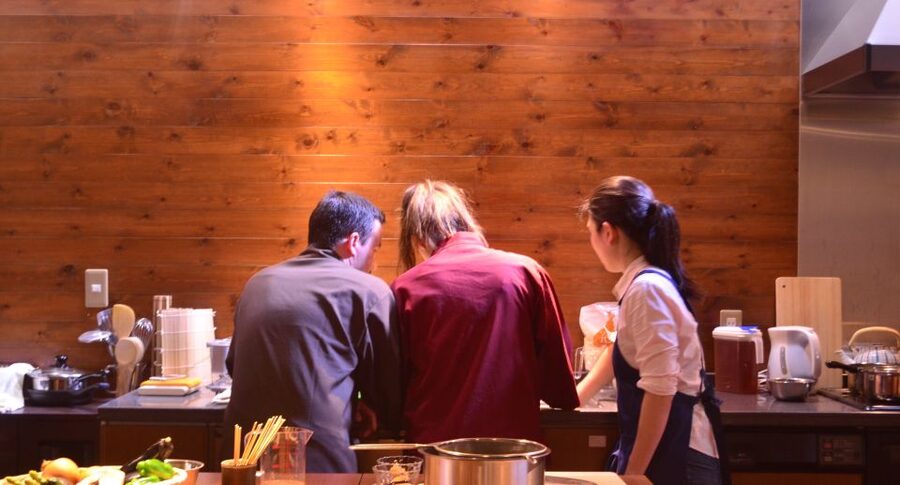
The class begins in the kitchen, where you work with the chef and prepare the first two or three dishes. You are not simply watching a demonstration from the back of the room. You receive ingredients, cooking tools, an apron, and utensils, then take part in the preparation.
The teaching style is practical. Instructions are given step by step, with the chef showing you what to do and helping when a task feels unfamiliar. Previous sessions have included basic techniques and ingredients such as dashi, mirin, and other staples of Japanese cooking. One especially useful detail is the attention to fundamentals. You are not expected to already understand Japanese flavor-building.
This is where the class earns its price. A restaurant meal lets you taste the finished dish, but it does not explain why it tastes the way it does. Here, you get a working lesson in the ingredients and methods behind it.
The social side begins right away. Izakaya dining is built around conversation, and the format encourages you to talk with the chef while preparing food. That makes the class feel less like a strict school lesson and more like an afternoon in a friendly working kitchen.
Eating what you make, then starting again
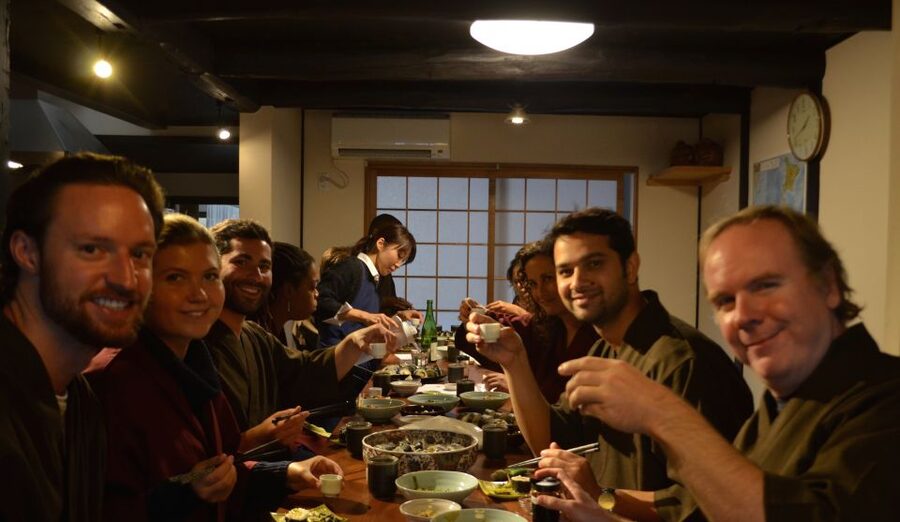
After the first set of dishes is ready, you sit down and eat together. This break is more than a reward. It lets you taste the results while the methods are still fresh in your mind.
The food has been described as delicious, traditional, and easy to reproduce. That combination is important. Some cooking classes produce dishes that depend on ingredients you cannot find at home or equipment you will never use again. This class aims for food you can make in a normal kitchen, supported by recipes you can take with you.
The meal also gives the chef time to explain Japanese food culture. You can ask about ingredients, preparation, and the place of izakaya dishes in daily life. Since the class is taught in English, you do not need to worry about missing the main instructions because of a language barrier.
Then you return to the kitchen for the second round. Another two or three dishes are prepared before you eat again. The structure keeps the food coming in manageable stages, rather than leaving you with a long wait before one large meal.
Why the menu matters more than sushi basics
Many visitors first associate Japanese cooking lessons with sushi, ramen, or tempura. Those are worthwhile subjects, but they are not the only way to understand Japanese food.
This class focuses on less familiar dishes and home cooking. You may work with ingredients and techniques that explain much of the flavor in ordinary Japanese meals. Learning to make dashi, for example, gives you a useful starting point for understanding soups, sauces, and savory dishes.
The menu is not fully fixed in the supplied information, so I would not book this expecting a particular named dish. Still, the examples from earlier classes are encouraging. Okonomiyaki has appeared, and one session included five savory dishes and a dessert. Another included six traditional Japanese dishes. The common thread is variety, not a single signature recipe.
That variety suits curious eaters who want a broader lesson. It may be less appealing if you have limited appetite or prefer to concentrate on mastering one technique in detail.
More cooking classes in Kyoto:
- Kyoto: Ramen Cooking Class at a Ramen Factory with Souvenir
★ 4.9 · 532 reviews - Kyoto: Ramen, Gyoza, and Onigiri Cooking Class
★ 5.0 · 445 reviews - Kyoto: Japanese Washoku Bento Small Group Cooking Class
★ 5.0 · 380 reviews - Kyoto Ramen and Gyoza Cooking Class with Professional Chefs
★ 5.0 · 282 reviews
Clear instruction for beginners and serious cooks
You do not need to be a skilled cook to take part. The class is built around simple, clear tasks, and the instructors help you complete each stage. Families, teenagers, people who rarely cook, and experienced home cooks have all found a place in the format.
The instruction is also useful for someone who already cooks. One experienced chef who attended said the class still taught him a great deal. That makes sense because the value is not only in knife work or timing. It is in seeing how Japanese seasonings, broth, and preparation methods work together.
The pace can be brisk. You are preparing several dishes in a three-hour window, and that leaves little room for a slow, leisurely approach. I would treat this as a hands-on workshop rather than a relaxed cooking demonstration.
If you are nervous in the kitchen, do not let the number of dishes put you off. The tasks are designed to be manageable, and the class provides individual cooking equipment according to the supplied information. You will still need to pay attention, but you are not thrown into an advanced professional kitchen.
The instructors and the feel of the room
The strongest part of the class is the teaching atmosphere. The instructors are repeatedly described as friendly, patient, organized, and encouraging. Yumi and Yumiko have been named as especially engaging teachers in past sessions, while other instructors have also been praised for excellent English and a genuine manner.
Names and staff can change, so you should not assume a particular instructor will lead your session. What seems consistent is the approach: explain the task, demonstrate it, help you through it, and keep the mood light.
That tone matters in a cooking class. A teacher who rushes or corrects every small mistake can make beginners freeze. Here, the emphasis is on helping you succeed. The result is a class that works well for mixed groups, including people with different levels of cooking experience.
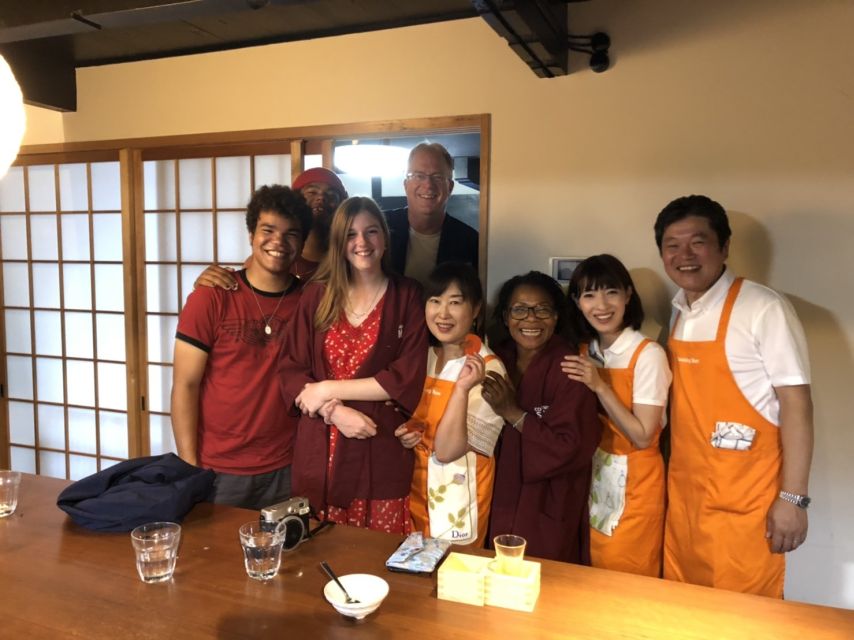
The social setup is another plus. You are likely to meet people from different countries and backgrounds while sharing the work and the meal. I like this kind of activity in Kyoto because it gives you direct contact with Japanese food culture instead of keeping you on the sightseeing path all day.
Recipes and the value after you leave Kyoto
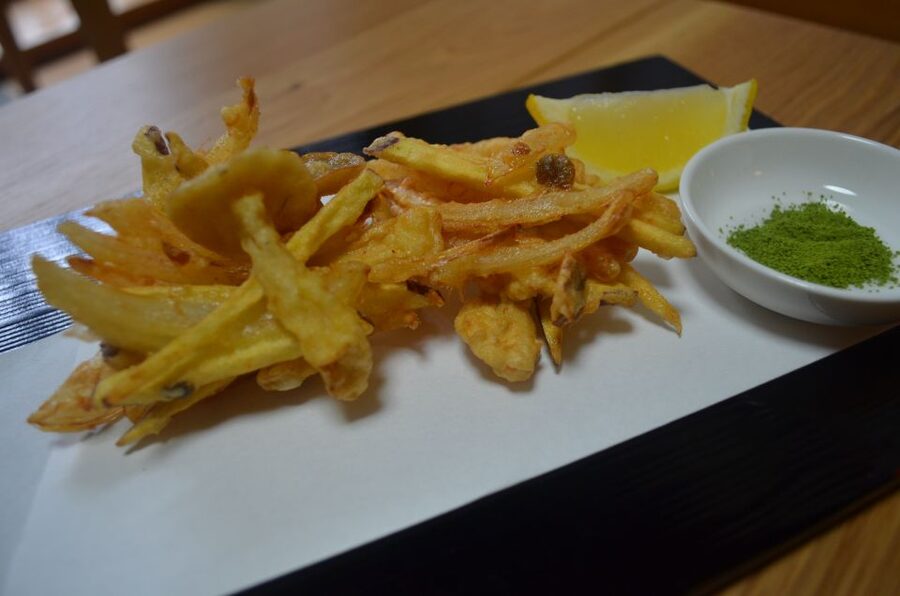
The recipe handout is one of the most practical parts of the experience. You do not leave with only a pleasant memory and a full stomach. You receive written instructions that help you try the dishes again at home.
Past participants have singled out the clear, well-documented recipes. The instructions bring the dishes down to manageable steps, which is useful when Japanese ingredients are unfamiliar. You may still need to visit an Asian grocery store or find substitutes for items such as dashi and mirin, but you will know what you are trying to reproduce.
This after-trip value helps justify the $67 price. For three hours of teaching, ingredients, equipment, several dishes, and a full meal, the cost is reasonable for Kyoto. It is not the cheapest way to eat lunch, but it is a better comparison to a food workshop than to a restaurant meal.
I would place the class in the good-value category if you enjoy cooking or want a food experience with something to take home. If you only want to eat, you can find a less expensive meal elsewhere.
Dietary needs, accessibility, and practical details
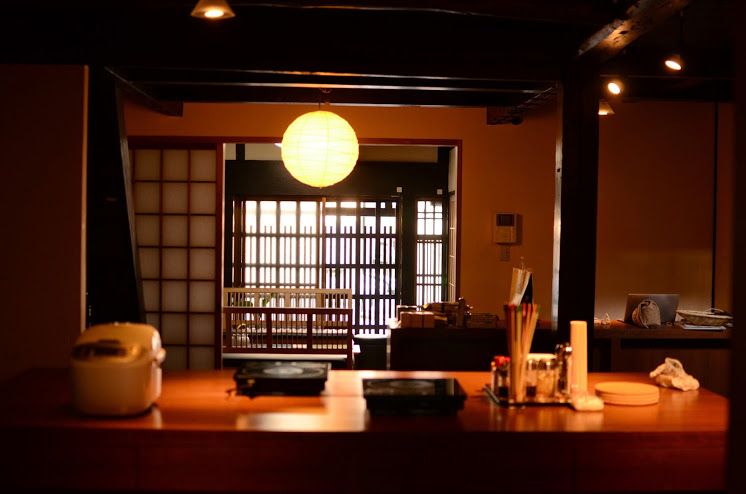
Tell the local supplier about dietary requirements when you book. This is important because the class centers on shared ingredients and several separate dishes. A vegetarian participant in one session received separate utensils and pans when needed, but you should still disclose your needs in advance rather than relying on an adjustment at the door.
The activity is wheelchair accessible. English is the listed language, and the instructors are expected to teach in English.
The meeting point is Cooking Sun, Funayacho, Shimogyo Ward, Kyoto, Kyoto 600-8466. Check the available starting times before booking, since the class lasts three hours and the exact start time can vary.
You can cancel up to 24 hours before the activity for a full refund. A reserve-now, pay-later option is also offered, which helps if your Kyoto schedule is still shifting.
Who should book this Kyoto food experience
I would recommend it most strongly to:
- Food-minded visitors who want to understand Japanese cooking beyond restaurant menus.
- Beginners who appreciate clear instructions and simple recipes.
- Families and couples looking for a shared indoor activity.
- Repeat visitors to Japan who have already seen the major temples and want a more hands-on afternoon.
- Home cooks who want techniques and recipes they can use after the trip.
- People needing an indoor plan during a hot, wet, or tiring sightseeing day.
It is also a good choice for someone who does not cook much. The lesson does not require advanced skills, and the friendly teaching style helps take the pressure off.
I would hesitate only if you dislike group activities, have a very restricted diet that cannot be easily adapted, or want a slow lesson focused on one dish. The number of recipes means you will cover a lot in a short time.
Is the $67 price worth it?
At $67 per person, this is not an impulse snack. It is a three-hour class with ingredients, an apron, utensils, multiple dishes, instruction in English, and food to eat during two separate meal breaks.
The strongest value comes after the class. You learn how Japanese dishes are built, taste your own work, and leave with recipes that can become part of your home cooking. The lesson also gives you a friendly cultural encounter that a standard restaurant meal cannot provide.
The weaker value is for anyone who measures an activity only by the amount of food served. You may eat well, but the main product is the skill and understanding you gain along the way.
My call: book it if food is part of your travel plan
I would book the Kyoto afternoon izakaya class if you want a practical, social food activity rather than another sightseeing stop. The combination of English instruction, several approachable dishes, warm teachers, and take-home recipes gives you plenty to do for three hours.
Go in ready for a fairly active lesson, and do not expect a fixed menu unless the operator confirms one before you book. Tell the supplier about dietary needs early, check the start time, and leave room in your appetite for two rounds of cooking and eating.
For curious eaters, families, and anyone hoping to bring a piece of Japan back to the home kitchen, this is a strong choice at $67.
FAQ
Where does the Kyoto izakaya cooking class meet?
The meeting point is Cooking Sun, Funayacho, Shimogyo Ward, Kyoto, Kyoto 600-8466.
How long does the cooking class last?
The activity lasts three hours.
How many dishes will I cook?
The class description includes 2 or 3 dishes in the first cooking round and another 2 or 3 in the second. Past sessions have included as many as six dishes, sometimes including dessert.
Is the class taught in English?
Yes. English is the listed language, and the instructor teaches in English.
Are ingredients and cooking equipment included?
Yes. The price includes the cooking class, ingredients, an apron, and utensils.
Can I tell the supplier about dietary requirements?
Yes. You should inform the local supplier of any dietary requirements when booking.
Is the activity wheelchair accessible?
Yes. The activity is listed as wheelchair accessible.
More Workshops in Kyoto
- Kyoto: 45-Minute Tea Ceremony Lesson Experience
★ 4.3 · 2,378 reviews - Kyoto : Chopsticks Making Workshop in Gion with Engraving Option
★ 5.0 · 958 reviews - Kyoto: Samurai Sword Class by Experts in Traditional Arts
★ 4.9 · 657 reviews - Ninja 1-hour Hands-on Lesson by Japanese master in Kyoto -Entry
★ 5.0 · 489 reviews
More Drinking Tours in Kyoto
- Kyoto Night Foodie Tour in Gion (9+ dishes + 6 Sake tastings)
★ 5.0 · 1,762 reviews - 3-Hour Kyoto Insider Sake Brewery Tour with Tastings & Pairings
★ 5.0 · 917 reviews - Arashiyama Bamboo, Temple, Monkeys, or Secret Sake Brewery
★ 4.8 · 886 reviews - Kyoto: Insider Sake Brewery Tour with Sake and Food Pairing
★ 5.0 · 704 reviews
Recently added around Kyoto
- Higashiyama | Kyoto: Sakura Season Private Rickshaw Tour★ 5.0 · 3 reviews
- Kyoto Kimono Rental CHAMATSU|Kimono/Yukata Rental FamilyPlan★ 5.0 · 3 reviews
- Kyoto: Half-Day Private Guided Tour to the Old Town of Gion★ 4.4 · 3 reviews
- Nara Private Customizable Half Day Tour★ 5.0 · 3 reviews
- Kansai Region Hiking Adventure in Nara Kobe Kyoto and More★ 5.0 · 3 reviews
- Full Day Nara Deer, Temple, Shrine, Activities & Tea Ceremony★ 5.0 · 3 reviews
- Nara: Essential Private Tour with Deer Park and Temples★ 5.0 · 3 reviews
- Hiking Tour for Sacred Sites in Kyoto with a Guide★ 5.0 · 3 reviews
Kyoto Izakaya Nights, compared.

Kyoto Night Food & Izakaya Hopping Tour in Pontocho
Read our review →Browse the lists this tour appears in