
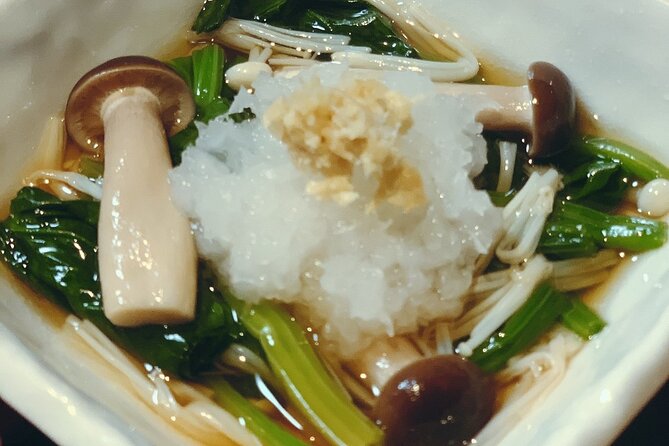
REVIEW · KYOTO IZAKAYA NIGHTS
Izakaya Style Cooking Class
Kyoto’s izakaya cooking class gives you something a restaurant meal cannot: a practical look at the small dishes Japanese people eat with sake, beer, and conversation. You’ll learn dashi, the basic soup stock behind much Japanese cooking, then prepare several home-style dishes before sitting down to eat them.
I like the class for two clear reasons. First, the recipes are meant to be repeated at home, not admired once and forgotten. Second, the staff keeps the session moving while still giving hands-on help, which matters when a group is cooking several dishes in only three hours.
The main consideration is the menu. It changes with seasonal ingredients, and past sessions have included dishes such as pasta alongside Japanese favorites. That keeps the food fresh, but you should not book expecting one fixed list of recipes.
In This Review
- Key points at a glance
- What izakaya means in Kyoto
- Starting at 2pm in a traditional Kyoto house
- Learning dashi and Japanese seasoning
- Preparing several dishes instead of one showpiece
- Friendly instruction and hands-on help
- Sitting down to eat what you made
- Is $71.63 a fair price?
- Who should book this class?
- Practical details before you book
- Should you book the Izakaya Style Cooking Class?
- FAQ
- Where does the Izakaya Style Cooking Class take place?
- What time does the class start?
- Is dinner included?
- Is the class taught in English?
- How many people can join?
- Can the class accommodate dietary requirements?
- What is the cancellation policy?
Key points at a glance
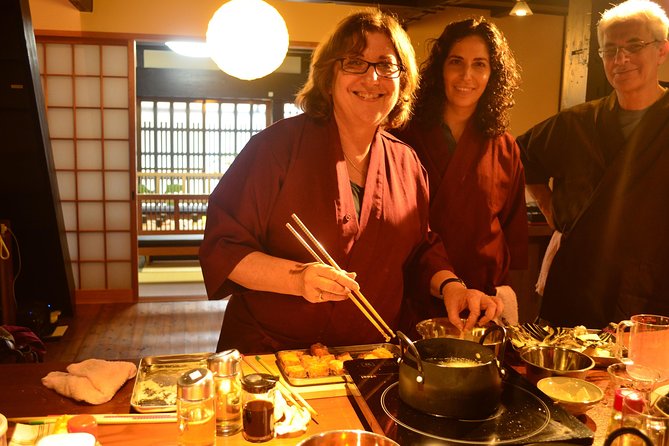
- Six dishes may be prepared in one session: Past menus have included spinach with sesame sauce, pumpkin or vegetable soup, cucumber salad, teriyaki yellowtail, mushroom tempura, rice dishes, mochi, and other seasonal items.
- Dashi is part of the lesson: You learn how Japanese soup stock is made and why it gives food its depth.
- Dinner is cooked by you: The meal is not simply served in front of you. You help prepare it, then sit down with the group to eat.
- Small-group format: The class allows up to eight people, with an apron, ingredients, and an English-speaking instructor included.
- Recipes go home with you: This is useful for cooks who want to recreate Japanese flavors after returning home.
- Dietary requests need advance notice: Vegetarian, allergy, and celiac-related needs have been accommodated, but you should state them when booking.
What izakaya means in Kyoto
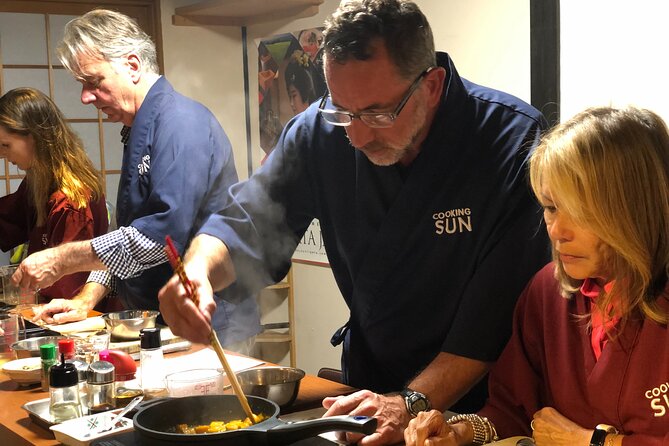
Izakaya is often explained as the Japanese answer to tapas, though the setting and mood are distinctly Japanese. You order several small plates, share them around the table, and pair them with drinks. It is casual food, but it can involve careful knife work, balanced sauces, frying, simmering, and precise seasoning.
The class begins with background on how izakaya developed. One commonly cited explanation links its early roots to 18th-century sake shops. As these shops began serving food with their drinks, they became places to eat as well as buy sake. Over time, izakaya became a reasonably priced way for people of different ages to gather over small portions.
That short introduction gives the cooking a useful setting. You are not just making random Japanese dishes. You are learning the kind of food served at home or in casual restaurants, often in several small courses.
This is a good choice if sushi and teriyaki are not enough for you. It also helps explain why Japanese meals can feel varied even when each individual dish is fairly simple. A bowl of rice, a vegetable side, a soup, a fried item, and a glazed fish dish can make a complete meal without relying on one centerpiece.
More izakaya nights in Kyoto:
- Kyoto: Izakaya Bars Guided Walking Tour
★ 4.9 · 815 reviews - Kyoto: Afternoon Japanese Izakaya Cooking Class
★ 4.9 · 241 reviews - Kyoto: Izakaya Nightlife Tour with Local Guide
★ 5.0 · 4 reviews
Starting at 2pm in a traditional Kyoto house
The class begins at 2pm at Cooking Sun, located at 679 Funayachō in Kyoto’s Shimogyo Ward. The studio is in a traditional wooden house, which gives the afternoon a more personal setting than a large commercial kitchen.
Your booking confirmation provides the cooking studio details, so check them before setting out. The meeting point is near public transportation, but hotel pickup and drop-off are not provided. Plan to arrive with enough time to find the house and settle in, especially if you are coming from another part of Kyoto.
The three-hour length works well for a cooking class. You have enough time for an introduction, demonstrations, preparation, cooking, and dinner without turning the afternoon into an all-day commitment. Starting at 2pm also leaves room for a morning temple visit or an evening walk after the class.
The room can accommodate up to eight people. That is small enough for direct help, but it is not necessarily a private lesson. One session may feel intimate with four or five participants, while a full group will have more of a shared class feel.
Learning dashi and Japanese seasoning
The most valuable part of the class may be the explanation of Japanese seasoning. Many visitors recognize soy sauce, miso, sesame, and mirin, but knowing the names does not automatically tell you how to combine them.
The instructor demonstrates the techniques behind the flavors, including how to make dashi. This soup stock is a foundation for many Japanese dishes. It can support soup, sauces, vegetables, and other preparations, so understanding it gives you a useful starting point for Japanese cooking at home.
The class also explains differences between sauces and condiments. That detail is easy to overlook when eating in a restaurant, where the finished dish arrives without explanation. Here, you can ask why one sauce is used for fish, why another works with vegetables, or how a seasoning changes the balance of a dish.
You do not need advanced cooking ability. The instructions are designed for a mixed group, from beginners to people who cook often. At the same time, experienced home cooks can still pick up new flavor combinations, Japanese utensils, and preparation methods.
Preparing several dishes instead of one showpiece
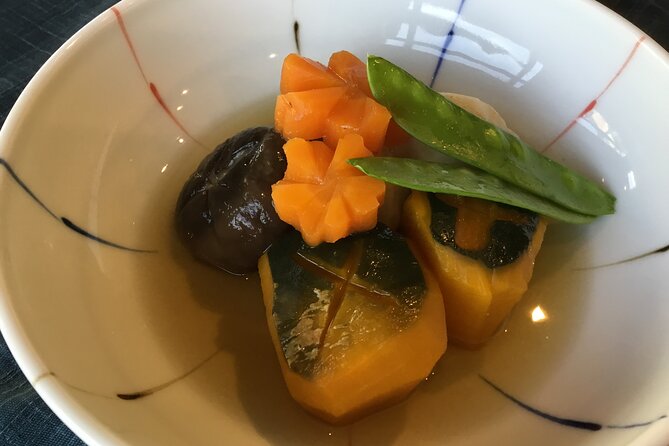
A major strength of this experience is variety. Rather than spending three hours on one complicated dish, you may help prepare around six smaller items. That gives you a wider taste of Japanese home cooking and makes the meal feel like an actual izakaya spread.
Possible dishes include spinach with sesame sauce, teriyaki yellowtail, vegetable chowder, mushroom tempura, and rice with vegetables. Other sessions have included cucumber salad, pumpkin soup, mochi dessert, and a pasta dish. The menu depends on seasonal ingredients, so the exact combination can change.
That variation has two sides. Seasonal cooking usually means the ingredients are chosen for what is available, and it prevents the class from becoming stale. But if one particular dish is the reason you want to attend, there is no guarantee it will appear.
The kitchen team prepares some ingredients in advance. This is a practical choice. You still do real work with your knife and cooking tools, but you do not lose the entire afternoon to washing, peeling, and measuring. The result is more dishes and more time to learn how they fit together.
You should expect to eat a substantial amount. Several small plates add up quickly, so arrive hungry. The included dinner is the food prepared during the session. Extra drinks are a separate matter unless clearly stated otherwise.
More cooking classes in Kyoto:
- Kyoto: Ramen Cooking Class at a Ramen Factory with Souvenir
★ 4.9 · 532 reviews - Kyoto: Ramen, Gyoza, and Onigiri Cooking Class
★ 5.0 · 445 reviews - Kyoto: Japanese Washoku Bento Small Group Cooking Class
★ 5.0 · 380 reviews - Kyoto Ramen and Gyoza Cooking Class with Professional Chefs
★ 5.0 · 282 reviews
Friendly instruction and hands-on help
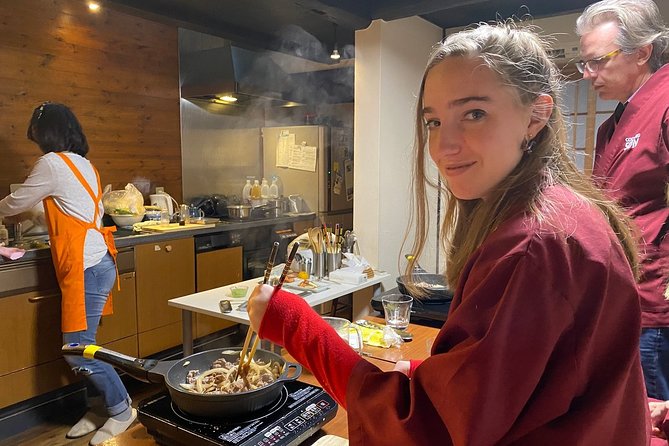
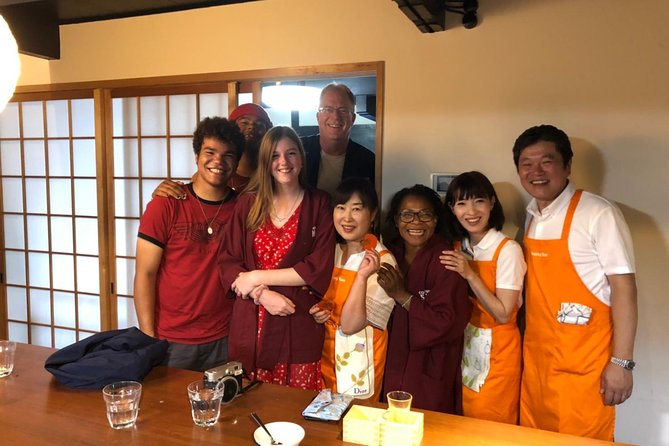
The teaching style is one of the strongest parts of the class. The instructors demonstrate each step in English, then help you try it yourself. The team is described as organized and attentive, with staff moving around the room to bring ingredients, answer questions, and keep work areas tidy.
Keiko is named as part of the Cooking Sun team, and the class may be led by her or by other instructors. The important point is the team approach. With several dishes in progress, one person can explain while another helps with a knife, pan, or ingredient.
That support is especially useful for families. Children aged 10 and 12 have taken part successfully, and the instructions are presented at a level that works for different cooking abilities. You still need to judge your own child’s comfort with knives, hot pans, and group instructions.
The class also suits solo visitors. Cooking gives you a natural way to meet other people without forcing conversation. You work together, share the meal, and have plenty to discuss once the food reaches the table.
A full group of eight may mean less individual time than a smaller group. Still, the reported organization of the staff suggests that the class is built to handle several people at once. If personal instruction is your top priority, a smaller booking is likely preferable.
Sitting down to eat what you made
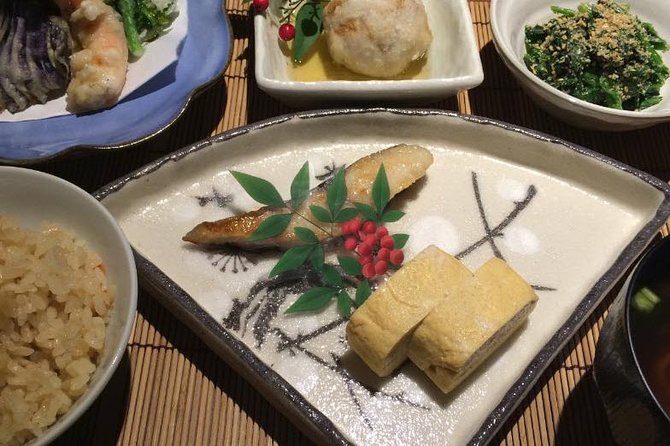
The final meal gives the class a satisfying finish. You sit with the other participants and eat the dishes prepared during the afternoon. This is more useful than tasting each item quickly at a work station because you can consider how the dishes work together.
The meal also turns technique into memory. You may understand dashi during the demonstration, but its role becomes clearer when you taste it in soup or a sauce. The same goes for sesame dressing, teriyaki glaze, tempura batter, and other preparations.
Drinks are worth clarifying before accepting them. One participant was offered sake and later found there was an additional charge of 600 yen per glass. That does not make the class poor value, but it is a good reminder to ask the price before ordering anything beyond the included meal.
The shared table is part of the izakaya idea. You get a sense of how several modest dishes can create a social meal. It is not formal fine dining, and it is not meant to be a quiet private dinner.
Is $71.63 a fair price?
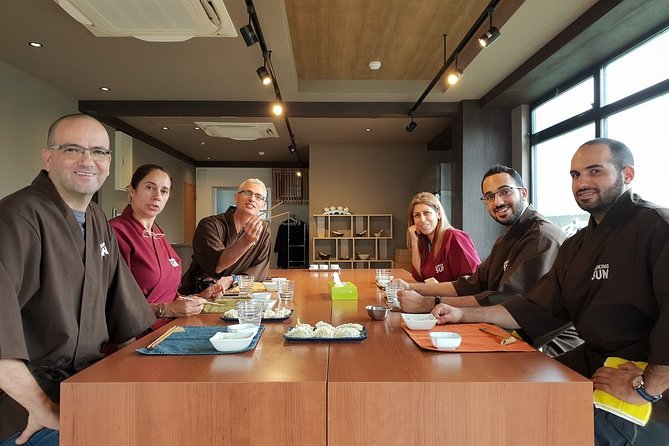
At $71.63 per person, the class is not the cheapest food activity in Kyoto. The price makes more sense when you count what is included: about three hours of instruction, all cooking ingredients, an apron, an English-speaking instructor, hands-on practice, and dinner.
You also leave with recipes. That adds lasting value, especially if you already cook or want a practical souvenir rather than another food photograph. The class can teach you several techniques in one afternoon, while a restaurant meal teaches you mainly by eating.
The value is strongest for people who would otherwise book both a food tour and a cooking activity. It gives you cultural context, a meal, and direct instruction in one package. The price may feel high if you only want to eat Japanese food or if you expect a professional culinary course with advanced techniques.
Group discounts may be available, which can help families or friends traveling together. Since the maximum booking size is eight, check the current price for your group before assuming a discount applies.
Who should book this class?
I would recommend it to first-time visitors who want to move past the most familiar Japanese dishes. You get a useful introduction to sauces, stock, side dishes, frying, rice, and seasonal ingredients without needing specialist cooking skills.
It is also a strong pick for families and couples. The shared tasks make it easier to spend an afternoon together, and children can take part at a simple instructional level. You will also find it useful if you like collecting recipes while traveling.
Vegetarians and people with allergies may be able to participate. The staff has accommodated vegetarian meals, allergies, and celiac-related needs, but you must provide those details when booking. Do not wait until you arrive, since the menu and ingredients need planning.
You may want to choose another activity if you require a fixed menu, a private kitchen, or advanced chef training. The menu is seasonal, the group may include beginners, and the focus is on accessible home cooking rather than restaurant-level specialization.
Practical details before you book
The activity ends back at the meeting point, so you do not need to arrange a second pickup. The studio is near public transportation, and service animals are allowed.
Wear something comfortable for cooking. An apron is provided, but an apron does not protect every part of your clothing from splashes or flour. You should also avoid arriving after the 2pm start, since the class moves through several preparations in sequence.
Free cancellation is available if you cancel at least 24 hours before the local start time. Cancellations or changes made within 24 hours are not accepted for a refund.
The overall rating is 4.9 from 219 ratings, with 99 percent recommending the activity. Those numbers fit the practical strengths of the class: clear instruction, good organization, a large amount of food, and recipes you can use later. The one recurring limitation to keep in mind is not a complaint about service, but the unpredictability of the seasonal menu.
Should you book the Izakaya Style Cooking Class?
Book it if you want to understand Japanese food by preparing it yourself. The combination of dashi instruction, several small dishes, shared dinner, and take-home recipes gives you more lasting value than a standard restaurant meal.
I would be especially happy to recommend it to families, beginner cooks, solo visitors, and anyone who wants Japanese recipes that can be repeated at home. Just notify Cooking Sun about dietary needs, ask about extra drink charges, and accept that the menu may change.
Skip it if you want a fixed dish list or a private, advanced cooking lesson. For most people seeking a friendly and useful Kyoto food experience, though, the three-hour format and hands-on approach make the $71.63 price reasonable.
FAQ
Where does the Izakaya Style Cooking Class take place?
The class takes place at Cooking Sun, 679 Funayachō, Shimogyo Ward, Kyoto, 600-8466, Japan. The cooking studio is in a traditional wooden house, and the activity ends back at the meeting point.
What time does the class start?
The class starts at 2pm and lasts about three hours.
Is dinner included?
Yes. Dinner consists of the dishes prepared during the class. Additional food and drinks are not included unless specifically stated.
Is the class taught in English?
Yes. An English-speaking cooking instructor leads the class.
How many people can join?
The activity has a maximum of eight participants per booking and a maximum of eight travelers in the class.
Can the class accommodate dietary requirements?
You should advise Cooking Sun of any dietary requirements when booking. Vegetarian meals and allergy-related adjustments have been accommodated, including needs related to celiac disease.
What is the cancellation policy?
You can cancel at least 24 hours before the local start time for a full refund. Cancellations or changes made less than 24 hours before the start are not accepted for a refund.
More Workshops in Kyoto
- Kyoto: 45-Minute Tea Ceremony Lesson Experience
★ 4.3 · 2,378 reviews - Kyoto : Chopsticks Making Workshop in Gion with Engraving Option
★ 5.0 · 958 reviews - Kyoto: Samurai Sword Class by Experts in Traditional Arts
★ 4.9 · 657 reviews - Ninja 1-hour Hands-on Lesson by Japanese master in Kyoto -Entry
★ 5.0 · 489 reviews
More Drinking Tours in Kyoto
- Kyoto Night Foodie Tour in Gion (9+ dishes + 6 Sake tastings)
★ 5.0 · 1,762 reviews - 3-Hour Kyoto Insider Sake Brewery Tour with Tastings & Pairings
★ 5.0 · 917 reviews - Arashiyama Bamboo, Temple, Monkeys, or Secret Sake Brewery
★ 4.8 · 886 reviews - Kyoto: Insider Sake Brewery Tour with Sake and Food Pairing
★ 5.0 · 704 reviews
Recently added around Kyoto
- Higashiyama | Kyoto: Sakura Season Private Rickshaw Tour★ 5.0 · 3 reviews
- Kyoto Kimono Rental CHAMATSU|Kimono/Yukata Rental FamilyPlan★ 5.0 · 3 reviews
- Kyoto: Half-Day Private Guided Tour to the Old Town of Gion★ 4.4 · 3 reviews
- Nara Private Customizable Half Day Tour★ 5.0 · 3 reviews
- Kansai Region Hiking Adventure in Nara Kobe Kyoto and More★ 5.0 · 3 reviews
- Full Day Nara Deer, Temple, Shrine, Activities & Tea Ceremony★ 5.0 · 3 reviews
- Nara: Essential Private Tour with Deer Park and Temples★ 5.0 · 3 reviews
- Hiking Tour for Sacred Sites in Kyoto with a Guide★ 5.0 · 3 reviews
Kyoto Izakaya Nights, compared.

Kyoto Night Food & Izakaya Hopping Tour in Pontocho
Read our review →Browse the lists this tour appears in