
REVIEW · KYOTO RAMEN TOURS
Kyoto: Ramen, Gyoza, and Onigiri Cooking Class
Kyoto’s ramen, gyoza, and onigiri class packs a full Japanese meal into 90 minutes. You make two broths, shape rice balls, wrap dumplings, then sit down to eat the results. It is a practical class, not a long chef’s course, and the English-speaking team keeps the pace moving.
I like the focus on broth rather than noodles, since good ramen soup is harder to find in a home kitchen than packaged noodles. I also like the small class size, limited to eight, which gives instructors time to help with gyoza folds and rice-ball shapes. The main catch is dietary: the regular menu contains meat, fish-based seasonings, and other animal products, while the vegetarian choice only replaces pork with tofu.
In This Review
- Key points to know before booking
- What this Kyoto cooking class actually teaches
- Finding the classroom near Sanjo Keihan
- First course: building two ramen broths
- Second course: filling and folding gyoza
- Third course: shaping onigiri
- The final meal is part of the lesson
- Why the small group size matters
- Price, time, and what you get for $90
- Dietary rules and age limits
- Who will enjoy this Kyoto food experience
- Is the Kyoto ramen, gyoza, and onigiri class worth booking?
- FAQ
- How long does the cooking class last?
- What dishes will I make?
- Is the class taught in English?
- How many people can join?
- Are ingredients and cooking equipment included?
- Can the class accommodate vegan or gluten-free diets?
- Where is the meeting point?
Key points to know before booking
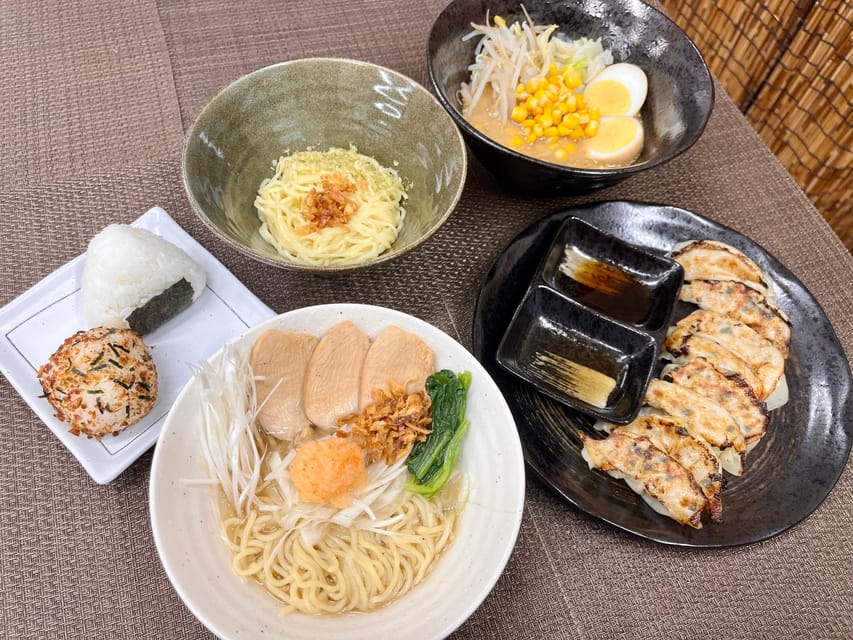
- Two ramen styles in one class: Prepare miso ramen and shoyu, or soy sauce, ramen with simple toppings.
- Gyoza practice is hands-on: Learn to balance the filling, fold the wrappers, and seal them before pan-frying.
- Onigiri adds a useful home-cooking skill: Shape seasoned rice balls for snacks or easy lunches.
- The ingredients are pre-portioned: You spend your time cooking and assembling rather than measuring every item.
- Small groups make the instruction personal: The class takes up to eight people and is taught in English.
- Come hungry: You eat the ramen, gyoza, and onigiri you prepare, and the portions are generous.
What this Kyoto cooking class actually teaches
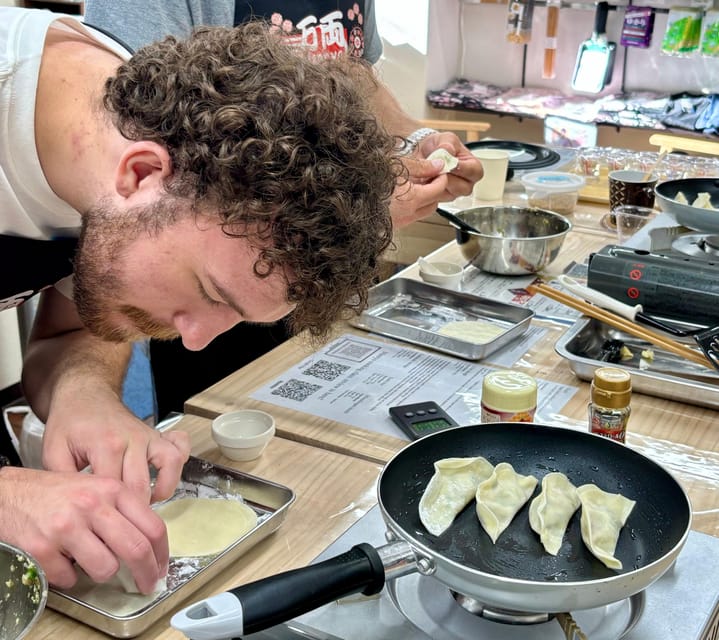
This is a fast, friendly introduction to three familiar Japanese foods. The goal is not to turn you into a ramen chef in an hour and a half. It is to show you techniques and flavor combinations you can repeat at home without hunting for obscure ingredients.
The class concentrates on homemade-style food. You work with seasonings such as soy sauce, miso, mirin, sesame oil, garlic, ginger, oyster sauce, cooking sake, chili oil, and fish powder. Chicken stock powder, ground pork, cabbage, onion, chives, and other everyday ingredients round out the recipes.
The experience suits you best if you want to cook, not just watch. Instructors prepare the setup in advance, so you are not spending half the session weighing cabbage or searching for equipment. That makes the class efficient, though it also means the experience is closer to guided preparation than a full lesson in shopping, knife work, or making everything from scratch.
Nori is one of the instructors, and several classes also include teachers such as Kairi, Aoi, Minori, Ayuna, Riho, Mia, or Kiara. The teaching team is used to working in clear English. The tone is light, with jokes, short explanations, and help at each station rather than a formal lecture.
More Kyoto ramen crawls:
- Kyoto: Ramen Cooking Class at a Ramen Factory with Souvenir
★ 4.9 · 532 reviews - Kyoto Ramen and Gyoza Cooking Class with Professional Chefs
★ 5.0 · 282 reviews - Home style Ramen and Homemade Gyoza in Kyoto
★ 5.0 · 152 reviews
Finding the classroom near Sanjo Keihan
The classroom is in the basement level, B1, of the Life Building. It is one street away from the main road, so the final approach can be easy to miss if you rely only on a quick glance at the address.
Search for Manryo cooking class on Google Maps before you leave. If you take a cab, the useful landmark is the Family Mart at Sanjo Keihan. From there, the classroom is about a two-minute walk. Give yourself extra time, especially if you are carrying luggage or arriving during a busy part of the day.
The meeting point is practical rather than scenic. You are not walking into a grand culinary school or a traditional machiya with a garden. You are entering a working classroom designed for a short, organized lesson. Wear comfortable clothes and shoes, since you will be standing, handling food, and moving through several cooking steps.
First course: building two ramen broths
The ramen portion is the heart of the class. You do not make noodles. Instead, you learn how to prepare the soup, which is the part most useful for home cooks who can already buy noodles at a supermarket.
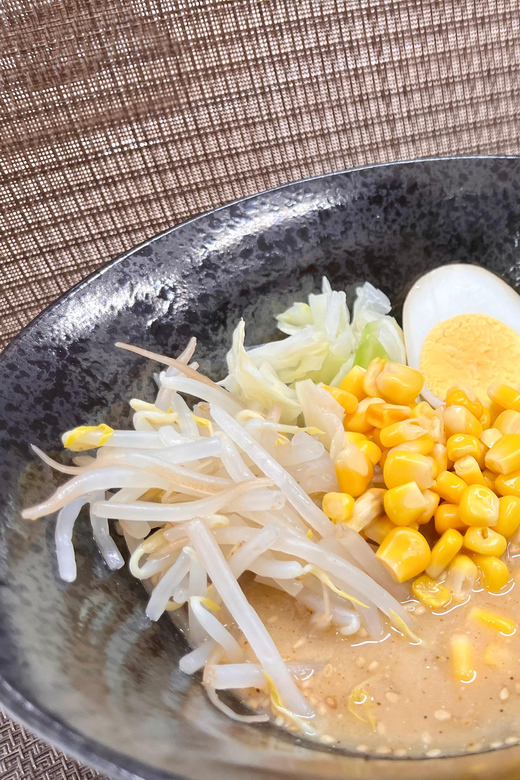
The two styles are miso ramen and shoyu ramen. Miso gives the soup a savory, rounded flavor, while shoyu relies on soy sauce for a clearer salty depth. The instructors show how seasonings and stock combine, then explain why the toppings stay fairly mild. The broth carries the main flavor, so corn, bean sprouts, green onions, bamboo shoots, chicken, and green vegetables are used as supporting players.
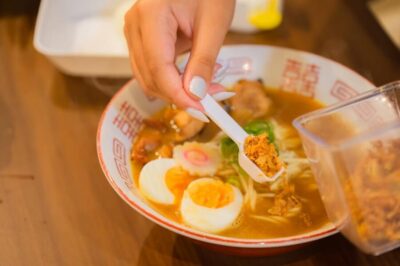
That lesson has real value. At home, people often pile on toppings and lose the balance of the soup. Here, you see why a boiled egg, a few vegetables, or some chicken can be enough. The recipes use ingredients you can generally find outside Japan, including stock powder, miso, soy sauce, garlic, ginger, sesame oil, and butter.
The class moves quickly. Several tasks are prepared in advance, and the instructor gives directions in short stages. You may make both broths close together, so listen carefully and keep track of which seasoning belongs to which bowl. The fast pace is part of the fun, but it leaves little room for wandering questions or slow experimentation.
You receive recipes for the ramen and gyoza afterward. That turns the class from a one-time meal into something you can use in your own kitchen. The onigiri method is also simple enough to remember, although the included recipe details are specified for ramen and gyoza.
Second course: filling and folding gyoza
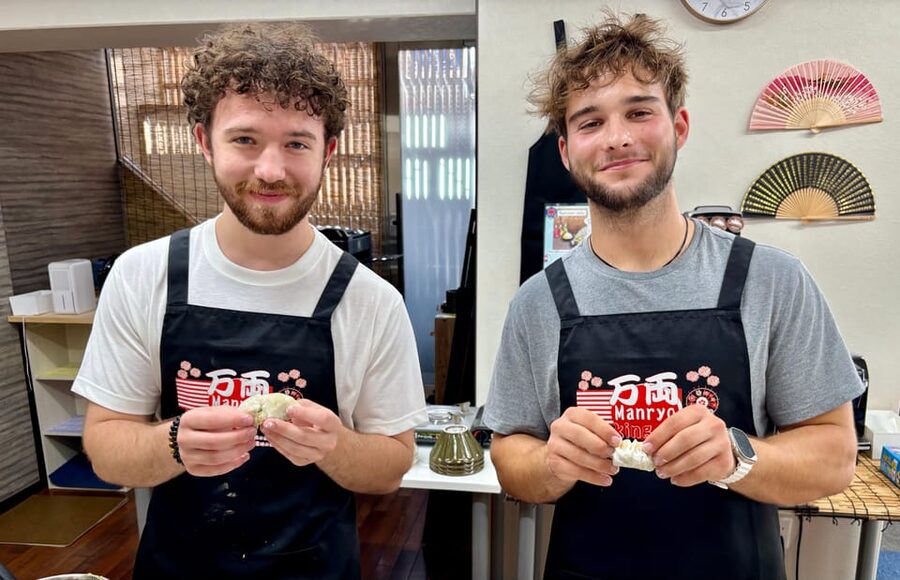
Gyoza is where your hands do the most work. The filling combines ground pork, cabbage, onion, chives, garlic, ginger, and seasonings. The point is not just to mix ingredients. You learn how the meat, vegetables, salt, and sauces need to balance so the dumpling stays juicy and flavorful.
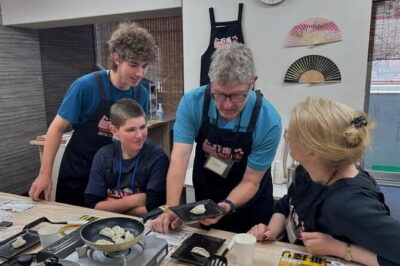
Then comes the folding. You place filling in the wrapper, moisten the edge, and practice making a secure seal. The ideal shape takes a little coordination, and the instructors can correct your technique before the dumplings reach the pan.
This is one of the best parts for families and couples because everyone can compare shapes without the pressure of restaurant-level perfection. A crooked fold still cooks. A weak seal, however, can open in the pan, so the practical focus is on closing the dumpling properly rather than making every pleat identical.
The class pan-fries the gyoza, giving the bottoms a crisp finish. You eat them as part of the final meal. Since the ingredients are measured ahead of time, you are not learning how to scale a filling for a large party, but you do leave with a method you can repeat for a home gyoza night.
The vegetarian menu replaces pork with tofu. It does not remove every animal-based ingredient from the meal, so read the food rules carefully before booking. The stated menu cannot accommodate vegan, pescatarian, gluten-free, or other special diets.
More gyoza nights:
- Gyoza Cooking Class in Kyoto: Traditional Japanese Dumplings
★ 5.0 · 210 reviews - Kyoto Ramen & Gyoza Cooking Class with Professional Chefs
★ 4.8 · 100 reviews - Ramen Gyoza Onigiri Japanese Cooking Class in Kyoto
★ 5.0 · 44 reviews - Private Ramen or Gyoza Cooking Class in Kyoto with Chef Midori
★ 5.0 · 18 reviews
Third course: shaping onigiri
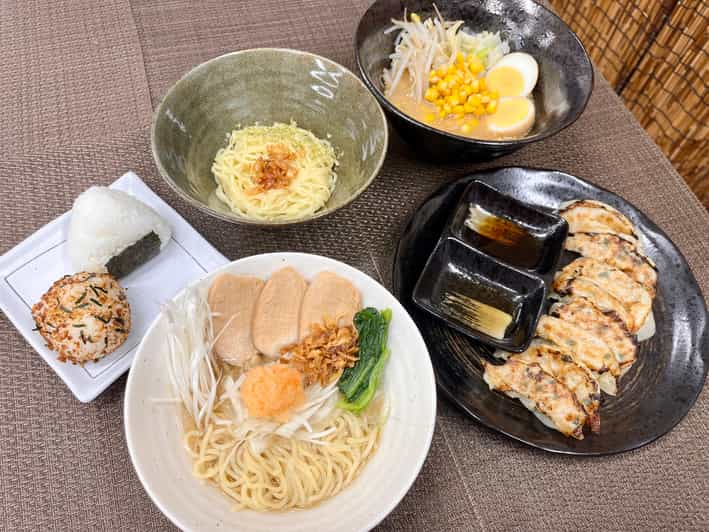
Onigiri is the most approachable dish in the lineup. These Japanese rice balls make a useful snack or lunch, and the class shows you how to shape them neatly instead of ending up with a loose mound of rice.
You work with seasoned rice and a range of fillings and flavors. The emphasis is on shape and handling. The rice needs enough pressure to hold together, but not so much that it becomes dense. You also learn why the triangular form is useful and how a well-shaped rice ball can replace a sandwich for a quick meal.
This section gives the menu a nice change of pace. Ramen requires attention to broth and timing. Gyoza takes dexterity. Onigiri is calmer and more intuitive, making it a good task for a family group or anyone who is less comfortable around a stove.
The finished rice balls are part of the meal, so you get an immediate test of your technique. You also gain a recipe idea that is easy to adapt at home with different fillings.
The final meal is part of the lesson
At the end, you sit down to eat what you have prepared. This matters. You can taste the difference between the miso and shoyu broths, check the texture of your gyoza, and see whether your onigiri holds together.
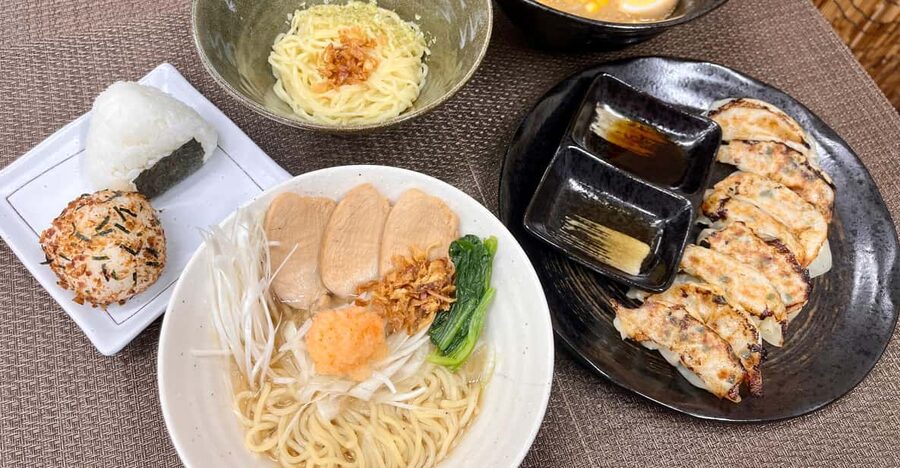
Expect a lot of food. You may have two bowls of ramen, gyoza, and onigiri in front of you, depending on the session’s exact serving arrangement. Several participants found the meal filling enough that they could not finish everything, so do not schedule this immediately after a large breakfast or lunch.
Free coffee and tea are included. Beer may be available for purchase afterward, but it is not part of the included package. The meal is also social without requiring you to make conversation with everyone. You can focus on the cooking, talk with the instructors, or share the table with your own group.
I like this eat-what-you-make format because it connects every technique to a clear result. You are not preparing sample food for someone else to serve. You see the process from seasoning to finished bowl, then get to judge the balance yourself.
Why the small group size matters
The class is limited to eight participants. That is a useful number for a hands-on lesson. You can ask for help with a stubborn dumpling fold, check the ramen seasoning, or get a second look at your onigiri without waiting behind a large crowd.
Some sessions may have several instructors assisting a small group. That gives the class a friendly, attentive feel, especially when the pace picks up. The team’s teaching style is direct and encouraging. You are shown a technique, allowed to try it, and corrected when needed.
The small size can also mean a more personal session. If only a few people book a particular time, you may have more room for questions about Japanese ingredients, cooking at home, or even kitchen tools. Do not count on a private class, but the format allows for close instruction when numbers are low.
This is not a class for passive observers. Everyone who enters must take part, and people who book but do not participate are not admitted into the classroom. If you reserve for five people, only those five participants can enter.
Price, time, and what you get for $90
At $90 per person, this is not the cheapest meal in Kyoto. You can buy ramen and gyoza for much less at a casual restaurant. The value comes from the instruction, the small group, the ingredients, the use of equipment, the meal, and the recipes you can take home.
The 90-minute length is efficient. You can fit it into a morning before sightseeing, a late lunch period, or an afternoon break. It is also long enough to make several dishes without taking over your day. The tradeoff is speed. You will not spend time making ramen noodles, developing a stock over many hours, or exploring a large number of regional variations.
For a family or couple, the cost can make sense as both lunch and an activity. For a solo visitor, the decision depends on how much you value learning a repeatable method. If you only want to eat ramen, choose a restaurant. If you want to understand the broth and make gyoza at home, the class offers more lasting value.
Free cancellation up to 24 hours before the start time and the option to reserve now and pay later add flexibility. Book only one reservation per group. Multiple bookings under the same name for the same date or other dates can be canceled.
Dietary rules and age limits
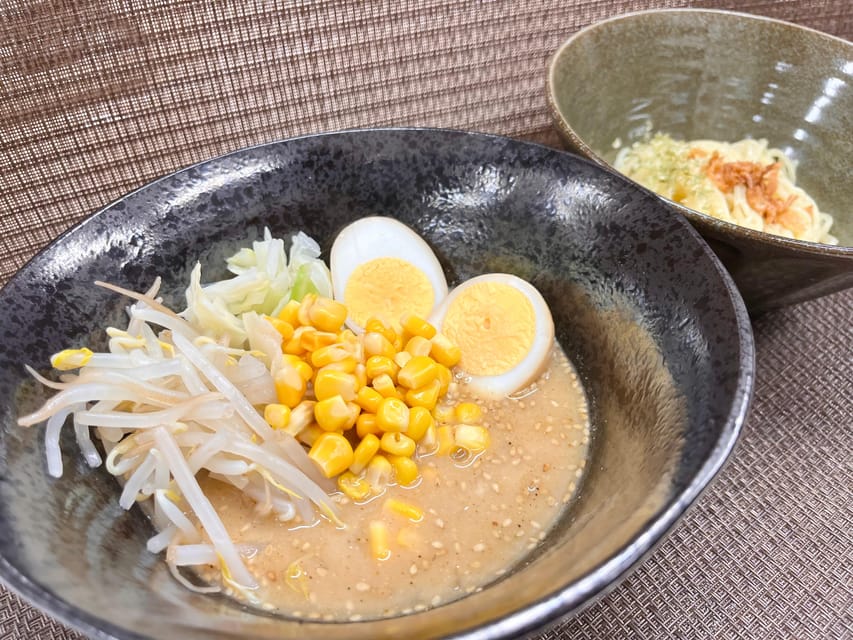
This class has firm food restrictions. The regular menu includes pork, chicken stock, oyster sauce, fish powder, lard, and cooking sake, among other ingredients. The vegetarian menu replaces pork with tofu, but other ingredients remain the same.
The published rules say the class cannot accommodate vegan, pescatarian, gluten-free, or other special diets. One older account describes a vegan adjustment, and another describes broad family substitutions, but you should not rely on those exceptions. If your diet is strict, this is not a safe booking.
The minimum age is 13. Participants must be able to cook independently without staff support. Children under 12 are listed as unsuitable, and the class is not designed for anyone who needs constant physical assistance.
Wheelchair users and people with recent surgeries are also listed as unsuitable. If you have an injury, mobility concern, or medical restriction, confirm directly before paying.
Who will enjoy this Kyoto food experience
I would choose this class for you if you want:
- A short, structured activity between sightseeing stops
- A meal that is more filling than a typical cooking demonstration
- Practical recipes using accessible seasonings
- A family activity for participants aged 13 and older
- A relaxed English-language class with plenty of instructor help
- A first step toward making ramen and gyoza at home
It is especially good for people who enjoy learning by doing. You do not need advanced cooking skills, but you do need to follow directions and work independently. The pre-measured ingredients make the process less intimidating for beginners.
I would skip it if you want to make noodles from flour, study knife skills in detail, cook a traditional multi-course Kyoto menu, or receive careful support for a special diet. This is a compact ramen and dumpling workshop, not a broad survey of Japanese cuisine.
Is the Kyoto ramen, gyoza, and onigiri class worth booking?
For the right eater, yes. You get three popular Japanese foods, two ramen broths, a generous meal, English instruction, and recipes in a compact 90-minute session. The most useful takeaway is the broth lesson, since buying noodles is easy but making a satisfying soup at home takes more guidance.
Book it if you are free of the listed dietary restrictions, are at least 13, and want a lively cooking activity rather than another restaurant meal. Arrive early because the classroom is down a side street, and come with a genuinely empty stomach. If you meet those conditions, this is a practical and tasty way to add a hands-on food experience to your Kyoto schedule.
FAQ
How long does the cooking class last?
The class lasts 90 minutes.
What dishes will I make?
You will prepare miso ramen, shoyu ramen, gyoza, and onigiri. The class focuses on ramen broth and does not include making ramen noodles.
Is the class taught in English?
Yes. English-speaking instructors lead the class.
How many people can join?
The class is a small-group experience limited to eight participants.
Are ingredients and cooking equipment included?
Yes. All cooking ingredients and equipment are included, along with the food you prepare. Free coffee and tea are also provided.
Can the class accommodate vegan or gluten-free diets?
No. The class cannot accommodate vegan, pescatarian, gluten-free, or other special diets. The vegetarian menu replaces pork with tofu, but other ingredients remain the same.
Where is the meeting point?
The classroom is in B1 of the Life Building, one street away from the main road. Search for Manryo cooking class on Google Maps. From the Family Mart at Sanjo Keihan, it is about a two-minute walk.
More Workshops in Kyoto
- Kyoto: 45-Minute Tea Ceremony Lesson Experience
★ 4.3 · 2,378 reviews - Kyoto : Chopsticks Making Workshop in Gion with Engraving Option
★ 5.0 · 958 reviews - Kyoto: Samurai Sword Class by Experts in Traditional Arts
★ 4.9 · 657 reviews - Ninja 1-hour Hands-on Lesson by Japanese master in Kyoto -Entry
★ 5.0 · 489 reviews
More Cooking Classes in Kyoto
- Kyoto: Japanese Washoku Bento Small Group Cooking Class
★ 5.0 · 380 reviews - Kyoto: Afternoon Japanese Izakaya Cooking Class
★ 4.9 · 241 reviews - Izakaya Style Cooking Class
★ 5.0 · 219 reviews - Bento Box Cooking Class
★ 5.0 · 171 reviews
Recently added around Kyoto
- Higashiyama | Kyoto: Sakura Season Private Rickshaw Tour★ 5.0 · 3 reviews
- Kyoto Kimono Rental CHAMATSU|Kimono/Yukata Rental FamilyPlan★ 5.0 · 3 reviews
- Kyoto: Half-Day Private Guided Tour to the Old Town of Gion★ 4.4 · 3 reviews
- Nara Private Customizable Half Day Tour★ 5.0 · 3 reviews
- Kansai Region Hiking Adventure in Nara Kobe Kyoto and More★ 5.0 · 3 reviews
- Full Day Nara Deer, Temple, Shrine, Activities & Tea Ceremony★ 5.0 · 3 reviews
- Nara: Essential Private Tour with Deer Park and Temples★ 5.0 · 3 reviews
- Hiking Tour for Sacred Sites in Kyoto with a Guide★ 5.0 · 3 reviews
Kyoto Ramen Tours, compared.
Ramen Cooking Class at a Ramen Factory with Souvenir
Read our review →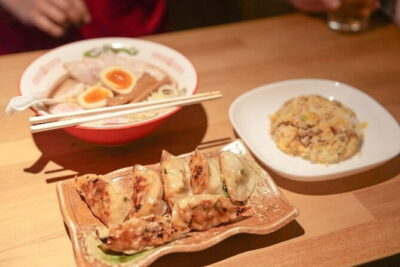
Kyoto Ramen and Gyoza Cooking Class with Professional Chefs
Read our review →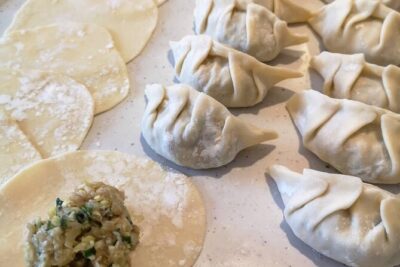
Kyoto Michelin Ramen Workshop or Painting Ramen Essentials
Read our review →Kyoto Ramen & Gyoza Cooking Class with Professional Chefs
Read our review →
Ramen Gyoza Onigiri Japanese Cooking Class in Kyoto
Read our review →Browse the lists this tour appears in