
REVIEW · GION GEISHA DISTRICT TOURS
Kyoto: Half-Day Private Guided Tour to the Old Town of Gion
Gion gives you Kyoto at its most traditional, with timber houses, narrow lanes, shrine gates, river views, and streets that still feel tied to the city’s old customs. This private walk connects the main sights without making you figure out the route yourself. You begin by the Kamo River and finish near Pontocho, with plenty of old Kyoto between them.
I like the private format, especially if you want to ask questions or set a comfortable walking pace. I also like the range of scenery: riverbank, shrine, hillside lanes, park, and traditional streets all fit into one outing. The main caution is that guide quality may vary. Mouloud received warm praise for being friendly, but one booking described the guide as less interesting, so this tour is strongest when your guide brings the history to life.
In This Review
- Key points to know before you book
- Why this Gion walk works well
- Starting beside the Kamo River at Sanjo-ohashi
- Shirakawa Street and Gion Tatsumi Bridge
- Yasaka Shrine and Kyoto’s religious traditions
- Sannenzaka and Ninenzaka: Kyoto’s classic old streets
- Maruyama Park in spring and autumn
- Hanamikoji Street and the kyomachiya houses
- Pontocho completes the old-town loop
- What the private format is really worth
- Timing, food, and walking comfort
- Who should book this experience
- Should you book the Gion half-day tour?
- FAQ
- How long does the Gion tour last?
- Where does the tour begin?
- Where does the tour finish?
- Is the tour private?
- Which languages are available?
- Is Yasaka Shrine included?
- Does the tour include lunch or snacks?
- Is the activity wheelchair accessible?
- Can I cancel for a full refund?
Key points to know before you book
- A private four-hour walk through Gion: You visit the area on foot, with no shared group to slow you down or shape the conversation.
- Old Kyoto appears at every turn: Sannenzaka, Ninenzaka, and Hanamikoji Street are lined with traditional-style houses and classic city views.
- The Kamo River starts and ends the experience: The meeting point is beside Sanjo-ohashi Bridge, and the route returns there after Pontocho.
- Seasonal scenery adds a lot: Maruyama Park is especially appealing during cherry blossom season and autumn foliage.
- Three guide languages are available: You can book with an English, French, or Japanese-speaking guide.
- Food is your responsibility: Lunch and snacks are not included, so plan around the midday timing.
Why this Gion walk works well
The appeal here is simple: you get a concentrated look at Kyoto’s old center without spending a full day on buses or moving between distant temples. The route links several famous places in one continuous walk, and the private setting gives you room to pause, ask questions, or spend a little longer where the atmosphere catches your attention.
The experience lasts about three to four hours. Each listed stop is planned for roughly 30 minutes, though the exact pace can depend on your guide and group. You should expect steady walking through historic streets, with some sections more crowded or uneven than a standard city sidewalk.
At $96 per person, the price makes the most sense for couples, families, or small groups who value personal attention. A private guide can be good value when the cost is shared among several people, but it is less attractive if you mainly want a quick orientation or prefer to explore independently. The guide fee is included, while food is not.
More evenings in Gion:
- Kyoto Geisha Walking Tour: Gion District & Hidden Gems
★ 4.7 · 3,273 reviews - Kyoto: Gion Magical Night Walking Tour with Geisha Trivia
★ 4.9 · 2,393 reviews - Kyoto: Gion Geisha District Walking Tour – Stories of Geisha
★ 4.7 · 2,187 reviews
Starting beside the Kamo River at Sanjo-ohashi
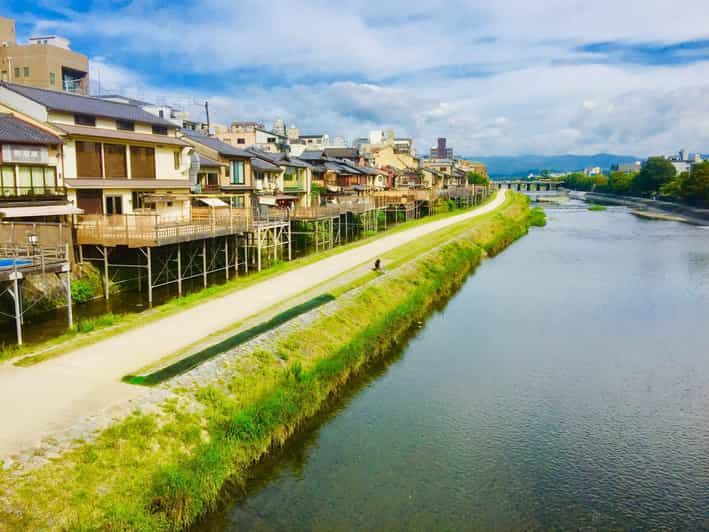
The tour begins at Starbucks Coffee near Kyoto’s Sanjo-ohashi Bridge. This is a practical meeting point beside one of the city’s best-known river crossings, and the first part of the walk takes you along the Kamo River.
The riverbank offers a calmer opening than a direct start in the narrow lanes of Gion. You get a refreshing promenade and a chance to settle into the walking pace before reaching the older streets. The river is also a useful piece of Kyoto’s geography. It helps you understand how the traditional districts sit within the larger city.
The starting and finishing point are the same, which simplifies the day. You do not need to arrange a taxi or work out how to return from a distant final stop. At the end, you walk back toward Sanjo-ohashi after visiting Pontocho.
Shirakawa Street and Gion Tatsumi Bridge
From the river, the route heads toward Shirakawa Street and Gion Tatsumi Bridge. Shirakawa marks an entrance to the Gion area, and this section introduces the look that most people associate with traditional Kyoto.
Expect old-style buildings, waterways, bridges, and a more intimate street scale. The route is appealing for photography, but the value of a guide goes beyond pictures. This is where you can ask about how Gion developed and how the area fits into Kyoto’s culture.
Gion is also a working district, not a museum set. You should be respectful, keep your voice down, and avoid treating private homes or people as photo props. A guide can help you understand the setting without turning the walk into a hunt for staged scenes.
Yasaka Shrine and Kyoto’s religious traditions
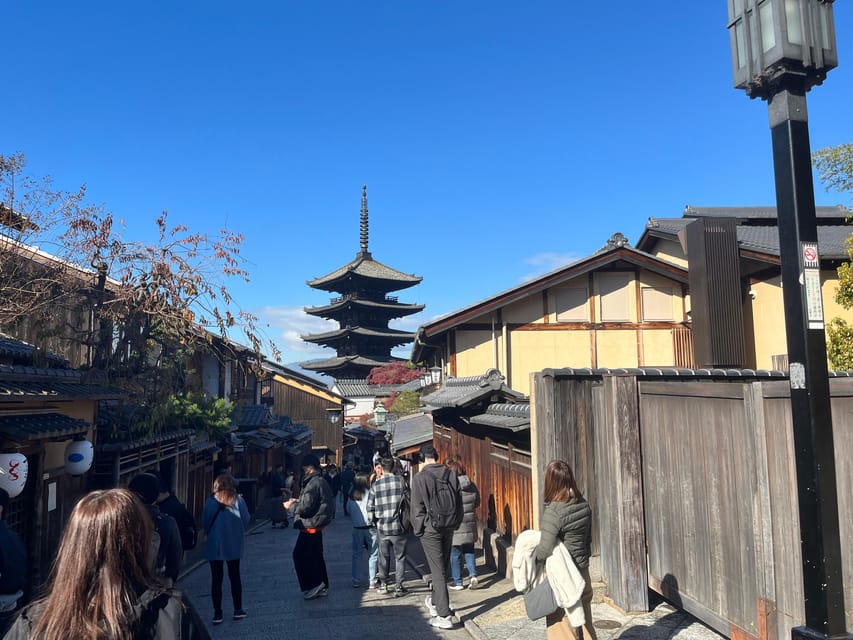
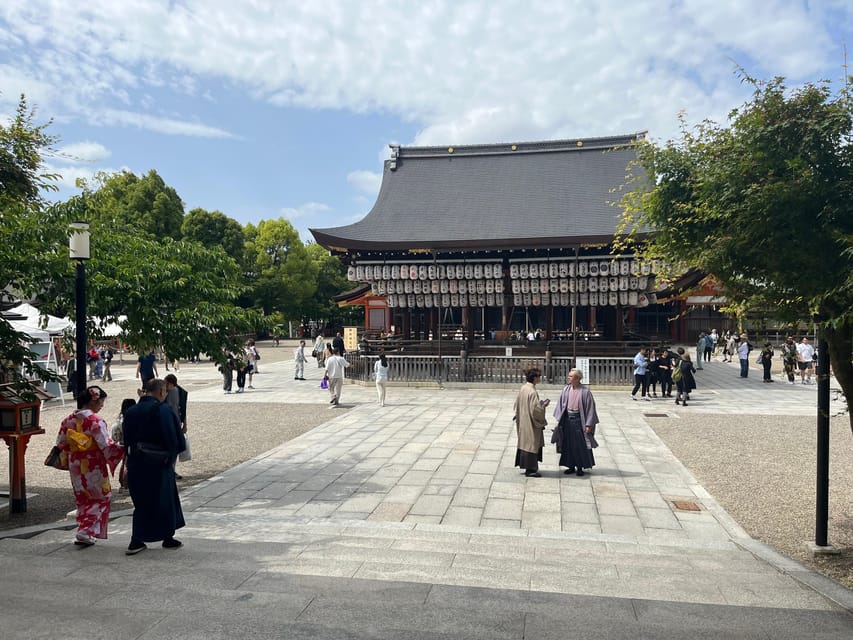
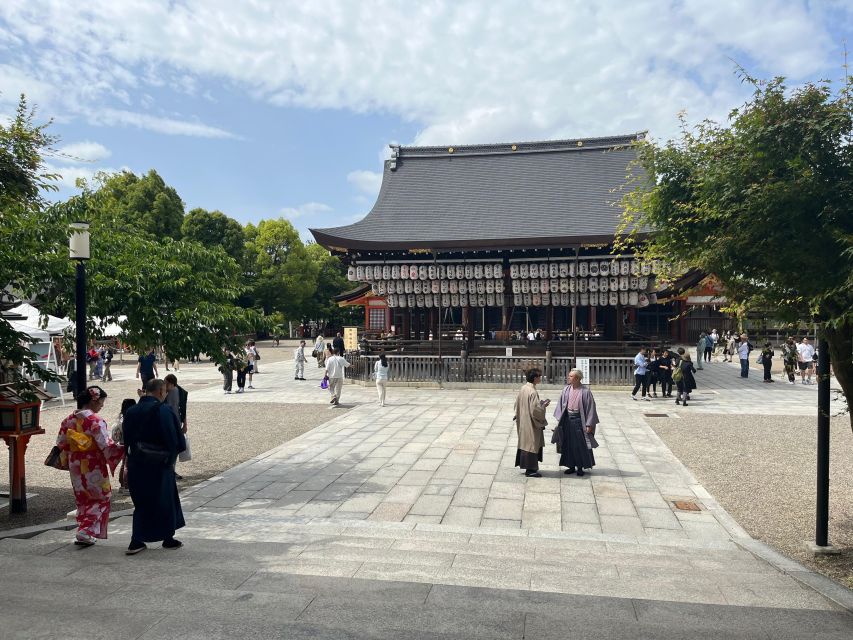
The next major stop is Yasaka Shrine, a sacred site dating from the seventh century. The visit includes time to walk through the shrine area and hear about its place in Kyoto’s religious life.
Yasaka Shrine is one of the route’s strongest historical anchors. After the softer river views and traditional lanes, the shrine gives the walk a clear sense of age and ceremony. Its presence also helps explain why Gion grew around this part of the city.
You should not expect a long, specialist temple lecture. This is a broad introduction within a half-day route, so the guide’s ability to explain the shrine clearly matters. Mouloud is the named guide associated with the most enthusiastic feedback, with comments describing him as friendly and the visit as matching its description. At the same time, one booking found the guide less interesting. That contrast is worth keeping in mind if you want detailed religious history rather than a general cultural overview.
A few more Kyoto experiences worth comparing
- Kyoto Arashiyama Bamboo forest & Garden Half-Day Walking Tour
★ 5.0 · 413 reviews - Half-Day Private Walking Tour in Kyoto
★ 5.0 · 57 reviews - Kyoto top must-see Golden pavilion and Bamboo forest half-day Private tour
★ 5.0 · 52 reviews - Perfect Nara Park Half-Day Bus Tour with English Speaking Guide
★ 5.0 · 49 reviews
Sannenzaka and Ninenzaka: Kyoto’s classic old streets
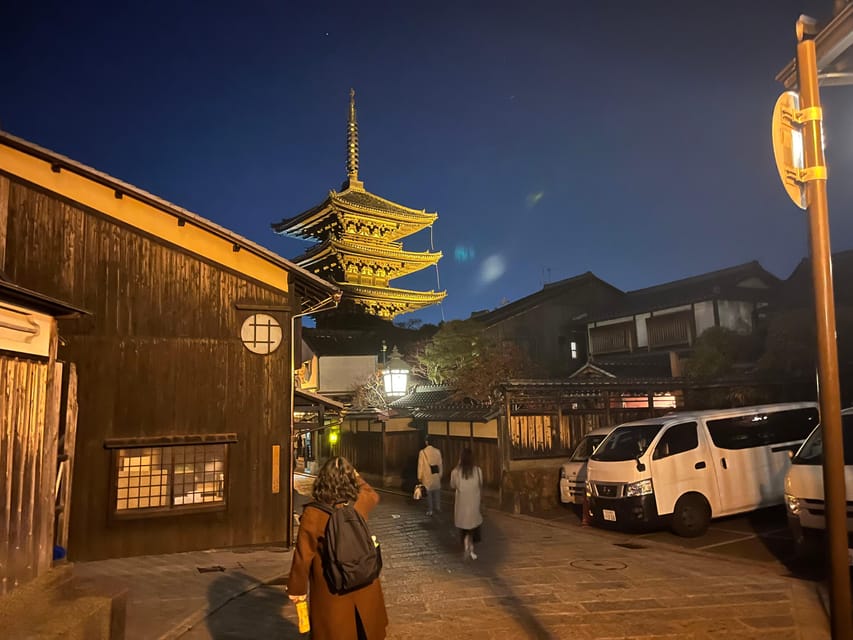
After Yasaka Shrine, the walk continues through Sannenzaka and Ninenzaka. These streets are among the most recognizable parts of old Kyoto, with traditional houses, sloping lanes, and a strong sense of the city’s older building style.
This is probably the section most likely to match your mental picture of Kyoto. The streets are attractive in every season, while spring adds flowering cherry trees and autumn brings colorful leaves nearby. The route is particularly good for you if your goal is to see traditional urban scenery rather than focus on one large monument.
There is a practical point here: these are popular streets. You may find them busy, particularly during the best blossom and foliage periods. The private format helps because you can discuss what you are seeing instead of simply following a flag through the crowd, but it cannot remove the popularity of the area.
The streets also involve walking on slopes and older paving. The tour is listed as wheelchair accessible, but you may still want to confirm the precise route and conditions when booking, especially if your party needs a consistently smooth surface. The provided information confirms accessibility, but it does not describe the exact street arrangements.
Maruyama Park in spring and autumn
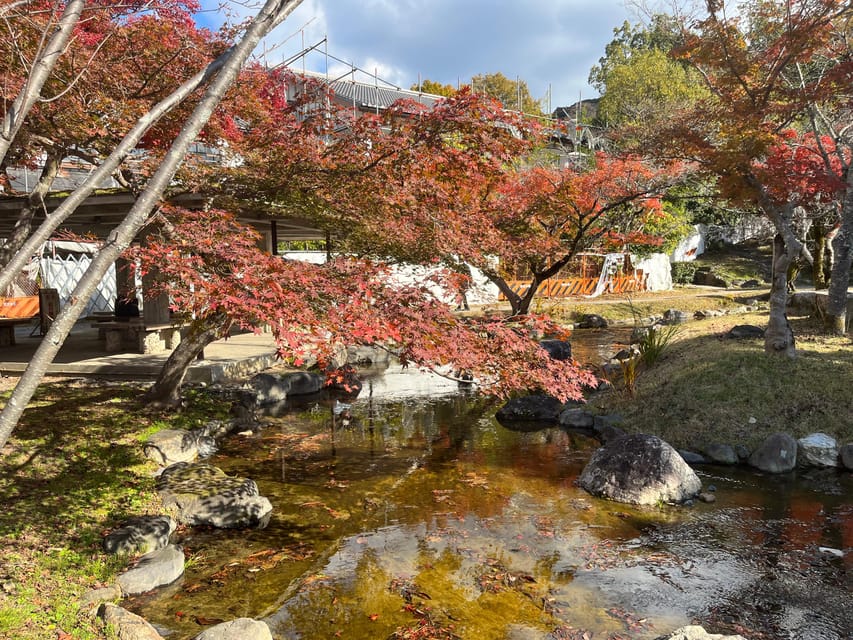
The walk then reaches Maruyama Park, a welcome change from the built-up lanes. You get time to visit, walk, and hear about the park while enjoying a more open setting.
Maruyama is especially attractive during cherry blossom season, when flowering trees give the park its most famous look. Autumn foliage adds another strong reason to come. The park is still worthwhile outside those seasons because it gives your legs a break from narrow streets and adds nature to the route.
This section also shows why the tour is more than a simple Gion photo walk. You see several kinds of Kyoto in a short period: river, shrine, old neighborhood, sloping lanes, and parkland. If you are visiting only for architecture, Maruyama may feel like a pause. If you appreciate changing scenery, it is one of the route’s better choices.
Hanamikoji Street and the kyomachiya houses
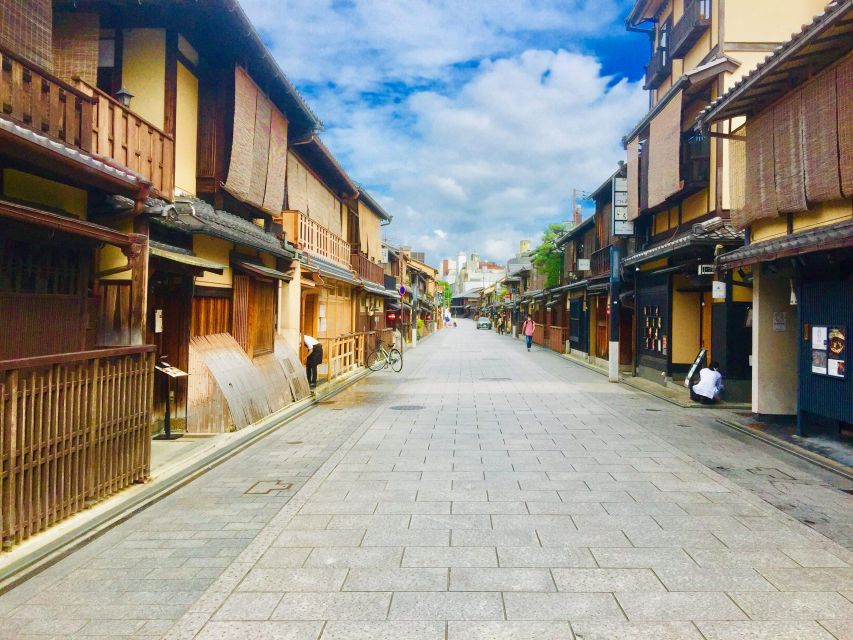
Hanamikoji Street brings you back into the heart of Gion. The traditional kyomachiya houses are the main attraction here. These Kyoto townhouses give the street its distinctive appearance and help you picture how the historic district once functioned as a place of homes, shops, and hospitality.
I like this stop because it focuses on the ordinary building fabric of the city, not just famous landmarks. A shrine can tell you about religion, but a row of kyomachiya can tell you about how people lived and worked in Kyoto’s old neighborhoods.
Your guide’s explanation makes a difference. Without context, you may simply see handsome wooden façades. With a good guide, you can better understand why the houses are built and arranged as they are, and why preserving the old appearance matters.
As with the rest of Gion, be considerate. Traditional streets are attractive, but they are not just backdrops. Keep the group moving when appropriate and follow any guidance about photography or access.
Pontocho completes the old-town loop
The final sightseeing stop is Pontocho, another historic Kyoto district known for its narrow traditional street and dining establishments. It gives the route a different finish from Hanamikoji, even though both areas share an old Kyoto feel.
Pontocho is a good place to end because it connects the cultural walk with Kyoto’s food and evening districts. Lunch or snacks are not included, so you can treat this area as a useful point for your own meal planning after the tour, though the activity itself returns to the original meeting place.
The final walk back to Starbucks near Sanjo-ohashi Bridge keeps the route tidy. You finish where you began instead of needing to navigate an unfamiliar neighborhood at the end of a long morning or afternoon.
What the private format is really worth
The tour is for a private group, not a shared departure. That matters most if you are traveling with family, have mixed walking speeds, or want to ask plenty of questions about Japanese culture. You can also avoid the awkwardness of trying to hear a guide over a large crowd.
The value depends heavily on your expectations. If you want a relaxed introduction to Gion with personal attention, $96 per person is reasonable, particularly when divided among a small group. If you already know Kyoto well and mainly want directions, the same price may feel high.
The mixed guide feedback suggests you should book this for the route and private structure, while keeping your expectations sensible about the depth of interpretation. Mouloud was specifically praised as friendly and for covering many parts of Gion. Another booking found the guide uninteresting, so the human element is not guaranteed to feel equally strong for everyone.
Languages offered are English, French, and Japanese. You can select the language that best suits your group, and the private setup should make it easier to communicate than on a large scheduled outing.
Timing, food, and walking comfort
The tour runs for three to four hours, with starting times available according to the date you choose. Because the route is described as a midday experience and lunch is not included, eat beforehand or plan a meal for after the walk.
Bring water and wear comfortable shoes. The route is on foot from the river through several old districts, and Sannenzaka and Ninenzaka include sloping streets. The information confirms wheelchair accessibility, but it does not specify which route adjustments are made, so ask for details if that affects your booking.
The best seasonal match is spring during cherry blossom or autumn during foliage, especially for Maruyama Park. Still, Gion’s traditional houses and old streets are attractive all year, so you do not need to build your entire Kyoto visit around one narrow season.
Who should book this experience
I would choose this walk if you are visiting Kyoto for the first time and want the old-town districts explained in a single outing. It also suits families and small private groups who prefer a flexible conversation to a large organized tour.
It is a good fit for people who enjoy streets, architecture, local customs, and changing scenery. You see no single blockbuster attraction for hours, so it may not satisfy you if your priority is an extended visit inside a major temple or shrine.
The walk is also useful early in a Kyoto stay. After seeing Gion with a guide, you may feel more comfortable returning to Hanamikoji, Pontocho, or the Kamo River on your own. Just remember that the quality of the experience depends partly on the guide’s storytelling, and the available feedback is positive overall but not uniformly strong.
Should you book the Gion half-day tour?
Book it if you want a private, well-shaped introduction to old Kyoto that covers the river, Yasaka Shrine, Sannenzaka, Ninenzaka, Maruyama Park, Hanamikoji, and Pontocho in one walk. The route offers excellent variety, and the repeated praise for Mouloud’s friendly manner is encouraging.
Think twice if you want highly detailed specialist history or dislike walking on slopes and busy old streets. At $96 per person, the tour earns its price through the private guide and efficient route, not through included meals or admissions. If that balance suits you, this is a practical way to get your bearings in Gion while seeing plenty of traditional Kyoto.
FAQ
How long does the Gion tour last?
The activity lasts approximately three to four hours.
Where does the tour begin?
It begins at Starbucks Coffee near Kyoto’s Sanjo-ohashi Bridge.
Where does the tour finish?
The walk returns to Starbucks Coffee near Kyoto’s Sanjo-ohashi Bridge.
Is the tour private?
Yes. The activity is arranged for a private group.
Which languages are available?
Guides are available in English, French, and Japanese.
Is Yasaka Shrine included?
Yes. You visit Yasaka Shrine and receive a guided walk there.
Does the tour include lunch or snacks?
No. Lunch and snacks are not included.
Is the activity wheelchair accessible?
Yes, the activity is listed as wheelchair accessible.
Can I cancel for a full refund?
Yes. You can cancel up to 24 hours in advance for a full refund.
Recently added around Kyoto
- Higashiyama | Kyoto: Sakura Season Private Rickshaw Tour★ 5.0 · 3 reviews
- Kyoto Kimono Rental CHAMATSU|Kimono/Yukata Rental FamilyPlan★ 5.0 · 3 reviews
- Nara Private Customizable Half Day Tour★ 5.0 · 3 reviews
- Kansai Region Hiking Adventure in Nara Kobe Kyoto and More★ 5.0 · 3 reviews
- Full Day Nara Deer, Temple, Shrine, Activities & Tea Ceremony★ 5.0 · 3 reviews
- Nara: Essential Private Tour with Deer Park and Temples★ 5.0 · 3 reviews
- Hiking Tour for Sacred Sites in Kyoto with a Guide★ 5.0 · 3 reviews
- Photo Shoot with a Private Vacation Photographer in KYOTO, JAPAN★ 5.0 · 3 reviews
Gion Geisha District Tours, compared.

Kyoto Geisha Walking Tour: Gion District & Hidden Gems
Read our review →
Gion Magical Night Walking Tour with Geisha Trivia
Read our review →
Gion Geisha District Walking Tour – Stories of Geisha
Read our review →
Best of Kyoto: Gion, Geisha, Pagodas & Cobblestones
Read our review →

Kyoto Night Foodie Tour in Gion (9+ dishes + 6 Sake tastings)
Read our review →
Kyoto Gion Geisha District Walking Tour – The Stories of Geisha
Read our review →
Kyoto Gion: 2-Hour Geisha Culture & History Walking Tour
Read our review →Browse the lists this tour appears in