
REVIEW · KYOTO RAMEN TOURS
Kyoto Ramen and Gyoza Cooking Class with Professional Chefs
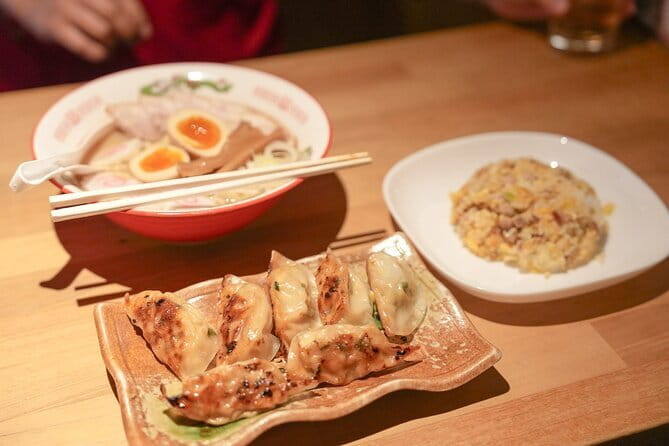
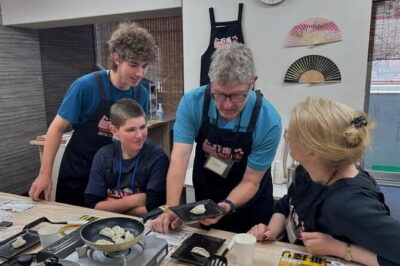
You do not simply eat lunch in this Kyoto class. You knead and cut ramen noodles, fold gyoza, help prepare fried rice, and then sit down to eat the results. That hands-on path from flour to full meal is the main reason this 2.5-hour cooking class feels more memorable than a quick restaurant stop.
I like the small maximum group of eight people, which gives the chef time to help without turning the lesson into a crowded demonstration. I also like the host-and-chef format. Guides such as Yuki, Ayuri, Rina, Emi, and Rika have been praised for translating clearly and adding useful notes about Kyoto and Japanese food.
The main thing to consider is the menu. The ramen uses pork broth, so this is not suitable for vegetarians, even if you skip meat toppings. The class also cannot accommodate vegan or gluten-free diets and cannot guarantee allergy-free food.
In This Review
- Key Points Before You Book
- Making Ramen in Central Kyoto
- Kneading, Cutting, and Topping the Noodles
- Folding Gyoza and Pairing the Meal
- Fried Rice Adds Value to the Menu
- What the Hosts Add to the Class
- A Good Choice for Families and First-Time Cooks
- Dietary Limits Matter More Than Usual
- Timing, Group Size, and Weather
- Recipes You Can Use at Home
- Is $86.22 Good Value?
- Should You Book This Kyoto Cooking Class?
- FAQ
- Where does the Kyoto ramen and gyoza class meet?
- Where does the activity end?
- How long does the cooking class last?
- What food do I make?
- Are drinks included?
- Is the ramen vegetarian?
- Can the class accommodate vegan or gluten-free diets?
- Can children participate?
- What happens if I arrive late?
- What is the cancellation policy?
Key Points Before You Book
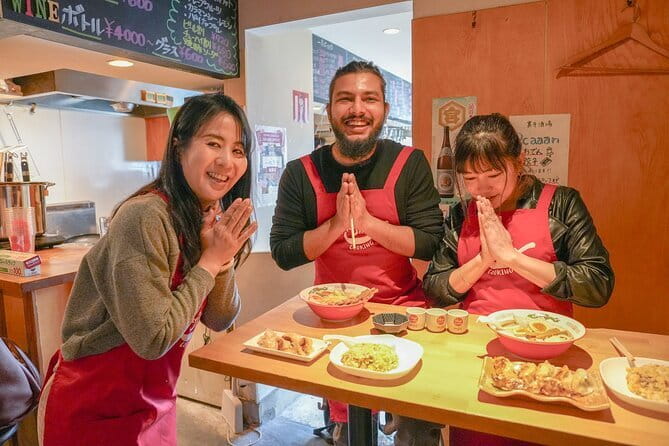
- Make noodles from scratch: You knead, cut, and top the ramen noodles rather than simply adding prepared noodles to a bowl.
- Cook three Japanese dishes: The meal includes ramen, gyoza, and fried rice, so eat lightly beforehand.
- Learn with two instructors: A professional chef leads the cooking, while a host translates and explains Japanese food culture.
- Enjoy two drinks: Beer or sake is included, along with the food you prepare.
- Keep the recipes: A recipe guide lets you try the dishes again at home.
- Expect a compact group: The class has a maximum of eight participants, but it is still a shared group activity.
Making Ramen in Central Kyoto
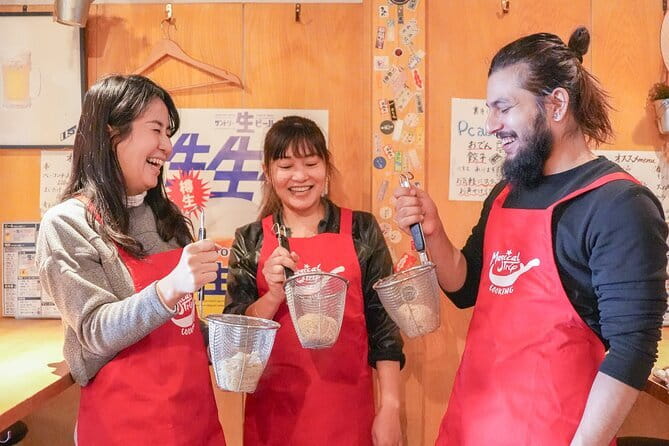
The class meets at 「北緯35物語」木村光佑 in Shincho, in Kyoto’s Shimogyo Ward. It is near public transportation and ends at the same place, making it easy to fit into a day of sightseeing around central Kyoto.
The setting has been described as a former restaurant, which suits the lesson well. You are not cooking in a large school kitchen designed only for demonstrations. Instead, the space has a more intimate restaurant feel, with several levels and mostly upstairs areas. That gives the class character, but you should take care on the stairs.
The chef leads the practical work, while the host helps bridge any language gap. This arrangement matters because cooking instructions often depend on small details: how firmly to knead dough, how thin to cut it, or how to fold a dumpling without tearing the wrapper. Hosts including Yuki and Ayuri have been singled out for translating the chef’s instructions and adding background about Japan and Kyoto.
You should expect the class to begin on time. Late arrivals cannot join, reschedule, or receive a refund, so allow extra time to find the meeting point. The mobile ticket is convenient, but it does not remove the need to arrive promptly.
More Kyoto ramen crawls:
- Kyoto: Ramen Cooking Class at a Ramen Factory with Souvenir
★ 4.9 · 532 reviews - Kyoto: Ramen, Gyoza, and Onigiri Cooking Class
★ 5.0 · 445 reviews - Home style Ramen and Homemade Gyoza in Kyoto
★ 5.0 · 152 reviews
Kneading, Cutting, and Topping the Noodles
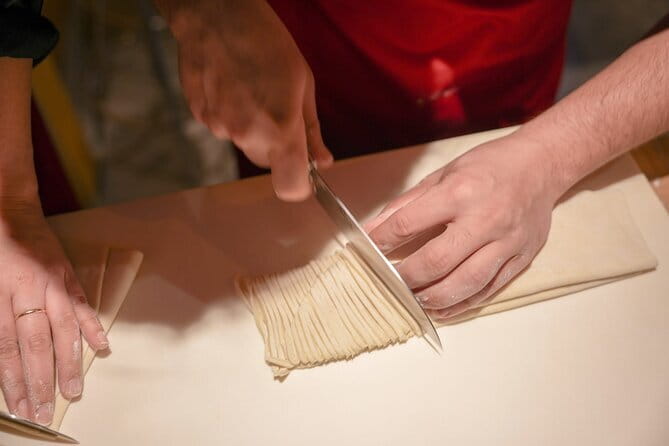
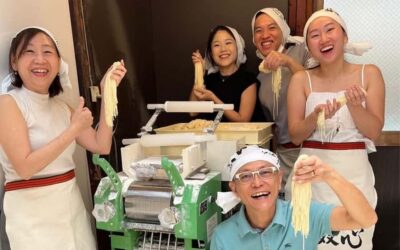
The most distinctive part of the class is making ramen noodles from scratch. You work the dough, cut the noodles, and prepare the toppings before assembling the bowl.
This gives you a better sense of ramen as a prepared dish rather than a packet of noodles dropped into hot liquid. The process also makes the class suitable for beginners. You do not need prior cooking skill, and the chef guides the group through each stage.
At the same time, you should set your expectations correctly. This is a social cooking class, not a full professional training course. One participant felt the cooking was not quite as hands-on as hoped, especially for someone who already loves to cook. Some parts of the preparation are likely organized and assisted so the whole group can finish within two and a half hours.
That is a fair trade for families and casual cooks. You get enough practical work to feel involved, but you are not left struggling with every technical step. The chef keeps an eye on the process and helps the group stay on schedule.
The broth is another point worth understanding. It uses pork broth, and one participant felt that the base was made from paste and water rather than a traditional broth. Others found the ramen broth very tasty. The class is best viewed as a lesson in preparing a satisfying ramen meal, not as a detailed study of long-simmered ramen stock.
Folding Gyoza and Pairing the Meal
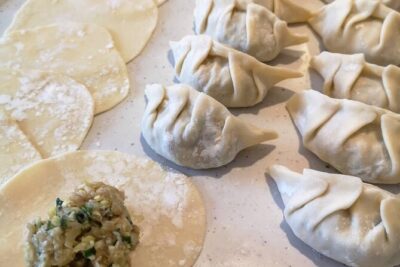
Gyoza brings a different kind of cooking to the table. You fill and fold your own dumplings, then cook them as part of the meal.
The folding step is approachable and entertaining, particularly for families and couples. It also gives you a skill you can repeat at home without needing a large set of special tools. Your first few dumplings may look a little uneven. That is part of the fun, and the chef can help you get the technique right.
The meal is served with beer or sake, and two drinks are included. This is a small but useful touch because the drinks turn the class into a shared lunch rather than a series of cooking exercises. If you do not drink alcohol, the available alternatives are not specified, so ask before booking if that matters to you.
The food portion is substantial. You prepare and eat ramen, gyoza, and fried rice, so this is a full meal. I would have a modest breakfast or early snack and avoid arriving already full. The point is to taste what you made, not pack it away after one bite.
Several participants described the food as one of the best meals of their Japan visit. That praise reflects two things: the dishes are filling, and the satisfaction comes from having made them yourself. Still, the final flavor depends partly on your own cooking and on the prepared ingredients supplied for the lesson.
Fried Rice Adds Value to the Menu
Ramen and gyoza would make a complete class on their own, but fried rice gives you another useful Japanese cooking skill. The dish helps round out the meal and makes the price easier to justify.
At $86.22 per person, the class costs more than simply ordering ramen and gyoza at an everyday restaurant. You are paying for the chef’s instruction, the host’s translation and cultural explanation, all ingredients, the cooking space, a full meal, two drinks, and the recipe guide.
That package makes reasonable value for someone who wants an activity as well as lunch. If you only want to eat ramen, a restaurant will be cheaper and faster. If you want to learn basic techniques, meet other people, and take home a recipe, the extra cost has a clearer purpose.
The included fried rice also means you are not paying for a short lesson followed by a small tasting plate. The meal is generous enough that it can function as a main sightseeing activity for part of the day.
More gyoza nights:
- Gyoza Cooking Class in Kyoto: Traditional Japanese Dumplings
★ 5.0 · 210 reviews - Kyoto Ramen & Gyoza Cooking Class with Professional Chefs
★ 4.8 · 100 reviews - Ramen Gyoza Onigiri Japanese Cooking Class in Kyoto
★ 5.0 · 44 reviews - Private Ramen or Gyoza Cooking Class in Kyoto with Chef Midori
★ 5.0 · 18 reviews
What the Hosts Add to the Class
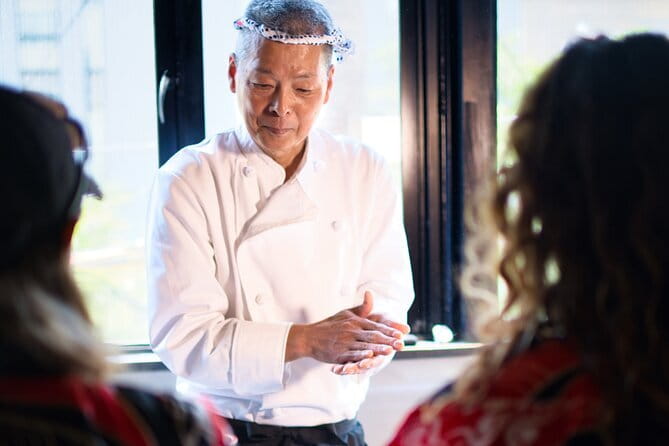
The chef teaches the food. The host makes the experience easy to follow.
Guides named in participant feedback include Yuki, Ayuri, Rina, Emi, Eri, Rika, Miu, Shun, and Avinash. The exact host depends on the date, but the role is consistent: translating the chef’s instructions, helping with questions, and sharing information about Japanese food and Kyoto.
Yuki has been praised for doing more than translating, adding useful context about Japanese culture and local places. Ayuri has been noted for her detailed explanations, while Rina has been described as attentive and patient. Emi and Eri have also been praised for helping families follow the class.
This two-person setup is especially helpful if you do not speak Japanese. You can focus on the cooking instead of trying to follow instructions you only half understand. The class also becomes more than a recipe lesson when the host explains why these dishes matter in everyday Japanese food culture.
The social side is part of the appeal. You may cook with people from other countries and share the meal afterward. Some groups have been very small, even only three or four participants, which can feel almost private. The official maximum is eight, but the actual group may be smaller.
A Good Choice for Families and First-Time Cooks
Children aged six and above can join. The class has worked well for families with children and for groups ranging from teenagers to adults in their fifties. The format gives younger participants clear jobs, but an accompanying adult must supervise children when knives or other potentially risky steps are involved.
I would recommend it to families who want a rainy-day activity that is more active than a museum visit. One practical warning: the cooking area includes stairs and several levels, and the activity is not recommended for people with mobility issues. A private tour may be a better choice if you need special accommodations.
First-time cooks should feel comfortable here. The instructions are designed for all cooking levels, and the chef helps keep the process manageable. You do not need to arrive with knife skills or experience making dough.
Experienced home cooks may find the recipes fairly simple. That is not a flaw for most people, since simple recipes are easier to repeat at home. But if you are looking for advanced broth-making, elaborate knife work, or a long technical lesson, this class may feel light.
Dietary Limits Matter More Than Usual

The food restrictions deserve careful attention before you pay.
The ramen broth contains pork. Removing meat toppings does not make the dish vegetarian. Vegetarian, vegan, and gluten-free requests cannot be accommodated, and the operator cannot guarantee an allergy-free meal because the food is prepared in kitchens that are not dedicated to this activity.
Substitutions may sometimes be possible, but they are not promised. Contact the provider before booking if you have an allergy or dietary requirement. Do not assume that a request can be handled on the day.
This is also not a class for someone who plans to eat only a small amount. You will prepare a full meal of ramen, gyoza, and fried rice. Plan your earlier meals accordingly, particularly if you are booking the class around other food stops.
Timing, Group Size, and Weather
The advertised duration is about two hours and thirty minutes. That is long enough to include instruction, preparation, cooking, eating, and conversation without taking up an entire day in Kyoto.
The group format keeps the cost below a private cooking lesson while still limiting the class to eight participants. A small group also gives you a better chance to receive help from the chef and to ask the host questions.
The activity may be canceled if weather becomes unsafe. Since the class is indoors, ordinary rain should not automatically spoil your plans, and it can be a sensible choice on a wet day. The space itself has stairs, so poor weather may still make the walk and arrival less pleasant.
Free cancellation is available up to 24 hours before the start time. Canceling or changing the booking less than 24 hours ahead does not qualify for a refund. The cutoff uses local Kyoto time.
Recipes You Can Use at Home
The recipe guide is one of the most practical inclusions. Many food classes are enjoyable for an afternoon and then fade into memory because the details are hard to recall. A written guide gives you a way to repeat at least the basic dishes after returning home.
Do not expect the recipes to turn you into a ramen specialist. The class focuses on a manageable version of ramen, gyoza, and fried rice that a home cook can understand. One participant found the recipes simpler than expected, but also felt the overall experience was excellent.
That simplicity may work in your favor. You can buy ingredients, follow the steps, and make the dishes without recreating a restaurant kitchen. The gyoza technique in particular is easy to practice again, and making noodles from scratch gives you a useful memory of the texture and process.
Is $86.22 Good Value?
The price is neither a bargain nor unreasonable. It depends on what you want from the afternoon.
For $86.22, you receive a 2.5-hour activity, instruction from a professional chef, translation and cultural notes from a host, ingredients, ramen, gyoza, fried rice, two drinks, and recipes. You also avoid the work of sourcing ingredients in an unfamiliar city.
The value is strongest for families, couples, and curious food lovers who want a shared activity. It is weaker for someone who only wants a cheap lunch or already knows how to make these dishes.
I would also factor in the meal size. Since you are making three dishes, you are not likely to need another full meal immediately afterward. That helps balance the higher price, especially in a costly city such as Kyoto.
Should You Book This Kyoto Cooking Class?
Book it if you want to do more than photograph Japanese food. The class gives you a practical connection to ramen and gyoza, with enough cooking to make the meal feel earned. The friendly host-and-chef format is a real strength, particularly for English-speaking participants who want clear translation and some local context.
I would choose this for families with children aged six and older, couples looking for an easy shared activity, and first-time cooks. It is also a smart rainy-day plan, provided everyone in your group can manage the stairs.
Skip it if you need vegetarian, vegan, gluten-free, or allergy-controlled food. I would also look elsewhere if you want a serious culinary course centered on traditional broth from the ground up. For everyone else, the combination of handmade noodles, folded gyoza, fried rice, drinks, and a filling meal makes this one of Kyoto’s more enjoyable food activities.
FAQ
Where does the Kyoto ramen and gyoza class meet?
The meeting point is 「北緯35物語」木村光佑 in Shincho, Shimogyo Ward, Kyoto, 600-8001, Japan.
Where does the activity end?
The class ends back at the same meeting point.
How long does the cooking class last?
The activity lasts approximately two hours and thirty minutes.
What food do I make?
You make ramen, gyoza, and fried rice, then eat the full meal you prepared.
Are drinks included?
Yes. Food and two drinks are included. Beer or sake may be paired with the gyoza.
Is the ramen vegetarian?
No. The ramen uses pork broth, even if you do not add meat toppings.
Can the class accommodate vegan or gluten-free diets?
No. Vegetarian, vegan, and gluten-free requests cannot be accommodated.
Can children participate?
Yes. Children aged six and above are welcome. An accompanying adult must supervise children when they handle knives or take part in potentially dangerous steps.
What happens if I arrive late?
The class starts on time. Late arrivals cannot join, reschedule, or receive a refund.
What is the cancellation policy?
You can cancel up to 24 hours before the start time for a full refund. Cancellations or changes made less than 24 hours before the activity are not refunded or accepted.
More Workshops in Kyoto
- Kyoto: 45-Minute Tea Ceremony Lesson Experience
★ 4.3 · 2,378 reviews - Kyoto : Chopsticks Making Workshop in Gion with Engraving Option
★ 5.0 · 958 reviews - Kyoto: Samurai Sword Class by Experts in Traditional Arts
★ 4.9 · 657 reviews - Ninja 1-hour Hands-on Lesson by Japanese master in Kyoto -Entry
★ 5.0 · 489 reviews
More Cooking Classes in Kyoto
- Kyoto: Japanese Washoku Bento Small Group Cooking Class
★ 5.0 · 380 reviews - Kyoto: Afternoon Japanese Izakaya Cooking Class
★ 4.9 · 241 reviews - Izakaya Style Cooking Class
★ 5.0 · 219 reviews - Bento Box Cooking Class
★ 5.0 · 171 reviews
Recently added around Kyoto
- Higashiyama | Kyoto: Sakura Season Private Rickshaw Tour★ 5.0 · 3 reviews
- Kyoto Kimono Rental CHAMATSU|Kimono/Yukata Rental FamilyPlan★ 5.0 · 3 reviews
- Kyoto: Half-Day Private Guided Tour to the Old Town of Gion★ 4.4 · 3 reviews
- Nara Private Customizable Half Day Tour★ 5.0 · 3 reviews
- Kansai Region Hiking Adventure in Nara Kobe Kyoto and More★ 5.0 · 3 reviews
- Full Day Nara Deer, Temple, Shrine, Activities & Tea Ceremony★ 5.0 · 3 reviews
- Nara: Essential Private Tour with Deer Park and Temples★ 5.0 · 3 reviews
- Photo Shoot with a Private Vacation Photographer in KYOTO, JAPAN★ 5.0 · 3 reviews
Kyoto Ramen Tours, compared.
Ramen Cooking Class at a Ramen Factory with Souvenir
Read our review →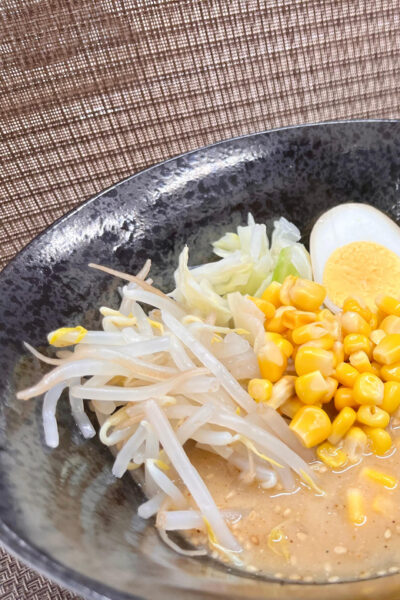
Kyoto Michelin Ramen Workshop or Painting Ramen Essentials
Read our review →Kyoto Ramen & Gyoza Cooking Class with Professional Chefs
Read our review →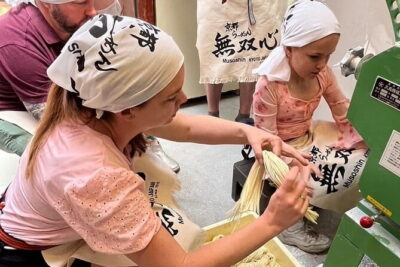
Ramen Gyoza Onigiri Japanese Cooking Class in Kyoto
Read our review →Browse the lists this tour appears in