
REVIEW · KYOTO RAMEN TOURS
Kyoto Ramen & Gyoza Cooking Class with Professional Chefs
Making ramen from flour, water, and your own effort is the heart of this Kyoto food class. You knead and cut the noodles, wrap gyoza, cook fried rice, then sit down to eat the full meal you helped create. Rika, Yuki, and other friendly English-speaking guides have helped participants follow the chefs closely, even when the kitchen instruction is not in English.
I like the small maximum of eight people, which keeps the class social without turning it into a noisy production line. I also like that two drinks, including beer, sake, or soft drinks, come with the $83 price. The main consideration is that this is a group class with some prepared work, not a full professional kitchen apprenticeship. One participant wanted more hands-on cooking beyond cutting a few ingredients.
In This Review
- Key points to know
- Making noodles instead of merely ordering them
- The 150-minute meal, step by step
- What the chef and guide add
- Why the small group matters
- Food quality, portions, and drinks
- Is $83 a fair price?
- What could be improved
- Who should book this class?
- My verdict on the Kyoto ramen class
- FAQ
- How long does the Kyoto ramen and gyoza class last?
- How much does the class cost?
- Where is the meeting point?
- How will I recognize the guide?
- Is the class taught in English?
- How many people can join?
- What dishes will I make?
- Are drinks included?
- Can children join the class?
- Can I cancel for a refund?
Key points to know
- Ramen made from scratch: Knead, roll or cut, cook, and top your own noodles.
- Three-course Japanese meal: Prepare ramen, gyoza, and fried rice, then eat them together.
- Small group setting: The class is limited to eight participants, making it easier to ask questions.
- English help throughout: A local guide translates the chef’s instructions and explains Japanese food culture.
- Two drinks included: Choose beer, sake, or soft drinks to enjoy with your meal.
- Useful take-home extras: Downloadable recipes and photos from the class help you remember the experience.
Making noodles instead of merely ordering them
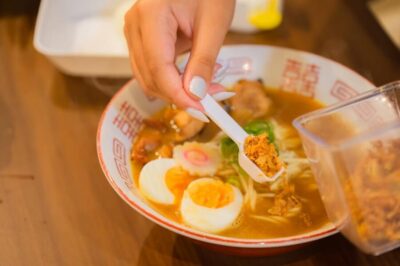
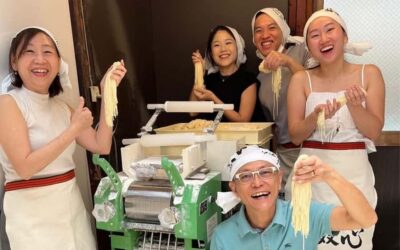
Most ramen meals take only minutes to arrive. This class slows the process down and lets you see what goes into the bowl. The most memorable task is making the noodles yourself. You work with the dough, knead it, and cut it into noodles before cooking and topping them.
That simple change in viewpoint matters. Ramen stops being just a quick comfort food and becomes a dish shaped by texture, timing, and technique. You also get the satisfaction of eating a meal that required some work, though the class keeps the process approachable for beginners.
The instructors explain each stage in a clear, practical way. The chefs lead the cooking, while the English-speaking guide fills in the gaps. Guides named Rika, Yuki, Yuka, Ayuri, Ken, Shiori, Mery, and others have led recent sessions, so the exact guide depends on the date. Their role is important because the chef may not speak English, but the guide translates instructions and answers questions about Kyoto and Japanese cooking.
You should not expect to master every detail of ramen production in 150 minutes. You will, however, leave with a workable method and recipes that let you try the dishes at home. That is a good trade for a first cooking class.
More Kyoto ramen crawls:
- Kyoto: Ramen Cooking Class at a Ramen Factory with Souvenir
★ 4.9 · 532 reviews - Kyoto: Ramen, Gyoza, and Onigiri Cooking Class
★ 5.0 · 445 reviews - Kyoto Ramen and Gyoza Cooking Class with Professional Chefs
★ 5.0 · 282 reviews
The 150-minute meal, step by step
The class begins at the meeting point in front of the Latitude 35° Story Monument, marked in Japanese as 北緯35°物語. Look for the guide holding an orange MagicalTrip board. Arrive early. The activity starts on time, and late arrivals cannot join, reschedule, or receive a refund.
Once the group is together, the guide introduces the chefs and explains the plan. You may also get a short lesson on ramen’s place in Japanese food culture. Ramen is often linked to 1697, when Tokugawa Mitsukuni was said to have eaten it, while the 1910 opening of Rairaiken in Asakusa helped make the dish popular across Japan. The class connects that background to present-day Japan, where ramen shops offer countless regional and house styles.
The first major task is the noodle dough. You knead it, follow the chef’s method, and prepare it for cutting. The work is hands-on, but the chef remains in control of the technical steps. That is useful for first-time cooks, although an experienced home cook may wish for more freedom.
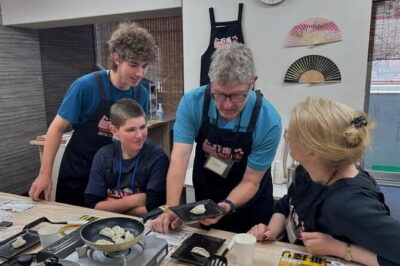
Next comes gyoza. You fill and wrap the dumplings, learning how to seal them before they are cooked until crisp. Gyoza is an ideal class dish because the technique is easy to try but difficult to make perfectly. Your first few folds may look uneven. That is part of the fun, and the small group gives you a chance to watch how the chef handles the wrapper.
Fried rice rounds out the meal. You help prepare the ingredients and cook the dish with guidance from the kitchen team. The sequence works well because each recipe uses familiar techniques in a different way: kneading for noodles, folding for gyoza, and quick pan cooking for fried rice.
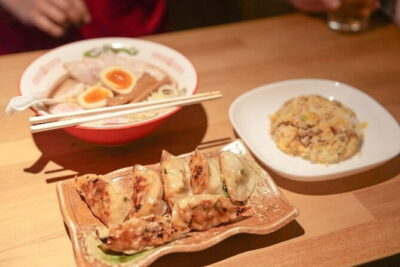
The final stage is the reward. You sit down with your handmade ramen, gyoza, and fried rice, along with two drinks. The portions are described as generous, so plan this as a full meal rather than a small tasting. If you have dinner plans afterward, keep them light.
What the chef and guide add
The chef gives the class its practical backbone. You are not simply watching a demonstration and receiving a recipe card at the end. You handle the dough, shape the dumplings, and take part in the preparation of all three dishes.
The guide makes the class work for English speakers. Ken, for example, was praised for translating every detail and making sure everyone understood the process. Shiori was noted for keeping the pace comfortable, while Yuki also answered wider questions about Kyoto during the class. Those small touches matter because cooking instruction moves quickly, especially when several dishes are being prepared.
The guide also helps keep the mood relaxed. This is a social activity, and several people join alone. You may be paired with other participants at the workstations, which makes the cooking an easy way to meet people without the forced feeling of a formal group exercise.
Photos are another useful extra. The guide takes pictures and videos during the class, then sends the tour photos by email afterward. Rika received particular praise for making sure people had memories on camera. You can enjoy the cooking without stopping every few minutes to photograph your own hands.
Why the small group matters
The limit of eight participants is one of the strongest practical features. A larger class could make noodle work and gyoza folding feel like a demonstration from the back of the room. With eight or fewer, the chef can check your dough, dumpling folds, and cooking steps more easily.
The group size also suits different types of visitors. Couples can treat it as a relaxed food date. Families can cook side by side, and children aged six and older are allowed. The chefs have worked well with children, but adults must supervise youngsters during knife use and other risky steps.
Solo participants fit in naturally. You will not be left sitting apart while everyone else arrives as a private party. The shared meal and drinks give the group an easy reason to talk, and the food provides a common subject from the start.
The one tradeoff is that you do not control the pace completely. This is a shared class, so you need to follow the kitchen schedule. If you want an entirely private lesson or need special mobility arrangements, a private tour is the better choice.
More gyoza nights:
- Gyoza Cooking Class in Kyoto: Traditional Japanese Dumplings
★ 5.0 · 210 reviews - Home style Ramen and Homemade Gyoza in Kyoto
★ 5.0 · 152 reviews - Ramen Gyoza Onigiri Japanese Cooking Class in Kyoto
★ 5.0 · 44 reviews - Private Ramen or Gyoza Cooking Class in Kyoto with Chef Midori
★ 5.0 · 18 reviews
Food quality, portions, and drinks
The meal is the main reason to book this activity, and the combination is generous. You prepare three Japanese staples rather than a single bowl of noodles. The ramen is the centerpiece, but the gyoza and fried rice make the class feel like a proper lunch or dinner.
The handmade noodles are especially satisfying because you have seen them go from dough to bowl. You also learn how the toppings and broth come together, giving you a clearer sense of why ramen shops pay so much attention to texture and balance.
Gyoza brings a different pleasure. The crisp outside and juicy filling reward careful folding and cooking. If you enjoy dumplings, this may be the most immediately useful skill to take home because the basic wrapping method can be adapted to many fillings.
Two drinks are included in the price. You can choose beer, sake, or soft drinks, and sake tasting may be part of the evening format. The drinks help turn the final meal into a social occasion rather than a hurried finish. You do not need to pay for the guide’s food or drinks.
One important dietary point: the class cannot accommodate vegetarian, vegan, or gluten-free requests, and allergy-free meals are not guaranteed. If you prefer no meat, tell the provider at booking so the chef can prepare in advance. That request is not the same as a promise of an allergy-safe or vegetarian menu, so use caution if your restrictions are strict.
Is $83 a fair price?
At $83 per person, this is not the cheapest ramen meal in Kyoto. A bowl at a casual shop costs far less, and you can eat gyoza and fried rice without taking a class. The comparison misses the point, though. Here you are paying for instruction, a full meal, two drinks, an English-speaking guide, a small group, recipes, and photos.
The value is strongest if you want an activity as well as food. A 150-minute class fills a good part of an afternoon or evening, and the meal replaces another restaurant booking. You also receive recipes that can keep the experience useful after Japan.
The price is less appealing if you mainly want to eat excellent ramen quickly. It is also less compelling for people who already make noodles and dumplings often, since the chef handles some of the more technical work. For most first-time cooks, couples, families, and solo food fans, the combination of instruction and meal makes the cost reasonable.
Free cancellation up to 24 hours before the start gives you some flexibility, and you can reserve now and pay later. Still, late arrival is a serious issue. The class cannot wait for stragglers, so build extra time into your journey to the meeting point.
What could be improved
The class earns strong marks for organization, translation, food, and friendly instruction. The clearest weakness is the amount of hands-on work. One participant felt the practical part was limited mainly to cutting a few ingredients. If you are looking for a detailed chef’s course, this may feel light.
The class is better understood as a guided food workshop. You participate in important stages, but the chefs also prepare and manage parts of the cooking so the meal comes together on time. That arrangement is likely why beginners, families, and mixed-skill groups tend to fit the experience well.
There is also a location wording issue in the supplied information. The activity is presented as a Kyoto class with a Kyoto meeting point, but one instruction refers to an Osaka cooking class. Check the confirmed meeting details carefully before setting out, especially if your Japan itinerary includes both cities.
The class is not suitable for wheelchair users, and it is not recommended for people with mobility issues. A private tour is suggested if mobility support is needed, but the available information does not promise that every access need can be met. Ask before booking rather than assuming.
Who should book this class?
I would choose this for you if food is a major part of your Japan trip and you want more than a restaurant meal. It suits beginners because the chefs guide every stage, and it suits families because the recipes are familiar, active, and easy to share.
It is also a good pick for solo visitors. The eight-person limit keeps the setting friendly, and the included drinks make conversation easy. If you are traveling with friends, the gyoza folding alone can produce plenty of laughs.
You may want a different activity if you need vegan, vegetarian, or gluten-free food, have serious allergies, use a wheelchair, or want a private advanced cooking lesson. You should also skip it if you dislike group activities or do not want a large meal.
My verdict on the Kyoto ramen class
Book this class if you want to turn three familiar Japanese dishes into skills you can use at home. The best parts are the handmade noodles, the small group, the patient English translation, and the complete meal with drinks. Guides such as Rika, Yuki, Ken, and Shiori add the personal help that keeps the session easy to follow.
Just set your expectations correctly. You will not spend every minute working alone at the stove, and the class cannot handle all dietary needs. For an entertaining, filling, practical introduction to ramen, gyoza, and fried rice, $83 is a fair price, especially when you count the recipes, photos, and two drinks.
FAQ
How long does the Kyoto ramen and gyoza class last?
The class lasts 150 minutes.
How much does the class cost?
The listed price is $83 per person.
Where is the meeting point?
Meet in front of the Latitude 35° Story Monument, also marked 北緯35°物語. The guide will hold an orange MagicalTrip board.
How will I recognize the guide?
Look for a guide holding an orange board with the MagicalTrip name.
Is the class taught in English?
Yes. The instructor language is English, and an English-speaking local guide translates the chef’s instructions.
How many people can join?
The class is limited to eight participants.
What dishes will I make?
You will learn to prepare ramen, gyoza, and fried rice.
Are drinks included?
Yes. Two drinks are included, with a choice of beer, sake, or soft drinks.
Can children join the class?
Children aged six and older can join. Adults must supervise children during knife use and other risky steps.
Can I cancel for a refund?
You can cancel up to 24 hours in advance for a full refund. Late arrivals cannot join, reschedule, or receive a refund.
More Workshops in Kyoto
- Kyoto: 45-Minute Tea Ceremony Lesson Experience
★ 4.3 · 2,378 reviews - Kyoto : Chopsticks Making Workshop in Gion with Engraving Option
★ 5.0 · 958 reviews - Kyoto: Samurai Sword Class by Experts in Traditional Arts
★ 4.9 · 657 reviews - Ninja 1-hour Hands-on Lesson by Japanese master in Kyoto -Entry
★ 5.0 · 489 reviews
More Cooking Classes in Kyoto
- Kyoto: Japanese Washoku Bento Small Group Cooking Class
★ 5.0 · 380 reviews - Kyoto: Afternoon Japanese Izakaya Cooking Class
★ 4.9 · 241 reviews - Izakaya Style Cooking Class
★ 5.0 · 219 reviews - Bento Box Cooking Class
★ 5.0 · 171 reviews
Recently added around Kyoto
- Higashiyama | Kyoto: Sakura Season Private Rickshaw Tour★ 5.0 · 3 reviews
- Kyoto Kimono Rental CHAMATSU|Kimono/Yukata Rental FamilyPlan★ 5.0 · 3 reviews
- Kyoto: Half-Day Private Guided Tour to the Old Town of Gion★ 4.4 · 3 reviews
- Nara Private Customizable Half Day Tour★ 5.0 · 3 reviews
- Kansai Region Hiking Adventure in Nara Kobe Kyoto and More★ 5.0 · 3 reviews
- Full Day Nara Deer, Temple, Shrine, Activities & Tea Ceremony★ 5.0 · 3 reviews
- Nara: Essential Private Tour with Deer Park and Temples★ 5.0 · 3 reviews
- Hiking Tour for Sacred Sites in Kyoto with a Guide★ 5.0 · 3 reviews
Kyoto Ramen Tours, compared.
Ramen Cooking Class at a Ramen Factory with Souvenir
Read our review →
Kyoto Ramen and Gyoza Cooking Class with Professional Chefs
Read our review →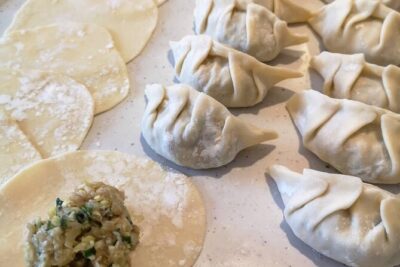
Kyoto Michelin Ramen Workshop or Painting Ramen Essentials
Read our review →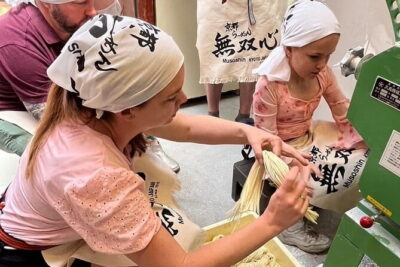
Ramen Gyoza Onigiri Japanese Cooking Class in Kyoto
Read our review →Browse the lists this tour appears in