
REVIEW · MUSEUMS
Kyoto : Family-Friendly Sword Lesson at Samurai Ninja Museum
Kyoto’s Samurai Ninja Museum lets you do more than look at old weapons behind glass. You put on hakama, armor, and a helmet, watch a katana demonstration, then practice a short sequence of sword movements yourself. It is a lively way to add hands-on fun to a Kyoto sightseeing day.
I like the small-group format and the mix of learning and play. You get a basic lesson, themed photographs, a museum visit, and a chance to try ninja weapons for $66 per person. The main thing to check is group size: the activity is advertised as limited to 10, while another note gives a maximum of 22.
In This Review
- Key points at a glance
- Putting on the hakama in central Kyoto
- Learning the katana from an English-speaking instructor
- From sword practice to museum exhibits
- Trying ninja weapons with a target
- Why the small group matters
- Is $66 per person good value?
- Planning the two-hour visit
- What makes this activity work for families
- What the strongest praise tells you
- My practical verdict
- FAQ
- How long does the samurai lesson last?
- What is included in the price?
- Is the activity taught in English?
- Can young children participate?
- Is transportation included?
- Can I cancel for a full refund?
Key points at a glance
- Two hours of samurai training: Watch an instructor demonstrate how to swing a sword, then practice the movements yourself.
- Real costume pieces: Wear hakama, a samurai helmet, and samurai armor for the lesson and photographs.
- More than a photo stop: The session includes an introduction to samurai history and a guided visit through the Samurai and Ninja Museum.
- Ninja weapons included: After the sword lesson, you can try a ninja target activity with shuriken.
- English instruction: Guides such as Ken, Raito, Nobu, and Jukia have led sessions, though your instructor may vary.
- Family-friendly, with one age limit: Most people can participate, but children under three cannot enter the venue.
Putting on the hakama in central Kyoto
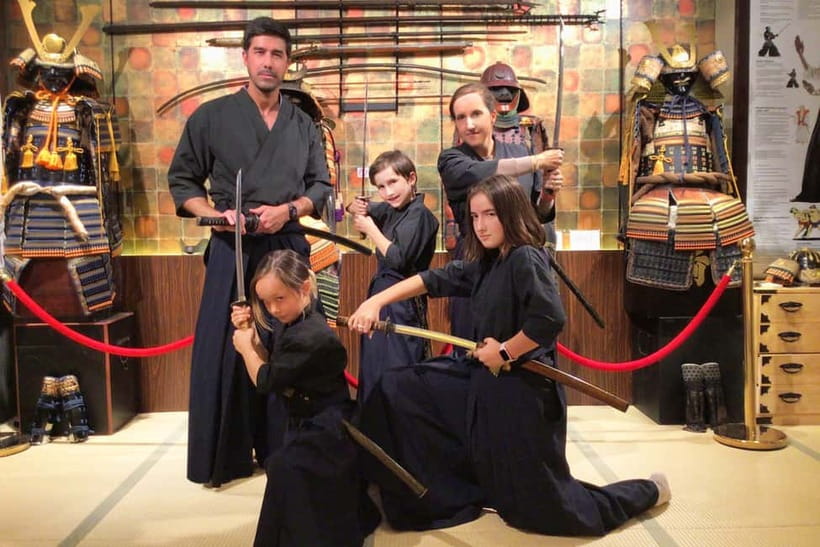
The fun starts before the first sword movement. You change into traditional samurai clothing, including hakama, the pleated trousers associated with samurai dress. The activity also provides a helmet and armor, giving you the visual transformation that many costume photographs promise but few manage to make feel quite so complete.
I like this part because it gives the lesson a sense of occasion. You are not simply holding a prop katana in ordinary clothes. The clothing helps children take the role seriously, while adults can enjoy the theatrical side without needing any prior martial arts skill.
The armor and helmet are also useful for photographs. You can pose with swords against studio or samurai-themed backgrounds, and the photographs become a clear souvenir of the day. If your family has different heights and ages, expect the pictures to look more playful than perfectly formal. That is part of the appeal.
The activity does not say that costumes are available in a full range of sizes, so it is sensible to contact the provider if fit is especially important. The information does confirm that hakama, armor, and a helmet are included, so you do not need to rent these separately.
More samurai and sword sessions:
- Kyoto Samurai Experience
★ 5.0 · 1,294 reviews - Kyoto: Kendo and Samurai Experience with Uniform and Gear
★ 4.9 · 815 reviews - Kyoto: Samurai Sword Class by Experts in Traditional Arts
★ 4.9 · 657 reviews
Learning the katana from an English-speaking instructor
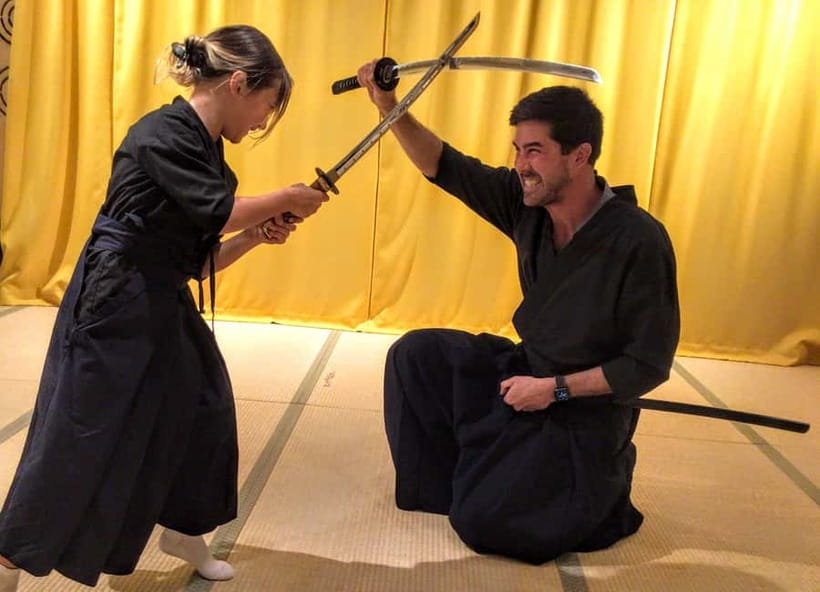
Once dressed, you watch a demonstration of how to handle and swing a samurai sword. The point is not to master sword fighting in two hours. It is to learn a short set of movements, understand a little about samurai practice, and enjoy the discipline of copying an instructor’s form.
The English-speaking format matters here. A sword lesson depends on clear instructions, and you will want to understand when to move, how to hold the sword, and how to follow the sequence. The instructors named in feedback include Ken, Raito, Nobu, and Jukia. Raito was singled out for experienced teaching, while Ken was praised for teaching two kata, or set movement patterns.
That detail gives you a better idea of the lesson than the phrase sword experience alone. You may learn a pair of short kata rather than simply swing a sword once for a photograph. The exact program can vary by instructor, but the session is designed for beginners and does not require previous training.
I would treat the activity as a guided introduction, not a serious martial arts class. You will get a taste of the focus and form behind a katana sequence, but two hours also includes costumes, photographs, the museum, and ninja weapons. Anyone hoping for advanced instruction should choose a longer specialist course.
From sword practice to museum exhibits
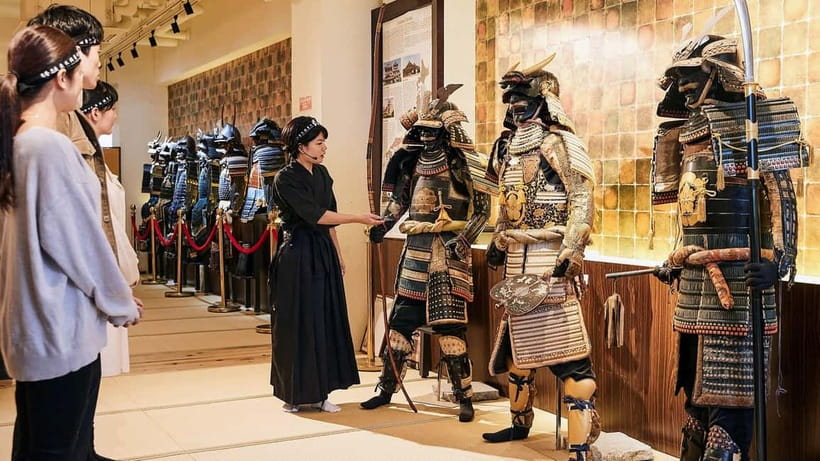
The activity combines the lesson with a visit to the Samurai and Ninja Museum. The museum portion gives context to the costume and movements. Instead of treating samurai and ninja as only movie characters, you get an introduction to the people, weapons, and traditions connected with them.
A guided museum visit is particularly helpful for families. Children often enjoy the action first, then absorb historical details in small pieces. Adults get a little more background for the objects and clothing they have just used.
The museum is not a substitute for Kyoto’s major temples, castles, or larger historical collections. Its appeal is focused and hands-on. You come for an entertaining introduction to samurai culture, with enough explanation to make the sword lesson feel connected to a real subject.
The order may be sword training followed by the museum visit. One detailed account describes getting dressed, learning two kata, moving through the museum, trying shuriken, and taking photographs in samurai and ninja clothing. Allow the full two hours rather than planning another appointment immediately afterward.
Trying ninja weapons with a target
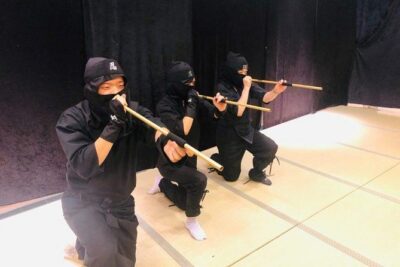
The sword lesson is the main event, but the ninja weapons trial gives the activity a second burst of energy. You get a chance to try shuriken at a target, turning the museum visit into something you actively do rather than simply observe.
This section will likely be a hit with children who enjoy aiming games. It also breaks up the more precise sword practice. The two activities use different movements, so the afternoon feels varied without adding extra cost.
The supplied information does not promise a particular number of throws or describe the exact target setup. Keep expectations practical: this is a short museum activity, not a full ninja-training course. The value comes from trying something unusual in a supervised setting and adding another set of photographs to the day.
More ninja experiences:
- Skip the lines Basic Ticket at SAMURAI NINJA MUSEUM KYOTO
★ 4.5 · 632 reviews - Ninja 1-hour Hands-on Lesson by Japanese master in Kyoto -Entry
★ 5.0 · 489 reviews - Kyoto: Ninja Weapon Forging Experience
★ 4.8 · 478 reviews - Ninja 2-hour Hands-on Lesson by Japanese master in Kyoto -Medium
★ 5.0 · 218 reviews
Why the small group matters
The activity is described as a small group with up to 10 participants, which is a useful size for a lesson. An instructor can see more of each person’s movements, and you should have a better chance to follow the kata without getting lost in a crowd.
There is also a separate note stating that the activity can have a maximum of 22 people. That conflicts with the small-group description. The safest approach is to check the group size for your chosen date before booking, especially if personal attention is the reason you are choosing this activity.
The positive side is clear: small groups make dressing, instruction, and photographs easier to manage. The possible downside is that the space may feel less private if your particular session is larger than expected. If you are booking for a family, ask whether everyone will remain together throughout the lesson.
The named instructors vary. Ken, Raito, Nobu, and Jukia are all associated with enthusiastic sessions, but you should not book on the assumption that one particular person will teach your class unless the provider confirms it.
Is $66 per person good value?
At $66 per person, this is not the cheapest costume photograph in Kyoto. It offers more than a picture, though. The price includes the sword lesson, hakama, helmet, armor, themed photo settings, the ninja weapons trial, and the museum component.
I see the strongest value for families and first-time visitors who want one organized activity with several parts. Paying separately for costume rental, a museum ticket, a guided lesson, and a themed photo session could take more planning and may not cost much less.
The value is weaker if you only want a polished portrait. You are paying for the teaching and activities, so skipping the sword lesson would miss the point. It is also less suited to a serious student of Japanese martial arts, since the program is short and built for general participation.
Children can make the price worthwhile because the activity gives them several things to do. Adults who prefer quiet museum visits may find the costume and weapons sections a little staged. I would book it for shared family fun, not as a replacement for Kyoto’s major cultural sights.
Planning the two-hour visit
The activity lasts two hours, and starting times depend on availability. I would place it in the middle of a flexible day rather than between two timed temple visits. Costuming, instruction, photographs, museum viewing, and the ninja trial all need their share of the schedule.
Transportation to and from the activity is not included. The venue is near public transportation, so you will need to make your own way there and back. Build in enough time to find the venue, especially if you are arriving with young children or carrying luggage.
Confirmation is provided at booking. You can also reserve now and pay later, which helps if your Kyoto plans are still shifting. Cancellation is free up to 24 hours before the activity for a full refund, according to the booking conditions.
The venue is listed as wheelchair accessible and stroller accessible. That is helpful for families, though the physical details of changing areas and costume fit are not provided. If you use a wheelchair or stroller, contact the provider before arrival with any specific access questions.
Children under three cannot enter the samurai venue. Older children can participate, and the overall program is built to suit most people rather than trained swordspeople. Keep in mind that the helmets, armor, and sword handling may be more comfortable for children who can follow spoken instructions.
What makes this activity work for families
I would choose this for a family that wants a clear break from temple and shrine visits. Kyoto can involve plenty of looking, walking, and quiet behavior. Here, children get to dress up, copy sword movements, aim at a target, and take photographs.
The adults are not left out. The museum explanation adds cultural context, and learning kata gives the session more substance than a quick costume rental. The result is a shared activity where parents can join the photographs and practice alongside their children.
The best family groups will set the tone before arriving. Explain that the katana lesson involves following directions, not wild swinging. The activity is playful, but it still depends on everyone listening to the instructor.
It can also work well for couples, friends, and solo visitors who enjoy themed activities. A solo participant may have fewer personal photos unless the staff or other participants help, so ask about photography arrangements if that is your main reason for booking.
What the strongest praise tells you
The most consistent positive points are the instructors, the small-group feel, and the way the session makes participants feel involved. One account describes learning two kata with Ken and then moving into the museum and shuriken activity. Another calls Raito an experienced teacher, while Nobu and Jukia are also praised for making the lesson enjoyable.
That pattern suggests the guide has a large effect on your day. A good instructor turns a simple prop activity into a short lesson with rhythm and purpose. You should expect friendly teaching and a willingness to help beginners, but the exact personality and teaching style will depend on who leads your session.
The overall rating is 4.4 from 14 reviews, with the supplied recent comments all giving five stars. That is encouraging, but the sample is small. I would read the rating as evidence of strong appeal for the right audience, not proof that every person will love the theatrical format.
My practical verdict
I would book this Samurai Ninja Museum activity if you want a hands-on family outing in Kyoto, especially if your children are tired of standard sightseeing. The combination of clothing, basic kata, museum explanations, shuriken, and photographs gives you a full two hours for the price.
I would skip it if you want advanced sword instruction, a long historical lecture, or a quiet museum visit. Also confirm the expected group size and instructor if those details matter to you. For most families and casual visitors, $66 is fair when you treat it as a guided cultural activity with entertainment built in, not simply a photograph in costume.
FAQ
How long does the samurai lesson last?
The activity lasts two hours in total. That time includes the sword lesson, costume use, museum component, themed photographs, and ninja weapons trial.
What is included in the price?
The price includes the samurai sword lesson, hakama, a samurai helmet, samurai armor, themed photo opportunities, and the ninja weapons trial.
Is the activity taught in English?
Yes. English instruction is listed for this activity.
Can young children participate?
Most people can participate, but children under three cannot enter the samurai venue.
Is transportation included?
No. Transportation to and from the activity is not included. The venue is near public transportation.
Can I cancel for a full refund?
Yes. You can cancel up to 24 hours in advance for a full refund. The activity also offers a reserve now and pay later option.
More Workshops in Kyoto
- Kyoto: 45-Minute Tea Ceremony Lesson Experience
★ 4.3 · 2,378 reviews - Kyoto : Chopsticks Making Workshop in Gion with Engraving Option
★ 5.0 · 958 reviews - Kyoto: Ramen Cooking Class at a Ramen Factory with Souvenir
★ 4.9 · 532 reviews - Kyoto: Ramen, Gyoza, and Onigiri Cooking Class
★ 5.0 · 445 reviews
More Kyoto Family Tours in Kyoto
- Kyoto:Family-Friendly Kimono & Yukata Experience at WARGO
★ 5.0 · 147 reviews - KYOTO: Private Tea Ceremony in Hidden Townhouse (Kid-Friendly)
★ 5.0 · 20 reviews - Kyoto: Family-Friendly Private Tour with Driver-Guide
★ 4.0 · 11 reviews - Private Kyoto Family Tour with a Local – 100% Personalized
★ 5.0 · 9 reviews
Recently added around Kyoto
- Higashiyama | Kyoto: Sakura Season Private Rickshaw Tour★ 5.0 · 3 reviews
- Kyoto Kimono Rental CHAMATSU|Kimono/Yukata Rental FamilyPlan★ 5.0 · 3 reviews
- Kyoto: Half-Day Private Guided Tour to the Old Town of Gion★ 4.4 · 3 reviews
- Nara Private Customizable Half Day Tour★ 5.0 · 3 reviews
- Kansai Region Hiking Adventure in Nara Kobe Kyoto and More★ 5.0 · 3 reviews
- Full Day Nara Deer, Temple, Shrine, Activities & Tea Ceremony★ 5.0 · 3 reviews
- Nara: Essential Private Tour with Deer Park and Temples★ 5.0 · 3 reviews
- Hiking Tour for Sacred Sites in Kyoto with a Guide★ 5.0 · 3 reviews
Museums, compared.
Tea Museum Tickets and Matcha Grinding Experience
Read our review →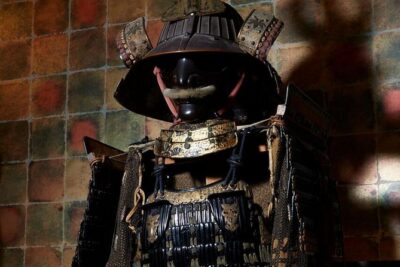
Skip the lines Basic Ticket at SAMURAI NINJA MUSEUM KYOTO
Read our review →
Geiko Maiko Dance of Kyoto & Visits of Gion Museum
Read our review →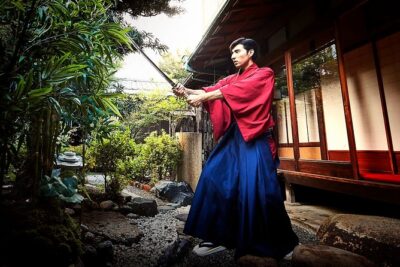
Kyoto Sword Experience – includes Museum Ticket/Ninja Experience
Read our review →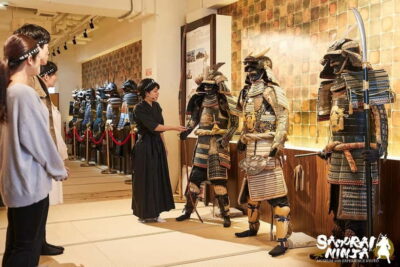
Ninja Experience (Family Friendly) at Samurai Ninja Museum KYOTO
Read our review →
Kyomai Dance by Maiko Geiko and Visits of Gion Art Museum Kyoto
Read our review →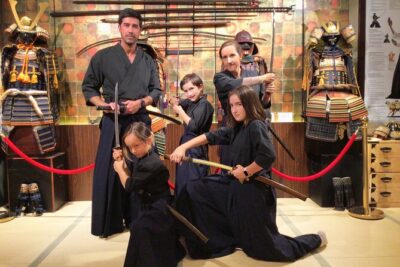
Samurai Sword Experience (Family Friendly)at SAMURAI MUSEUM KYOTO
Read our review →Browse the lists this tour appears in