
REVIEW · GION GEISHA DISTRICT TOURS
Kyoto : Geiko Maiko Dance of Kyoto & Visits of Gion Museum
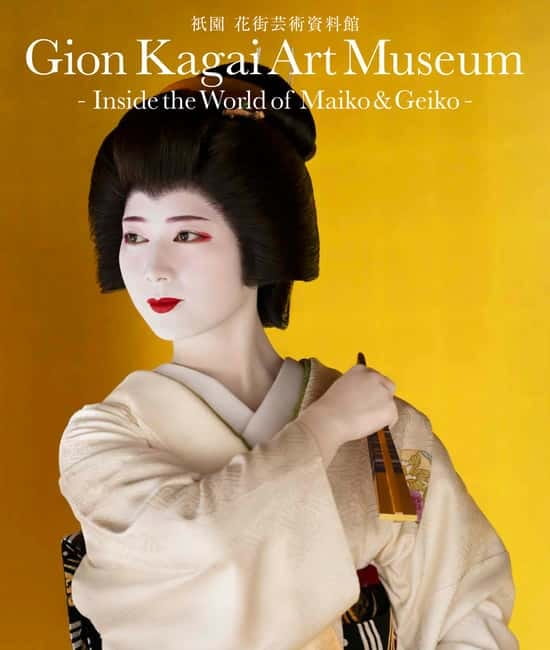
A geiko or maiko performs two traditional Kyomai dances just a few feet away, giving you a compact but memorable look at Kyoto’s performing arts. I like the close-up setting and the fact that your ticket also covers a museum filled with costumes, hair ornaments, photographs, and personal items.
I also like the small Japanese garden and the freedom to stay in the museum after the 15-minute performance. The main drawback is simple: the dance is brief, and no photography or audio recording is allowed during it. If you want a picture with a geiko or maiko, arrange that separately at the museum.
In This Review
- Key points to know before you book
- What the 15-minute Kyomai performance is really like
- Geiko and maiko, and why the terms matter
- The permanent exhibition: clothing, ornaments, and working objects
- The Chisen water garden and the museum atmosphere
- Planning your visit around Gion
- Is $25 a fair price?
- What the experience does best
- Where the experience could be better
- Who should book the Gion Kagai Art Museum?
- My booking advice
- FAQ
- How long does the Kyomai performance last?
- What is Kyomai?
- Will one or two performers appear?
- What are the performance times?
- What does the ticket include?
- Can I stay in the museum after the dance?
- Is photography allowed during the performance?
- Can I take a photo with a geiko or maiko?
- Is English information available?
Key points to know before you book
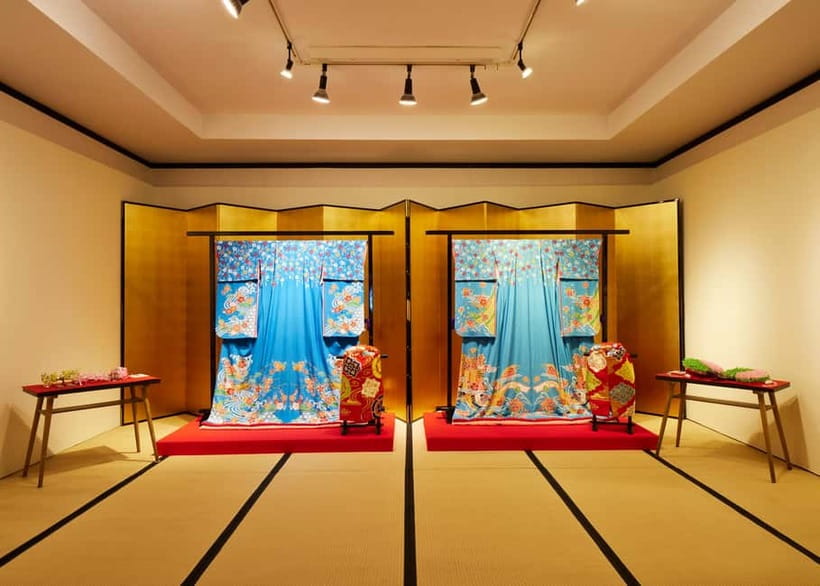
- Two Kyomai songs: The performance lasts about 15 minutes and usually features one geiko or maiko.
- Inoue-style Kyoto dance: This is Kyomai, the traditional dance style associated with Kyoto, rather than a general stage show.
- Museum entry included: You can explore the permanent Gion Kagai Art Culture exhibition before or after the performance.
- English help by QR code: Scan the museum displays for translated information about geiko, maiko, dance, clothing, and customs.
- Quiet garden break: The Chisen water garden adds a calm pause to a busy day in Gion.
- Photo session costs extra: Photo opportunities are sold at the museum and are not part of the main admission.
What the 15-minute Kyomai performance is really like
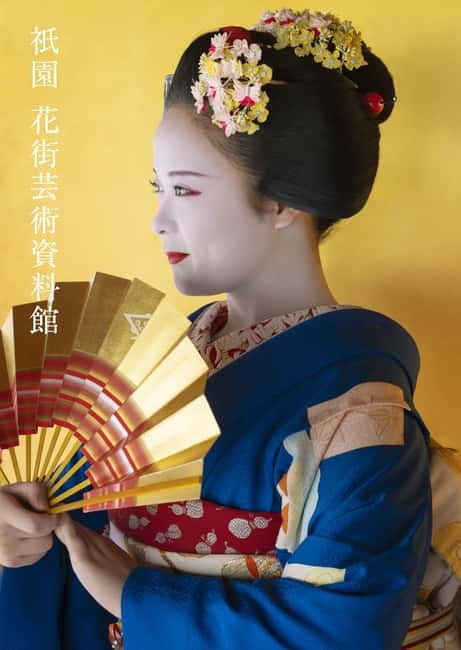
The heart of this experience is the Kyomai performance. Kyomai means Kyoto Mai, or Kyoto dance, and the presentation follows the Inoue style. You’ll see two songs performed for a total of roughly 15 minutes.
Most sessions feature one performer. On some days, the third and fourth performances may include two geiko or maiko, but that is not guaranteed. If you happen to see two performers together, you’ll have a useful chance to notice differences in movement, timing, and stage presence. Still, a solo dance is the usual format.
The performance is graceful rather than dramatic. Don’t expect a long theatrical production, explanations between every movement, or a large musical ensemble. The appeal is in the controlled gestures, careful posture, measured steps, expressive face, and the details of the costume.
For me, the short length is part of the charm. Kyoto sightseeing can involve temples, gardens, markets, and long walks. A 15-minute performance fits neatly between other plans, and it does not ask you to give up half a day. At the same time, you should set your expectations correctly. This is a brief introduction, not a full evening of traditional entertainment.
The schedule gives you several chances to fit it into your day:
- 1:30 p.m.
- 2:20 p.m.
- 3 p.m.
- 4 p.m.
- 4:30 p.m.
You’re asked to arrive at the museum 10 minutes before your scheduled start. That matters. The show itself is short, so arriving late can cost you a large part of the performance.
No photography is allowed during the dance, and audio recording is also prohibited. Put your phone away and watch the movements directly. The museum sells separate photo sessions with a geiko or maiko, so you can still plan a photograph if that is important to you. The price given for this extra is about 2,000 yen, with one reported package including a Polaroid and phone pictures, but you should confirm the current details at the museum.
More evenings in Gion:
- Kyoto Geisha Walking Tour: Gion District & Hidden Gems
★ 4.7 · 3,273 reviews - Kyoto: Gion Magical Night Walking Tour with Geisha Trivia
★ 4.9 · 2,393 reviews - Kyoto: Gion Geisha District Walking Tour – Stories of Geisha
★ 4.7 · 2,187 reviews
Geiko and maiko, and why the terms matter
In Kyoto’s kagai districts, women who perform traditional dance and music for banquet rooms and on stage are called geiko. The term geisha is more widely known outside Kyoto, but geiko is the local word used here.
A maiko is a woman training to become a geiko. The visual difference is often noticeable in the hairstyle, ornaments, clothing, and overall presentation, though the museum helps you understand the details rather than asking you to guess.
This distinction is more than a vocabulary lesson. It gives you a better sense of what you are seeing. The performance is not a costume display or a theatrical imitation of old Kyoto. It connects to a living system of dance, music, training, dress, and formal entertainment.
The museum’s displays explain this world in a practical way. You’ll see the clothing and tools that support the performance, then watch a live example of the art in motion. That combination makes the dance easier to appreciate than it might be on its own.
The permanent exhibition: clothing, ornaments, and working objects
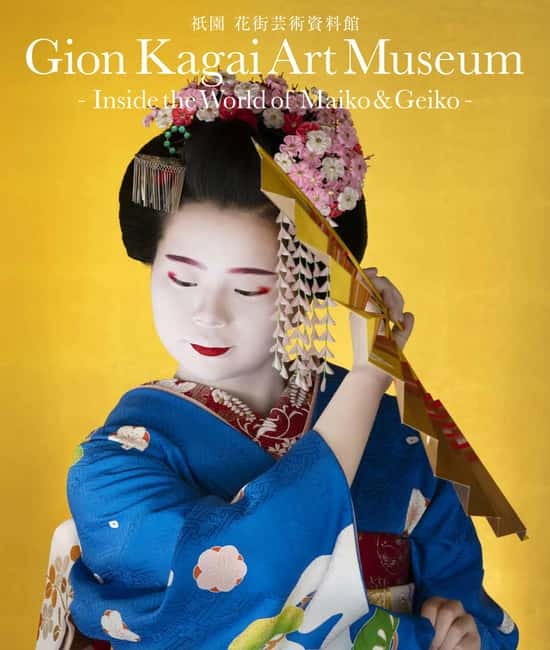
The Gion Kagai Art Museum’s permanent exhibition introduces the art and culture of Kyoto’s kagai districts. It is not a huge museum, but it contains plenty to examine if you take your time.
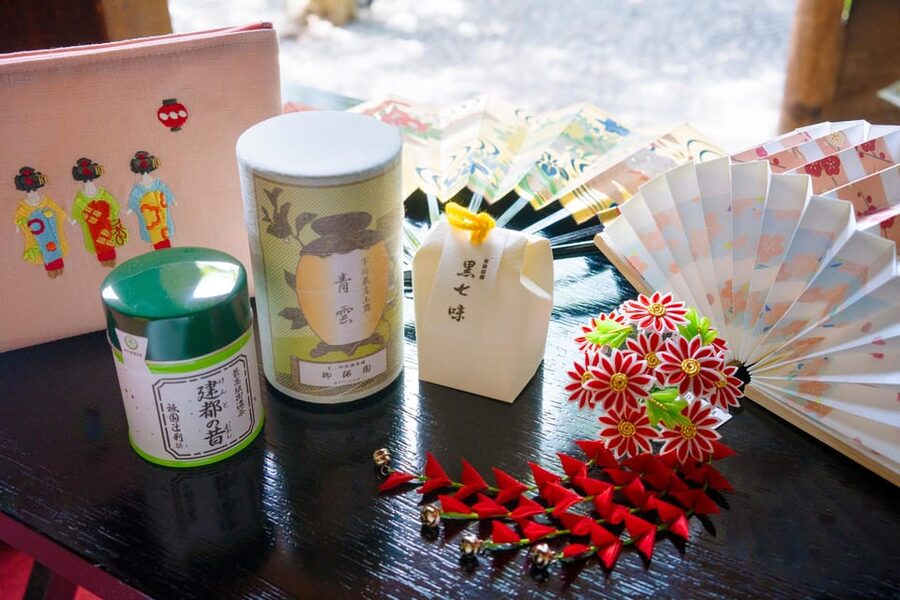
The displays include hand-painted Yuzen kimono and Nishijin brocade obi sashes. These are not just pretty fabrics. Their color, pattern, and workmanship help explain the visual precision expected in geiko and maiko dress.
You’ll also see personal belongings and makeup used by maiko. These everyday objects bring the subject down from an idealized image to something more human and practical. The clothing has to be worn, maintained, and arranged. The makeup has to be applied. The hair ornaments must suit the season.
The kanzashi hair ornaments are especially interesting. They are displayed according to seasonal use, showing how even a small accessory can carry a calendar of flowers, colors, and occasions. Alongside them are black crested formal kimono, garments rarely seen in ordinary Gion streets.
Photographs add another layer. They convey the atmosphere of the kagai districts and help place the clothing and objects within the social world where geiko and maiko work. I like this kind of display because it gives context without turning the museum into a long academic lecture.
English information is available by scanning QR codes. You’ll need your phone, and the amount of English explanation depends on how much time you spend reading each display. A short printed sheet about maiko and geiko is also available, and it helps visitors who want a quick introduction before the performance.
One limitation is that the dance itself may not be explained in enough detail for everyone. You may understand who the performers are and how they train, yet still wonder what a particular gesture or song means. A clearer introduction to the two dances, or a short question-and-answer period afterward, would make the live portion easier to follow.
The Chisen water garden and the museum atmosphere
The museum includes a Chisen water Japanese garden. It is a modest but welcome feature, especially if you have just spent time reading displays or walking through crowded parts of Kyoto.
The garden gives you a place to slow down and notice the setting. You can look at the water, traditional planting, and quiet design before or after the show. It is not the main reason to buy the ticket, but it adds value to a small museum visit.
Several people find the garden one of the most pleasing parts of the venue. I can understand why. The dance is highly formal and concentrated, while the garden offers a softer pause. Together, they create a visit with more variety than a single 15-minute stage presentation.
You can also visit the art café and museum shop. The available information does not specify the café menu or shop inventory, so I would treat them as useful extras rather than plan a meal or major shopping stop around them. The shop is described as small, and it gives you a chance to browse souvenirs after seeing the exhibition.
More museums in Kyoto:
- Kyoto: Tea Museum Tickets and Matcha Grinding Experience
★ 4.9 · 739 reviews - Skip the lines Basic Ticket at SAMURAI NINJA MUSEUM KYOTO
★ 4.5 · 632 reviews - Kyoto Sword Experience – includes Museum Ticket/Ninja Experience
★ 4.5 · 149 reviews - Kyoto: Samurai Ninja Museum guided tour
★ 4.8 · 145 reviews
Planning your visit around Gion
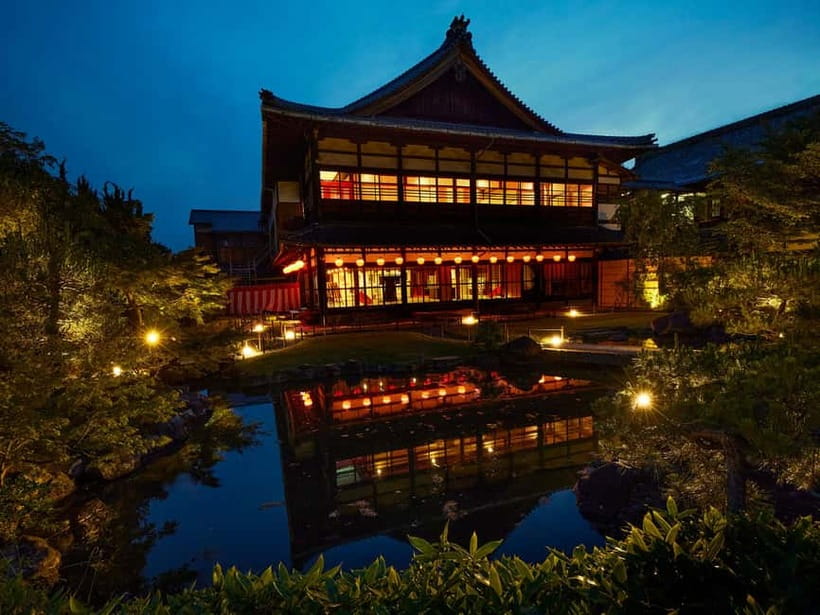
The meeting point is the museum entrance. You should find the entrance and arrive at least 10 minutes before your chosen performance. Staff can help direct you, which is useful if you are unsure where to go.
The scheduled times make this easy to combine with other Kyoto plans. A 1:30 p.m. or 2:20 p.m. session works well for an afternoon in Gion. The 4 p.m. and 4:30 p.m. options may suit you if you want to visit other sights first.
The ticket covers admission to the Gion Kagai Art Museum and the Kyomai performance. After the dance, you can stay in the museum and continue through the exhibits rather than being sent straight out. That is important when judging the price. The performance lasts 15 minutes, but the entire visit does not have to end there.
The activity is non-refundable, so check your plans carefully before booking. Pets, oversized luggage, drones, alcohol, and drugs are not allowed. Audio recording is prohibited, and the no-photo rule applies during the dance.
Because the performance is scheduled, do not arrive assuming you can simply join any session. Check availability for the time you want, and allow enough time to find the entrance. If your day is tightly arranged, leave a little breathing room rather than booking a session that begins immediately after another attraction.
Is $25 a fair price?
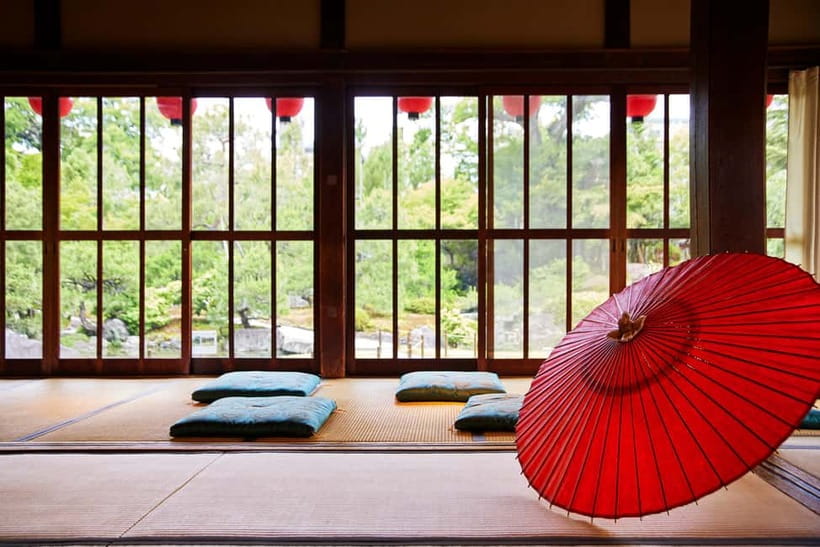
At $25 per person, this is not the cheapest museum stop in Kyoto. If you only want to look at a few costumes, you may find the price hard to justify. The performance is short, and the museum is relatively small.
The value improves when you use the ticket as a combined experience. You are paying for admission to the exhibition, a live Kyomai performance, access to the garden, and the chance to remain in the museum afterward. For someone who wants a direct introduction to geiko and maiko culture without booking an expensive evening banquet, the price is reasonable.
I would especially consider it good value if you are short on time. You can see live Kyoto dance, learn the basic background, and visit a garden in one compact stop. It is also a useful choice for a first visit to Kyoto, when you may want cultural experiences that are easy to understand and simple to fit into a packed schedule.
The price is less attractive if you expect a long show, extensive English commentary, or included photographs. The ticket does not include the optional photo session, and the songs may not be translated in a way that explains their meaning during the performance.
What the experience does best
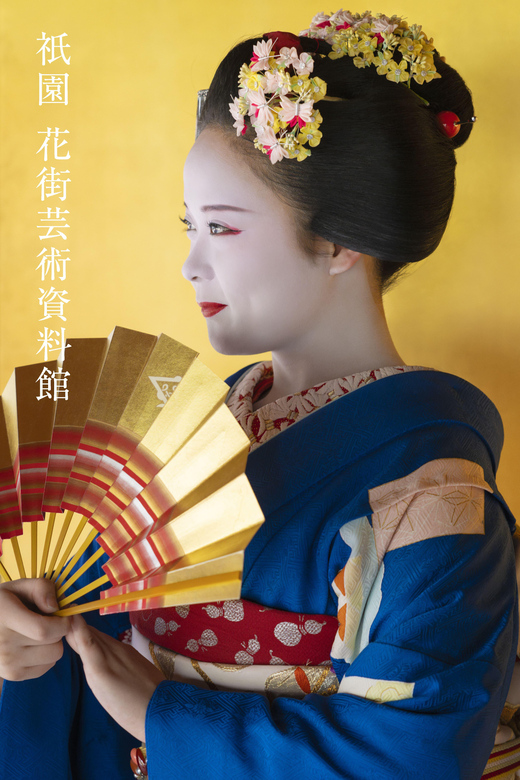
The strongest feature is the sense of proximity. You are not simply looking at a costume behind glass. You first see the clothes, ornaments, makeup, and photographs, then watch a performer use posture, sleeves, expression, and controlled movement in a live setting.
The dance also feels restful. You can spend a full day moving from one Kyoto sight to another, then sit quietly for two songs. The brief format makes it easier to pay attention. A longer show might provide more context, but it could also be harder to fit into your schedule.
The museum is another strong point. The displays are focused, and the QR translations help you read more without requiring a guided tour. You can move quickly if you are in a hurry, or spend longer with the textiles, seasonal kanzashi, formal kimono, and photographs.
The staff can also help with basic arrival and payment questions. English assistance is available, and visitors have found the welcome organized and friendly. That practical help matters when the entrance is not immediately obvious or when you need information about the extra photo session.
Where the experience could be better
The biggest weakness is limited explanation around the performance. A flyer and museum information can tell you the general story, but they may not explain the meaning of each dance or song. If you want a detailed lesson in Kyomai, you may leave with unanswered questions.
The brief length is another consideration. Two songs in 15 minutes can feel satisfying, but it can also feel over quickly. I would not book this as your only traditional arts experience if you want a full evening of music and dance.
The quality of the costume may also vary from one performance to another. The clothing is normally a major part of the visual appeal, but one person found a particular kimono disappointing. That is a reminder that you are seeing a scheduled working performance, not a guaranteed showcase of every possible formal garment.
Photography can be a sore point if you do not know the rule in advance. You cannot take pictures during the dance, and the optional photo session must be arranged at the museum. If you want that keepsake, ask about it when you arrive rather than waiting until the performance is over.
Who should book the Gion Kagai Art Museum?
I recommend this experience most strongly if you want:
- A short cultural stop between larger Kyoto sights
- A live view of Kyomai rather than only a museum display
- An introduction to geiko and maiko customs
- A calm garden and indoor activity during an afternoon in Gion
- A family-friendly or first-time introduction to traditional Kyoto arts
- A fixed-price alternative to more elaborate evening entertainment
You may want to skip it if your main goal is a long performance, detailed dance interpretation, or guaranteed photographs during the show. It is also less suitable if your schedule cannot spare time before the performance, since arriving 10 minutes early is part of the plan.
My booking advice
I would book this if you are curious about geiko and maiko culture but do not want to commit to a large or expensive evening program. The combination of exhibition and live dance gives you enough background to understand what you are seeing, while the 15-minute format keeps the visit manageable.
Choose your session carefully, arrive early, and scan the English QR information before the performance if you can. Ask about the optional photo session at the entrance, since it is not included and may be the one detail you regret missing.
For $25, this is a sensible Kyoto add-on. It offers a real performance, useful cultural context, a Japanese garden, and time to explore at your own pace. Just book it for what it is: a polished, intimate introduction to Kyomai, not a full-night stage production.
FAQ
How long does the Kyomai performance last?
The performance lasts approximately 15 minutes and includes two Kyomai songs.
What is Kyomai?
Kyomai, also called Kyoto Mai, is a traditional Kyoto dance style. The performance at the museum follows the Inoue style.
Will one or two performers appear?
Most performances feature one geiko or maiko. On some days, the third and fourth sessions may feature two performers.
What are the performance times?
The scheduled sessions are at 1:30 p.m., 2:20 p.m., 3 p.m., 4 p.m., and 4:30 p.m.
What does the ticket include?
The ticket includes admission to the Gion Kagai Art Museum and the performance fee for the Kyomai dance.
Can I stay in the museum after the dance?
Yes. You can continue exploring the museum after the approximately 15-minute performance.
Is photography allowed during the performance?
No. Photos are not allowed during the dance, and audio recording is also prohibited.
Can I take a photo with a geiko or maiko?
Photo-session tickets are available separately at the museum. The extra cost has been reported as about 2,000 yen, so confirm the current price and details when you arrive.
Is English information available?
Yes. English information is available through QR codes that you can scan at the museum displays. A translated information sheet about geiko and maiko may also be provided.
Recently added around Kyoto
- Higashiyama | Kyoto: Sakura Season Private Rickshaw Tour★ 5.0 · 3 reviews
- Kyoto Kimono Rental CHAMATSU|Kimono/Yukata Rental FamilyPlan★ 5.0 · 3 reviews
- Kyoto: Half-Day Private Guided Tour to the Old Town of Gion★ 4.4 · 3 reviews
- Nara Private Customizable Half Day Tour★ 5.0 · 3 reviews
- Kansai Region Hiking Adventure in Nara Kobe Kyoto and More★ 5.0 · 3 reviews
- Full Day Nara Deer, Temple, Shrine, Activities & Tea Ceremony★ 5.0 · 3 reviews
- Nara: Essential Private Tour with Deer Park and Temples★ 5.0 · 3 reviews
- Hiking Tour for Sacred Sites in Kyoto with a Guide★ 5.0 · 3 reviews
Gion Geisha District Tours, compared.

Kyoto Geisha Walking Tour: Gion District & Hidden Gems
Read our review →
Gion Magical Night Walking Tour with Geisha Trivia
Read our review →
Gion Geisha District Walking Tour – Stories of Geisha
Read our review →
Best of Kyoto: Gion, Geisha, Pagodas & Cobblestones
Read our review →

Kyoto Night Foodie Tour in Gion (9+ dishes + 6 Sake tastings)
Read our review →
Kyoto Gion Geisha District Walking Tour – The Stories of Geisha
Read our review →
Kyoto Gion: 2-Hour Geisha Culture & History Walking Tour
Read our review →Browse the lists this tour appears in