
REVIEW · MUSEUMS
Kyoto: Samurai Ninja Museum guided tour
Kyoto’s Samurai Ninja Museum turns a history lesson into a hands-on hour: you see armor and weapons, put on a samurai costume, wear a real helmet, handle a replica sword, and finish by throwing ninja stars. The English-speaking guides keep the pace moving, with Miu, Akiko, Sayo, Ko, and Aya among the guides praised for clear explanations and friendly presentation.
I like the mix of history and play, especially the armor displays followed by dress-up and shuriken throwing. I also like the compact one-hour format, which fits neatly into a Kyoto day. The main caution is price and expectation: at $28, you are paying for a guided museum activity rather than a large traditional museum, and one booking comment felt the cost was high for the ticket and guide.
In This Review
- Key points at a glance
- What the Kyoto Samurai Ninja Museum experience is really like
- Beginning with samurai and ninja history
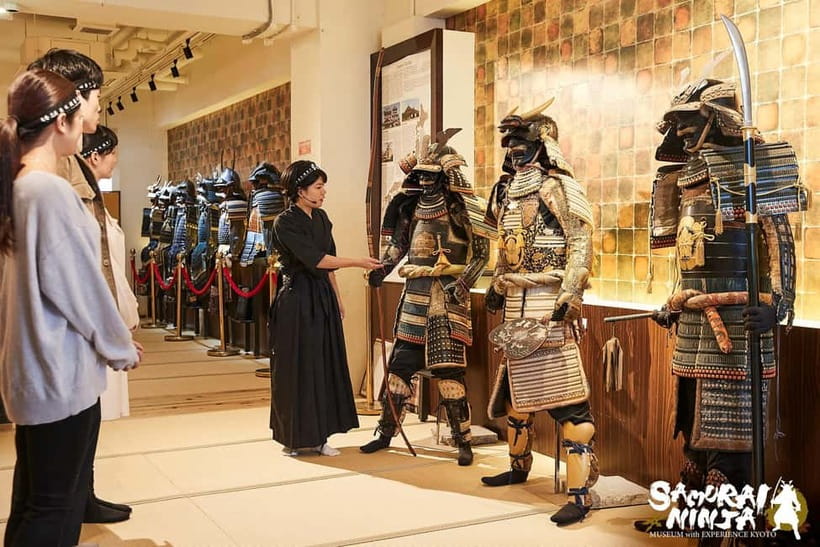
- Armor, weapons, and craftsmanship on display
- Dressing as a samurai in Kyoto
- The katana lesson and replica sword handling
- Ending with shuriken throwing
- Why the guides matter so much
- Is $28 good value for one hour?
- Timing, group size, and practical planning
- Who should book this Kyoto tour?
- Should you book the Samurai Ninja Museum tour?
- FAQ
- How long does the Samurai Ninja Museum tour last?
- What language is the tour conducted in?
- Is museum admission included?
- Can I dress as a samurai?
- Is ninja star throwing included?
- Is transportation included?
- Can I cancel for a full refund?
Key points at a glance
- A one-hour samurai lesson: Learn how samurai and ninja fit into Japanese history through an English-led museum tour.
- Real costume pieces for photographs: Dress as a samurai, wear a real helmet, and hold a replica sword.
- Ninja star practice included: Shuriken throwing gives the final part of the visit a playful, hands-on finish.
- Guides make the difference: Miu, Akiko, Sayo, Ko, Aya, and others are praised for clear English and engaging delivery.
- Good for families: Children and teenagers have an activity to focus on, while adults get historical context.
- Short and easy to schedule: The one-hour visit works well between other Kyoto sights, though transportation is not included.
What the Kyoto Samurai Ninja Museum experience is really like
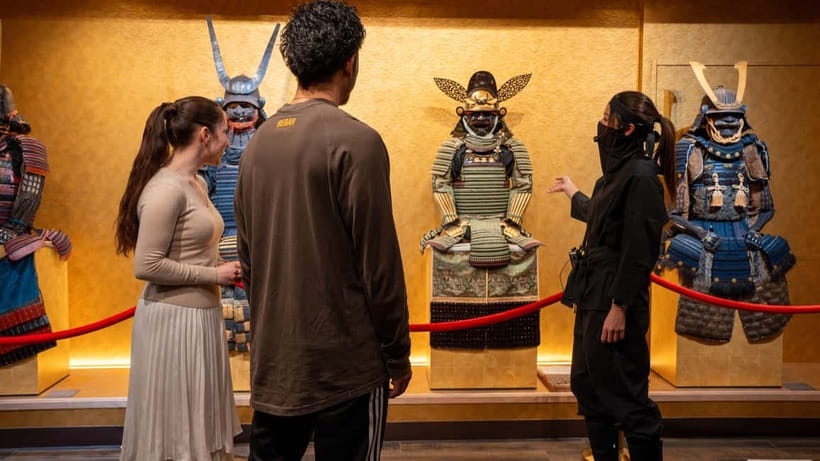
This is not a quiet museum visit where you simply read labels and move on. The basic idea is part museum, part guided history talk, and part supervised activity. You begin with samurai and ninja displays, then get opportunities to dress up, handle replica equipment, and throw ninja stars.
That balance matters in Kyoto. The city is closely linked with samurai history, but much of that history can feel distant when you are standing in front of a temple or walking through an old district. Here, the subject becomes physical. A helmet has weight. A sword has a shape and balance. A thrown shuriken gives you a small sense of the skill involved, even if the activity is designed for fun rather than serious training.
The tour lasts one hour, so you should not expect a full study of Japanese military history. Instead, you get a focused introduction with a guide who explains the people, equipment, and periods connected with samurai and ninja life. For many visitors, especially first-time visitors to Japan, that is the right amount of information.
More samurai and sword sessions:
- Kyoto Samurai Experience
★ 5.0 · 1,294 reviews - Kyoto: Kendo and Samurai Experience with Uniform and Gear
★ 4.9 · 815 reviews - Kyoto: Samurai Sword Class by Experts in Traditional Arts
★ 4.9 · 657 reviews
Beginning with samurai and ninja history
The guided portion sets the scene by connecting samurai and ninja with Kyoto’s long history, from the early Heian period through the fall of the Tokugawa shogunate. That broad time span helps you understand that samurai were not a short-lived feature of one era. Their role changed over centuries, as did their armor, weapons, and place in Japanese society.
The guide also brings ninja into the picture. This is useful because popular culture often turns ninja into fantasy figures, while the museum aims to place them beside the wider story of warriors, weapons, and Japanese history. You can ask questions during the presentation, and several guides are praised for using questions of their own to keep the group involved.
English ability is important here, and the experience is built around an English-speaking guide. Guides named in the feedback include Miu, Akiko, Sayo, Ko, Aya, Miku, Jukia, Taka, Saku, and others. The strongest descriptions point to guides who explain clearly, answer questions, and make room for interaction rather than giving a stiff speech.
I would pay attention to the guide’s approach more than to the exact name assigned to your time slot. The individual guide can shape the mood of the hour. The available comments repeatedly praise clear explanations, good English, humor, and the ability to involve both adults and children.
Armor, weapons, and craftsmanship on display
The museum displays samurai armor, weapons, and related equipment. This is the part to treat as the serious core of the visit. The equipment gives you something concrete to study while the guide explains how it fits into samurai life and Japanese craftsmanship.
Several visitors singled out the displays of armor and weapons, as well as the craftsmanship connected with the ninja period. You may find the objects more interesting after hearing what to look for: protective parts, materials, decoration, and the practical purpose of each item. The guide’s explanations help turn a collection of props and displays into a story about the people who used them.
The museum is not presented as a vast institution with room after room of collections. The appeal is concentrated. You can cover the main material within an hour, then spend time on the interactive portions. If your main aim is detailed academic research, this will probably feel light. If you want a clear introduction before visiting castles, temples, or other historical sites, it works better.
The displays also create good photo opportunities. You should expect the experience to have a visual and theatrical side, especially when the guide appears in ninja-style clothing and helps the group connect with the subject. That presentation is part of the appeal, but it also means you should come expecting an accessible attraction rather than a formal museum tour.
Dressing as a samurai in Kyoto
The costume session is one of the tour’s most memorable features. You can dress as a samurai, wear a real samurai helmet, and hold a replica sword. The combination gives you photographs that feel more personal than a standard picture in front of a display case.
The helmet is especially useful for putting the subject in perspective. Samurai armor can look decorative in a photograph, but wearing part of it gives you a better sense of its physical presence. The replica sword lets you pose and handle an object without the risks connected with a real weapon.
I like this section because it works for different ages. Children can play the part of a warrior, teenagers get a photo opportunity that does not feel like another ordinary museum stop, and adults can enjoy the historical setting without taking the activity too seriously. The costume is not a substitute for learning, but it gives the information a stronger memory hook.
You should also keep the one-hour schedule in mind. There may not be time for everyone to spend a long period posing or examining every detail. If photographs matter to you, be ready when your turn comes and follow the guide’s instructions. The supplied information confirms the costume and replica sword experience, but it does not promise a particular number of photographs or a private photo session.
More ninja experiences:
- Skip the lines Basic Ticket at SAMURAI NINJA MUSEUM KYOTO
★ 4.5 · 632 reviews - Ninja 1-hour Hands-on Lesson by Japanese master in Kyoto -Entry
★ 5.0 · 489 reviews - Kyoto: Ninja Weapon Forging Experience
★ 4.8 · 478 reviews - Ninja 2-hour Hands-on Lesson by Japanese master in Kyoto -Medium
★ 5.0 · 218 reviews
The katana lesson and replica sword handling
The experience includes a katana lesson as part of the hands-on program, while the listed inclusions specifically confirm the samurai costume and ninja star throwing. You should think of the sword element as a guided introduction and handling activity, not a full martial arts class.
That distinction keeps expectations realistic. The value is in seeing how the sword fits into the wider samurai story and in having a supervised chance to hold a replica. The activity gives the tour a physical rhythm after the history presentation, but the hour is too short for detailed instruction in sword technique.
The replica matters. You get the visual and tactile side of the experience without being handed a live weapon. This makes the activity suitable for families, provided children follow the guide’s instructions and behave sensibly around the equipment.
Ending with shuriken throwing
The ninja star throwing session is the most consistently popular activity in the tour. It gives you a clear goal and a little friendly competition, and it is an easy way to end a history-focused visit on an active note.
You throw shuriken under the guide’s direction. The activity is simple enough for children and teenagers to enjoy, while adults can still get caught up in trying to hit the target. Several people specifically describe the throwing as a highlight, and one family found that the competition helped keep two children interested throughout the tour.
This is also where the experience feels least like a conventional museum visit. You are no longer only looking at warrior equipment. You are trying one small skill linked with the ninja theme. Do not expect to become an expert in a few throws, but do expect a memorable finish.
The tour may also include use of a ninja fukiya, a blowgun-style ninja tool, because the activity description includes it among the hands-on elements. The listed inclusions specifically guarantee ninja star throwing, so I would regard the fukiya as an additional element that may depend on the exact tour setup rather than the central promise of the booking.
Why the guides matter so much
The guide is the engine of this experience. Without a good explanation, the museum could feel like a collection of costumes, weapons, and staged props. With a lively guide, the same objects become a simple lesson in Japanese history and warrior culture.
The most frequently praised qualities are clear English, historical detail, warmth, and audience interaction. Miu is praised for being informative and engaging. Akiko is repeatedly noted for beautiful explanations and good photographs. Sayo is described as fun and clear, while Ko is praised for easy-to-understand English and an ability to keep people involved.
Other guides receive similar praise. Aya is described as well informed and lovely, Jukia as passionate and detailed, and Taka as both informative and fun. You cannot usually choose your guide, but these names give you an idea of the presentation style the museum aims for.
I especially value the comments about questions. A guide who welcomes questions makes the tour work better for adults who want context, while asking the group questions helps younger participants stay alert. If you already know something about samurai or ninja, use the opportunity to ask for clarification rather than assuming the short format will cover every detail.
Is $28 good value for one hour?
At $28 per person, this is not the cheapest way to spend an hour in Kyoto. You are paying for museum entry, an English-speaking professional guide, the costume experience, and ninja star throwing. Transportation to and from the attraction is not included, so you also need to reach the museum on your own.
I think the price is reasonable if you want a guided and interactive activity. The costume, helmet, replica sword, and shuriken session add something beyond a basic admission ticket. The English guidance is also valuable if you want more than a quick look at objects with labels you may not fully understand.
The value is weaker if you mainly want to see samurai artifacts in silence or if you are comparing this with a large museum visit that lasts several hours. One four-star assessment felt an upcharge was not justified for a museum ticket and standard guide. That is a fair warning: the experience earns its price through presentation and participation, not through a huge collection.
For families, the calculation may be better. A one-hour activity that gives children history, costumes, photographs, and a target to aim at can be easier to fit into a busy Kyoto day than a long museum visit. Adults who enjoy history may want to pair it with a more traditional historical site elsewhere in the city.
Timing, group size, and practical planning
The listed duration is one hour, with starting times based on availability. That makes it easy to place before lunch, after a morning sightseeing stop, or between other activities in central Kyoto. Leave enough time to reach the museum, since transport is not part of the experience.
The tour is described as a small group limited to 10 participants. A separate note gives a maximum of 30 travelers, so the exact group size may depend on the departure or booking arrangement. If a very small group is important to you, check the current details before paying.
The activity is wheelchair accessible. You should still consider the physical nature of the costume and handling activities, but the supplied information confirms accessibility for the tour itself. Ask the provider directly if you need precise details about changing, movement, or participation in the throwing activity.
Cancellation is flexible: you can cancel up to 24 hours in advance for a full refund. You can also reserve now and pay later, which helps if your Kyoto schedule is still shifting. Those policies do not change the experience itself, but they make a short activity easier to fit into a packed Japan itinerary.
Who should book this Kyoto tour?
I would recommend it most strongly to first-time visitors to Japan, families, and anyone who wants a quick introduction to samurai and ninja culture without committing half a day. Teenagers are likely to respond well to the interactive sections, especially the dress-up session and shuriken throwing.
It also suits adults who like history but do not want every stop to be purely observational. The guide-led format gives you context, while the activities keep the hour from becoming a lecture.
You may want to skip it if you expect authentic weapons training, a large museum collection, or a long specialist talk. The experience is designed for broad appeal. It gives you a taste of the subject, a few memorable photographs, and an easy activity to share with your group.
If you know little about samurai or ninja, a little reading beforehand could help. One visitor specifically suggested learning about ninjas in advance. Even a basic understanding of the difference between popular images and historical context will make the guide’s explanations easier to follow.
Should you book the Samurai Ninja Museum tour?
Book it if you want a lively one-hour introduction with English guidance and real participation. The strongest reasons are the guides, the clear historical explanations, the samurai costume and helmet, and the shuriken session that gives the visit a fun finish.
Think carefully if your priority is value per hour in a conventional museum. At $28, the attraction depends on the guide and interactive elements to justify the cost. For a family or first visit, I think those extras make the price easier to defend. For a history specialist, it may work best as a light introduction before seeking out more substantial samurai sites in Japan.
FAQ
How long does the Samurai Ninja Museum tour last?
The tour lasts one hour.
What language is the tour conducted in?
The tour has a live English-speaking guide.
Is museum admission included?
Yes. The entry ticket for the museum is included.
Can I dress as a samurai?
Yes. The experience includes a samurai costume, a real samurai helmet, and the chance to hold a replica sword.
Is ninja star throwing included?
Yes. Ninja star throwing, also called shuriken throwing, is included in the tour.
Is transportation included?
No. Transportation to and from the attraction is not included.
Can I cancel for a full refund?
Yes. You can cancel up to 24 hours in advance for a full refund. You can also reserve now and pay later.
More Museums in Kyoto
- Kyoto: Tea Museum Tickets and Matcha Grinding Experience
★ 4.9 · 739 reviews - Kyoto : Geiko Maiko Dance of Kyoto & Visits of Gion Museum
★ 4.6 · 415 reviews - Kyoto Sword Experience – includes Museum Ticket/Ninja Experience
★ 4.5 · 149 reviews - Ninja Experience (Family Friendly) at Samurai Ninja Museum KYOTO
★ 4.5 · 132 reviews
Recently added around Kyoto
- Higashiyama | Kyoto: Sakura Season Private Rickshaw Tour★ 5.0 · 3 reviews
- Kyoto Kimono Rental CHAMATSU|Kimono/Yukata Rental FamilyPlan★ 5.0 · 3 reviews
- Kyoto: Half-Day Private Guided Tour to the Old Town of Gion★ 4.4 · 3 reviews
- Nara Private Customizable Half Day Tour★ 5.0 · 3 reviews
- Nara: Essential Private Tour with Deer Park and Temples★ 5.0 · 3 reviews
- Kansai Region Hiking Adventure in Nara Kobe Kyoto and More★ 5.0 · 3 reviews
- Full Day Nara Deer, Temple, Shrine, Activities & Tea Ceremony★ 5.0 · 3 reviews
- Hiking Tour for Sacred Sites in Kyoto with a Guide★ 5.0 · 3 reviews
Museums, compared.
Tea Museum Tickets and Matcha Grinding Experience
Read our review →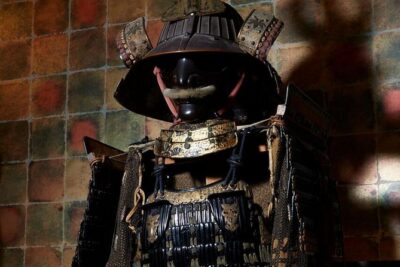
Skip the lines Basic Ticket at SAMURAI NINJA MUSEUM KYOTO
Read our review →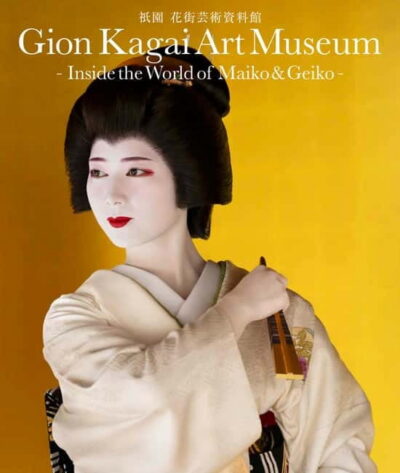
Geiko Maiko Dance of Kyoto & Visits of Gion Museum
Read our review →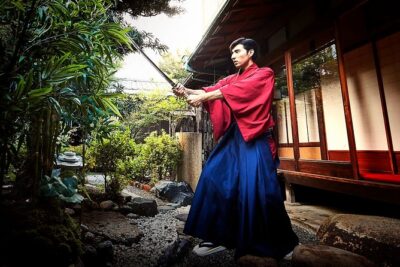
Kyoto Sword Experience – includes Museum Ticket/Ninja Experience
Read our review →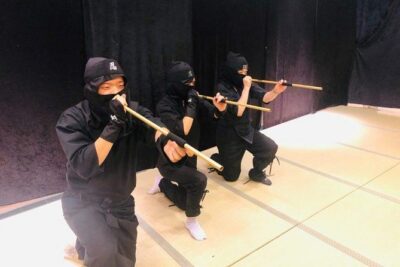
Ninja Experience (Family Friendly) at Samurai Ninja Museum KYOTO
Read our review →
Kyomai Dance by Maiko Geiko and Visits of Gion Art Museum Kyoto
Read our review →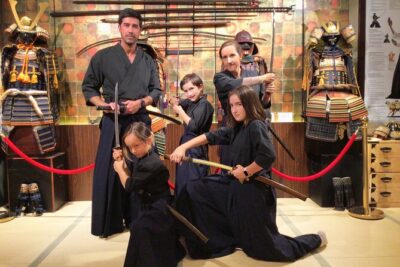
Samurai Sword Experience (Family Friendly)at SAMURAI MUSEUM KYOTO
Read our review →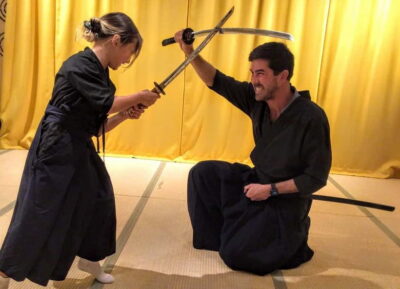
Family-Friendly Sword Lesson at Samurai Ninja Museum
Read our review →Browse the lists this tour appears in