
REVIEW · UJI TOURS
Uji Walking Tour – Byodo-in temple and Tea Ceremony from Kyoto
Uji’s best sights fit into one compact morning: an old bridge, a riverside park, a tea ceremony, and one of Japan’s most recognizable temples. The train ride from Kyoto is included, so you can focus on the town rather than figuring out local transport. I especially like the small group of up to 12 and the chance to take part in tea at Taihoan, not just look at tea shops from the street.
I also like the direct link between Uji’s tea culture and Byodo-in, whose Phoenix Hall appears on the 10-yen coin. The main concern is time: this is a brisk walking tour, and a late arrival or crowded temple can leave you with little time at Byodo-in.
In This Review
- Key points to know before booking
- Why Uji makes a smart half-day trip from Kyoto
- Riding the JR train from Kyoto to Uji
- Ujibashi Bridge and the Uji River
- Nakanoshima Park beside the river
- Taking tea at Taihoan
- Byodo-in and the famous Phoenix Hall
- What the $96.06 price includes
- Walking pace, group size, and practical comfort
- Who will get the most from this Uji morning
- Should you book the Uji Walking Tour?
- FAQ
- How long does the Uji Walking Tour last?
- Where does the tour begin?
- Is train transportation included?
- Is the tea ceremony always matcha?
- Do I need to wear socks?
- Is admission to Byodo-in included?
- Can children join the tour?
Key points to know before booking
- Uji by train: JR fare and the return ride from Kyoto are included, but seats are non-reserved and not guaranteed.
- Tea at Taihoan: The ceremony lasts about 20 minutes and may feature matcha or sencha, with no choice of tea on the day.
- Byodo-in on a tight clock: The temple visit is scheduled for about 50 minutes, but congestion can reduce the time available.
- A real walking outing: Bring easy walking shoes, since this is not a bus tour.
- Tatami-room etiquette: Wear socks, and do not plan to record video during the tea ceremony.
- Morning finish: The tour begins at 8:20 a.m. and ends near Kyoto Station around 12:30 p.m.
Why Uji makes a smart half-day trip from Kyoto
Uji is close enough to Kyoto for a short outing, yet it has its own identity. The town is tied closely to green tea, the Uji River, and the late-Heian-era world that produced Byodo-in. This tour gives you a guided introduction without asking you to spend a full day away from Kyoto.
The structure is useful if you want several pieces of Uji in one visit. You get the river, the bridge, the tea tradition, and the temple. On your own, you could certainly visit these places, but the guide helps connect them and handles the train movement at both ends.
The morning timing also works well for a Kyoto schedule. You meet at the JTB Sunrise Tours Desk inside the Avanti building near Kyoto Station at 8:20 a.m. The tour finishes close to the station around 12:30 p.m., leaving the afternoon open for another part of the city.
The tradeoff is pace. Four hours and 10 minutes sounds generous until you include two train rides, several walks, the tea ceremony, and Byodo-in. If you stop often for photographs, you may need to keep moving to stay with the group.
More time in Uji:
- World Heritage Kyoto & Nara Uji Authentic Matcha Experience
★ 5.0 · 1,573 reviews - Uji: Green Tea Tour with Byodoin and Koshoji Temple Visits
★ 4.8 · 72 reviews - Uji: UNESCO Heritage & Tea Ceremony Walking Tour
★ 4.6 · 54 reviews
Riding the JR train from Kyoto to Uji
The tour begins with a JR rapid or local train from Kyoto Station to Uji Station. The ride takes about 20 minutes, and the fare is included in the tour price. This is a practical touch, especially if you are still learning Kyoto’s rail system.
You will use non-reserved seating. That means the group may board together, but individual seats are not promised. If the train is crowded, you could stand for part or all of the short journey. The ride itself is easy, but do not expect a private coach or a reserved group compartment.
The guide leads the outing in English and manages the public transportation portion. That makes this a good fit if you want help with the route but do not want to spend half a day inside a bus.
You should arrive with enough time to find the meeting point. The starting location is the JTB Sunrise Tours Desk at Avanti, 31 Higashikujō Nishisannōchō, in Kyoto’s Minami Ward. Since the group departs at 8:20 a.m., cutting it close is a poor plan.
Ujibashi Bridge and the Uji River
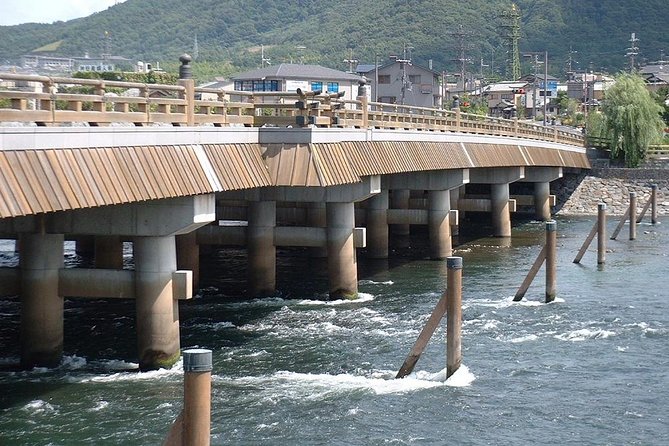
Ujibashi Bridge is one of Uji’s main visual markers. It is thought to date in some form to the seventh century, making it one of Japan’s oldest bridges. The current structure is not simply a preserved seventh-century object, but the long history of the crossing gives the site weight.
The bridge offers a fine first look at Uji. A small projection called san-no-ma extends from one side and provides a useful viewing point. This is the place to take the classic Uji photograph, with the river and surrounding town framing the scene.
I like this stop because it gives you a sense of place quickly. You are not dropped straight at a museum or ushered into a building. You begin by walking through the town and crossing a bridge that has connected the area for centuries.
Still, this is a photo stop rather than a long bridge walk. If you want time to linger beside the water, study the structure, or compose several photographs, the group schedule may feel tight. Take your pictures early and keep an eye on the guide.
Nakanoshima Park beside the river
The route continues through Nakanoshima Park, also called Uji Park. The park occupies the river area and gives the walking portion a quieter stretch between the bridge and the town’s cultural stops.
This is a pleasant change from simply moving along streets. You get open views and a closer look at how Uji’s river shapes the town. The stop also helps explain why Uji has long been more than a temple destination. Water, bridges, tea, and religious buildings all meet here.
The park visit is subject to conditions. High water in the Uji River or other local issues can prevent the group from stopping there. That is worth knowing if the riverside walk is one of your main reasons for booking. The bridge and temple remain the core sights, but the park is not guaranteed on every departure.
More tea ceremonies in Kyoto:
- Kyoto: Tea Ceremony in a Traditional Tea House in Kiyomizu
★ 4.9 · 3,519 reviews - Kyoto: Tea Ceremony Ju-An at Jotokuji Temple
★ 4.9 · 3,207 reviews - Kyoto: 45-Minute Tea Ceremony Lesson Experience
★ 4.3 · 2,378 reviews - Kyoto: Table-Style Tea Ceremony at a Kyo-Machiya
★ 4.9 · 1,211 reviews
Taking tea at Taihoan
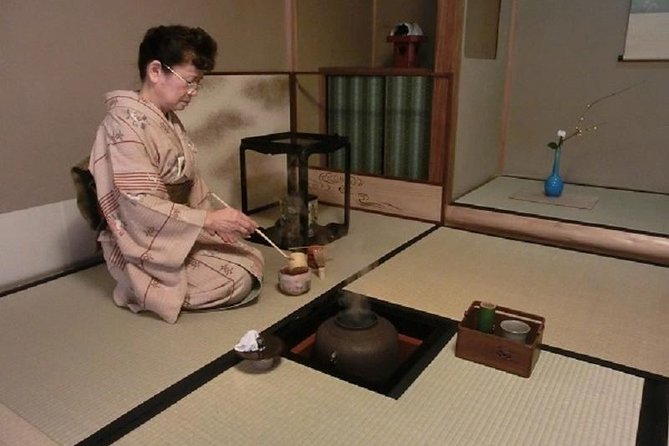
Taihoan is the cultural center of the morning. Uji is famous for tea, and the ceremony gives you a chance to participate in that tradition rather than only buy packaged tea as a souvenir.
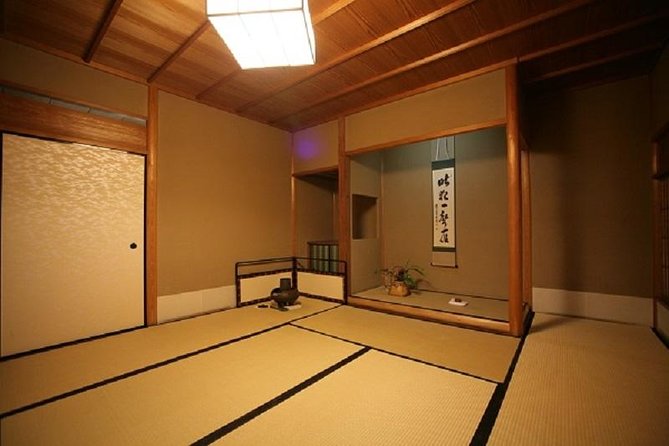
The tea experience lasts about 20 minutes. It takes place in a tatami room, so wear socks. Shoes are not the only practical concern here: videos are not allowed inside the tea room, so put the phone away and pay attention to the gestures, utensils, and quiet rhythm of the service.
The tea may be matcha or sencha, depending on the day. You cannot select which one you receive. Matcha is the powdered green tea most associated with formal tea ceremony, while sencha is brewed green tea. The procedure can differ with the tea served, and the experience may take place with other customers.
That uncertainty is not necessarily a flaw. It means the activity reflects the day’s program instead of promising a fixed performance. But you should book this tour only if you are comfortable with a shared, short introduction rather than a private ceremony with lots of explanation or time for questions.
For me, the tea stop is valuable because it gives the temple visit a local context. Byodo-in is not just another old building on a checklist. Uji’s tea culture is part of what makes the town worth visiting, and Taihoan puts that culture directly into the morning.
Byodo-in and the famous Phoenix Hall
Byodo-in is the centerpiece of the tour. Built near the end of the Heian period, the temple is part of the Historic Monuments of Ancient Kyoto World Heritage site. Its Phoenix Hall is so familiar in Japan that an image of it appears on the 10-yen coin.
The hall sits beside a garden and houses a Buddha statue along with other religious images. Even if you know little about Japanese Buddhist architecture, the setting makes the visit memorable. The building, water, garden, and reflections work together, so do not focus only on the front facade.
The standard temple visit is scheduled for about 50 minutes. That should give you enough time to walk the grounds and visit the museum if the group arrives on schedule. The museum adds useful context, especially for the artwork and objects connected with the temple.
The key issue is congestion. Entry into the Phoenix Hall itself may not be possible when demand is high. If that happens, JPY 300 is refunded at the location. The temple grounds and museum can still provide a worthwhile visit, but the refund rule tells you not to assume that every part of the complex will be accessible.
You also need to watch the clock. This tour covers a lot in one morning, and a delayed start or crowded route can cut into the Byodo-in stop. There have been departures where the available temple time felt closer to 15 minutes, including the grounds and museum. That is far too short for a relaxed visit, so ask the guide early how much time remains and save your main photographs for the temple.
If Byodo-in is your top priority, a separate visit gives you better control. You could spend more time with the garden, see if Phoenix Hall access is available, and move at your own pace. If you want a compact introduction to Uji, the guided version is more efficient.
What the $96.06 price includes
At $96.06 per person, this is not the cheapest way to see Uji. The price includes the English-speaking national government licensed guide, train transportation from Kyoto to Uji and back, the Taihoan tea ceremony, and admission to Byodo-in.
That package has real value if you want guidance and a fixed morning plan. The train fares alone are modest, so you are mainly paying for the guide, organization, tea experience, and temple admission. The small maximum group size also matters. Twelve people is large enough to keep the price below a private tour, but small enough to move around Uji without a full coach group.
The value drops if you already know how to use Kyoto’s trains and are happy to visit Byodo-in independently. Uji is reachable by public transport, and the bridge, park, tea shops, and temple are all part of a manageable outing. In that case, you may prefer to spend your money on a longer tea experience or more time at the temple.
I would see this tour as a convenience purchase. You pay for a clear route, an English guide, and a taste of Uji’s traditions in a single morning. It is less attractive if your main goal is a slow, detailed study of Byodo-in.
Walking pace, group size, and practical comfort
This is a walking tour, not a bus tour. Wear shoes that are comfortable for steady walking, and avoid footwear that makes you cautious on every step. The schedule includes station movement, bridge and park walking, temple grounds, and the route between stops.
The group is limited to 12 people. That is one of the tour’s strongest features. A guide can usually give directions and keep a group of this size together more easily than a large coach party, and the tea-room setting is less awkward than it would be with dozens of people.
The pace remains brisk even with a small group. One person stopping for a photograph can quickly fall behind, especially near the river or on the route to Byodo-in. I would take a small camera or keep your phone ready, then move when the guide calls the group onward.
Most people can take part, and the tour runs near public transportation. The information does not promise special accessibility arrangements, so anyone who needs a specific accommodation should confirm it before booking. Participants under 18 need written parental permission. Anyone under 15, or not yet enrolled in middle school, must be accompanied by a parent or guardian.
Who will get the most from this Uji morning
I would recommend the tour to a first-time Japan visitor who wants a guided introduction to Uji without giving up a full Kyoto afternoon. It also suits you if the train system feels confusing, if you want an English-speaking guide, or if you like combining famous sights with a hands-on cultural activity.
Tea fans will get the clearest benefit. The ceremony is short, but it gives the town’s tea reputation a practical meaning. You also get a stronger sense of Uji by seeing the river and bridge before entering the temple complex.
This is less suitable for you if you dislike fixed schedules or want lots of time for photographs. It may also disappoint if you expect a private tea ceremony, guaranteed Phoenix Hall access, or a slow temple visit.
Families can participate, subject to the age rules and written permission requirement. Keep in mind that young children may find the quick walking pace and quiet tea-room etiquette demanding.
Booking confirmation is sent within 48 hours, subject to availability. You can cancel for a full refund up to 24 hours before the start time. Changes or cancellations made less than 24 hours before departure are not accepted for a refund.
Should you book the Uji Walking Tour?
Book it if you want efficient coverage of Uji, included train transport, a small group, and a short tea ceremony in one morning. The combination of Ujibashi Bridge, Nakanoshima Park, Taihoan, and Byodo-in gives you a useful first look at the town.
Skip it if Byodo-in deserves a full, unhurried visit on your schedule. In that case, go independently and allow more time for the garden, museum, and possible Phoenix Hall access.
My practical advice is simple: choose this tour for structure and cultural range, not spare time. Wear good shoes, socks, arrive early at Avanti, and treat the temple stop as an introduction. That approach matches what the tour can deliver and avoids expecting a relaxed full-day exploration from a tightly packed morning.
FAQ
How long does the Uji Walking Tour last?
The tour lasts approximately 4 hours and 10 minutes. It begins at 8:20 a.m. and ends near Kyoto Station around 12:30 p.m.
Where does the tour begin?
The meeting point is the JTB Sunrise Tours Desk at Avanti, 31 Higashikujō Nishisannōchō, in Kyoto’s Minami Ward.
Is train transportation included?
Yes. The tour includes the JR train journey from Kyoto Station to Uji Station and the return ride. Seating is non-reserved, so a seat is not guaranteed.
Is the tea ceremony always matcha?
No. The tea may be matcha or sencha, depending on the day. You cannot choose which tea will be served, and the experience may take place with other customers.
Do I need to wear socks?
Yes. The tea ceremony takes place in a tatami room, so socks are required. Video recording is not allowed in the tea room.
Is admission to Byodo-in included?
Yes. Byodo-in admission is included. If congestion prevents entry into the Phoenix Hall, JPY 300 is refunded at the location.
Can children join the tour?
Most people can participate, but participants under 18 need written parental permission. Anyone under 15, or not yet enrolled in middle school, must join with a parent or guardian.
More Walking Tours in Kyoto
- Kyoto Geisha Walking Tour: Gion District & Hidden Gems
★ 4.7 · 3,273 reviews - Kyoto: Gion Magical Night Walking Tour with Geisha Trivia
★ 4.9 · 2,393 reviews - Kyoto: Gion Geisha District Walking Tour – Stories of Geisha
★ 4.7 · 2,187 reviews - Night Walk in Gion: Kyoto’s Geisha District
★ 4.5 · 2,003 reviews
More Temples in Kyoto
- Arashiyama Bamboo, Temple, Monkeys, or Secret Sake Brewery
★ 4.8 · 886 reviews - Kyoto: Arashiyama Bamboo Forest, Monkeys, Matcha & Temple Tour
★ 5.0 · 759 reviews - Kyoto: Ninnaji Temple Entry Ticket
★ 4.2 · 650 reviews - Kyoto Zen Meditation & Garden Tour at a Zen Temple with Lunch
★ 5.0 · 441 reviews
Recently added around Kyoto
- Higashiyama | Kyoto: Sakura Season Private Rickshaw Tour★ 5.0 · 3 reviews
- Kyoto Kimono Rental CHAMATSU|Kimono/Yukata Rental FamilyPlan★ 5.0 · 3 reviews
- Kyoto: Half-Day Private Guided Tour to the Old Town of Gion★ 4.4 · 3 reviews
- Nara Private Customizable Half Day Tour★ 5.0 · 3 reviews
- Kansai Region Hiking Adventure in Nara Kobe Kyoto and More★ 5.0 · 3 reviews
- Full Day Nara Deer, Temple, Shrine, Activities & Tea Ceremony★ 5.0 · 3 reviews
- Nara: Essential Private Tour with Deer Park and Temples★ 5.0 · 3 reviews
- Hiking Tour for Sacred Sites in Kyoto with a Guide★ 5.0 · 3 reviews
Uji Tours, compared.
World Heritage Kyoto & Nara Uji Authentic Matcha Experience
Read our review →
Green Tea Tour with Byodoin and Koshoji Temple Visits
Read our review →
Matcha Grinding Experience and Walking Tour in Uji Kyoto
Read our review →
Slow Cycling Tour at Uji’s Matcha Green Tea Fields and Heritage
Read our review →
Uji and Wazuka Matcha Farm Half Day Private Guided Tour
Read our review →
Uji Tea Ceremony and UNESCO Heritage Walking Tour
Read our review →
Browse the lists this tour appears in