
REVIEW · GION GEISHA DISTRICT TOURS
Kyoto: Gion Geisha District Walking Tour – Stories of Geisha
Kyoto’s geisha districts are most atmospheric after sunset, when lanterns glow outside wooden teahouses and kimono-clad geiko and maiko may hurry toward evening appointments. This two-hour walk links Pontocho and Gion, giving you the stories and cultural context that are easy to miss when you explore alone.
I like the easy pace, with time for questions, and the way guides such as Yuki, Nami, Deborah, and Manuel bring both history and present-day customs into the conversation. I also like the price: at $20, you get a useful introduction to two of Kyoto’s best-known old districts without committing to an expensive dinner or performance.
The main consideration is that seeing a geiko or maiko is never guaranteed. The tour also ends away from the starting point, so you should pay attention to the route and be ready to find your way back afterward.
In This Review
- Key points at a glance
- Why this nighttime walk works in Kyoto
- Meeting at Ben’s Cookies Kyoto Shijo
- Pontocho Alley and Kyoto’s evening lanes
- Izumo-no-Okuni and the roots of kabuki
- Gion after dark
- Yasaka Shrine and a pause in the route
- Gion Corner and Hanamikoji Street
- Guides make the biggest difference
- What the $20 price really buys you
- Who should book this walk
- Should you book the Gion Geisha District Walking Tour?
- FAQ
- Where does the tour meet?
- How long does the tour last?
- What areas does the tour visit?
- Is the tour held at night?
- Will I definitely see a geiko or maiko?
- Which languages are available?
- What is included in the price?
- Can children join the tour?
- What should I bring?
Key points at a glance
- Nighttime atmosphere: See Pontocho and Gion when lanterns, teahouses, and evening appointments give the lanes their distinctive mood.
- Two historic districts: Compare Pontocho Alley with Gion’s Hanamikoji Street and surrounding lanes.
- Clear cultural background: Learn about geiko, maiko, training, etiquette, and the role of traditional teahouses.
- Strong guide element: Guides including Yuki, Nami, Deborah, Yukari, Kenji, and Manuel are praised for warmth, local insight, and lively explanations.
- Good low-cost introduction: The $20 fee is a sensible way to get your bearings before booking other Kyoto cultural activities.
- Respectful sightseeing: You may see geiko or maiko, but the focus is on understanding their work rather than treating them as photo props.
Why this nighttime walk works in Kyoto
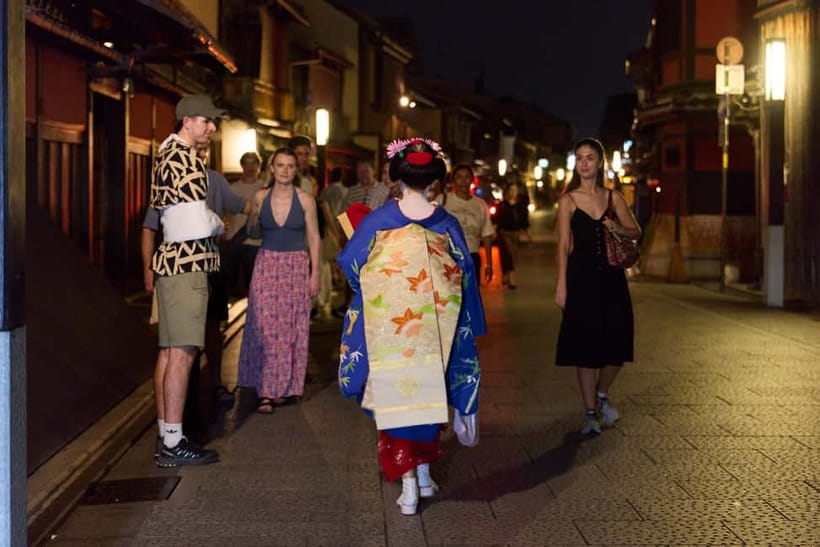
Gion is often presented as a place where you simply wander until a geisha appears. That approach misses the point. These are working entertainment districts, not open-air museums, and much of what makes them interesting is easy to overlook: a discreet entrance, a wooden townhouse, a particular street layout, or the difference between a geiko and a maiko.
This tour gives you a local guide to explain those details as you walk. You are not just being led from one photogenic lane to another. You are given a basic map of the culture, including the training and daily life behind the costumes, makeup, music, dance, and formal manners.
The evening timing matters. Pontocho and Gion are quieter and more atmospheric in some lanes after dark, while the old wooden facades and lanterns take on a softer appearance. You might also see geiko or maiko traveling to appointments. Still, this is a possibility, not a promise, and a good tour should help you appreciate the districts even if nobody appears.
I would think of the experience as an introduction rather than a full cultural performance. It does not include a meal, a private meeting with a geiko, or a stage show. What you get is a guided walk and a chance to ask questions. At $20, that is a fair exchange.
More evenings in Gion:
- Kyoto Geisha Walking Tour: Gion District & Hidden Gems
★ 4.7 · 3,273 reviews - Kyoto: Gion Magical Night Walking Tour with Geisha Trivia
★ 4.9 · 2,393 reviews - Best of Kyoto: Gion, Geisha, Pagodas & Cobblestones
★ 4.9 · 2,058 reviews
Meeting at Ben’s Cookies Kyoto Shijo
The meeting point is in front of Ben’s Cookies Kyoto Shijo, in a central part of Kyoto. Your guide holds a sign board, which makes the group easier to identify in a busy shopping area.
Arrive with enough time to locate the shop and check the guide’s sign. The tour then sets off on foot, so comfortable shoes and a bottle of water are sensible. The provided information does not list transport during the tour, and the itinerary is built around walking from one district to the next.
The opening section takes about 10 minutes. That is not a major sightseeing stop, but it gives the guide a chance to introduce the evening and set expectations. This is a useful moment to remember that geiko and maiko are working professionals. You are visiting their neighborhood and workplaces, so respectful behavior matters.
Alcohol and drugs are not allowed. Children under 10 cannot join, which makes this better suited to older children, teenagers, and adults who can handle a two-hour cultural walk.
Pontocho Alley and Kyoto’s evening lanes
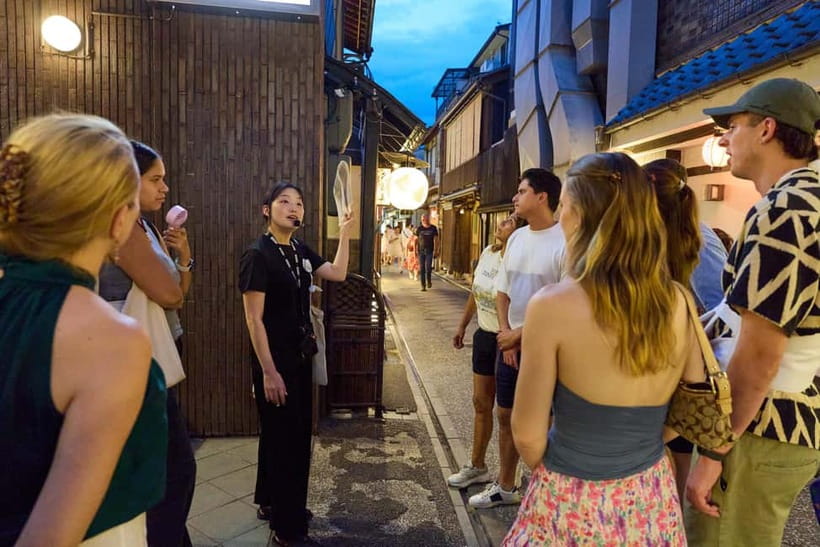
Pontocho Alley is one of the most memorable parts of the route. It is a narrow street lined with traditional Japanese restaurants and elite clubs, many of them tucked behind understated entrances. The street can look almost plain at first glance, but a guide helps you understand why those doors and facades matter.
The walk through Pontocho lasts about 15 minutes. That may sound short, but the alley itself is compact, and the value comes from the explanation rather than distance covered. You can ask about the establishments, the role of the district, and how traditional hospitality differs from the casual restaurant culture you see elsewhere in Kyoto.
This is also where the tour begins to show the difference between looking at old buildings and understanding them. A row of wooden fronts is attractive, but the guide’s stories give the street a human purpose. Pontocho is connected with Kyoto’s evening entertainment culture, and the discreet style of the alley reflects that world.
The drawback is that narrow lanes can feel crowded or difficult for a larger group. Group size appears to vary. Some groups have been as small as six, while another group included about 13 people. Smaller groups make it easier to hear and ask questions, but you should not assume every departure will feel private.
Izumo-no-Okuni and the roots of kabuki
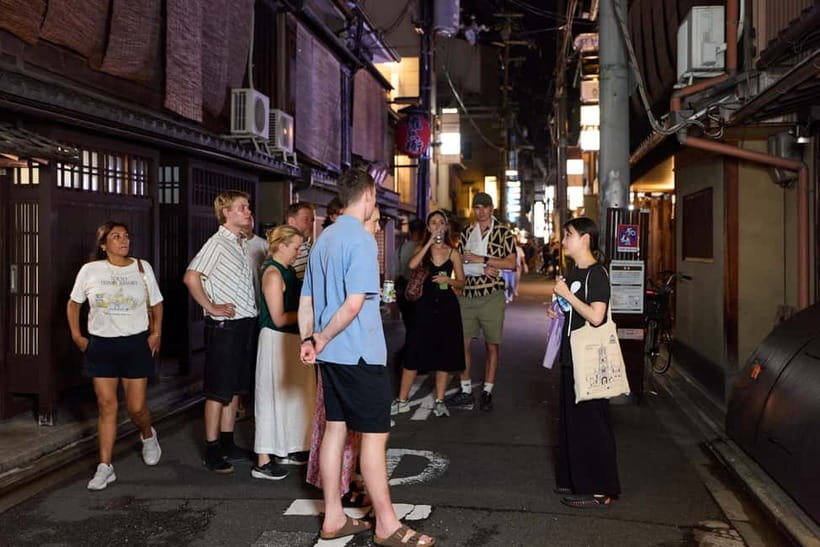
After Pontocho, the route crosses the river and stops at the statue of Izumo-no-Okuni. The guided visit lasts around 15 minutes.
Izumo-no-Okuni is remembered as the woman who invented the art of kabuki. This stop widens the tour beyond geisha culture and shows how Kyoto’s traditional performing arts developed alongside one another. It gives you a chance to connect dance, costume, music, public performance, and the more private world of teahouse entertainment.
I like this part because it prevents the tour from becoming a simple search for kimono sightings. Kyoto’s arts are linked by training, presentation, ceremony, and audience expectations. A short stop at the statue helps place geiko and maiko within that larger cultural setting.
The area around the statue is also a natural transition point. You are moving from Pontocho toward Gion, and the guide can use the walk to answer questions. Based on the way the strongest guide experiences are described, this question-and-answer time is one of the tour’s real strengths. Guides such as Nami and Yuki are praised for checking that everyone is keeping up, while Deborah is noted for handling timing and questions well.
More walking tours in Kyoto:
- Night Walk in Gion: Kyoto’s Geisha District
★ 4.5 · 2,003 reviews - Kyoto Gion Geisha District Walking Tour – The Stories of Geisha
★ 5.0 · 1,441 reviews - Nishiki Market Brunch Walking Tour (7 Tastings + Brunch)
★ 5.0 · 1,355 reviews - Kyoto Arashiyama Walking Tour: Bamboo, Monkeys, Gardens & Secrets
★ 5.0 · 1,216 reviews
Gion after dark
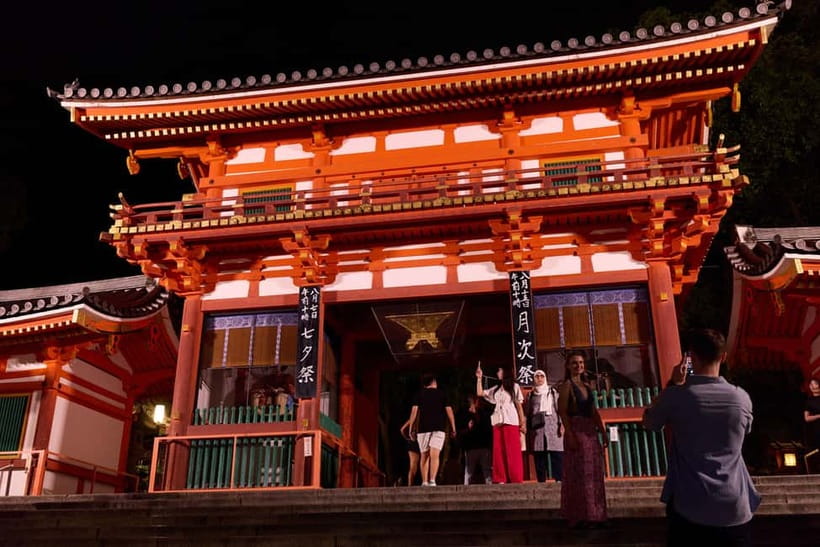
Gion is Kyoto’s most famous geisha district, but fame can work against it. Some streets are full of people holding cameras, while others remain quiet and residential in feel. The tour spends about 30 minutes exploring the district, using the lanes to explain how geiko and maiko work and train.
You will hear the terms geiko and maiko used correctly. In Kyoto, geiko refers to a professional in the traditional entertainment world, while maiko are apprentices. The distinction matters because their clothing, hairstyles, makeup, and stage of training can differ. The exact details are best learned from the guide on site, since the tour is designed to explain the customs in context.
Several guides receive especially strong praise for making this material accessible to people with no prior knowledge while still offering useful detail to those who already know something about geisha culture. Ann is noted for adjusting the content to the group, and Yuki is repeatedly described as enthusiastic and respectful toward Kyoto’s heritage.
The tour is not built around sensational stories. Its best moments come from hearing about training, the importance of ceremony, and the continuing place of geiko and maiko in Japanese culture. That approach is more useful than treating the district as a backdrop for costume photography.
If you encounter a geiko or maiko, follow your guide’s lead. The information provided promises a chance to encounter them en route to appointments, but not a formal interaction. You should not expect them to stop, pose, or explain their work. The respectful experience is to watch from an appropriate distance and let them continue on their way.
Yasaka Shrine and a pause in the route
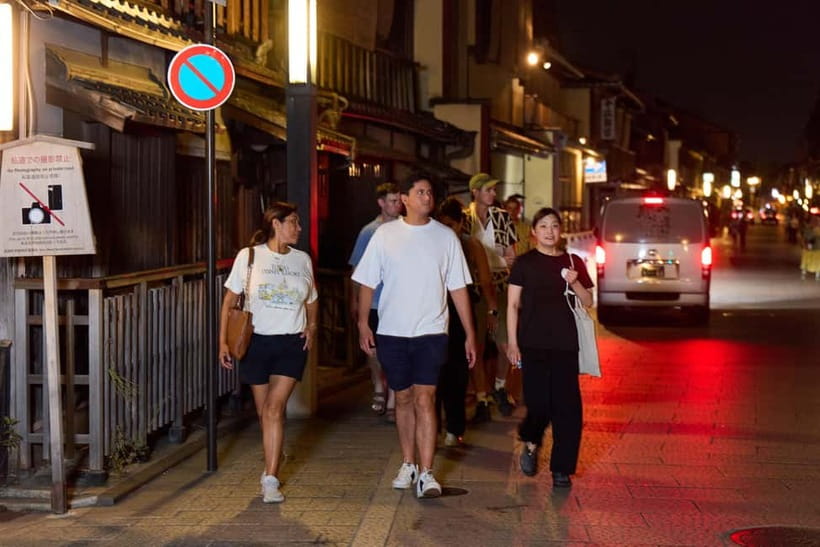
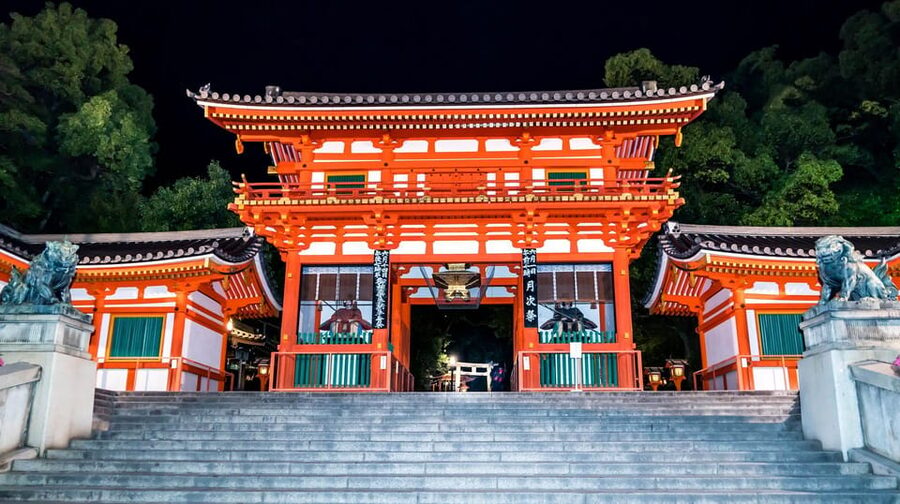
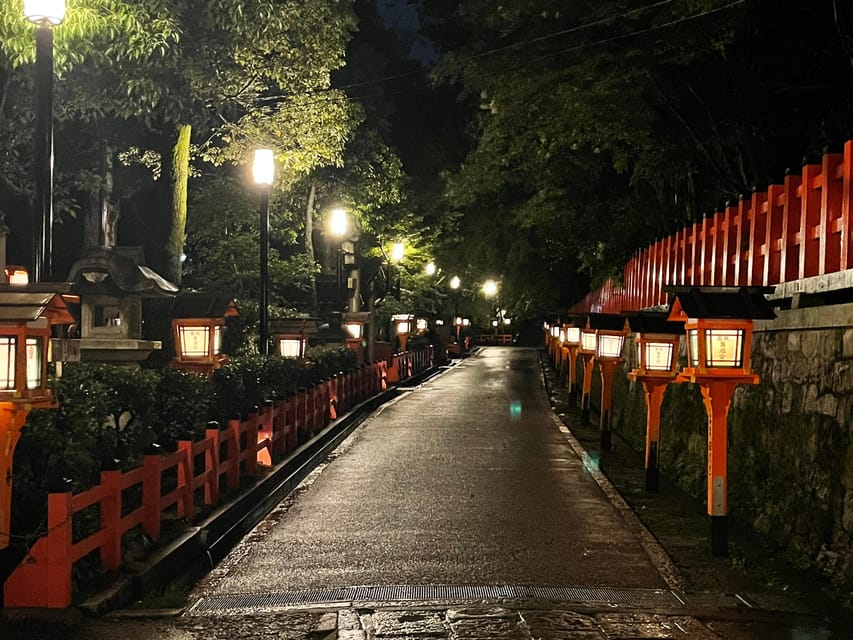
Yasaka Shrine receives about 25 minutes, making it one of the longer stops. The shrine gives the tour a religious and civic landmark amid the entertainment districts.
This pause breaks up the narrow-lane walking and adds another layer to the evening. Gion is not only about teahouses and performers. It is also part of a wider Kyoto setting where shrines, festivals, local customs, restaurants, and traditional businesses overlap.
The longer stop should help if you want to ask broader questions about Japanese customs. Guides have been praised for explaining everyday habits as well as geiko and maiko traditions, so this is a good place to ask about anything you noticed during the walk.
Weather can affect this section. One wet-weather group was moved between sheltered stopping places, which suggests the guide can adapt the explanations when rain makes standing outside unpleasant. Still, the experience remains outdoors, so bring suitable clothing and keep water with you. The operator specifically lists water as something to bring.
Gion Corner and Hanamikoji Street
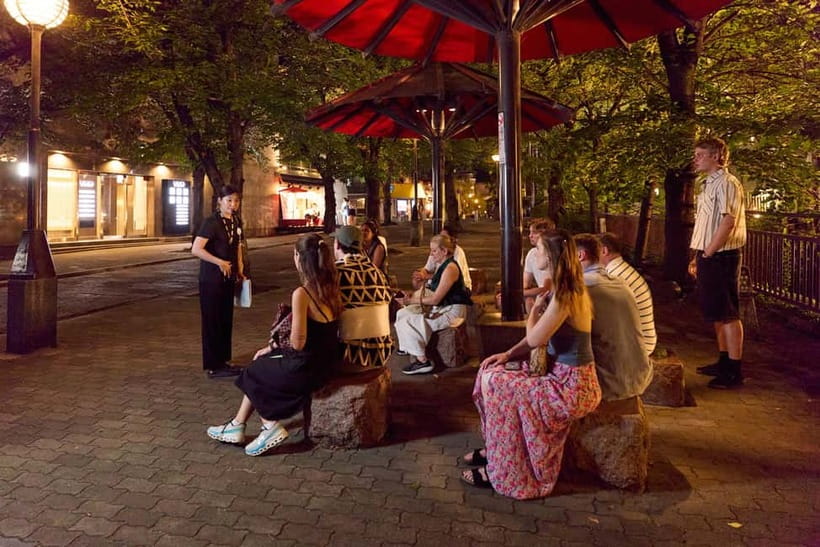
The route then visits Gion Corner for about 10 minutes. The supplied details do not specify an included performance or admission, so treat this as a guided stop rather than a show. Your guide can explain its place within Kyoto’s traditional arts scene and connect it to the larger subject of geiko and maiko performance.
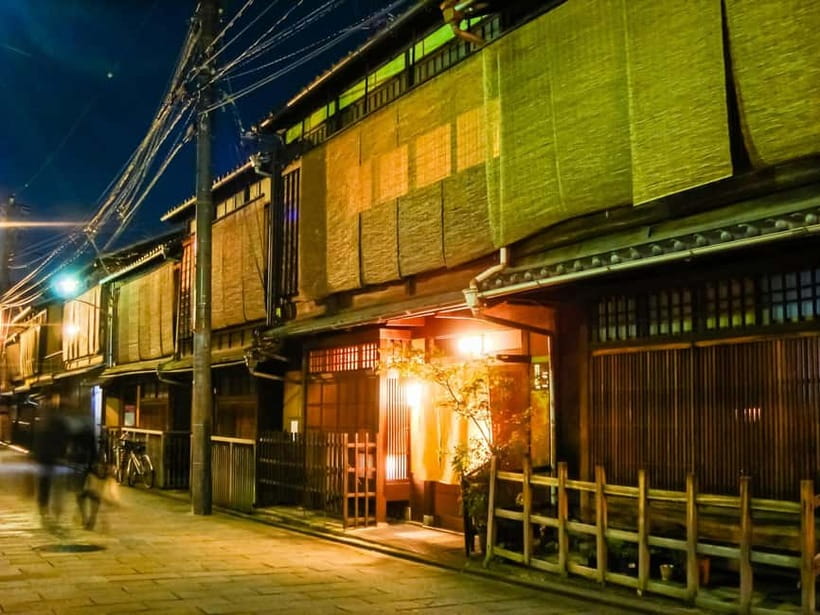
The final major stop is Hanamikoji Street, with around 15 minutes of guided exploration. This is one of Gion’s most recognizable streets, lined with traditional wooden architecture and associated with the district’s teahouse culture.
Hanamikoji is photogenic, but it is also where good manners matter most. Avoid blocking entrances or treating people heading to appointments as entertainment. A guide can point out what you are seeing without encouraging intrusive behavior.
The tour ends after this walk, away from the original Ben’s Cookies meeting point. That is a small but important practical detail. Before you set off, ask the guide where the walk finishes and note the nearest route back to your hotel or onward restaurant. One person found the return easy enough but had not realized the tour would not end where it began.
Guides make the biggest difference
The route is appealing, but the guide determines how much you take from it. The most praised guides include Yuki, Nami, Deborah, Manuel, Yukari, Kenji, Michael, Ann, Shin, Akari, and Adrian. Guide assignments can change, so you should not count on choosing a particular person unless the booking system allows it.
The recurring strengths are clear: friendly delivery, strong subject knowledge, patience with questions, and pride in Kyoto. Yuki is often described as a local who brings respect for his hometown into the walk. Nami is praised for clear communication before the tour and for keeping a comfortable pace. Deborah is noted for using photographs to explain geiko and maiko life, which can make unfamiliar clothing and training stages easier to understand.
Manuel and Kenji are particularly well regarded for making the subject lively while giving plenty of background. Yukari is described as casual and funny, while Ann is praised for adapting the material to mixed levels of interest.
This matters because two hours is not long. A dry lecture would make the lanes feel like a checklist. A good guide turns each stop into a conversation and helps you leave with a more accurate picture of the culture.
What the $20 price really buys you
At $20 per person, this is inexpensive by Kyoto activity standards. The fee includes the walking tour and a local guide, but not food, drinks, entrance tickets, or a performance. The main value is interpretation.
You are paying for a route that links Pontocho, the Izumo-no-Okuni statue, Gion, Yasaka Shrine, Gion Corner, and Hanamikoji Street in two hours. You could walk through these areas independently, but you would likely miss much of the meaning behind the buildings and customs. The guide also saves you from spending your limited Kyoto time wondering where to look or what you are seeing.
The price is especially attractive if this is your first evening in Kyoto. Several people used the walk to get their bearings and then followed restaurant or sightseeing suggestions from the guide. That kind of practical local advice can add value, though it should be treated as a helpful extra rather than a guaranteed feature.
The limitations are simple. You do not get a guaranteed geiko encounter, and you do not receive a meal or performance. If your main goal is to watch traditional arts on stage, choose a dedicated show instead. If you want context before exploring more of Kyoto, this walk makes better sense.
Flexible booking adds another practical benefit. You can cancel up to 24 hours before the start for a full refund, and the reserve-now, pay-later option lets you hold a place without paying immediately.
Who should book this walk
I would recommend it to first-time Kyoto visitors, culture-minded adults, and anyone who wants a clear introduction to geiko and maiko traditions without spending a large sum. It also suits people with only a short stay, since two hours gives you a focused look at two important districts.
It works well for curious visitors who like to ask questions. The guides are repeatedly praised for making time for them, and the pace is described as easy rather than rushed.
It is less suitable if you dislike walking at night, want guaranteed contact with a geiko or maiko, or expect a formal entertainment program. The tour is also not available to children under 10.
Dress for an outdoor walk, bring water, and wear shoes you can comfortably use for two hours. If rain is in the forecast, prepare for it rather than assuming the tour will move entirely indoors.
Should you book the Gion Geisha District Walking Tour?
For $20, I think this is a strong-value Kyoto introduction. You get Pontocho’s discreet alley, the Izumo-no-Okuni statue, Gion’s old streets, Yasaka Shrine, and Hanamikoji, tied together by a guide who can explain the difference between geiko and maiko and the traditions behind their work.
Book it if you want understanding as well as atmosphere. Go with realistic expectations: a geiko or maiko may pass by, but the real payoff is learning how to see the district respectfully. If you want a meal or performance, book something else alongside it. For a compact evening orientation with plenty of local context, this walk earns its strong 4.7 rating from 2,187 bookings.
FAQ
Where does the tour meet?
Meet your guide in front of Ben’s Cookies Kyoto Shijo. The guide will be holding a sign board.
How long does the tour last?
The walking tour lasts two hours.
What areas does the tour visit?
The route includes Pontocho Alley, the statue of Izumo-no-Okuni, Gion, Yasaka Shrine, Gion Corner, and Hanamikoji Street.
Is the tour held at night?
Yes. This is a nighttime walking tour of Kyoto’s Gion and Pontocho districts.
Will I definitely see a geiko or maiko?
No. You may encounter geiko or maiko traveling to appointments, but sightings are not guaranteed.
Which languages are available?
The live guide is available in English or Spanish.
What is included in the price?
The $20 price includes the walking tour and a local guide.
Can children join the tour?
Children under 10 are not permitted to join.
What should I bring?
Bring water and wear suitable clothing and shoes for an outdoor walk.
Recently added around Kyoto
- Higashiyama | Kyoto: Sakura Season Private Rickshaw Tour★ 5.0 · 3 reviews
- Kyoto Kimono Rental CHAMATSU|Kimono/Yukata Rental FamilyPlan★ 5.0 · 3 reviews
- Kyoto: Half-Day Private Guided Tour to the Old Town of Gion★ 4.4 · 3 reviews
- Nara Private Customizable Half Day Tour★ 5.0 · 3 reviews
- Full Day Nara Deer, Temple, Shrine, Activities & Tea Ceremony★ 5.0 · 3 reviews
- Nara: Essential Private Tour with Deer Park and Temples★ 5.0 · 3 reviews
- Kansai Region Hiking Adventure in Nara Kobe Kyoto and More★ 5.0 · 3 reviews
- Hiking Tour for Sacred Sites in Kyoto with a Guide★ 5.0 · 3 reviews
Gion Geisha District Tours, compared.

Kyoto Geisha Walking Tour: Gion District & Hidden Gems
Read our review →
Gion Magical Night Walking Tour with Geisha Trivia
Read our review →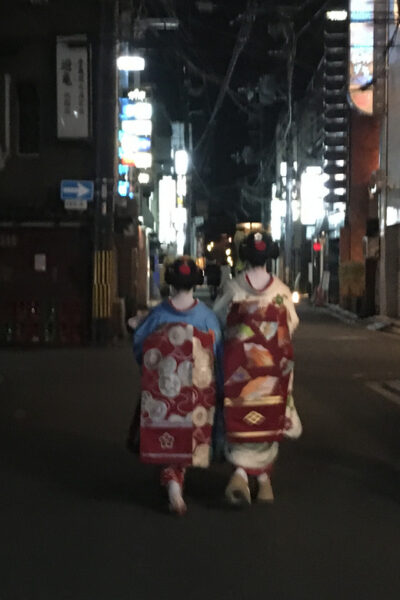
Best of Kyoto: Gion, Geisha, Pagodas & Cobblestones
Read our review →
Kyoto Night Foodie Tour in Gion (9+ dishes + 6 Sake tastings)
Read our review →
Kyoto Gion Geisha District Walking Tour – The Stories of Geisha
Read our review →
Kyoto Gion: 2-Hour Geisha Culture & History Walking Tour
Read our review →
Chopsticks Making Workshop in Gion with Engraving Option
Read our review →Browse the lists this tour appears in