
REVIEW · FUSHIMI INARI SHRINE TOURS
Kyoto Early Bird Tour in Uji and Fushimi Inari
Kyoto’s most famous red gates and Uji’s finest temples make an efficient pair on this early morning tour. You begin at Fushimi Inari-taisha, then travel south to Byodoin Temple and Ujigami Shrine, finishing at Uji Station after about five and a half hours.
I like the small maximum of eight people, which gives you room to ask questions. I also like that Byodoin entry is included, saving you a ticket-line chore. The main catch is that transportation costs an extra ¥390 per person, and the tour ends in Uji rather than returning to Kyoto.
In This Review
- Key points to know before booking
- Why this Kyoto and Uji combination works
- Fushimi Inari before the crowds
- Byodoin Temple and the Phoenix Hall
- Ujigami Shrine, a quieter final stop
- A guide who helps the sites make sense
- What the $55.18 price really covers
- Starting at Kyoto Station and finishing in Uji
- Who should book this morning tour
- Practical tips for getting the most from the route
- Should you book the Kyoto Early Bird Tour?
- FAQ
- How long does the Kyoto Early Bird Tour last?
- Where does the tour begin?
- Where does the tour end?
- Which attractions are included?
- Is admission to Byodoin Temple included?
- Is transportation included?
- How large is the tour group?
- Is lunch included?
- Can I cancel for a full refund?
Key points to know before booking
- Early access to Fushimi Inari: See the famous vermilion gates before the worst afternoon crowds arrive.
- Three major sights in one morning: Combine Fushimi Inari, Byodoin Temple, and Ujigami Shrine without arranging separate visits.
- Byodoin admission included: Your temple entry is covered, but transportation and lunch are not.
- Small group of eight or fewer: You get a better chance to hear the guide and ask about Shinto, Buddhism, and local history.
- Guide Genki earns special praise: His clear, warm explanations help make the religious sites easier to understand.
- Convenient one-way plan: Start at Kyoto Station and finish at Uji Station, useful if Uji is your next stop.
Why this Kyoto and Uji combination works
Kyoto has no shortage of famous places, but seeing them in one morning is not always easy. Fushimi Inari is in southeastern Kyoto, while Uji lies farther south. Byodoin and Ujigami are close enough to visit together, yet they feel different from the city’s busiest central sights.
This tour handles that southbound route in a sensible order. You begin at Kyoto Station, visit Fushimi Inari while the morning is still young, and then continue to Uji. The finish at Uji Station is not a flaw if you plan to spend more time in Uji. It can even save you from backtracking.
I especially like the change in mood along the way. Fushimi Inari is dramatic and instantly recognizable, with its long rows of red gates. Uji is quieter and more reflective, with temple grounds, old wooden buildings, and a slower pace. In five and a half hours, you get both the iconic Kyoto image and a more subdued historic town.
The tour is capped at eight people. That matters at religious sites, where a large group can block paths and make explanations hard to hear. You should also have a moderate level of fitness. The tour involves walking at three major stops, and Fushimi Inari is best appreciated on foot.
More ways to walk Fushimi Inari:
- Kyoto: Fushimi Inari, Kinkakuji, Bamboo Grove 1 Day Bus Tour
★ 4.8 · 4,316 reviews - Fushimi Inari Hidden Hiking Tour (Private Option Available)
★ 5.0 · 1,750 reviews - Kyoto/Osaka: Nara, Fushimi Inari Taisha, Arashiyama Bus Tour
★ 4.7 · 1,275 reviews
Fushimi Inari before the crowds
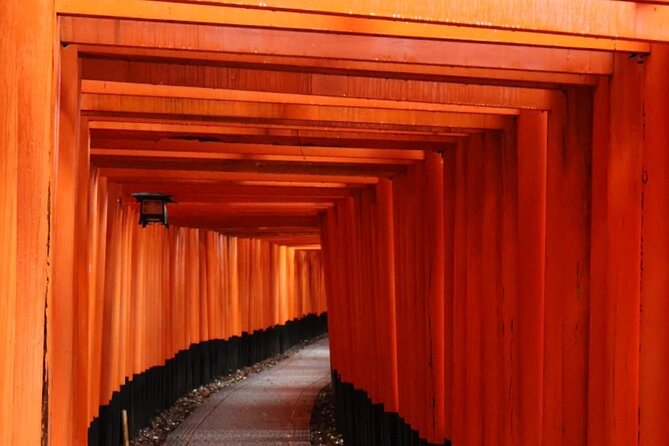
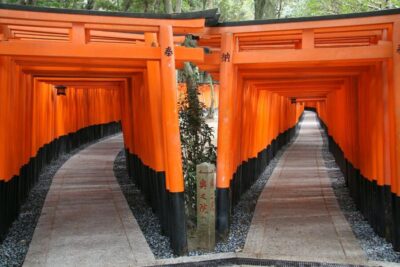
Your first stop is Fushimi Inari-taisha, one of Japan’s best-known shrines. The defining sight is the passage of thousands of red torii gates, each creating another frame through the hillside shrine grounds.
The early start is the point here. Fushimi Inari is a major draw, and its most famous paths can become crowded later in the day. An early visit gives you a better chance to enjoy the gates without the packed afternoon tour-bus atmosphere.
You have about one and a half hours at the shrine. That is enough time to walk through the striking gate corridors, pause for photographs, and listen to the guide’s explanation of what you are seeing. It is not an attempt to cover every corner of the huge shrine complex, so keep your expectations in check. The value comes from seeing the main experience at a better hour, not from an exhaustive hike.
The red gates are visually powerful, but the guide adds useful context. Genki has been praised for explaining the differences between Shinto and Buddhism in a way that is easy to retain. That kind of explanation helps you understand why the shrine feels different from a Buddhist temple later in the morning.
Fushimi Inari is also the most physically demanding part of the route for many people. You should wear comfortable shoes and expect stairs or sloping paths. The provided information calls for moderate physical fitness, so this is not the best pick if you need a fully flat, low-walking outing.
Byodoin Temple and the Phoenix Hall
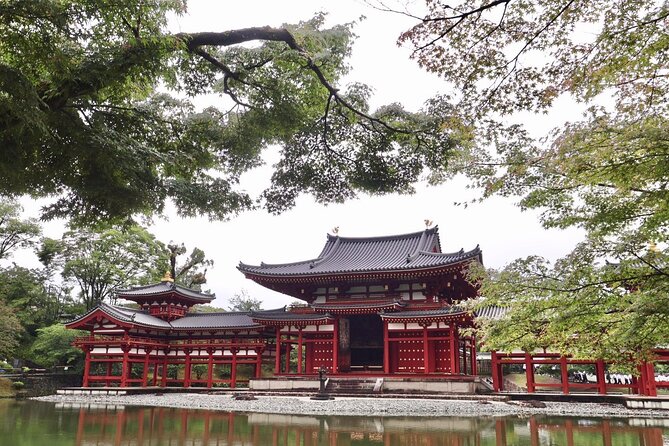
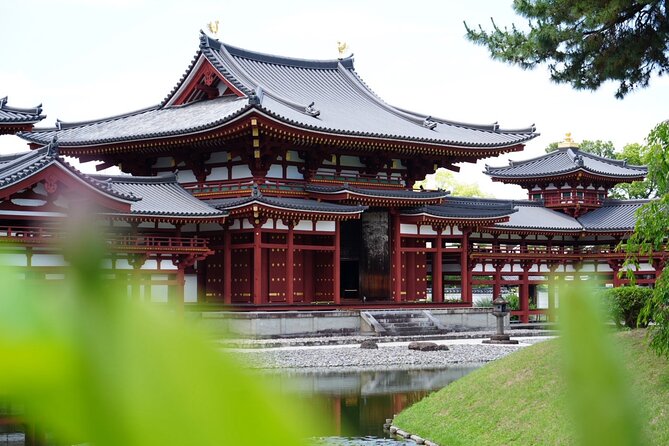
After Fushimi Inari, the tour continues to Uji and Byodoin Temple. This is the morning’s major temple visit, and the admission fee is included in the tour price.
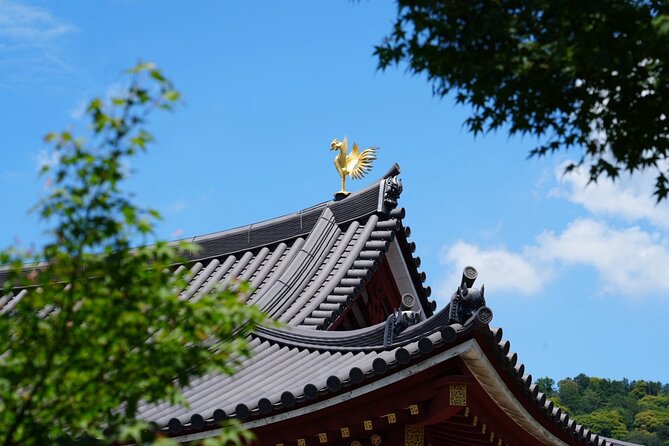
Byodoin is a UNESCO World Heritage Site and one of Uji’s signature sights. Its Phoenix Hall is famously pictured on the Japanese 10 yen coin, a detail that gives the building an immediate connection to everyday life in Japan. You are not just looking at an old temple. You are seeing one of the country’s most recognizable architectural images in person.
The temple visit lasts about 90 minutes. That gives the guide time to explain the site and gives you space to look carefully rather than rushing from gate to gate. The included admission is useful because you do not need to stop and arrange that ticket yourself.
I see two main benefits here. First, Byodoin gives the tour a major cultural anchor beyond the red gates of Fushimi Inari. Second, visiting with a small group makes it easier to ask questions about the temple’s design, religious role, and place in Japanese culture.
The limitation is that the tour does not include lunch. Since the route continues to another shrine and ends at Uji Station, you should plan to eat after the tour or make your own arrangements. The supplied details do not specify a meal stop, so do not count on lunch being part of the morning.
Ujigami Shrine, a quieter final stop
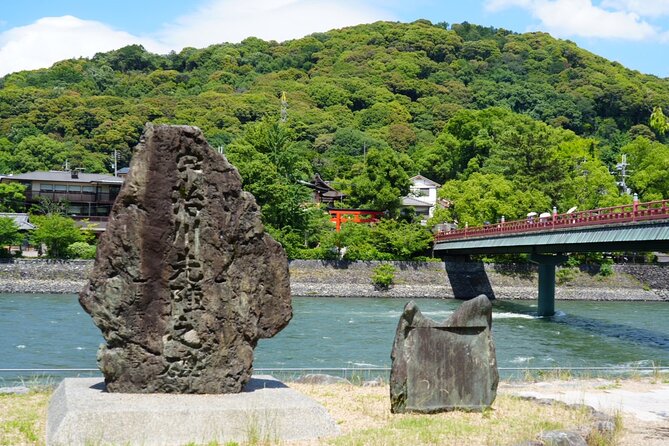
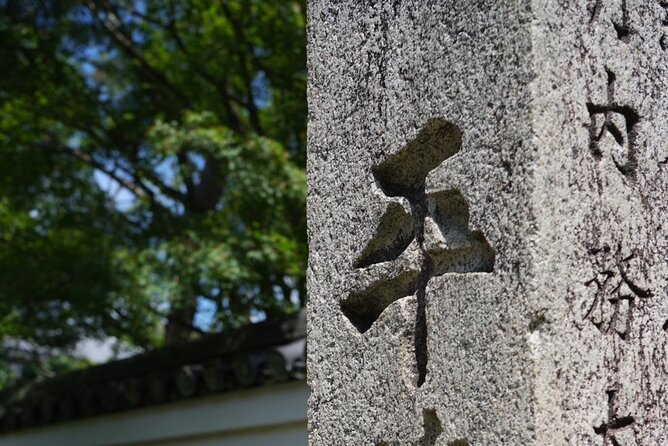
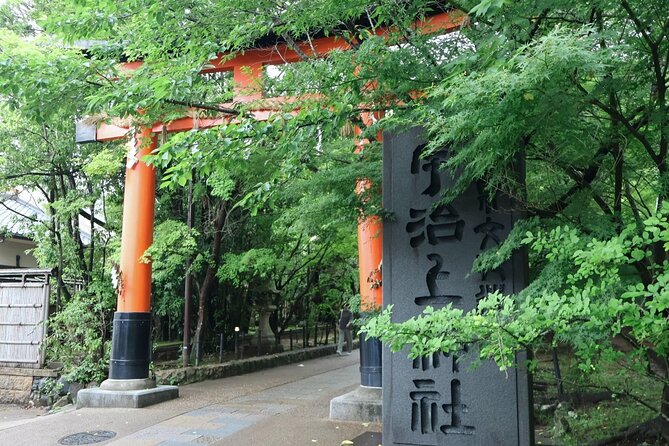
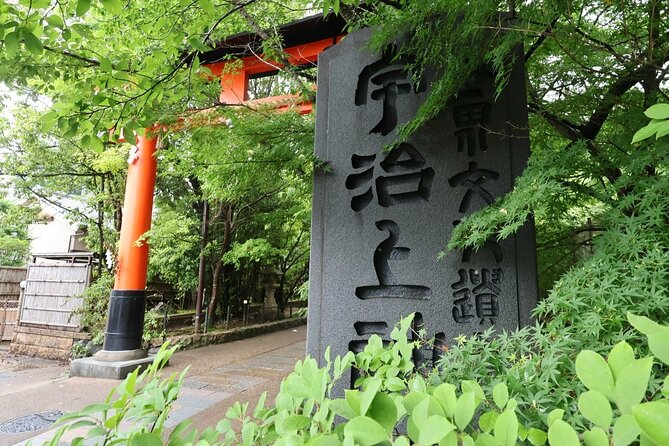
The final scheduled sight is Ujigami Shrine, described as Japan’s oldest standing shrine. Compared with Fushimi Inari and Byodoin, it is the understated stop. That is precisely why it works well near the end of the tour.
Ujigami has old wooden architecture and moss-covered grounds. You might find the setting calmer and less showy than the first two stops. Instead of another headline attraction, you get a place where the details matter: the age of the buildings, the quiet grounds, and the contrast between a modest shrine and Kyoto’s more famous monuments.
You have about 90 minutes here. The guide can help you understand the difference between a Shinto shrine and a Buddhist temple, a useful thread running through the entire tour. Genki’s style, based on the information provided, is warm and clear without overloading you with facts. That is important during a morning with three historic sites. Too much information can blur together, while a few well-chosen explanations tend to stay with you.
Ujigami is also a good reason to choose this tour instead of only visiting Fushimi Inari. If you have already seen Kyoto’s headline sights, this stop adds a more peaceful side of the region. It is not flashy, but it gives the morning a satisfying change of pace.
More time in Uji:
- World Heritage Kyoto & Nara Uji Authentic Matcha Experience
★ 5.0 · 1,573 reviews - Uji: Green Tea Tour with Byodoin and Koshoji Temple Visits
★ 4.8 · 72 reviews - Uji: UNESCO Heritage & Tea Ceremony Walking Tour
★ 4.6 · 54 reviews - Matcha Grinding Experience and Walking Tour in Uji Kyoto
★ 5.0 · 26 reviews
A guide who helps the sites make sense
The guide can make or break a temple-and-shrine tour. Here, Genki is the named guide associated with the strongest praise in the supplied feedback. His strengths are described as warmth, care, clear teaching, and a good sense of how much information people can absorb.
That last point deserves attention. Religious sites in Japan can be confusing when you do not know the basic difference between Shinto and Buddhism. A good guide does not simply repeat dates and architectural terms. The guide gives you a framework for noticing what makes a shrine a shrine and a temple a temple.
The small group also improves the experience. With no more than eight people, you can ask a question without stopping a large procession. You are more likely to hear explanations clearly and stay close to the guide while moving through the sites.
This is still a group tour, not a private outing. The pace and route are set for you, and the guide must keep the group moving between stops. If you want to spend a long time photographing one gate or study every building at Byodoin, an independent visit will give you more freedom.
What the $55.18 price really covers
At $55.18 per person, the tour is priced reasonably for a half-day guided outing, especially because Byodoin Temple admission is included. You are also paying for route planning, an English-speaking guide, and the convenience of seeing three important places without arranging the sequence yourself.
The transportation fee is separate and listed as ¥390 per person. That is a small extra cost, but it is worth knowing before you book. Lunch is also not included.
The value depends on how you travel. If you are comfortable planning trains, finding the correct shrine entrances, buying tickets, and learning the background on your own, you can likely visit these places independently. The tour earns its price through structure and explanation rather than luxury.
I think the price makes the most sense for a first visit to Kyoto, a short stay, or anyone who wants to cover Fushimi Inari and Uji in one organized morning. It is less compelling for you if you already know the area well or prefer to set your own pace.
The tour is often booked well in advance, with an average booking lead time of 62 days. That does not mean you must reserve exactly that far ahead, but it suggests that you should not leave it until the last moment if your Kyoto dates are fixed.
Starting at Kyoto Station and finishing in Uji
The meeting point is Kyoto Station, at Higashishiokoji Kamadonocho in Shimogyo Ward. Kyoto Station is a practical place to begin, but you should allow enough time to find the meeting point. The supplied information confirms that the tour starts there, but it does not provide a more detailed landmark or exact platform instruction.
The tour ends at Uji Station. This one-way design can work very well. You can continue exploring Uji after the scheduled stops, find lunch there, or make your own way back to Kyoto later.
If you plan to return to Kyoto, tell the guide. The guide can explain how to do it, but will not take the train back with the group. That means you should be comfortable following directions independently after the tour ends.
The end point may be inconvenient if your hotel is in central Kyoto and you have luggage with you. It is also less suitable if you have a strict afternoon reservation back in the city. Check your plans before booking, and allow some flexibility after Uji Station.
The mobile ticket is useful for keeping your booking details on your phone. Confirmation is provided when you book, and the tour is close to public transportation.
Who should book this morning tour
I would recommend this experience to you if you want a compact introduction to southeastern Kyoto and Uji. It is particularly suited to:
- First-time Kyoto visitors who want major sights without joining a large coach group
- People who prefer cooler, quieter morning visits
- Anyone interested in both Shinto shrines and Buddhist temples
- Couples, solo visitors, or small families who value access to an English-speaking guide
- People who plan to spend more time in Uji after the tour
- Those with moderate fitness who are comfortable walking between and within the sites
I would be more cautious if you dislike early starts, have limited mobility, need a fully flat route, or want a relaxed afternoon return to central Kyoto. The tour covers a lot of ground in one morning, and the end point requires some planning.
It is also not the right choice if food is a major part of your sightseeing plan. Lunch is not included, and no meal stop is specified. Plan to eat afterward in Uji or arrange food separately.
Practical tips for getting the most from the route
Wear shoes that can handle stairs and uneven walking. Fushimi Inari is most enjoyable when you can move comfortably through the gate paths without worrying about your feet.
Keep your phone charged. The mobile ticket is part of the experience’s convenience, and you may also want your phone for directions after the tour ends at Uji Station.
Bring a little patience for the transport portion. The tour’s three visits are each planned for about 90 minutes, but the morning also includes travel between Kyoto, Fushimi Inari, and Uji. The schedule is designed to show you several places, not to give you a full day at any one site.
Ask questions. The small group is one of the tour’s best features, and Genki’s teaching style is described as clear and easy to follow. If you are curious about the difference between Shinto and Buddhism, this is a good setting to ask.
Finally, think about what you want to do after Ujigami Shrine. Since the tour ends at Uji Station, you can turn the outing into a longer Uji day, or you can return to Kyoto on your own. Either plan works, but the tour is easier to enjoy when the rest of your day is not tightly timed.
Should you book the Kyoto Early Bird Tour?
Book it if you want Fushimi Inari and Uji in one morning, prefer a small group, and value an English-speaking guide who can explain the difference between Shinto and Buddhism without burying you in facts. The included Byodoin admission and quiet early timing add real value.
Skip it if you need a private schedule, a meal included, or a direct return to Kyoto with the group. For most first-time visitors who can manage moderate walking, this is a smart, well-focused way to see three important sites before the day gets crowded.
Free cancellation is available up to 24 hours before the start time for a full refund. Changes or cancellations made less than 24 hours ahead are not accepted or refunded.
FAQ
How long does the Kyoto Early Bird Tour last?
The tour lasts approximately 5 hours and 30 minutes.
Where does the tour begin?
The meeting point is Kyoto Station in Shimogyo Ward, Kyoto.
Where does the tour end?
The tour ends at Uji Station.
Which attractions are included?
The tour visits Fushimi Inari-taisha Shrine, Byodoin Temple, and Ujigami Shrine.
Is admission to Byodoin Temple included?
Yes. The entrance fee to Byodoin Temple is included in the tour price.
Is transportation included?
No. Transportation costs an additional ¥390 per person.
How large is the tour group?
The tour has a maximum of eight travelers.
Is lunch included?
No. Lunch is not included.
Can I cancel for a full refund?
Yes, if you cancel at least 24 hours before the experience start time. Cancellations made less than 24 hours ahead are not refunded.
More Kyoto Early Morning Tours in Kyoto
- Kyoto Early Morning Tour with English-Speaking Guide
★ 5.0 · 1,427 reviews - Kyoto: Early Morning Tour with English-Speaking Guide
★ 4.9 · 1,128 reviews - Nara Early Morning Tour (Kyoto or Osaka Departure Available)
★ 5.0 · 676 reviews - Arashiyama Bamboo Forest & Hidden Gems Bike Tour (Early Bird)
★ 5.0 · 613 reviews
Recently added around Kyoto
- Higashiyama | Kyoto: Sakura Season Private Rickshaw Tour★ 5.0 · 3 reviews
- Kyoto Kimono Rental CHAMATSU|Kimono/Yukata Rental FamilyPlan★ 5.0 · 3 reviews
- Kyoto: Half-Day Private Guided Tour to the Old Town of Gion★ 4.4 · 3 reviews
- Nara Private Customizable Half Day Tour★ 5.0 · 3 reviews
- Kansai Region Hiking Adventure in Nara Kobe Kyoto and More★ 5.0 · 3 reviews
- Full Day Nara Deer, Temple, Shrine, Activities & Tea Ceremony★ 5.0 · 3 reviews
- Nara: Essential Private Tour with Deer Park and Temples★ 5.0 · 3 reviews
- Hiking Tour for Sacred Sites in Kyoto with a Guide★ 5.0 · 3 reviews
Fushimi Inari Shrine Tours, compared.
Fushimi Inari, Kinkakuji, Bamboo Grove 1 Day Bus Tour
Read our review →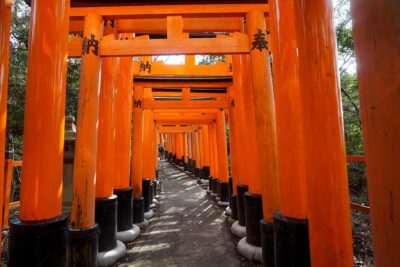
Fushimi Inari Hidden Hiking Tour (Private Option Available)
Read our review →
Kyoto/Osaka: Nara, Fushimi Inari Taisha, Arashiyama Bus Tour
Read our review →
Nijo, Kinkaku-ji, Arashiyama, Kiyomizu & Fushimi Inari
Read our review →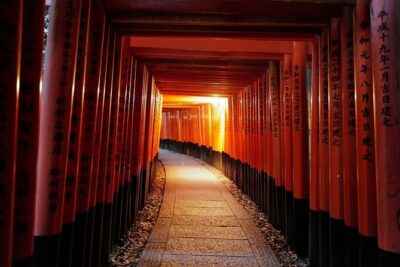
Kyoto Early Bird English Tour: Fushimi-Inari and Arashiyama
Read our review →
Fushimi, Arashiyama – Bamboo, Monkey, Torii & Secrets
Read our review →Browse the lists this tour appears in