
REVIEW · KYOTO TEA CEREMONY EXPERIENCES
Kyoto: Table-Style Tea Ceremony at a Kyo-Machiya
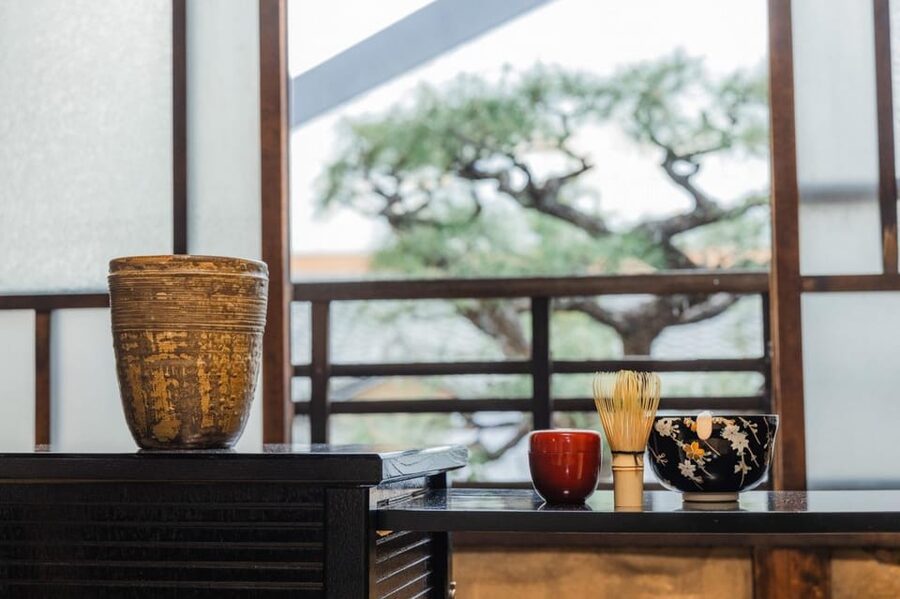
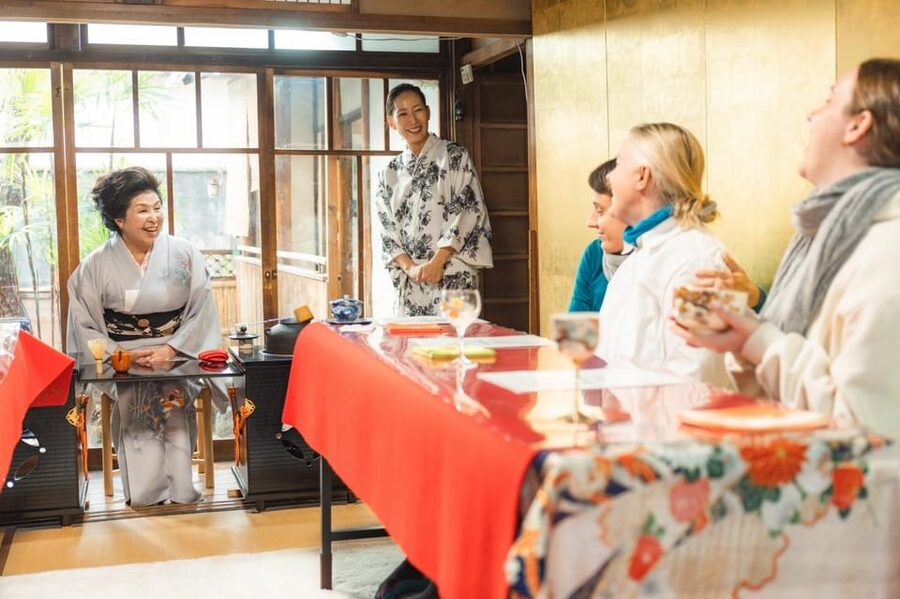
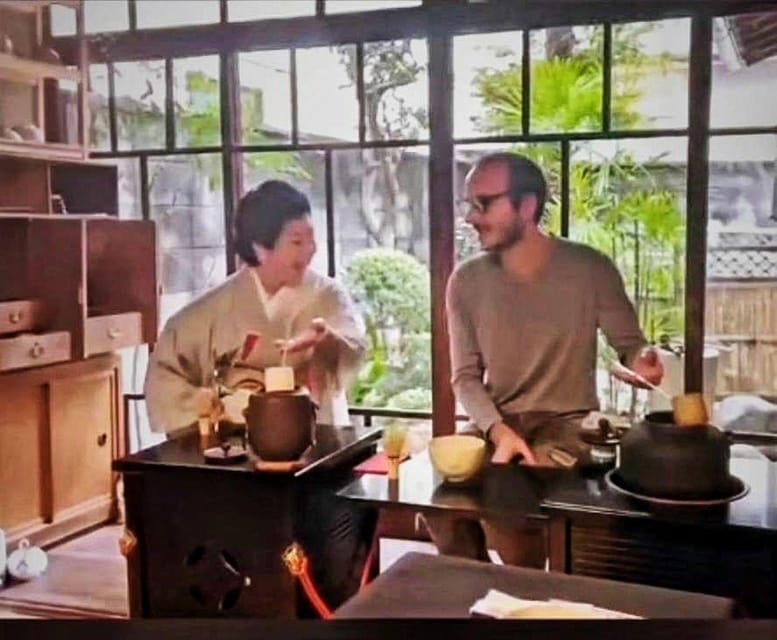
Kyoto tea ceremonies often mean kneeling on tatami, but this one takes place at tables and chairs, a welcome choice if your knees dislike long periods on the floor. In a more than 100-year-old Kyo-Machiya, you learn the customs, watch the tea being prepared, and then whisk your own frothy matcha.
I like the mix of serious tradition and hands-on fun: you can purify yourself at a garden stone basin, then make matcha, try flower arranging, and write your name in Japanese. I also like the setting in Fushimi, a sake-making district with food, shopping, and easy train links to Fushimi Inari, Uji, Osaka, and Nara. The main drawback is location: this is not central Kyoto, and wheelchair users cannot take part. The kimono option also requires arriving 30 minutes early.
In This Review
- Key points to know before booking
- Why the chair-style ceremony works so well
- Entering a 100-year-old Kyo-Machiya
- What happens during the 90 minutes
- Welcome drinks and an introduction
- Watching the tea ceremony
- Making your own matcha
- Calligraphy and your name in Japanese
- Flower arranging
- Adding the kimono option
- Why Fushimi is a useful base
- Is $45 a good value?
- Who will enjoy this most
- Practical tips for a smoother visit
- Should you book this Kyoto tea ceremony?
- FAQ
- How long does the Kyoto table-style tea ceremony last?
- How much does the experience cost?
- Do I have to sit on the floor?
- Is the activity conducted in English?
- What is included in the tea ceremony?
- Can I rent a kimono?
- Is the kimono option suitable during pregnancy?
- How do I reach the townhouse from Kyoto Station?
- Is the experience suitable for wheelchair users?
Key points to know before booking
- Tea ceremony without floor sitting: Tables and chairs make the 90-minute session easier for many people.
- A real old townhouse setting: You’ll see traditional rooms, a garden, Buddhist and Shinto altars, and antiques.
- More than tea: The program can include matcha making, sweets, drinks, calligraphy, flower arranging, and photo time.
- Kimono adds the visual magic: Choose the kimono option for dressing, hairstyling, and garden photos, but arrive early.
- Fushimi makes a smart day trip: Pair the ceremony with sake shops, Fushimi Inari, or a train ride to Uji.
- Strong English support: The activity is conducted in English, with private or small-group choices available.
Why the chair-style ceremony works so well
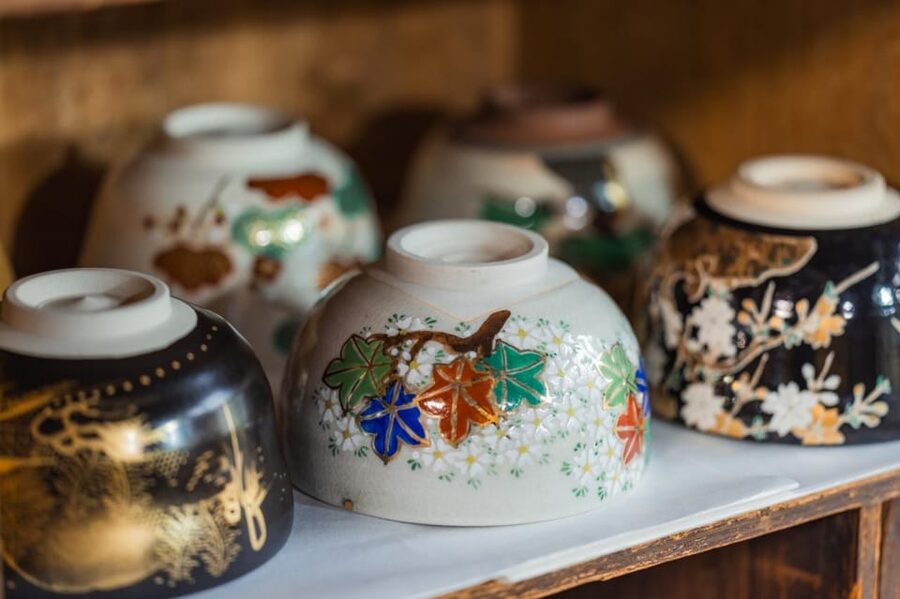
The clever idea here is simple: you experience Japanese tea customs without spending the session kneeling on the floor. You sit at a table, which makes the activity friendlier for older adults, families, and anyone with stiff knees or a leg injury.
That does not mean the ceremony feels stripped down. You still learn how guests purify themselves, how to behave around the tea, and why each movement matters. The hosts explain the spirit of the ceremony, Japanese manners, and the development of tea culture with an English presentation before moving into the practical part.
I would think of this as an introduction rather than formal tea training. You will not become a tea master in 90 minutes, but you will understand enough to recognize the care behind the quiet gestures. The table arrangement also lets you focus on the details instead of worrying about your posture.
The experience is run by Éclat Japon, with hosts in kimono and English instruction. The available information does not give the guides’ individual names, but the teaching team includes several kimono-clad hosts. Their role is hands-on, from helping with clothing to guiding each movement and answering questions.
More tea ceremonies in Kyoto:
- Kyoto: Tea Ceremony in a Traditional Tea House in Kiyomizu
★ 4.9 · 3,519 reviews - Kyoto: Tea Ceremony Ju-An at Jotokuji Temple
★ 4.9 · 3,207 reviews - Kyoto: 45-Minute Tea Ceremony Lesson Experience
★ 4.3 · 2,378 reviews
Entering a 100-year-old Kyo-Machiya
The house is one of the main reasons to make the trip to southern Kyoto. From the outside, it may look modest, with a blue curtain marking the entrance. Inside, you find the narrow rooms, old furnishings, traditional altars, and small architectural touches that give a Kyo-Machiya its character.
You are invited to walk through the townhouse rather than simply sit down for tea. Look for the Buddhist and Shinto altars and the antiques. These details connect the activity to ordinary Kyoto life, not just to a staged performance created for visitors.
The garden adds another layer. Before the ceremony, you can learn how to purify yourself at a stone basin, following a custom associated with shrine visits. This short ritual helps explain why Japanese ceremonies often begin with a physical act of preparation.
The setting is also useful for photographs. Umbrellas, folding fans, and a katana are available as props, and the garden provides a traditional backdrop. If you choose the kimono option, plan extra time for photos. The combination of old rooms, garden details, and formal clothing gives you much better keepsakes than a quick snapshot beside a city attraction.
What happens during the 90 minutes
The exact order can vary, especially if you add the kimono option, but you should expect a series of short activities rather than one long demonstration.
Welcome drinks and an introduction
You begin with a welcome drink. Depending on the arrangements, this can be sake or juice, along with Japanese tea. The opening gives you time to settle in and meet the hosts before the more formal portion begins.
A PowerPoint presentation explains how the tea ceremony developed in Japan and introduces the manners and ideas behind it. This background matters because the ceremony has many small movements that can seem mysterious if you only watch them. Here, you learn what you are seeing before trying it yourself.
The English instruction is a major practical advantage. You can ask questions freely, and the activity is designed for English-speaking participants. French support has also been provided during at least some sessions, but English is the stated activity language, so do not book expecting a multilingual program as standard.
A completely different side of Kyoto:
- PERFECT KYOTO 1-Day Bus Tour
★ 5.0 · 13,518 reviews - Kyoto: Fushimi Inari, Kinkakuji, Bamboo Grove 1 Day Bus Tour
★ 4.8 · 4,316 reviews - Kyoto Geisha Walking Tour: Gion District & Hidden Gems
★ 4.7 · 3,273 reviews - Kyoto: Gion Magical Night Walking Tour with Geisha Trivia
★ 4.9 · 2,393 reviews
Watching the tea ceremony
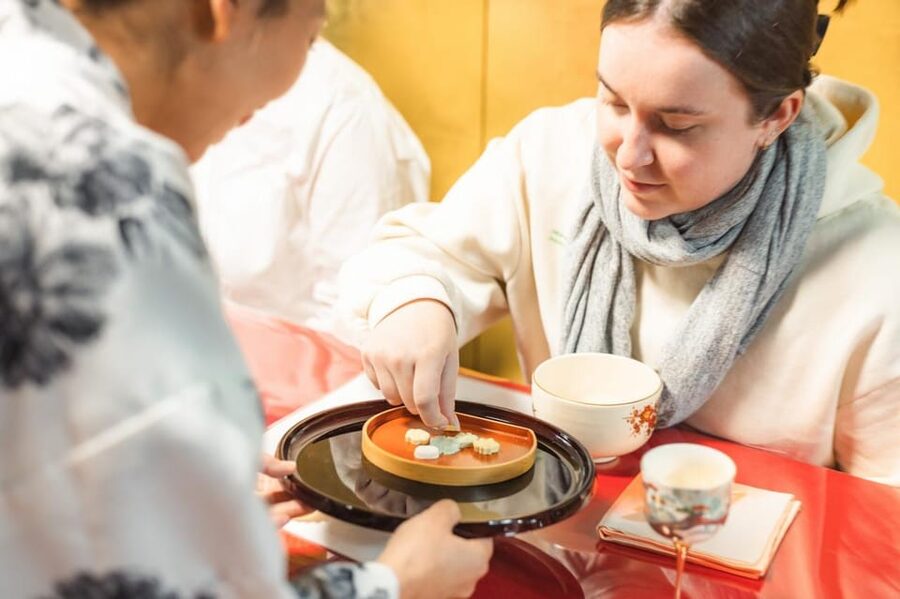
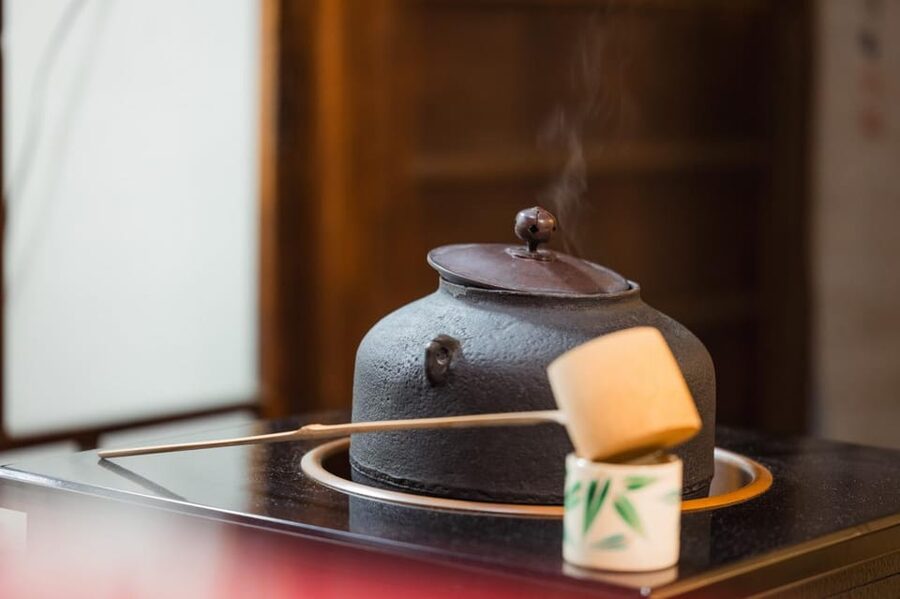
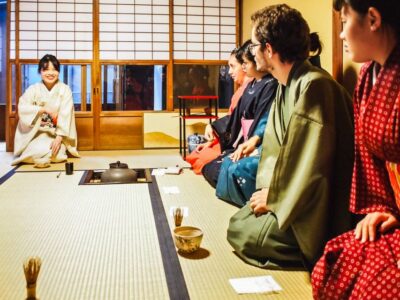
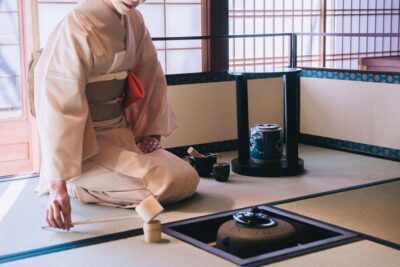
The hosts then perform a tea ceremony while explaining the utensils, movements, and etiquette. Pay attention to the deliberate pace. The point is not simply to drink powdered green tea. The ceremony places value on preparation, respect, cleanliness, and attention to the moment.
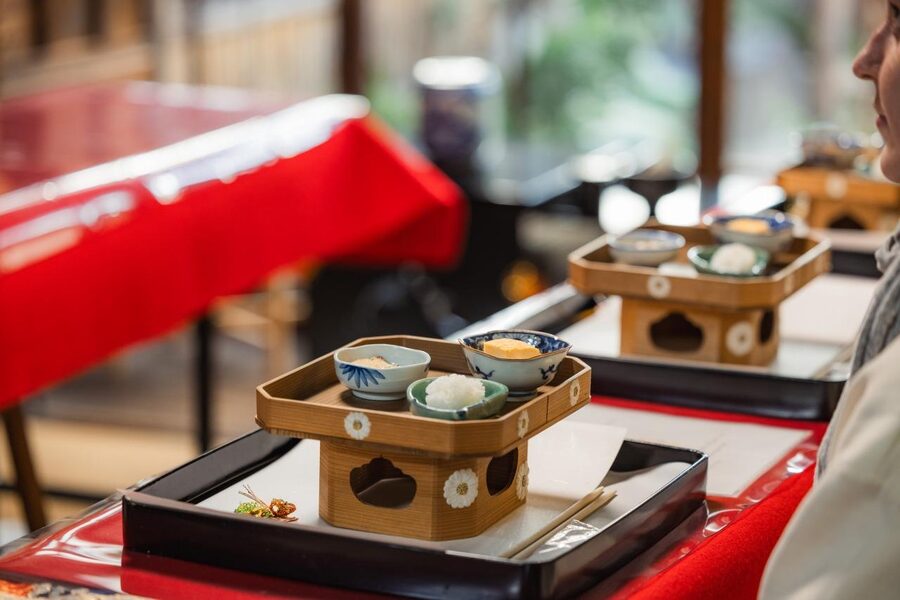
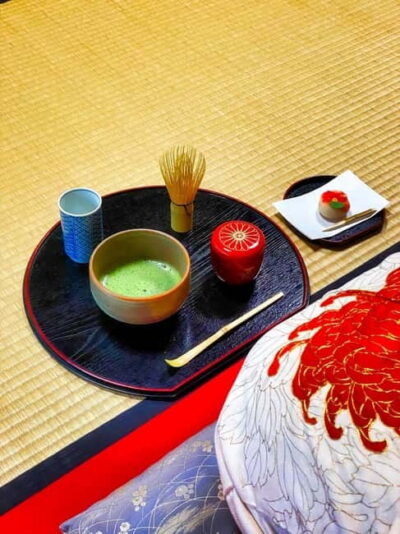
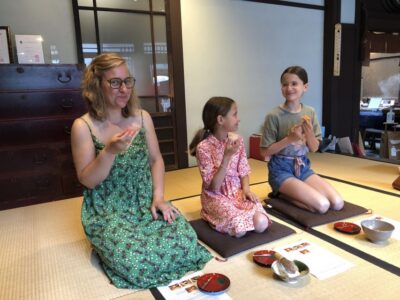
You also receive traditional sweets. These provide a pleasant contrast to matcha’s grassy, slightly bitter taste. The sweets are not just a snack, they are part of how the tea is enjoyed.
Because you sit at a table, you can watch comfortably and see the preparation clearly. The format is less formal than a ceremony designed for experienced practitioners, but that is exactly why it works for a first visit.
Making your own matcha
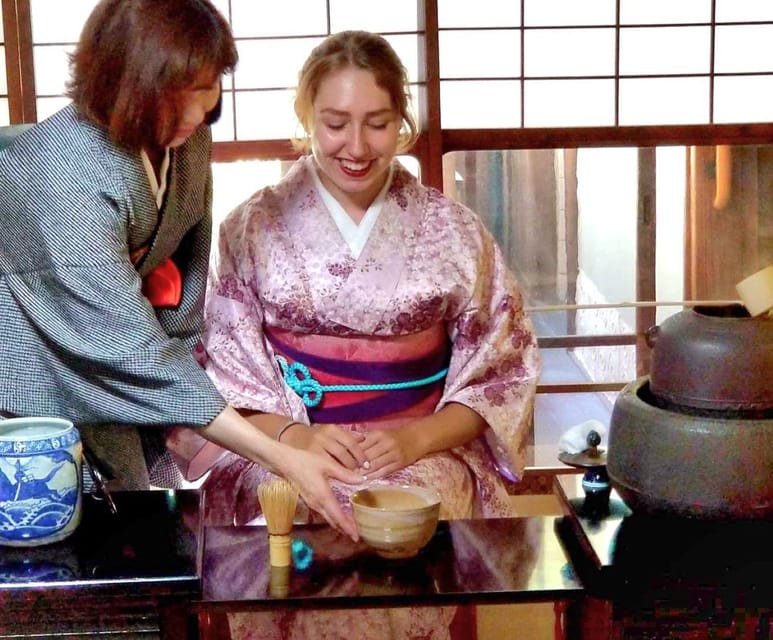
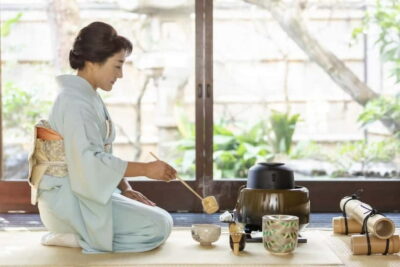
The most satisfying hands-on part is preparing your own matcha with a bamboo whisk. You add the tea and water, then work the whisk until the drink becomes creamy and frothy.
Do not expect every bowl to look perfect. The fun is in feeling how much movement the whisk requires and seeing the powder change into a smooth drink. The hosts guide you through the steps, so you are not left guessing.
The included latte art using thick tea gives the matcha session a playful twist. It adds a visual element to a drink that can otherwise feel quite formal. If you enjoy Japanese tea, you may also be able to buy matcha powder at the end, although purchasing it is not listed as an included part of the price.
Calligraphy and your name in Japanese
Near the end, you write your name in Japanese. The activity includes kanji or hiragana, and several sessions have also introduced katakana, giving you a chance to see how your name can be represented in different writing systems.
The hosts help you with the characters and brushwork. You do not need prior calligraphy skill. In fact, the uneven strokes and careful concentration are part of the charm.
You receive a hanging scroll or envelope with your name written in Japanese kanji or hiragana. That gives the activity a useful souvenir rather than another disposable photograph. Families with children and teenagers may especially appreciate this section because it breaks up the quieter tea portion with a creative task.
Flower arranging
Flower arranging is included in the program as a traditional Japanese cultural activity. It is a short creative exercise, not a separate full-day ikebana course, but it gives you another way to work with Japanese aesthetics.
The value here is variety. In a single session, you see the house, learn manners, taste tea and sweets, prepare matcha, practice writing, and arrange flowers. The program feels full without requiring you to spend half a day at one formal ceremony.
Adding the kimono option
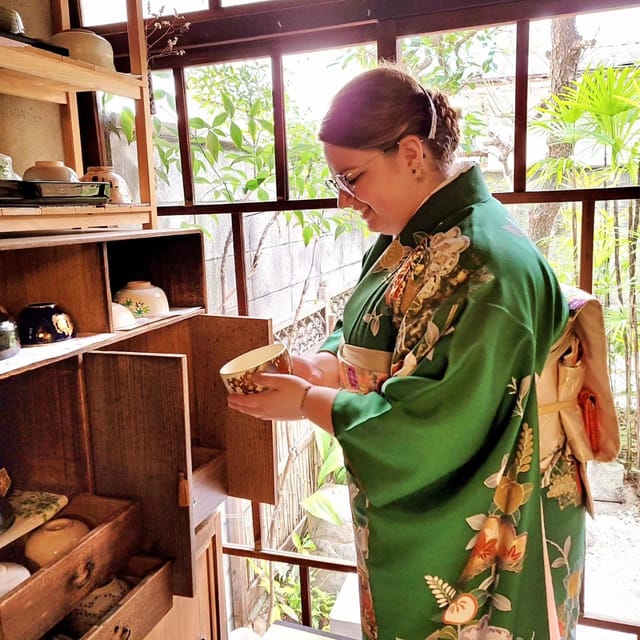
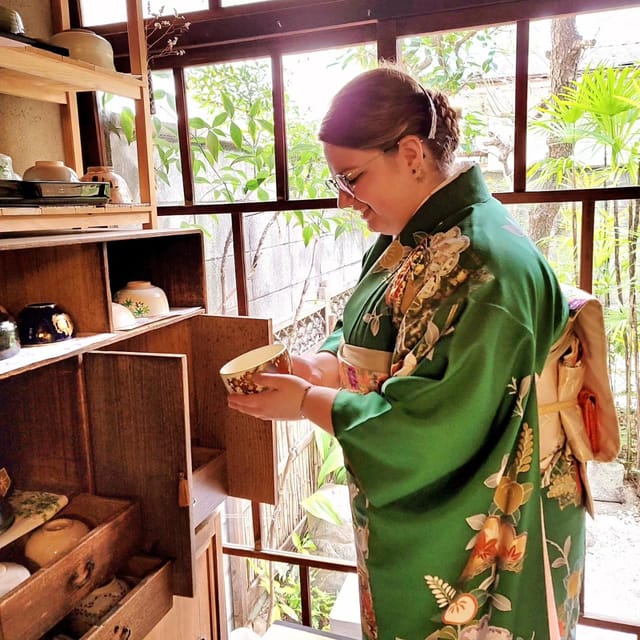
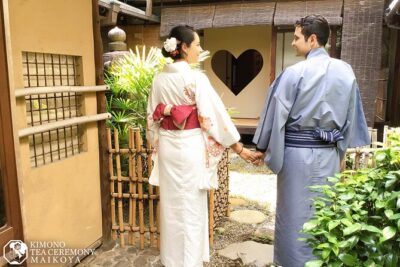
I would seriously consider the kimono upgrade if photographs and clothing are important to you. The hosts help you choose from a selection of kimono, dress you, and in some cases arrange your hair. The clothing is worn during the ceremony, so it becomes part of the activity rather than a quick costume stop.
The fitting takes time. You must arrive 30 minutes before the scheduled start, and this early arrival is required when the kimono option is selected. Build that into your train schedule.
The kimono option is also the better choice for couples, families, and anyone marking a special occasion. You can take pictures in the garden with fans and umbrellas, and you may use the katana as a prop. The activity data does not promise a particular hairstyle, color, or size, so specific choices depend on what is available that day.
Pregnant participants should not select the kimono option for health and safety reasons. If you skip the kimono, you still receive the tea ceremony, sweets, welcome drink, matcha preparation, calligraphy, and other listed cultural activities.
Why Fushimi is a useful base
This experience takes place in Fushimi, in southern Kyoto. Fushimi is well known for sake, so you can combine the tea ceremony with casual restaurants, shopping streets, and sake-related stops.
The activity is about 20 minutes by train from Keihan Gion-Shijo Station and roughly 25 minutes from Kintetsu Kyoto Station. From Kintetsu Kyoto Station, take an express train for about 15 minutes to Kintetsu Momoyama-Goryo-mae Station. From Keihan Gion-Shijo, get off at Fushimi-Momoyama Station.
The directions are manageable, but allow time to find the right turn. From the station, head west through the Otesuji shopping arcade. Turn right at Mizuho Bank or the Rakuten mobile shop, then continue for about two minutes. The old townhouse has a blue curtain, and hosts in kimono wait for you.
From Momoyama Station on the JR line, walk northwest and pass Gokogu Shrine on your right after about 300 meters. Continue to Otesuji Arcade, turn right at the same bank or mobile shop, and look for the townhouse.
Fushimi also makes a smart pairing with nearby sights. Fushimi Inari Shrine is about 15 minutes from Keihan Fushimi Inari Station, and Uji, the tea town, takes about 20 minutes by train. Osaka is about 40 minutes by express train, while Nara takes about 50 minutes. I would schedule the ceremony on a day when you are already exploring this part of the region, rather than crossing Kyoto just for a 90-minute appointment.
Is $45 a good value?
At $45 per person, the base price is fair for a 90-minute cultural activity that includes a guided ceremony, sweets, a welcome drink, matcha preparation, calligraphy, a name keepsake, and flower arranging. You are paying for instruction, access to a historic home, and a range of activities, not just a cup of tea.
The value becomes stronger if you want a compact introduction to several Japanese customs. A formal tea ceremony alone might appeal more to someone seeking silence and strict ritual, but this program gives you more to do and more chances to ask questions.
The kimono option costs extra, with the amount not specified here. Treat it as an optional photo and cultural add-on, not a required part of the tea experience. If your budget is tight, book the standard version. If you want photographs and a more memorable occasion, the upgrade may be worth considering.
Private and small-group options are available. A smaller group should give you more time with the hosts and make it easier to ask questions or receive help with calligraphy and matcha. Availability and pricing can vary, so check the selected option carefully before paying.
You can cancel up to 24 hours in advance for a full refund, and reserve now while paying later. That is useful when your Kyoto schedule depends on train connections or changing weather.
Who will enjoy this most
I would recommend this for a first tea ceremony, especially if you want explanations in English rather than a silent demonstration. It suits couples, families, teenagers, and visitors who want a cultural activity with several practical parts.
It is also a good fit if you are curious about kimono, Japanese writing, or traditional homes. The program gives you a keepsake, photographs, and new skills without taking an entire day.
People with limited mobility should read the restrictions carefully. The experience is not suitable for wheelchair users, and the townhouse includes stairs. Sitting at tables helps with floor comfort, but it does not remove every mobility issue.
You should also know that this is a visitor-friendly introduction. If you have already studied Japanese tea ceremony in depth, you may prefer a longer, more formal session. For most first-time visitors, the friendly teaching style and range of activities are the point.
Practical tips for a smoother visit
- Wear easy-to-remove shoes: You are entering a traditional townhouse, where footwear customs may apply.
- Arrive early for kimono: The clothing option requires arrival 30 minutes before the start.
- Keep your schedule flexible: The house is about 20 to 25 minutes from central Kyoto by train, before the walk from the station.
- Plan a Fushimi afternoon: Add sake shops, Otesuji Arcade, Gokogu Shrine, or a meal nearby.
- Use the photo time: Bring a phone with room for pictures. The garden, fans, umbrellas, kimono, and townhouse make this a photo-friendly activity.
- Do not fear calligraphy: The hosts guide you through the writing, so artistic skill is not needed.
- Ask questions: The activity is conducted in English, and the program is designed to explain the meaning behind the customs.
Should you book this Kyoto tea ceremony?
Book it if you want a warm, accessible introduction to Japanese tea culture in a traditional home, especially if kneeling on the floor is a concern. The strongest reasons are the 100-year-old townhouse, the English guidance, the chance to make your own matcha, and the unusual mix of calligraphy, flower arranging, and photo time.
Choose the kimono option if clothing and photographs matter to you, and arrive early. Choose the standard option if you mainly want the ceremony and hands-on tea lesson.
I would place this on a Fushimi day rather than treat it as a quick central-Kyoto stop. Pair it with sake-town shops, Fushimi Inari, or Uji, and the train ride becomes part of a useful southern Kyoto outing.
FAQ
How long does the Kyoto table-style tea ceremony last?
The activity lasts 90 minutes.
How much does the experience cost?
The listed price is $45 per person. The kimono option may cost extra, but its price is not specified in the provided details.
Do I have to sit on the floor?
No. The tea ceremony is arranged with tables and chairs.
Is the activity conducted in English?
Yes. English is the listed activity language, and English-speaking hosts guide the program.
What is included in the tea ceremony?
The experience includes the tea ceremony, traditional sweets, a welcome drink such as sake or juice, thick-tea latte art, calligraphy, and a hanging scroll or envelope with your name in Japanese kanji or hiragana. Flower arranging is also included.
Can I rent a kimono?
Yes, a kimono rental option is available. If you select it, arrive 30 minutes before the activity begins.
Is the kimono option suitable during pregnancy?
No. Pregnant participants are asked not to wear a kimono for health and safety reasons.
How do I reach the townhouse from Kyoto Station?
From Kintetsu Kyoto Station, take an express train for about 15 minutes and get off at Kintetsu Momoyama-Goryo-mae Station. The total trip from central Kyoto is about 25 minutes, including the walk.
Is the experience suitable for wheelchair users?
No. The activity is not suitable for wheelchair users.
Recently added around Kyoto
- Higashiyama | Kyoto: Sakura Season Private Rickshaw Tour★ 5.0 · 3 reviews
- Kyoto Kimono Rental CHAMATSU|Kimono/Yukata Rental FamilyPlan★ 5.0 · 3 reviews
- Kyoto: Half-Day Private Guided Tour to the Old Town of Gion★ 4.4 · 3 reviews
- Nara Private Customizable Half Day Tour★ 5.0 · 3 reviews
- Kansai Region Hiking Adventure in Nara Kobe Kyoto and More★ 5.0 · 3 reviews
- Full Day Nara Deer, Temple, Shrine, Activities & Tea Ceremony★ 5.0 · 3 reviews
- Nara: Essential Private Tour with Deer Park and Temples★ 5.0 · 3 reviews
- Hiking Tour for Sacred Sites in Kyoto with a Guide★ 5.0 · 3 reviews
Kyoto Tea Ceremony Experiences, compared.
Tea Ceremony in a Traditional Tea House in Kiyomizu
Read our review →
Tea Ceremony in 100-year-old Kyo-Machiya Townhouse
Read our review →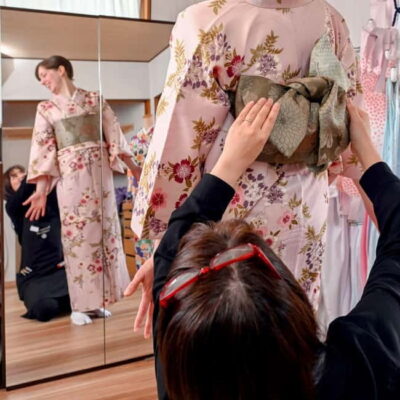
Tea Ceremony Meditation – Make Matcha with Tea Master
Read our review →Browse the lists this tour appears in