
REVIEW · KYOTO TEMPLE TOURS
Kyoto: Ninnaji Temple Entry Ticket
Ninnaji Temple saves one of Kyoto’s best spring surprises for late in the season. Its Omuro sakura trees bloom after many of the city’s better-known cherry trees have faded, giving you a second chance at blossom viewing. The five-story pagoda, quiet gardens, and old temple buildings make the visit worthwhile in any season.
I like the low $5 price and the choice of pace. You can make a short visit around the Goten Palace gardens, or spend much longer with the Omuro Pilgrimage course and museum. One consideration: the most famous cherry trees require an extra seasonal admission fee, and the temple grounds close earlier in winter.
In This Review
- Key points to know before you go
- Why Ninnaji’s late sakura changes the Kyoto blossom plan
- Goten Palace gardens: the best place to slow down
- The five-story pagoda and the wider temple grounds
- Walking the two-hour Omuro Pilgrimage course
- Reihokan Museum and Ninnaji’s cultural treasures
- Kannon-do and the possibility of a special guide
- How the seasons change the experience
- Spring and the late Omuro blossoms
- Summer ceremonies and green gardens
- Autumn color around old buildings
- Winter snow at the Goten Palace
- Is the $5 ticket good value?
- Practical planning for your visit
- Should you book Ninnaji Temple?
- FAQ
- How long is the Ninnaji Temple ticket valid?
- What are Ninnaji Temple’s opening hours?
- When do the ticket booths close?
- Is the Omuro sakura area included in the regular entry ticket?
- Is the Reihokan Museum included?
- Is Ninnaji Temple wheelchair accessible?
Key points to know before you go
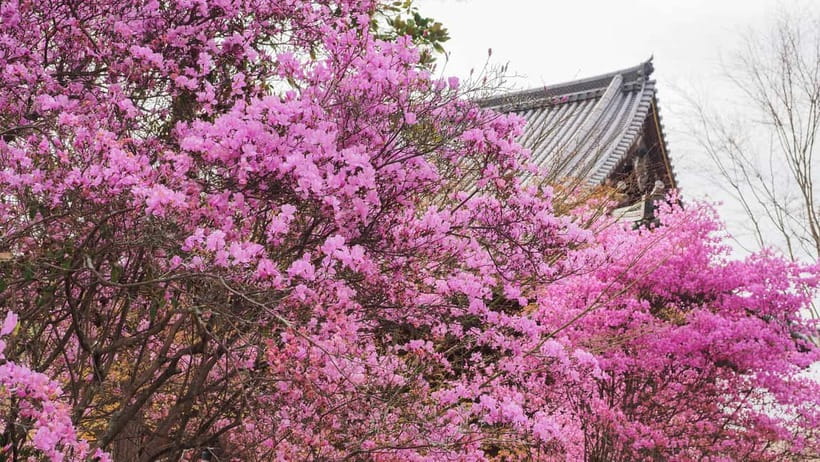
- Late-blooming Omuro sakura: Visit after many Kyoto cherry trees have finished flowering, though the exact paid viewing period changes with the bloom.
- Goten Palace gardens: The main ticket includes access to the palace area and gardens, except during special ticket periods.
- Two-hour Omuro Pilgrimage: Walk a shorter version of the Shikoku Pilgrimage while listening to the sounds of nature.
- Reihokan Museum: Add this option to see important cultural items connected to Ninnaji Temple.
- Seasonal appeal: Spring brings blossoms, summer brings Buddhist ceremonies, autumn brings red and yellow foliage, and winter can bring snow-covered gardens.
- Flexible booking: You can cancel up to 24 hours before the visit for a full refund, and the activity is wheelchair accessible.
Why Ninnaji’s late sakura changes the Kyoto blossom plan
Ninnaji Temple was founded in 888 and serves as the main temple of the Omuro school of the Shingon sect of Buddhism. That age matters less as a number than as a feeling: you are walking through a temple complex shaped by centuries of religious practice, ceremonies, gardens, and art.
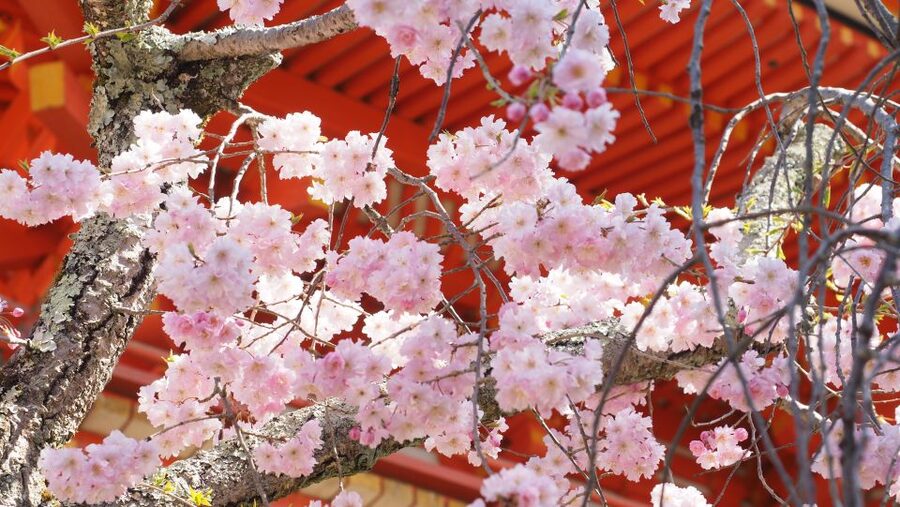
The main spring draw is the Omuro sakura. These cherry trees bloom late, so Ninnaji can work well when the famous early blossoms around Kyoto are already gone. If you are building a blossom trip, this timing gives you a useful backup rather than forcing your entire visit into one narrow week.
The bloom is not fixed to a calendar date. During the cherry blossom season, you pay an additional admission fee to enter the area beyond the Chumon inner gate and see the Omuro sakura. The period for this charge changes according to the point of full bloom. That flexibility helps protect the trees, since the money goes toward preserving the Omuro sakura, but you should check the current situation before setting your schedule.
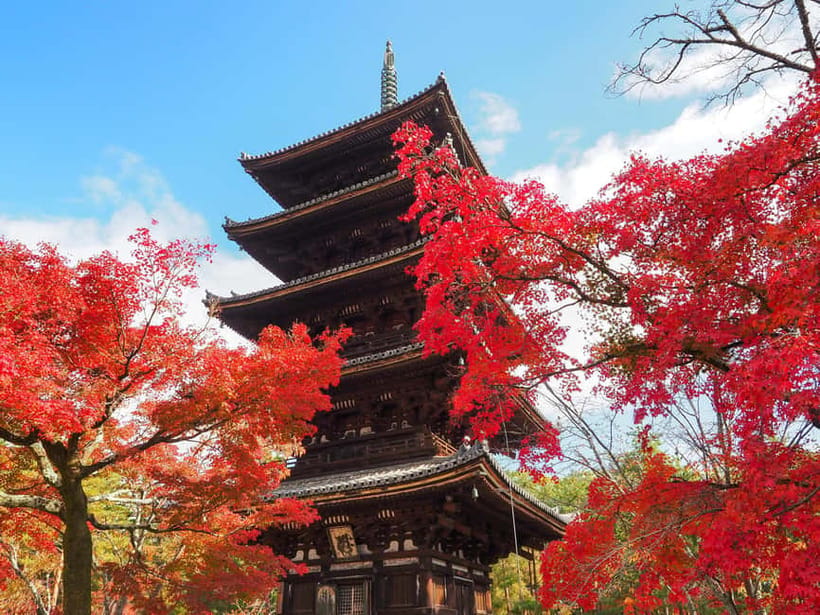
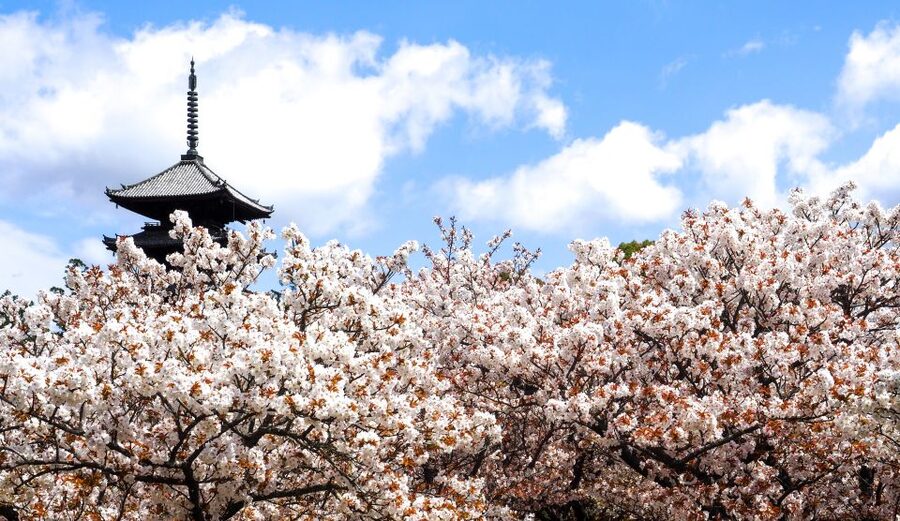
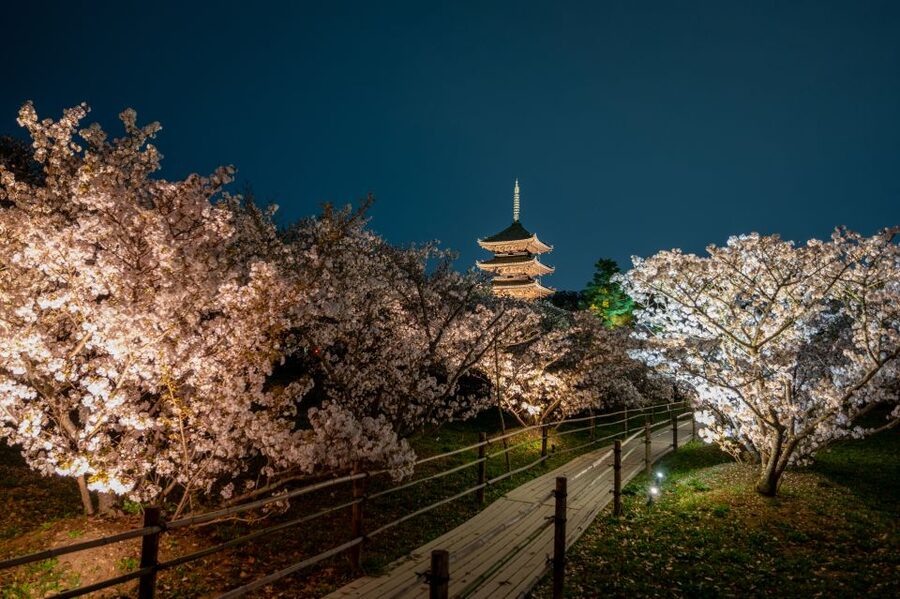
The pagoda gives the spring scene its familiar vertical marker. Look for the contrast between the delicate blossoms and the five-story structure, then give yourself time to notice the temple buildings beyond the obvious photo stop. The appeal here is not just one row of trees. It is the way the trees, pagoda, gates, and old architecture share the same view.
More Kyoto temples worth a morning:
- Kyoto: Tea Ceremony Ju-An at Jotokuji Temple
★ 4.9 · 3,207 reviews - Arashiyama Bamboo, Temple, Monkeys, or Secret Sake Brewery
★ 4.8 · 886 reviews - Kyoto: Arashiyama Bamboo Forest, Monkeys, Matcha & Temple Tour
★ 5.0 · 759 reviews
Goten Palace gardens: the best place to slow down
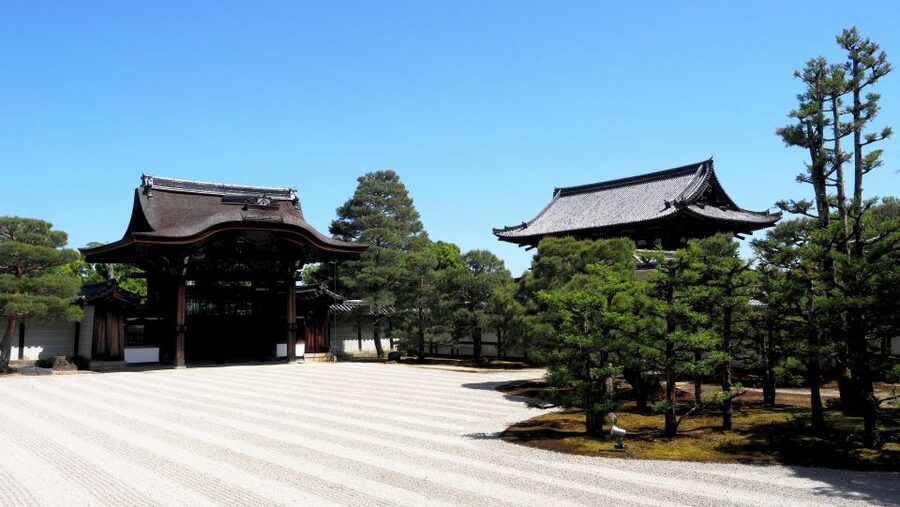
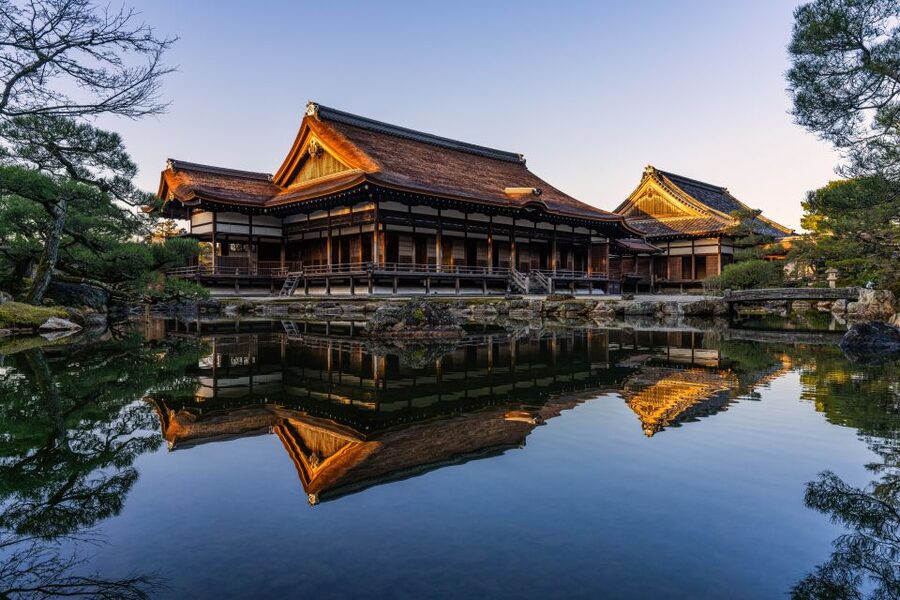
The Goten Palace and its gardens are included in the basic entry ticket, apart from periods when a special ticket is required. I would make this the center of a first visit because it gives you a quieter look at Ninnaji than a quick pagoda photograph alone.
The gardens change their character with the weather and season. In spring, blossoms add color around the traditional buildings. In autumn, the temple structures are framed by red and yellow leaves. In winter, fresh snow can simplify the scene, making the garden feel still and spare. The supplied information specifically highlights the snowy view of the Goten Palace, so winter visitors have a strong reason to come even without cherry blossoms.
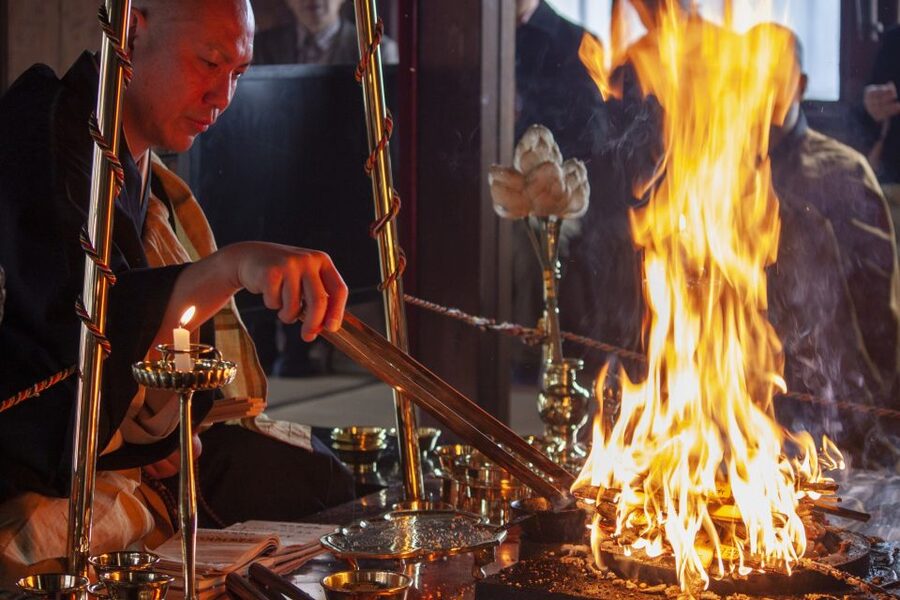
Summer has a different mood. Many priests are present for Buddhist ceremonies, giving the complex a more active religious setting. You may prefer this season if you want to see Ninnaji as a working temple rather than only as a scenic garden.
Do not rush through the palace gardens just because the ticket is inexpensive. The admission fee is modest, but the value comes from having a place where you can set your own pace. Sit with the garden views, move between the buildings, and let the visit take longer than a standard photo stop.
The five-story pagoda and the wider temple grounds
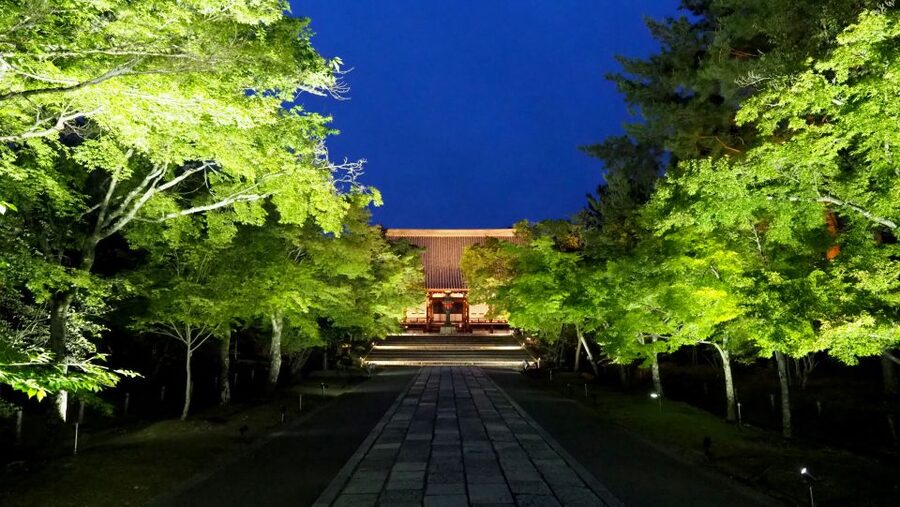
The five-story pagoda is Ninnaji’s most recognizable landmark, but the temple grounds work best as a group of connected spaces. Gates lead you from one area to another, and the scale changes as you move from broad exterior views toward the more enclosed palace and garden spaces.
You will also see why season matters so much here. A pagoda under summer greenery gives a different impression from a pagoda surrounded by autumn leaves or framed by snow. The architecture stays in place, but the setting keeps changing.
I would not treat the temple as a single quick attraction. The basic ticket is valid for one day, so you have room to return to a favorite garden view or combine a first look with the longer pilgrimage course. The one-day validity is especially useful if you want to divide your time rather than complete every part in one pass.
The temple closes at 5 PM from March through November and at 4:30 PM from December through February. Ticket booths close 30 minutes before the temple itself, so do not arrive at the last moment. Winter visitors need to plan more carefully because the grounds close earlier and daylight is shorter.
Walking the two-hour Omuro Pilgrimage course
The Omuro Pilgrimage course is a shorter version of the famous Shikoku Pilgrimage. It takes about two hours and is surrounded by nature, seasonal changes, and the sounds of the outdoors.
That makes it a different experience from simply walking between temple buildings. You are not signing up for a long-distance pilgrimage, but you do get a more active way to understand Ninnaji’s setting. The course gives you time to walk, listen, and notice the natural surroundings rather than moving from one landmark to the next.
You should allow enough time for the course if you want to enjoy it properly. A rushed walk would miss the point. Pair it with the gardens and pagoda, and you can make a full day of the temple without needing another major attraction to fill the schedule.
The course may suit you especially well if you like quiet walks and seasonal scenery. It may be less appealing if you want a short, tightly timed temple visit. The listed two-hour duration is useful here: it tells you this is not a quick add-on, but it also gives you a clear idea of the commitment.
The route’s seasonal appeal is broad. Spring adds late cherry blossoms, summer brings a more active temple atmosphere, autumn brings strong leaf color, and winter offers a quieter setting. The provided information does not specify the route’s exact length or difficulty, so you should regard the two-hour figure as the key planning detail.
A few more Kyoto experiences worth comparing
- Kyoto: Hop-on Hop-off Sightseeing Bus Ticket
★ 3.9 · 2,034 reviews - Kyoto: Tea Museum Tickets and Matcha Grinding Experience
★ 4.9 · 739 reviews - Skip the lines Basic Ticket at SAMURAI NINJA MUSEUM KYOTO
★ 4.5 · 632 reviews - Kyoto: Nidec Kyoto Tower Observation Deck Admission Ticket
★ 4.5 · 273 reviews
Reihokan Museum and Ninnaji’s cultural treasures
The Reihokan Museum holds important cultural items belonging to Ninnaji Temple. Its entrance is included only when you select the relevant option, so check exactly what your chosen ticket covers before you pay.
The museum is the right choice for you if temple art, religious objects, and cultural materials matter as much as gardens. Outdoor scenery can explain why Ninnaji is memorable, but museum pieces help show the institution’s religious and artistic importance over time.
I would not add the museum automatically if you have only a short visit and mainly want the gardens. If you have more time, or if you are making a special trip to Ninnaji, it gives the visit more depth. The main temple grounds provide atmosphere. The museum provides a closer look at the objects connected to that atmosphere.
Special exhibitions or seasonal access can affect what is open and what ticket you need. The information provided confirms the museum option, but it does not give a fixed exhibition schedule. Check the current details if one particular collection is important to you.
Kannon-do and the possibility of a special guide
One particularly useful detail from the available feedback concerns a special guide inside Kannon-do. A visitor described this guide as wonderful and informative, which suggests that access to this area can add a stronger interpretive layer to the visit.
No guide’s name or regular schedule is provided, so I would not plan the entire day around meeting a particular person. Instead, ask at the temple if the special guide is available during your visit. If so, it may help you understand what you are seeing inside Kannon-do rather than simply passing through another historic space.
This is also a reminder that Ninnaji rewards curiosity. The pagoda and blossoms are easy to spot, but smaller areas may carry much of the temple’s religious meaning. If staff or a guide point out something you would otherwise miss, take the opportunity.
How the seasons change the experience
Spring and the late Omuro blossoms
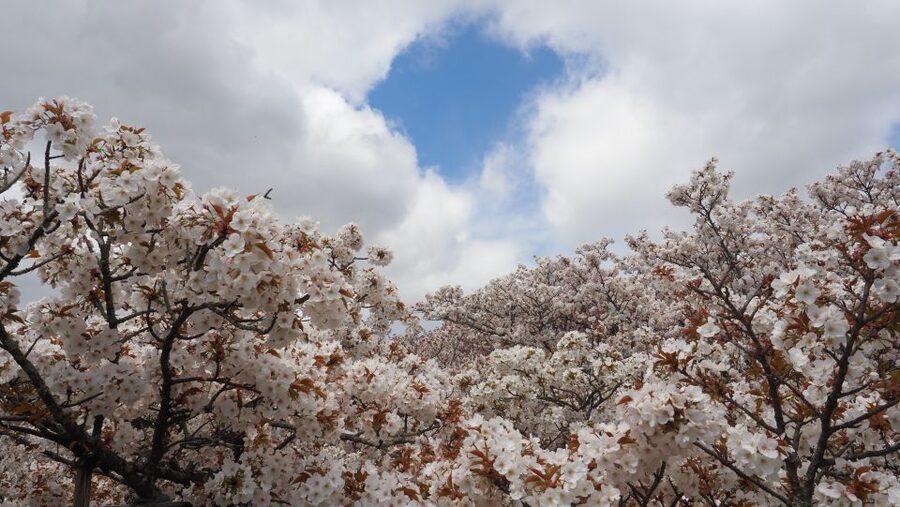
Spring is the most obvious time to visit, but Ninnaji’s timing is important. The Omuro sakura bloom late, so you may find them in flower after other Kyoto cherry trees have passed their peak.
The special blossom admission is charged for the area after the Chumon inner gate. The fee supports preservation, and the dates can change based on the blossoms. If you are visiting specifically for the trees, confirm the current paid period instead of assuming the fee applies throughout the entire season.
Summer ceremonies and green gardens
Summer brings many priests to the temple for Buddhist ceremonies. The grounds may feel more connected to present-day religious life during this period.
Summer can also be a good fit if you want seasonal scenery without making the trip around cherry blossoms. The supplied information does not provide temperature or crowd details, so plan around your own comfort and focus on the temple’s ceremonies and gardens.
Autumn color around old buildings
In fall, red and yellow leaves surround the historic temple buildings. This season suits you if you want strong color paired with architecture rather than a blossom-centered visit.
The pagoda and palace gardens should be especially appealing at this time because the leaves frame the buildings without changing their traditional form. As always, exact color timing varies, so avoid treating a fixed date as a guarantee.
Winter snow at the Goten Palace
Snow gives Ninnaji a quiet, restrained look. The Japanese garden and Goten Palace can appear especially beautiful under a fresh covering, with fewer visual distractions than in blossom or leaf season.
Winter has the shortest hours, from 9 AM to 4:30 PM, and ticket booths close 30 minutes before closing. If snow is forecast, arrive early enough to see the garden before the day ends. Snow itself cannot be guaranteed, but the season offers a calm reason to visit beyond the usual Kyoto highlights.
Is the $5 ticket good value?
At $5 per person, the basic ticket is easy to recommend for the Goten Palace and gardens. You are paying a small amount for access to a major temple complex with a pagoda, seasonal scenery, and a setting that can occupy anything from a brief visit to much of a day.
The value improves if you use the one-day validity well. A rushed half-hour visit would still let you see the main sights, but it would not make full use of the gardens or the two-hour pilgrimage course.
Keep an eye on optional charges. The Reihokan Museum requires the appropriate option, and the flower festival or other special areas may also use separate tickets. The Omuro sakura viewing fee is an additional seasonal charge beyond the regular entry. The preservation purpose makes the cost understandable, but it means your final total may be higher than the base $5.
This is a good-value choice for different kinds of visitors:
- Photographers and garden lovers get the pagoda, palace, flowers, foliage, and snow scenes.
- Culture-focused visitors can add the Reihokan Museum and ask about the special guide inside Kannon-do.
- Walkers can spend about two hours on the Omuro Pilgrimage course.
- Families or mixed groups can choose a shorter visit instead of committing everyone to a long tour.
- Repeat Kyoto visitors get a seasonal reason to return.
Practical planning for your visit
The temple is open from 9 AM to 5 PM between March and November, and from 9 AM to 4:30 PM between December and February. Ticket sales stop 30 minutes before closing, so plan to arrive well before that cutoff.
The activity is valid for one day, but the information does not provide a required starting time. Check availability for the date you want. Since the visit can range from a quick look at the main buildings to a full day with the pilgrimage course and museum, your ideal arrival time depends on how much you want to do.
Wheelchair access is available. If you have a physical disability certificate, you can enter free of charge, but the exemption applies only to the person with the certificate. Ask at the ticket counter.
You can cancel up to 24 hours in advance for a full refund, and the reserve-now, pay-later option keeps your plans flexible. Those policies are useful if you are planning around uncertain blossom dates or winter weather.
Should you book Ninnaji Temple?
I would book this entry ticket if you want a flexible Kyoto temple visit with real seasonal range. The $5 base price is modest, the Goten Palace gardens give you a clear main target, and the Omuro Pilgrimage course lets you turn the visit into a longer walk.
Spring requires the most planning because the Omuro sakura fee and viewing dates change with the bloom. If you are coming for the blossoms, check the current conditions. If you miss them, Ninnaji still works in summer, autumn, and winter, with ceremonies, colorful leaves, or possible snow in their place.
You may want to skip the museum option if your schedule is tight and gardens are your priority. Add it if you care about Ninnaji’s cultural objects or want a fuller visit. Ask about the special guide inside Kannon-do, too, since that may be one of the most informative parts of the experience.
FAQ
How long is the Ninnaji Temple ticket valid?
The ticket is valid for one day.
What are Ninnaji Temple’s opening hours?
The temple is open from 9 AM to 5 PM from March through November, and from 9 AM to 4:30 PM from December through February.
When do the ticket booths close?
The ticket booths close 30 minutes before the temple closes.
Is the Omuro sakura area included in the regular entry ticket?
During cherry blossom season, an additional admission fee is required to enter the area after the Chumon inner gate and view the Omuro sakura. The dates can change depending on when the trees reach full bloom.
Is the Reihokan Museum included?
The Reihokan Museum is included only if you select the option that includes museum admission.
Is Ninnaji Temple wheelchair accessible?
Yes. The activity is wheelchair accessible. A person with a physical disability certificate can enter free of charge, and should ask at the ticket counter.
Recently added around Kyoto
- Higashiyama | Kyoto: Sakura Season Private Rickshaw Tour★ 5.0 · 3 reviews
- Kyoto Kimono Rental CHAMATSU|Kimono/Yukata Rental FamilyPlan★ 5.0 · 3 reviews
- Nara Private Customizable Half Day Tour★ 5.0 · 3 reviews
- Kyoto: Half-Day Private Guided Tour to the Old Town of Gion★ 4.4 · 3 reviews
- Kansai Region Hiking Adventure in Nara Kobe Kyoto and More★ 5.0 · 3 reviews
- Full Day Nara Deer, Temple, Shrine, Activities & Tea Ceremony★ 5.0 · 3 reviews
- Nara: Essential Private Tour with Deer Park and Temples★ 5.0 · 3 reviews
- Hiking Tour for Sacred Sites in Kyoto with a Guide★ 5.0 · 3 reviews
Kyoto Temple Tours, compared.
Arashiyama Bamboo, Temple, Monkeys, or Secret Sake Brewery
Read our review →
Arashiyama Bamboo Forest, Monkeys, Matcha & Temple Tour
Read our review →
Kyoto Zen Meditation & Garden Tour at a Zen Temple with Lunch
Read our review →
Arashiyama Bamboo, Matcha, Monkeys & Temple Tour
Read our review →
Arashiyama Bamboo, Temple, Matcha, Monkeys & secret spots
Read our review →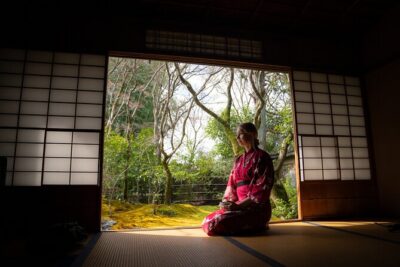
Browse the lists this tour appears in