
REVIEW · GION GEISHA DISTRICT TOURS
Kyoto Geisha Walking Tour: Gion District & Hidden Gems
Gion’s real charm appears when a geiko or maiko slips along a narrow lane toward an appointment, her formal dress and careful pace making old Kyoto feel close at hand. This two-hour English walking tour explains the culture behind that scene rather than treating it as a photo opportunity.
I like the clear history lessons and the route’s mix of famous sights and quieter corners. I also like the practical advice at the end, when guides such as Michael, Anton, Yuri, and Ikuro share food, shopping, and sightseeing ideas. The main consideration is simple: you may not see a geiko or maiko, and two hours outdoors can feel cold or tiring in poor weather.
In This Review
- At a glance
- Why Gion works best with a guide
- Meeting beside Hotel Alza Kyoto
- The first walk through Gion’s old streets
- Understanding geiko, maiko, and the chance to see them
- Hõkan Ji Pagoda and the best photo pauses
- Kennin-ji Temple, Kyoto’s oldest Zen temple
- Chion-in and the quieter side of the route
- The recommendations are a real part of the value
- Price, pace, and physical demands
- What I would plan around the tour
- Should you book the Gion walking tour?
- FAQ
- How long does the Kyoto Geisha Walking Tour last?
- What language is the tour conducted in?
- Can I see a geiko or maiko during the walk?
- Where is the meeting point?
- Is the tour suitable for wheelchair users?
- Can I cancel the booking?
At a glance
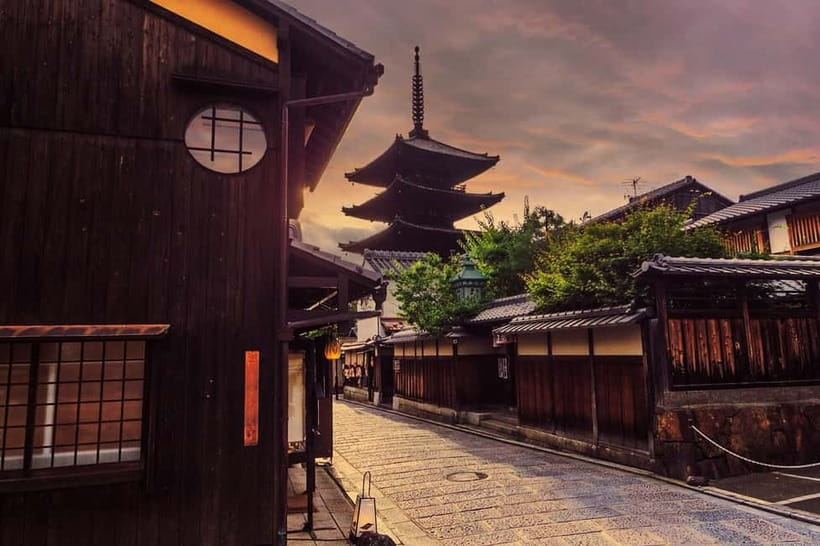
- Gion after dark: Lantern-lit lanes create the tour’s most atmospheric setting.
- Geisha culture explained: Learn the difference between geiko and maiko and how their work fits into modern Kyoto.
- Historic stops: See machiya houses, tea houses, Kennin-ji Temple, Chion-in Temple, and Hõkan Ji Pagoda.
- Local guidance: Guides explain architecture, customs, and the district’s past in clear English.
- Useful trip advice: Finish with recommendations for restaurants, bars, shops, and other places in Kyoto and beyond.
- Good value: At $25 per person, this is an affordable way to get your bearings in one of Kyoto’s most visited districts.
Why Gion works best with a guide
Gion is easy to reach but not always easy to understand. You can walk its handsome streets alone, yet the most important details are often small: a discreet entrance, a preserved wooden townhouse, a sign indicating a tea house, or a lane that changes character after sunset.
A guide gives those details a place in the story. You learn why the district developed around entertainment and tea houses, how Kyoto’s old buildings are used today, and why geiko and maiko are working professionals rather than costumed performers placed on display for visitors.
That context matters. Gion can otherwise become a parade of cameras aimed at women hurrying to appointments. A good guide helps you understand the setting and behave respectfully. You are shown the culture, not promised access to it.
The tour has earned a 4.7 rating from 3,273 bookings, and the strongest praise centers on the guides’ teaching style. Michael is especially frequently named for his warmth, humor, and command of Kyoto’s past. Anton, Yuri, Ikuro, and Ron are also singled out in the supplied feedback. The guide you receive may vary, but the pattern is clear: expect an English-speaking host who answers questions and adds advice beyond the basic route.
More evenings in Gion:
- Kyoto: Gion Magical Night Walking Tour with Geisha Trivia
★ 4.9 · 2,393 reviews - Kyoto: Gion Geisha District Walking Tour – Stories of Geisha
★ 4.7 · 2,187 reviews - Best of Kyoto: Gion, Geisha, Pagodas & Cobblestones
★ 4.9 · 2,058 reviews
Meeting beside Hotel Alza Kyoto
The meeting point is on the side street beside Hotel Alza Kyoto. Look for the red parasol or umbrellas with marble seats underneath.
This is worth taking seriously in Gion, where small lanes can look much alike. Arrive with enough time to identify the red parasol rather than relying on a last-second search. Since this is a walking tour, wear shoes that can handle uneven pavement and bring a layer, especially for an evening start.
Starting times vary, so check availability when you book. The 6 p.m. departure received particular praise for its quieter feel and lantern-lit atmosphere. An earlier start may give you more daylight for photographs. One person specifically found a 3 p.m. outing preferable because later light was limited, while another found 6 p.m. ideal. That is a useful choice: select daylight for architectural detail, evening for mood.
The first walk through Gion’s old streets
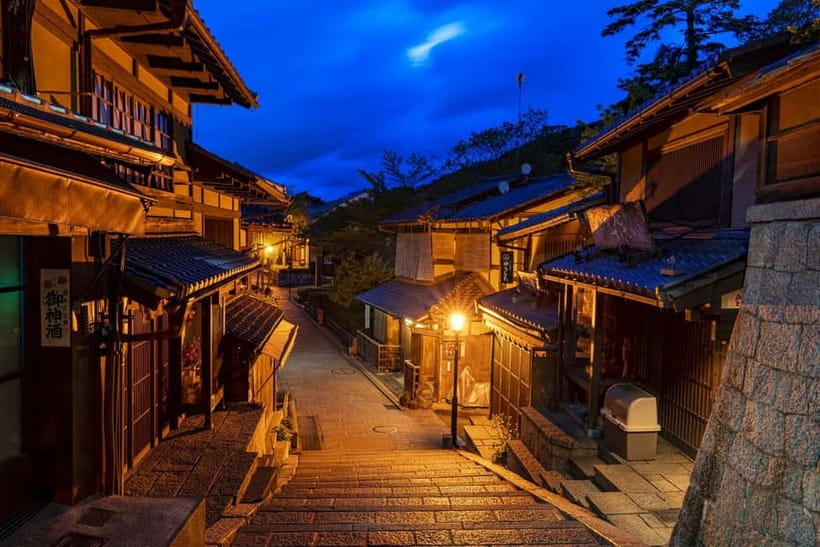
The opening section introduces Gion through its narrow streets, wooden facades, and traditional tea houses. The pleasure here is not speed. You pause while the guide explains what you are looking at, so the district becomes more than a backdrop for photographs.
Machiya townhouses are among the most appealing features. Their slim fronts and deep interiors reflect the shape of old Kyoto’s urban plots. Along the way, you may see buildings that appear private or modest from the street but connect to long-running forms of commerce and hospitality.
The tea houses are also important to understand. They are not ordinary cafés, and the private performances associated with them are not generally open to casual walk-ins. The guide explains their role in geisha culture and the relationship between entertainers, patrons, music, dance, conversation, and formal hospitality.
I appreciate that this part of the walk deals with the subject plainly. Geisha culture is often reduced to mystery and costume. Here, the aim is to explain its origins, traditions, and place in present-day Kyoto. You come away with a more respectful idea of the work and discipline involved.
The route also passes small shops and boutique-style souvenir stores. These can be useful for a quick look at Kyoto crafts and local gifts, though the tour is not a shopping excursion. The value is in learning how the commercial streets fit into the older district.
Understanding geiko, maiko, and the chance to see them
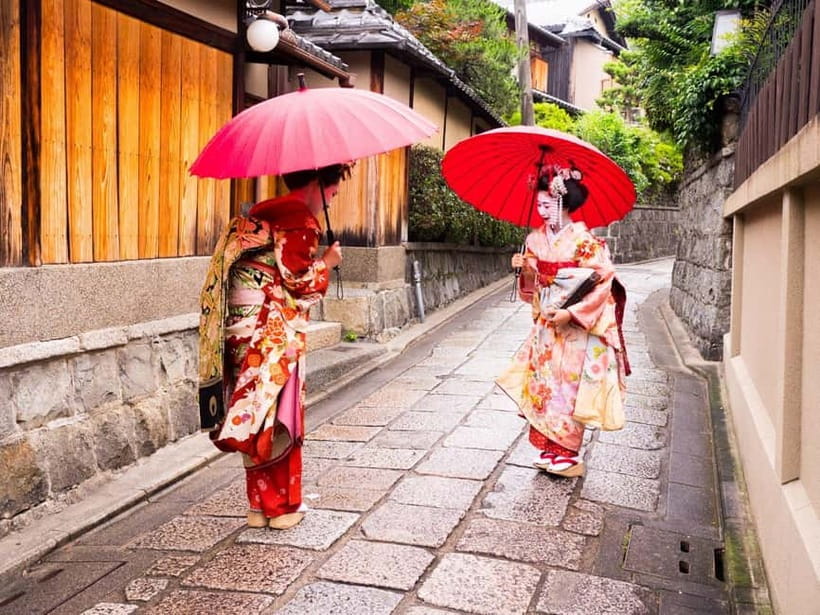
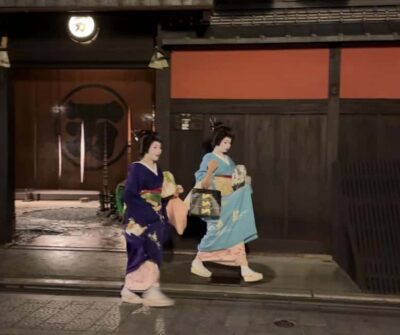
In Kyoto, the women commonly called geisha are known as geiko, while maiko are apprentices. The tour explains this world and the way it operates in Gion, including the distinction between seeing someone at work and encountering a staged attraction.
You may spot a geiko or maiko walking to an appointment. That possibility is one of the tour’s main draws, but it is not guaranteed. One person saw a geisha during the walk, while another did not and still found the historical material worthwhile. This is exactly how you should approach it: hope for a sighting, but book the tour for the explanation of Gion itself.
If you do see one, listen to the guide’s instructions and avoid blocking the lane or chasing after her. The women are going somewhere for work. A respectful distance gives you a better chance of observing the moment without turning it into a nuisance.
The evening setting can make these encounters feel especially striking, with lanterns glowing and the streets quieter than during the busiest daytime periods. Still, weather and timing matter. In winter, the tour can be genuinely cold, and there is no stated indoor refreshment stop. Dress for two hours outside and do not assume the walk will include a warm-up break.
More walking tours in Kyoto:
- Night Walk in Gion: Kyoto’s Geisha District
★ 4.5 · 2,003 reviews - Kyoto Gion Geisha District Walking Tour – The Stories of Geisha
★ 5.0 · 1,441 reviews - Nishiki Market Brunch Walking Tour (7 Tastings + Brunch)
★ 5.0 · 1,355 reviews - Kyoto Arashiyama Walking Tour: Bamboo, Monkeys, Gardens & Secrets
★ 5.0 · 1,216 reviews
Hõkan Ji Pagoda and the best photo pauses
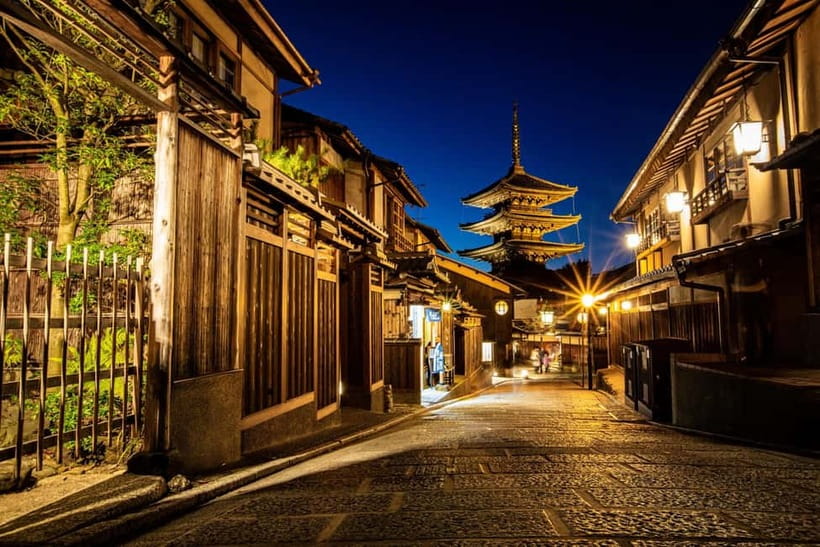
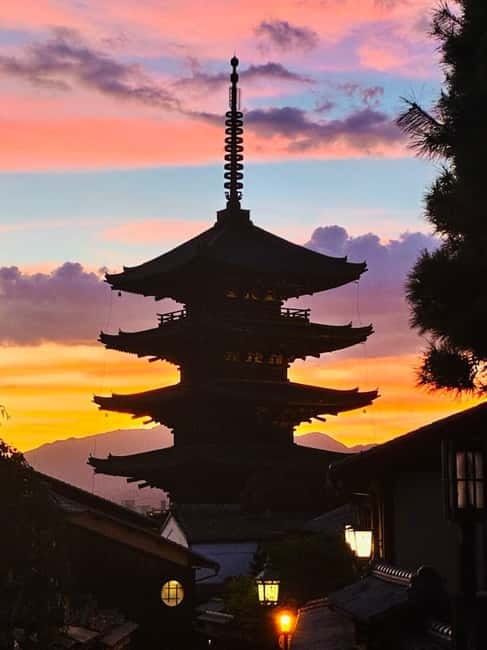
Hõkan Ji Pagoda provides one of the route’s most recognizable views. The structure is a symbol of Kyoto’s old quarters, and the surrounding streets offer the kind of carefully framed scene that makes Gion so popular with photographers.
Your guide points out less obvious places to take pictures rather than simply leading you to the busiest viewpoint. That is helpful because the district’s appeal often lies in small compositions: a timber facade, a stone lane, a temple roof, or a lantern-lit corner.
Do not expect a dedicated photography workshop. The tour moves on foot and has a lot to cover. You will have opportunities for attractive photographs, but the guide’s main job is interpretation. If you want empty streets, an early start may help. If you prefer atmosphere, choose a later departure, accepting that daylight will fade.
The route can also be crowded at famous points. A guide may steer you toward nearby streets where you can pause without standing in the middle of a busy passage. That is one of the practical benefits of knowing the area rather than following a map pin from one famous photo spot to the next.
Kennin-ji Temple, Kyoto’s oldest Zen temple
Kennin-ji brings a quieter, more reflective note to the walk. It is identified as the oldest Zen temple in Kyoto, and its presence helps broaden the tour beyond geisha culture.
The temple gives you a chance to consider how Gion’s entertainment district developed alongside religious institutions, residential streets, and old forms of urban life. The guide connects the buildings and surroundings to wider Kyoto traditions, so you are not simply collecting another temple photograph.
Keep in mind that the experience is a guided neighborhood walk, not a full temple visit with extended time inside every building. The exact amount of time at each stop can depend on the group, walking pace, and starting time. If Kennin-ji is a top priority, plan to return independently for a slower look.
That said, the stop works well in a two-hour introduction. You see how quickly Kyoto shifts from a narrow entertainment lane to a temple setting. That change in mood is part of what makes the route worthwhile.
Chion-in and the quieter side of the route
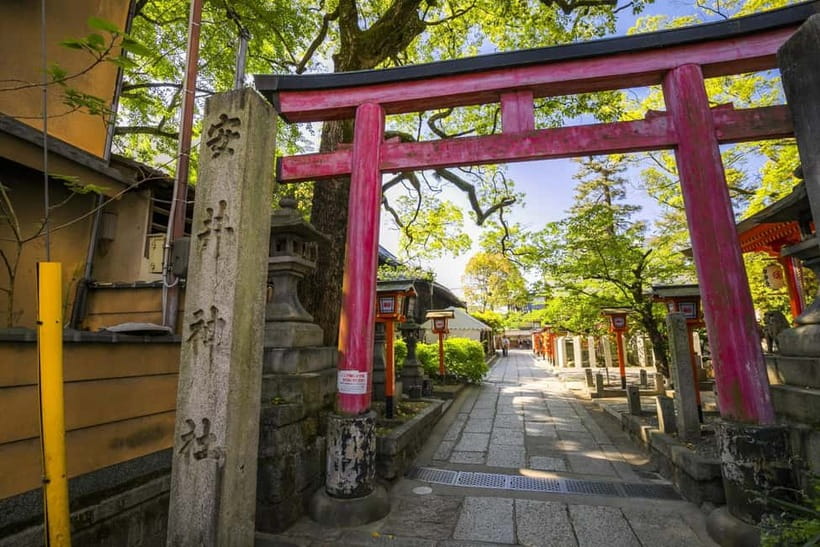
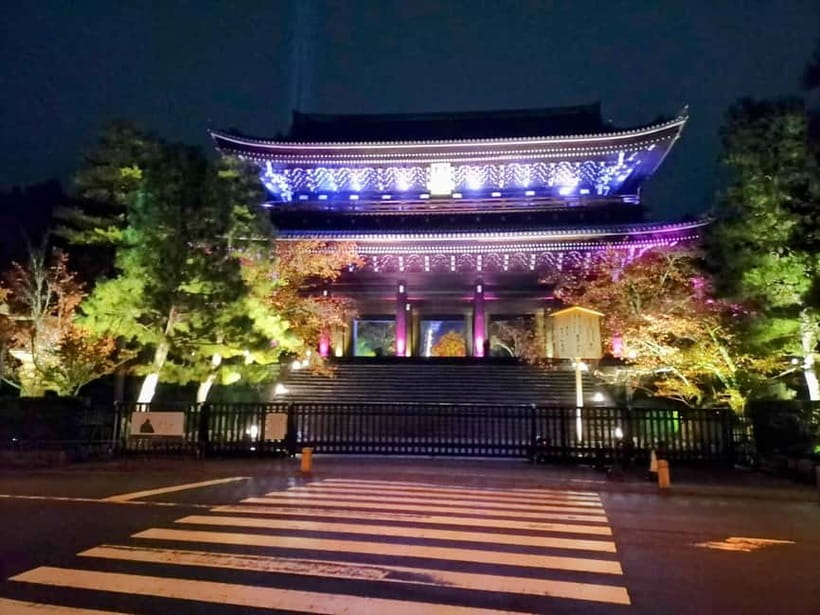
Chion-in is presented as an often-overlooked stop, with broad, picturesque grounds and three designated national treasures. It gives the walk a larger sense of scale after the tight lanes of Gion.
The contrast is useful. Gion’s charm comes from intimacy: small streets, wooden fronts, and discreet entrances. Chion-in opens the view and offers a calmer setting for the guide’s stories about Kyoto’s religious and architectural traditions.
Again, consider this an introduction rather than a thorough temple tour. Two hours is enough to see a selection of significant places and understand their connection, but not enough to explore every corner. If you want detailed temple interiors, gardens, or extended quiet time, leave room in your schedule to return.
I like having Chion-in included because many short Gion walks focus only on geiko sightings and tea houses. This stop gives the route more balance and helps you see the district as part of a living city rather than a themed entertainment quarter.
The recommendations are a real part of the value
Near the end, the guide shares personal recommendations for restaurants, bars, shops, and further sights. This may sound like a small extra, but it can be one of the most useful parts of a first Kyoto tour.
Several guides are praised for answering questions and suggesting places to eat after the walk. One practical tip is to schedule the tour before dinner, then use the recommendations immediately afterward. The route finishes in an area with plenty of places to continue your evening, and the advice can help you make a better choice than simply entering the first crowded restaurant you see.
You can also ask about activities and shopping in the surrounding area. One person specifically suggested leaving time after the tour for food, stores, perfume-making, pottery, and other small activities. Those suggestions are not listed as included activities, so treat them as ideas for your own plans, not promises within the tour.
This advice also makes the walk a good first activity in Kyoto. You get a basic map in your head, learn which areas connect, and gain a list of possibilities for the rest of your stay. Guides such as Michael are praised for offering recommendations beyond Gion, including food and sights across the city.
Price, pace, and physical demands
At $25 per person, the tour is priced well for a two-hour guided walk in a major historic district. You are paying less for admission-based sightseeing and more for explanation, local orientation, and the chance to notice things you could easily pass without understanding.
The value is strongest if you are new to Kyoto or interested in culture but unsure where to begin. A private guide would cost far more, while a self-guided walk gives you no one to answer questions or explain customs. Some departures may be small enough to feel almost private, but group size is not specified, so do not book expecting a guaranteed one-on-one experience.
The pace is generally described as comfortable, but this is still a walking tour with plenty of ground to cover. The experience is not suitable for wheelchair users or people with mobility impairments. Uneven streets, temple approaches, and two hours on foot make comfortable footwear essential.
Families can enjoy it, particularly with a guide who keeps the explanations lively. One guide was specifically praised for working well with children. History fans and photographers will also find plenty to like, while anyone seeking only a guaranteed geisha sighting should reconsider.
Cancellation is flexible: you can cancel up to 24 hours before the start for a full refund. You can also reserve now and pay later, which helps if your Kyoto schedule is still shifting.
What I would plan around the tour
I would place this walk near the start of your Kyoto stay. That way, the recommendations can shape later meals and outings, and the historical background will make subsequent visits to temples and old neighborhoods more meaningful.
For the best balance, choose daylight if architecture and photographs matter most. Choose early evening if you want lanterns, a cooler mood, and a better chance of seeing Gion as it functions after working hours begin.
Allow extra time afterward. You may want dinner, another look at the lanes, or a stop at one of the suggested shops. Do not schedule a tight reservation immediately after the stated two hours, since walking pace and questions can affect the finish.
Bring a phone or small notebook for recommendations. The guide may give you more useful names than you can remember while moving through the district. In cold weather, add gloves and a warm layer. There is no stated café stop, and one person specifically wished for a chance to warm up.
Should you book the Gion walking tour?
I would book it if you want a well-priced introduction to Gion, especially early in your Kyoto visit. The strongest reason is not the promise of spotting geiko or maiko. It is the combination of clear cultural explanation, historic streets, temples, photo stops, and practical local advice.
I would skip it if you have difficulty walking for two hours, need wheelchair access, or want an in-depth visit inside every temple and tea house. I would also avoid treating it as a guaranteed geisha encounter.
For most first-time visitors, though, $25 buys a useful orientation and a more thoughtful look at one of Kyoto’s most famous districts. Go with curiosity, respectful manners, and realistic expectations, and Gion will offer much more than a pretty street for your camera.
FAQ
How long does the Kyoto Geisha Walking Tour last?
The tour lasts two hours. Starting times vary, so check availability for the date you want.
What language is the tour conducted in?
The live guided tour is conducted in English.
Can I see a geiko or maiko during the walk?
You have an opportunity to spot geiko and maiko as they travel to appointments, but a sighting is not guaranteed.
Where is the meeting point?
Meet on the side street beside Hotel Alza Kyoto. Look for the red parasol or umbrellas with marble seats underneath.
Is the tour suitable for wheelchair users?
No. The activity is not suitable for wheelchair users or people with mobility impairments.
Can I cancel the booking?
Yes. You can cancel up to 24 hours in advance for a full refund. A reserve-now, pay-later option is also available.
Recently added around Kyoto
- Higashiyama | Kyoto: Sakura Season Private Rickshaw Tour★ 5.0 · 3 reviews
- Kyoto Kimono Rental CHAMATSU|Kimono/Yukata Rental FamilyPlan★ 5.0 · 3 reviews
- Kyoto: Half-Day Private Guided Tour to the Old Town of Gion★ 4.4 · 3 reviews
- Nara Private Customizable Half Day Tour★ 5.0 · 3 reviews
- Kansai Region Hiking Adventure in Nara Kobe Kyoto and More★ 5.0 · 3 reviews
- Full Day Nara Deer, Temple, Shrine, Activities & Tea Ceremony★ 5.0 · 3 reviews
- Nara: Essential Private Tour with Deer Park and Temples★ 5.0 · 3 reviews
- Hiking Tour for Sacred Sites in Kyoto with a Guide★ 5.0 · 3 reviews
Gion Geisha District Tours, compared.
Gion Magical Night Walking Tour with Geisha Trivia
Read our review →
Gion Geisha District Walking Tour – Stories of Geisha
Read our review →
Best of Kyoto: Gion, Geisha, Pagodas & Cobblestones
Read our review →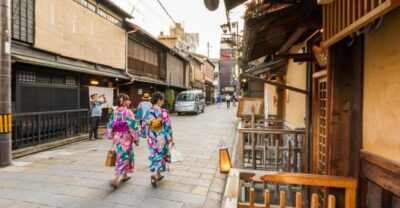
Kyoto Night Foodie Tour in Gion (9+ dishes + 6 Sake tastings)
Read our review →
Kyoto Gion Geisha District Walking Tour – The Stories of Geisha
Read our review →
Kyoto Gion: 2-Hour Geisha Culture & History Walking Tour
Read our review →
Chopsticks Making Workshop in Gion with Engraving Option
Read our review →Browse the lists this tour appears in