
REVIEW · UJI TOURS
Matcha Grinding Experience and Walking Tour in Uji Kyoto
Uji’s best trick is turning a cup of tea into a hands-on lesson. On this four-hour walk, you visit Byodo-in Temple, the graceful temple shown on Japan’s 10-yen coin, then grind tea leaves by hand and drink the powder you made. It gives Uji’s matcha fame a clear, enjoyable shape.
I like two things here. First, the small maximum of six people should make it easier to ask questions and keep a relaxed pace. Second, the tour joins major sights with a real activity, not just a string of photo stops. The main consideration is the price, $130.46 per person, which is a serious spend for a half-day walk.
In This Review
- Key points at a glance
- Why this Uji tour is more than a tea tasting
- Starting at Kyoto Station at 9:30 a.m.
- Byodo-in and the 10-yen coin connection
- Uji Shrine and the town between the sights
- Grinding matcha at Fukujuen Ujicha Kobo
- What Uji tea adds to the experience
- Is $130.46 a fair price?
- Who will enjoy this four-hour outing
- Booking, communication, and cancellation details
- Should you book the Uji matcha walk?
- FAQ
- Where does the tour start?
- Does the tour include hotel pickup?
- What sights are included?
- Is admission to Byodo-in included?
- What happens during the matcha class?
- How large is the group?
- Can I cancel for a refund?
Key points at a glance
- Fresh matcha from a stone mill: Grind tea leaves yourself, then drink the powder you have made.
- Byodo-in admission included: See the temple linked to the 10-yen coin and Uji’s best-known sight.
- A compact Uji route: Visit Byodo-in, Uji Shrine, and Fukujuen Ujicha Kobo in about four hours.
- Small group size: The tour accepts a maximum of six people, with an English-speaking guide.
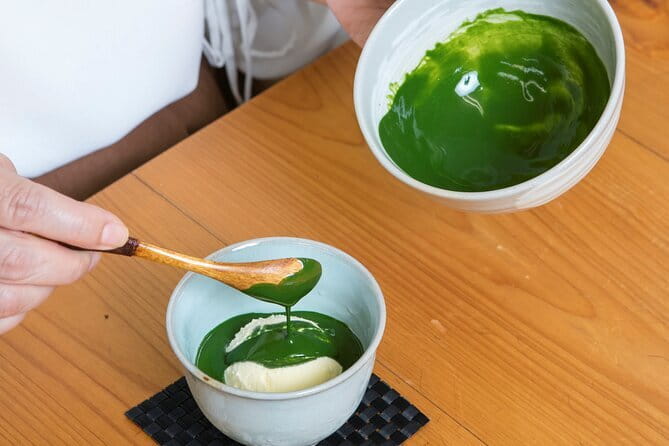
- A sweet finish: Your fresh tea comes with Japanese snacks or matcha ice cream.
- Simple Kyoto logistics: Meet at 9:30 a.m. at the central entrance area of Kyoto Station, then return there after the walk.
Why this Uji tour is more than a tea tasting
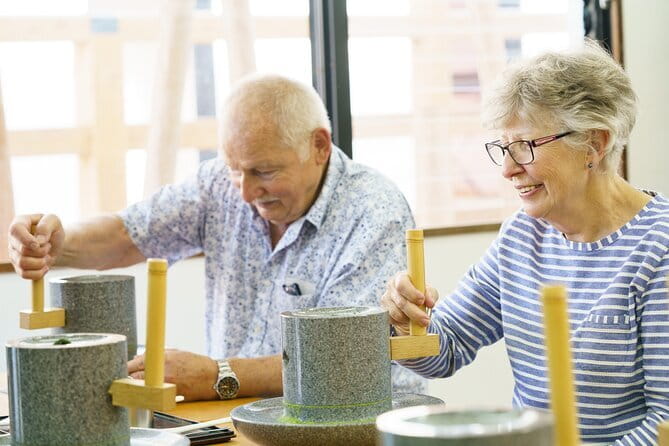
Uji is widely known for high-quality green tea, but a shop tasting alone can leave you with little sense of how the drink reaches your cup. This experience gives you a physical connection to the process. You handle the stone mill, turn tea leaves into fine matcha powder, and drink the result while the work is still fresh in your mind.
That matters because matcha is not simply green tea poured into a cup. The leaves are ground into powder, and you drink that powder rather than steeping and removing the leaves. The workshop lets you see and feel the difference instead of treating matcha as a fashionable flavor on a menu.
The walking portion adds useful context. Uji is not presented only as a tea stop. You also see an important temple and shrine, and you hear why the area became associated with fine green tea. I like that balance. You get culture, local history, and a small craft lesson in one morning.
The tour is also limited to six people. That does not guarantee a private experience, but it is a much more personal size than a large coach group. One of the tours led by Vincent became private, allowing the group to adjust the pace and spend time at several temples and shrines. If Vincent is your guide, his friendly manner and clear explanations may add to the experience.
More time in Uji:
- World Heritage Kyoto & Nara Uji Authentic Matcha Experience
★ 5.0 · 1,573 reviews - Uji: Green Tea Tour with Byodoin and Koshoji Temple Visits
★ 4.8 · 72 reviews - Uji: UNESCO Heritage & Tea Ceremony Walking Tour
★ 4.6 · 54 reviews
Starting at Kyoto Station at 9:30 a.m.
The meeting point is Shinshindo near the central entrance at JR Kyoto Station, inside the station’s bus ticket center area. The address is in Higashishiokoji, Shimogyo Ward, Kyoto. This is a practical starting place if you are staying in Kyoto, but Kyoto Station can be confusing, so give yourself extra time to find the correct entrance and meeting area.
The start time is 9:30 a.m. The tour does not include hotel pickup, so you need to reach the station on your own. That keeps the arrangement simple, but it also means you should confirm the exact meeting instructions before the morning of the tour.
The operator asks you to have WhatsApp available before the experience. The guide uses it for communication, so this is not a minor detail. Make sure the app works on your phone and that you can receive messages while in Japan.
From Kyoto Station, the group heads toward Uji. The supplied details do not state the exact transport method or travel time between Kyoto and Uji, so you should think of the advertised four hours as covering the complete activity from the meeting point through the return. The tour finishes back at the same meeting place.
Byodo-in and the 10-yen coin connection
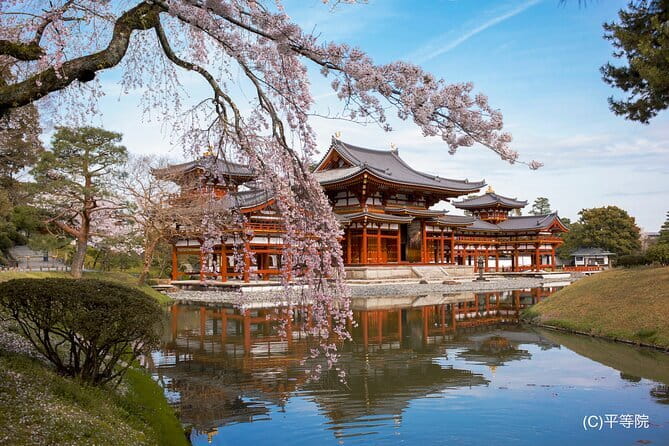
The first listed stop is Byodo-in Temple. This is the visual anchor of the tour, and it gives you an immediate reason to visit Uji beyond tea. The temple’s Phoenix Hall appears on the back of Japan’s 10-yen coin, so you may already have seen its outline without knowing the setting.
The included admission is useful. You do not need to buy a separate entrance ticket for the main temple visit, and the guide can explain what you are seeing as you walk through the grounds. The temple is also a UNESCO World Heritage Site, giving the visit added weight for anyone interested in Japanese architecture and religious sites.
Byodo-in helps set the tone for the rest of the morning. Its beauty can make the tour feel more like a cultural walk than a commercial tea activity. You are not simply taken to a shop to buy matcha. You first see one of Uji’s most important landmarks, then connect the town’s cultural identity with its tea trade.
There is one practical limit: the tour summary does not promise special access, extended temple time, or entry into every building. Your time at Byodo-in will be part of a larger route, so this is not designed as a detailed temple study. If Byodo-in is your main reason for visiting Uji, you may want to return independently for a slower look.
Uji Shrine and the town between the sights
Uji Shrine is the second listed stop. It offers a different kind of setting from Byodo-in. Instead of focusing on a famous temple image, the walk gives you another place to hear about local religious tradition and the history of the area.
The value of a stop like this depends heavily on the guide. The supplied feedback points to Vincent’s ability to explain the local history and show several temples and shrines during the walk. That suggests the strongest part of the experience may be the connection between the places, rather than any one stop taken alone.
Walking between the sights also lets you see Uji as a town. You are not being moved from one isolated attraction to another. The route makes room for the character of the place and for questions about why Uji became Japan’s best-known matcha region.
The route is still a walking tour, so wear comfortable shoes. The information provided does not give a precise walking distance or accessibility details. If you need a low walking load, contact the operator before booking and ask for the current route.
More matcha tastings and workshops:
- Kyoto: Arashiyama Bamboo Forest, Monkeys, Matcha & Temple Tour
★ 5.0 · 759 reviews - Kyoto: Tea Museum Tickets and Matcha Grinding Experience
★ 4.9 · 739 reviews - Kyoto: Tea Ceremony Meditation – Make Matcha with Tea Master
★ 4.8 · 406 reviews - Kyoto: Arashiyama Bamboo, Matcha, Monkeys & Temple Tour
★ 4.9 · 291 reviews
Grinding matcha at Fukujuen Ujicha Kobo
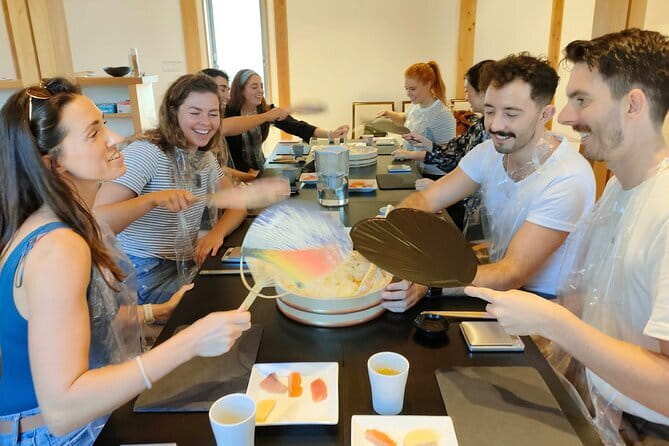
The hands-on portion takes place at Fukujuen Ujicha Kobo. Here, you grind tea leaves into matcha powder with a traditional stone mill. This is the part that gives the tour its strongest sense of participation.
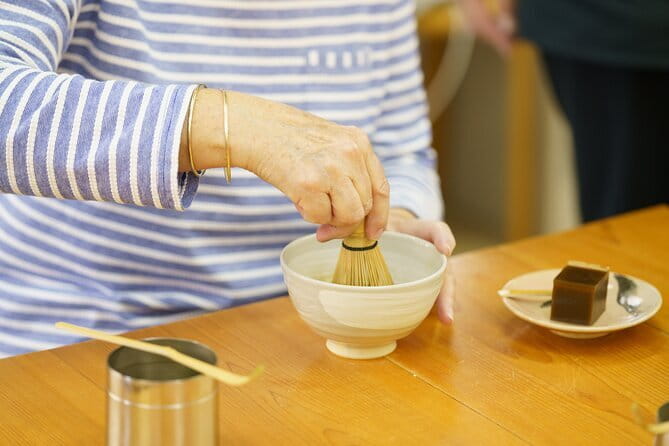
Stone grinding is slower and more physical than using a modern electric machine. That slower pace is useful. It shows that matcha is the result of a careful process, not just a green powder added to milk or dessert. You can expect the guide or workshop staff to talk you through the basic method, though the supplied information does not specify the exact length of the grinding session.
After the grinding, you drink the matcha you made. That immediate tasting is a small but satisfying detail. You are not merely watching a demonstration or sampling a pre-prepared cup. The workshop links the work of your hands to what you taste.
The tour requires you to wear a mask during the matcha-making workshop. Take that rule seriously and bring one with you. It is the clearest specific instruction for the class, and following it helps the group move through the activity without trouble.
The final treat is your choice of Japanese snacks or matcha ice cream. The choice gives the experience a lighter finish, especially if the tea’s flavor is stronger or more bitter than you expected. It also makes the activity appealing to people in a group who have different tastes.
What Uji tea adds to the experience
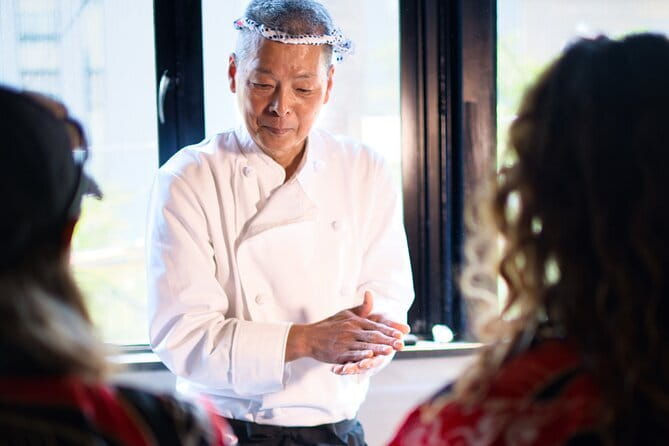
The guide explains why Uji is associated with top-quality green tea. The tour does not just tell you that Uji is the matcha capital. It places the claim beside a visit to a tea workshop, so you can connect the town’s reputation with an actual production method.
This is especially helpful if you are new to Japanese tea. You may leave with a better sense of why matcha has a distinct texture and preparation style. You also get a short introduction to the importance of tea in Uji’s identity.
I would not book this expecting a full agricultural tour. The supplied plan does not include tea fields, a farm visit, or a long lecture on cultivation. Its focus is the town, the major cultural stops, and your own matcha-making session.
That limited focus is part of the appeal. In four hours, you get a clear introduction without committing an entire day to tea. It works well if you want to add Uji to a Kyoto stay but still have the afternoon free.
Is $130.46 a fair price?

At $130.46 per person, this is not a budget way to see Uji. The value comes from the combination of included admission, an English-guided walk, the matcha class, and the snack or ice cream. You are paying for an organized half-day with a small group, not only for temple entry.
The price makes more sense if you value explanation and structure. A do-it-yourself visit to Uji could cost less, especially if you only walk around the public areas and buy tea on your own. But you would need to arrange the route, learn the context independently, and find a workshop that accepts you at a suitable time.
The small group size is important here. With no more than six people, the guide can answer questions and adjust the pace more easily than on a large tour. The experience may become private if no other bookings join, though that should not be treated as a promise.
I would consider the price reasonable for a first-time visitor who wants both Uji’s main cultural sights and a structured tea activity. I would hesitate if you mainly want to take photos at Byodo-in or if you already have a detailed tea workshop planned elsewhere in Kyoto.
Who will enjoy this four-hour outing

This tour suits you best if you want an easy introduction to Uji rather than a specialist study of tea. It is a good match for first-time visitors, matcha fans, and anyone who prefers learning by doing.
It also works for a small family or friend group that wants several types of activity in one morning. The temple offers architecture, the shrine adds local culture, and the workshop gives everyone something practical to try. The choice between Japanese snacks and matcha ice cream helps keep the finish accessible.
You may want to skip it if you dislike group schedules or prefer exploring at your own speed. The tour begins at a fixed time, follows a planned route, and returns to Kyoto Station after about four hours.
It is also not the right choice for a serious tea student looking for a long technical lesson. The workshop is a memorable introduction, but the supplied details do not promise advanced instruction, tea-field visits, or a full ceremony.
Booking, communication, and cancellation details
Confirmation is sent within 48 hours of booking, subject to availability. The activity requires a minimum number of people, so if that number is not met, you will be offered another date or experience, or receive a full refund.
You can cancel for a full refund up to 24 hours before the local start time. Cancellations or changes made less than 24 hours before the experience are not accepted for a refund.
Keep WhatsApp available so the guide can contact you. Also remember the mask requirement for the workshop, the lack of hotel pickup, and the need to reach the Kyoto Station meeting point by 9:30 a.m.
Should you book the Uji matcha walk?
Book it if you want Uji explained in a compact morning and like the idea of making your own tea rather than simply buying a drink. The combination of Byodo-in, Uji Shrine, a small group, and stone-ground matcha gives you a useful introduction to the town.
I would book with realistic expectations. You are paying a premium for guidance and convenience, not for an all-day tea pilgrimage. If that balance suits you, this is a strong choice, especially when Vincent leads the group and can add the friendly, flexible style noted in the tour details.
FAQ
Where does the tour start?
The tour starts at 9:30 a.m. at Shinshindo near the central entrance of JR Kyoto Station, inside the bus ticket center area.
Does the tour include hotel pickup?
No. Hotel pickup is not included, so you must make your own way to the Kyoto Station meeting point.
What sights are included?
The planned stops are Byodo-in Temple, Uji Shrine, and Fukujuen Ujicha Kobo.
Is admission to Byodo-in included?
Yes. Admission to Byodo-in Temple is included in the tour price.
What happens during the matcha class?
You grind tea leaves into matcha powder with a traditional stone mill and then drink the matcha you made. Japanese snacks or matcha ice cream are also included.
How large is the group?
The activity accepts a maximum of six people. It may become a private tour if no other bookings join, but that is not guaranteed.
Can I cancel for a refund?
Yes. You can cancel at least 24 hours before the experience start time for a full refund. Changes or cancellations made less than 24 hours before the start are not accepted for a refund.
More Walking Tours in Kyoto
- Kyoto Geisha Walking Tour: Gion District & Hidden Gems
★ 4.7 · 3,273 reviews - Kyoto: Gion Magical Night Walking Tour with Geisha Trivia
★ 4.9 · 2,393 reviews - Kyoto: Gion Geisha District Walking Tour – Stories of Geisha
★ 4.7 · 2,187 reviews - Night Walk in Gion: Kyoto’s Geisha District
★ 4.5 · 2,003 reviews
Recently added around Kyoto
- Higashiyama | Kyoto: Sakura Season Private Rickshaw Tour★ 5.0 · 3 reviews
- Kyoto Kimono Rental CHAMATSU|Kimono/Yukata Rental FamilyPlan★ 5.0 · 3 reviews
- Kyoto: Half-Day Private Guided Tour to the Old Town of Gion★ 4.4 · 3 reviews
- Nara Private Customizable Half Day Tour★ 5.0 · 3 reviews
- Kansai Region Hiking Adventure in Nara Kobe Kyoto and More★ 5.0 · 3 reviews
- Full Day Nara Deer, Temple, Shrine, Activities & Tea Ceremony★ 5.0 · 3 reviews
- Nara: Essential Private Tour with Deer Park and Temples★ 5.0 · 3 reviews
- Hiking Tour for Sacred Sites in Kyoto with a Guide★ 5.0 · 3 reviews
Uji Tours, compared.
World Heritage Kyoto & Nara Uji Authentic Matcha Experience
Read our review →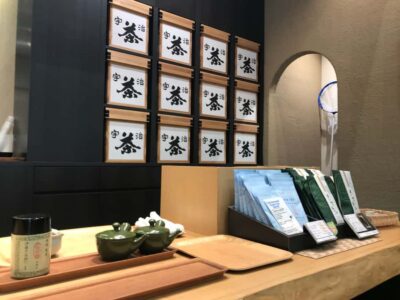
Green Tea Tour with Byodoin and Koshoji Temple Visits
Read our review →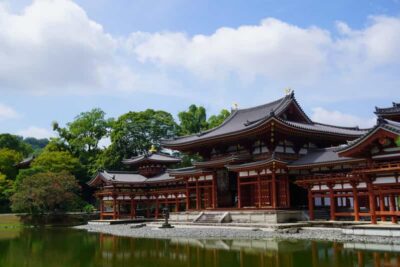
Slow Cycling Tour at Uji’s Matcha Green Tea Fields and Heritage
Read our review →
Uji and Wazuka Matcha Farm Half Day Private Guided Tour
Read our review →
Uji Tea Ceremony and UNESCO Heritage Walking Tour
Read our review →
Private immersion into Kyoto’s tea and reglious culture
Read our review →Browse the lists this tour appears in