

REVIEW · KYOTO RAMEN TOURS
Kyoto Ramen Spoon Painting & Michelin Cooking Class
The best part of this Kyoto class is that it turns ramen from a quick meal into a hands-on craft. You paint a ceramic spoon upstairs, then head into the restaurant kitchen to prepare ramen using ingredients made by Musoshin, whose Toronto restaurant has earned Michelin nominations for three straight years.
I like the small group of up to 12 and the fact that you eat what you prepare. I also like the spoon, which gives you a useful souvenir instead of another disposable photo prop. The main catch is timing: the spoon goes into a kiln overnight, so you may not take it home on the same day.
In This Review
- Key points at a glance
- Why this Kyoto ramen class feels different
- Painting your ceramic ramen spoon
- Cooking ramen with Shin or Amiru
- The meal at the end
- A small group with a personal feel
- How the listed Kyoto sights fit in
- Who should book it
- My take on the value
- Should you book this ramen experience?
- FAQ
- How long does the Kyoto ramen class last?
- Where does the activity begin?
- Where does the activity end?
- How many people can join the class?
- Do I get to paint a ramen spoon?
- Can I take the painted spoon home that day?
- Are vegetarian or vegan options available?
- Can I cancel for a full refund?
Key points at a glance
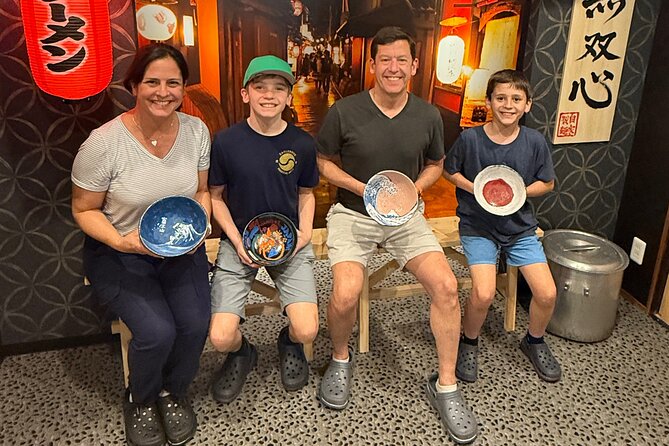
- Paint first, cook second: Your ceramic ramen spoon is decorated before the cooking session begins.
- A real ramen restaurant kitchen: Musoshin makes its own noodles, soup, soy sauce, and roast pork.
- Chef-led instruction: Shin and Amiru are among the instructors connected with the class.
- Pork and vegetarian options: Vegetarian and vegan preparations can be arranged.
- Small-group format: The class accepts a maximum of 12 people.
- A 90-minute food-and-craft activity: It fits neatly into a Kyoto sightseeing day, but the spoon needs overnight kiln firing.
Why this Kyoto ramen class feels different
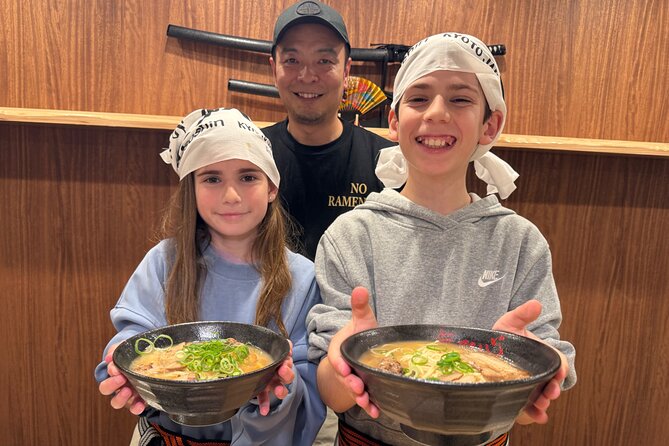
Many cooking classes teach you to assemble a familiar dish. This one gives you two jobs: make a personal utensil, then learn how a ramen restaurant builds its bowl. That pairing gives the experience a nice rhythm. You use your hands for the creative part, then pay closer attention to ingredients, heat, timing, and presentation.
Musoshin began in Kyoto in 2022 and now has six restaurants in Kyoto and Toronto. Its Toronto branch has been nominated for Michelin recognition for three consecutive years. That does not mean this class is a Michelin-starred meal, but it does mean you are learning the restaurant’s own method and recipe rather than following a generic home-cooking lesson.
The restaurant says it prepares its key ingredients in-house. Noodles are made each morning, rested overnight, and used the following day. The soup cooks for 12 hours, while the ramen soy sauce and roast pork are also made by the restaurant. You are not expected to produce all of that from raw ingredients during a 90-minute class. Instead, the restaurant brings its prepared components and shows you how to cook, combine, and finish them.
That is an important distinction. If your dream is to knead ramen dough and build a 12-hour broth from scratch, this is not that sort of workshop. If you want to understand how a professional bowl comes together and then eat a very good version of it, the format makes sense.
More Kyoto ramen crawls:
- Kyoto: Ramen Cooking Class at a Ramen Factory with Souvenir
★ 4.9 · 532 reviews - Kyoto: Ramen, Gyoza, and Onigiri Cooking Class
★ 5.0 · 445 reviews - Kyoto Ramen and Gyoza Cooking Class with Professional Chefs
★ 5.0 · 282 reviews
Painting your ceramic ramen spoon
The craft portion takes place on the second floor. You paint a ceramic ramen spoon, giving you room to make something personal without needing advanced artistic skill. The spoon is a practical souvenir, and it connects directly to the meal you are about to prepare.
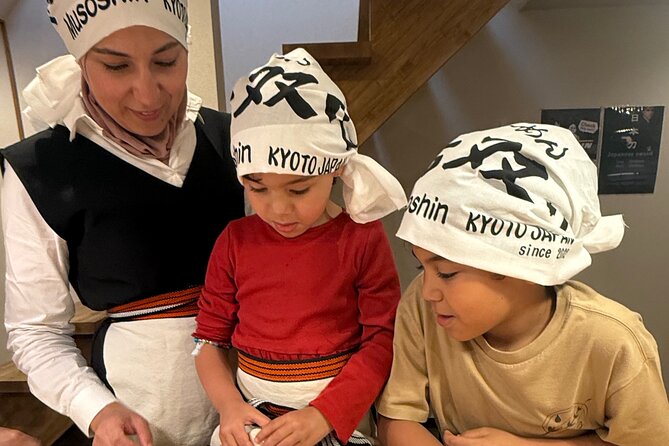
The painting is especially appealing for families and couples. One child can focus on color and pictures while an adult pays attention to the cooking lesson later. It also gives you a quiet creative break before the more active kitchen work.
Be clear about the firing process. The painted spoon must be baked in a kiln overnight. That means the activity creates a souvenir, but not necessarily one you can pack into your suitcase before leaving the class. If you are visiting Kyoto briefly, ask the provider how and when the finished spoon will be returned or collected. The supplied details confirm the overnight firing, but do not explain the delivery method.
The spoon is also one reason to handle your booking carefully. A guest who did not realize the overnight kiln schedule could not paint and receive the finished item as expected. You will have a better time if you treat it as a made-to-order keepsake rather than an object you carry away immediately.
Cooking ramen with Shin or Amiru
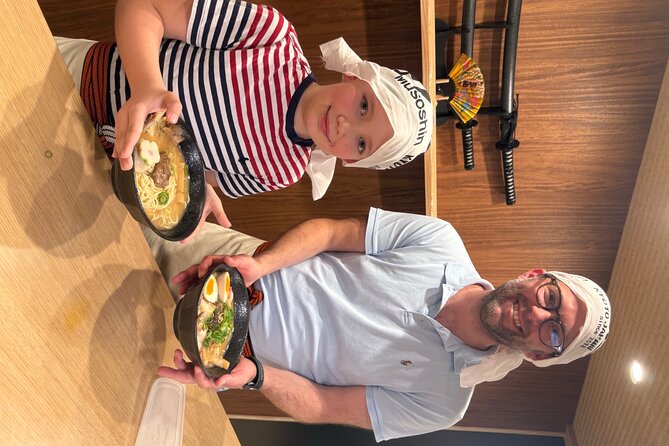
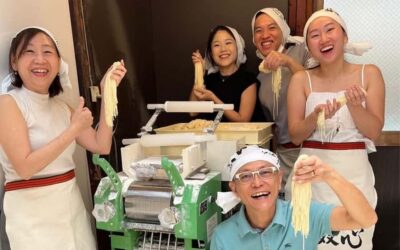
After painting, you move downstairs to prepare the meal. The cooking is step by step, with an explanation of the ramen components, the restaurant’s methods, and some background on the dish. The class is practical rather than a lecture. You take part in cooking and arranging the bowl, then eat the finished result.
Chef Shin receives particular praise for being hands-on, warm with children, and willing to work directly with participants. Amiru is also named as an instructor. The tone appears energetic and friendly, with assistants helping people through each stage. That matters in a small kitchen, where clear instructions and patient guidance can make the difference between fun and frantic.
You will work with ingredients brought from the restaurant. The experience includes a ramen bowl, ramen spoon, apron, and part of the ramen. The restaurant’s stated aim is to let you cook its ingredients yourself, then arrange the bowl so the meal feels more personal.
One useful lesson is how much work sits behind a simple bowl of ramen. The long-cooked soup, house-made noodles, handmade soy sauce, and roast pork each play a role. You get a better sense of why restaurant ramen can taste so different from an instant packet or a quick home version.
One limitation deserves a straight explanation: you do not appear to make the noodles yourself. The restaurant makes them in advance, rests them overnight, and brings them to the class. That keeps the session within 90 minutes, but it may disappoint anyone specifically seeking a noodle-making workshop.
The meal at the end
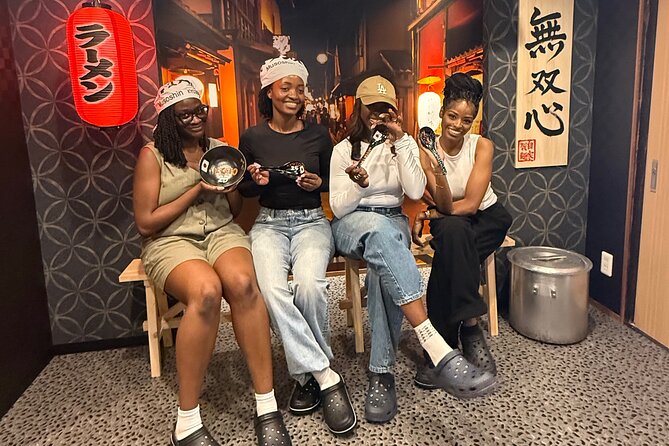
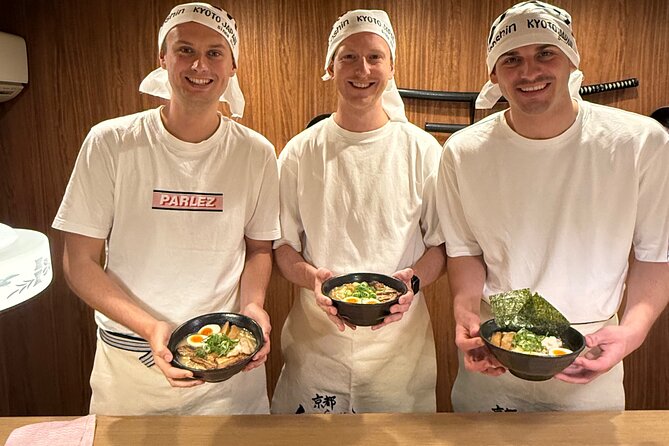
The reward for the preparation is a bowl you eat on site. This is not a demonstration where you watch a chef cook and then receive a separate sample. You arrange your ramen and taste the result of your own work.
That final meal adds real value to the price. At $65.89 per person, you are paying for food, instruction, a craft activity, ingredients, restaurant space, and a souvenir. A standard ramen meal costs much less, but it does not include the teaching or the spoon. A longer, full-day cooking school may offer more technique, but this class is easier to fit between Kyoto sights.
The ramen itself is a major reason to consider the class. The preparation uses Musoshin’s restaurant recipe, and the class lets you compare the parts of the bowl as you build it. The finished meal may be especially satisfying because you have arranged it yourself, not simply received it across a counter.
Vegetarian and vegan options are available. One family used vegetarian preparations successfully, and another participant had allergies handled well. Still, you should communicate dietary needs when booking or before the class. The available information confirms accommodation, but does not list every ingredient or guarantee that all allergies can be managed.
More cooking classes in Kyoto:
- Kyoto: Japanese Washoku Bento Small Group Cooking Class
★ 5.0 · 380 reviews - Kyoto: Afternoon Japanese Izakaya Cooking Class
★ 4.9 · 241 reviews - Izakaya Style Cooking Class
★ 5.0 · 219 reviews - Gyoza Cooking Class in Kyoto: Traditional Japanese Dumplings
★ 5.0 · 210 reviews
A small group with a personal feel
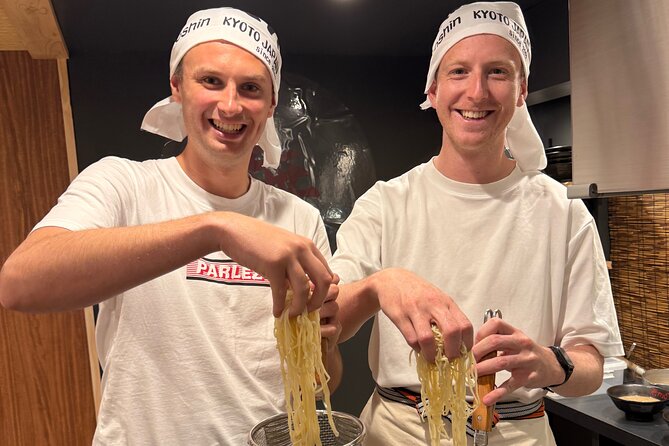
The maximum group size is 12. That is small enough for the instructor and assistant to keep an eye on the cooking, answer questions, and help with the spoon painting. It also keeps the restaurant setting from feeling like a large demonstration hall.
The class suits adults, children, families, and anyone who enjoys food with a creative side. Children can take part in the spoon painting, while ramen fans get a closer look at the restaurant’s process. If you are traveling alone, the small format should make it easier to follow along and speak with the instructors.
The 90-minute duration is another strength. You get a complete activity without spending half a day away from Kyoto’s temples. The pace may feel brisk if you like to linger over art or ask many cooking questions, but it is a sensible length for a first introduction.
The location is near public transportation, though the supplied information does not identify the nearest station or give detailed walking directions. The meeting point is 440-5 Nishigomonchō, Higashiyama Ward, Kyoto, 605-0816, and the activity ends there. Give yourself time to find the address, especially because the class is in the Higashiyama area, where narrow streets and busy sightseeing routes can slow you down.
How the listed Kyoto sights fit in
The booking information names Kiyomizu-dera Temple, Kennin-ji Temple, and Sanjusangendo Temple as itinerary stops. The detailed class description, however, focuses on the Musoshin Ramen Academy meeting point, spoon painting, and restaurant cooking. It does not explain that transportation, guided temple visits, or admission tickets are included.
You should therefore treat the ramen academy address as the confirmed center of the activity. Do not assume you will be escorted to all three temples as part of the 90-minute class. Kiyomizu-dera, Kennin-ji, and Sanjusangendo are all important Kyoto sights, but the supplied schedule does not give enough detail to say how they connect to this workshop.
If you plan to visit those temples on the same day, use the ramen class as one fixed appointment and build your sightseeing around it. The cooking class ends back at the meeting point, which makes it easier to continue exploring Higashiyama afterward.
Who should book it
I would recommend this experience to you if you want a Kyoto food activity that is short, social, and more active than a restaurant meal. It works particularly well for:
- Ramen lovers who want to understand the bowl’s separate parts
- Families looking for an activity that suits both adults and children
- Visitors interested in a small-group class rather than a large cooking show
- Vegetarian or vegan diners who want an available alternative
- People who like souvenirs with a personal story
- Anyone with a free 90-minute slot in the Higashiyama area
I would look elsewhere if your main goal is to make ramen noodles from flour, cook broth for many hours, or learn advanced restaurant techniques. The restaurant supplies much of the preparation, so the class teaches assembly and cooking within a professional ramen system rather than every step from the beginning.
The class also suits people who prefer a clear activity with a meal built in. You will not leave hungry, and you do not need to find a separate restaurant afterward. That makes the $65.89 price easier to justify, especially in a small group with a chef and an assistant.
Free cancellation is available if you cancel at least 24 hours before the local start time. Changes or cancellations made within 24 hours are not accepted for a refund.
My take on the value
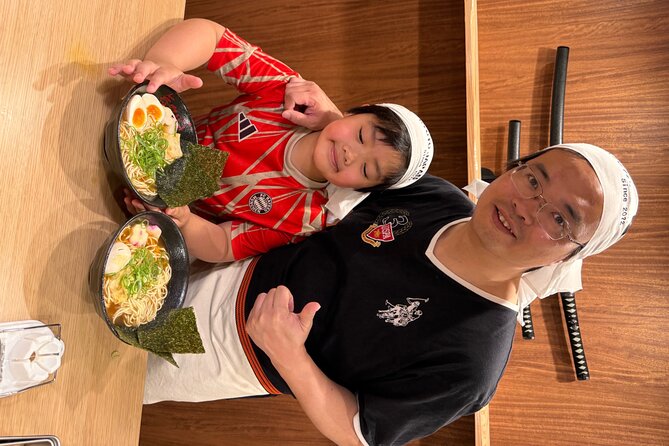
The strongest value comes from combining three things in one booking: instruction, lunch or dinner, and a ceramic souvenir. The spoon painting alone would be a light craft activity. The ramen meal alone would be cheaper at a restaurant. Together, they create a more memorable 90-minute stop.
The Michelin connection should be understood carefully. Musoshin’s Toronto restaurant has received Michelin nominations for three consecutive years, and the recipe used there is said to be the same. That gives the class a professional backdrop, but it is not a promise of a Michelin-starred dining room or a formal culinary qualification.
I also appreciate the honesty of the format. The class does not pretend you can recreate a 12-hour broth in one sitting. Instead, it shows you how the restaurant’s prepared elements work together. You learn enough to make better ramen at home, particularly with vegetarian versions, while still enjoying the advantages of a professional kitchen.
Should you book this ramen experience?
Book it if you want a friendly, hands-on introduction to Kyoto ramen with a meal at the end. The best reasons are the small group, the restaurant-made ingredients, the helpful instruction from chefs such as Shin and Amiru, and the spoon you design yourself.
Skip it if you want a full noodle-making course or need to take your souvenir home immediately. Before booking, confirm the arrangements for receiving the spoon after overnight kiln firing, and clarify the temple itinerary if those listed stops are important to your plans. For most food-focused visitors, the combination of craft, cooking, and a satisfying bowl makes this a strong use of 90 minutes in Kyoto.
FAQ
How long does the Kyoto ramen class last?
The experience lasts approximately 1 hour and 30 minutes.
Where does the activity begin?
It begins at 440-5 Nishigomonchō, Higashiyama Ward, Kyoto, 605-0816, Japan.
Where does the activity end?
The activity ends back at the meeting point.
How many people can join the class?
The maximum group size is 12 participants.
Do I get to paint a ramen spoon?
Yes. You paint a ceramic ramen spoon as part of the experience.
Can I take the painted spoon home that day?
Not necessarily. The spoon is baked in a kiln overnight, so it may not be ready on the same day.
Are vegetarian or vegan options available?
Yes. Vegetarian and vegan ramen options are available, and dietary needs should be communicated in advance.
Can I cancel for a full refund?
Yes. You can receive a full refund if you cancel at least 24 hours before the experience start time. Cancellations or changes made less than 24 hours before the start time are not accepted for a refund.
More Workshops in Kyoto
- Kyoto: 45-Minute Tea Ceremony Lesson Experience
★ 4.3 · 2,378 reviews - Kyoto : Chopsticks Making Workshop in Gion with Engraving Option
★ 5.0 · 958 reviews - Kyoto: Samurai Sword Class by Experts in Traditional Arts
★ 4.9 · 657 reviews - Ninja 1-hour Hands-on Lesson by Japanese master in Kyoto -Entry
★ 5.0 · 489 reviews
Recently added around Kyoto
- Higashiyama | Kyoto: Sakura Season Private Rickshaw Tour★ 5.0 · 3 reviews
- Kyoto Kimono Rental CHAMATSU|Kimono/Yukata Rental FamilyPlan★ 5.0 · 3 reviews
- Kyoto: Half-Day Private Guided Tour to the Old Town of Gion★ 4.4 · 3 reviews
- Nara Private Customizable Half Day Tour★ 5.0 · 3 reviews
- Kansai Region Hiking Adventure in Nara Kobe Kyoto and More★ 5.0 · 3 reviews
- Full Day Nara Deer, Temple, Shrine, Activities & Tea Ceremony★ 5.0 · 3 reviews
- Nara: Essential Private Tour with Deer Park and Temples★ 5.0 · 3 reviews
- Hiking Tour for Sacred Sites in Kyoto with a Guide★ 5.0 · 3 reviews
Kyoto Ramen Tours, compared.
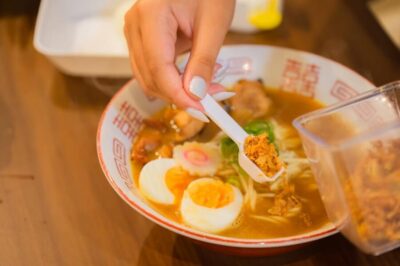
Ramen Cooking Class at a Ramen Factory with Souvenir
Read our review →
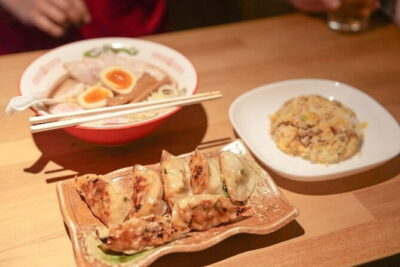
Kyoto Ramen and Gyoza Cooking Class with Professional Chefs
Read our review →
Kyoto Michelin Ramen Workshop or Painting Ramen Essentials
Read our review →Kyoto Ramen & Gyoza Cooking Class with Professional Chefs
Read our review →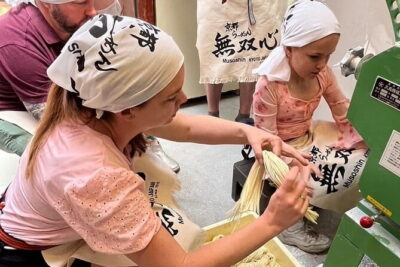
Browse the lists this tour appears in