
REVIEW · GION GEISHA DISTRICT TOURS
Kyoto: Maiko, Samurai, or Kimono Rental and Tea Ceremony
Kyoto puts you in costume before it puts you in a tea room. At Studio Shiki, you can choose a maiko, samurai, kimono, or yukata look, then walk three minutes to Akebonotei for matcha and sweets. It is an easy way to add a traditional Japanese activity to a morning near Kiyomizu-dera.
I like the convenient location and the family-friendly format. You can step out in costume and explore nearby Kiyomizu-dera, Ninenzaka, Sannenzaka, and the Yasaka Five-Story Pagoda. I also like the short tea session, especially for children who may not want to sit through a long formal ceremony.
The main consideration is that this is a tourist-oriented introduction, not a full lesson in tea culture. Some participants have found the setup rushed and artificial, so book it for the dressing, photographs, sweets, and simple ritual rather than for a quiet, deeply traditional ceremony.
In This Review
- Key points to know before booking
- Dressing near Kiyomizu-dera
- The 90-minute gap between costume and tea
- Walking to Akebonotei for matcha
- What the costume adds to a Kyoto sightseeing day
- Hair styling, accessories, and extra costs
- Getting there and managing the group
- Who will get the most from this activity
- Booking advice for a smoother visit
- Should you book the Kyoto kimono and tea ceremony?
- FAQ
- How long does the experience last?
- What costumes can I choose?
- Is hair styling included?
- How old must children be?
- Can pregnant women take part?
- What happens if I arrive late?
Key points to know before booking
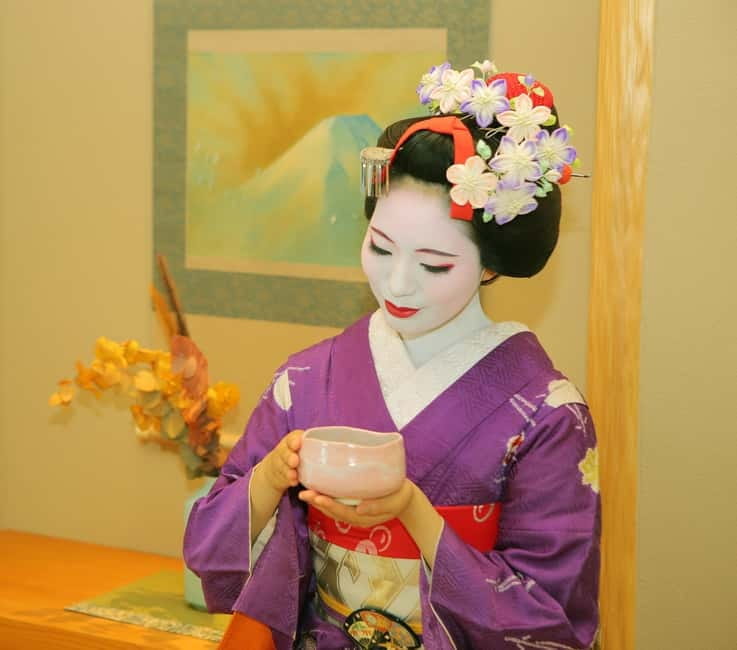
- Choose from four distinct looks: Dress as a maiko, samurai, standard kimono wearer, or seasonal yukata guest.
- Tea follows the dressing: Akebonotei is a three-minute walk from Studio Shiki, with matcha and sweets included.
- Plan your timing carefully: Each costume appointment is paired with a tea session 90 minutes later.
- Kiyomizu-dera is close by: The rental shop sits about three minutes from the temple and near Kyoto’s famous eastern hillside streets.
- Hair styling costs extra: It is not included, and one published price was 1,650 yen.
- Best for small family groups: Children must be at least five years old, and groups are limited in size.
Dressing near Kiyomizu-dera
The experience begins at Maiko Transformation Studio Shiki, also called Rental Kimono Shiki Sakura. Its location is the first major advantage. You are close to Kiyomizu-dera, one of Kyoto’s most visited temples, and within walking range of Ninenzaka, Sannenzaka, Kodaiji Temple, Yasaka Shrine, Yasaka Koshindo, and the Yasaka Five-Story Pagoda.
That makes this more than a stand-alone costume appointment. You can use the rental as part of a full sightseeing morning or afternoon in Higashiyama. The narrow lanes and old-style streets nearby are the natural setting for photographs, though you should remember that many other people come to the same area for the same reason.
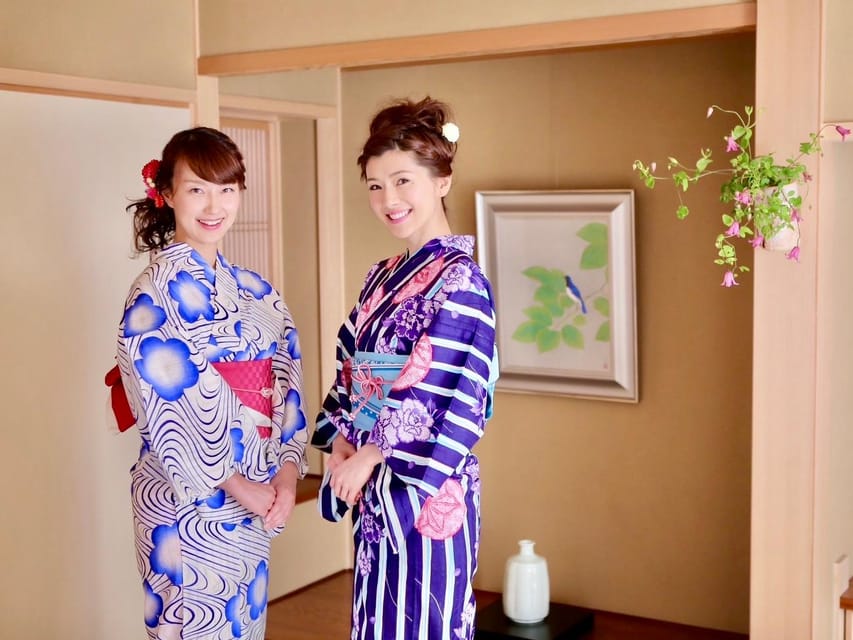
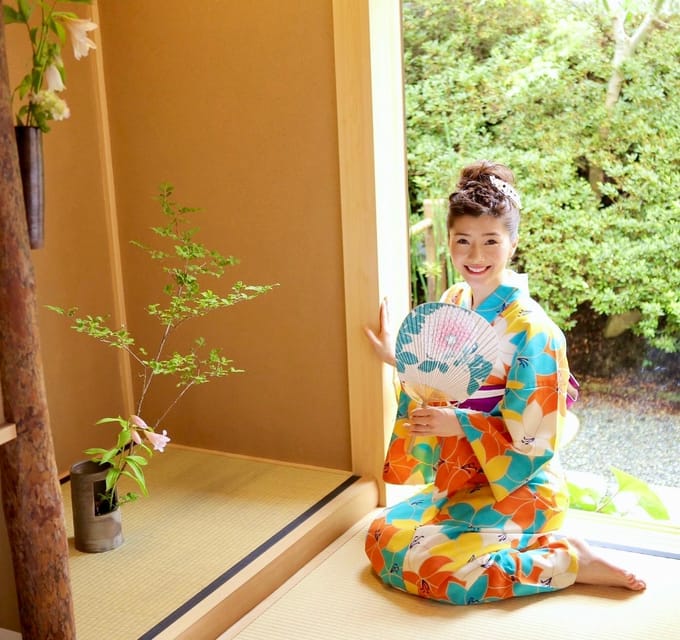
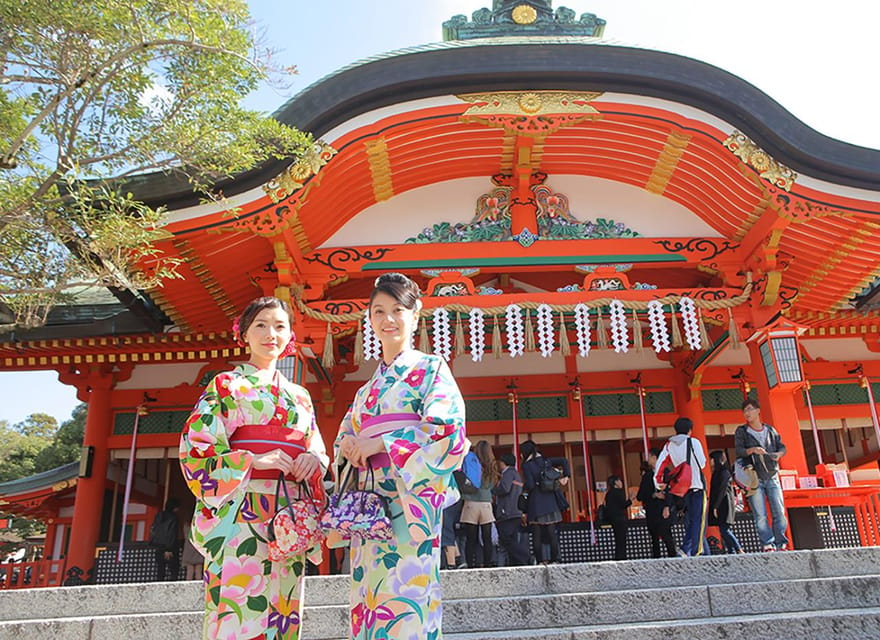
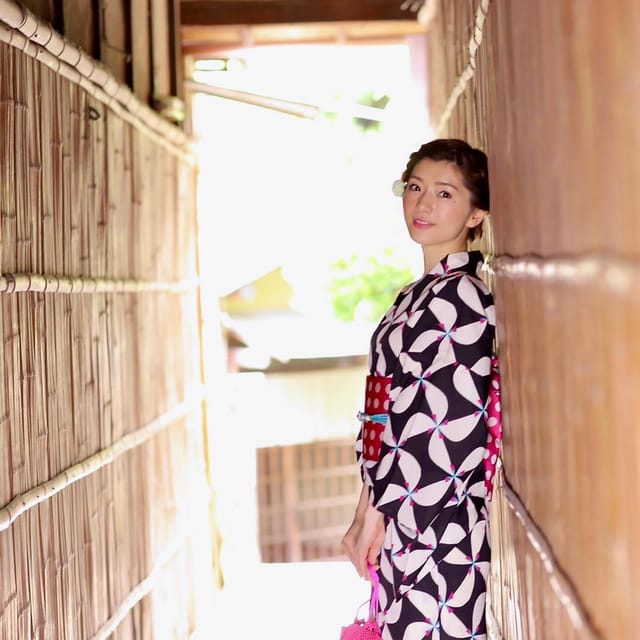
At the studio, you choose your plan and receive the clothing listed in the booking: kimono, obi, underwear, bag, and sandals. From June 1 through September 15, the seasonal plan is yukata, a lighter and more casual summer garment. That option should be more comfortable in Kyoto’s hot months, though the activity still involves dressing and walking in traditional clothing.
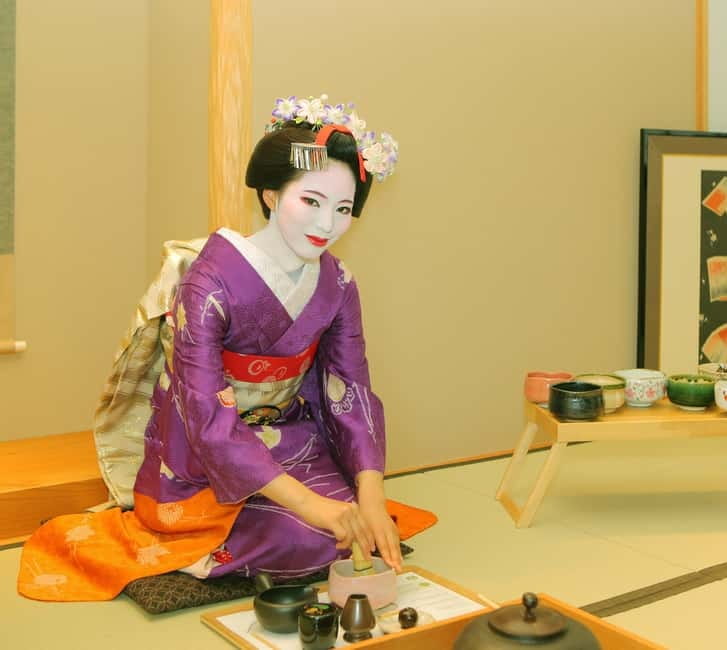
The choice of costume shapes the mood of the visit. A maiko transformation gives you the most theatrical look. The samurai plan offers something different for adults or children who would rather avoid a feminine costume. The regular kimono option is the safest choice if you want a classic Kyoto appearance without the stronger stage effect of maiko styling.
The selection is described as correct rather than huge. You should expect a useful range of choices, not a vast wardrobe where every possible color and pattern is available. If you are particular about a certain style, arrive ready to choose from what is offered that day.
More evenings in Gion:
- Kyoto Geisha Walking Tour: Gion District & Hidden Gems
★ 4.7 · 3,273 reviews - Kyoto: Gion Magical Night Walking Tour with Geisha Trivia
★ 4.9 · 2,393 reviews - Kyoto: Gion Geisha District Walking Tour – Stories of Geisha
★ 4.7 · 2,187 reviews
The 90-minute gap between costume and tea
The schedule is built around a 90-minute gap. A 9:00 a.m. kimono appointment leads to a 10:30 a.m. tea session. The pattern continues throughout the day:
- 10:00 a.m. dressing, 11:30 a.m. tea
- 11:00 a.m. dressing, 12:30 p.m. tea
- Noon dressing, 1:30 p.m. tea
- 1:00 p.m. dressing, 2:30 p.m. tea
- 2:00 p.m. dressing, 3:30 p.m. tea
- 3:00 p.m. dressing, 4:30 p.m. tea
This gap is useful because it gives you time to walk around in costume before the tea ceremony. It also means the appointment is not a single quick stop. You need to keep the whole schedule in mind, especially if you are planning lunch, temple admission, or a visit to another part of Kyoto.
Punctuality matters at both ends. If you arrive late for the dressing or tea, you may be asked to join partway through or may lose that portion altogether. I would build in extra time for the walk from the bus stop and for Kyoto’s crowded streets around Kiyomizu-dera.
The stated duration is 150 minutes to three hours. The difference depends on the selected time, the dressing process, and how the visit fits together. The tea portion itself is short, which is helpful for families but less satisfying if you expect a long formal ceremony.
Walking to Akebonotei for matcha
After the costume appointment, you go to Akebonotei, described as a tea ceremony parlor about three minutes from the rental shop. The close distance is a real benefit. You do not need a long bus ride or a complicated transfer while wearing sandals and formal clothing.
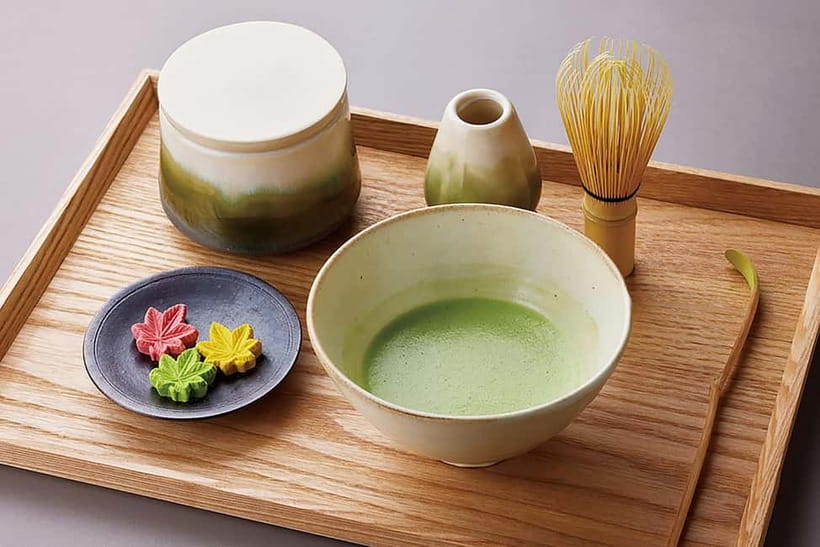
The tea experience includes matcha and sweets. You can take part in the ceremony while dressed as a maiko, in a kimono, or in samurai-style clothing. This gives the activity its central appeal: the costume is not separate from the tea session, but part of the presentation.
You should set your expectations correctly. This is a short introduction to the visual and basic ceremonial side of matcha, not an extended tea-school lesson. Some people will like the manageable pace, particularly families with children. Others may find it too staged or too brief to feel genuinely cultural.
The available information does not name the tea instructor. One participant specifically found the English-speaking staff member easy to communicate with, which is useful if you want simple explanations during the session. Still, you should not expect a private scholar-led class based on the information provided.
The tea room is also described in mixed terms. Positive experiences focus on the novelty, the short format, and the ability to do the activity as a family. Negative experiences describe the atmosphere as crowded, artificial, and more like a tourist setup than an old Kyoto ceremony. Both views can be true: the activity gives you a taste of the ritual, but it does not recreate a private tea gathering in a historic residence.
What the costume adds to a Kyoto sightseeing day
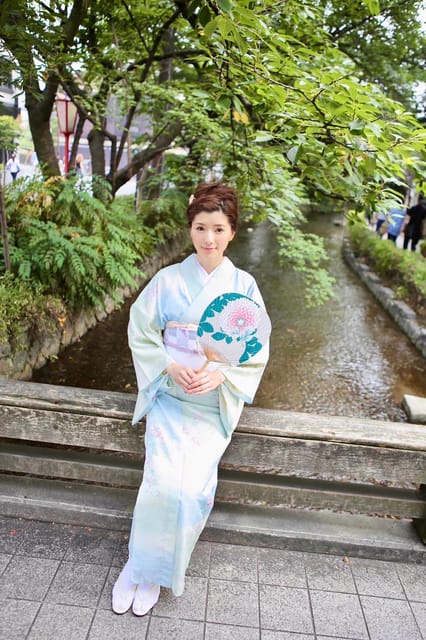
The costume makes familiar sights feel different. Kiyomizu-dera is only a few minutes from the shop, and the nearby streets offer a ready-made route after dressing. You can continue toward the Yasaka Five-Story Pagoda, Yasaka Koshindo, Ninenzaka, Sannenzaka, Kodaiji Temple, or Yasaka Shrine.
The rental terms say you may keep the kimono until 5:00 p.m. That is important. You are not limited to a few photographs inside the shop or a quick walk to the tea parlor. If your appointment is early enough, you have time to make the costume part of a larger Higashiyama visit.
Do not build an overpacked plan around it. Walking in sandals and traditional clothing can be slower than walking in your usual shoes, and the hillside streets near Kiyomizu-dera can be tiring. I would choose two or three nearby sights rather than trying to cover every temple listed.
The experience may suit children especially well because it gives them a clear activity and a visual change from ordinary sightseeing. The tea session is short enough to hold their attention, and the samurai option gives families another choice besides kimono or maiko dress.
For adults, the value depends on what you want from Kyoto. If you want a memorable photograph and a simple cultural activity in a famous neighborhood, the arrangement is practical. If you want an exact reproduction of historical clothing or an in-depth explanation of maiko life, this is not the right product.
More tea ceremonies in Kyoto:
- Kyoto: Tea Ceremony in a Traditional Tea House in Kiyomizu
★ 4.9 · 3,519 reviews - Kyoto: Tea Ceremony Ju-An at Jotokuji Temple
★ 4.9 · 3,207 reviews - Kyoto: 45-Minute Tea Ceremony Lesson Experience
★ 4.3 · 2,378 reviews - Kyoto: Table-Style Tea Ceremony at a Kyo-Machiya
★ 4.9 · 1,211 reviews
Hair styling, accessories, and extra costs
The listed price is $77 per person. That includes the kimono or yukata plan, obi, underwear, bag, sandals, matcha, and sweets. It does not include hair styling, and the published review information gives 1,650 yen as the price offered for that service.
Hair can make a major difference to a maiko-style transformation, so check the extra cost before you arrive. If you want to keep the price close to the advertised amount, you can skip it. If the visual transformation is the main reason you are booking, budget for the added styling.
Admission fees are also not included for anyone who does not take part in the tea ceremony. The tea component is included in this experience, so this note matters mainly if your plans change or if someone in your group does not participate.
At $77, the value is strongest when you use the rental for several hours and visit the nearby sights afterward. The price covers more than a quick costume photo because it includes clothing, accessories, matcha, sweets, and access to a scheduled tea experience. It is weaker value if you only want to wear a kimono briefly or if you are seeking a serious tea lesson.
The price also needs to be judged against the quality of the atmosphere. Some people have described the experience as highly commercial and crowded. If you are sensitive to staged settings, the cost may feel high for what is essentially a short tourist presentation.
Getting there and managing the group
If you come by Kyoto city bus, allow about 20 minutes to reach the Kiyomizu-michi bus stop, followed by a 10-minute walk to the store. The directions do not describe a direct bus stop at the studio, so do not leave the transfer and walk until the last minute.
A taxi or another route may change the travel time, but the supplied directions specifically cover the city bus. Once you reach the Kiyomizu area, signs, crowds, and uphill streets can slow you down. Arriving early is the sensible choice because lateness can affect both the costume and tea appointments.
The activity is described as a small group, with up to six participants. It is also limited to families of up to four people, ages five and up. Those two limits are not identical, so a larger party should confirm the arrangement before booking. A family of four fits the stated family limit well.
The group size affects the feel of the tea portion. A small group can be easier for questions and movement, but it does not guarantee a private ceremony. If you want a quiet room with no other participants, look carefully at the booking conditions rather than assuming small group means private.
Pregnant women cannot take part, and children under five are not permitted. These rules should be treated as firm, not as minor guidelines.
Who will get the most from this activity
I would recommend this experience to families with children age five and older, couples who want a traditional costume photograph, and first-time Kyoto visitors already planning to explore Higashiyama. It works particularly well when you want a light cultural activity rather than a full day devoted to formal instruction.
It is also a good fit for a mixed-interest group. One person can choose maiko styling, another can dress as a samurai, and others can select kimono or yukata. That flexibility is more useful than a one-style costume shop when everyone in your party wants a different look.
You may want to skip it if your top priority is historical accuracy, solitude, or an extended tea lesson. The tea session is short, the setting can feel commercial, and the experience is built for tourists. Those are not flaws for every reader, but they matter if you are looking for a more serious cultural program.
The overall rating of 4.3 from 31 reviews suggests a generally positive experience with some sharp disagreement. The strongest praise centers on the location, the family format, and the pleasant novelty of dressing in Kyoto. The sharpest criticism concerns waiting, rushed handling, and a tea room that can feel artificial or crowded.
Booking advice for a smoother visit
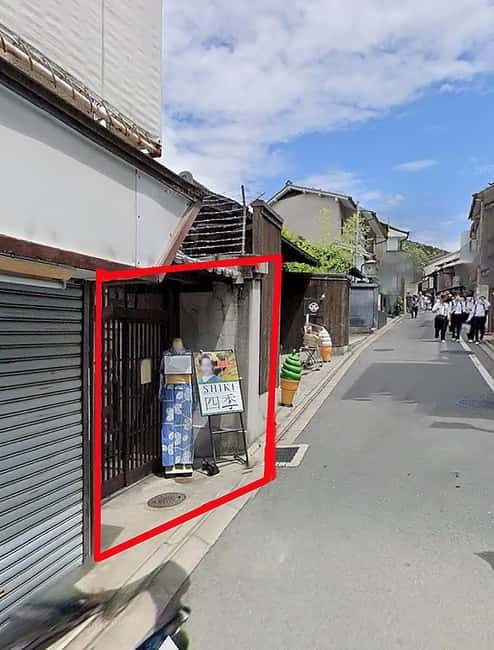
Pick a morning appointment if you want the most time in the kimono before the 5:00 p.m. return deadline. A late-afternoon booking still works, but the costume period will be shorter and the 4:30 p.m. tea appointment leaves little time afterward.
Keep your sightseeing nearby. Kiyomizu-dera, Ninenzaka, Sannenzaka, Kodaiji Temple, Yasaka Koshindo, the Yasaka Five-Story Pagoda, and Yasaka Shrine all fit the location better than a distant Kyoto attraction.
Tell your group to arrive together and on time. The 90-minute schedule is easy to understand, but a missed start can disrupt the whole day. I would also avoid booking this immediately before a train, a restaurant reservation across town, or another timed tour.
Free cancellation is available up to 24 hours before the activity for a full refund, and the reserve-now, pay-later option can help if your Kyoto plans are still moving. Check the exact availability and start time before committing, since the duration ranges from 150 minutes to three hours.
Should you book the Kyoto kimono and tea ceremony?

Book it if you want an easy, photogenic introduction to Japanese dress with matcha and sweets near Kiyomizu-dera. The location is excellent, the costume choices suit different family members, and the short ceremony is less demanding than a formal tea lesson.
Do not book it expecting a quiet, private, historically exact ritual. The setting is designed for visitors, and the experience may feel rushed or staged when demand is high. For most people, the best reason to choose it is the combination of costume rental, a brief tea ceremony, and several hours in Kyoto’s most atmospheric sightseeing district.
FAQ
How long does the experience last?
The stated duration is 150 minutes to three hours. The exact length depends on the selected starting time and how the costume rental and tea session fit together.
What costumes can I choose?
You can choose a maiko, samurai, kimono, or yukata plan. The yukata plan is available from June 1 through September 15.
Is hair styling included?
No. Hair styling is not included in the listed price. A published price for the optional service was 1,650 yen.
How old must children be?
Children must be at least five years old. Children under five cannot participate.
Can pregnant women take part?
No. Pregnant women are not permitted to participate in this experience.
What happens if I arrive late?
You must be punctual for both the costume appointment and the tea ceremony. If you are late, you may have to join partway through or may not be able to participate.
More Samurai Sessions in Kyoto
- Kyoto Samurai Experience
★ 5.0 · 1,294 reviews - Kyoto: Kendo and Samurai Experience with Uniform and Gear
★ 4.9 · 815 reviews - Kyoto: Samurai Sword Class by Experts in Traditional Arts
★ 4.9 · 657 reviews - Skip the lines Basic Ticket at SAMURAI NINJA MUSEUM KYOTO
★ 4.5 · 632 reviews
More Kimono Rentals in Kyoto
- Kimono Tea Ceremony at Kyoto Maikoya, NISHIKI
★ 5.0 · 911 reviews - Kyoto: Kimono Rental with Hairstyling and Accessories
★ 4.8 · 653 reviews - Kyoto: Kimono Tea Ceremony at Orizuruya Gion
★ 4.9 · 618 reviews - KYOTO Tea Ceremony with kimono near by Imamiya Jinjya Shrine
★ 5.0 · 343 reviews
Recently added around Kyoto
- Higashiyama | Kyoto: Sakura Season Private Rickshaw Tour★ 5.0 · 3 reviews
- Kyoto Kimono Rental CHAMATSU|Kimono/Yukata Rental FamilyPlan★ 5.0 · 3 reviews
- Kyoto: Half-Day Private Guided Tour to the Old Town of Gion★ 4.4 · 3 reviews
- Nara Private Customizable Half Day Tour★ 5.0 · 3 reviews
- Kansai Region Hiking Adventure in Nara Kobe Kyoto and More★ 5.0 · 3 reviews
- Full Day Nara Deer, Temple, Shrine, Activities & Tea Ceremony★ 5.0 · 3 reviews
- Nara: Essential Private Tour with Deer Park and Temples★ 5.0 · 3 reviews
- Hiking Tour for Sacred Sites in Kyoto with a Guide★ 5.0 · 3 reviews
Gion Geisha District Tours, compared.

Kyoto Geisha Walking Tour: Gion District & Hidden Gems
Read our review →
Gion Magical Night Walking Tour with Geisha Trivia
Read our review →
Gion Geisha District Walking Tour – Stories of Geisha
Read our review →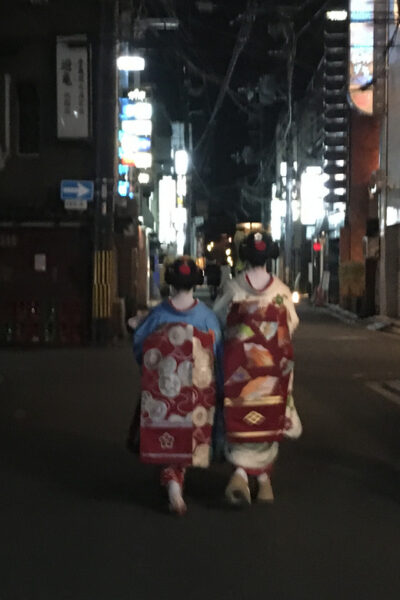
Best of Kyoto: Gion, Geisha, Pagodas & Cobblestones
Read our review →
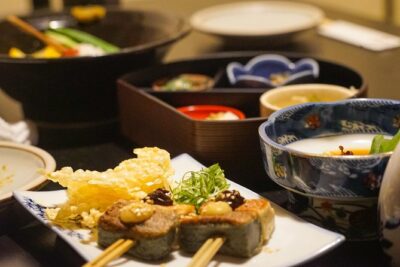
Kyoto Night Foodie Tour in Gion (9+ dishes + 6 Sake tastings)
Read our review →
Kyoto Gion Geisha District Walking Tour – The Stories of Geisha
Read our review →
Kyoto Gion: 2-Hour Geisha Culture & History Walking Tour
Read our review →Browse the lists this tour appears in