
REVIEW · KYOTO TEA CEREMONY EXPERIENCES
KYOTO Tea Ceremony with kimono near by Imamiya Jinjya Shrine
The most memorable part of this Kyoto experience is the careful preparation before the tea even begins. You choose a kimono, have it fitted in several layers, get your hair arranged, and then enter a tea room used by three generations. It turns a short cultural lesson into a proper occasion.
I like the hands-on tea preparation, since you do not just watch a master perform. I also like the personal touch: staff help with photographs, explain kimono patterns, and make sure solo visitors and families take part. The main consideration is that the dressing process can feel busy when several people arrive together, so arrive early if you can.
In This Review
- Key points at a glance
- Choosing a kimono near Daitoku-ji
- Why the photographs are part of the experience
- Inside a Kyoto tea room used for three generations
- Watching the tea master work
- Preparing your own cup of Japanese tea
- The value of the $99.49 price
- Timing, location, and what to plan around it
- Who will enjoy this most
- My verdict on this Kyoto tea ceremony
- FAQ
- How long does the Kyoto tea ceremony experience last?
- Where does the experience start and finish?
- Is transportation included?
- How many people can join the activity?
- Do I get to make my own Japanese tea?
- What is the cancellation policy?
Key points at a glance
- Three generations of tea-room tradition: The ceremony takes place in an older tea room near Daitoku-ji, an area closely linked with Kyoto tea culture.
- Full kimono preparation: You choose from a Nishijin collection, receive help dressing, and have your hair arranged before the ceremony.
- A tea master with 30 years of study: The demonstration gives useful context for the movements, manners, and meaning behind the ritual.
- You make your own tea: After tasting tea and a seasonal sweet, you prepare a cup yourself under guidance.
- Small-group setting: The maximum group size is 12 people, which allows room for instruction and photographs.
- A practical 90-minute activity: The experience fits neatly into a Kyoto sightseeing day, with no private transportation included.
Choosing a kimono near Daitoku-ji
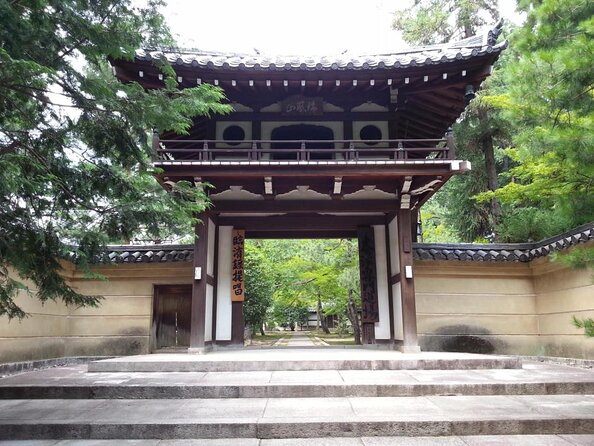
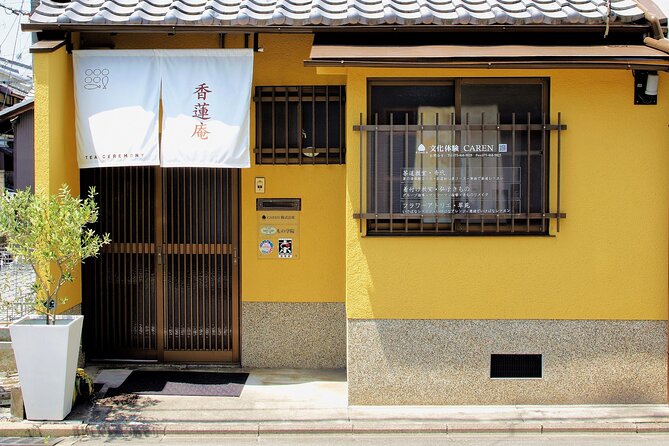
The experience begins at Tea Ceremony Caren, at 74-4 Murasakino Daitokujicho in Kyoto’s Kita Ward. The setting is near Daitoku-ji Temple and public transportation, making it a natural choice if you are already visiting northern Kyoto.
You first choose a kimono by color and pattern. The collection comes from Nishijin, Kyoto’s well-known textile area, so this is more than simply pulling on a costume for a photograph. The patterns and colors become part of the lesson, as your guide explains what different designs can represent.
The dressing is not a quick robe-and-sash routine. Staff fit the kimono in several layers and adjust it carefully. That process helps you understand why traditional dress requires skill and patience. It can also be the busiest part of the visit, particularly if several people arrive at once, so arriving a little before your scheduled time is sensible.
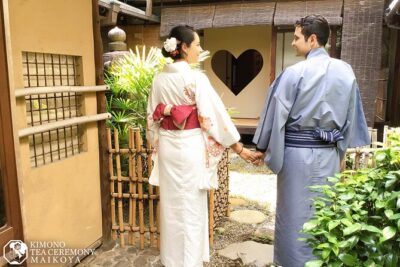
Women have their hair arranged as part of the preparation. The styling is described as efficient, and the staff help you choose accessories that work with the kimono. Men can also wear kimono, making this a good choice for couples, families, and mixed-age groups.
You should wear clothing that allows you to be dressed comfortably over it. The supplied information does not give a specific clothing requirement, but a kimono is fitted closely around the body and tied securely. Comfort matters more than dressing for a separate formal event underneath.
More tea ceremonies in Kyoto:
- Kyoto: Tea Ceremony in a Traditional Tea House in Kiyomizu
★ 4.9 · 3,519 reviews - Kyoto: Tea Ceremony Ju-An at Jotokuji Temple
★ 4.9 · 3,207 reviews - Kyoto: 45-Minute Tea Ceremony Lesson Experience
★ 4.3 · 2,378 reviews
Why the photographs are part of the experience
Once dressed, you have a simple photo session. Staff help with poses and take pictures, rather than leaving you to stand awkwardly in an unfamiliar outfit. This is especially useful because a kimono changes how you move, sit, and hold your hands.
The photographs are not the whole point of the visit, but they give the dressing process a purpose. You get a chance to appreciate the colors and details before sitting down for tea. Several parts of the experience are designed with photographs in mind, yet the atmosphere remains focused on the ceremony rather than a rushed photo stop.
If you are visiting with family, this is a useful moment for group pictures. The experience also works for solo visitors. One solo participant described being included in the tea preparation rather than left watching from the side, which is an important detail if you are booking alone.
Inside a Kyoto tea room used for three generations
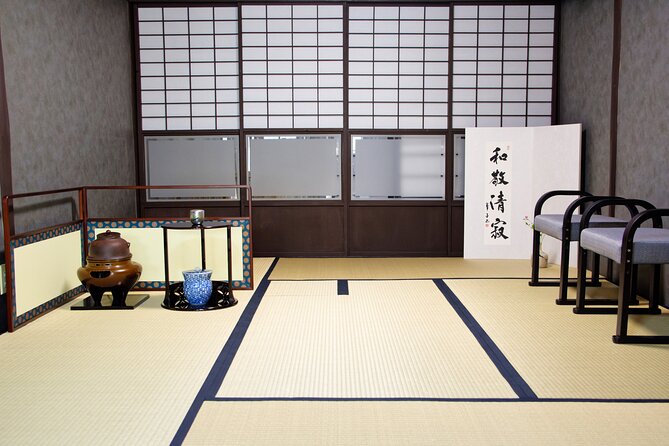
After the kimono and photographs, you go upstairs to the tea-room area. The room is older, and the setting is presented as a working place with three generations of use. Do not expect a large, polished attraction built for crowds. The appeal is the intimate scale and the sense that the ceremony belongs in a real Kyoto setting.
The activity lasts about 90 minutes, so the schedule is compact. The staff must fit several stages into that time: kimono selection, dressing, hair arrangement, photographs, a demonstration, explanation, tasting, and your own preparation of tea.
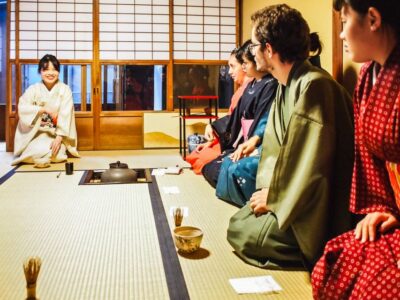
The group maximum is 12 people. That is large enough to meet other people from around the world, but small enough for the instructor and interpreter to give direction. The size may vary on your date, and the dressing area can feel more active when everyone arrives together.
The tea master has studied tea ceremony for 30 years. The ceremony is performed in Japanese, with interpretation provided for English-speaking participants. Akira is named as an interpreter and photographer in the experience feedback, and is noted for explaining the process, helping with poses, and adding background about the tea ceremony fan.
Watching the tea master work
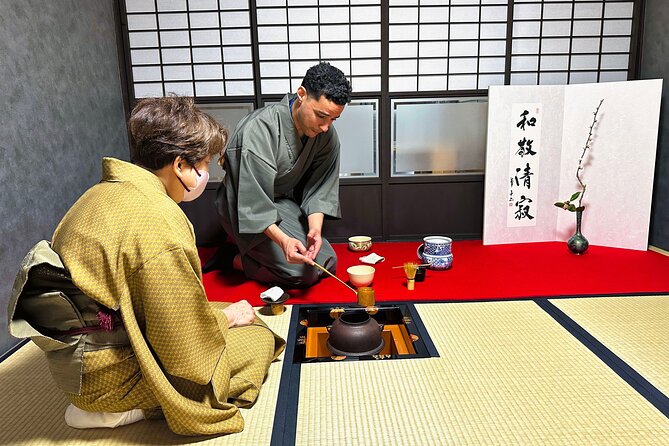
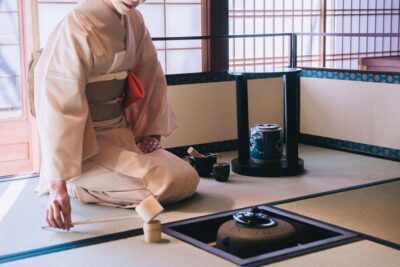
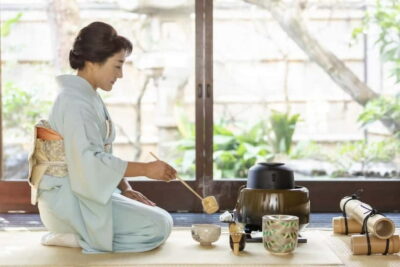
The demonstration is the quiet center of the experience. The tea master prepares tea while you watch the sequence of movements and learn why manners matter. You are not simply handed a bowl of matcha with a brief explanation.
The guide discusses the history of Japanese tea ceremony and the customs connected with serving and drinking tea. This context matters because many gestures can look small or mysterious if you do not know what they mean. The formal movements reflect care, attention, and respect between the person preparing the tea and the person receiving it.
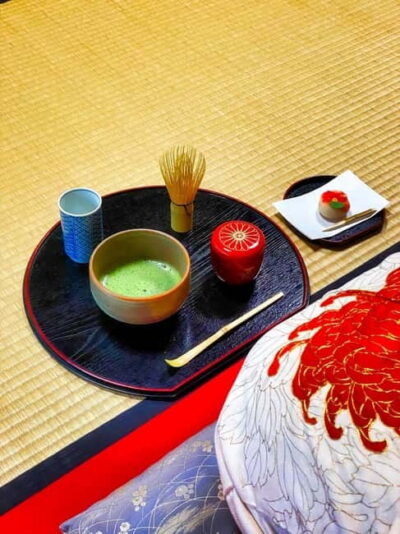
You then receive tea with a seasonal sweet. The sweet provides a small contrast to the tea and is part of the traditional rhythm of the ceremony. The supplied information does not specify the exact flavor or type of sweet, since it changes with the season.
The ceremony is formal, but the teaching style is welcoming. You learn the manners without being expected to know them beforehand. If you are nervous about making a mistake, that is part of the point of the demonstration. You see the correct sequence first, then have the chance to try it with help.
More kimono and yukata rentals:
- Kimono Tea Ceremony at Kyoto Maikoya, NISHIKI
★ 5.0 · 911 reviews - Kyoto: Kimono Rental with Hairstyling and Accessories
★ 4.8 · 653 reviews - Kyoto: Kimono Tea Ceremony at Orizuruya Gion
★ 4.9 · 618 reviews - Kyoto: Kimono and Tea Ceremony Experience at Cultural Asset
★ 4.3 · 306 reviews
Preparing your own cup of Japanese tea
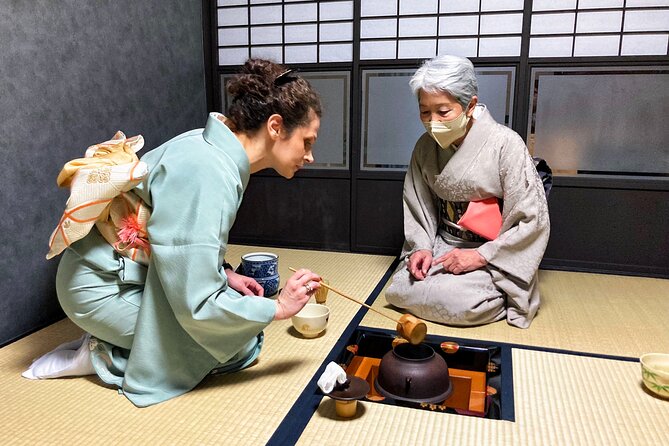
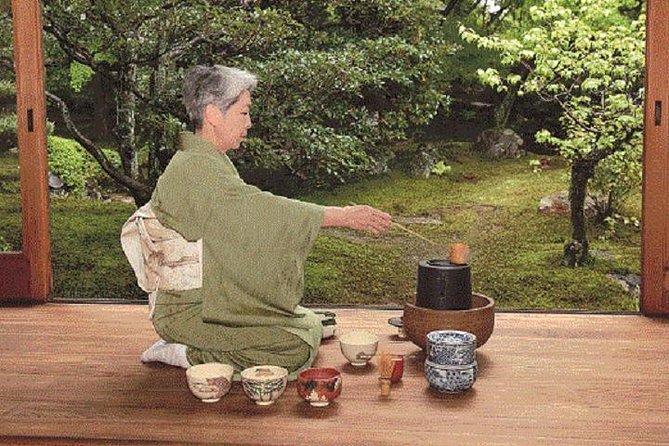
The strongest feature for me is the chance to prepare tea yourself. Many cultural activities stop after a demonstration. Here, you take the bowl and tools in hand and make a cup for another person in the group.
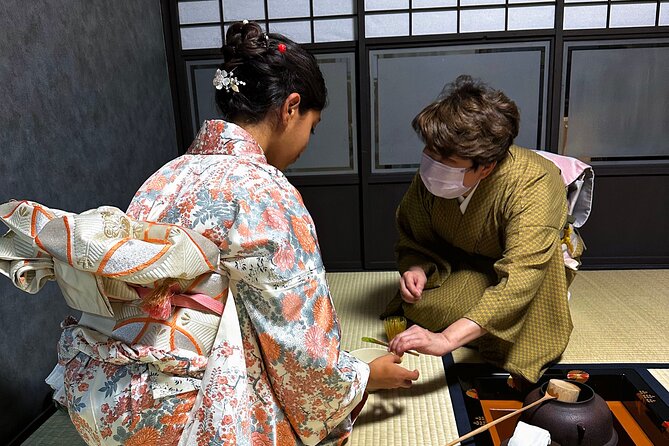
You should expect your first attempt to be less precise than the tea master’s. That is fine. The value is in noticing the movements and gaining a physical sense of the method. Wearing the kimono while you perform the steps also connects the clothing, posture, and etiquette into one experience.
The staff encourage participation, including for people who come alone. Families can make this a shared activity, and children or teenagers may find the practical part more engaging than a talk alone. The experience is also suitable for people who already know a little about tea ceremony, since the demonstration adds detail and the setting gives the ritual more weight.
The tea is matcha, and the activity includes coffee and/or tea. The supplied details do not promise a particular number of bowls, so you should think of this as one guided ceremony and one practical attempt rather than a long tasting session.
The value of the $99.49 price
At $99.49 per person, this is not a cheap photo rental. You are paying for several linked services: kimono selection, professional dressing, hair arrangement, a guided photo session, interpretation, a tea master’s demonstration, a seasonal sweet, and your own tea preparation.
That combination makes the price easier to justify than a short ceremony where you remain in ordinary clothes. The kimono fitting alone requires staff time and care. Add the 30 years of tea study behind the demonstration and a group size capped at 12, and the experience offers more personal attention than a large stage-style cultural show.
The value depends on what you want from Kyoto. If your priority is seeing as many temples as possible, 90 minutes and $99.49 may feel like a large commitment. If you want to understand one custom and take part in it, the price covers a complete cultural activity rather than a single photo opportunity.
I would especially consider it for a first visit to Japan, a family trip, or a special occasion. It is also a thoughtful choice for someone who has always wanted to wear a kimono or attend a tea ceremony. Couples and solo visitors can take part, and the staff make room for individual photographs and instruction.
Timing, location, and what to plan around it
The meeting point is Tea Ceremony Caren, and the activity ends back there. Private transportation is not included, so you need to make your own way to the venue. The location is near public transportation, but you should allow enough time to find the address in the Kita Ward neighborhood.
The activity is described as being near Imamiya Jinjya Shrine, while the tea room is also described as near Daitoku-ji Temple. These are useful landmarks when planning your day. Check your route carefully and avoid scheduling a tight appointment immediately afterward, since the dressing process and photographs are part of the allotted experience.
You may want to combine this with sightseeing in northern Kyoto, rather than crossing the city solely for the ceremony. The nearby temple area has strong links to Japanese tea culture, which gives the location more meaning than a generic downtown venue.
The experience requires good weather under its stated policy. If poor weather causes cancellation, you are offered another date or a full refund. You can cancel for a full refund up to 24 hours before the start time, but cancellations or changes within 24 hours are not refunded or accepted. A minimum number of participants is also required, and a cancellation for that reason brings an alternative date or experience, or a full refund.
Who will enjoy this most
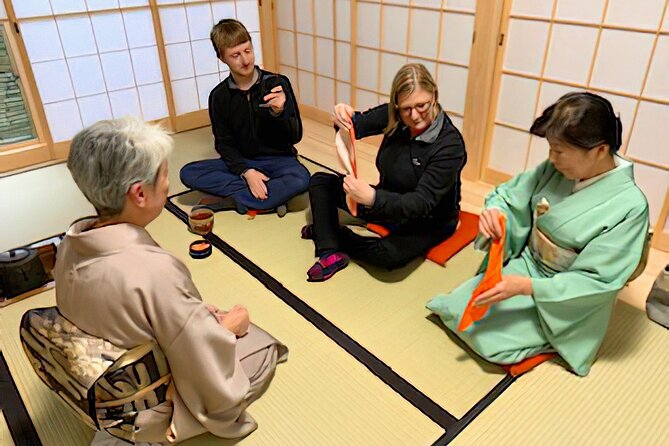
This is a good fit if you want structure and guidance. You do not need to know how to wear a kimono, how to handle matcha, or how to behave during a tea ceremony. The staff explain each stage and help with the parts that are difficult to manage alone.
It suits:
- Couples who want a shared cultural activity and photographs
- Families, including teenagers who may prefer hands-on learning
- Solo visitors who want an activity with a small group
- First-time visitors to Japan
- Anyone interested in traditional clothing, tea, or Japanese manners
- People who want a calm break from temple and city sightseeing
You may want to skip it if you dislike being dressed by other people, photographed, or asked to sit through a formal demonstration. The ceremony is designed to be respectful and traditional, not a fast-moving entertainment show. The older tea room may also feel modest rather than luxurious.
My verdict on this Kyoto tea ceremony
I would book this if wearing a kimono and learning tea etiquette both appeal to you. The experience earns its price through the complete preparation, the long-studied tea master, the interpretation, and the chance to prepare tea yourself.
The most useful booking tip is simple: arrive early, especially if you are in a family or larger party. Choose your preferred kimono color quickly, expect several layers during dressing, and leave enough time to enjoy the photographs without rushing.
With a 5 out of 5 rating from 343 ratings and a 99 percent recommendation rate, the experience has a strong record. More important, its best features are concrete: careful dressing, clear explanations, a seasonal sweet, a real tea-room setting, and active participation.
If you only want a quick kimono photograph, you can likely find a simpler option. If you want a compact but meaningful introduction to two important parts of Kyoto culture, this is a very good choice.
FAQ
How long does the Kyoto tea ceremony experience last?
The activity lasts approximately 1 hour and 30 minutes. This includes choosing and putting on a kimono, hair arrangement, photographs, the tea ceremony demonstration, explanations, tasting tea with a seasonal sweet, and preparing tea yourself.
Where does the experience start and finish?
It starts at Tea Ceremony Caren, 74-4 Murasakino Daitokujicho, Kita Ward, Kyoto, 603-8231, Japan. The activity ends back at the meeting point.
Is transportation included?
No. Private transportation is not included, although the venue is near public transportation.
How many people can join the activity?
The experience accepts a maximum of 12 participants.
Do I get to make my own Japanese tea?
Yes. The tea master first demonstrates the ceremony and explains its history and etiquette. You then have the opportunity to prepare your own cup of tea with guidance.
What is the cancellation policy?
You can cancel up to 24 hours before the start time for a full refund. Cancellations or changes made less than 24 hours before the experience are not refunded or accepted. If poor weather or an insufficient number of participants causes cancellation, you are offered another date or experience, or a full refund.
More Shrines in Kyoto
- Kyoto: 3-Hour Fushimi Inari Shrine Hidden Hiking Tour
★ 4.9 · 270 reviews - E-Bike Nara Highlights – Todaiji, Knives, Deer, Shrine
★ 4.8 · 186 reviews - Kyoto Magical Night English Tour: Gion & Fushimi Inari Shrine
★ 5.0 · 97 reviews - Kyoto: Fushimi Inari Shrine and Tofukuji Temple E-Bike Tour
★ 5.0 · 75 reviews
Recently added around Kyoto
- Higashiyama | Kyoto: Sakura Season Private Rickshaw Tour★ 5.0 · 3 reviews
- Kyoto Kimono Rental CHAMATSU|Kimono/Yukata Rental FamilyPlan★ 5.0 · 3 reviews
- Kyoto: Half-Day Private Guided Tour to the Old Town of Gion★ 4.4 · 3 reviews
- Nara Private Customizable Half Day Tour★ 5.0 · 3 reviews
- Kansai Region Hiking Adventure in Nara Kobe Kyoto and More★ 5.0 · 3 reviews
- Full Day Nara Deer, Temple, Shrine, Activities & Tea Ceremony★ 5.0 · 3 reviews
- Nara: Essential Private Tour with Deer Park and Temples★ 5.0 · 3 reviews
- Hiking Tour for Sacred Sites in Kyoto with a Guide★ 5.0 · 3 reviews
Kyoto Tea Ceremony Experiences, compared.
Tea Ceremony in a Traditional Tea House in Kiyomizu
Read our review →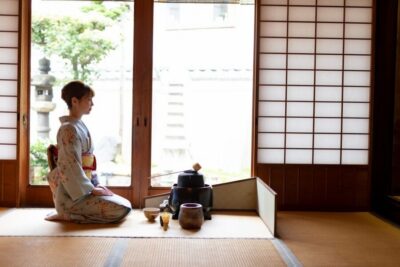
Tea Ceremony in 100-year-old Kyo-Machiya Townhouse
Read our review →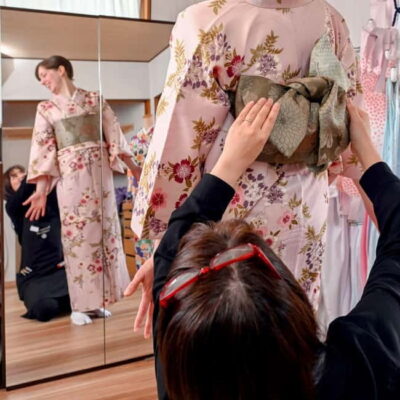
Browse the lists this tour appears in