
REVIEW · GION GEISHA DISTRICT TOURS
Kyoto Gion: 2-Hour Geisha Culture & History Walking Tour
A geisha sighting is possible, but it should be a bonus, not the reason you book this walk. The real prize is learning how Gion works, from the demanding training of maiko and geisha to the meaning behind its tea houses, old streets, hairstyles, dances, and formal kimonos.
I like the way this tour combines geisha culture with ordinary Kyoto history. You also get a useful mix of famous photo stops and quieter lanes, including shrines, Edo-period wooden homes, and a peaceful spot beside the Kamogawa River.
The main drawback is that two hours goes quickly, especially with seven stops. The walk also needs a moderate level of fitness, and the heat can be tough since there are no scheduled drink stops. If you want to see a geisha, book around 5 or 6 p.m., when the chance is considered better, but there is never a guarantee.
In This Review
- Key Points at a Glance
- Why Gion Is More Than a Geisha Photo
- Starting at Shijo-ohashi Bridge
- Hanamikoji Street and the World of Geisha
- Sannenzaka and Ninenzaka: Kyoto’s Famous Slopes
- Yasaka Shrine and a Thousand Years of Worship
- Hokan-ji Temple and the Famous Five-Story Pagoda View
- Pontocho, Food Streets, and Kamogawa River Air
- Gion Shirakawa and Edo-Period Wooden Homes
- Yasui-Konpiragu and Shinto Practice
- How Much Walking and How Much Heat?
- Is $23.88 a Good Value?
- Who Should Book This Gion Walk?
- Final Verdict: A Smart First Look at Gion
- FAQ
- How long does the Kyoto Gion walking tour last?
- How much does the tour cost?
- Can I see a real geisha on the tour?
- Where does the tour begin?
- Where does the tour end?
- What happens if the weather is poor?
Key Points at a Glance
- Possible geisha sighting: Hanamikoji Street offers a chance to see a geisha or maiko heading between appointments, though sightings depend on luck.
- Seven varied stops: You move from Gion’s formal streets to shrines, temples, old homes, Pontocho, and the Kamogawa River.
- Strong guide-led experience: Guides including Uta, Dan, Naoya, Soyo, Ukyo, Kenta, and Alex have been praised for clear English, storytelling, patience, and local suggestions.
- Small group size: The group is capped at 15 people, a useful size for hearing explanations in narrow lanes.
- Good value at $23.88: For about two hours of guided sightseeing in central Kyoto, the price is modest, especially if this is your first visit to Gion.
- Best for walkers: Expect a steady urban walk with time on your feet, uneven streets, and no built-in refreshment break.
Why Gion Is More Than a Geisha Photo
Gion is often reduced to one image: a woman in a silk kimono hurrying down a narrow lane. That picture can be striking, but it tells you very little. This walk gives you the background needed to read the district with more care.
Your guide explains the difference between maiko and geisha, the training involved, and the work behind the dances, hairstyles, and clothing. That context matters because Gion is not a stage set. It is a working cultural district with rules, private spaces, and customs that deserve respect.
The walk also helps you see the buildings. Wooden townhouses, small shrines, temple gates, and restaurant streets are not just attractive backdrops. Their layout and age show how Kyoto’s old entertainment districts developed.
The guides appear to be a major part of the experience. Uta is described as lively, clear in English, and especially good at making the subject fun. Dan is praised for storytelling and local history. Naoya has been singled out for patience and for taking photos along the route. Soyo and Ukyo have been noted for explaining geisha and maiko culture in detail.
Guide assignments can change, so you should not assume you will meet one particular person. Still, the range of guide feedback suggests that the tour depends more on personal interpretation than on a fixed script.
More evenings in Gion:
- Kyoto Geisha Walking Tour: Gion District & Hidden Gems
★ 4.7 · 3,273 reviews - Kyoto: Gion Magical Night Walking Tour with Geisha Trivia
★ 4.9 · 2,393 reviews - Kyoto: Gion Geisha District Walking Tour – Stories of Geisha
★ 4.7 · 2,187 reviews
Starting at Shijo-ohashi Bridge
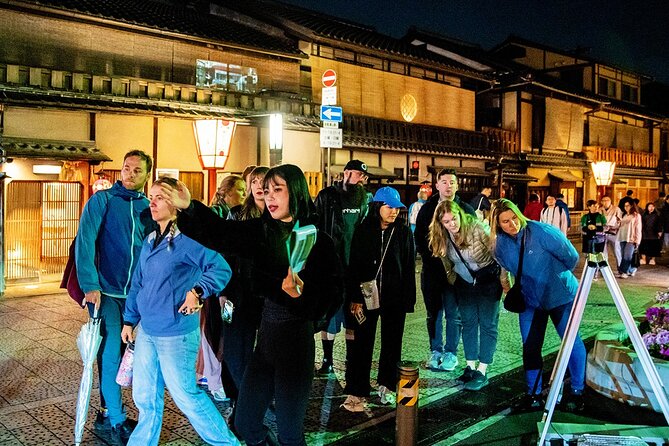
The meeting point is outside McDonald’s at 105-1 Hashimotocho, near Shijo-ohashi Bridge. This location puts you close to the central Gion and Pontocho districts, and it is near public transportation.
That is practical for a short tour. You do not spend the first part of your limited time getting to the neighborhood. Check the exact meeting instructions when booking, then arrive with enough time to find the bridge and the restaurant. The activity ends back at the meeting point, which makes it easier to continue with dinner or return to your hotel.
A mobile ticket keeps the arrival process simple. Confirmation is provided at booking. The group can include up to 15 people, so this is not a private walk, but it should still be small enough for a guide to keep the group together and answer questions.
Hanamikoji Street and the World of Geisha
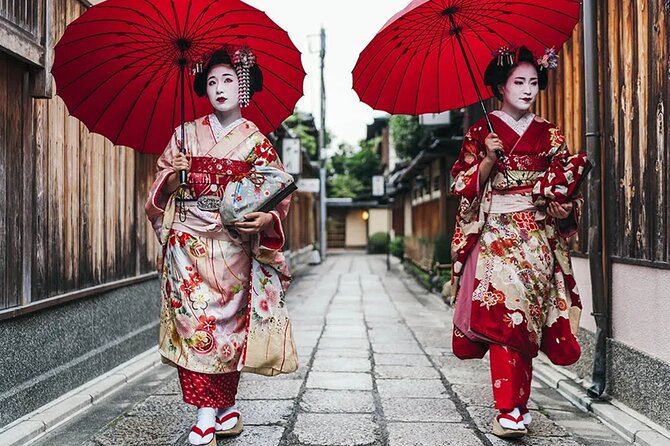
Hanamikoji Street is the clearest introduction to Gion. It is known as the heart of the geisha district, with traditional facades and entrances to establishments that are not generally open to casual drop-ins.
Here, your guide focuses on the world of geisha and maiko. You learn about training, performance, kimono craftsmanship, hairstyling, and the discipline needed to work in this setting. This is where the tour’s title makes the most sense.
You may see a geisha or maiko on the street, particularly in the early evening. Several accounts point to around 5 to 6 p.m. as a useful time for improving your chances. Even then, treat a sighting as luck. Do not block the way, touch anyone, or photograph people aggressively. The guide can help you understand what you are seeing and how to behave.
The scheduled stop is about 15 minutes, so expect an introduction rather than a full lecture. That short format keeps the walk moving, but anyone wanting a detailed lesson on geisha culture may want a longer cultural program as well.
Sannenzaka and Ninenzaka: Kyoto’s Famous Slopes
Sannenzaka and Ninenzaka are among Kyoto’s most photographed streets. Their sloping lanes, wooden buildings, shops, and traditional appearance make them a natural stop on a first visit.
Your guide also explains the local rumor that falling on these streets means you will die within two years. The story is a memorable way to notice the steep steps and uneven surfaces, but the guide gives the real explanation behind the rumor rather than leaving it as a spooky tale.
This is one of the more crowded parts of the walk. It can be hard to stay focused when other people are stopping for photos, and the narrow streets are not ideal for a relaxed pace. Still, having a guide here adds value because you get more than a quick photograph. You learn why the area looks the way it does and how it fits into Kyoto’s older streetscape.
Wear shoes that are comfortable on slopes and hard paving. If your knees or balance are a concern, this section deserves extra thought.
More history walks in Kyoto:
- World Heritage Kyoto & Nara Uji Authentic Matcha Experience
★ 5.0 · 1,573 reviews - Kyoto Gion Historical Walking Tour
★ 5.0 · 188 reviews - Historical Kyoto E-Bike Tour
★ 5.0 · 181 reviews - Kyoto: Nijo Castle World Heritage Guided Tour with Admission
★ 5.0 · 128 reviews
Yasaka Shrine and a Thousand Years of Worship
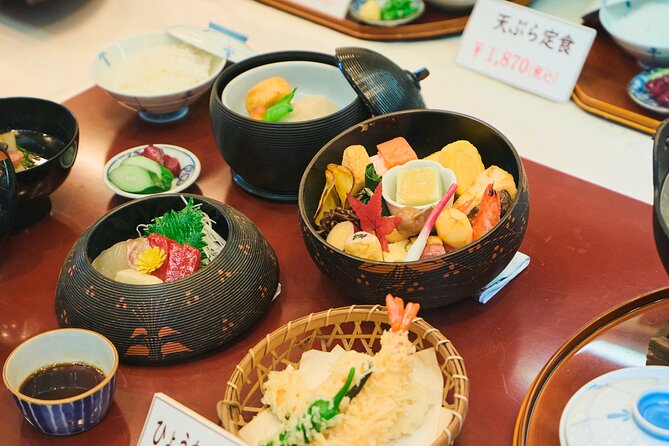
Yasaka Shrine gives the tour a change of mood. Instead of focusing on entertainment culture and streetscapes, you step into a major Shinto site described as 1,000 years old.
Your guide introduces the shrine and explains aspects of Shinto worship. This is useful for first-time visitors because shrines can look simple at a glance. The gates, buildings, purification customs, and gestures each have a place in Japanese religious practice.
The stop lasts about 20 minutes. That is enough for an introduction and a look around, though it is not a full religious history lesson. The shrine is also free to enter, which keeps the entire route inexpensive.
Yasaka Shrine can be a strong photo stop, but try not to treat it only as scenery. The best part is understanding the difference between a Shinto shrine and a Buddhist temple, especially since the next major stop is Hokan-ji Temple.
Hokan-ji Temple and the Famous Five-Story Pagoda View
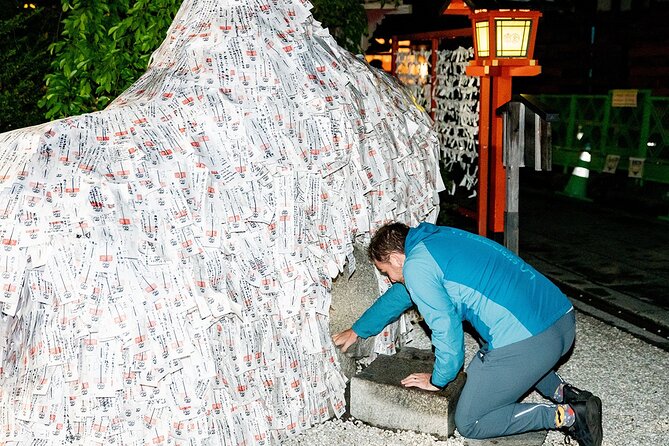
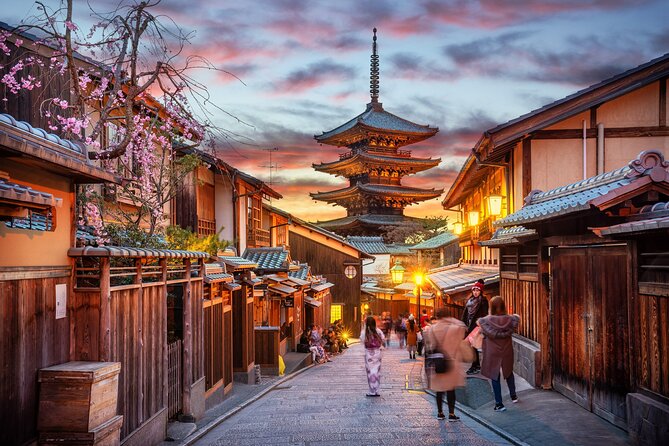
Hokan-ji Temple is known for the photogenic pagoda that appears above Kyoto’s traditional lanes. It is one of the images people often associate with the Higashiyama area.
The stop lasts around 20 minutes and gives you time to take pictures while the guide explains the place. This is a good example of the tour’s balance: you get the photograph you came for, but also some cultural framing.
The photo opportunities come with a practical warning. Sannenzaka, Ninenzaka, and the lanes near Hokan-ji can be busy, especially during the day. Your guide may point out better angles or less crowded corners, but you should not expect complete solitude at such a popular location.
The tour does not promise entry into every building or temple along the way. Its strength is the walking route and the guide’s explanations, not extended indoor visits.
Pontocho, Food Streets, and Kamogawa River Air
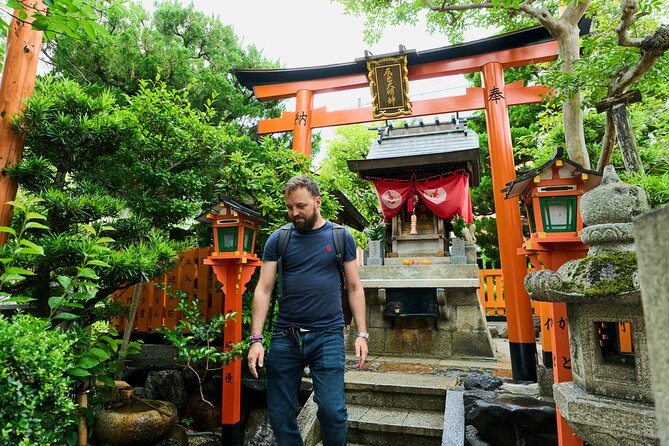
Pontocho brings you into one of Kyoto’s best-known gourmet streets. It is a narrow historic lane lined with restaurants and entertainment venues, many of which cater to evening dining.
Your guide can help you understand the area and may offer restaurant or rooftop bar suggestions. This is one of the more practical benefits of taking the walk early in your Kyoto stay. You can use the advice later rather than guessing where to eat.
The tour also includes a local place to relax beside the Kamogawa River. This provides a welcome pause after the denser streets and temple areas. The river setting gives you a different view of Kyoto, with room to watch the city move without standing in a queue for a major attraction.
There is no scheduled drink stop, so bring water before setting out. One account specifically notes that the lack of a refreshment break was difficult in very hot weather. The walk is only about two hours, but Kyoto summers can make even a short route demanding.
Gion Shirakawa and Edo-Period Wooden Homes
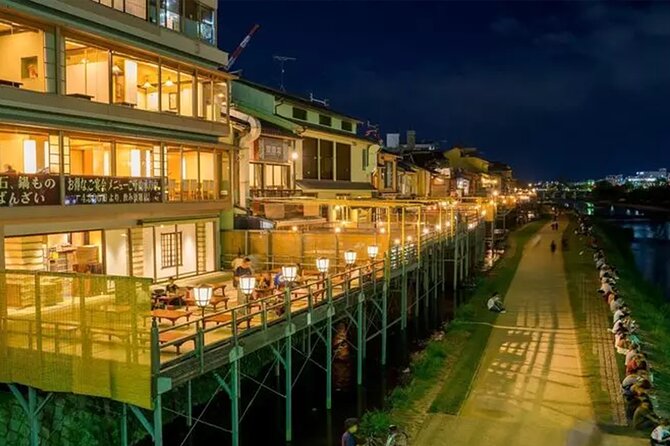
Gion Shirakawa is one of the most atmospheric parts of the route. The area is known for traditional wooden townhouses, water, narrow lanes, and a quieter appearance than the main tourist streets.
Your guide explains the stories behind the Edo-period buildings. This helps you notice details that might otherwise pass by as pretty architecture. The dark wood, compact fronts, and carefully maintained facades show how much of old Kyoto survives in small pieces rather than in large museum buildings.
This is a section where a local guide earns the price of admission, especially since there is no separate admission fee for the walk. You can take in the setting on your own, but the explanations connect the homes to Gion’s former businesses and social life.
Evening can be especially attractive here. Some accounts describe sunset as a lovely time for the walk, while others recommend finishing earlier because some sites and businesses may close later in the evening. The right timing depends on whether you value atmosphere or open shops.
Yasui-Konpiragu and Shinto Practice
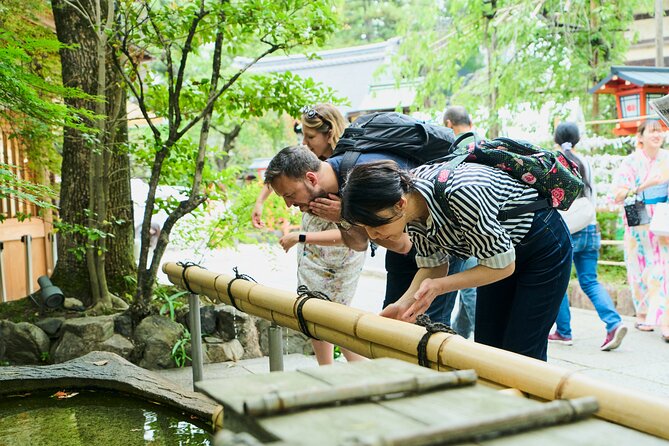
The final listed stop is Yasui-Konpiragu, where you get another chance to see Shinto worship in practice. It gives the tour a quieter ending than a simple return through the shopping streets.
The guide explains how to approach the shrine and what the rituals mean. This is helpful if you have seen people bowing, washing their hands, or making offerings but were unsure of the proper sequence.
A 15-minute stop is brief, but it fits the tour’s wider purpose. You are not spending the whole afternoon at one shrine. Instead, you are seeing several parts of Kyoto’s cultural life and learning how they relate to one another.
Since the route ends back at the original meeting point, you can finish with dinner in Pontocho, continue exploring Gion, or use public transportation from central Kyoto.
How Much Walking and How Much Heat?
The tour requires moderate physical fitness. You should expect roughly two hours on foot, including slopes, paved lanes, crowded streets, shrine grounds, and temple approaches.
The route is not described as strenuous, but the number of stops means you are rarely sitting. Comfortable shoes matter more than fashionable ones. In hot weather, carry water and consider booking a cooler part of the day.
Sunset and evening tours may offer more comfortable temperatures and attractive light. Around 5 to 6 p.m. may also improve your chance of seeing a geisha or maiko. The tradeoff is that some businesses or sites may not be open as late, so ask your guide for current suggestions if dining is part of your plan.
Is $23.88 a Good Value?
At $23.88 per person, this is a low-cost way to get an organized introduction to Gion. You pay for about two hours of guiding rather than admission tickets, and the main sights on the route are free to enter.
I consider the price particularly fair if you are new to Kyoto. The guide gives you cultural context, points out old buildings, explains shrine customs, and adds restaurant advice. Without that help, you might walk through the same streets and miss what makes them important.
The tour is less useful if you already know Gion well or want long visits inside temples and museums. It is also not a private experience, and the route has to suit a group of up to 15 people.
The strongest value comes from the guide. Names such as Uta, Dan, Naoya, Soyo, Ukyo, Kenta, and Alex appear in the guide feedback, with particular praise for friendliness, English, patience, storytelling, and personal recommendations. Staff can change, but the tour format clearly gives the guide room to shape the experience.
Who Should Book This Gion Walk?
I would choose this tour for a first or second day in Kyoto, especially if you want to understand Gion before exploring it on your own. It suits curious walkers, solo visitors, couples, families with older children, and anyone interested in Japanese customs without committing to a full-day cultural program.
It is also a good choice for a last-minute plan. Booking can be made close to the start time when space is available, and the short duration fits neatly around lunch or dinner.
You may want another type of experience if your priority is guaranteed geisha entertainment, a formal tea ceremony, extensive temple interiors, or a private guide. This is a street-level introduction, not a performance or a luxury cultural package.
Free cancellation is available up to 24 hours before the start time. Changes or cancellations inside that window are not refunded, and poor weather may lead to a new date or a full refund. Keep that rule in mind if your Kyoto plans are uncertain.
Final Verdict: A Smart First Look at Gion
Book this walk if you want a compact, affordable explanation of Kyoto’s most famous traditional district. You get geisha culture, shrine customs, old townhouses, famous photo streets, Pontocho, and the Kamogawa River in one route.
Go with realistic expectations. A geisha sighting is not assured, crowded lanes are part of the experience, and two hours leaves little time for lingering. But at $23.88, with a group limit of 15 and guides such as Uta, Dan, and Naoya bringing the streets to life, this is a sensible way to get your bearings and see Gion with more respect and understanding.
FAQ
How long does the Kyoto Gion walking tour last?
The tour lasts approximately two hours.
How much does the tour cost?
The listed price is $23.88 per person.
Can I see a real geisha on the tour?
You might see a geisha or maiko, especially around 5 to 6 p.m., but sightings are not guaranteed.
Where does the tour begin?
The meeting point is McDonald’s at 105-1 Hashimotocho, near Shijo-ohashi Bridge in Kyoto.
Where does the tour end?
The activity ends back at the original meeting point.
What happens if the weather is poor?
The experience requires good weather. If it is canceled because of poor weather, you will be offered another date or a full refund.
More 2-Hour Experiences in Kyoto
- Ninja 2-hour Hands-on Lesson by Japanese master in Kyoto -Medium
★ 5.0 · 218 reviews - Kyoto: 2-Hour Maiko Makeover and Photo Studio Shoot
★ 4.7 · 122 reviews - Kyoto 2 Hours Genuine Kendo / Samurai Experience In Japan
★ 5.0 · 57 reviews - 2 Hour Night Walking Tour Throughout Gion with snack
★ 4.0 · 13 reviews
More Walking Tours in Kyoto
- Night Walk in Gion: Kyoto’s Geisha District
★ 4.5 · 2,003 reviews - Kyoto Gion Geisha District Walking Tour – The Stories of Geisha
★ 5.0 · 1,441 reviews - Nishiki Market Brunch Walking Tour (7 Tastings + Brunch)
★ 5.0 · 1,355 reviews - Kyoto Arashiyama Walking Tour: Bamboo, Monkeys, Gardens & Secrets
★ 5.0 · 1,216 reviews
Recently added around Kyoto
- Higashiyama | Kyoto: Sakura Season Private Rickshaw Tour★ 5.0 · 3 reviews
- Kyoto Kimono Rental CHAMATSU|Kimono/Yukata Rental FamilyPlan★ 5.0 · 3 reviews
- Kyoto: Half-Day Private Guided Tour to the Old Town of Gion★ 4.4 · 3 reviews
- Nara Private Customizable Half Day Tour★ 5.0 · 3 reviews
- Kansai Region Hiking Adventure in Nara Kobe Kyoto and More★ 5.0 · 3 reviews
- Full Day Nara Deer, Temple, Shrine, Activities & Tea Ceremony★ 5.0 · 3 reviews
- Nara: Essential Private Tour with Deer Park and Temples★ 5.0 · 3 reviews
- Hiking Tour for Sacred Sites in Kyoto with a Guide★ 5.0 · 3 reviews
Gion Geisha District Tours, compared.

Kyoto Geisha Walking Tour: Gion District & Hidden Gems
Read our review →
Gion Magical Night Walking Tour with Geisha Trivia
Read our review →
Gion Geisha District Walking Tour – Stories of Geisha
Read our review →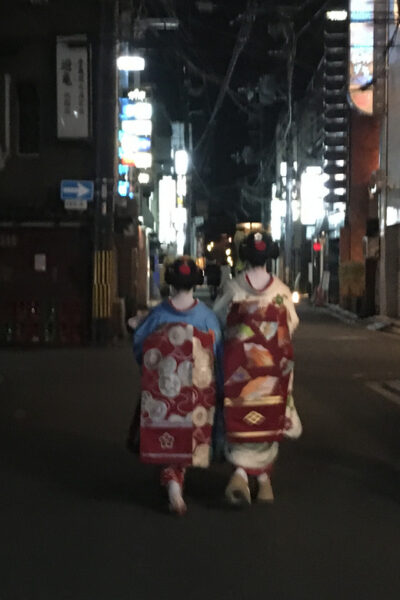
Best of Kyoto: Gion, Geisha, Pagodas & Cobblestones
Read our review →

Kyoto Night Foodie Tour in Gion (9+ dishes + 6 Sake tastings)
Read our review →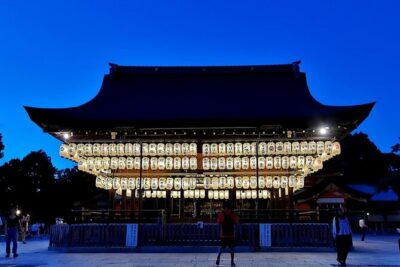
Kyoto Gion Geisha District Walking Tour – The Stories of Geisha
Read our review →
Chopsticks Making Workshop in Gion with Engraving Option
Read our review →Browse the lists this tour appears in