
REVIEW · GION GEISHA DISTRICT TOURS
Kyoto Gion Geisha District Walking Tour – The Stories of Geisha
Kyoto’s Gion is at its most atmospheric after dark, when lanterns glow along narrow lanes and the daytime crowds have thinned. This tour gives you a small-group look at geiko and maiko culture, with guides such as Ben, Shin, Deborah, Nami, and Kenji explaining the district’s customs, entertainment history, and less obvious buildings.
I like two things in particular: the route connects famous sights with the stories behind them, and the group limit of 15 keeps the walk personal enough for questions. The main drawback is that the tour is short, and the content can feel more like an introduction than a full study of Gion. Winter evenings can also be very cold, so bring a proper coat.
In This Review
- Key points to know before you book
- Why Gion works better after sunset
- Starting near Shijo and entering Kyoto’s theater world
- Tatsumi Bridge and the quieter side of Gion
- Hanamikoji Street, where the scenery needs explanation
- Gion Corner and the wider arts scene
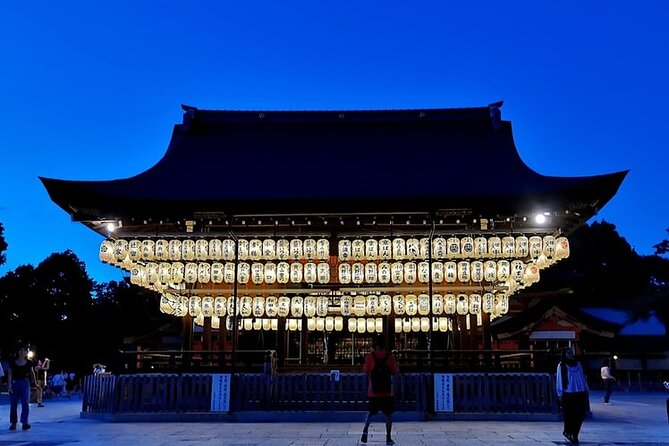
- Yasaka Shrine brings the walk to a strong finish
- What the guide adds to the $25 price
- Cold weather, walking pace, and practical comfort
- Who will get the most from this walk
- Should you book the Kyoto Gion Geisha District Walking Tour?
- FAQ
- How long is the Kyoto Gion Geisha District Walking Tour?
- How large is the tour group?
- Where does the tour start and end?
- Which places are included on the route?
- Is a geisha performance included?
- What happens if the weather is poor?
Key points to know before you book
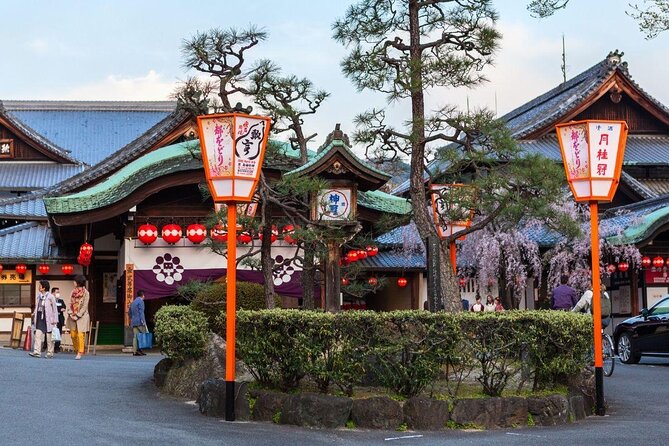
- The evening setting matters: Gion’s lantern-lit streets feel calmer and more atmospheric after the main daytime crowds have gone.
- The group is capped at 15: You get a better chance to hear the guide and ask questions than on a large coach-style tour.
- The focus is cultural, not a guaranteed performance: You learn about geiko, maiko, Kyoto’s entertainment quarters, and local history while walking through Gion.
- The route covers major landmarks: Expect the Izumo-no-Okuni Statue, Minamiza, Tatsumi Bridge, Hanamikoji Street, Gion Corner, and Yasaka Shrine.
- The walk ends at Yasaka Shrine: This gives you a useful starting point for continuing your own evening in Gion.
- The value is strong at $25: For about two hours of guiding and local context, the price is modest, though it does not include drinks or a show.
Why Gion works better after sunset
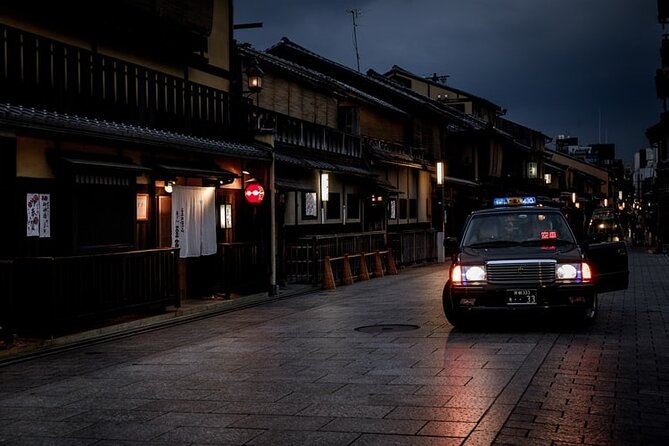
During daylight, Gion can be hard to read. Tour groups fill the main lanes, visitors pause for photographs, and the district’s traditional façades can start to feel like scenery rather than part of a living neighborhood. After dark, the pace changes.
The tour takes you through the area while geiko and maiko may be heading to appointments. That does not mean you are promised a close encounter or a performance. It does mean the timing gives you a better chance to see Gion functioning as an entertainment district rather than simply as a photo stop.
Your guide supplies the missing context. A plain wooden building may look unremarkable until you learn how it relates to geisha culture. A narrow street may reveal something about the old flower towns, the traditional name for districts built around licensed entertainment and arts. This is where the tour earns its modest fee.
I especially like that the walk deals with both past and present practice. Guides explain the evolution of geisha culture, the difference between geiko and maiko, and the role of music, dance, hospitality, and theater in Kyoto’s traditional entertainment world. The strongest guides, including Ben, Deborah, Melanie, Manuel, and Shin, are described as clear, friendly, and eager to answer questions.
More evenings in Gion:
- Kyoto Geisha Walking Tour: Gion District & Hidden Gems
★ 4.7 · 3,273 reviews - Kyoto: Gion Magical Night Walking Tour with Geisha Trivia
★ 4.9 · 2,393 reviews - Kyoto: Gion Geisha District Walking Tour – Stories of Geisha
★ 4.7 · 2,187 reviews
Starting near Shijo and entering Kyoto’s theater world
The meeting point is Ben’s Cookies Kyoto Shijo, at 89 Shinchō in Shimogyo Ward. The route then heads toward Gion, finishing at Yasaka Shrine. Since the start and end are in different places, you should plan to arrive ready to walk and avoid bringing anything cumbersome.
The first listed stop is the Izumo-no-Okuni Statue, with about 10 minutes set aside. The bronze figure honors Okuni, the legendary founder of Kabuki theater. This is a smart opening because it places Gion’s entertainment culture in a wider Japanese arts story. Geisha traditions did not develop in isolation, and the statue helps connect the district with performance, costume, music, and dramatic storytelling.
Minamiza, Kyoto’s historic Kabuki theater, is another important point on the route. The theater is known for elaborate Kabuki performances, and even a short stop outside gives your guide a chance to explain how staged performance and the geisha arts overlap while remaining distinct.
Do not expect entry to the theater or a Kabuki performance. The value here is the explanation. If you are new to Japanese traditional arts, Minamiza gives you a useful frame before the walk turns deeper into Gion’s tea houses and entertainment streets.
Tatsumi Bridge and the quieter side of Gion
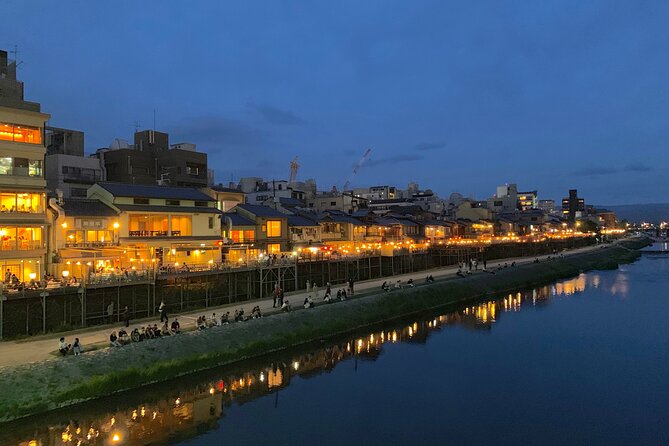
The walk continues to the Tatsumi Bridge area, part of Gion Shinbashi. This is one of the prettiest sections of the route, with traditional tea houses and old streets that show why Gion has such a strong visual identity.
About 10 minutes is listed for the stop, though the walk between points forms much of the experience. Your guide may point out buildings that you would likely pass without noticing. Sakuri, for example, is noted for explaining why seemingly ordinary structures matter to geisha culture. That kind of detail is more useful than simply being led to a famous street and told to take photographs.
Tatsumi Bridge is also a good place to listen. The area rewards a slower pace, especially after sunset, when lights and traditional façades create a more refined mood. Keep your voice low and follow your guide’s advice about photography. Gion is a working neighborhood, not an open-air stage, and respectful behavior matters.
The walk does not promise that you will see a geiko or maiko. If one passes nearby, give her space. The tour’s purpose is to help you understand the culture, not to turn local performers into picture subjects.
Hanamikoji Street, where the scenery needs explanation
Hanamikoji Street is perhaps the most recognizable part of Gion. Its traditional machiya houses, upscale restaurants, tea houses, and carefully maintained façades make it an obvious highlight. The street can also be the most crowded section, even in the evening.
A guide makes the difference here. Without context, Hanamikoji is a beautiful street with expensive-looking doorways. With explanation, you begin to understand the private nature of the establishments behind those doors and why access to some traditional tea houses is limited.
This is where the tour’s emphasis on hidden details pays off. You may learn about the codes and customs of the flower towns, the structure of geisha work, and the distinction between a maiko in training and a geiko who has completed that training. The exact amount of detail depends on your guide, but the route is designed to give you a clear first look rather than a specialist course.
The listed stop lasts around 10 minutes. That is enough for an overview, but it may feel brief if you want extended time for photographs or a long discussion. One useful way to handle this is to treat the tour as your orientation to Gion. Afterward, you can return to the streets that interested you most, now with a better idea of what you are seeing.
More walking tours in Kyoto:
- Night Walk in Gion: Kyoto’s Geisha District
★ 4.5 · 2,003 reviews - Nishiki Market Brunch Walking Tour (7 Tastings + Brunch)
★ 5.0 · 1,355 reviews - Kyoto Arashiyama Walking Tour: Bamboo, Monkeys, Gardens & Secrets
★ 5.0 · 1,216 reviews - Kyoto Gion: 2-Hour Geisha Culture & History Walking Tour
★ 5.0 · 1,186 reviews
Gion Corner and the wider arts scene
Gion Corner is a cultural center and performance venue that presents several traditional Japanese arts in a condensed format. The walking tour includes it as part of the district’s cultural picture, but the tour price does not include a performance ticket.
That distinction matters. This is not a substitute for booking an evening show, and you should not reserve the tour expecting live geisha entertainment. Instead, Gion Corner helps your guide explain how Kyoto presents its traditional arts to visitors and how those arts relate to the neighborhood you are walking through.
If you already have a geisha performance or cultural experience booked, the walk can work well as background. One guide, Melanie, has been praised for explaining both geisha life and Japan more generally, making the tour useful even for people who have another cultural activity planned.
I would book the walking tour first if possible. It can give you a vocabulary for the later performance: geiko, maiko, tea houses, dance, music, and the history of Kyoto’s entertainment quarters. You will understand more when you see a performance after hearing how the traditions fit together.
Yasaka Shrine brings the walk to a strong finish
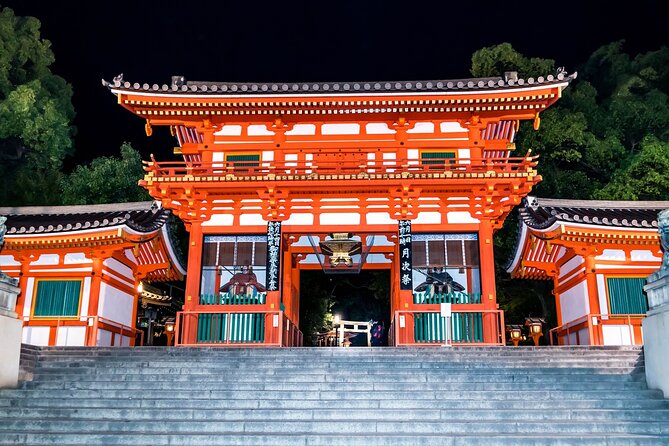
The final stop is Yasaka Shrine, also called Yasaka Jinja or Gion Shrine. The shrine is one of Kyoto’s best-known Shinto sites and sits at the eastern edge of Gion. The tour ends here, after roughly two hours.
Yasaka Shrine changes the focus from private entertainment houses to a public religious space. That contrast gives the route a satisfying shape. You begin with the Izumo-no-Okuni Statue and Kabuki, move through the streets of Gion and its tea houses, and finish at a major shrine tied closely to the district.
About 10 minutes is allocated to this stop. The tour does not include a special shrine ceremony or admission charge. You get a guided introduction and then a convenient place from which to continue exploring on your own.
The end point is practical, too. You are not returned to the starting point, so note the route before booking. Yasaka Shrine leaves you in a central part of eastern Kyoto, but the activity is a one-way walk rather than a round trip.
What the guide adds to the $25 price
At $25 per person, this is a good-value tour if you want explanation rather than a long list of photo stops. All fees and taxes are included, and the mobile ticket makes entry simple. Bottled water is not included, so carry your own if you like to drink during walks.
The strongest part of the value is the guide. Names connected with especially strong experiences include Ben, Shin, Deborah, Melanie, Manuel, Joy, Sakuri, Nami, Kenji, Adrian, Tommy, Manny, Ikari, and Nikki. Guides vary, but the qualities you should expect are clear explanations, local historical context, and time for questions.
The small-group limit helps. With no more than 15 people, you are less likely to lose the guide in a narrow lane or miss an explanation outside a quiet building. It also makes the experience more suitable for families with older children and teenagers. A multigenerational family can take part without needing specialist background.
Still, keep the price in perspective. You are paying for about two hours of guided walking, not a meal, a theater ticket, or a private meeting with a geiko or maiko. If you want a full evening of entertainment, you will need to arrange that separately.
Cold weather, walking pace, and practical comfort
The tour requires a reasonable amount of walking, and there is little reason to expect long indoor breaks. Several accounts describe cold winter conditions, with one particularly cold evening made manageable by a heavy coat. Dress for the forecast, and do not assume that an evening in central Kyoto will feel mild.
Comfortable shoes are the sensible choice. The route includes several stops of about 10 minutes each, but you will also walk between them. The activity is near public transportation, and most people can participate. Service animals are allowed.
The experience requires good weather. If poor weather cancels the tour, you are offered another date or a full refund. For your own plans, avoid placing this activity on the final possible evening of your trip if the walk is important to you.
You can cancel for a full refund up to 24 hours before the start time. Cancellations or changes made within 24 hours are not refunded or accepted. The cut-off follows Kyoto local time.
Who will get the most from this walk
I would recommend this to first-time Kyoto visitors who want an introduction to Gion before exploring the district alone. It is also useful for anyone curious about geisha culture but unsure how to separate real tradition from popular myths.
The tour suits you if you enjoy:
- Short historical explanations tied to real streets and buildings
- Evening walks with a small group
- Japanese performance traditions and cultural history
- Asking questions rather than simply following a route
- A gentle introduction before attending a separate cultural show
It may not suit you if you want a private tour, a guaranteed sighting of geiko or maiko, indoor shelter, or a long and detailed academic treatment. The walk is an overview. One useful criticism is that the route could use more content in places, particularly for people who already know Gion well.
Families with teenage children should find the two-hour length manageable, though young children may not care much about the history of entertainment districts. Adults who want photographs should also remember that the guide’s explanations and local etiquette come first.
Should you book the Kyoto Gion Geisha District Walking Tour?
Book it if you want to understand what you are seeing in Gion, especially on your first Kyoto visit. The evening timing, one-way route, small group, and capable guides make this a practical introduction to one of the city’s most misunderstood districts.
Do not book it as a substitute for a geiko performance or a private cultural experience. Instead, think of it as a well-priced orientation with atmosphere, context, and a useful finish at Yasaka Shrine.
For $25, I consider it worthwhile, provided you arrive prepared for a real walk and cool evening air. Choose it early in your Kyoto stay, listen closely, and then return to Gion later with sharper eyes.
FAQ
How long is the Kyoto Gion Geisha District Walking Tour?
The tour lasts approximately two hours.
How large is the tour group?
The group has a maximum of 15 travelers.
Where does the tour start and end?
It starts at Ben’s Cookies Kyoto Shijo, 89 Shinchō, Shimogyo Ward, Kyoto. It ends at Yasaka Shrine, 625 Gionmachi Kitagawa, Higashiyama Ward, Kyoto.
Which places are included on the route?
The route includes the Izumo-no-Okuni Statue, Minamiza, Tatsumi Bridge, Hanamikoji Street, Gion Corner, and Yasaka Shrine.
Is a geisha performance included?
No. The tour explains geisha and maiko culture while walking through Gion. A performance at Gion Corner or another venue is not included in the tour price.
What happens if the weather is poor?
If the experience is canceled because of poor weather, you can choose another date or receive a full refund. You can also cancel for a full refund up to 24 hours before the start time.
Recently added around Kyoto
- Higashiyama | Kyoto: Sakura Season Private Rickshaw Tour★ 5.0 · 3 reviews
- Kyoto Kimono Rental CHAMATSU|Kimono/Yukata Rental FamilyPlan★ 5.0 · 3 reviews
- Kyoto: Half-Day Private Guided Tour to the Old Town of Gion★ 4.4 · 3 reviews
- Nara Private Customizable Half Day Tour★ 5.0 · 3 reviews
- Kansai Region Hiking Adventure in Nara Kobe Kyoto and More★ 5.0 · 3 reviews
- Full Day Nara Deer, Temple, Shrine, Activities & Tea Ceremony★ 5.0 · 3 reviews
- Nara: Essential Private Tour with Deer Park and Temples★ 5.0 · 3 reviews
- Photo Shoot with a Private Vacation Photographer in KYOTO, JAPAN★ 5.0 · 3 reviews
Gion Geisha District Tours, compared.

Kyoto Geisha Walking Tour: Gion District & Hidden Gems
Read our review →
Gion Magical Night Walking Tour with Geisha Trivia
Read our review →
Gion Geisha District Walking Tour – Stories of Geisha
Read our review →
Best of Kyoto: Gion, Geisha, Pagodas & Cobblestones
Read our review →

Kyoto Night Foodie Tour in Gion (9+ dishes + 6 Sake tastings)
Read our review →
Kyoto Gion: 2-Hour Geisha Culture & History Walking Tour
Read our review →
Chopsticks Making Workshop in Gion with Engraving Option
Read our review →Browse the lists this tour appears in