
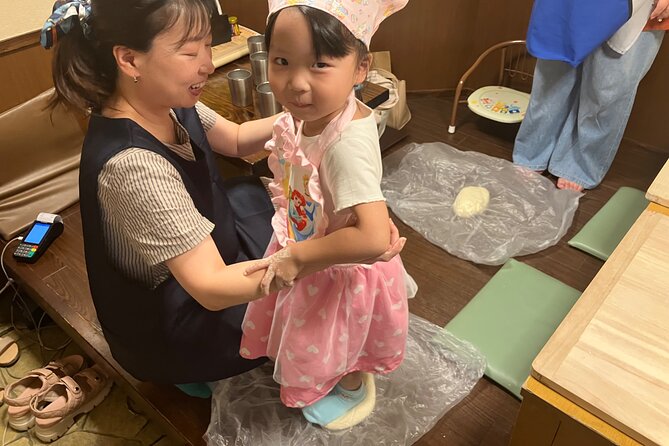
REVIEW · NARA DAY TRIPS
Udon and Tempura Cooking Class in Nara
The best part of this Nara experience is simple: you make the meal you eat. Under the guidance of craftsman Masakazu Sakaguchi, you turn Japanese wheat flour into udon, fry local vegetables as tempura, then sit down to your own hot Tempura Udon.
I like two things right away. You learn by doing, not by watching a chef work behind a counter. And the class connects the food to Nara, using local vegetables and offering Nara sake for an extra toast. The main drawback is the short 90-minute schedule, which leaves little room for a long cultural talk or a slow meal.
In This Review
- Key points
- Why making udon is the main event
- Meeting Masakazu Sakaguchi in Nara
- Kneading, rolling, and cutting the noodles
- Frying Nara vegetables into tempura
- Sitting down to your own Tempura Udon
- What the price includes at $53.33
- The welcome and the small personal details
- Who will get the most from this class
- Timing, group size, and booking advice
- Should you book the Nara udon and tempura class?
- FAQ
- How long does the udon and tempura class last?
- Where does the activity start and end?
- Is pickup available?
- What food is included?
- Is alcohol included in the price?
- How many people can join the class?
Key points
- Handmade from 100% Japanese wheat: Knead, roll, and cut the dough yourself.
- Nara vegetables become tempura: Fry fresh local produce with the chef and eat it hot.
- A personal host-led class: Masakazu Sakaguchi welcomes you at his restaurant and guides the work.
- Your meal is the finish line: The class ends with your own udon and freshly fried tempura.
- Pickup is offered: An air-conditioned vehicle can collect you at the listed meeting point.
- Small group size: The class accepts a maximum of 10 people, keeping the format fairly intimate.
Why making udon is the main event
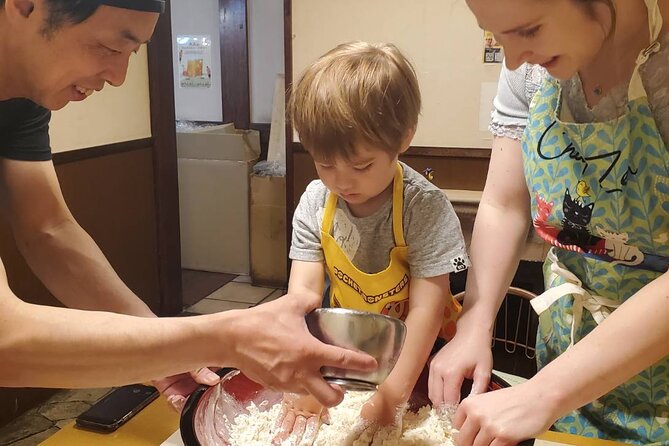
Udon can look plain in a bowl, but handmade noodles show you how much work sits behind that simple meal. You begin with 100% Japanese wheat flour and learn the basic stages: kneading the dough, rolling it out, and cutting it into noodles.
That process gives the class its value. You are not simply tasting a local dish and moving on. You handle the dough and see how flour becomes the thick, springy noodle associated with udon. The finished bowl carries a small personal story: you made it in Nara, with guidance from a local craftsman.
The class is suitable for beginners because the chef leads each step. Still, expect a hands-on session rather than a passive demonstration. You will need to pay attention to the instructions and take part in the preparation. If your group includes children, the appeal is clear, but the adult cooking guidance still matters around hot equipment and frying.
The work also gives you a useful comparison with restaurant udon. A restaurant serves a polished final product. Here, the pleasure comes from the change in the dough and from seeing your own noodles reach the bowl. That makes this a good choice for people who want a food activity with a clear result, not just a tasting.
More day trips to Nara:
- World Heritage Kyoto & Nara Uji Authentic Matcha Experience
★ 5.0 · 1,573 reviews - Nara Half Day Trip Walking Tour (Private Option Available)
★ 5.0 · 937 reviews - Nara Early Morning Tour (Kyoto or Osaka Departure Available)
★ 5.0 · 676 reviews
Meeting Masakazu Sakaguchi in Nara
The class is led by Masakazu Sakaguchi, identified as a skilled craftsman from Nara. The setting is connected with his restaurant, where you are asked to wash your hands and remove your shoes before beginning. Those small steps help set the tone for a Japanese home-style cooking environment rather than a large commercial kitchen.
I like that the welcome appears personal. The host comes to meet you, and pickup by an air-conditioned car is offered from the listed meeting point at 632-2 Hōrenchō, Nara. Since the activity ends back at that same meeting point, you should plan your sightseeing around this fixed start and finish rather than treating the class as a drop-in stop near Nara’s major sights.
The available information does not give a separate hotel pickup schedule or a list of alternate pickup locations. For that reason, check the exact meeting instructions after booking. The listed point is near public transportation, but the vehicle pickup may make the arrival easier if you are carrying bags or are unfamiliar with the area.
The maximum group size is 10 people. That is not a private lesson, but it is small enough to keep the chef’s instructions within reach. A smaller group may also make it easier to ask about the dough, the vegetables, or Nara’s food traditions as you work.
Kneading, rolling, and cutting the noodles
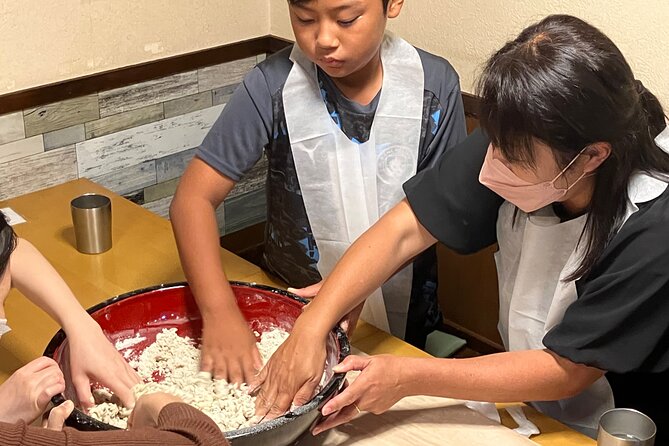
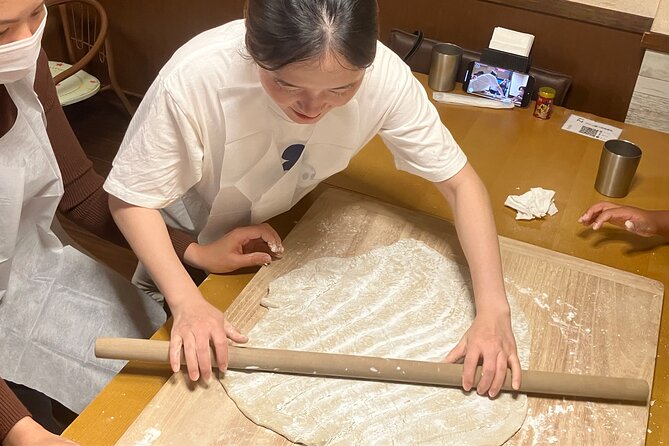
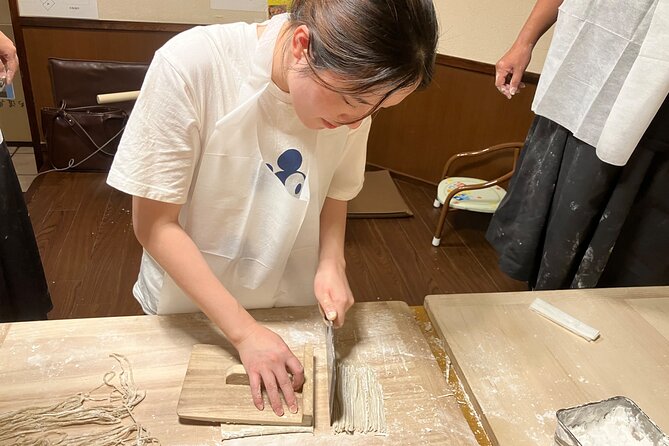
The udon portion begins with dough. You knead the Japanese wheat flour, work it into shape, roll it out, and cut the noodles. Each stage has a practical purpose, and the order matters.
Kneading is where the dough starts to gain structure. Rolling turns the mass into a sheet, and cutting creates the strands that will become udon. You do not need prior cooking experience, but you should expect your noodles to have a handmade look. Small variations are part of the point.
This is also the portion that may appeal most to families and first-time cooks. The sequence is easy to understand, and the result is visible. You can see the dough change from a rough mixture into something ready for the pot.
The 90-minute duration keeps the class focused. You should have enough time for the core cooking stages and the meal, but not for an extended workshop on every detail of noodle production. If you want a long technical lesson about flour, hydration, or regional noodle styles, this may feel brief. If you want to make a traditional Japanese dish during a compact Nara visit, the timing works better.
Frying Nara vegetables into tempura
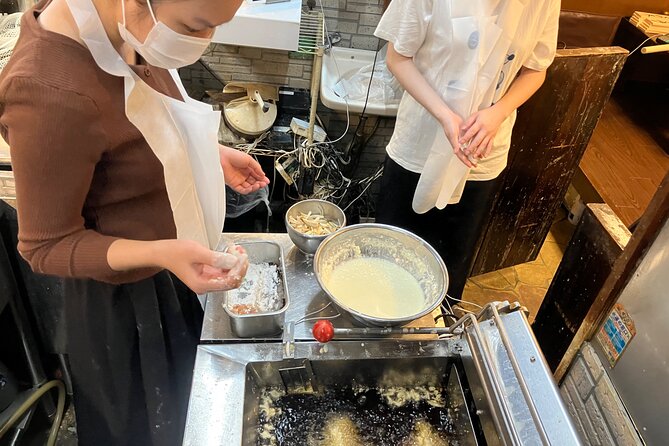
After the noodles, you prepare tempura with fresh vegetables sourced from Nara. You fry them together with the chef, then eat them hot and crisp alongside the udon.
This local produce is an important part of the experience. The class is not only about reproducing a famous Japanese dish. It gives you a direct connection to Nara’s food culture through ingredients from the area. The vegetable selection can vary, and the supplied details do not list a fixed menu, so you should not book expecting particular vegetables.
Tempura is also where the class shifts from dough work to cooking with heat. The chef’s presence matters here. You can watch the technique and take part under supervision, rather than trying to manage the frying alone. The goal is fresh, crisp tempura served soon after cooking, not food prepared long before you arrive.
The combination works well. Udon brings warmth and chew, while tempura adds crunch and the flavor of the vegetables. You get two different kinds of cooking practice in one short session, which gives the class more substance than a noodle-only lesson.
More cooking classes in Nara:
- Nara: Cooking class, learning how to make authentic sushi
★ 5.0 · 5 reviews - Nara: Authentic Onigiri Cooking Class & Meal in a Local Home
★ 5.0 · 4 reviews - Kyoto: Ramen Cooking Class at a Ramen Factory with Souvenir
★ 4.9 · 532 reviews - Kyoto: Ramen, Gyoza, and Onigiri Cooking Class
★ 5.0 · 445 reviews
Sitting down to your own Tempura Udon
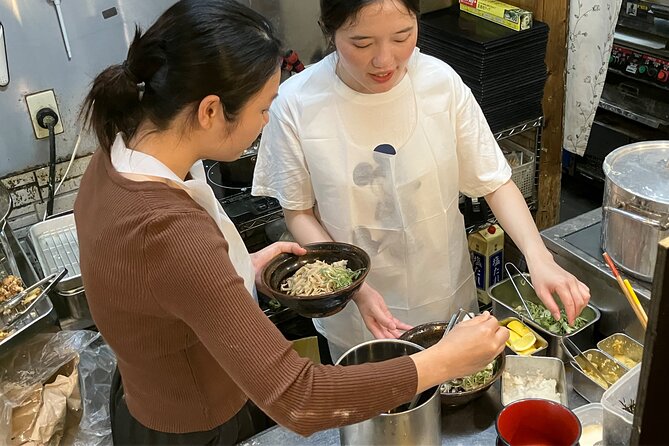
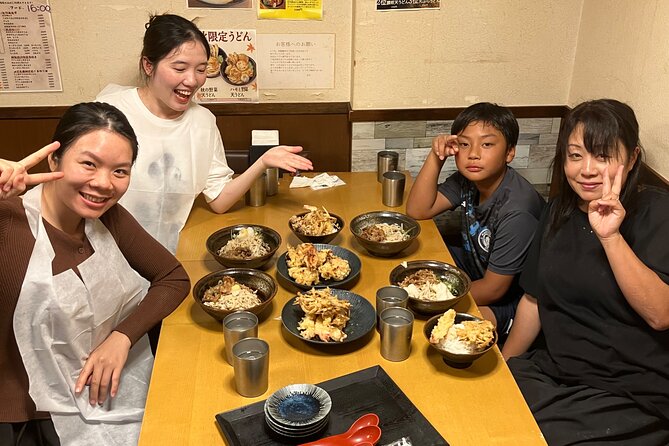
The final meal is handmade udon served with the tempura you prepared. This is the reward, but it is also where the class makes sense as a complete activity.
You have worked with the flour, shaped the noodles, handled local vegetables, and helped fry them. Eating the finished dish immediately means you can connect the taste to the steps that produced it. The meal is included in the price, along with the ingredients and cooking tools, so there is no separate charge for the main food experience.
Nara sake is available if you want to add a local drink, but alcohol is not included. You can purchase sake, beer, or another alcoholic drink separately. That option may suit adults looking for a relaxed toast after cooking, while anyone watching costs can simply enjoy the meal without ordering extra drinks.
Do not expect a multi-course restaurant dinner. The advertised finish is Tempura Udon, and the strength of the meal is its connection to your work. If you judge the experience by portion size or menu variety alone, the value may feel different from a conventional lunch. If you value participation and a meal made during the class, the format is more appealing.
What the price includes at $53.33
At $53.33 per person, this class sits above the cost of simply ordering udon in Nara. That comparison is fair, but incomplete. You are paying for the food, the ingredients, the equipment, the chef’s instruction, and the time spent making the meal.
The air-conditioned pickup vehicle is also included. That can add practical value, especially if getting to the meeting point would otherwise be awkward. The class returns to the same meeting point, so the transport arrangement is easy to understand, even though it is not a point-to-point tour of Nara.
The small maximum group size helps support the price. With no more than 10 people, the chef can guide the noodle and tempura work more closely than in a large demonstration. The experience also earns value from its local focus: Japanese wheat, Nara vegetables, a Nara craftsman, and optional local sake.
I would consider the price reasonable for someone who wants an activity and a meal in one. It is less compelling for someone who only wants a cheap lunch or who already has several cooking classes planned during a Japan trip. You are buying participation, not just food.
The welcome and the small personal details
The strongest personal touch is the arrival at the restaurant. You wash your hands and remove your shoes before beginning, a simple ritual that makes the setting feel more connected to Japanese household customs.
Masakazu Sakaguchi’s warm welcome is part of the appeal. The class is designed for international visitors, and the host’s response to the experience shows genuine pleasure in sharing the food and the preparation with people from abroad. That matters because cooking classes can feel mechanical when the instructor rushes through a script.
Here, the food provides a natural way to communicate. Even if you do not share much language with the chef, the process is clear: knead, roll, cut, fry, eat. You can learn through demonstration and practice, with the finished bowl giving everyone a common point of focus.
This is not a major sightseeing tour, and that is worth keeping clear. You will not be taken through Nara’s temples or given a broad city tour. The cultural connection comes through the kitchen, ingredients, dining customs, and the host’s own way of presenting local food.
Who will get the most from this class
I would recommend this experience to:
- First-time visitors who want a food memory tied to Nara
- Families looking for a practical activity rather than another viewing stop
- Couples who enjoy cooking together
- People who like Japanese food and want to understand how udon is made
- Visitors with about 90 minutes available for a compact class and meal
- Anyone who values a small host-led setting over a large demonstration
You may want to skip it if your schedule is packed with Nara’s temples and parks, or if you prefer a long, advanced cooking course. The short format is useful, but it also limits the depth of instruction.
It is also worth thinking about your group’s comfort with hands-on work. You will be making dough and frying food, not simply sitting at a counter while someone else cooks. That is the attraction for many people, but it is not the right format for anyone wanting a completely restful meal.
Service animals are allowed, and the activity is near public transportation. The provided information does not describe specific dietary substitutions, so you should confirm any food restrictions before booking rather than assume the menu can be changed.
Timing, group size, and booking advice
The activity lasts about 1 hour and 30 minutes. That makes it easy to fit into a morning or afternoon, but remember to allow time to reach the meeting point at 632-2 Hōrenchō and to return there at the end.
The experience is commonly booked about 15 days ahead. That is a useful planning signal, especially if your Nara dates are fixed. With a maximum of 10 participants, availability may be tighter than for a large food demonstration.
A mobile ticket is offered, and confirmation is received when you book. Free cancellation is available until 24 hours before the start time. Cancellations made less than 24 hours before the start, or changes made within that period, are not accepted for a refund. The cut-off follows local time in Nara.
Plan to wear something comfortable for cooking. The supplied details do not state a dress code, but you will be working with dough and hot oil, so practical clothing makes sense. Since you remove your shoes before starting, choose footwear that is easy to take off and put back on.
Should you book the Nara udon and tempura class?
Book it if you want to make a traditional meal, meet a local craftsman, and connect Nara’s food culture with your own hands. The strongest reasons are the focused 90-minute format, the use of Japanese wheat and Nara vegetables, the included meal, and the personal welcome from Masakazu Sakaguchi.
Think twice if you want a full-day food tour, a large menu, or a highly technical cooking course. This is a compact workshop built around one satisfying result: your handmade Tempura Udon.
For the right person, $53.33 is a fair price for instruction, ingredients, equipment, transport support, and lunch in one package. I would choose it for a morning or afternoon when you want to slow down from temple sightseeing and do something tangible. You leave with more than a bowl of noodles. You leave knowing how that bowl came together.
FAQ
How long does the udon and tempura class last?
The class lasts approximately 1 hour and 30 minutes.
Where does the activity start and end?
It starts at リハビリデイサービスアイリス, 632-2 Hōrenchō, Nara, 630-8113, Japan. The activity ends back at the same meeting point.
Is pickup available?
Yes. The host will come to pick you up by air-conditioned car. The listed meeting point is also near public transportation.
What food is included?
All ingredients and cooking tools are included. You make handmade udon from 100% Japanese wheat flour and prepare tempura using fresh local vegetables, then eat the finished Tempura Udon.
Is alcohol included in the price?
No. Nara sake, beer, and other alcoholic drinks can be purchased separately at an additional cost.
How many people can join the class?
The activity accepts a maximum of 10 participants.
More Workshops in Nara
- Hammer a Pattern on Your Ring Workshop
★ 5.0 · 57 reviews - Kyoto: 45-Minute Tea Ceremony Lesson Experience
★ 4.3 · 2,378 reviews - Kyoto : Chopsticks Making Workshop in Gion with Engraving Option
★ 5.0 · 958 reviews - Kyoto: Samurai Sword Class by Experts in Traditional Arts
★ 4.9 · 657 reviews
Recently added around Nara
- Nara Private Customizable Half Day Tour★ 5.0 · 3 reviews
- Nara: Essential Private Tour with Deer Park and Temples★ 5.0 · 3 reviews
- Full Day Nara Deer, Temple, Shrine, Activities & Tea Ceremony★ 5.0 · 3 reviews
- Discover the Essence of Nara Ink Through Your Senses★ 5.0 · 3 reviews
- Private Journey in Nara’s Historical Wonder★ 5.0 · 3 reviews
- Nara:Private Tea Ceremony(Max 5 ppl) -Master Matcha Making-★ 5.0 · 3 reviews
- Nara Takayama Tea Whisk Craft and Tea Culture Experience★ 5.0 · 3 reviews
- Nara: Half-Day Private Tour of 4 Must-See Spots & Deer Park★ 5.0 · 3 reviews
Nara Day Trips, compared.

World Heritage Kyoto & Nara Uji Authentic Matcha Experience
Read our review →
Kyoto/Osaka: Nara, Fushimi Inari Taisha, Arashiyama Bus Tour
Read our review →
Nara Half Day Trip Walking Tour (Private Option Available)
Read our review →
Nara Early Morning Tour (Kyoto or Osaka Departure Available)
Read our review →


Kyoto/Osaka: Kinkakuji, Bamboo Forest, and Nara Deer Park
Read our review →Browse the lists this tour appears in