
REVIEW · NARA DAY TRIPS
Nara Early Morning Tour (Kyoto or Osaka Departure Available)
Nara is at its most peaceful early in the day, when the lantern-lined paths are quiet and the deer have room to roam. This 4.5-hour small-group walk takes you from Kofuku-ji to Kasuga Grand Shrine, across Nara Park, and into Todai-ji before the main crowds arrive.
I like the group limit of 12, which gives guides such as Momoka, Nana, Haruka, Futaba, and Koichiro room to answer questions and adjust the pace. I also like the clear route: temples, shrine, deer, and Great Buddha, with no wasted sightseeing time. The catch is the walking. You should expect about 10,000 steps, and the ¥800 Todai-ji admission and return transportation are extra.
In This Review
- Key points at a glance
- Why an early start changes Nara
- Meeting in Nara Park or coming from Kyoto and Osaka
- Kofuku-ji: an elegant first look at Nara
- Kasuga Grand Shrine and its 3,000 lanterns
- Nara Park: beautiful deer, practical cautions
- Todai-ji and the Great Buddha
- What the guides add to the walk
- Is $61.02 a good value?
- Who will enjoy this tour most
- Simple ways to prepare
- Should you book the Nara Early Morning Tour?
- FAQ
- How long does the Nara Early Morning Tour last?
- Where does the tour start and end?
- Can I start the tour from Kyoto or Osaka?
- Is transportation back to Kyoto or Osaka included?
- What sights are visited?
- Is the Todai-ji entrance fee included?
- How large is the group?
- How much walking is involved?
- Can children join?
- Are food and drinks included?
- Is the tour available with a mobile ticket?
- Can I cancel for a full refund?
Key points at a glance
- Early access to Nara: Begin before the busiest part of the day, when Nara Park and its forest paths are calmer.
- Four major sights in one morning: Visit Kofuku-ji, Kasuga Grand Shrine, Nara Park, and Todai-ji.
- Small group of up to 12: The format makes it easier to ask questions and keep the walk personal.
- Deer are part of the experience: You can buy crackers locally and feed the free-roaming deer, with sensible care around the animals.
- Transport choices: You can meet in Nara Park or select an option with transportation from Kyoto or Osaka.
- Plan for the walk home: The tour ends in Nara Park, and your return transportation to Kyoto or Osaka is not included.
Why an early start changes Nara
Nara is one of Japan’s easiest day trips from Kyoto or Osaka, but its most famous sights can become crowded quickly. The early start is not just a scheduling trick. It changes the mood of the visit.
The paths through Nara Park feel more open in the morning, and the approach to Kasuga Grand Shrine has a quieter, more reflective quality. You can look at the stone lanterns, listen to your guide, and take photographs without constantly stopping for large groups.
You will still see other people. This is not a private walk through an empty city. But starting early gives you a useful head start, especially during peak travel periods. One practical benefit is that the tour finishes while many other visitors are still making their way toward the main sights.
The tour is capped at 12 people. That is small enough for a guide to keep the group together without turning the walk into a rigid procession. Guides named in the feedback include Momoka, Nana, Haruka, Futaba, Natsuho, Kevin, Shin, Toshiki, Koichiro, Koh, Ginko, and Soichiro Toide. The strongest pattern is clear: guides are praised for explaining Japanese history and culture in an easy way, answering questions, helping families, and offering advice for the rest of your day.
More day trips to Nara:
- World Heritage Kyoto & Nara Uji Authentic Matcha Experience
★ 5.0 · 1,573 reviews - Nara Half Day Trip Walking Tour (Private Option Available)
★ 5.0 · 937 reviews - Kyoto/Osaka: Kinkakuji, Bamboo Forest, and Nara Deer Park
★ 4.4 · 265 reviews
Meeting in Nara Park or coming from Kyoto and Osaka
The standard meeting and finishing point is Nara Park. If you choose the transport option, transportation from Kyoto or Osaka to Nara is included. Check the exact option carefully when booking, since the transport arrangement depends on your selection.
The return trip is your responsibility. This is easy enough for an independent visitor who is comfortable using public transportation, but it matters when you are planning the rest of your day. You may want to keep your schedule flexible rather than booking a tightly timed afternoon activity immediately after the walk.
The four named sightseeing stops account for about three hours: 30 minutes at Kofuku-ji, one hour at Kasuga Grand Shrine, 30 minutes in Nara Park, and one hour at Todai-ji. The full experience lasts about 4.5 hours, allowing time for walking between locations and the overall tour flow.
Wear shoes you can walk in for several hours. The route is not presented as strenuous hiking, but 10,000 steps is a serious city walk. The tour is not recommended for people over 75, and children under six cannot join. A moderate level of physical fitness is expected.
Kofuku-ji: an elegant first look at Nara
Kofuku-ji was established in Nara when the city became Japan’s capital in 710. That date gives you an immediate sense of the place: Nara is not simply a collection of old buildings beside a deer park. It was built as an imperial capital, and its temples and shrines helped shape Japanese religion, art, and government.
The temple is especially known for its five-storied pagoda. It is the second-tallest wooden pagoda in Japan, only seven meters shorter than the tallest. Even if you are not deeply interested in temple architecture, the pagoda gives you a strong visual introduction to Nara.
You spend about 30 minutes here, with no admission fee listed for this stop. That is a sensible amount of time. You can take in the architecture, hear the basic story of the temple, and get oriented without using up the morning before the longer shrine and temple visits.
The short stop also keeps the tour moving. If you prefer long, unhurried photography sessions at every site, the group schedule may feel brisk at times. For most people, though, Kofuku-ji works well as the opening chapter.
Kasuga Grand Shrine and its 3,000 lanterns
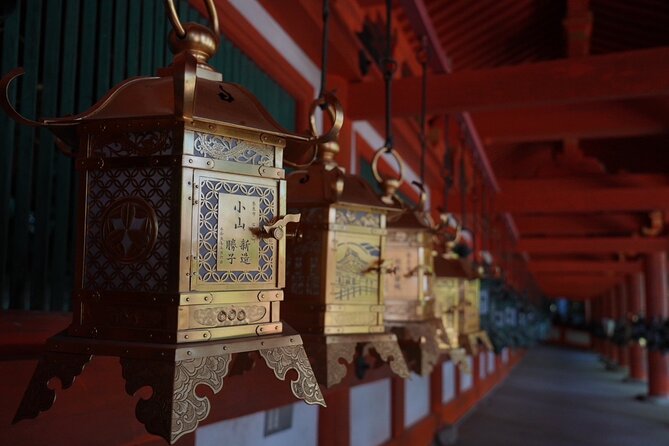
Kasuga Grand Shrine receives the longest scheduled visit, about one hour. The shrine is famous for its lanterns, with roughly 3,000 stone and bronze examples donated by worshippers over the years.
The lanterns are not mere decoration. They create the character of the approach and help explain the connection between religious practice, donations, and place. The walk toward the shrine also brings you into a more wooded setting, a welcome shift after the open spaces around Kofuku-ji.
This is one of the stops where a guide adds real value. A quick self-guided visit can leave you admiring the lanterns without understanding why they matter. Guides such as Koichiro and Futaba have been praised for discussing Japanese religion, customs, and cultural practices, while guides such as Momoka and Nana have been praised for making the stories interactive and easy to follow.
The hour should give you time to pause, ask questions, and take pictures. The early timing matters most here. A quiet forest approach and a slower look at the lanterns can be more memorable than rushing through the shrine later in the day.
More early starts before the crowds:
- Nara Early Bird Tour (Kyoto Departure Option Available)
★ 4.9 · 142 reviews - Kyoto Early Morning Tour with English-Speaking Guide
★ 5.0 · 1,427 reviews - Kyoto: Early Morning Tour with English-Speaking Guide
★ 4.9 · 1,128 reviews - Arashiyama Bamboo Forest & Hidden Gems Bike Tour (Early Bird)
★ 5.0 · 613 reviews
Nara Park: beautiful deer, practical cautions
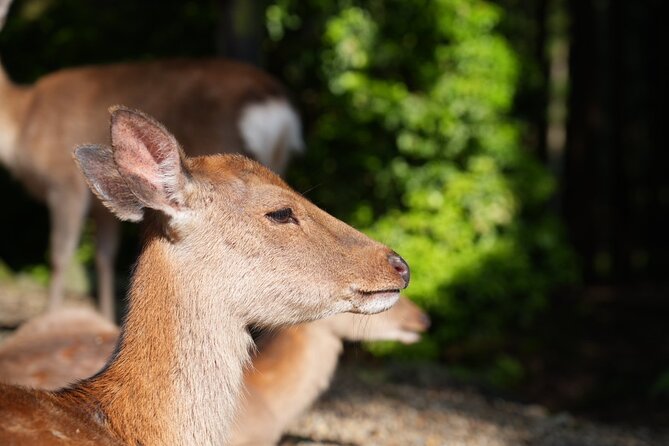
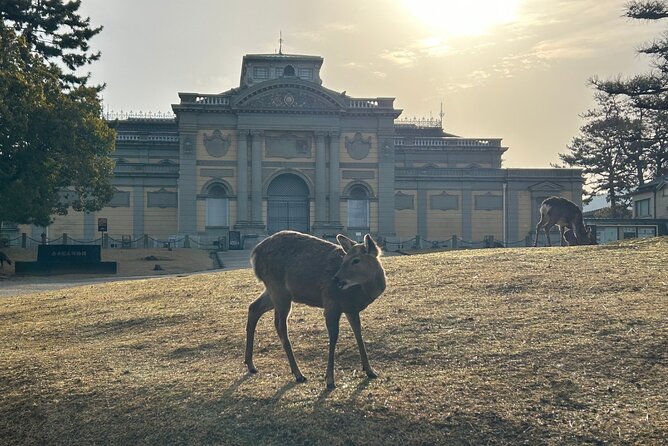
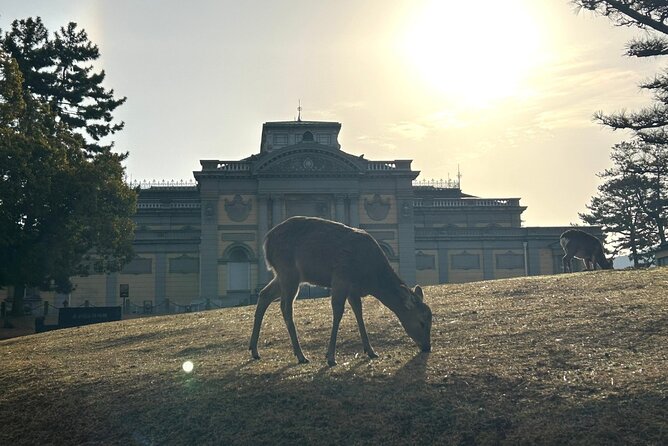
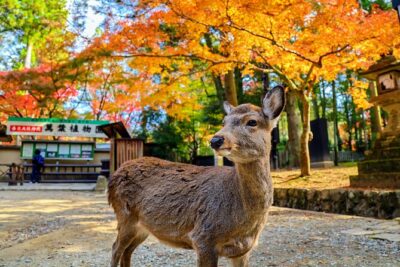
Nara Park is the tour’s most playful stop. Free-roaming deer move through the park, and the animals are considered sacred because of the belief that one of the gods associated with Kasuga Shrine came to Nara riding a deer.
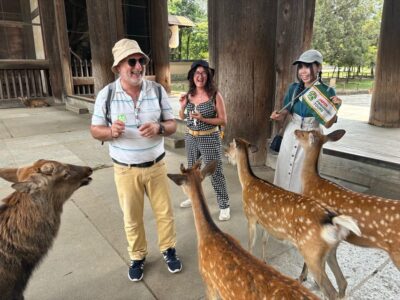
You spend about 30 minutes in the park, though the walking route between the main sights gives you additional time around the animals. The deer are accustomed to people, and you can buy special crackers to feed them. Some will bow for food, which is charming. They can also be persistent, so keep food visible only when you are ready to feed and follow your guide’s lead.
This is a particularly good part of the tour for families. Children tend to enjoy the immediate, hands-on nature of the park, while adults get a memorable setting for the religious stories introduced at Kasuga Grand Shrine.
There is a small trade-off. The deer are not a petting-zoo attraction, and the experience is not fully controlled. They are free-roaming animals, not performers. That is part of the appeal, but it also means you should pay attention to your belongings and to the guide’s instructions.
Todai-ji and the Great Buddha
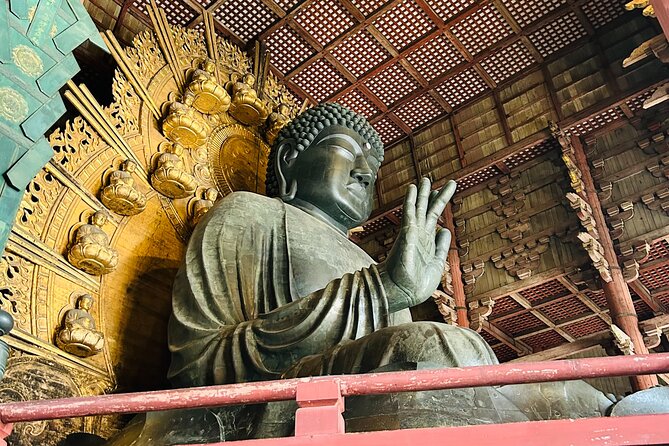
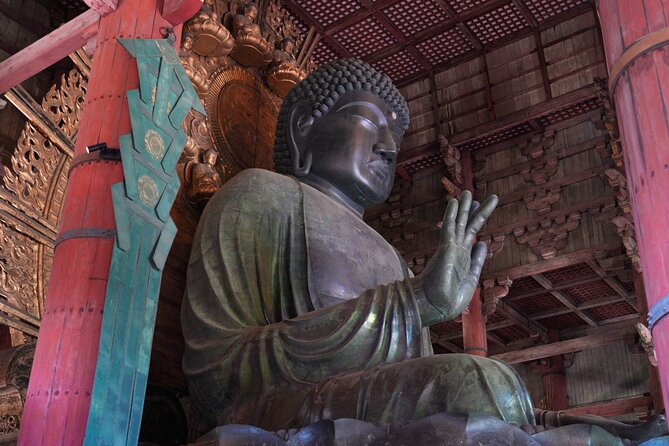
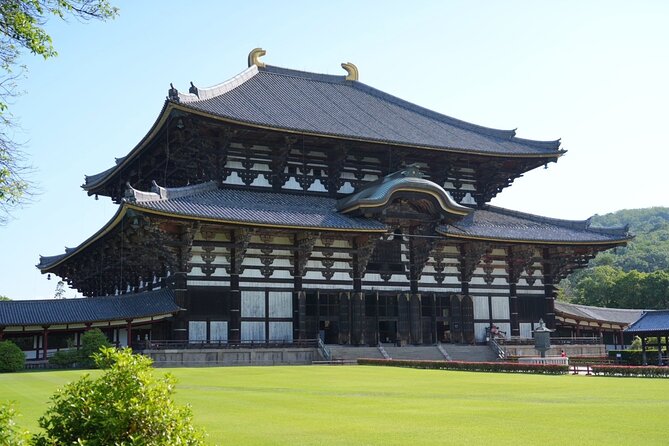
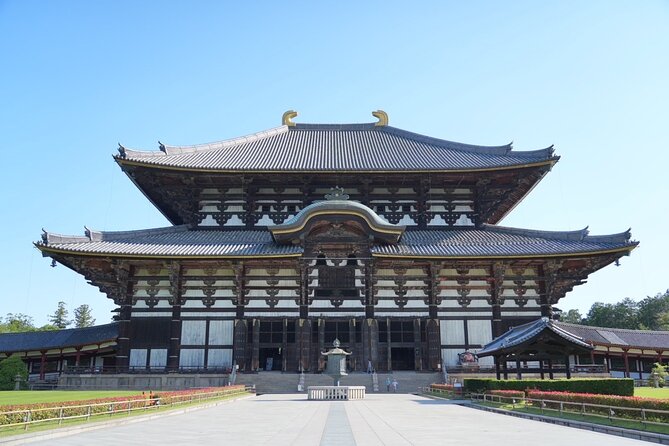
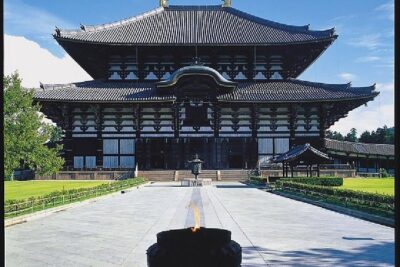
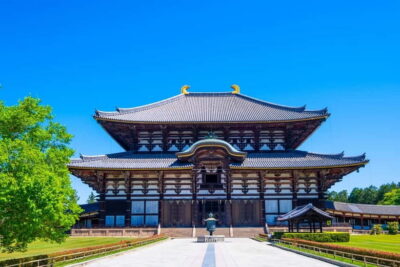
Todai-ji is the grand finale, and you spend about an hour here. The temple is famous for its Great Buddha, described as the biggest Buddha statue in Japan. The main hall itself was, until recently, the world’s largest wooden building.
The scale is the point. After the smaller details of the lanterns and the lively deer of Nara Park, Todai-ji gives you an enormous interior and a powerful religious image. A guide can help connect the building’s size to the ambition of Nara as an ancient capital.
Todai-ji admission is not included. The stated entrance fee is ¥800 per person, so add that to the advertised $61.02 tour price. This extra cost is modest compared with the importance of the site, but it is worth knowing in advance, particularly for a family.
The hour here should leave room for the Great Buddha, the main hall, photographs, and questions. It is also the part most likely to feel busy as the morning advances. That is another reason the early start works: you reach Nara’s biggest attraction before the day reaches full speed.
What the guides add to the walk
The tour’s strongest feature is not simply getting from one landmark to the next. It is the explanation along the way.
You are likely to hear about Nara’s role as Japan’s former capital, the connection between Shinto shrines and sacred deer, temple architecture, religious customs, and local stories. Several guides are praised for using quizzes, folklore, and questions rather than delivering a long lecture. That approach helps families and first-time visitors stay involved.
The group format also appears to support a relaxed pace. Guests have described time for photographs, questions, and informal conversation. Guides have helped with train directions back to Kyoto, restaurant suggestions, local recommendations, and places to find freshly made mochi.
Guide assignments are not guaranteed, so you should not book solely in hopes of getting one particular person. Still, the range of positive comments about Momoka, Haruka, Futaba, Nana, Natsuho, Kevin, Shin, and the others suggests that the company’s strength is its guiding team rather than one individual personality.
Is $61.02 a good value?
At $61.02 per person, the tour is priced as a guided half-day experience rather than a simple transfer. The value comes from combining transportation options, a small group, local guidance, and a route that covers four major parts of Nara in one morning.
If you already know Nara well and are happy navigating temples and trains alone, you can spend less by arranging the day yourself. Independent sightseeing also gives you complete control over how long you stay at each place.
I think the price makes more sense for a first visit, especially if you are coming from Kyoto or Osaka and want the logistics simplified at the start. The guide helps you understand what you are seeing, not just photograph it. The 12-person limit is also useful if you dislike the impersonal feel of a large bus group.
Budget separately for Todai-ji’s ¥800 entry, food and drinks, and the journey back to Kyoto or Osaka. The tour itself does not include those items.
Who will enjoy this tour most
I would choose this experience if you want an efficient introduction to Nara and prefer context over wandering alone. It suits families, couples, and solo visitors who like asking questions and meeting a few other people without joining a large crowd.
Families should note the walking distance and the age rule. Children under six cannot join, and the 10,000-step route may be tiring for very young children or anyone unused to long walks.
The tour also suits visitors who want Nara’s major themes in one morning: imperial history, Buddhist temple architecture, Shinto worship, woodland paths, and deer. It is less suitable if you want a slow museum day, a long lunch, or extended time at one temple.
The early schedule is especially useful during busy seasons. You may still encounter crowds at Todai-ji later in the morning, but you get the quieter part of the day first.
Simple ways to prepare
- Wear comfortable walking shoes and expect about 10,000 steps.
- Bring water, since food and drinks are not included.
- Keep ¥800 per person available for Todai-ji admission.
- Check if your booking includes transportation from Kyoto or Osaka.
- Plan your own return trip from Nara Park.
- If you want to feed the deer, buy the designated crackers locally and listen to your guide’s advice.
- Leave room for questions, photographs, and a relaxed pace rather than scheduling another activity immediately afterward.
The tour has a 4.9 rating from 676 ratings, with 98 percent recommending it. More important than the numbers is the consistent praise for friendly guides, clear explanations, thoughtful pacing, and help with the return journey. The main complaint is not about the sightseeing. It is simply that the walk is substantial and the ride home is not included.
Should you book the Nara Early Morning Tour?
Book it if you want to see Nara’s essential sights before the crowds, understand the religious and historical setting, and have a guide handle the morning’s structure. The small group and relaxed pacing give it a more personal feel than a standard large-group day trip.
Skip it if you are happy planning your own train connections, reading up before you arrive, and spending as long as you like at each stop. Also think twice if 10,000 steps is beyond your comfort level or if you need a fully packaged round trip.
For most first-time visitors based in Kyoto or Osaka, I would consider this a strong half-day choice. Start early, listen closely at Kasuga Grand Shrine, treat the deer with respect, and keep your afternoon open for the journey back and a meal in Nara.
FAQ
How long does the Nara Early Morning Tour last?
The tour lasts approximately 4 hours and 30 minutes.
Where does the tour start and end?
The meeting point and end point are both in Nara Park, Nara, Japan.
Can I start the tour from Kyoto or Osaka?
Yes. An option with transportation from Kyoto or Osaka to Nara is available. Transportation is included only if you select that option.
Is transportation back to Kyoto or Osaka included?
No. The return transportation from Nara to Kyoto or Osaka is not included.
What sights are visited?
The route includes Kofuku-ji Temple, Kasuga Grand Shrine, Nara Park, and Todai-ji Temple.
Is the Todai-ji entrance fee included?
No. Todai-ji admission costs ¥800 per person and is paid separately.
How large is the group?
The tour has a maximum of 12 participants.
How much walking is involved?
You should expect to walk about 10,000 steps during the tour.
Can children join?
Children under six cannot join the tour. The experience also requires a moderate level of physical fitness and is not recommended for people over 75.
Are food and drinks included?
No. Food and drinks are not included.
Is the tour available with a mobile ticket?
Yes. A mobile ticket is available.
Can I cancel for a full refund?
Yes, if you cancel at least 24 hours before the experience start time. Cancellations made less than 24 hours in advance are not refunded, and changes within that period are not accepted.
More Morning in Nara
- From Kyoto: Nara Guided Morning Tour
★ 4.6 · 335 reviews - Kyoto Morning Tour from Kyoto or Osaka
★ 4.0 · 281 reviews - Kyoto: Morning Japanese Bento Cooking Class
★ 5.0 · 149 reviews - Kyoto: Arashiyama Bamboo Forest Morning Tour by Bike
★ 5.0 · 115 reviews
Recently added around Nara
- Nara Private Customizable Half Day Tour★ 5.0 · 3 reviews
- Full Day Nara Deer, Temple, Shrine, Activities & Tea Ceremony★ 5.0 · 3 reviews
- Nara: Essential Private Tour with Deer Park and Temples★ 5.0 · 3 reviews
- Discover the Essence of Nara Ink Through Your Senses★ 5.0 · 3 reviews
- Private Journey in Nara’s Historical Wonder★ 5.0 · 3 reviews
- Nara:Private Tea Ceremony(Max 5 ppl) -Master Matcha Making-★ 5.0 · 3 reviews
- Nara Takayama Tea Whisk Craft and Tea Culture Experience★ 5.0 · 3 reviews
- Nara: Half-Day Private Tour of 4 Must-See Spots & Deer Park★ 5.0 · 3 reviews
Nara Day Trips, compared.
World Heritage Kyoto & Nara Uji Authentic Matcha Experience
Read our review →
Kyoto/Osaka: Nara, Fushimi Inari Taisha, Arashiyama Bus Tour
Read our review →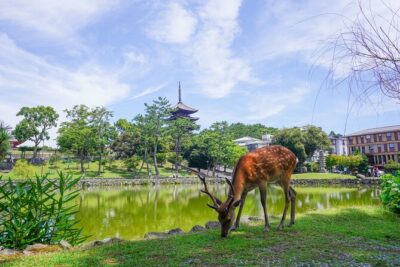
Nara Half Day Trip Walking Tour (Private Option Available)
Read our review →
Kyoto/Osaka: Kinkakuji, Bamboo Forest, and Nara Deer Park
Read our review →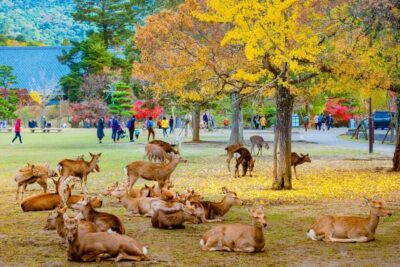
Kyoto/Osaka: Kyoto and Nara Customized Private Guided Tour
Read our review →Browse the lists this tour appears in