
REVIEW · NARA DAY TRIPS
Nara: Authentic Onigiri Cooking Class & Meal in a Local Home
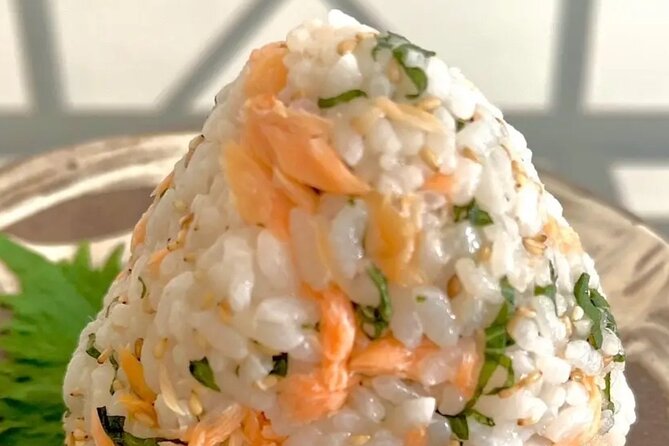
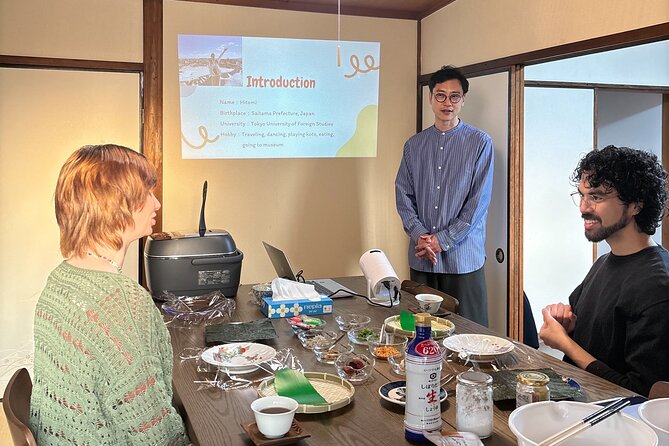
The best part of this Nara experience is not simply learning to shape rice. It is being welcomed into a 70-year-old private home, where Mune and Hitomi host you more like a friend than a class member. You make three kinds of onigiri, then eat them with miso soup and homemade side dishes.
I like the small group limit of six, which gives you room to ask real questions about Japanese life. I also like the location, just five minutes from JR or Kintetsu Nara Station, making this an easy addition after Nara Park or before an evening train.
The main consideration is that this is a simple home meal, not a restaurant tasting menu or a formal cooking school. The two-hour visit is best for you if conversation, local life, and hands-on cooking matter more than a long list of dishes.
In This Review
- Key points to know before booking
- Why onigiri makes a good Nara cooking class
- Meeting Mune and Hitomi in their Nara home
- Entering a 70-year-old Japanese house
- Making traditional, typical, and innovative onigiri
- Sitting down for lunch or dinner
- Fitting the class into a Nara day
- What the $70 price means
- Who will enjoy this experience most
- Practical details worth knowing
- Should you book the Nara onigiri class?
- FAQ
- How long does the onigiri cooking class last?
- Where does the activity start and finish?
- How far is the house from Nara Station?
- Which types of onigiri will I make?
- Is a meal included?
- How many people can join the activity?
- What is the cancellation policy?
Key points to know before booking
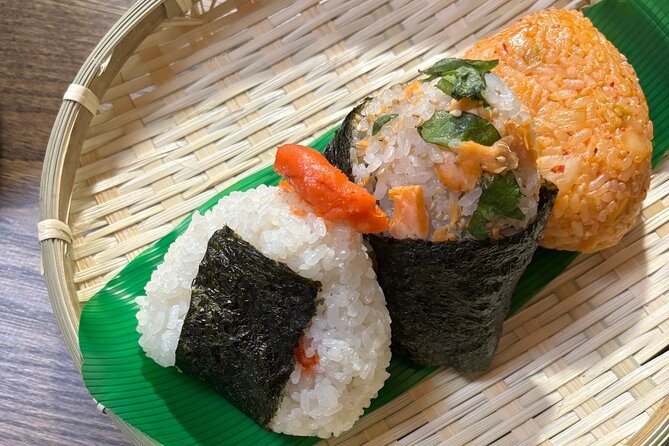
- Cook three types of onigiri: Make a traditional rice ball, a popular typical style, and your own original creation.
- Meet Mune and Hitomi: Both hosts speak English, and Mune has a tourism background while Hitomi loves folk art.
- Eat a complete Japanese meal: Your rice balls come with miso soup and homemade side dishes.
- Enter a real Nara residence: The house is more than 70 years old and used as a private home, not a commercial studio.
- Stay close to the station: The meeting point at 1-chōme-1-8 Shibatsujichō is about a five-minute walk from Nara Station.
- Keep your schedule flexible: The activity lasts about two hours and offers free cancellation up to 24 hours before the start time.
Why onigiri makes a good Nara cooking class
Onigiri is one of Japan’s most practical foods. At its simplest, it is seasoned rice shaped by hand, often made for school lunches, picnics, train rides, or a quick meal at home. That everyday quality makes it a smart subject for a short class.
You are not trying to master a complicated restaurant recipe in two hours. Instead, you learn how an ordinary Japanese food fits into daily life. The process is easy to understand, hands-on, and useful after you return home.
The class covers three styles. The traditional version gives you the classic starting point. The typical version shows a popular everyday approach. The innovative version lets you create a one-of-a-kind rice ball, using what you have learned to make your own choice.
The information provided does not list the exact fillings or seasonings, so you should not expect a fixed menu of particular ingredients. That is not necessarily a weakness. It leaves room for the hosts to guide the class in a personal way and for you to focus on shaping, seasoning, and the role of onigiri in Japanese home cooking.
More day trips to Nara:
- World Heritage Kyoto & Nara Uji Authentic Matcha Experience
★ 5.0 · 1,573 reviews - Nara Half Day Trip Walking Tour (Private Option Available)
★ 5.0 · 937 reviews - Nara Early Morning Tour (Kyoto or Osaka Departure Available)
★ 5.0 · 676 reviews
Meeting Mune and Hitomi in their Nara home
Mune and Hitomi are the heart of the experience. They are a local couple who speak English, and their background gives the visit a wider focus than food alone. Mune has a master’s degree in tourism from the University of Glasgow, while Hitomi is a folk art lover.
That combination should appeal to you if you like asking questions. You can talk about food, customs, daily routines, history, and life in Japan without the stiff feeling of a scripted tour. The hosts describe the visit as time with friends, and the small maximum group of six supports that relaxed mood.
One past participant specifically praised Mune for being kind and fun to talk to after visiting Nara Park. That detail matters. Many Nara visits center on the famous deer and temples, but those sights do not always give you much contact with local people. This experience adds a human side to the city.
Still, the tone depends partly on the group. With six people, you may have a lively conversation, or you may share the room with people who prefer to listen. The hosts speak English, but the class is not presented as a formal lecture with a detailed cultural syllabus. Think of it as a guided home visit with cooking at its center.
Entering a 70-year-old Japanese house
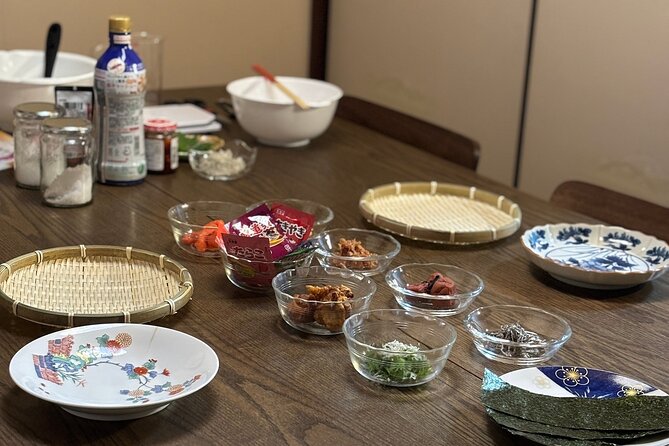
The setting is a major reason to choose this activity. You are not cooking in a rented commercial kitchen designed for tourists. You are visiting a private residence built more than 70 years ago, with the nostalgic feel of an older Japanese home.
That setting gives the class a different pace. The house itself becomes part of the lesson. You get a glimpse of the kind of domestic space that does not appear in a temple visit or department-store food hall. It is a chance to notice the atmosphere of an older home while sharing a practical meal.
The description does not promise a museum-style tour of the house, so do not book this expecting a detailed architectural visit. The home is the backdrop for meeting the hosts, cooking, and eating. Its value comes from the sense of place and personal welcome.
You should also be comfortable with the fact that this is a private home. A home visit can feel warmer than a studio class, but it is also less standardized. The experience may feel informal, which is ideal for some people and less appealing if you prefer a polished, highly structured lesson.
Making traditional, typical, and innovative onigiri
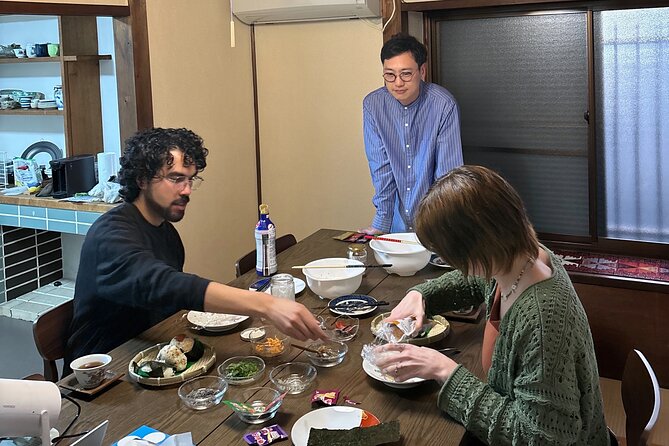
The cooking portion takes place in the home kitchen. You will learn how to shape and season the rice, then make three styles rather than stopping after one basic rice ball.
The traditional style gives you a familiar foundation. Here, the focus is likely on the basic form and method of making classic onigiri, though the exact recipe details are not specified. You get a chance to practice the handwork and see how much pressure is needed to keep the rice together without making it heavy.
The typical style moves toward a popular everyday version. This helps connect the class to the food Japanese people commonly eat, rather than treating onigiri as a special novelty.
The innovative style is the most personal part. You create your own original rice ball, which means the class does not end with copying the host’s example. You use the method as a starting point and make something that reflects your own choices.
The cooking is suitable for a short visit because the central skill is clear and physical. You can understand the result as you work. A participant’s rice balls were praised by the hosts as especially beautiful, a useful reminder that presentation is part of the fun. You do not need to arrive with cooking experience.
At the same time, you should keep your expectations realistic. This is not a full Japanese cuisine course. The focus is on onigiri, with soup and side dishes served as part of the meal. If you want sushi rolling, knife skills, several cooked dishes, or a market visit, this is not the right format.
More cooking classes in Nara:
- Nara: Cooking class, learning how to make authentic sushi
★ 5.0 · 5 reviews - Udon and Tempura Cooking Class in Nara
★ 5.0 · 3 reviews - Kyoto: Ramen Cooking Class at a Ramen Factory with Souvenir
★ 4.9 · 532 reviews - Kyoto: Ramen, Gyoza, and Onigiri Cooking Class
★ 5.0 · 445 reviews
Sitting down for lunch or dinner
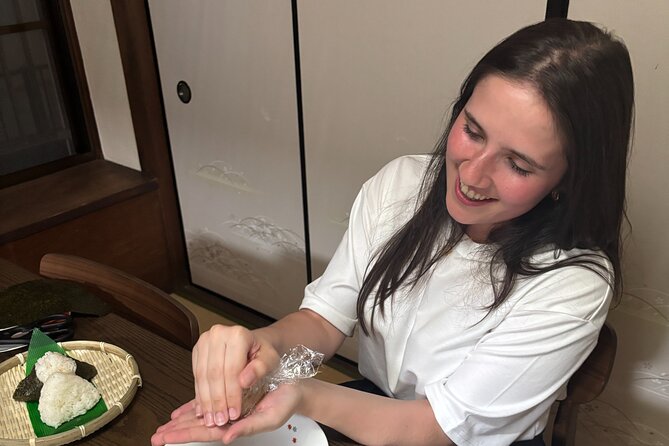
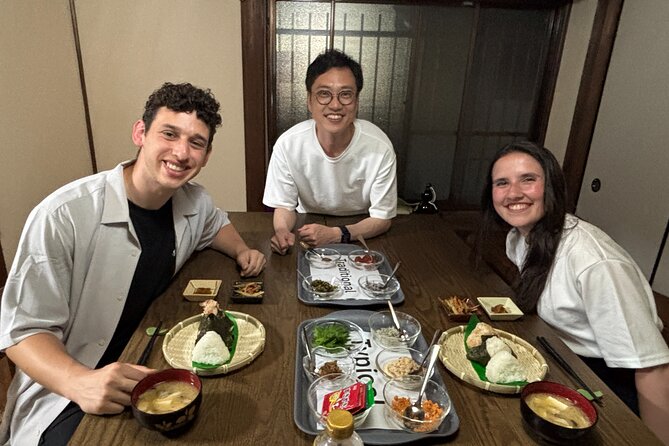
After cooking, you eat the onigiri you made. The meal also includes miso soup and homemade side dishes, so you are getting more than a quick taste of your own rice balls.
That shared meal is where the class becomes a social experience. You can slow down, compare the three styles, and talk with Mune and Hitomi while eating. The food gives the conversation a natural focus, so you are not simply sitting through a question-and-answer session.
Choose lunch if you want a break before more sightseeing in Nara. The location near the station makes it practical for a midday stop, especially if you are building the activity into a day that includes Nara Park.
Dinner may be the better choice if you want a quieter end to the day. The hosts point out that an evening visit can work well when many local restaurants are closed. That is useful in a city where your dinner options may feel less obvious after the main sights have emptied.
The menu is described as onigiri, miso soup, and homemade side dishes, but specific dishes are not listed. If you have allergies, dietary restrictions, or foods you avoid, ask about them before booking. The supplied information does not confirm special-diet arrangements.
Fitting the class into a Nara day
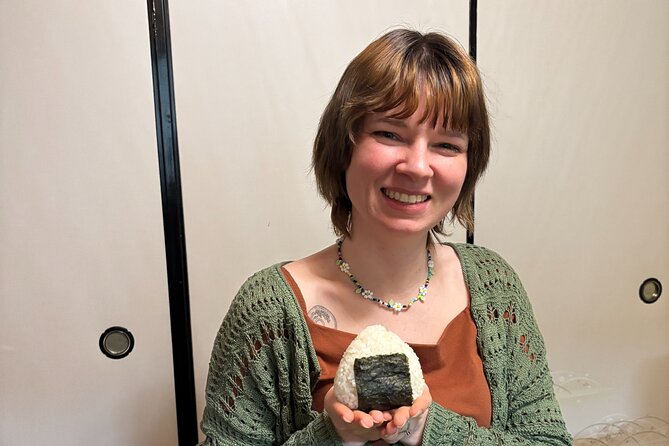
The meeting point is at 1-chōme-1-8 Shibatsujichō, Nara, 630-8114, Japan. The activity begins and ends there, and it is about a five-minute walk from JR Nara Station and Kintetsu Nara Station.
That makes the class unusually easy to add to a short Nara visit. You can arrive by train, take part in the two-hour session, and continue on foot or by rail without crossing the city for another appointment.
Nara Park is the obvious pairing. A common plan would be to visit the park and its temples first, then use the cooking class as a break where you can sit indoors and talk with local people. The reverse also works: cook first, then spend the afternoon sightseeing with a full meal already behind you.
From Kyoto, the journey to Nara is described as about 35 minutes. From Osaka, it is about 40 minutes, with the broader travel estimate given as 35 to 50 minutes. Those times make this possible as part of a day trip, but remember to allow time to find the exact meeting point and reach the station afterward.
The activity itself lasts about two hours. It is short enough to fit beside major sights, but long enough for cooking, eating, and conversation. Because it ends where it starts, you do not need to arrange a separate return transfer.
What the $70 price means
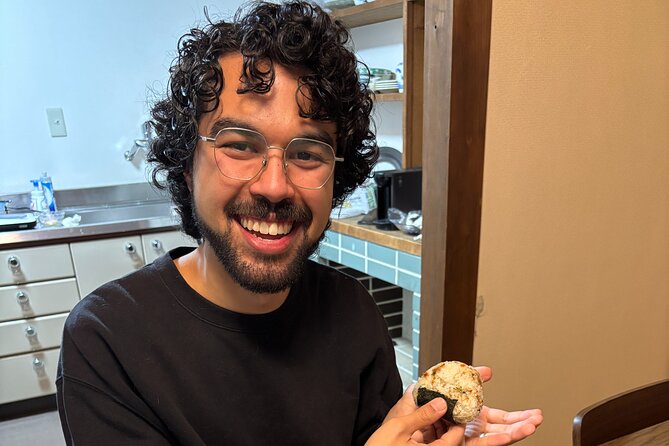
At $70 per person, this costs more than buying onigiri from a convenience store or eating a basic lunch. That comparison misses the point, though. You are paying for a small-group class, a meal, access to a private home, and time with English-speaking hosts.
The group size matters here. With a maximum of six people, you are not one face in a large demonstration. You should have a better chance to shape the rice yourself and ask questions during the meal.
The value is strongest if you care about personal contact and cultural context. The hosts offer conversation about Japanese culture, lifestyle, and history, along with the food. If your main goal is simply to eat cheaply, $70 is not a bargain. If you want an easy, personal activity that adds something beyond Nara’s famous sights, the price is easier to justify.
The full meal also helps. You are not paying for a short sample and then searching for lunch. Your onigiri, miso soup, and side dishes make the experience a proper meal as well as a lesson.
Who will enjoy this experience most
I would recommend this class to you if you want a break from temple visits and sightseeing checklists. It gives you a reason to sit still, talk, and learn something tied to ordinary Japanese life.
It is also a good fit for first-time visitors who want an introduction to home cooking without committing to a long course. The three onigiri styles create enough variety to keep the class interesting, while the core technique remains approachable.
Families, couples, solo visitors, and small groups can all fit the format, provided everyone is comfortable sharing a private setting with other people. The maximum group size of six keeps it more personal than a large food demonstration.
You might want to skip it if you prefer a highly polished cooking studio, a large menu, or a tour built around famous landmarks. You should also think twice if you need a very strict schedule, since a home-based meal and conversation may not move with the precision of a timed sightseeing excursion.
Practical details worth knowing
Confirmation is provided when you book, and the activity is near public transportation. The meeting point is also the end point, which keeps the logistics simple.
The mobile ticket feature means you can keep the booking on your phone rather than carrying a printed voucher. Arrive with the meeting address ready, especially if you are coming directly from Nara Park or another part of the city.
Free cancellation is available if you cancel at least 24 hours before the local start time. Cancellations made within 24 hours are not refunded, and changes during that period are not accepted.
The available information does not specify accessibility details, exact menu ingredients, or the precise cooking time within the two-hour session. If any of those points affect your plans, contact the provider, Authentic Local Experience House, before you reserve.
Should you book the Nara onigiri class?
Book it if you want a personal home visit, a hands-on food lesson, and a real meal in one compact experience. The station location is excellent, the group is capped at six, and Mune and Hitomi give you a chance to talk about Japan beyond the usual sightseeing script.
The strongest reason to choose it is the combination of place and people. You cook in an older private home, make three forms of onigiri, then eat with local hosts who welcome questions. The main limitation is the narrow food focus and informal format.
For a first Nara visit, I would place this after Nara Park or use it as a relaxed dinner plan. At $70, it is not the cheapest meal in town, but it offers something a restaurant cannot: a small lesson, a home setting, and a conversation you are unlikely to get while eating alone at a counter.
FAQ
How long does the onigiri cooking class last?
The experience lasts approximately two hours.
Where does the activity start and finish?
It starts at 1-chōme-1-8 Shibatsujichō, Nara, 630-8114, Japan, and ends back at the same meeting point.
How far is the house from Nara Station?
The home is about a five-minute walk from JR Nara Station and Kintetsu Nara Station.
Which types of onigiri will I make?
You will make three styles: traditional, typical, and innovative. The innovative style allows you to create your own original rice ball.
Is a meal included?
Yes. After cooking, you will eat your onigiri with miso soup and homemade side dishes. The experience can be booked for lunch or dinner.
How many people can join the activity?
The group has a maximum of six participants.
What is the cancellation policy?
You can receive a full refund if you cancel at least 24 hours before the local start time. Cancellations or changes made within 24 hours are not accepted, and the payment is not refunded.
More Workshops in Nara
- Hammer a Pattern on Your Ring Workshop
★ 5.0 · 57 reviews - Kyoto: 45-Minute Tea Ceremony Lesson Experience
★ 4.3 · 2,378 reviews - Kyoto : Chopsticks Making Workshop in Gion with Engraving Option
★ 5.0 · 958 reviews - Kyoto: Samurai Sword Class by Experts in Traditional Arts
★ 4.9 · 657 reviews
Recently added around Nara
- Nara Private Customizable Half Day Tour★ 5.0 · 3 reviews
- Full Day Nara Deer, Temple, Shrine, Activities & Tea Ceremony★ 5.0 · 3 reviews
- Nara: Essential Private Tour with Deer Park and Temples★ 5.0 · 3 reviews
- Discover the Essence of Nara Ink Through Your Senses★ 5.0 · 3 reviews
- Private Journey in Nara’s Historical Wonder★ 5.0 · 3 reviews
- Nara:Private Tea Ceremony(Max 5 ppl) -Master Matcha Making-★ 5.0 · 3 reviews
- Nara Takayama Tea Whisk Craft and Tea Culture Experience★ 5.0 · 3 reviews
- Nara: Half-Day Private Tour of 4 Must-See Spots & Deer Park★ 5.0 · 3 reviews
Nara Day Trips, compared.

World Heritage Kyoto & Nara Uji Authentic Matcha Experience
Read our review →
Kyoto/Osaka: Nara, Fushimi Inari Taisha, Arashiyama Bus Tour
Read our review →
Nara Half Day Trip Walking Tour (Private Option Available)
Read our review →
Nara Early Morning Tour (Kyoto or Osaka Departure Available)
Read our review →


Kyoto/Osaka: Kinkakuji, Bamboo Forest, and Nara Deer Park
Read our review →Browse the lists this tour appears in