
REVIEW · NARA DAY TRIPS
Private Journey in Nara’s Historical Wonder
Nara’s greatest strength is variety: in one long day, you move from the giant Buddha at Todai-ji to deer-filled parkland, quiet Shinto paths, old merchant streets, imperial ruins, and some of Japan’s finest Buddhist temples. The route gives you a broad look at Nara rather than a single headline sight.
I like the private format, which lets your own group set the pace, and I like the mix of famous sights and quieter stops such as Shinyakushiji and Yoshikien. The main caution is time: 14 stops in about eight hours makes this an ambitious day, with some visits lasting only 20 or 30 minutes.
In This Review
- Key points at a glance
- Why this Nara route covers so much
- Todai-ji and Nara Park: the essential opening
- Kasuga Taisha and Wakakusayama Hill
- Horyu-ji: the day’s major historical detour
- Naramachi and Kofuku-ji: old streets and a famous pagoda
- Yakushi-ji and Shinyakushiji: two quieter temple visits
- Nara National Museum and the former palace grounds
- Toshodai-ji, Isuien, and Yoshikien
- What the $1,207.46 price really means
- Who will enjoy this private day most
- Should you book this Nara experience?
- FAQ
- Where does the tour start?
- How long does the experience last?
- Is this a private tour?
- Is pickup available?
- Does the tour include Horyu-ji Temple?
- Can I cancel or change the booking?
Key points at a glance
- Todai-ji and the Great Buddha: Begin with Nara’s most powerful sight, a huge bronze Buddha inside one of the world’s great wooden temple halls.
- Private sightseeing from Osaka: Your group travels together, with pickup offered and no strangers added to the party.
- Fourteen very different stops: Temples, shrine paths, deer, gardens, a museum, old streets, and the Heijō Palace site all appear on the same route.
- Horyu-ji adds major historical weight: This UNESCO-listed temple complex is linked with some of Japan’s oldest surviving wooden buildings.
- A family-friendly mix: Deer and open parkland appeal to children, while the museum, temples, and palace site give adults plenty to think about.
- A costly but efficient choice: At $1,207.46 per person, the value depends heavily on your group size, pickup needs, and desire for a private day.
Why this Nara route covers so much
Nara is easy to underestimate. Many people come for the deer and the Great Buddha, then discover that the city holds layers of Buddhist, Shinto, imperial, artistic, and domestic history. This day trip tries to show nearly all of them.
The route starts in Osaka and lasts about eight hours. That includes 14 listed stops, though the published stop times alone add up to about seven hours and 40 minutes. Transport between sites, parking, getting in and out, meals, and the natural pauses of a sightseeing day all have to fit around that schedule.
That math matters. You will not get a slow, lingering visit at every temple. The private setup helps because your group does not have to wait for strangers, but the day still asks you to keep moving. If your family wants a broad first look at Nara, this is useful. If you prefer to sit quietly in one garden or study every museum display, the route may feel too full.
The strongest parts are the contrasts. One moment you are under a vast wooden roof looking at the Great Buddha. Later, you are walking through Naramachi’s traditional streets or sitting among carefully arranged garden scenery. That range gives the day its appeal.
More day trips to Nara:
- World Heritage Kyoto & Nara Uji Authentic Matcha Experience
★ 5.0 · 1,573 reviews - Nara Half Day Trip Walking Tour (Private Option Available)
★ 5.0 · 937 reviews - Nara Early Morning Tour (Kyoto or Osaka Departure Available)
★ 5.0 · 676 reviews
Todai-ji and Nara Park: the essential opening
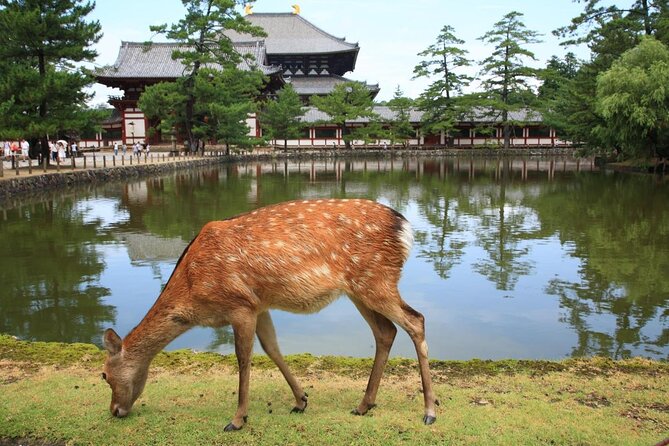
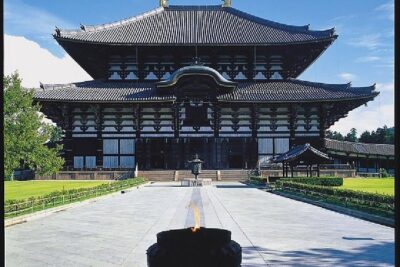
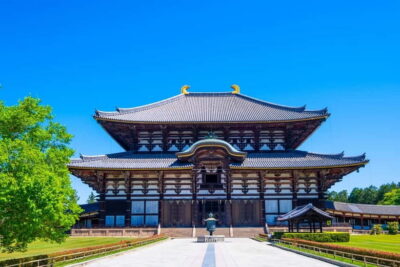
Todai-ji is the right place to begin. Its main hall is a remarkable wooden structure, and inside sits the enormous bronze Buddha that has made the temple famous around the world. The scale is the point: the building, the statue, and the surrounding temple grounds all make a strong first impression.
You have about one hour here. That is enough to see the main hall and take in the central religious setting, but not enough for a slow study of every feature. I would keep your attention on the relationship between the building and the statue. The architecture is not just a container for the Buddha. It is part of the experience.
The listed admission ticket is free, which helps the value of this stop. You should still allow time for the group to gather and move through the grounds, since this is likely to be one of the busiest parts of the day.
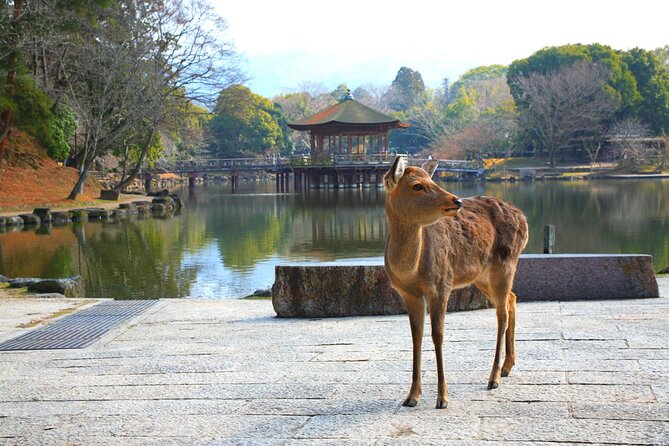
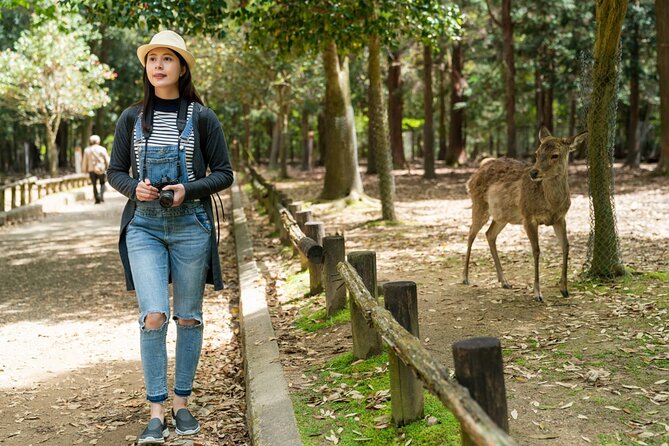
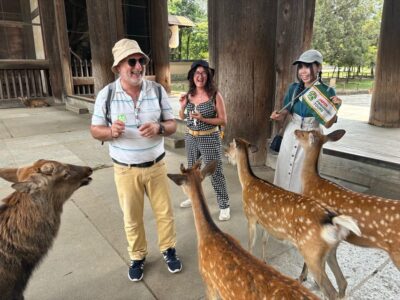
Nara Park follows with a 20-minute walk among the deer. The deer are a symbol of Nara, and their presence changes the feel of the city. You are not visiting a conventional zoo. The animals roam freely through the park, sharing the paths with people.
Twenty minutes is enough for a short encounter and a few photographs, but it is a brief window. Families with children will likely rate this among the most memorable parts of the day. Keep food and personal belongings under control around the deer, and treat the animals with care.
Kasuga Taisha and Wakakusayama Hill
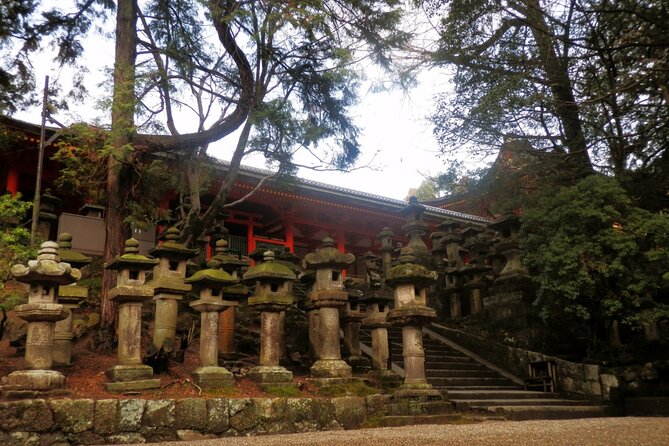
Kasuga Taisha brings a different mood. The shrine is known for its many stone lanterns and its connection with Shinto tradition. After Todai-ji’s imposing scale and the open energy of the deer park, the shrine offers a more wooded and quiet setting.
The schedule gives you one hour here. That is a better amount of time than the short garden and street stops later in the day. Use it to notice the lanterns, the shrine buildings, and the gradual change from urban Nara to a more secluded religious setting.
Wakakusayama Hill is allotted just 20 minutes. The description calls for a quick hike and views over Nara. This is a short scenic pause, not a full hill walk. If anyone in your group has trouble with inclines, ask how far you will actually go before setting off. The reward is a broader view of the city, but the tight timing means you should not expect a long rest at the top.
These first four stops work well together. You get monumental Buddhism, wildlife, Shinto ritual, and an elevated view. They also explain why Nara feels different from a city visit limited to temples and museums.
Horyu-ji: the day’s major historical detour
Horyu-ji is one of the most important stops on the route. It is a UNESCO World Heritage site and is described as home to the world’s oldest wooden building. More broadly, the complex is prized for its ancient wooden architecture and Buddhist art.
You have one hour here. That gives you enough time to understand why the site matters, though the visit will remain an overview. The value of Horyu-ji is not only visual. It connects you with the early development of Buddhism in Japan and with buildings that have survived for many centuries.
This stop also raises a practical question: the route covers both central Nara and sites farther from the main park area. Time spent reaching Horyu-ji is time not spent at another stop. That is not a flaw if Horyu-ji is high on your list. It is a consideration if you mainly want the classic Nara Park experience.
I would give this temple priority if you care about architecture, early Japanese religion, or UNESCO sites. For a family with limited interest in buildings, Todai-ji and the deer may be enough. The private format lets your group discuss that balance with the guide, though no guide name or detailed guiding style is provided.
More history walks in Nara:
- Nara: Bike Tour in Ancient Capital UNESCO World Heritage
★ 5.0 · 43 reviews - Nara World Heritage PRIVATE TOUR
★ 4.5 · 15 reviews - Nara: UNESCO Heritage Sites & Deer Park Tour with Pro guide
★ 4.5 · 10 reviews - Nara Heritage Walkabout from Nara Park to Todaji-ji temple
★ 5.0 · 5 reviews
Naramachi and Kofuku-ji: old streets and a famous pagoda
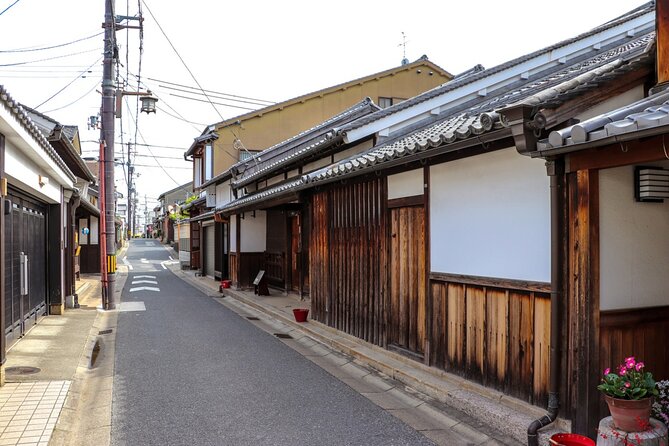
Naramachi gives the day a needed change of pace. This old district is lined with traditional merchant houses and narrow streets that preserve the feel of historic Nara’s commercial quarters.
The stop lasts about 20 minutes, so think of it as a short walk and orientation rather than a full neighborhood visit. You may have time to appreciate the house fronts and atmosphere, but not to browse every lane or shop. If you want time for food, shopping, or a longer look at local homes, this is one place where the schedule may feel tight.
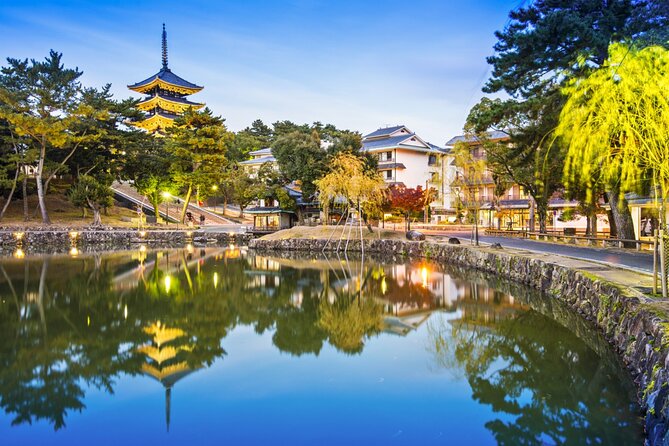
Kofuku-ji follows with 30 minutes. Its five-story pagoda is one of Nara’s best-known visual markers, and the temple grounds offer a calmer pause after the streets of Naramachi. The pagoda gives you a clear sense of the style and scale of Japanese Buddhist architecture, even during a short visit.
I like this pairing because it moves from everyday historic life to formal religious architecture. You see how Nara’s past survives in both merchant buildings and major temples.
Yakushi-ji and Shinyakushiji: two quieter temple visits
Yakushi-ji is known for its symmetrical design, gardens, and Buddhist art. The half-hour visit is enough to see the basic layout and enjoy the orderly design, though serious students of temple architecture may want much longer.
Shinyakushiji, scheduled for 20 minutes, is more intimate. Its Buddhist sculptures are the reason to pay attention here. This is a smaller-scale stop than Todai-ji or Horyu-ji, and that difference is welcome. Not every worthwhile temple in Nara is grand. Some reward a closer, quieter look.
The drawback is repetition. By this point, you will have visited several temples and shrines in one day. If you enjoy comparing buildings, statues, and religious settings, the sequence is satisfying. If your group begins to suffer from temple fatigue, these shorter visits may blur together.
A good guide can make the difference by explaining what sets each place apart. Since the experience information does not provide a guide’s name or a detailed commentary plan, you should treat the quality of explanation as something to confirm before booking.
Nara National Museum and the former palace grounds
The Nara National Museum gives the day an indoor cultural stop. Its collections focus on classical Japanese art and Buddhist relics, making it a useful companion to the temples you have already seen.
The museum is scheduled for 30 minutes. That is enough for a focused introduction, not a full museum visit. If you enjoy art museums, this may be the stop you wish were longer. The strongest appeal is educational: objects in the galleries can help explain the religious art and sculpture seen outdoors.
A published account of the experience singled out the museum as a highlight because the displays helped make Japan’s cultural past easier to understand for the whole family. That makes sense, especially if children or first-time visitors need more context than temple buildings alone provide.
The Nara Palace Site Historical Park offers another kind of history. Here, you picture the scale of the former capital through an open historical site rather than a compact temple compound. The visit lasts about one hour, giving you more breathing room than many of the later stops.
The palace site is valuable because it shows that Nara was once the center of imperial government. You are not simply looking at a preserved building. You are trying to imagine the plan and scale of an earlier capital. Since the setting is expansive, one hour is a sensible allocation, though some people may find it less immediately dramatic than Todai-ji.
Toshodai-ji, Isuien, and Yoshikien
Toshodai-ji continues the Buddhist thread with Nara-era architecture and a peaceful setting. The planned 30 minutes gives you a concise visit. It is another good stop for anyone who wants to compare different temple layouts and periods rather than see only the most famous landmark.
Isuien Garden shifts attention from buildings to garden design. You have 20 minutes to relax among carefully arranged scenery. That is a short visit for a garden, but even a brief pause can help break up a full day of temples and walking.
Yoshikien is listed as three distinct gardens, each offering a different traditional Japanese style. Again, the schedule allows only 20 minutes. You should expect a quick look, not a long period of reflection.
These final stops are strongest for people who appreciate details, plants, paths, water, and the controlled composition of Japanese gardens. They may be less exciting for a child who has been on the move since morning. The private format helps your group decide how much energy to spend here, but the total timetable still limits flexibility.
What the $1,207.46 price really means
At $1,207.46 per person, this is an expensive day trip. The price needs to be judged against what you are buying, not just the number of stops.
You are paying for a private activity, pickup offered from Osaka, and the ability to keep your group together. Group discounts are available, though the actual discount amount is not stated. For a larger family or group, the private format may make more sense than booking several separate seats on a shared excursion.
You are also paying for an unusually broad route. A standard Nara visit might focus on Todai-ji, Nara Park, Kasuga Taisha, and perhaps Naramachi. This experience adds Horyu-ji, Yakushi-ji, Shinyakushiji, the museum, the palace site, Toshodai-ji, and two gardens.
That breadth is the main value. You can see much more in one day, without having to plan each transfer yourself. The tradeoff is depth. You may pay a premium and still receive only a short look at several places.
If your group is staying in Osaka or Kyoto and wants a single organized day with a wide cultural range, the price may be acceptable. If you are a solo visitor or a couple on a tight budget, the cost is harder to justify. Compare it with building your own Nara day around fewer sights, especially if you do not need private pickup.
The experience is booked an average of 77 days in advance, which suggests you should plan early if your dates are fixed. Confirmation is provided at booking, and a mobile ticket is available. The cancellation rule is strict: the experience is non-refundable and cannot be changed for any reason, so check your date and group details carefully before paying.
Who will enjoy this private day most
I would recommend this route most strongly to families and small groups who want a broad introduction to Nara without organizing a complicated day themselves. The deer, open park, Great Buddha, gardens, and old streets give children and adults different things to enjoy.
It also suits visitors staying in Osaka who want Nara added to a Japan itinerary. One published comment described the day as a perfect addition to an Osaka or Kyoto trip, and that is a fair way to see it. Nara is close enough in spirit to fit naturally into a Kansai visit, yet different enough to feel like a distinct destination.
History and architecture enthusiasts will appreciate the range from Todai-ji to Horyu-ji and Toshodai-ji. Museum lovers may wish for more than 30 minutes inside the Nara National Museum, while garden fans may find the 20-minute visits at Isuien and Yoshikien too brief.
The tour is near public transportation, and most people can participate. Still, the day involves repeated movement through temple grounds, park paths, streets, and a quick hill walk. Anyone who needs a slower schedule should ask about pacing before booking.
Should you book this Nara experience?
Book it if you want maximum coverage in one private day, especially with family or friends, and if Horyu-ji, the palace site, the museum, and several additional temples matter to you. The route gives you the famous Nara sights plus a wider look at the city’s religious and imperial past.
Think twice if you want a relaxed day, if you are watching costs, or if you would rather spend two hours at one temple than 20 minutes at a garden. The best reason to choose this experience is not simply the deer or the Great Buddha. It is the convenience of combining 14 very different sights in one organized, private outing from Osaka.
FAQ
Where does the tour start?
The meeting point is in Osaka, Japan.
How long does the experience last?
The tour lasts approximately eight hours.
Is this a private tour?
Yes. Only your group participates in the activity.
Is pickup available?
Pickup is offered.
Does the tour include Horyu-ji Temple?
Yes. The itinerary includes about one hour at Horyu-ji Temple.
Can I cancel or change the booking?
No. The experience is non-refundable and cannot be changed for any reason.
Recently added around Nara
- Nara Private Customizable Half Day Tour★ 5.0 · 3 reviews
- Full Day Nara Deer, Temple, Shrine, Activities & Tea Ceremony★ 5.0 · 3 reviews
- Nara: Essential Private Tour with Deer Park and Temples★ 5.0 · 3 reviews
- Discover the Essence of Nara Ink Through Your Senses★ 5.0 · 3 reviews
- Nara:Private Tea Ceremony(Max 5 ppl) -Master Matcha Making-★ 5.0 · 3 reviews
- Nara Takayama Tea Whisk Craft and Tea Culture Experience★ 5.0 · 3 reviews
- Nara: Half-Day Private Tour of 4 Must-See Spots & Deer Park★ 5.0 · 3 reviews
- Udon and Tempura Cooking Class in Nara★ 5.0 · 3 reviews
Nara Day Trips, compared.
World Heritage Kyoto & Nara Uji Authentic Matcha Experience
Read our review →
Kyoto/Osaka: Nara, Fushimi Inari Taisha, Arashiyama Bus Tour
Read our review →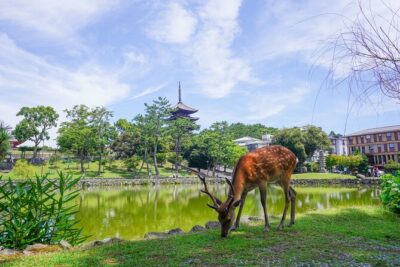
Nara Half Day Trip Walking Tour (Private Option Available)
Read our review →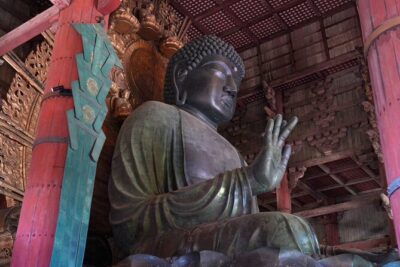
Nara Early Morning Tour (Kyoto or Osaka Departure Available)
Read our review →
Kyoto/Osaka: Kinkakuji, Bamboo Forest, and Nara Deer Park
Read our review →Browse the lists this tour appears in