
REVIEW · NARA DAY TRIPS
Nara Afternoon Tour from Kyoto or Osaka
Nara’s famous deer and the enormous bronze Buddha at Todaiji Temple make a powerful pairing. In one afternoon, you move from a vast Buddhist hall to a Shinto shrine lined with lanterns, with deer wandering freely through the park between them. It is a compact introduction to Japan’s first permanent capital.
I like the simple transport from Kyoto and the fact that entrance fees and an English-speaking government-licensed guide are included. I also like the chance to see Kasuga Shrine’s special Main Sanctuary area, added to the route from January 2025. The catch is time: the tour can feel rushed, especially once you add the long walk from the coach parking area to Todaiji.
In This Review
- Key points to know before booking
- Why Nara makes a strong afternoon from Kyoto
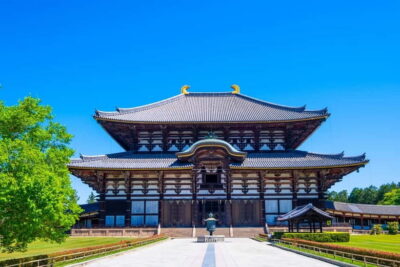
- Meeting the giant Buddha at Todaiji
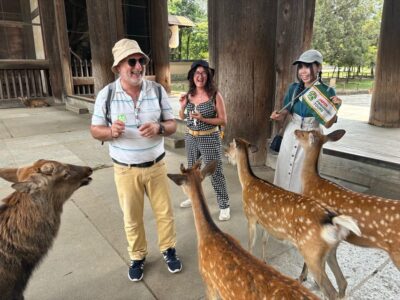
- Meeting Nara’s deer in the park
- Seeing Kasuga Shrine and its lanterns
- Transport, group size, and the pace
- Is the $102.38 price fair?
- Important details for families and mobility
- Who should book this Nara afternoon tour?
- FAQ
- Where does the Kyoto tour depart from?
- How long does the tour last?
- Is transportation included?
- Is hotel pickup or drop-off included?
- Are entrance fees included?
- How much walking is required?
- Are the deer included in the tour?
- What happens if the Kasuga Shrine special area is closed?
- Should you book it?
Key points to know before booking
- Todaiji’s Great Buddha Hall is the afternoon’s big visual hit, with one of the world’s largest wooden buildings and an immense bronze Buddha.
- Nara Park’s deer roam freely, but you may have less time with them than expected because the schedule includes temple and shrine visits.
- The walk to Todaiji takes about 25 minutes each way from the coach parking area, so comfortable shoes matter.
- Kasuga Shrine includes admission, with access to the Main Sanctuary special visit area planned from January 2025, subject to operating conditions.
- The tour lasts about 5 hours and 40 minutes, with a maximum group size of 40 and no hotel pickup or drop-off.
- The $102.38 price buys convenience and guidance, but independent train travel may offer more freedom and a lower cost.
Why Nara makes a strong afternoon from Kyoto
Nara was founded in 710 as Japan’s first permanent capital. Known then as Heijo, it became the political and religious center of the young Japanese state. Powerful Buddhist monasteries grew here, and the city collected monuments that still give Nara its special character.
The capital moved away in 784, first to Nagaoka, and later to Kyoto. Nara became quieter, but that change helped preserve its temples, shrines, wooded paths, and open parkland. You are not simply checking off three sights. You are seeing the remains of a city that helped shape Japanese government and religion.
The afternoon departure is useful if you spend your morning in Kyoto. You meet at the Avanti Tour Desk near Kyoto Station, then travel by return vehicle to Nara. The drive takes roughly an hour each way, depending on traffic, so the coach saves you the work of arranging trains, local transport, directions, and admissions.
That convenience has a cost. Your total tour time is about 5 hours and 40 minutes, but only part of it is spent at the sights. If you want a slow meal, a quiet walk through the park, or time to browse Nara’s smaller streets, this schedule will not give you much room.
More day trips to Nara:
- World Heritage Kyoto & Nara Uji Authentic Matcha Experience
★ 5.0 · 1,573 reviews - Kyoto/Osaka: Nara, Fushimi Inari Taisha, Arashiyama Bus Tour
★ 4.7 · 1,275 reviews - Nara Half Day Trip Walking Tour (Private Option Available)
★ 5.0 · 937 reviews
Meeting the giant Buddha at Todaiji
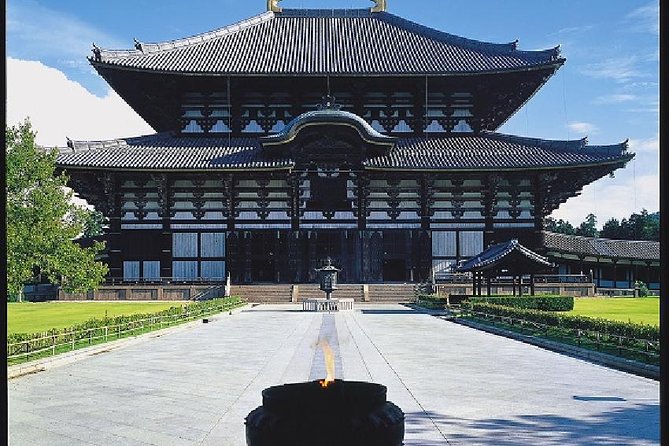
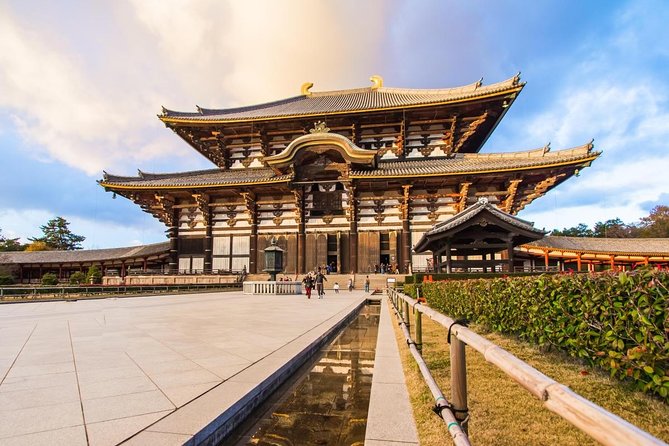
Todaiji is the tour’s strongest stop. The temple was built in the eighth century and became one of Japan’s most important Buddhist centers. Its main hall, the Daibutsuden, is famous for its scale. It is one of the largest wooden buildings in the world, and the huge bronze Great Buddha inside makes the building feel even larger.
The effect is immediate. You enter a vast timber hall and face a seated Buddha that dwarfs the people below. The statue is not just a large object for photographs. It shows the power and ambition of Nara during the period when Buddhist institutions helped support the new capital.
You have about 1 hour and 10 minutes here, and admission is included. Your guide can give the site a useful framework, explaining what you are seeing rather than leaving you to decode the temple on your own. Guides named Yuki, KC, Mo Mo, and Miyuki have been praised for clear explanations, friendly attention, and a good sense of pace. The quality of interpretation can vary with the individual guide, but the tour is designed around guided visits rather than silent sightseeing.
Here is the important practical detail: the coach cannot take you directly to the temple entrance. You walk about 25 minutes each way from the parking area. That is roughly 50 minutes of the visit spent getting there and back, before you enter the hall, see the Buddha, and spend time around the grounds.
This walk may be pleasant in good weather, but it can feel long in heat, rain, or crowded conditions. One guide has been praised for providing spare umbrellas during a sudden downpour, but you should still bring weather protection. The route is not a good fit if you have difficulty walking for extended periods.
The limited time also affects your choices. You may need to decide between lingering inside the Great Buddha Hall, looking around the temple grounds, and spending more time with the deer nearby. If Todaiji is your priority, stay focused and follow your guide’s meeting instructions closely.
Meeting Nara’s deer in the park
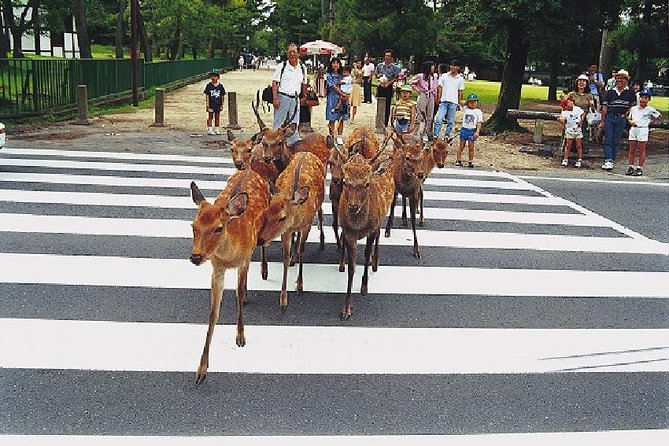
Nara Park covers about 1,250 acres and is home to more than 1,000 deer. The animals move around freely, appearing beside paths, temple grounds, and open lawns. They are closely linked to Kasuga Shrine, where deer are regarded as messengers of the shrine’s deity.
This is one of Japan’s most unusual city sights. The deer are accustomed to people and may approach when food is available. Some visitors describe them as gentle and eager to interact, but you should not assume every animal is calm. Older or larger deer can be assertive, and one account describes them as surprisingly aggressive.
The supplied schedule does not give the park a separate long visit. Instead, the deer are part of the movement between Todaiji and Kasuga Shrine. That distinction matters. If your main goal is to feed deer and take your time watching them, an independent visit may suit you better.
If you want deer crackers, ask your guide early where to buy them. The food is not included, and the tour may not pause to explain this before entering the park. Keep your attention on the animals and your belongings, especially when several deer gather around you.
The deer are not a minor extra. They are one of the reasons Nara feels different from Kyoto, and even a short encounter can become a favorite memory. Just keep your expectations realistic. This is a temple and shrine tour with deer along the route, not a full afternoon devoted to the park.
Seeing Kasuga Shrine and its lanterns
Kasuga Grand Shrine brings a different mood. Todaiji is monumental and heavily tied to Buddhist power. Kasuga is a Shinto shrine associated with forest paths, deer, and rows of stone and bronze lanterns. More than 3,000 lanterns are connected with the shrine, giving the grounds a distinctive look even when the lanterns are not lit.
You have about one hour at Kasuga. From January 2025, the route is scheduled to include the Main Sanctuary special visit area. This lets you get closer to the sanctuary and view hanging lanterns in the corridor, which adds a more focused look at the shrine than simply walking around the outer grounds.
There is an important condition. If an event or operating issue prevents access to the special area, the visit may be replaced by the Kasuga Taisha Museum or Todaiji Museum. No refund is provided for that substitution. Also, the Treasures Hall and Manyo Botanical Gardens are not included, so do not count on those as part of the paid admission.
The shrine visit can feel hurried if the group arrives late or if the first stop runs over time. Follow the guide’s instructions about where and when to regroup. A few minutes lost here can make the final stop feel especially short.
Still, Kasuga earns its place on the route. The shrine gives you a strong contrast with Todaiji, and the lanterns help explain the close relationship between sacred places, nature, and local tradition in Nara.
A completely different side of Kyoto:
- PERFECT KYOTO 1-Day Bus Tour
★ 5.0 · 13,518 reviews - Kyoto: Fushimi Inari, Kinkakuji, Bamboo Grove 1 Day Bus Tour
★ 4.8 · 4,316 reviews - Kyoto: Tea Ceremony in a Traditional Tea House in Kiyomizu
★ 4.9 · 3,519 reviews - Kyoto Geisha Walking Tour: Gion District & Hidden Gems
★ 4.7 · 3,273 reviews
Transport, group size, and the pace

The tour uses return vehicle transport and allows up to 40 people. A coach is comfortable and easy, especially after several days of walking around Kyoto. You can sit back on the journey and let the guide handle the route.
The group size is also the source of some problems. A group of 40 takes time to gather, cross roads, enter sites, and board the coach. If one or two people are late, everyone else may lose time at the next stop. The order of visits and arrival times can change because of road traffic and congestion.
The tour has received strong praise for organization, comfortable transport, and guides who keep the group informed. Yuki has been singled out for a good pace and helpful explanations. KC has been praised for explaining Japanese culture and history in an approachable way. Mo Mo has been noted for making the afternoon engaging, while other guides have received positive comments for kindness and humor.
English ability may vary by guide. Some visitors find the explanations easy to follow, while others feel the information is less detailed or less clear than expected. That is worth considering if you want a lecture-style historical tour. The experience is more dependable as a guided introduction than as an in-depth study visit.
The biggest timing issue is the long approach to Todaiji. Some people have felt that they had only about 45 minutes for the temple, deer, and return walk, while others found the overall time adequate. The difference may come from traffic, group movement, and how quickly everyone follows instructions.
Is the $102.38 price fair?
At $102.38 per person, this is not the cheapest way to reach Nara. You are paying for return transport, admission fees, and a government-licensed English guide. You are also paying for a fixed plan that takes you directly to the most famous religious sites.
That can be good value if you want a straightforward half-day with no train planning. First-time visitors often benefit from hearing why Todaiji matters, how Kasuga Shrine fits into Nara’s traditions, and why the deer are connected with the shrine. A comfortable coach is also useful after a busy Kyoto itinerary.
The value is weaker if you mainly want Nara Park. Independent transport by train can give you more control over the length of your stay, and you can choose how much time to spend at the deer, Todaiji, Kasuga, or other places. Some less expensive Nara options may include an additional cultural activity, such as a matcha experience, though that is not part of this tour.
I would pay the price for convenience and interpretation, not for free time. If your ideal afternoon means sitting under the trees, feeding deer slowly, and exploring at your own speed, use public transport instead.
Important details for families and mobility
Most people can take part, and service animals are allowed. The main physical demand is the walk from the parking lot to Todaiji and back, plus walking around the temple, park, and shrine. The tour does not list hotel pickup or hotel drop-off, so you need to reach the departure point yourself.
Children up to age five may join free, but they do not receive a coach seat unless you book the child rate. Anyone under 18 needs written parental permission. Children under 15, or those not yet enrolled in middle school, must be accompanied by a parent or guardian.
Seats may not be assigned. If you are traveling with family or friends, do not assume you can choose specific seats or sit together without checking the arrangements.
For the Osaka departure option, an English-speaking assistant accompanies you from Hotel Granvia Osaka to the Sunrise Tours Desk in Kyoto Avanti B1F. The return connection runs from Kintetsu Nara Station to Osaka Namba Station. On those Osaka segments, the assistant is not the nationally licensed guide who leads the Nara sightseeing.
Who should book this Nara afternoon tour?
I would choose this tour if you are staying in Kyoto, want to see Nara’s main sights in one outing, and prefer a guide to manage the transport and entry details. It is especially useful if you have limited time in Japan and want a clear introduction rather than a loose day of wandering.
It also suits you if Todaiji is essential and you want context for the Great Buddha and Kasuga Shrine. The combination of Buddhist temple, Shinto shrine, and free-roaming deer gives you a broad look at Nara in a short period.
I would hesitate if you walk slowly, dislike group schedules, or want plenty of time with the deer. The 25-minute approach to Todaiji each way is easy to underestimate. Summer heat, rain, late arrivals, and a group of up to 40 can make the afternoon feel tight.
Free cancellation is available if you cancel at least 24 hours before the scheduled start time. Changes or cancellations made within 24 hours are not accepted for a refund.
FAQ
Where does the Kyoto tour depart from?
The Kyoto departure is from the Avanti Tour Desk near Kyoto Station.
How long does the tour last?
The tour lasts approximately 5 hours and 40 minutes.
Is transportation included?
Yes. Return vehicle transportation from Kyoto to Nara is included. The Osaka departure option includes the connection from Hotel Granvia Osaka to the Kyoto Avanti Sunrise Tours Desk and the return connection from Kintetsu Nara Station to Osaka Namba Station.
Is hotel pickup or drop-off included?
No. Hotel pickup and drop-off are not included.
Are entrance fees included?
Admission fees for the scheduled sightseeing are included. Entry to the Treasures Hall and Manyo Botanical Gardens at Kasuga Shrine is not included.
How much walking is required?
You walk about 25 minutes each way between the coach parking area and Todaiji Temple. You also walk around the temple, Nara Park, and Kasuga Shrine.
Are the deer included in the tour?
Nara Park, where more than 1,000 deer roam freely, is part of the visit. Deer food, if you choose to buy it, is not included.
What happens if the Kasuga Shrine special area is closed?
The Main Sanctuary special visit area may be replaced by the Kasuga Taisha Museum or Todaiji Museum if events or operating conditions prevent entry. No refund is provided for this substitution.
Should you book it?
Book this tour if you want Nara’s essential sights arranged for you, with a coach, admissions, and an English guide included. Todaiji’s Great Buddha and Kasuga’s lanterns are worth the trip, and the deer add a memorable bit of unpredictability.
Skip it in favor of an independent visit if you want to linger. The tour’s real weakness is not the sights, but the clock. You can see a great deal in one afternoon, but you must accept the long walk, the group pace, and limited time for feeding deer or exploring beyond the planned route.
Recently added around Kyoto
- Higashiyama | Kyoto: Sakura Season Private Rickshaw Tour★ 5.0 · 3 reviews
- Kyoto Kimono Rental CHAMATSU|Kimono/Yukata Rental FamilyPlan★ 5.0 · 3 reviews
- Nara Private Customizable Half Day Tour★ 5.0 · 3 reviews
- Kyoto: Half-Day Private Guided Tour to the Old Town of Gion★ 4.4 · 3 reviews
- Kansai Region Hiking Adventure in Nara Kobe Kyoto and More★ 5.0 · 3 reviews
- Full Day Nara Deer, Temple, Shrine, Activities & Tea Ceremony★ 5.0 · 3 reviews
- Nara: Essential Private Tour with Deer Park and Temples★ 5.0 · 3 reviews
- Hiking Tour for Sacred Sites in Kyoto with a Guide★ 5.0 · 3 reviews
Nara Day Trips, compared.
World Heritage Kyoto & Nara Uji Authentic Matcha Experience
Read our review →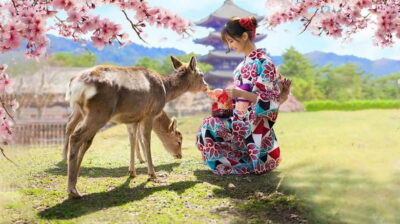
Kyoto/Osaka: Nara, Fushimi Inari Taisha, Arashiyama Bus Tour
Read our review →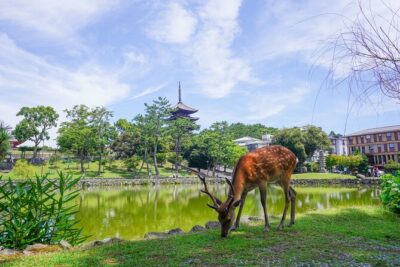
Nara Half Day Trip Walking Tour (Private Option Available)
Read our review →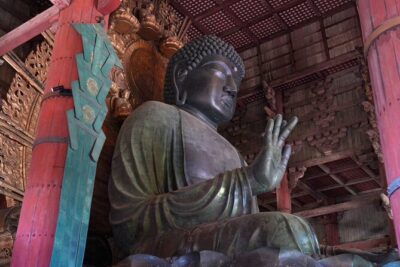
Nara Early Morning Tour (Kyoto or Osaka Departure Available)
Read our review →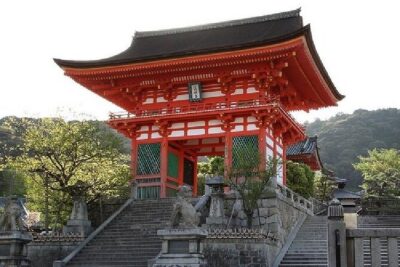
Kyoto/Osaka: Kinkakuji, Bamboo Forest, and Nara Deer Park
Read our review →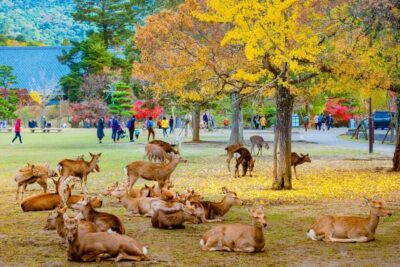
Kyoto/Osaka: Kyoto and Nara Customized Private Guided Tour
Read our review →Browse the lists this tour appears in