
REVIEW · KYOTO SUSHI EXPERIENCES
Sushi – Authentic Japanese Cooking Class – the best souvenir from Kyoto!
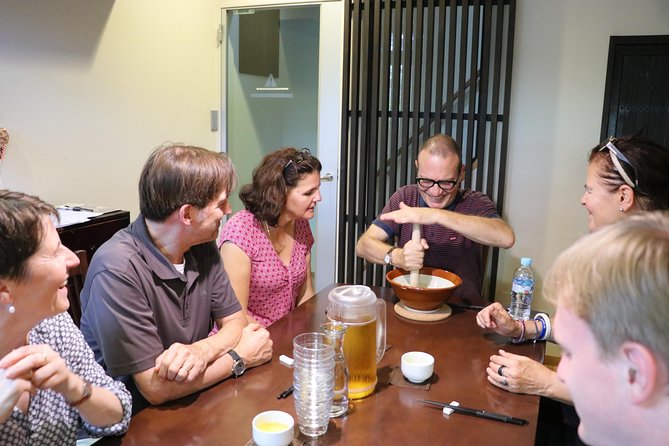
The best souvenir from Kyoto may not fit in your suitcase. At Japanese Cooking Class Roujiya, you learn to make sushi, dashi soup, pickled ginger, and sushi rice, then sit down to eat what you prepared. Kaori also explains Japanese food customs, including table manners, umami, chopsticks, and the reason sushi rice is fanned.
I like two things here: you do the work yourself, and the lesson connects each dish to Japanese culture rather than treating sushi as a craft project. I also like the useful four-page handout, which covers recipes, food, and dining manners. The main consideration is practical: this takes place in a home-style kitchen at a specific address in Kyoto, so you should follow the supplied map carefully and allow time to find it.
In This Review
- Key points about the Kyoto sushi class
- What happens inside Roujiya’s Kyoto kitchen
- Starting with umami and dashi soup
- Making sushi rice, pickled ginger, and several sushi types
- Japanese etiquette that restaurants do not always explain
- Kaori’s teaching style and English instruction
- What is included for $72.67
- Finding the meeting point in Nishinokyo
- Who will enjoy this class most
- The main drawback: navigation and group-size uncertainty
- Is this Kyoto cooking class worth booking?
- FAQ
- Where does the sushi cooking class take place?
- What time does the class start?
- How long does the experience last?
- Is the class taught in English?
- What dishes will I make?
- Is food included in the price?
- Are drinks included?
- Is hotel transportation provided?
- Can I cancel for a full refund?
Key points about the Kyoto sushi class
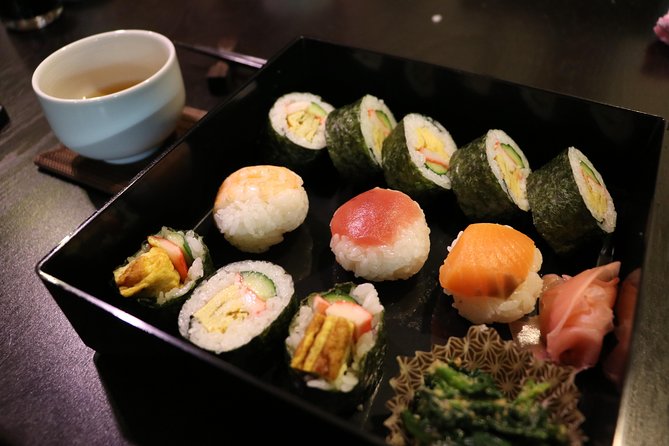
- You make several dishes: Sushi, sushi rice, dashi soup, and pickled ginger are part of the lesson.
- Kaori teaches in English: She explains each step clearly and adds cultural background as you cook.
- The class lasts about two hours: It has a useful mix of demonstration, hands-on preparation, and eating.
- You learn more than recipes: Japanese dining manners, umami, chopstick customs, and food history are included.
- Food and drinks are part of the experience: Ingredients, the meal, an aperitif, and Japanese green tea are included.
- You leave with take-home help: Recipes and a guide make it easier to repeat the dishes at home.
What happens inside Roujiya’s Kyoto kitchen
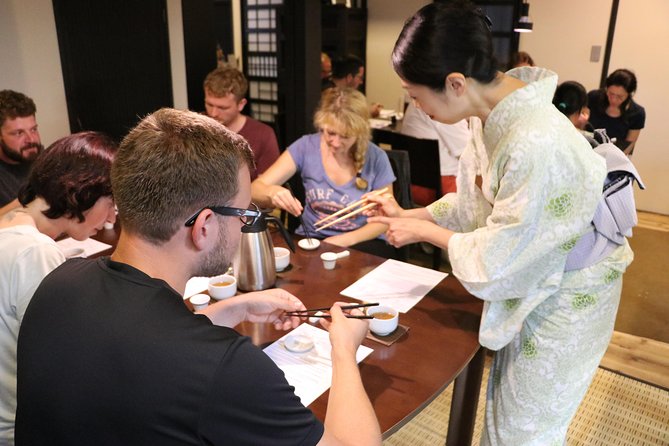
The class begins at 11:30 a.m. at Roujiya, located at 22-58 Nishinokyō Ikenouchichō in Nakagyo Ward. The activity starts and ends at this meeting point, with no hotel pickup or drop-off.
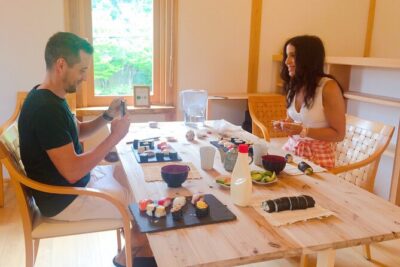
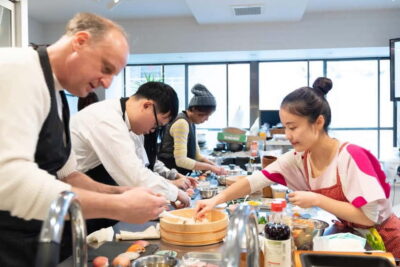
Kaori welcomes you into her kitchen and sets the tone as a home visit rather than a formal restaurant lesson. That matters in Japan, where food is closely tied to hospitality and good manners. You are not simply shown a finished plate and sent on your way. You work through the preparation with guidance at each stage.
The group size is designed to keep the lesson personal. The main description presents it as a small class capped at eight people, while the booking information lists a maximum of 12 travelers and up to 13 people per booking. Group size may therefore vary, so I would confirm the expected number if a very small class is important to you.
The two-hour length is another strength. It is long enough to cover several techniques without taking half a day from your Kyoto sightseeing plans. You get a real activity, not a rushed photo opportunity, but you still have time afterward for temples, shops, or an afternoon walk.
More sushi counters and classes:
- Sushi Making in Kyoto! Same-day bookings welcome!
★ 5.0 · 713 reviews - The Original Small-Group Sushi Making Class in Kyoto
★ 5.0 · 436 reviews - Kyoto: Small-Group Authentic Sushi Making Workshop
★ 5.0 · 137 reviews
Starting with umami and dashi soup
One of the most useful parts of the lesson is the introduction to umami. This savory taste is a basic idea in Japanese cooking, yet many visitors know the word without understanding how it works in a dish.
Kaori uses the class to explain the role of umami and the ingredients behind it. You learn how to make dashi, a simple Japanese broth made with seaweed and bonito flakes. The soup gives you a clear example of how Japanese cooking can build flavor from a small number of carefully chosen ingredients.
This is more useful than a long lecture because the explanation connects directly to what you are preparing. You can taste the broth, understand its purpose, and see how it supports the rest of the meal. The lesson also covers the background of the food being made, so the cooking has a cultural frame.
I especially like this part for anyone who wants to cook Japanese food at home. Sushi is the flashy headline, but dashi is the practical lesson you may use in soups, sauces, and other dishes. The class gives you a foundation instead of focusing only on rolling rice.
Making sushi rice, pickled ginger, and several sushi types
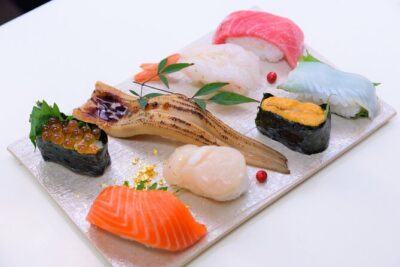
The central task is preparing sushi. You learn how to make sushi rice and work with several types of sushi, although the exact selection is not specified in the available details.
The rice receives proper attention. One especially memorable point is the instruction to fan the sushi rice. That small step is easy to overlook when learning from a short online video, yet it shows how technique and texture matter in Japanese cooking.
You also prepare pickled ginger. This adds another useful layer to the class, since ginger is not just a colorful side dish. It helps refresh your palate between bites and is part of the familiar sushi meal many people know from restaurants.
The hands-on format is the reason to book this instead of simply watching a demonstration. You handle the ingredients, follow the stages, and receive corrections when needed. If you arrive with no sushi-making experience, the instruction is structured for beginners. If you already make sushi, you may still pick up better habits around rice, presentation, or the wider meal.
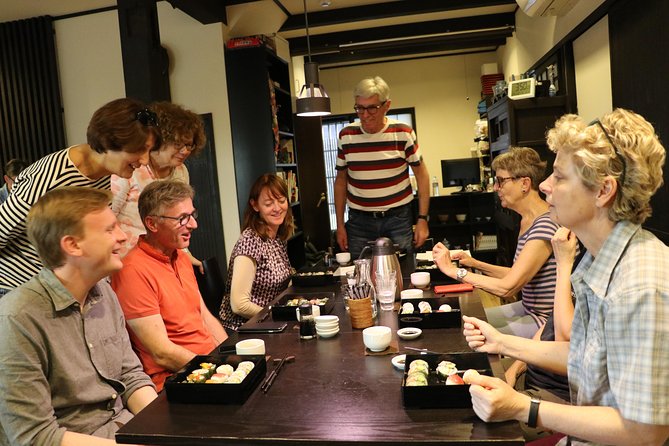
Expect to eat a generous amount. Several descriptions stress that participants finish full, so this should be treated as both a class and a meal. Come hungry, especially if you have planned the activity as your main lunch.
Japanese etiquette that restaurants do not always explain
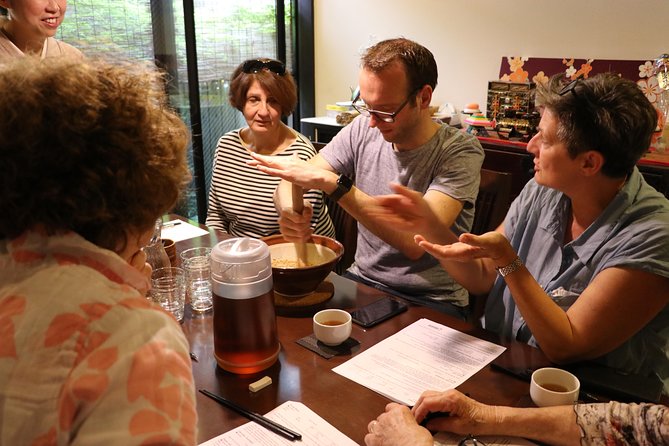
Sushi dining has rules that can feel mysterious if you only learn by copying the person beside you. Kaori includes Japanese table manners in the lesson, giving you a more comfortable way to approach sushi restaurants during the rest of your stay.
The class guide covers Japanese manners and food, and the cultural details go beyond the mechanics of cooking. You may learn why Japanese chopsticks are shorter than Chinese ones, how certain ingredients are used, and how customs connect to the meal in front of you.
This is one of the class’s best features because etiquette is easier to remember when you are eating the food yourself. You do not have to memorize a list of rules in a museum talk. You learn the customs while handling sushi, soup, chopsticks, and tea.
The goal is not to make you nervous at your next meal. It is to help you understand what you are seeing and give you confidence to participate politely. For first-time visitors to Japan, that practical cultural guidance can be worth as much as the recipe.
More cooking classes in Kyoto:
- Kyoto: Ramen Cooking Class at a Ramen Factory with Souvenir
★ 4.9 · 532 reviews - Kyoto: Ramen, Gyoza, and Onigiri Cooking Class
★ 5.0 · 445 reviews - Kyoto: Japanese Washoku Bento Small Group Cooking Class
★ 5.0 · 380 reviews - Kyoto Ramen and Gyoza Cooking Class with Professional Chefs
★ 5.0 · 282 reviews
Kaori’s teaching style and English instruction
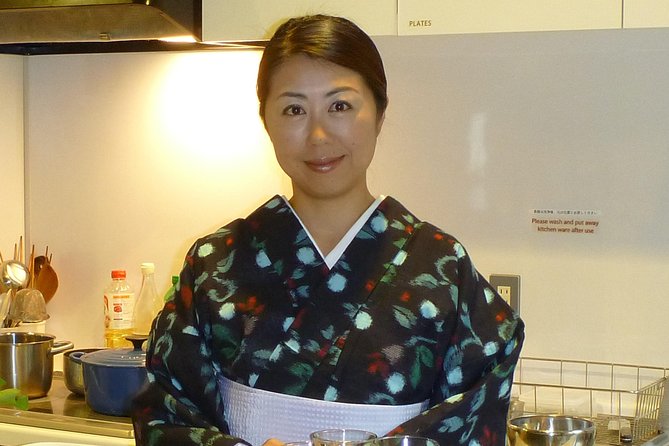
Kaori is the named instructor, and the available information consistently presents her as friendly, patient, and clear in English. She explains what to do, why you are doing it, and how the ingredients fit into Japanese cooking.
That approach suits a cooking class well. A fast demonstration can look easy until you try it yourself. Step-by-step teaching gives you time to copy the technique and ask for help before moving on.
The class also appears suitable for mixed ages. Families with children have taken part, and the format allows adults and younger participants to follow the stages and eat together. Specific child ages are not provided, so families with very young children should check suitability before booking.
The setting is described as clean and attractive, with a kitchen arranged so you can follow the preparation. That is important in a class where you need to see the instructor’s hands and understand the order of the work. Still, a home kitchen is not the same as a large commercial cooking school. If you prefer a highly polished professional studio, this more personal setting may feel different.
What is included for $72.67
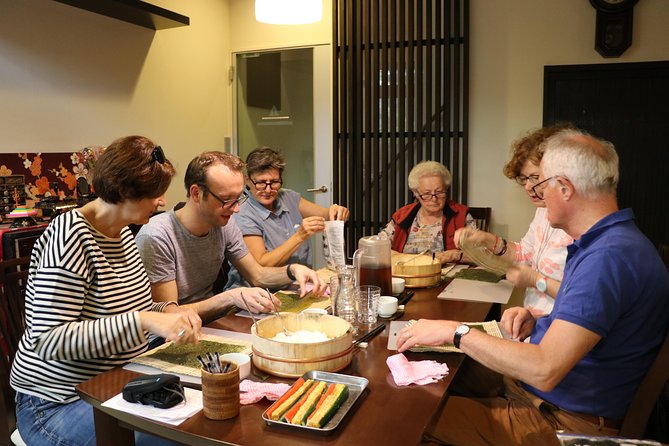
The price is $72.67 per person. That is not a bargain lunch in Kyoto, but it is fair value if you want an activity that combines food, instruction, and cultural insight.
Your fee includes:
- All cooking ingredients
- The meal you prepare
- An English-speaking instructor
- Recipes
- An aperitif
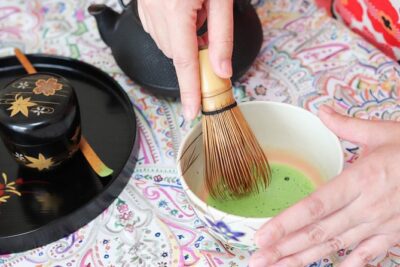
- Japanese green tea
You are paying for more than the raw ingredients. The value comes from the guidance, the small-group format, the chance to ask questions, and the recipes you can use after returning home. A sushi restaurant gives you a meal. This class gives you a meal plus a skill and a better understanding of what you are eating.
One point needs clarification. A class description says an aperitif and green tea complement the meal, while one detailed account says tea, sake, and beer were available afterward at extra cost. The safest reading is that an aperitif and green tea are included, but alcoholic drinks beyond that may cost extra. Ask before ordering if you want to avoid an unexpected charge.
The four-page guide adds real value. It includes recipes for sushi rice, soup, and pickled ginger, along with information on manners and food. You do not have to rely on memory after a busy day in Kyoto.
Finding the meeting point in Nishinokyo
Kyoto addresses can be confusing because streets and neighborhood names do not always work in the simple grid you might expect. The meeting point is near public transportation, but the information provided does not name a specific station or give travel time from major sights.
Use the Google Maps location supplied after booking rather than relying only on the written address. One booking problem involved a driver struggling to find the location, followed by a delayed message response. That appears to have been an isolated issue, but it points to a useful lesson: do not leave navigation until the last minute.
I would save the map pin, address, and start time before heading out. Arrive early enough to deal with a wrong turn. Since the class begins at 11:30 a.m. and the activity is not offered with hotel pickup, you are responsible for reaching Roujiya.
The mobile ticket is convenient, but it does not replace preparation. Keep the booking details available on your phone, and advise the operator of dietary requirements when you book.
Who will enjoy this class most
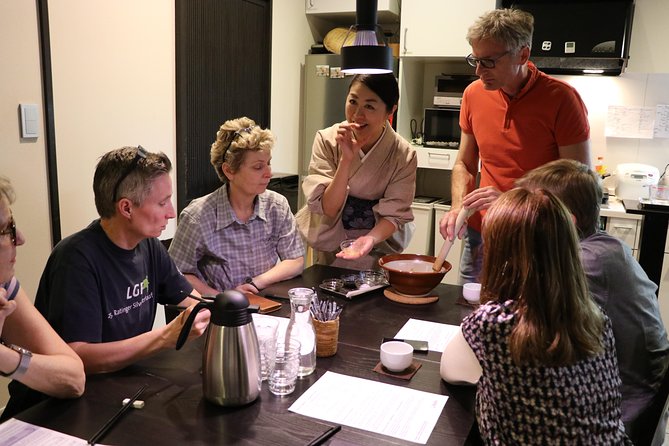
This experience suits you if you want to connect food with everyday Japanese culture. It works particularly well for:
- First-time sushi makers
- Couples looking for a shared activity
- Families with older children
- Small groups of friends
- Visitors who want recipes they can use at home
- Anyone curious about Japanese manners and ingredients
It is also a good rainy-day plan. Kyoto has plenty of outdoor sights, but a two-hour kitchen class gives you a comfortable change of pace without wasting a morning or afternoon.
Sushi lovers should note one thing: this is not described as an advanced sushi-chef course. The focus is on accessible home cooking, clear instruction, and cultural understanding. You will not be training for a professional sushi counter. You will be learning enough to prepare and appreciate several Japanese dishes with confidence.
The class may be less suitable if you dislike group activities, have complex dietary needs, or want a completely private lesson. Dietary requirements can be shared at booking, but no specific substitutions or allergy guarantees are provided.
The main drawback: navigation and group-size uncertainty
The overwhelming strength of the experience is its personal teaching style. The main weakness is not the food or the lesson, but the practical information around arrival and capacity.
The meeting point is a private kitchen rather than a major landmark. Kyoto’s address system can make this harder to find, particularly if you depend on a taxi or ride-hailing driver. Use the map pin and allow extra time.
There is also a mismatch in the stated group numbers. The experience is presented as a small class capped at eight, yet the additional booking details allow up to 12 participants. If you are booking because you want a very intimate lesson, confirm the expected group size in advance.
The cancellation terms are straightforward: you receive a full refund if you cancel at least 24 hours before the local start time. Cancellations or changes made inside that window are not refunded or accepted.
Is this Kyoto cooking class worth booking?
I would book this class if you want a useful, food-centered memory of Kyoto rather than another meal at a restaurant. The combination of sushi, dashi, pickled ginger, table manners, and recipes makes the $72.67 price easier to justify, especially when the meal and ingredients are included.
You should book early if your dates are fixed. The experience is booked about 40 days ahead on average, which suggests that popular time slots can disappear well before arrival.
My advice is simple: save the map pin, disclose dietary needs, confirm the group size if that matters, and arrive hungry. If you want to learn a few real Japanese cooking skills in English and take them home with you, Roujiya is a strong choice. If you only want to eat sushi or expect advanced professional training, spend the money at a restaurant instead.
FAQ
Where does the sushi cooking class take place?
The class takes place at Japanese Cooking Class Roujiya, at 22-58 Nishinokyō Ikenouchichō, Nakagyo Ward, Kyoto, 604-8375, Japan.
What time does the class start?
The class starts at 11:30 a.m.
How long does the experience last?
The cooking class lasts approximately two hours.
Is the class taught in English?
Yes. An English-speaking cooking instructor teaches the class, and the available information identifies the instructor as Kaori.
What dishes will I make?
You make several types of sushi, sushi rice, dashi soup, and pickled ginger. The exact types of sushi are not specified.
Is food included in the price?
Yes. The meal you prepare and all cooking ingredients are included.
Are drinks included?
An aperitif and Japanese green tea are included. One class description also notes that sake and beer may be offered afterward for an additional cost.
Is hotel transportation provided?
No. Hotel pickup and drop-off are not included. You must make your own way to the Roujiya meeting point.
Can I cancel for a full refund?
Yes. You can cancel at least 24 hours before the experience start time for a full refund. Cancellations or changes made less than 24 hours before the local start time are not accepted for a refund.
More Workshops in Kyoto
- Kyoto: 45-Minute Tea Ceremony Lesson Experience
★ 4.3 · 2,378 reviews - Kyoto : Chopsticks Making Workshop in Gion with Engraving Option
★ 5.0 · 958 reviews - Kyoto: Samurai Sword Class by Experts in Traditional Arts
★ 4.9 · 657 reviews - Ninja 1-hour Hands-on Lesson by Japanese master in Kyoto -Entry
★ 5.0 · 489 reviews
Recently added around Kyoto
- Higashiyama | Kyoto: Sakura Season Private Rickshaw Tour★ 5.0 · 3 reviews
- Kyoto Kimono Rental CHAMATSU|Kimono/Yukata Rental FamilyPlan★ 5.0 · 3 reviews
- Kyoto: Half-Day Private Guided Tour to the Old Town of Gion★ 4.4 · 3 reviews
- Nara Private Customizable Half Day Tour★ 5.0 · 3 reviews
- Kansai Region Hiking Adventure in Nara Kobe Kyoto and More★ 5.0 · 3 reviews
- Full Day Nara Deer, Temple, Shrine, Activities & Tea Ceremony★ 5.0 · 3 reviews
- Nara: Essential Private Tour with Deer Park and Temples★ 5.0 · 3 reviews
- Photo Shoot with a Private Vacation Photographer in KYOTO, JAPAN★ 5.0 · 3 reviews
Kyoto Sushi Experiences, compared.
The Original Small-Group Sushi Making Class in Kyoto
Read our review →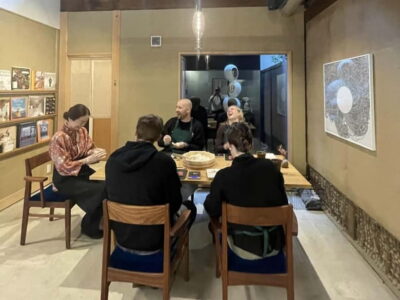
Private Kyoto Sushi Cooking Class & Tea Ceremony with Emika
Read our review →
Enjoy Sushi & Market Tour! Best for Family & Couple!
Read our review →
Sushi or Traditional Japanese Cuisine in a Kyoto Home with Emika
Read our review →
Kyoto Sushi Making Experience with a Professional Sushi Chef
Read our review →Browse the lists this tour appears in