
REVIEW · KYOTO SUSHI EXPERIENCES
Kyoto: Small-Group Authentic Sushi Making Workshop
Kyoto’s original small-group sushi workshop gives you something better than a quick cooking demonstration: you make the lunch yourself. In 90 minutes, Kana and her teaching team guide you through seasoned rice, nigiri, gunkan, and maki rolls in a restored townhouse near Kiyomizu-Gojō Station.
I like the tiny class size, capped at eight, and the calm setting, which leaves room for questions instead of pushing everyone through a crowded station. I also like the useful gift bag, with a rolling mat, chopsticks, and recipe card. The main consideration is that the fish is prepared for you, so this is a sushi-making class, not a fish-cutting lesson.
In This Review
- Key points to know before booking
- A quiet sushi class near Kiyomizu-Gojō Station
- Meeting Kana and settling into the small group
- Seasoning rice, the foundation of good sushi
- Making nigiri, gunkan, and maki
- Fresh fish and a proper sushi lunch
- Why the townhouse setting matters
- Is $60 a fair price for 90 minutes?
- Who will enjoy this Kyoto activity most?
- Booking details worth knowing
- Should you book the Atelier SUSHI workshop?
- FAQ
- How long does the sushi-making workshop last?
- Where does the class take place?
- Is the workshop taught in English?
- What food and equipment are included?
- Can vegetarians or wheelchair users join?
- Can I cancel the booking or pay later?
Key points to know before booking
- Fresh Kyoto ingredients: Fish is sourced locally, including from Nishiki Market, and the rice comes from the instructor Kana’s family farm.
- Real hands-on practice: You prepare rice and make nigiri, gunkan, and maki rather than only watching a chef.
- Small English-language class: A maximum of eight participants keeps the pace relaxed and personal.
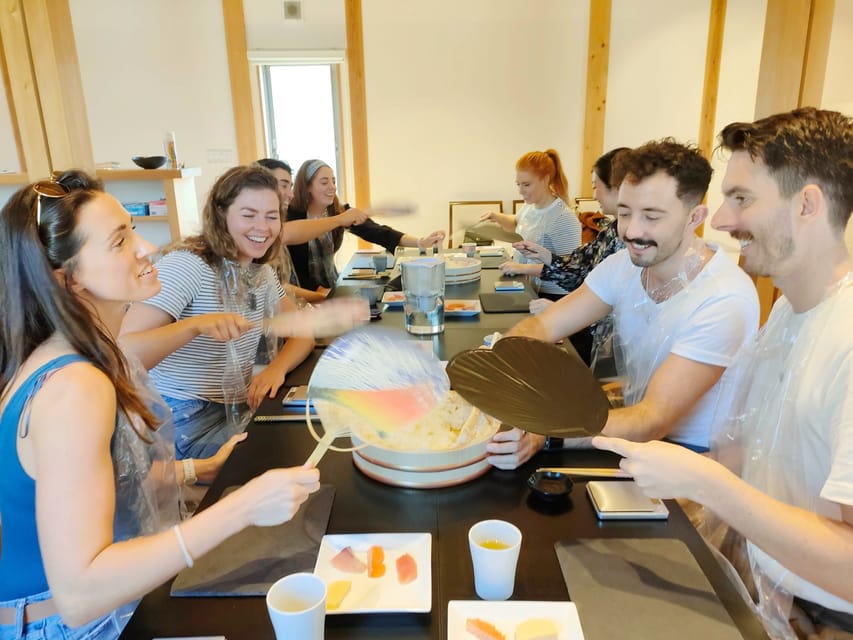
- A generous lunch: You eat the sushi you make, along with miso soup, and several people found the portion surprisingly large.
- Useful take-home kit: Your gift bag includes a sushi mat, chopsticks, and recipe card.
- Easy sightseeing pairing: The townhouse is near Kiyomizu-dera, Gion, and Kiyomizu-Gojō Station.
A quiet sushi class near Kiyomizu-Gojō Station
The workshop takes place in the Kyoto Wand building, a short walk from Kiyomizu-Gojō Station on the Keihan Main Line. That location works well in a busy sightseeing day. You can pair the class with Gion, Kiyomizu-dera, or the streets around the Higashiyama area without adding a long cross-city ride.
The meeting point is centrally placed, but you still need to allow time to find the building. The supplied location information gives the Google Plus Code XQVC+J7 Kyoto, which can help if your map app has trouble with the address. Hotel pickup and drop-off are not included, so you make your own way there.
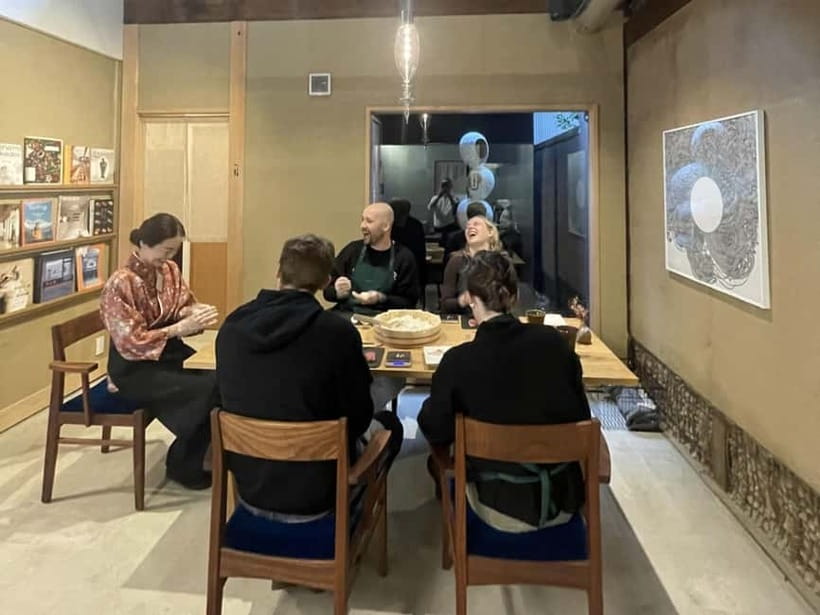
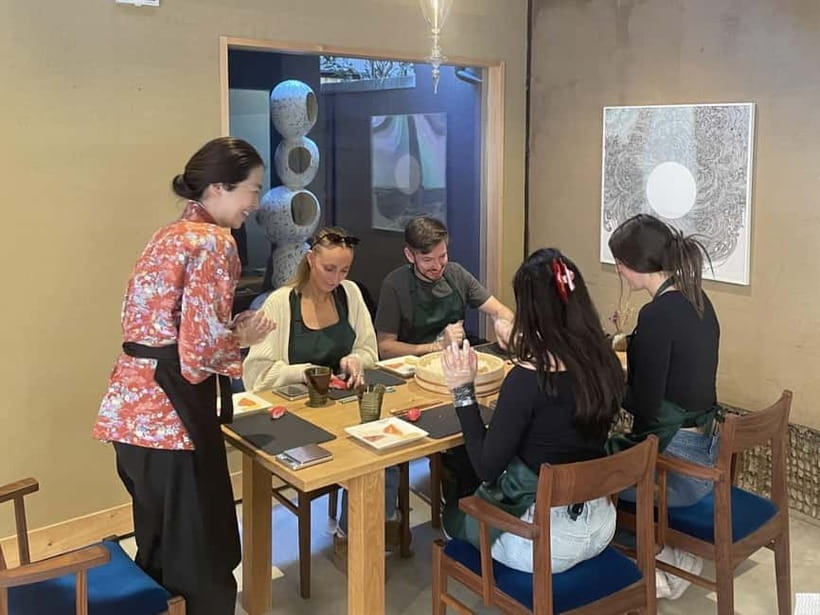
Inside, the mood is deliberately calm. You enter a beautifully restored Kyoto townhouse rather than a large modern cooking school. That setting matters. Sushi is often associated with speed, precision, and restaurant theater, but this class gives you time to pay attention to the small movements that make the food work.
More sushi counters and classes:
- Sushi Making in Kyoto! Same-day bookings welcome!
★ 5.0 · 713 reviews - The Original Small-Group Sushi Making Class in Kyoto
★ 5.0 · 436 reviews - Sushi – Authentic Japanese Cooking Class – the best souvenir from Kyoto!
★ 5.0 · 93 reviews
Meeting Kana and settling into the small group
The class is limited to eight participants and conducted in English. That is the right size for this type of lesson. You can see the instructor’s hands clearly, ask for help without interrupting a long line of people, and get individual corrections while you work.
The teaching team includes Kana, along with instructors and assistants such as Aya, Ayumi, Karim, and Kenneth. Kana is especially associated with the class and brings more than kitchen instruction. She talks about Japanese culture, Kyoto, local food, and, when asked, subjects such as Japanese history and daily life.
I like that this social side does not appear to be bolted onto the lesson. The table naturally gives you time to talk with the instructors and other participants while you work. Families, couples, parents with children, and solo visitors can all fit the format. One family attended as a group of seven, with ages ranging from grandmother to grandchildren, while another class had only two participants.
The friendly tone is one of the strongest reasons to choose this workshop. Several participants described staying after the scheduled class to continue talking. That extra time is not something you should count on, but it shows the class is built around personal contact rather than a strict conveyor belt.
Seasoning rice, the foundation of good sushi
The first practical lesson centers on sushi rice. You learn how properly cooked rice is seasoned and handled before it becomes nigiri or a roll. This may sound basic, but it is the part many home cooks get wrong. Sushi depends on rice that holds together while remaining pleasant to eat.
The class breaks the process into manageable steps. Kana or another instructor demonstrates, then you repeat the technique yourself. The pace is especially suitable for beginners because you can watch the movement, try it, and ask for another explanation before moving on.
The rice also has a personal connection to the workshop. One family learned that the rice used in class is grown by Kana’s own family. That detail gives the meal a stronger sense of place than a generic cooking class using anonymous ingredients.
You should not expect to become a sushi chef in 90 minutes. You will not cover every regional style or learn the demanding knife work used in professional sushi restaurants. What you do get is a practical introduction to the ingredients, texture, shaping, and balance that make sushi enjoyable.
Making nigiri, gunkan, and maki
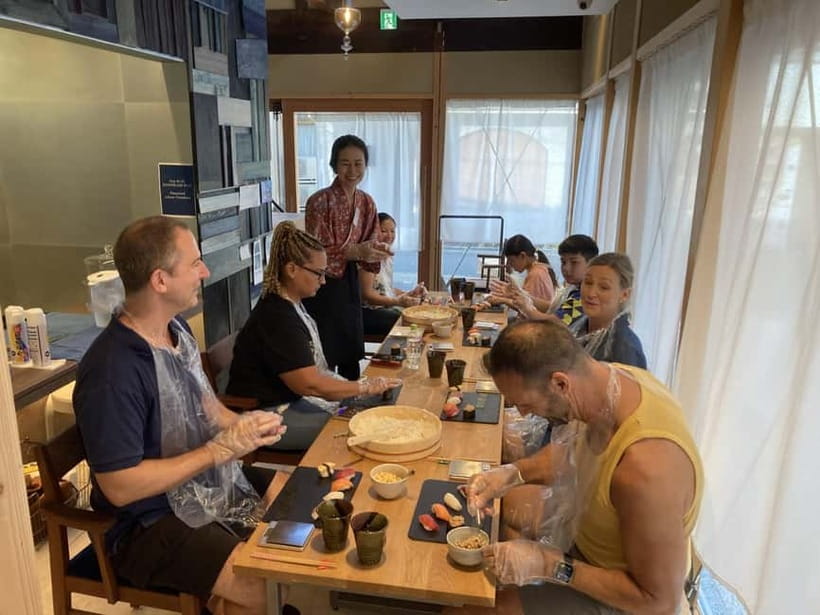
Once the rice is ready, you move on to shaping several kinds of sushi. Nigiri is the most recognizable: a small piece of rice topped with fish or another ingredient. The technique looks simple, but it requires a light touch. Press too hard and the rice becomes dense. Press too little and it falls apart.
The instructor demonstrates the form slowly, then helps you refine your own pieces. You may work with fish such as salmon, tuna, squid, and yellowtail, along with egg omelette. The exact ingredients can vary, so think of these examples as a sense of the range rather than a guaranteed menu.
Gunkan offers a different shape, with rice enclosed by seaweed and topped with a softer mixture. Previous classes have used fillings such as corn and tuna salad. Maki rolls then bring a new challenge: spreading rice, placing fillings, and using the bamboo mat to form an even roll.
The rolling mat is included in your gift bag, so this is one skill you can try again at home. The recipe card helps too. I would keep both in your luggage rather than treating them as simple souvenirs. They turn the class into a useful memory, especially if you want to make sushi again after your Japan trip.
One small limitation is worth noting. The fish is prepared before the class. If you hoped to learn how to fillet or slice a whole fish, this workshop will not meet that goal. That choice is sensible for a short beginner class, though, since it keeps the focus on rice, shaping, fillings, and presentation.
More workshops and classes in Kyoto:
- Kyoto: 45-Minute Tea Ceremony Lesson Experience
★ 4.3 · 2,378 reviews - Kyoto : Chopsticks Making Workshop in Gion with Engraving Option
★ 5.0 · 958 reviews - Kyoto: Samurai Sword Class by Experts in Traditional Arts
★ 4.9 · 657 reviews - Kyoto: Ramen Cooking Class at a Ramen Factory with Souvenir
★ 4.9 · 532 reviews
Fresh fish and a proper sushi lunch
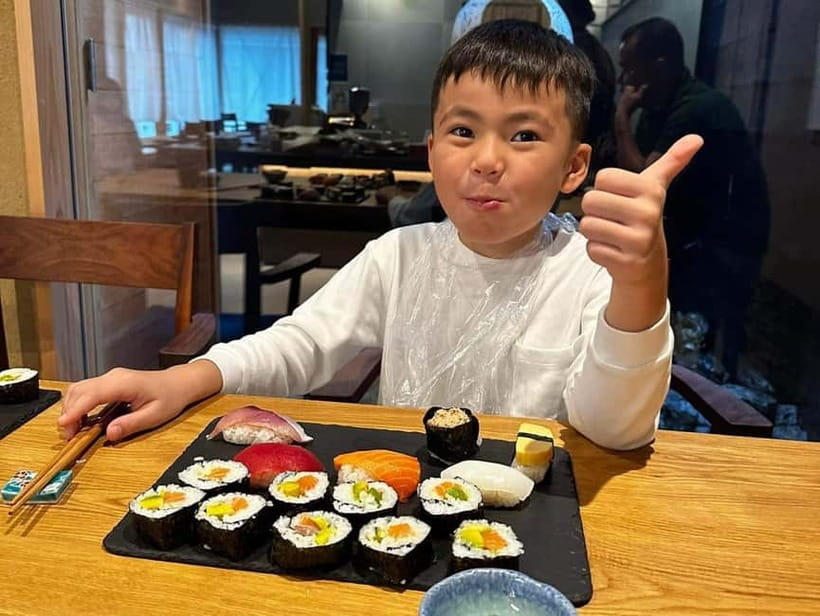
Ingredient quality is central to the experience. The fish is described as fresh and locally sourced, with supplies coming from Kyoto’s Nishiki Market. The rice and other ingredients are also selected with care.
That makes a practical difference for first-time sushi makers. Good ingredients help your finished pieces taste good even when your shapes are not perfect. You can concentrate on learning rather than wondering if a bland or dry result came from your technique or the food itself.
At the end, you sit down and eat what you have made. Miso soup is included, along with soy sauce, wasabi, and ginger for serving. The meal is not an afterthought. The satisfaction comes from seeing a table filled with food you shaped yourself, then tasting the results while the lesson is still fresh.
Plan to arrive hungry. The amount of sushi can be substantial, and several participants found there was more than enough for lunch. That is a good value point, but it also means this is not a light snack between temple visits.
You should tell the operator about dietary restrictions when booking. Vegetarians cannot take this class, and the activity is not suitable for wheelchair users. The supplied information does not promise specific substitutions, so do not assume that fish-free or special-diet options will be available.
Why the townhouse setting matters
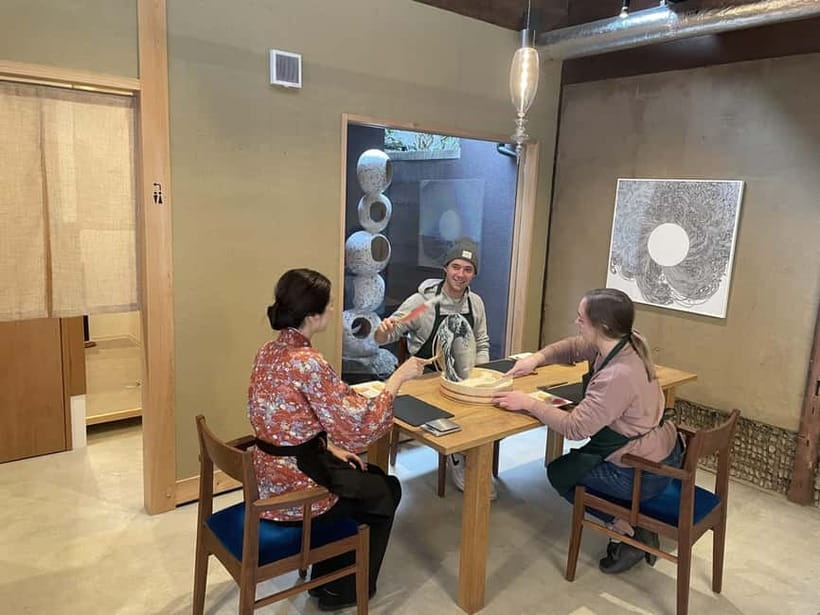
Kyoto offers many food activities, but the setting here gives the class a clear local character. You are not simply standing at a counter in a commercial kitchen. You are working in a traditional-style building in a part of the city already known for old streets, temples, and neighborhood restaurants.
The townhouse is also a useful break from Kyoto’s walking demands. After several days of temples and crowded sightseeing lanes, sitting at a table and working with your hands can feel restful without being passive. You still learn something, eat lunch, and speak with people who know the city.
I would especially value the cultural conversation if this is your first trip to Japan. Kana has shared stories about growing up in Osaka and moving to Kyoto, and the instructors are happy to answer questions about Japanese customs and food. They can also offer local restaurant and sightseeing suggestions, though those conversations naturally depend on the people leading your particular session.
The class does not try to turn sushi into a theatrical performance. Its appeal is the direct contact: rice in your hands, a mat on the table, an instructor correcting your technique, and a meal you can point to as your own work.
Is $60 a fair price for 90 minutes?
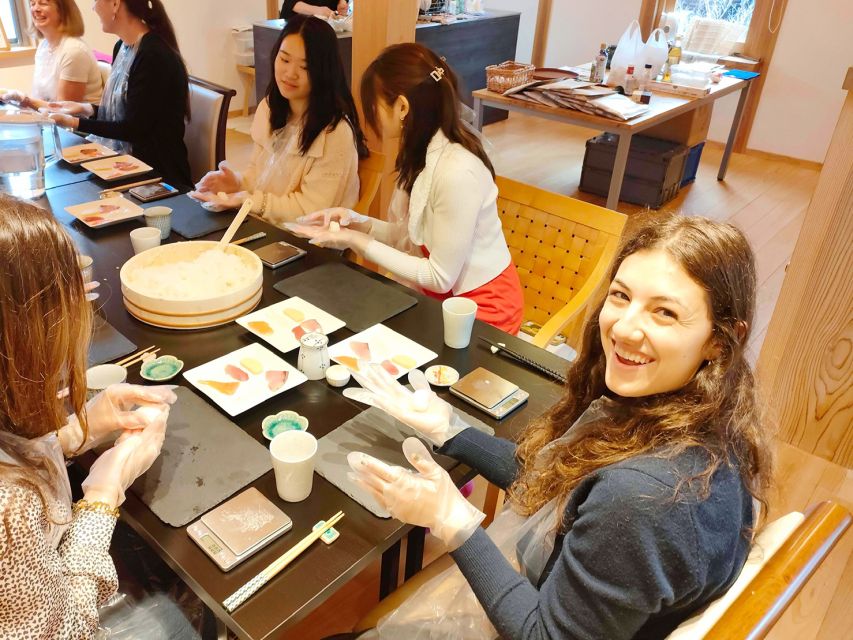
At $60 per person, the workshop sits above the cost of a casual lunch but includes much more than food. You receive 90 minutes of instruction, a full meal of your own sushi, miso soup, an English-speaking host, and a gift bag with tools and a recipe card.
The small group improves the value. An eight-person limit means you are paying for access to the instructor’s attention, not just ingredients and a seat. If your class has only a few participants, you may receive even more one-to-one help, although the group size depends on the date.
I would compare this with the cost of a sushi meal plus a separate cultural activity. Here, the meal and lesson are combined, and the take-home mat gives you something practical after the class ends. For a family, the shared activity can also be more memorable than another restaurant meal.
The price is less appealing if you only want to eat excellent sushi. Kyoto has plenty of places for that. You should book this class because you want to learn, make mistakes, talk with an English-speaking local host, and eat the results.
Who will enjoy this Kyoto activity most?
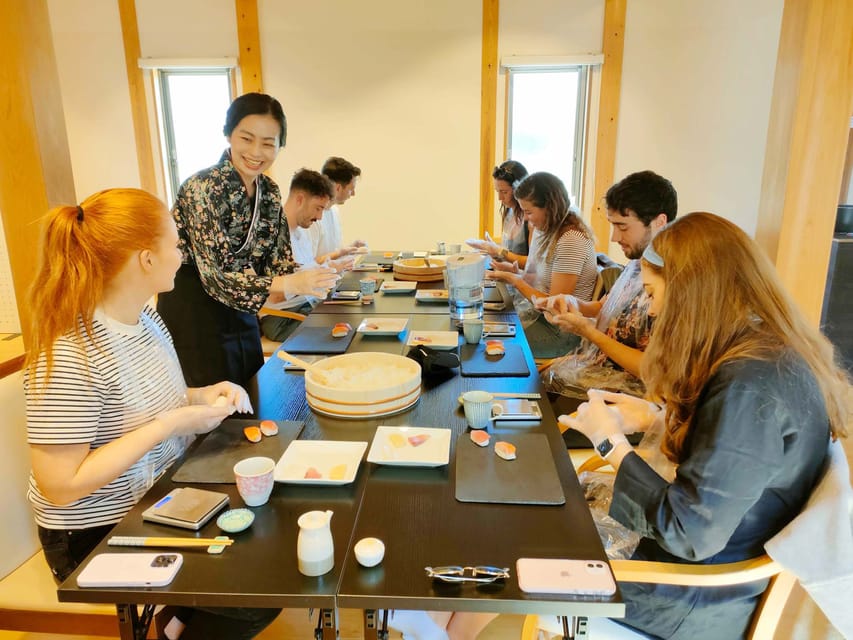
I would recommend the workshop to first-time sushi makers, food-focused visitors, couples, families, and anyone who wants a slower activity between major sights. Children can take part, and a 10-year-old previously completed the class with a parent. The family format also works well across several generations.
You do not need prior experience. The instruction is broken into clear steps, and the teachers repeat demonstrations when needed. If you already make sushi at home, you can still pick up useful points about traditional local styles and technique, though you may find the beginner sections familiar.
This is not the right choice for a vegetarian, someone who uses a wheelchair, or a visitor seeking professional fish preparation skills. It is also not a class for anyone who wants a long, advanced culinary course. The 90-minute format is focused and friendly, not exhaustive.
For your schedule, I would place it near a Kiyomizu-dera or Gion visit. Give yourself enough time to reach the Kyoto Wand building and remember that the food may leave you full for the rest of the afternoon.
Booking details worth knowing
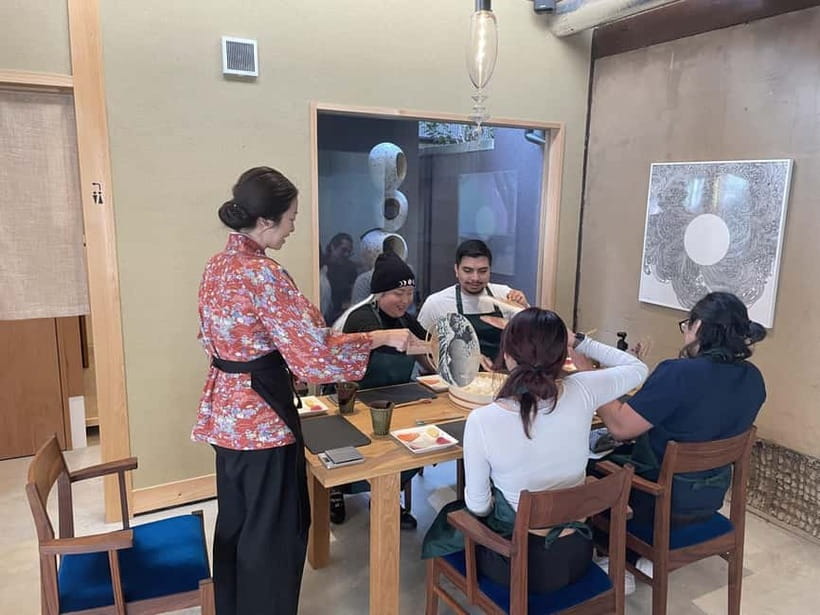
The class runs for 90 minutes, with starting times shown according to availability. English is the teaching language, and the small-group format has a maximum of eight participants.
You can reserve now and pay later, which helps if your Kyoto plans are still shifting. Cancellation is free up to 24 hours in advance for a full refund. Hotel transportation is not included.
The most important preparation is simple: report dietary restrictions when you book, wear something comfortable for a hands-on food activity, and arrive ready to eat. The class supplies disposable gloves and an apron.
Should you book the Atelier SUSHI workshop?
Book it if you want a personal, hands-on introduction to Japanese food culture rather than a standard meal. The combination of fresh local fish, family-grown rice, patient English instruction, a traditional townhouse, and a generous lunch gives the $60 price solid value.
I would choose it especially for a family or couple who wants a shared memory, and for solo visitors who enjoy meeting people around a table. The strongest feature is the human scale. You get time with Kana and her team, room to ask questions, and a useful skill to take home.
Skip it if you are vegetarian, need wheelchair access, or want to learn fish butchery. For everyone else, this is an easygoing Kyoto activity that turns sushi from something you order into something you understand.
FAQ
How long does the sushi-making workshop last?
The workshop lasts 90 minutes.
Where does the class take place?
It takes place in the Kyoto Wand building, a short walk from Kiyomizu-Gojō Station on the Keihan Main Line. It is also within walking distance of areas including Kiyomizu-dera and Gion.
Is the workshop taught in English?
Yes. The activity includes an English-speaking host, and English is the listed instruction language.
What food and equipment are included?
You make sushi for your own lunch and receive miso soup. The class also supplies disposable gloves and an apron. The gift bag contains a sushi rolling mat, chopsticks, and a recipe card.
Can vegetarians or wheelchair users join?
The activity is not suitable for vegetarians or wheelchair users.
Can I cancel the booking or pay later?
You can reserve and pay later. Cancellation is free up to 24 hours in advance for a full refund.
Recently added around Kyoto
- Higashiyama | Kyoto: Sakura Season Private Rickshaw Tour★ 5.0 · 3 reviews
- Kyoto Kimono Rental CHAMATSU|Kimono/Yukata Rental FamilyPlan★ 5.0 · 3 reviews
- Kyoto: Half-Day Private Guided Tour to the Old Town of Gion★ 4.4 · 3 reviews
- Nara Private Customizable Half Day Tour★ 5.0 · 3 reviews
- Full Day Nara Deer, Temple, Shrine, Activities & Tea Ceremony★ 5.0 · 3 reviews
- Nara: Essential Private Tour with Deer Park and Temples★ 5.0 · 3 reviews
- Kansai Region Hiking Adventure in Nara Kobe Kyoto and More★ 5.0 · 3 reviews
- Hiking Tour for Sacred Sites in Kyoto with a Guide★ 5.0 · 3 reviews
Kyoto Sushi Experiences, compared.
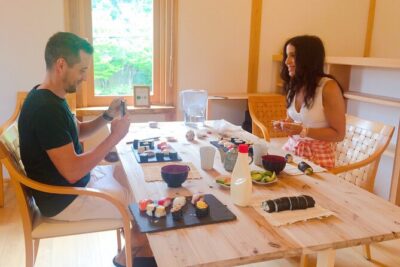
The Original Small-Group Sushi Making Class in Kyoto
Read our review →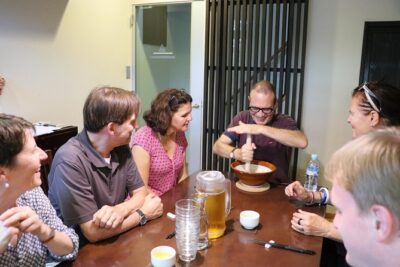
Sushi – Authentic Japanese Cooking Class – the best souvenir from Kyoto!
Read our review →
Private Kyoto Sushi Cooking Class & Tea Ceremony with Emika
Read our review →
Enjoy Sushi & Market Tour! Best for Family & Couple!
Read our review →
Sushi or Traditional Japanese Cuisine in a Kyoto Home with Emika
Read our review →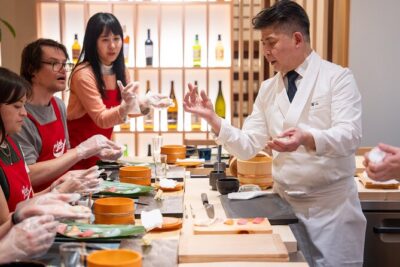
Kyoto Sushi Making Experience with a Professional Sushi Chef
Read our review →Browse the lists this tour appears in