
REVIEW · KYOTO SUSHI EXPERIENCES
The Original Small-Group Sushi Making Class in Kyoto
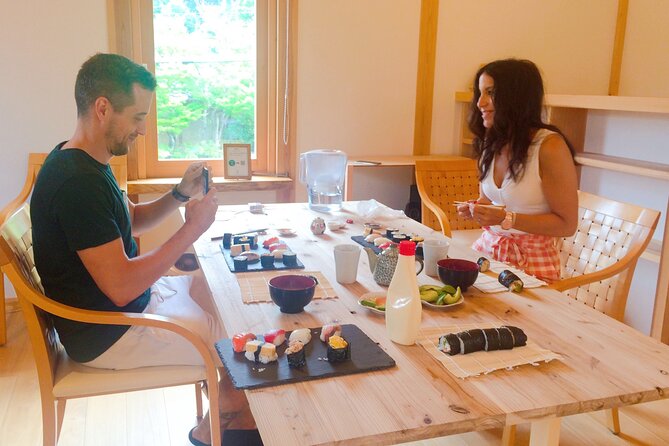
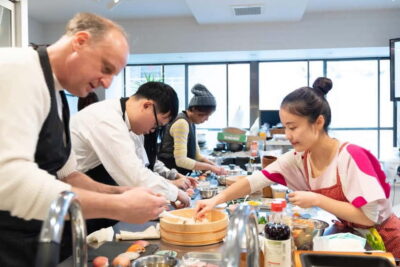
The best thing about this Kyoto experience is its scale. With no more than eight people, you get time to work with the rice, shape nigiri, roll maki, and ask questions without being lost in a crowded cooking demonstration. Kana leads the English-language class with patience and a relaxed sense of humor, and her husband may assist.
I especially like the hands-on format and the setting: a restored historic townhouse near Kiyomizu-dera and Gion. I also like that the class ends with a proper meal of the sushi you prepare, plus tea or coffee. The main consideration is that vegetarian and vegan options are not offered, so this is best for people comfortable eating fish and following the stated menu.
In This Review
- Key points before you book
- What the 90-minute Kyoto sushi class is really like
- Arriving near Kiyomizu-dera and Gion
- Seasoning the rice, the quiet foundation of sushi
- Shaping nigiri with direct guidance
- Rolling maki without making a mess
- Eating the sushi you made
- Kana, cultural conversation, and local advice
- Dietary limits and what to clarify
- Is $69.64 a fair price?
- Who should book this Kyoto sushi class?
- Booking, cancellation, and practical details
- FAQ
- How long does the sushi-making class last?
- How much does the experience cost?
- Where does the class begin?
- Where does the activity end?
- How many people can join the class?
- Is the class taught in English?
- What sushi will I learn to make?
- Is a meal included?
- Are vegetarian or vegan options available?
- Can I cancel for a full refund?
- Should you book Atelier SUSHI?
Key points before you book
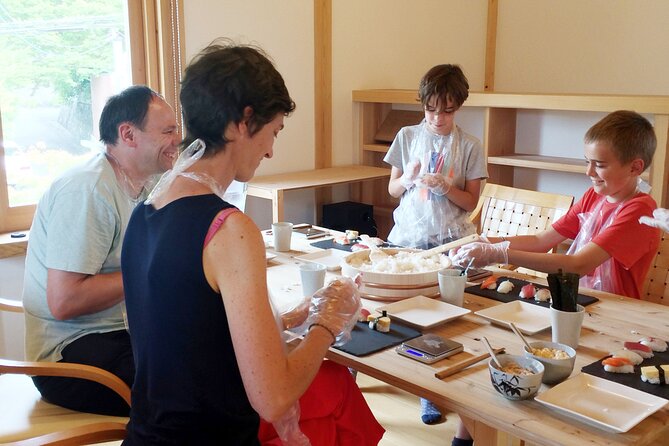
- A maximum of eight people: The small class size allows individual help with rice seasoning, nigiri shape, and maki rolling.
- Two essential sushi styles: You learn both nigiri and maki, giving you useful skills to repeat at home.
- Kana teaches in English: The class combines practical instruction with conversation about Japanese food and culture.
- A traditional Kyoto setting: The workshop takes place in a restored townhouse near two of Kyoto’s most visited districts.
- A filling meal is included: You eat the sushi you make at the end, served as lunch or dinner according to the session time.
- Take-home value: Some sessions include class notes, rice recipes, chopsticks, a sushi mat, or a small gift bag.
What the 90-minute Kyoto sushi class is really like
This is not a long culinary course. It is a compact, focused introduction to sushi-making, priced at $69.64 per person and lasting about an hour and a half. That time is enough to learn the core movements and eat a generous amount, but not enough for a full study of Japanese seafood, knife work, or professional sushi service.
The class is conducted in English, which matters here. Sushi has plenty of small details that are easy to miss when instructions move quickly: how the rice should feel, how much rice belongs in a piece of nigiri, and how firmly to roll maki. Kana’s role is not just to demonstrate. She gives direct guidance and encouragement as you work.
Because the class is limited to eight people, you can expect a social setting without the feel of a large group attraction. That works well for couples, families, solo visitors, and small groups of friends. It also gives the instructor a fair chance to correct technique rather than simply showing you a finished piece.
The mood appears intentionally informal. You learn, talk, laugh, and eat together. The hosts also make room for questions about Japanese culture, daily life, Kyoto, and places to visit. If you like food classes that feel personal rather than polished and theatrical, this format should suit you.
More sushi counters and classes:
- Sushi Making in Kyoto! Same-day bookings welcome!
★ 5.0 · 713 reviews - Kyoto: Small-Group Authentic Sushi Making Workshop
★ 5.0 · 137 reviews - Sushi – Authentic Japanese Cooking Class – the best souvenir from Kyoto!
★ 5.0 · 93 reviews
Arriving near Kiyomizu-dera and Gion
The meeting point is Atelier SUSHI, at 311-1 Kitatōryōchō in Kyoto’s Higashiyama Ward, postal code 605-0918. The activity ends at the same place. It is near public transportation, but you should still allow enough time to find the townhouse, especially if you are coming from the busy Kiyomizu-dera or Gion areas.
The location gives the class a useful place in a Kyoto sightseeing day. You can pair it with a visit to Kiyomizu-dera, explore Higashiyama’s traditional streets, or spend time around Gion before or after your session. The attraction is not just convenience. A historic townhouse offers a calmer backdrop than a modern classroom and connects the cooking lesson with the older character of eastern Kyoto.
The setting also helps keep the experience grounded. You are not simply checking sushi off a list in a generic cooking studio. You are learning in a traditional Kyoto environment, with Japanese hosts who can add local context as the class unfolds.
Still, do not treat the workshop as a guided tour of Kiyomizu-dera or Gion. The sightseeing districts are nearby, but the class itself centers on food preparation. Plan your temple visits and neighborhood walks separately.
Seasoning the rice, the quiet foundation of sushi
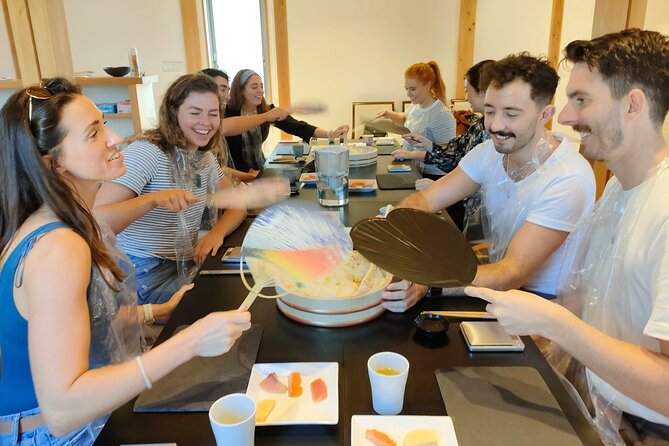
The first useful lesson is the rice. Good sushi is not just raw fish placed on top of ordinary rice. The rice needs the right texture, temperature, and seasoning, and it must hold together without becoming heavy or wet.
You learn how to season properly cooked rice before forming the sushi. This is a practical skill you can use at home, even if you never master a perfect piece of nigiri. Rice seasoning is also where a short class earns its keep. It gives you a foundation instead of reducing sushi-making to a simple assembly job.
The workshop format lets you handle the rice yourself. That is important because the feel is difficult to understand from a recipe alone. You can ask questions, compare your technique with the instructor’s example, and adjust as you go.
The class materials may also include recipes or notes to take home. One useful recipe mentioned by participants is for the rice itself, which is arguably the most reusable part of the lesson. Fish quality varies from country to country, but properly prepared sushi rice is within reach of most home cooks.
Shaping nigiri with direct guidance
Nigiri is the neat, hand-shaped sushi made with a small mound of rice and a topping of fish or another ingredient. It looks simple. It is not always simple to shape well.
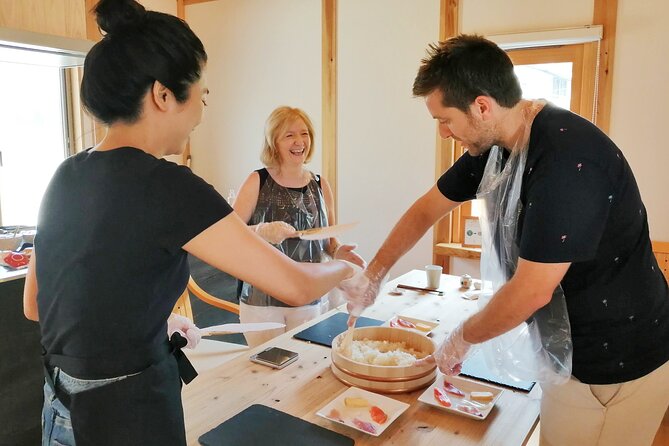
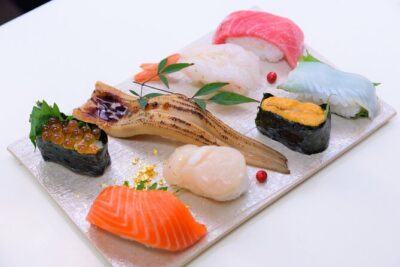
At Atelier SUSHI, you practice forming several pieces of nigiri with fresh fish and selected local ingredients. The instructor helps you find the balance between a piece that holds together and one that has been pressed too firmly. That personal correction is one of the strongest reasons to choose a small class.
The goal is not to turn you into a sushi chef in 90 minutes. The goal is to give you a reliable starting method. You should leave understanding the basic shape, portion, and handling, even if your first pieces look a little more rustic than the instructor’s.
The fresh fish is another major part of the experience. Several people specifically praised the taste and freshness of the seafood, including one participant who arrived uncertain about raw fish and found the sushi approachable. That does not make this a safe choice for someone who avoids seafood, but it may suit a hesitant sushi eater who wants to try high-quality ingredients in a relaxed setting.
The menu is not described in exact detail, so you should not book expecting a particular fish unless the provider confirms it. The class promises premium fresh fish and local ingredients, along with a variety of sushi styles.
More workshops and classes in Kyoto:
- Kyoto: 45-Minute Tea Ceremony Lesson Experience
★ 4.3 · 2,378 reviews - Kyoto : Chopsticks Making Workshop in Gion with Engraving Option
★ 5.0 · 958 reviews - Kyoto: Samurai Sword Class by Experts in Traditional Arts
★ 4.9 · 657 reviews - Kyoto: Ramen Cooking Class at a Ramen Factory with Souvenir
★ 4.9 · 532 reviews
Rolling maki without making a mess
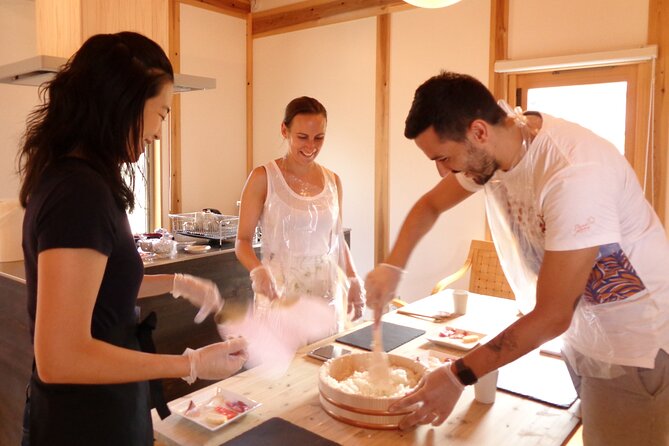
Maki gives you a different kind of challenge. Instead of shaping rice by hand, you spread ingredients and rice, then use a bamboo mat to create a firm roll. It is visual, practical, and usually a little messy at first.
You learn to make a roll of maki, then cut it into pieces to eat at the end. The process teaches you how much filling to use, how to position the ingredients, and how to apply pressure with the mat. These are simple principles, but the instructor’s help can save you from the common problem of overfilling the roll.
The class may provide a sushi mat and chopsticks as a keepsake. That improves the value for anyone who wants to continue at home. One person who already made sushi regularly still found the session enjoyable because the teaching style and social atmosphere added something beyond basic instruction.
I would think of the take-home items as a bonus, not the main reason to book. The core value is the guided practice and the meal. Supplies may vary by session or current offering, so confirm what is included if the gift bag matters to you.
Eating the sushi you made
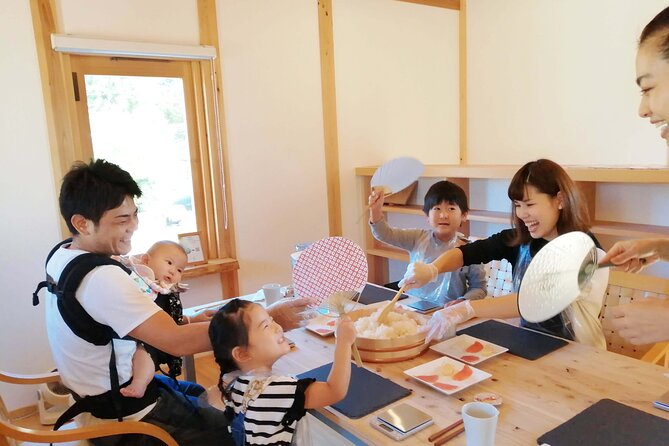
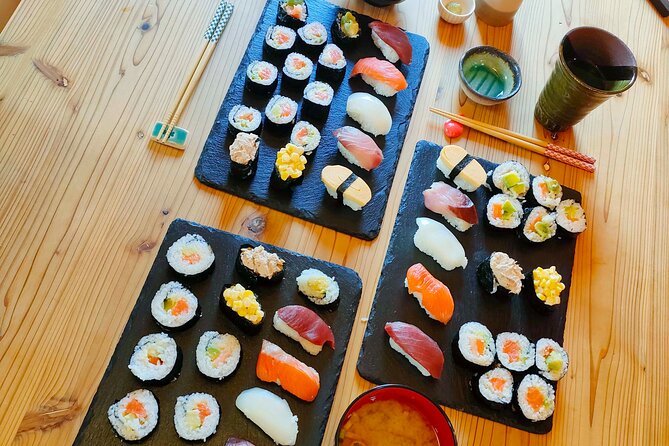
At the end, you eat the sushi prepared during the workshop. This is served as lunch or dinner depending on the time of your booking. The amount sounds substantial, so arrive hungry rather than planning a large meal immediately before class.
The meal changes the feel of the activity. You are not cooking for practice and then leaving. You get to sit with the result, notice the difference between nigiri and maki, and enjoy the effect of fresh ingredients and properly seasoned rice.
Coffee, tea, or Japanese tea is included. That small touch fits the slower pace of the townhouse setting and gives you time to talk with the hosts and other people in the group.
The class can also work for a family with an older child. A 12-year-old sushi fan was specifically described as enjoying the experience, and the hands-on format gives children something concrete to do. The activity is still a food lesson, so families should consider each child’s comfort with raw fish and the use of gloves and kitchen tools.
Kana, cultural conversation, and local advice
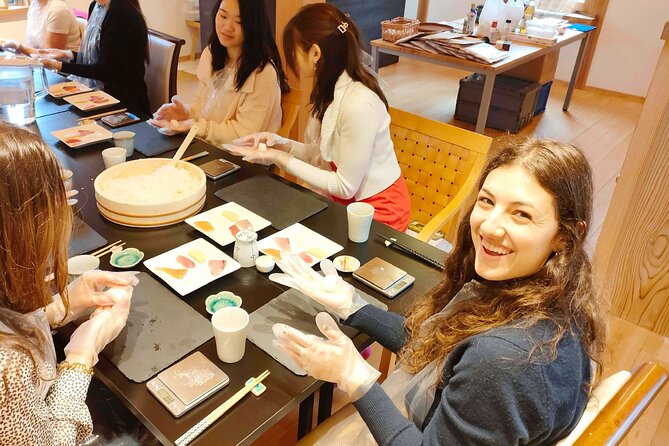
Kana is the central personality of the class. The material consistently presents her as patient, kind, funny, and clear in English. She explains the sushi process while also talking about her own life and Japanese culture.
That personal element is valuable in Kyoto, where many food experiences can feel highly staged. Here, the conversation may cover Japanese customs, food traditions, the neighborhood, and practical suggestions for the rest of your stay. The hosts have also offered travel tips, which can be useful early in a Kyoto visit.
I like the idea of booking this class near the start of your trip. You get a meal, a cultural introduction, and a chance to ask local people for ideas while your plans are still flexible. If your schedule is already full, the class is still worthwhile, but you lose some of that orientation benefit.
The tone is family-run and welcoming. Kana’s husband sometimes assists, and the two work together to keep the class moving while still giving people personal attention. Do not expect the formality of a high-end sushi counter. Expect a friendly lesson with plenty of conversation.
Dietary limits and what to clarify
The stated offering does not include vegetarian or vegan options. If you follow either diet, this is not the right booking unless the provider confirms a suitable alternative directly.
Food allergies deserve more careful handling. Some people with shellfish or gluten concerns received accommodations, but that should not be treated as a blanket guarantee. Contact Atelier SUSHI before booking and explain the allergy clearly. Ask what ingredients will be used and what substitutions are possible.
The class includes fish, and the description emphasizes premium fresh seafood. If you do not eat raw fish, you may find the ingredients more appealing than expected, but there is no promise of a fully cooked menu. Ask before paying if that is important to you.
Aprons and gloves are provided. These make the session more comfortable and hygienic, especially when working with rice and seafood. You do not need to bring cooking equipment based on the stated inclusions.
Is $69.64 a fair price?
At $69.64 per person, this is not the cheapest way to eat sushi in Kyoto. You can find a meal for less, and a short class will not teach every part of the craft. The price makes more sense when you count the instruction, the food, the tea or coffee, the townhouse setting, and the small group.
For me, the strongest value comes from the chance to practice both nigiri and maki with an English-speaking instructor. A large class could offer the same ingredients, but not the same level of correction. If you want an activity rather than just lunch, the cost is reasonable.
The take-home notes, recipes, chopsticks, sushi mat, or gift bag add value when provided. They give you a way to repeat the experience at home, though you will still need to buy suitable fish and ingredients yourself.
The class also fills a useful gap in a Kyoto itinerary. Temples and shrines show you the city’s public face. A small food workshop lets you spend time with local hosts in a more personal setting. That combination makes the price easier to justify for a first visit.
Who should book this Kyoto sushi class?
I would recommend it most strongly to:
- Couples who want a shared activity that produces a meal
- Families with children who enjoy sushi and hands-on cooking
- Solo visitors who like meeting people in a small group
- First-time sushi makers who want clear instruction
- Home cooks who want better rice, nigiri, and maki technique
- Visitors staying near Higashiyama, Kiyomizu-dera, or Gion
I would be more cautious if you are vegetarian, vegan, unwilling to eat fish, or looking for an advanced professional course. The class teaches foundations. It is not a chef apprenticeship, a fish-cutting seminar, or an elaborate multi-course dinner.
You should also leave room in your schedule. The class is listed at about 90 minutes, but food activities are best enjoyed without rushing to the next temple or reservation.
Booking, cancellation, and practical details
A mobile ticket is available, and confirmation is provided when you book. The maximum group size is eight people. The activity begins and ends at Atelier SUSHI, and public transportation is nearby.
Free cancellation is available up to 24 hours before the local start time for a full refund. Changes or cancellations made less than 24 hours in advance are not accepted for a refund, so check your Kyoto schedule before committing.
The class is priced per person. Since the meal is included, you do not need to budget for a separate lunch or dinner immediately afterward. Bring an appetite, and contact the provider ahead of time about allergies or any special concern that could affect the menu.
FAQ
How long does the sushi-making class last?
The class lasts approximately 1 hour and 30 minutes.
How much does the experience cost?
The listed price is $69.64 per person.
Where does the class begin?
The class begins at Atelier SUSHI, 311-1 Kitatōryōchō, Higashiyama Ward, Kyoto, 605-0918, Japan.
Where does the activity end?
The activity ends back at the meeting point, Atelier SUSHI.
How many people can join the class?
The class has a maximum of eight participants.
Is the class taught in English?
Yes. The workshop is conducted in English, with guidance from a Japanese instructor.
What sushi will I learn to make?
You learn to season sushi rice and make both nigiri and maki.
Is a meal included?
Yes. You eat the sushi you prepare, served as lunch or dinner depending on the workshop time. Coffee or tea, including Japanese tea, is also included.
Are vegetarian or vegan options available?
No. Vegetarian or vegan options are not included in the stated offering.
Can I cancel for a full refund?
Yes, if you cancel at least 24 hours before the experience start time. Cancellations or changes made less than 24 hours in advance are not eligible for a refund.
Should you book Atelier SUSHI?
Book this class if you want to do more than eat sushi in Kyoto. The small group, English instruction, fresh ingredients, traditional townhouse, and meal at the end create a well-rounded experience in a short window.
I would put it high on the list for couples, families, and first-time sushi makers. Book it early in your Kyoto stay if you would like local tips and a pleasant way to get oriented. Skip it if you need vegetarian or vegan food, or if you want advanced sushi training. For everyone else, $69.64 buys a useful skill, a filling meal, and a personal slice of Kyoto culinary culture.
Recently added around Kyoto
- Higashiyama | Kyoto: Sakura Season Private Rickshaw Tour★ 5.0 · 3 reviews
- Kyoto Kimono Rental CHAMATSU|Kimono/Yukata Rental FamilyPlan★ 5.0 · 3 reviews
- Kyoto: Half-Day Private Guided Tour to the Old Town of Gion★ 4.4 · 3 reviews
- Nara Private Customizable Half Day Tour★ 5.0 · 3 reviews
- Nara: Essential Private Tour with Deer Park and Temples★ 5.0 · 3 reviews
- Kansai Region Hiking Adventure in Nara Kobe Kyoto and More★ 5.0 · 3 reviews
- Full Day Nara Deer, Temple, Shrine, Activities & Tea Ceremony★ 5.0 · 3 reviews
- Hiking Tour for Sacred Sites in Kyoto with a Guide★ 5.0 · 3 reviews
Kyoto Sushi Experiences, compared.
Sushi – Authentic Japanese Cooking Class – the best souvenir from Kyoto!
Read our review →
Private Kyoto Sushi Cooking Class & Tea Ceremony with Emika
Read our review →
Enjoy Sushi & Market Tour! Best for Family & Couple!
Read our review →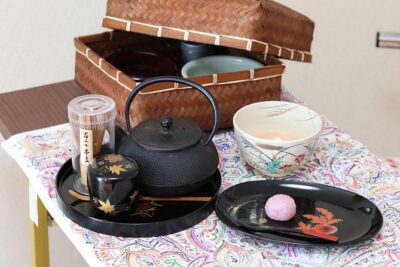
Sushi or Traditional Japanese Cuisine in a Kyoto Home with Emika
Read our review →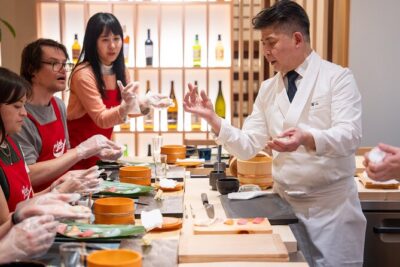
Kyoto Sushi Making Experience with a Professional Sushi Chef
Read our review →Browse the lists this tour appears in