
REVIEW · COOKING CLASSES
Kyoto: White Miso Cooking Class & Fermented Food Course Lunch
Kyoto’s white miso is more than a seasoning here. You’ll handle the process yourself, learn how this pale, sweet paste fits into Japanese food culture, and then use it in a creamy potage soup. Miyuki Toko, the miso expert leading the class, explains the method and the place fermentation holds in everyday Japanese cooking.
I like two things right away: the small maximum group of six, which gives the workshop a personal feel, and the useful progression from making miso to cooking with it. The fermented-food lunch also turns the lesson into a proper meal, not just a quick demonstration. The main drawback is practical: you cannot take the finished miso home because of customs rules, and the nonrefundable booking policy calls for firm plans.
In This Review
- Key points to know before booking
- Why white miso makes a good Kyoto food class
- Arriving at 9:20 a.m. in central Kyoto
- Learning the story behind Japanese fermentation
- Making white miso from scratch
- Turning miso into tofu potage
- Sitting down to a fermented-food lunch
- What the small group changes
- Is $120 a fair price?
- Who will enjoy this Kyoto workshop most
- Booking details worth keeping in mind
- FAQ
- Where does the white miso class meet?
- What time does the activity start?
- How long does the experience last?
- Where does the experience end?
- How many people can join the class?
- Can I take the miso I make home?
- What happens if the minimum number of participants is not reached?
- Should you book this white miso class?
Key points to know before booking
- Make white miso by hand: You take part in the process rather than only watching a demonstration.
- Learn from Miyuki Toko: She explains the history, method, and place of miso in Japanese diets.
- Cook tofu miso potage: You use white miso in a warm, creamy soup and taste the result.
- Eat a fermented-food lunch: The class ends with a meal built around Japanese fermentation.
- Plan around the early start: Meet at 9:20 a.m. at Wajo Dibi in central Kyoto.
- Expect a very small class: The activity accepts no more than six people and needs at least two to operate.
Why white miso makes a good Kyoto food class
White miso, known as shiro miso, has a gentle flavor that makes it easier to understand than a strongly salty or earthy miso. Instead of treating it as an abstract ingredient, this class lets you work with it from the start and then taste it in a dish.
That hands-on approach matters. You can learn a great deal about Japanese food by eating it, but making a staple ingredient gives you a better sense of the work behind the bowl. The class connects ingredients, technique, history, and daily use in one sitting.
Miso is made through fermentation, a process that appears throughout Japanese cooking. This course places that process at the center. You learn why miso has remained important for centuries and how fermented foods can fit into a modern diet.
I would especially recommend this activity if you have already visited Kyoto’s temples and markets and want a quieter food experience. It does not try to cover all of Japanese cuisine. Instead, it focuses closely on one ingredient and gives you time to understand it.
More miso and tofu making:
- Making Fresh To-fu from soybeans in Kyoto
★ 5.0 · 8 reviews - Kyoto|10 miso & soup tastings, miso balls & light meal
★ 4.7 · 6 reviews - Strengthen the immunity!! Making miso in Japanese old house.
★ 5.0 · 4 reviews
Arriving at 9:20 a.m. in central Kyoto
The meeting point is Wajo Dibi, at the Kyoto Food and Lifestyle Research Institute, 416 Higashitakeyacho, Nakagyo Ward, Kyoto 604-0085. The class starts at 9:20 a.m., so you will want to arrive with enough time to find the entrance and settle in.
The address includes a Japanese name and a specific building location, listed as the rear of the first floor. That detail is worth saving on your phone before leaving your hotel. A mobile ticket is provided, and the activity returns to the same meeting point at the end.
The early start shapes the day in a useful way. You finish after roughly three hours and 40 minutes, leaving the rest of the day open for Kyoto sightseeing. The tradeoff is that a slow morning is not part of the plan. If you prefer late breakfasts, this will require an earlier start than many cooking classes.
The class is capped at six people. That limit should help you follow the instructions and get involved during the preparation instead of standing at the edge of a large room. A minimum of two participants is required, though, so the experience can be canceled if that number is not reached.
Learning the story behind Japanese fermentation
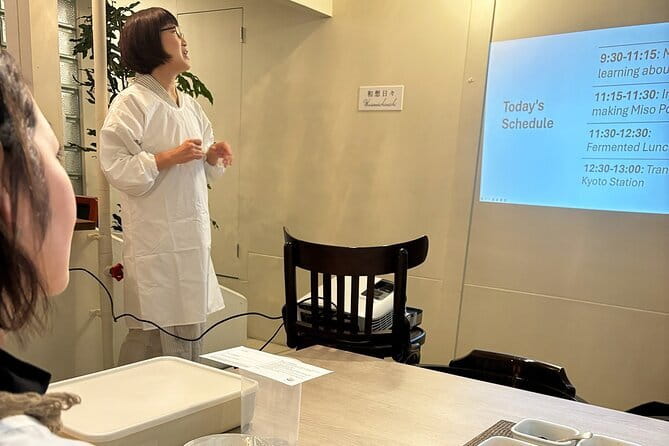
The first part of the class sets the food in context. Miyuki explains how miso developed, why it became a lasting part of Japanese cooking, and what fermentation does for flavor and food traditions.
This is not simply a lesson in following a recipe. You learn why white miso is different in character from other types and how its mild, sweet profile can be used in cooking. The historical explanation gives purpose to the practical work that follows.
I like this balance because it keeps the class from becoming either a lecture or a rushed activity. You get the background first, then put that information to work with your own hands. The format suits anyone who wants more than a photograph of a finished dish.
The class also connects fermentation with present-day eating habits. Miyuki discusses the role of fermented foods in the modern Japanese diet and in diets more generally. That makes the subject feel useful beyond this one morning in Kyoto.
Expect a clear focus on food and technique. This is not a broad cultural tour, and there is no sightseeing route attached to it. If you want a class that concentrates on one traditional ingredient, that focus is a strength.
Making white miso from scratch
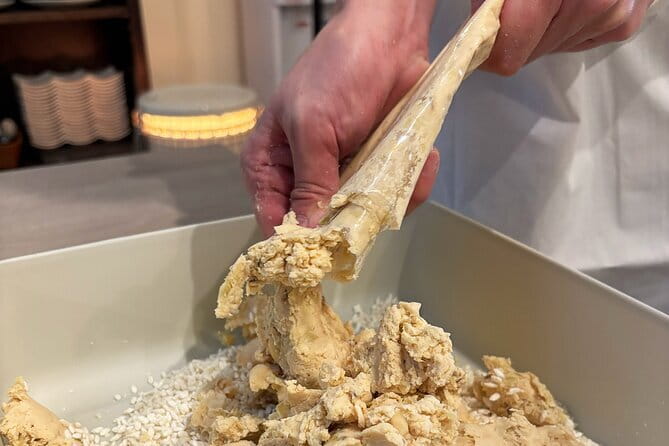
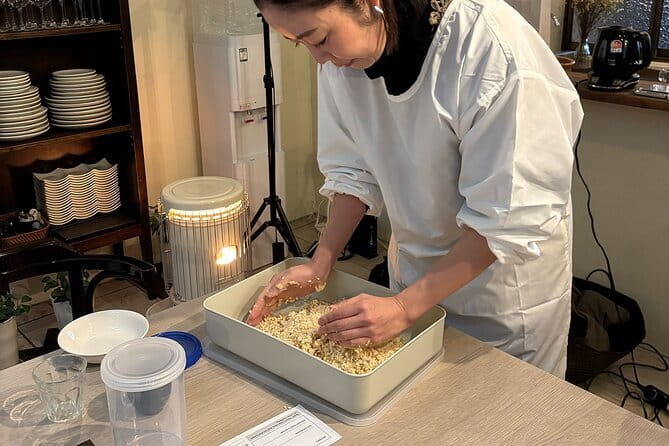
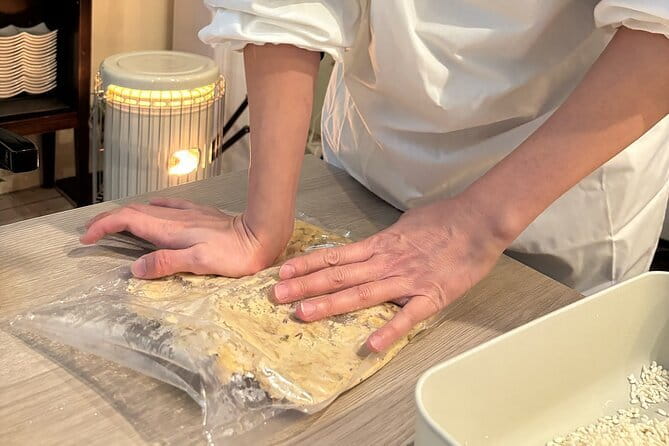
The central activity is the white miso workshop. You take part in making the paste under Miyuki’s guidance and learn the steps that turn basic ingredients into a familiar Japanese seasoning.
The work is more physical than you might expect. The preparation involves effort, so this is not a passive craft class where you simply stir once and watch someone else finish. The activity gives you a direct feel for the labor behind homemade miso.
That physical element is part of the appeal. You leave with a stronger sense of how much care goes into a food that often arrives in a small tub at the supermarket. You also gain a process you can try to repeat at home, even though the finished class-made miso cannot be taken through customs.
The class is designed to build confidence. The instructions are guided rather than left for you to work out alone, and the small group means Miyuki can keep the process moving while helping participants understand what they are doing.
One point needs careful attention: the supplied tour information says you will not be able to take miso home because of customs regulations. Some informal descriptions of the activity refer to leaving with your own miso, but you should rely on the current restriction when deciding to book. Consider the finished product part of the class and tasting experience, not a souvenir.
More cooking classes in Kyoto:
- Kyoto: Ramen Cooking Class at a Ramen Factory with Souvenir
★ 4.9 · 532 reviews - Kyoto: Ramen, Gyoza, and Onigiri Cooking Class
★ 5.0 · 445 reviews - Kyoto: Japanese Washoku Bento Small Group Cooking Class
★ 5.0 · 380 reviews - Kyoto Ramen and Gyoza Cooking Class with Professional Chefs
★ 5.0 · 282 reviews
Turning miso into tofu potage
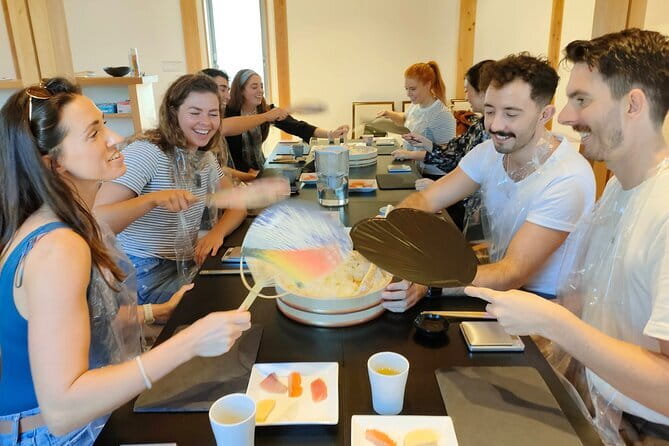
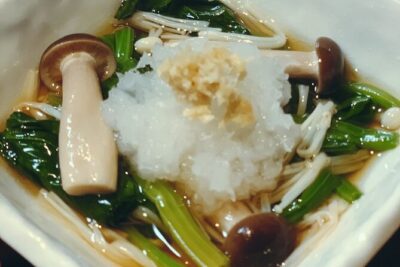
After making the paste, you cook and taste a white miso potage. The dish is described as a tofu miso potage, giving you a warm example of how this delicate seasoning works in a meal.
This step is important because it moves the class from production to everyday use. You are not just learning how white miso is made. You are also seeing how to add it to a dish in a way that highlights its soft flavor.
A potage is a useful choice for teaching. It lets you taste the miso in a smooth, comforting preparation rather than sampling a spoonful on its own. You can compare the ingredient’s direct flavor with the way it behaves when combined into a complete soup.
The cooking portion also gives the class a satisfying rhythm. First you hear about fermentation, then you make the miso, then you cook with it. The meal that follows feels connected to the work rather than added as an unrelated lunch.
The available information does not provide a detailed ingredient list or promise a particular set of cooking equipment. If you need precise dietary details, ask the provider before booking. What is clear is that white miso potage is prepared and tasted during the session.
Sitting down to a fermented-food lunch
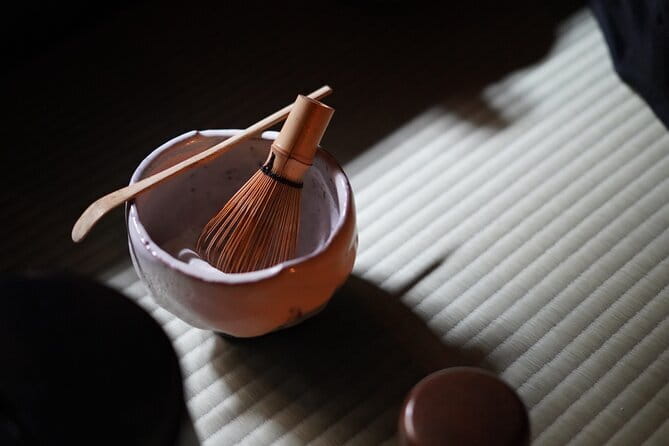
The final food experience is a fermented-food lunch. This gives you more time to explore the subject through eating and rounds out the morning with a proper meal.
The lunch is designed around foods that support the class theme. Rather than stopping after one small soup sample, you get a broader look at how fermentation appears in Japanese food. That makes the meal useful for anyone who wants to connect the workshop with real eating habits.
I would see lunch as part of the value, not just a convenient extra. A three-hour-40-minute class needs a satisfying finish, and the meal helps the experience feel complete. It also gives you a chance to pause and think about the techniques you have just practiced.
At the same time, the description does not specify every dish served at lunch. You should not book expecting a published menu unless the provider confirms one. The key promise is a fermented-food lunch, with tofu miso potage included in the cooking and tasting portion.
If you are particularly interested in gut health, the lunch adds another layer to the class. The course presents fermentation as both a culinary tradition and a way to think about daily food choices. It does not turn into a medical seminar, but it does encourage a closer look at what you eat.
What the small group changes
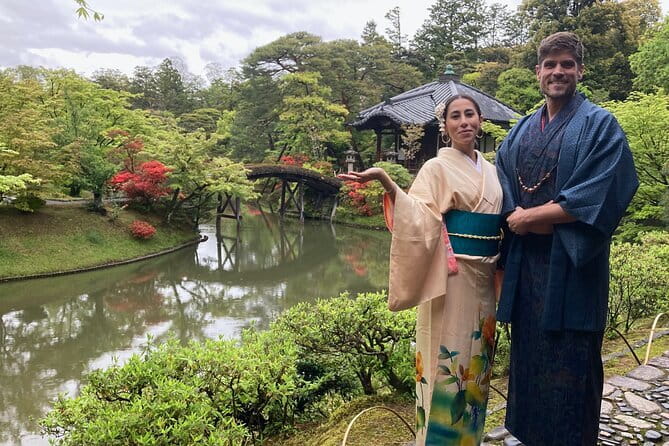
With a maximum of six participants, this is built for direct instruction. You should have a better chance to see the process, ask questions, and take an active role than you would in a large commercial cooking class.
The small size also suits the subject. Miso making involves texture, timing, and physical handling, so close guidance is useful. The class feels more like a workshop than a performance staged at the front of a room.
Miyuki’s teaching style is described as gentle and clear. That matters if you are new to fermentation or unsure about handling an unfamiliar ingredient. The class aims to make the method approachable, not to assume you already know Japanese cooking.
There is a possible downside to the small-group format. Because the activity needs at least two participants, a solo booking depends on another person joining. The operator says a cancellation caused by low numbers will be communicated four days before departure, with a full refund offered.
Is $120 a fair price?
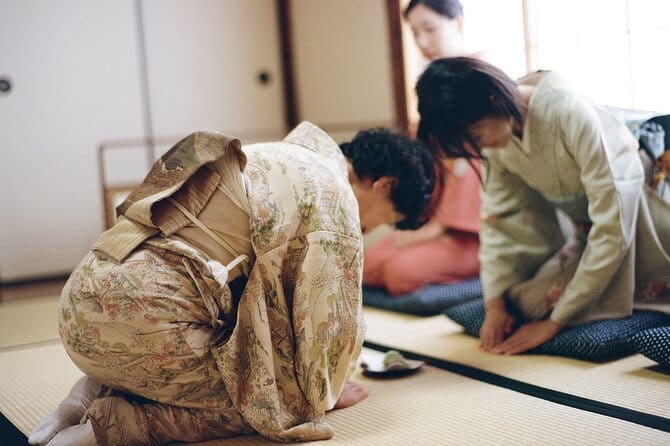
At $120 per person, this is not a cheap lunch or a quick cooking demonstration. The price makes more sense when you count the full package: about three hours and 40 minutes, expert instruction, a hands-on white miso workshop, tofu miso potage, and a fermented-food lunch.
You are paying for access to a focused lesson and a small group, not simply for ingredients. The cultural explanation adds value for anyone who wants to understand why miso matters in Japan instead of learning a recipe without context.
I think the price works best for food-focused visitors who will make use of the knowledge afterward. If you plan to cook at home, study fermentation, or seek out Japanese food traditions beyond restaurant meals, the class offers more lasting value than a standard lunch.
The value is weaker if your main goal is to bring home a culinary souvenir. Customs rules prevent you from taking the miso you make, so the reward is the experience and the knowledge rather than a jar in your luggage.
It is also worth comparing the cost with the small group size. Six people is the maximum, and a smaller class can make practical instruction more useful. For someone who prefers personal guidance to a large demonstration, that is a meaningful part of the price.
Who will enjoy this Kyoto workshop most
This class is a strong choice for several kinds of visitors:
- You enjoy cooking and want to make a traditional Japanese ingredient from scratch.
- You are curious about fermentation and want a practical introduction.
- You want a food experience with cultural context, not just a meal.
- You have already seen Kyoto’s major sights and want a different kind of morning.
- You appreciate small groups and direct contact with an instructor.
- You are happy to taste and learn without taking the finished miso home.
It may be less suitable if you need a late start, want a broad tour of Kyoto cuisine, or are looking for a souvenir product to carry home. The activity stays tightly focused on white miso and fermented food.
You should also check any food restrictions before confirming. The provided details do not list allergy, dietary, or ingredient substitutions, so the provider is the right place to ask specific questions.
Booking details worth keeping in mind
Confirmation arrives within 48 hours, subject to availability. The tour requires at least two participants and accepts no more than six.
The experience is listed as nonrefundable and unchangeable if you cancel or request an amendment. That makes travel planning important. Do not book this class until you are confident you can reach the 9:20 a.m. meeting point on the chosen date.
If the operator cancels because the minimum number is not met, you will be offered another date or experience, or a full refund. That protection does not apply to a cancellation you make yourself.
The activity ends back at the starting point. Since the class lasts roughly three hours and 40 minutes, you can plan another Kyoto activity afterward, though you should leave yourself enough time for the next location.
FAQ
Where does the white miso class meet?
The meeting point is Wajo Dibi at the Kyoto Food and Lifestyle Research Institute, 416 Higashitakeyacho, Nakagyo Ward, Kyoto 604-0085. The listed location is at the rear of the first floor.
What time does the activity start?
The class starts at 9:20 a.m.
How long does the experience last?
The activity lasts approximately three hours and 40 minutes.
Where does the experience end?
The class ends back at the meeting point.
How many people can join the class?
The maximum group size is six people.
Can I take the miso I make home?
No. The tour information says you cannot take the miso home because of customs regulations.
What happens if the minimum number of participants is not reached?
The experience requires at least two participants. If that minimum is not reached, the operator may cancel the activity four days before departure and offer a full refund or another date or experience.
Should you book this white miso class?
Book it if you want a small, practical food lesson with a clear Kyoto connection. The combination of Miyuki Toko’s instruction, hands-on miso making, tofu miso potage, and a fermented-food lunch gives you a fuller experience than a simple cooking demonstration.
I would choose it for a food-minded morning, especially if fermentation interests you or you want to understand an everyday Japanese ingredient at close range. Just plan carefully around the early start, the firm cancellation terms, and the fact that your homemade miso cannot come home with you.
If those limits do not bother you, the class offers something worthwhile: you leave Kyoto with a better understanding of how one humble paste links history, cooking, and daily life.
More Food Tours in Kyoto
- Kyoto Night Foodie Tour in Gion (9+ dishes + 6 Sake tastings)
★ 5.0 · 1,762 reviews - 3-Hour Kyoto Insider Sake Brewery Tour with Tastings & Pairings
★ 5.0 · 917 reviews - Arashiyama Bamboo, Temple, Monkeys, or Secret Sake Brewery
★ 4.8 · 886 reviews - Kyoto: Insider Sake Brewery Tour with Sake and Food Pairing
★ 5.0 · 704 reviews
More Lunch Experiences in Kyoto
- Bike Tour Exploring North Kyoto plus Lunch
★ 5.0 · 1,087 reviews - Kyoto Zen Meditation & Garden Tour at a Zen Temple with Lunch
★ 5.0 · 441 reviews - 4.5-Hour Kyoto Bike Tour with Lunch and UNESCO Zen Temples
★ 5.0 · 122 reviews - From Kyoto: Nara History Guided Half Day Bus Tour with Lunch
★ 4.8 · 114 reviews
Recently added around Kyoto
- Higashiyama | Kyoto: Sakura Season Private Rickshaw Tour★ 5.0 · 3 reviews
- Kyoto Kimono Rental CHAMATSU|Kimono/Yukata Rental FamilyPlan★ 5.0 · 3 reviews
- Kyoto: Half-Day Private Guided Tour to the Old Town of Gion★ 4.4 · 3 reviews
- Nara Private Customizable Half Day Tour★ 5.0 · 3 reviews
- Kansai Region Hiking Adventure in Nara Kobe Kyoto and More★ 5.0 · 3 reviews
- Full Day Nara Deer, Temple, Shrine, Activities & Tea Ceremony★ 5.0 · 3 reviews
- Nara: Essential Private Tour with Deer Park and Temples★ 5.0 · 3 reviews
- Hiking Tour for Sacred Sites in Kyoto with a Guide★ 5.0 · 3 reviews
Cooking Classes, compared.
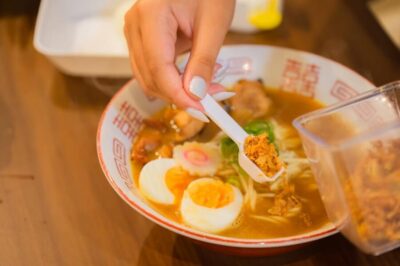
Ramen Cooking Class at a Ramen Factory with Souvenir
Read our review →
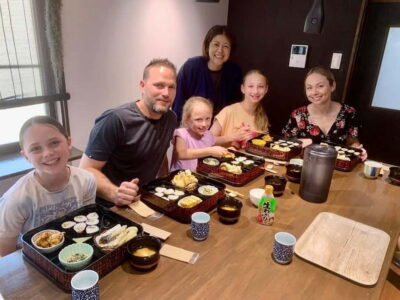
Japanese Washoku Bento Small Group Cooking Class
Read our review →
Kyoto Ramen and Gyoza Cooking Class with Professional Chefs
Read our review →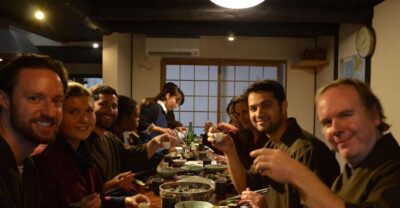
Gyoza Cooking Class in Kyoto: Traditional Japanese Dumplings
Read our review →
Browse the lists this tour appears in