
REVIEW · CYCLING TOURS
Bike Tour Exploring North Kyoto plus Lunch
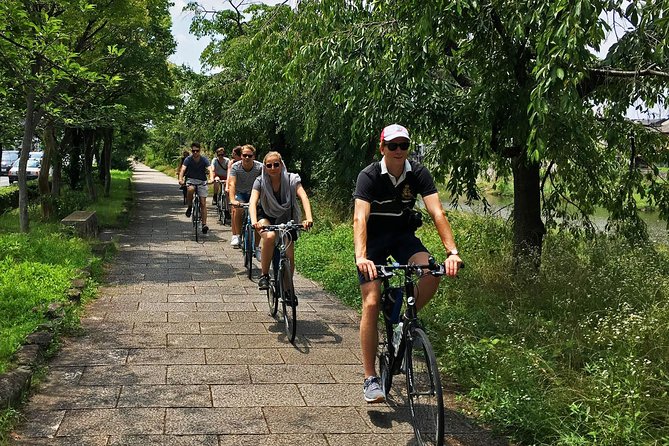
Kyoto makes more sense from a bicycle seat. This half-day ride links famous sights with quiet lanes, back streets, and small corners that are easy to miss from a bus. You cover roughly 13 miles, or about 24 kilometers, at an easy to moderate pace, with frequent stops for temples, shrines, photos, and stories.
I like the small maximum group of eight, which gives your guide room to adjust the pace and answer questions. I also like that the price includes a fitted Cannondale bike, bottled water, temple admission, and lunch, so the $106.12 cost covers far more than simple bike hire.
The main consideration is effort. This is not a lazy sightseeing ride, and six hours in Kyoto’s heat can feel long. You must be at least 13, comfortable on a bike, and in moderate physical shape. Rain can also force a change of date.
In This Review
- Key points to know before booking
- Why Kyoto works so well by bicycle
- Starting at Cycle Kyoto at 10 a.m.
- Nishi Honganji and Kyoto’s wooden scale
- Kitano Tenmangu, a shrine with local life
- Kinkakuji and the Golden Pavilion
- Imperial Palace grounds and open city riding
- Lunch at a traditional Japanese restaurant
- A short look at Gion
- The guides make the difference
- Price, timing, and what the $106.12 covers
- Who should book this ride
- Should you book the North Kyoto bike tour?
- FAQ
- Where does the bike tour begin?
- What time does the tour start?
- Where does the tour finish?
- How long does the tour last?
- How far do you cycle?
- Is lunch included?
- Is temple admission included?
- What equipment is provided?
- How old must riders be?
- Can dietary requirements be accommodated?
- What happens if it rains?
- Can I cancel for a refund?
Key points to know before booking
- About 13 miles of cycling: The ride takes roughly 2.5 hours of actual cycling, spread across a six-hour day.
- A strong first-day introduction: The route covers major religious sites, the Golden Pavilion, Imperial Palace grounds, and Gion.
- Lunch is included: Expect a Japanese meal, with past routes using a traditional noodle restaurant or sushi venue.
- Guides bring the route to life: Mayco, Julian, Indra, Karl, Quinn, Jay, and Jamie are among the guides praised for history, humor, safety, and local insight.
- Mostly comfortable riding: The pace is usually easy to moderate, though there is a slight climb toward Kinkakuji and hot weather can make the day harder.
- Good value for an active tour: Equipment, guidance, water, lunch, and temple admission are included in the $106.12 price.
Why Kyoto works so well by bicycle
Kyoto’s major sights are spread across the city. Buses can be crowded, traffic can slow them down, and walking between every temple and shrine takes time. A bicycle gives you a useful middle ground: you cover more ground than on foot while still moving slowly enough to notice old walls, narrow lanes, shopfronts, and ordinary neighborhood life.
The route is especially useful for a first full day in Kyoto. You get an overview of several districts and a clear sense of what deserves a longer visit later. The guide can also point out places to return to, helping you plan the rest of your stay.
The cycling is not nonstop. You ride between stops, then park and spend time listening, looking around, and taking photographs. One detailed account put the riding at about 24 kilometers, with the cycling spread across roughly six hours. That is a reasonable pace for someone who rides now and then, though you should not book this expecting a short spin around town.
The route is generally gentle, with one noted incline on the way to the Golden Pavilion. After that, the ride is easier. Guides have adjusted speed and route for the group, and frequent breaks help in hot weather. Still, Kyoto summers are hot, so take the physical requirement seriously.
More bike days around Kyoto:
- Hidden Kyoto E-Biking tour
★ 5.0 · 1,843 reviews - Arashiyama Bamboo Forest & Hidden Gems Bike Tour (Early Bird)
★ 5.0 · 613 reviews - 5 Top Highlights of Kyoto Full Day Bike Tour (E-bike option)
★ 5.0 · 511 reviews
Starting at Cycle Kyoto at 10 a.m.
You begin at Cycle Kyoto, at 7 Higashikujō Nishisannōchō in Minami Ward. The tour starts at 10 a.m. and ends back at the same meeting point, which makes the return simple and avoids the need to arrange a second pickup.
The opening 15 minutes are used for introductions, bike fitting, and basic preparation. Your bike is a high-quality Cannondale, and the equipment is included. Past participants also appreciated optional helmets, height-based bike selection, and extra seat padding.
The group size is capped at eight. That matters on city streets, where a large line of bikes can be hard to manage. A small group also lets the guide learn names, check on riders, and make small adjustments when someone is tired or less confident.
You need to be at least 13 and comfortable riding a bike. The tour is not presented as a lesson for beginners who cannot ride. If you have not cycled for years, you may still manage the route if you are comfortable getting back on a bike, but six hours is a long outing. Wear practical clothes and shoes, and tell the operator about dietary needs before the day.
Nishi Honganji and Kyoto’s wooden scale
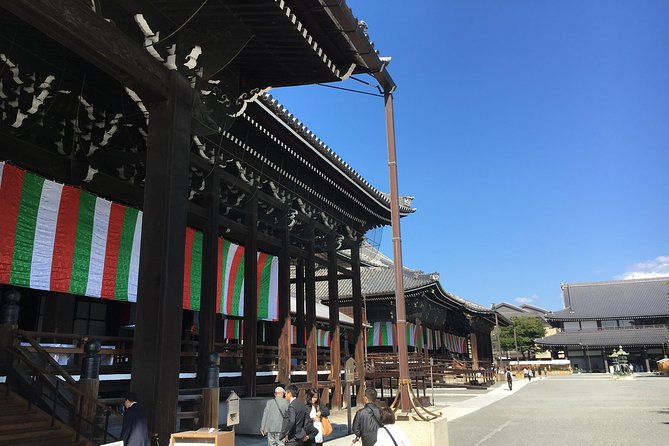
The first major stop is Nishi Honganji, one of Kyoto’s less visited religious sites. It is also one of the largest wooden buildings in the world, making it an impressive early stop without the crowds associated with Kinkakuji.
You get about 15 minutes here. That is enough to enter, look closely at the huge timber structure, and hear the guide explain its place in Kyoto’s religious life. The shorter visit works well at this point, since the tour still has a lot of ground to cover.
One particularly useful detail is the visible repair work on parts of the historic complex. It gives you a chance to think about how old buildings survive, rather than treating them as untouched museum pieces. The stop is quieter than the Golden Pavilion, so it helps you ease into Kyoto’s temple culture before reaching the busiest sights.
Kitano Tenmangu, a shrine with local life
Next comes Kitano Tenmangu Shrine, with about 20 minutes to explore. This is a chance to see a working shrine rather than only a famous photo stop. You may find local worshippers going about their own visits, which gives the place a more everyday feel.
The guide explains the shrine’s past and the customs connected with it. This is one of the places where a guide adds real value, since Shinto spaces can look beautiful while their symbols and rituals remain unclear to first-time visitors.
The stop also breaks up the ride nicely. You are not expected to spend hours inside every complex. Instead, you get a focused explanation, time to look around, and a clear idea of what you might want to revisit on foot.
More Kyoto tours that include lunch:
- Kyoto Zen Meditation & Garden Tour at a Zen Temple with Lunch
★ 5.0 · 441 reviews - 4.5-Hour Kyoto Bike Tour with Lunch and UNESCO Zen Temples
★ 5.0 · 122 reviews - From Kyoto: Nara History Guided Half Day Bus Tour with Lunch
★ 4.8 · 114 reviews - Kyoto: Zen Meditation and Garden Tour at a Temple with Lunch
★ 4.9 · 86 reviews
Kinkakuji and the Golden Pavilion
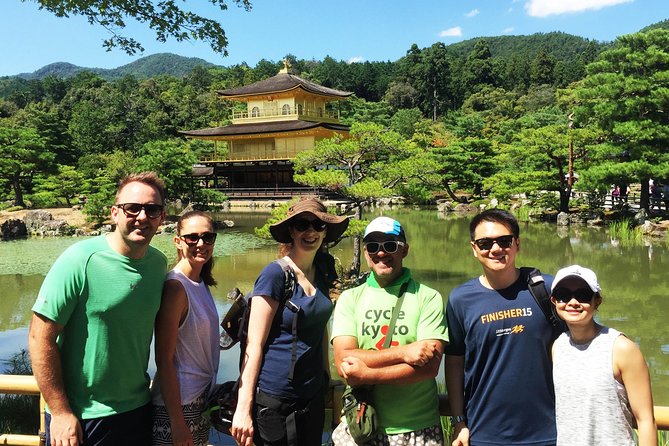
Kinkakuji is the visual centerpiece of the ride. The Golden Pavilion is one of Japan’s most famous sights, and the 30-minute visit includes admission and commentary from your guide.
The pavilion itself is highly polished and photographed from every angle, but the guide’s explanation helps put it in context. You will have time to enjoy the view, take photographs, and pause for an ice cream before getting back on the bike.
This is also the route’s main physical test. There is a slight incline approaching Kinkakuji. It is not described as a major climb, but you will feel it more on a warm day or if you are not used to riding. Once you leave the area, much of the route is easier.
Kinkakuji can be crowded. A bicycle tour does not make the attraction quiet, and your 30-minute stop is shorter than a slow independent visit. That is the tradeoff: you see a major sight efficiently, then continue across the city instead of spending half a day in one place.
Imperial Palace grounds and open city riding
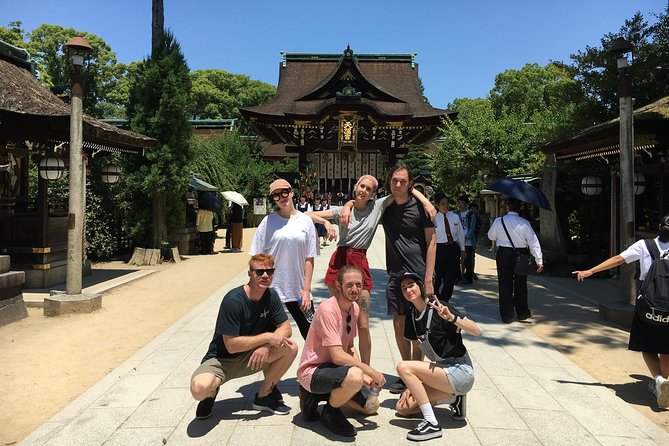
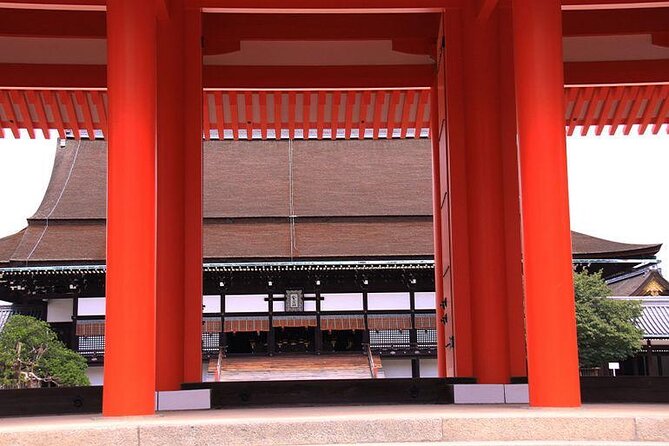
The route also passes through the grounds of the former seat of Japan’s imperial family. The supplied timing does not give a separate stop length, so think of this as part of the ride rather than a long formal visit.
This section adds useful historical scale. Kyoto is not only a collection of temples and tourist streets. Its civic and imperial past shaped the city’s layout, ceremonies, and identity. A guide can connect that past with the other religious sites you have already seen.
It is also one of the stretches where the bicycle itself feels most useful. You move through the city at street level, with time to notice the change from major attractions to quieter roads. Guides have been praised for choosing safe routes and adding small stops along the way when the group had time.
Lunch at a traditional Japanese restaurant
Lunch is included, and it is more than a quick snack between sights. Depending on the day and the restaurant, the meal may be at a noodle house with a long history or a sushi restaurant, including a conveyor-belt sushi venue.
One account described lunch at a 400-year-old noodle restaurant. Another had sushi when the planned noodle house was closed. That flexibility is worth noting: the exact restaurant and menu can change, so do not book this expecting one guaranteed dish or venue.
The meal gives you a proper break after the morning riding. It is also a useful chance to try Japanese food without having to choose a restaurant while tired and hungry. Vegetarian arrangements have been made when requested ahead of time, but dietary requirements need to be provided in advance.
Extra drinks are not included. Bottled water is supplied, and guides have made a point of keeping groups hydrated on hot days. Still, bring or buy additional drinks if you know you drink a lot in warm weather.
A short look at Gion
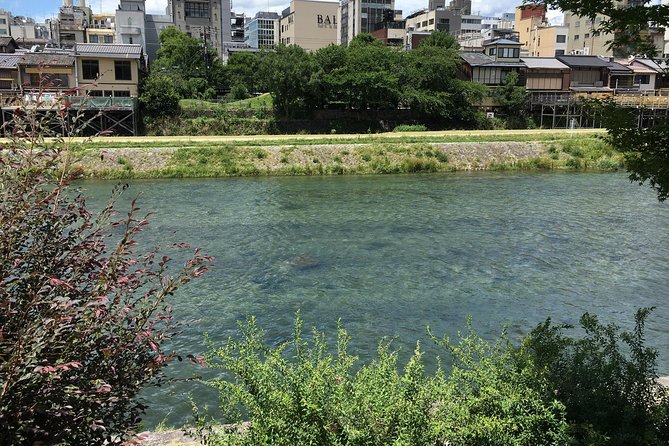
The final sightseeing stop is Gion, Kyoto’s famous geisha district. The visit is brief, about 10 minutes, so it is best treated as an introduction rather than a full district walk.
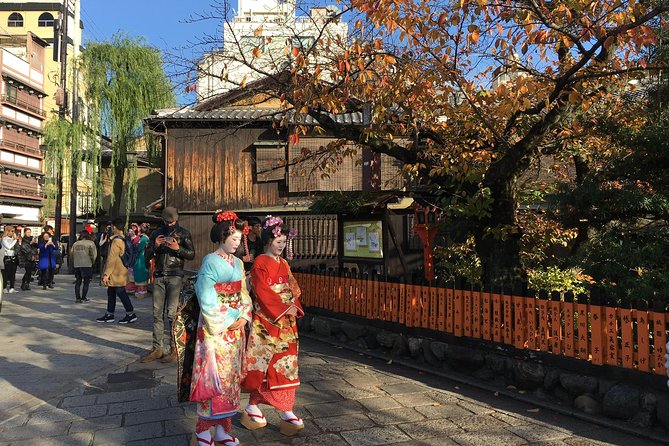
Your guide explains the area and the world of geisha, helping you understand the difference between the public streets and the private entertainment houses behind them. You might catch a glimpse of an entertainer, but that is never something to count on, and the respectful approach is to observe quietly without blocking lanes or taking intrusive photographs.
Gion works well near the end of the day because it changes the mood. After temples and shrines, you see a neighborhood tied to Kyoto’s traditional arts and evening culture. If the area interests you, the tour gives you enough orientation to return later on foot.
The guides make the difference
This experience depends heavily on the guide. The roster changes, but named guides have included Mayco, Julian, Indra, Karl, Quinn, Jay, and Jamie.
The strongest guide style here combines historical explanation with practical care. Mayco has been praised for connecting religious traditions with modern Japanese culture. Julian has been noted for an easygoing manner and strong local knowledge. Indra has explained the differences between Buddhism and Shinto and the origins of geisha culture.
Karl is known for detailed answers and a lively personality. Quinn has made an effort to learn everyone’s name, adjust the pace, and keep people comfortable in hot weather. Jay has been especially good with families, making the history accessible to younger riders. Jamie has been described as funny, friendly, and enthusiastic about the places along the route.
You should expect the guide to shape the day’s feel. The common thread is not a fixed script, but a mix of safe riding, stories, questions, and local suggestions for the rest of your Kyoto stay.
Price, timing, and what the $106.12 covers
At $106.12 per person, this is not the cheapest way to see Kyoto. It is much better value than paying only for a bike rental, though, because the fee includes the bike, guidance, bottled water, lunch, and the Kinkakuji admission.
You are also paying for route planning and time. Finding a safe 24-kilometer route that links Nishi Honganji, Kitano Tenmangu, Kinkakuji, the Imperial Palace grounds, and Gion would take research. The guide removes that work and adds context at each stop.
The tour lasts about five to six hours and ends where it begins. That makes it a substantial part of your day, not a quick morning activity. I would schedule it early in your Kyoto visit, since it gives you a useful map of the city and helps you decide where to spend more time afterward.
The booking is mobile-ticket based, confirmation is provided at booking, and the meeting point is near public transportation. Free cancellation is available up to 24 hours before the 10 a.m. start. Changes or cancellations inside that window are not accepted for a refund, and bad weather or failure to meet the minimum group size can lead to a new date or a full refund.
Who should book this ride
I would choose this tour if you want to see several major Kyoto sights in one day without spending the whole time on buses. It suits active visitors, first-time visitors, couples, solo riders, and families with children aged 13 or older who are comfortable cycling.
It is also a good match if you enjoy asking questions. The religious sites make more sense when someone explains how Buddhism and Shinto differ, and the guide can add cultural context that a self-guided ride may lack.
I would think twice if you dislike cycling in city traffic, tire easily, or want long, unhurried visits inside each temple. The stops are well chosen, but they are short. Hot weather can also turn a pleasant ride into a demanding one, even with breaks and water.
Should you book the North Kyoto bike tour?
Book it if you want a lively introduction to Kyoto, a small group, and a way to connect famous sights with ordinary streets. The combination of included lunch, quality bikes, temple admission, and a strong guide makes the price reasonable for a full day of activity.
Skip it if your priority is slow temple viewing or if you are not comfortable riding for several hours. For most reasonably fit visitors who want to cover ground and understand what they are seeing, this is one of the more useful ways to get oriented in Kyoto.
FAQ
Where does the bike tour begin?
It begins at Cycle Kyoto, 7 Higashikujō Nishisannōchō, Minami Ward, Kyoto, 601-8003, Japan.
What time does the tour start?
The scheduled start time is 10 a.m.
Where does the tour finish?
The activity ends back at the starting meeting point.
How long does the tour last?
The tour lasts approximately five to six hours.
How far do you cycle?
The cycling distance is about 13 miles, or approximately 24 kilometers, according to the detailed activity information.
Is lunch included?
Yes. Lunch is included, although the restaurant and meal can vary. Past arrangements have included noodle restaurants and sushi venues.
Is temple admission included?
Yes. The admission fee for Kinkakuji, the Golden Pavilion, is included.
What equipment is provided?
A high-quality Cannondale bike, cycling equipment, guidance, and bottled water are included. Helmets have been available as an option.
How old must riders be?
Riders must be at least 13 years old and comfortable riding a bike.
Can dietary requirements be accommodated?
Dietary requirements must be provided ahead of time so arrangements can be considered.
What happens if it rains?
The experience requires good weather. If poor weather causes cancellation, you are offered another date or a full refund.
Can I cancel for a refund?
You can cancel up to 24 hours before the experience start time for a full refund. Cancellations or changes made less than 24 hours before the start are not accepted for a refund.
Recently added around Kyoto
- Higashiyama | Kyoto: Sakura Season Private Rickshaw Tour★ 5.0 · 3 reviews
- Kyoto Kimono Rental CHAMATSU|Kimono/Yukata Rental FamilyPlan★ 5.0 · 3 reviews
- Kyoto: Half-Day Private Guided Tour to the Old Town of Gion★ 4.4 · 3 reviews
- Nara Private Customizable Half Day Tour★ 5.0 · 3 reviews
- Kansai Region Hiking Adventure in Nara Kobe Kyoto and More★ 5.0 · 3 reviews
- Full Day Nara Deer, Temple, Shrine, Activities & Tea Ceremony★ 5.0 · 3 reviews
- Nara: Essential Private Tour with Deer Park and Temples★ 5.0 · 3 reviews
- Hiking Tour for Sacred Sites in Kyoto with a Guide★ 5.0 · 3 reviews
Cycling Tours, compared.
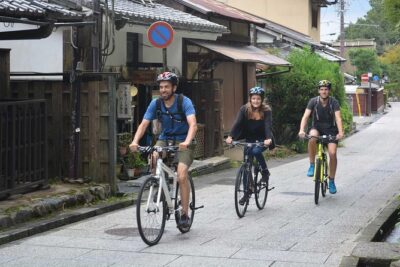
Arashiyama Bamboo Forest & Hidden Gems Bike Tour (Early Bird)
Read our review →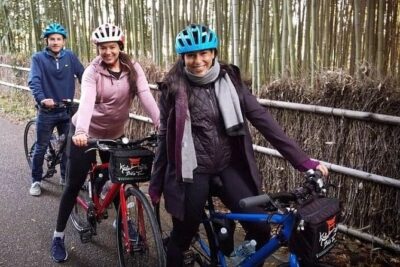
5 Top Highlights of Kyoto Full Day Bike Tour (E-bike option)
Read our review →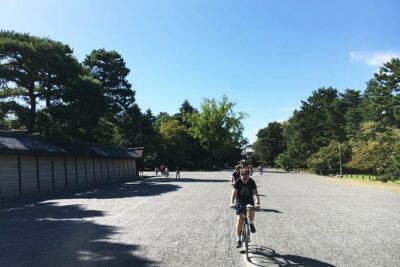
Full Day Biking Tour Exploring the Best of Kyoto
Read our review →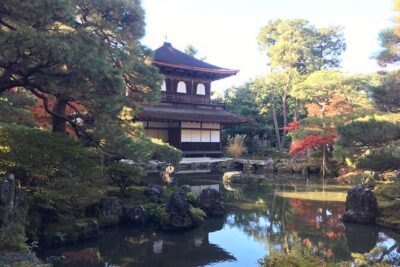
Afternoon Kyoto Bike Tour: Bamboo Forest, Monkeys & Hidden Spots
Read our review →
South Kyoto in a Nutshell: Gentle Backstreet Bike Tour!
Read our review →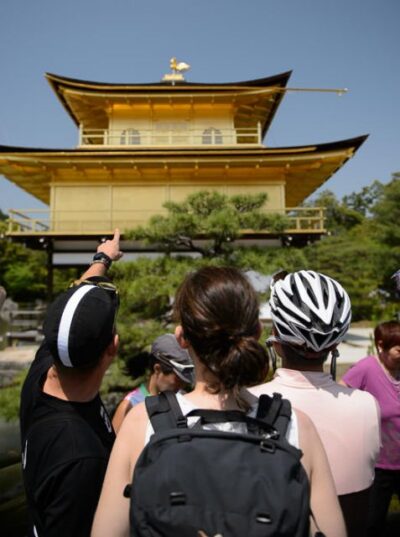
Browse the lists this tour appears in