
REVIEW · KYOTO
Making Fresh To-fu from soybeans in Kyoto
Fresh tofu is the star here, not a side dish. You turn soybeans into tofu, taste it before seasoning, and learn why Japanese tofu is often soft, delicate, and good enough to eat on its own. The hands-on process gives you a better feel for Japanese cooking than a standard food tasting.
I like the small group size, limited to six, and the convenient central Kyoto location. I also like that you taste the soymilk and oboro-dofu made along the way, then eat four dishes prepared from the tofu you produce. The main drawback is the setting: the class takes place in a tiny apartment, which some people may find cramped rather than polished.
In This Review
- Key points to know
- Why making tofu changes the way you taste it
- A 90-minute class near Shijo and Karasuma
- Learning the difference between soybeans
- Turning soybeans into tofu by hand
- Soymilk and oboro-dofu along the way
- Four tofu dishes, then the plain tasting
- The apartment setting and teaching style
- Is $56 a fair price?
- Who should book this Kyoto tofu workshop?
- Booking details that matter
- FAQ
- Where does the tofu-making class take place?
- How long does the experience last?
- How much does the class cost?
- Is the class taught in English?
- How many people can join?
- Can the class accommodate dietary restrictions?
- Can I cancel or pay later?
- Should you book it?
Key points to know
- Fresh tofu is the main event: Taste your own tofu without seasoning before trying it in four different dishes.
- You see the whole process: Learn about soybean differences, tofu production, and how tofu is eaten in Japan.
- The byproducts are part of the tasting: Soymilk and soft oboro-dofu are included, not discarded.
- Small and personal: Only six people can join, with instruction in English or Japanese.
- Easy Kyoto access: The meeting point is within a 10-minute walk of Shijo Station or Karasuma Station.
- Dietary needs are welcomed: The class is gluten-free, vegan, Halal-friendly, and can prepare for allergies when told in advance.
Why making tofu changes the way you taste it
Tofu can seem plain when you meet it in a supermarket tub. In Japan, it has a much broader role. It may be served chilled, added to miso soup, or presented with only a little seasoning. Its texture matters as much as its flavor.
This workshop starts with that basic idea. You do not simply receive a neat plate of tofu. You work with soybeans and follow the process closely enough to understand why fresh, hand-made tofu can taste thicker and more substantial than machine-made tofu.
That difference is the reason to book this class. If you already enjoy Japanese food, the workshop adds useful context to dishes you may have eaten many times. If tofu has always seemed bland, this is a fair test of the ingredient in its freshest form.
The class is also a good match for anyone curious about the small steps behind everyday food. You learn which soybeans differ, how tofu is made from them, and how people in Japan eat it. The lesson is practical rather than academic, with tasting built into the work.
More miso and tofu making:
- Kyoto|10 miso & soup tastings, miso balls & light meal
★ 4.7 · 6 reviews - Kyoto: White Miso Cooking Class & Fermented Food Course Lunch
★ 5.0 · 5 reviews - Strengthen the immunity!! Making miso in Japanese old house.
★ 5.0 · 4 reviews
A 90-minute class near Shijo and Karasuma
The location is one of the easiest parts of the experience. You can reach it within about 10 minutes on foot from Shijo Station or Karasuma Station, placing the workshop in a useful part of central Kyoto. That makes it simple to fit between shopping, temple visits, or a meal elsewhere.
The meeting instructions are specific but easy to miss if you are rushing. Take the elevator to the third floor, then press the doorbell for room 302. This is not a large cooking school with a prominent street entrance. It is held in an apartment, so allow a few extra minutes to find the building and get upstairs.
The apartment setting gives the class a home-based feel. One participant described the small apartment as part of the appeal because it offered a look inside a Japanese home. Still, space is limited. If you prefer a bright, spacious culinary studio with several workstations, this may feel more intimate than expected.
Once inside, you meet the instructor and receive an introduction to the session. English and Japanese are available. Marie is named as an instructor for at least some classes, and her role includes answering questions and guiding participants through the process. The teaching style is designed to make the work approachable, even if you have never prepared tofu.
Learning the difference between soybeans
The class begins with an explanation of soybeans and the way they affect tofu. That detail is important because tofu is not one uniform food. Texture, firmness, and taste can change with the beans and the method used.
You learn to connect the ingredient with the finished food rather than treating tofu as a fixed product. This is a useful lesson for anyone interested in Japanese cuisine because it shows why two blocks of tofu can behave and taste differently.
The instruction also covers how tofu is eaten in Japan. Overseas, tofu is often used in stir-fries or stews, where it absorbs sauces and adds protein. Japanese cooking also uses it in simpler forms, including chilled tofu and miso soup. In those settings, the tofu itself has nowhere to hide.
That is why the first tasting matters. You get to judge the freshly made tofu without extra seasoning. The purpose is not to make the flavor louder. It is to notice the texture and taste created by the beans and the hand-made process.
Turning soybeans into tofu by hand
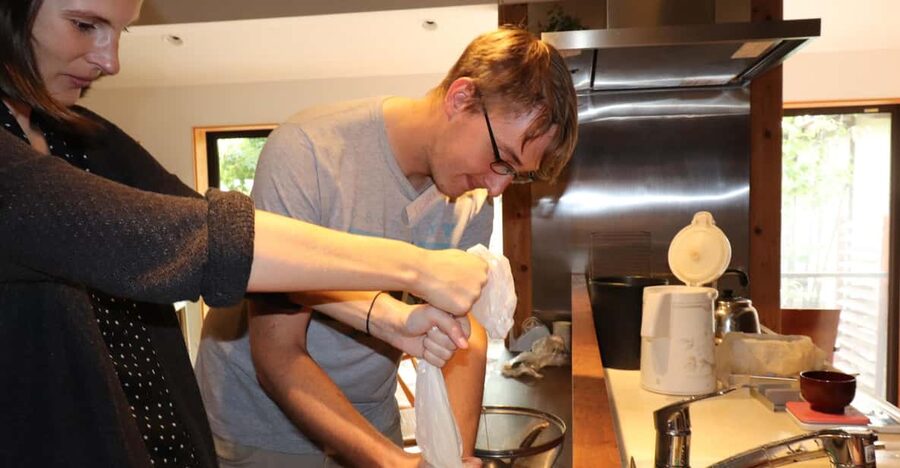
The practical portion is the heart of the class. You make tofu from soybeans with guidance from the instructor, rather than watching a demonstration from the side. The process gives you a clear sense of how much work sits behind a food that usually arrives in a sealed package.
The exact hand movements are taught during the session, so you do not need prior cooking skill. The available information does not promise a professional cooking setup or a long series of technical exercises. Think of this as a focused introduction to tofu making, not a full Japanese culinary course.
That focus works well within 90 minutes. You have enough time to learn the main stages, taste what is produced during the work, and sit down to try the finished tofu in several forms. The pace should suit a short Kyoto itinerary, especially if you want an activity that does not take half a day.
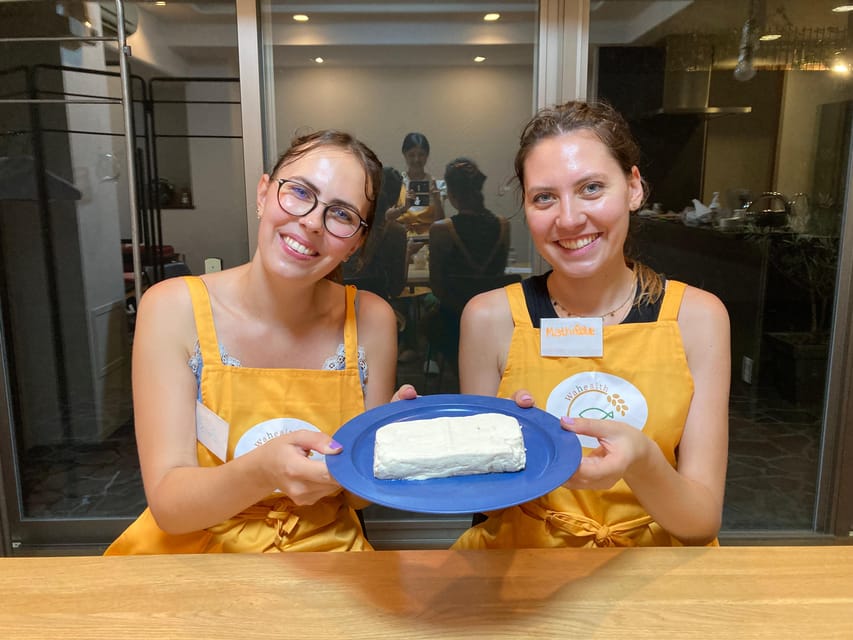
The small group limit of six is a real advantage here. A class this size gives you a better chance to follow the instructor, ask questions, and take part directly. It also means the apartment does not need to accommodate a large crowd. The tradeoff is that spaces and equipment may feel close together.
A completely different side of Kyoto:
- PERFECT KYOTO 1-Day Bus Tour
★ 5.0 · 13,518 reviews - Kyoto: Fushimi Inari, Kinkakuji, Bamboo Grove 1 Day Bus Tour
★ 4.8 · 4,316 reviews - Kyoto: Tea Ceremony in a Traditional Tea House in Kiyomizu
★ 4.9 · 3,519 reviews - Kyoto Geisha Walking Tour: Gion District & Hidden Gems
★ 4.7 · 3,273 reviews
Soymilk and oboro-dofu along the way
Do not think of the finished tofu as the only reward. The process also produces soymilk and oboro-dofu, both of which you taste during the class.
Oboro-dofu is soft and loosely formed, with a texture that differs from a firm block. Trying it beside the finished tofu helps you understand how tofu changes as the process continues. Soymilk gives you another reference point, showing the soybean in a drinkable form before it becomes tofu.
These tastes make the lesson more useful. You are not waiting until the final minute to discover the result. You sample stages of the process and see how one ingredient can become several different foods.
The tasting is also generous in purpose, even if it is not intended as a full meal. You receive four tofu dishes made with the tofu you produce, along with the soymilk and oboro-dofu. The activity description treats these as tasting portions, so you should not book it as a replacement for lunch or dinner.
Four tofu dishes, then the plain tasting
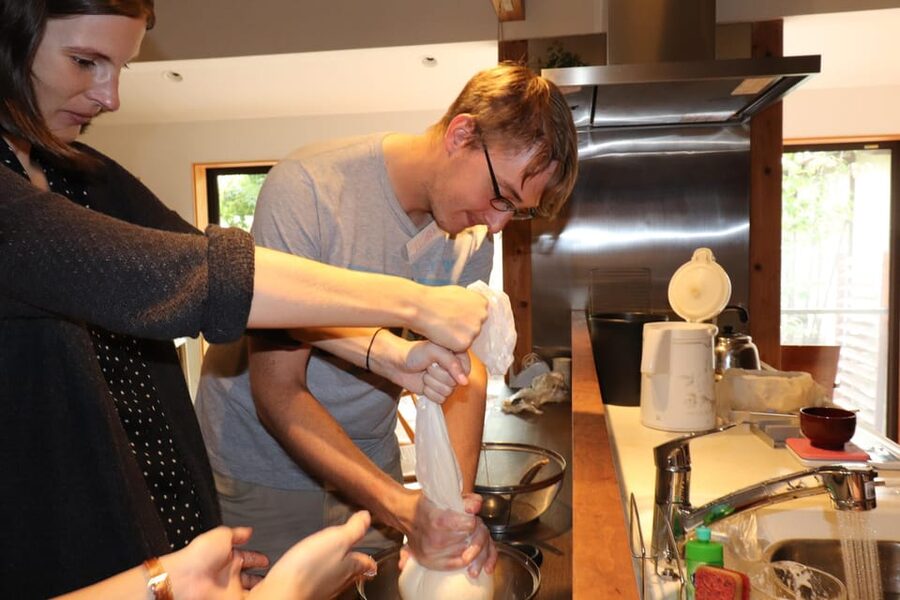
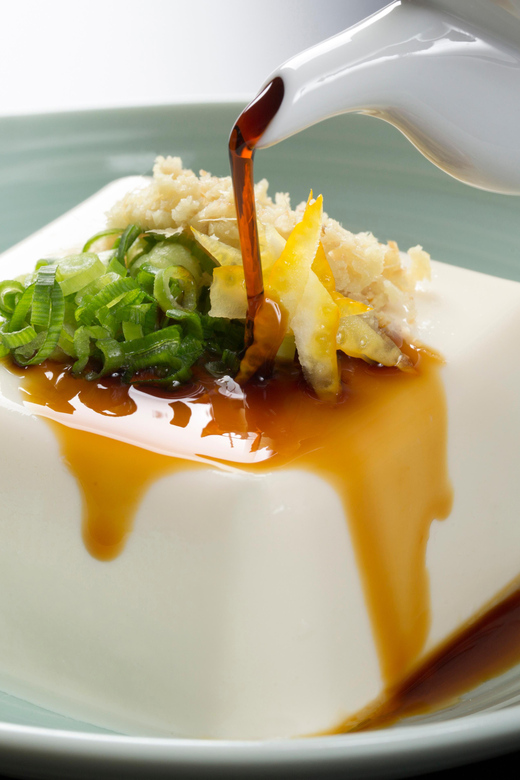
After the tofu is made, you enjoy four different tofu dishes prepared with it. The supplied details do not name each dish, so you should not expect a fixed menu description when booking. What is clear is that the dishes let you compare the tofu in more than one serving style.
This is where the class moves from food production to Japanese eating habits. One piece of tofu may be appreciated plain, while another preparation shows how it works with seasoning or in a composed dish. The contrast helps you understand why Japanese cooks care about softness, freshness, and mouthfeel.
I like the order of the experience: learn, make, taste plain, then try several dishes. It gives the unseasoned tofu a fair chance before other ingredients influence your judgment. If you are used to strong sauces, that first bite may feel subtle. Give it a moment. The point is to notice what is already there.
The tasting portions are enough to make the workshop satisfying, but the class does not include other meals or drinks. Plan a proper meal before or after, especially if you are hungry after sightseeing.
The apartment setting and teaching style
The room is small, and that fact deserves an honest mention. This is a home-style workshop rather than a glossy cooking attraction. You may find the compact apartment more personal and more connected to ordinary Kyoto life, but you will not have the space of a restaurant kitchen.
The setting can also make the class feel less formal. You are close to the instructor and the other participants, and the group size keeps the session social without making it crowded with strangers. For many people, that suits a lesson about an everyday Japanese food.
Marie is specifically praised for making the process easy to follow and for answering questions about soybeans. The available feedback also points to a friendly, smiling instructor and a class that works well for people who want to ask questions rather than simply follow printed directions.
English instruction is available, but you should still tell the provider about dietary needs in advance. Japanese is also offered. The class can prepare for gluten-free, vegan, Halal-friendly, and allergy-related requirements when informed beforehand.
Is $56 a fair price?
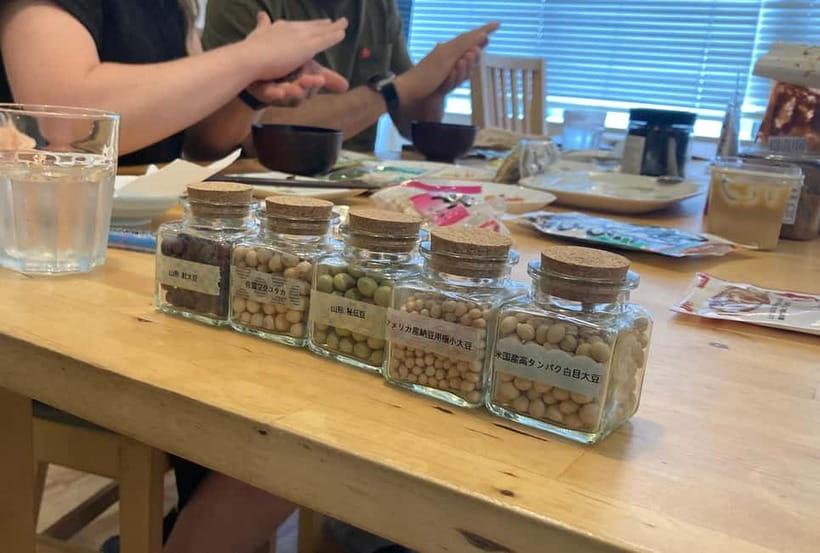
At $56 per person, this is not the cheapest way to eat tofu in Kyoto. You can buy tofu or order a tofu dish for much less. The price makes sense only if you value the lesson and the hands-on work as much as the food.
For that cost, you receive a 90-minute guided class, soybean instruction, practical tofu making, soymilk, oboro-dofu, and four tofu dishes made from your tofu. You are paying for access to the process, not simply for a tasting plate.
The small group matters to the value. With no more than six participants, the instructor can give the activity a personal feel. A larger class might reduce the price, but it would also make it harder to ask questions or take an active role.
I would recommend the class to people who enjoy food workshops, Japanese cooking, and small local activities. I would be less likely to recommend it to someone seeking a full meal, a large professional kitchen, or a broad tour of Kyoto cuisine.
Who should book this Kyoto tofu workshop?
This class fits neatly into a busy Kyoto schedule. Its 90-minute length is short enough to pair with nearby sightseeing, and the central location avoids a long trip across the city. The small group also makes it a good choice for solo visitors, couples, or families who want a quieter activity.
It is especially suitable if you are vegan or have a dietary restriction, since the ingredients can be adjusted when you provide details in advance. Gluten-free, vegan, Halal-friendly, and allergy-friendly arrangements are available according to the stated information.
Food lovers will get the most from the session, but you do not need to be a serious cook. The instructor guides you through the work, and the lesson is meant to improve your understanding of Japanese food at a basic, practical level.
You may want to skip it if tofu does not interest you at all. The activity stays focused on soybeans and tofu for the full 90 minutes. That focus is its strength, but it also means there is no sightseeing, broad menu, or general cooking tour to balance it.
Booking details that matter
The class costs $56 per person and lasts 90 minutes. Starting times vary, so check availability for your chosen date.
You can cancel up to 24 hours before the activity for a full refund. A reserve-now, pay-later option is also available, which helps if your Kyoto plans are still changing.
Transportation to and from the location is not included. You make your own way to the apartment near Shijo and Karasuma Stations. Remember the arrival instructions: use the elevator to the third floor and press the bell for 302.
The experience is run by the Japan Association of Washoku Lifestylists. The class is limited to six participants, with English and Japanese instruction.
FAQ
Where does the tofu-making class take place?
The class takes place in Kyoto, within about a 10-minute walk of Shijo Station or Karasuma Station. At the meeting point, take the elevator to the third floor and press the doorbell for room 302.
How long does the experience last?
The tofu-making workshop lasts 90 minutes. Starting times depend on availability for the date you select.
How much does the class cost?
The price is $56 per person.
Is the class taught in English?
Yes. Instruction is available in English and Japanese.
How many people can join?
The class is limited to six participants, making it a small-group activity.
Can the class accommodate dietary restrictions?
Yes. The experience is listed as gluten-free, vegan, Halal-friendly, and suitable for allergy-related needs when you tell the provider about your restrictions in advance.
Can I cancel or pay later?
You can cancel up to 24 hours in advance for a full refund. A reserve-now, pay-later option is also available.
Should you book it?
Book this workshop if you want to understand tofu through your own hands, not just eat it in a restaurant. The combination of fresh tofu, soymilk, oboro-dofu, and four finished dishes gives you several ways to taste the same basic ingredient.
The strongest reasons to go are the small group, central location, and personal instruction. The main caution is the tiny apartment setting and the tasting-size food. For a practical, focused addition to a Kyoto itinerary, $56 is fair. For a full meal or a polished cooking school, choose something else.
Recently added around Kyoto
- Higashiyama | Kyoto: Sakura Season Private Rickshaw Tour★ 5.0 · 3 reviews
- Kyoto Kimono Rental CHAMATSU|Kimono/Yukata Rental FamilyPlan★ 5.0 · 3 reviews
- Kyoto: Half-Day Private Guided Tour to the Old Town of Gion★ 4.4 · 3 reviews
- Nara Private Customizable Half Day Tour★ 5.0 · 3 reviews
- Kansai Region Hiking Adventure in Nara Kobe Kyoto and More★ 5.0 · 3 reviews
- Full Day Nara Deer, Temple, Shrine, Activities & Tea Ceremony★ 5.0 · 3 reviews
- Nara: Essential Private Tour with Deer Park and Temples★ 5.0 · 3 reviews
- Photo Shoot with a Private Vacation Photographer in KYOTO, JAPAN★ 5.0 · 3 reviews