
REVIEW · KYOTO SAKE BREWERY TOURS
3-Hour Kyoto Insider Sake Brewery Tour with Tastings & Pairings
Kyoto’s Fushimi district is one of Japan’s best places to learn about sake, and this three-hour tour turns a drink many people find confusing into something you can choose with confidence. You’ll visit the Gekkeikan Okura Sake Museum, then taste around 10 distinct sakes with traditional otsumami snacks.
I like the clear link between brewing and tasting: you learn what happens to rice before you taste the result. I also like the private tasting room, generous samples, and practical label-reading tips from certified sake sommeliers such as Kyoko, Miyuki, Mayo, Mai, and Shogo. The main drawback is simple: you must walk between meeting points, and the tour is not suitable for anyone who wants only a quick drink or two.
In This Review
- Key points at a glance
- Why Fushimi is the right place to learn sake
- Inside the Gekkeikan Okura Sake Museum
- Learning to taste beyond sweet or dry
- Otsumami pairings show why food matters
- Bottle labels and ordering with less guesswork
- Group size, guides, and the pace of the afternoon
- What the $84.89 price really covers
- Timing, transport, and rules you should know
- Who should book this sake tour
- My verdict on the Fushimi sake afternoon
- FAQ
- How long does the sake tour last?
- Where does the tour begin?
- Where does the tour finish?
- How many sakes will I taste?
- Is food included?
- Can vegetarians join the tasting?
- Can people under 20 participate?
- Can I drink sake if I arrive by car or bicycle?
Key points at a glance
- Ten sake styles in one sitting: Taste a broad range of sake selected to reveal different aromas, textures, and levels of sweetness.
- Gekkeikan Okura Sake Museum visit: Learn the brewing process, brewery traditions, and the role of Fushimi sake before tasting.
- Food pairings that change the flavor: Try otsumami with sake to see how salty, savory, and other flavors affect each sip.
- Useful bottle and menu guidance: Learn terms and kanji that can help you order or shop for sake later in Japan.
- Small group format: The tour accepts a maximum of 12 people, leaving room for questions.
- Important drinking rules: You must be 20 or older to receive alcohol, and no alcohol is served if you arrive by car or bicycle.
Why Fushimi is the right place to learn sake
Fushimi is a historic sake-making district in southern Kyoto. The tour begins at 697 Motozaimokuchō, close to the Gekkeikan Okura Sake Museum, then finishes at a separate sake tasting location at 271-1 Kurumamachi.
That layout matters. You are not simply sitting down to sample bottles in a generic bar. The first half gives you a sense of place and explains why this Kyoto district became associated with brewing. The second half lets you use that information at the table.
The museum visit lasts about 90 minutes. The tasting session also lasts about 90 minutes, making this a proper half-day activity rather than a quick stop between temples. Plan to eat lunch or brunch beforehand, since the otsumami are pairings, not a full meal.
You arrange your own transportation to both locations. The meeting points are near public transportation, but you should check the route carefully because the tour starts and ends at different addresses.
More Fushimi sake breweries:
- Arashiyama Bamboo, Temple, Monkeys, or Secret Sake Brewery
★ 4.8 · 886 reviews - Kyoto: Insider Sake Brewery Tour with Sake and Food Pairing
★ 5.0 · 704 reviews - Kyoto Sake Brewery & Tasting Walking Tour
★ 5.0 · 623 reviews
Inside the Gekkeikan Okura Sake Museum
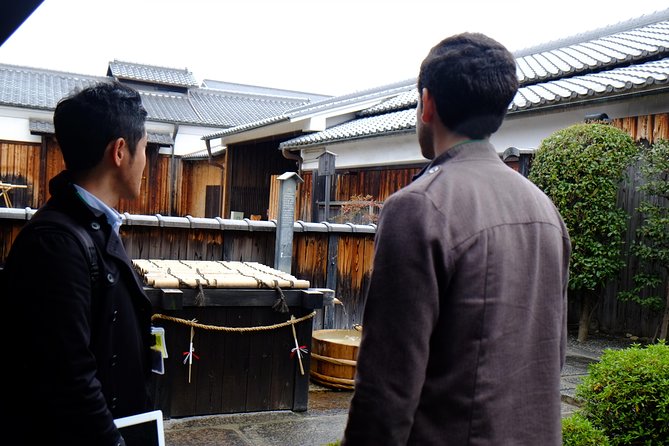
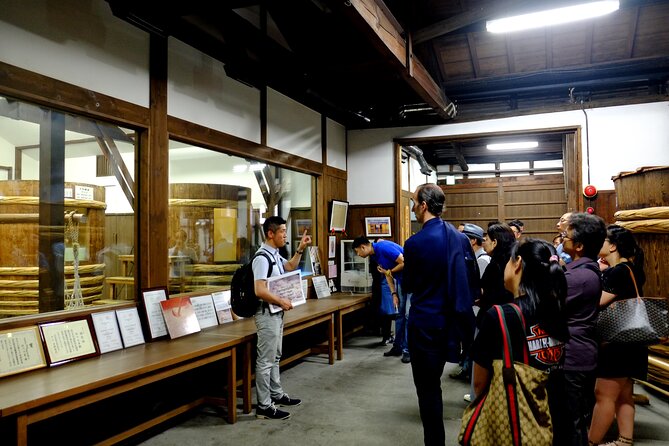
The Gekkeikan Okura Sake Museum provides the tour’s foundation. Here, you learn how sake is made, from rice selection through fermentation and bottling, along with the tools and traditions connected to brewing.
The museum is especially useful for beginners because it gives you a simple framework before the tasting begins. You’ll hear how ingredients and brewing choices affect the final drink, then get a chance to connect those ideas with selected Gekkeikan sakes.
Expect explanations about the importance of rice, brewing methods, aroma, balance, and texture. The guide also places Gekkeikan in the wider story of modern sake culture. That gives the tasting more meaning than simply comparing one bottle with another.
One practical point is worth knowing: this is a museum visit, not a walk through an active production floor. Sake breweries generally keep production areas closed for health and safety reasons. The brewing process is explained through the museum displays and the guide’s presentation instead.
For many people, that is enough. You still learn how the drink is produced, but you should not book this expecting tanks, workers, or a behind-the-scenes factory tour.
Learning to taste beyond sweet or dry
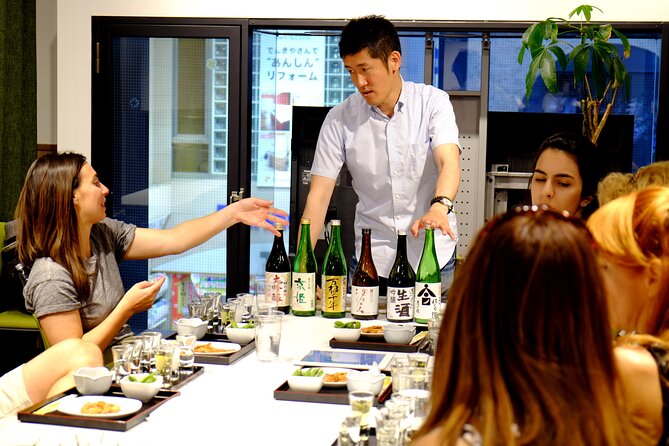
The tasting is built around comparison. Instead of being handed one sake and told whether it is good, you try several styles selected to show how broad the category can be.
That is one of the strongest parts of the experience. Sake is often reduced to sweet versus dry, but those labels do not tell you everything. Aroma, acidity, body, polish, temperature, and the way the sake was made all shape what you taste.
Your sommelier guides you through those differences in plain English. Guides named in the tour’s sessions include Kyoko, Miyuki, Mayo, Mai, Shogo, Shojo, Momo, Greg, Sayaka, Kotaro, and Mae. The exact guide depends on the date, but the format is consistent: explanation first, tasting second, then time for questions.
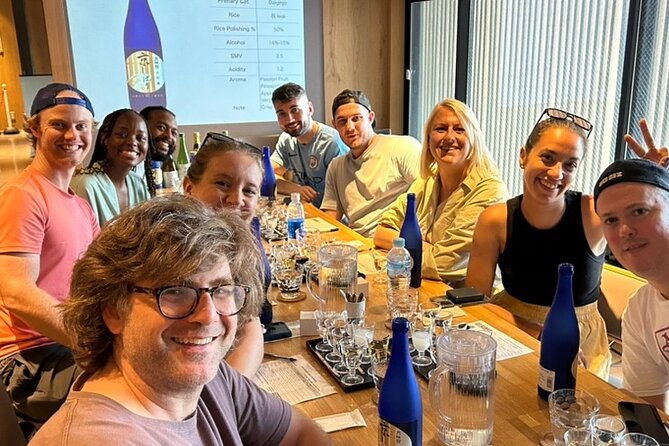
The private tasting room helps here. You can focus on the glass, compare samples, and ask why one sake feels lighter, fuller, sweeter, sharper, or more fragrant than another. The pace is intended to be relaxed, not rushed.
Some sessions include more than 10 samples, with one participant describing a dozen different sakes. The stated selection is 10 carefully chosen sakes, so the exact number may vary slightly. Either way, this is a substantial tasting, and you should not treat it like a small welcome sip before sightseeing.
Otsumami pairings show why food matters
The food pairing adds a useful Japanese touch. Otsumami are small snacks traditionally served with alcohol, and they give you a way to test how sake behaves with food.
A sake that seems sharp or plain on its own may feel rounder with a salty snack. Another may work better with a savory bite. The point is not to identify one perfect pairing, but to notice how food changes your impression of the drink.
This is where the tour becomes useful for restaurant visits. You learn that choosing sake is not only about your personal taste. The dish on the table matters too.
The snacks are not intended to replace lunch. Have a meal before you arrive, then think of the otsumami as part of the lesson. A vegetarian snack option is available, but you should tell your guide on site.
I also like that the tasting does not treat sake as a drink reserved for experts. The teaching focuses on finding your own preferences. You do not need prior knowledge of Japanese alcohol, wine, or beer to take part.
More bars and sake stops in Kyoto:
- Kyoto Night Foodie Tour in Gion (9+ dishes + 6 Sake tastings)
★ 5.0 · 1,762 reviews - Kyoto: Izakaya Bars Guided Walking Tour
★ 4.9 · 815 reviews - Kyoto Bar Hopping Night Tour
★ 5.0 · 613 reviews - Kyoto Local Bar Crawl in Kawaramachi Area
★ 5.0 · 378 reviews
Bottle labels and ordering with less guesswork
The most practical takeaway may be the sake cheat sheet and tasting notes. These materials help you remember what you liked and give you language for making choices later.
The guides also explain how to read sake labels, including useful terms and selected kanji. You will not become a sake professional in three hours, but you should leave better prepared to recognize styles and ask sensible questions.
That is valuable in Kyoto, where menus may list sake by brewery, style, region, or serving method without much explanation in English. Rather than pointing at a random bottle, you can use the clues from the label and your own tasting preferences.
The tasting also gives you a reference point. If you discover that you prefer a fragrant, lighter style, you can look for similar characteristics later. If you like fuller or more savory sake, you can tell the difference between that preference and simply choosing the most familiar brand.
Several guides use slides and props during the explanations. This is helpful because sake terminology can become abstract when it is delivered as a list of Japanese words. The strongest teaching moments connect a brewing decision to something you can smell or taste.
Group size, guides, and the pace of the afternoon
The maximum group size is 12. That is small enough for questions and personal attention, though a full group will feel different from a private lesson.
The guides are a major part of the experience. Kyoko is described in the tour material as especially enthusiastic and engaging, while Miyuki is noted for combining sake expertise with humor and an easy manner. Mayo, Mai, Shogo, Shojo, Momo, Greg, Sayaka, Kotaro, and Mae are also named as guides who lead sessions.
You cannot choose a particular guide when booking, so consider those names examples of the teaching style rather than a promise. The important point is that the tour is led by a certified sake sommelier, not just a staff member pouring drinks.
English ability is a key concern for many international visitors. The sessions described here include clear English explanations, with particular praise for the guides’ ability to explain brewing, categories, tasting notes, and food matches.
The tone is educational without being formal. You can ask questions, compare reactions with the group, and learn at a comfortable pace. If you are the only person booked for a particular tasting, the format may become more personal, with extra time for your own questions.
What the $84.89 price really covers
At $84.89 per person, this is not the cheapest sake tasting in Kyoto. The price makes more sense when you look at the full package: museum admission, a 90-minute guided visit, a separate 90-minute tasting, 10 selected sakes, otsumami, a certified sommelier, a private tasting room, and printed guidance for later.
If you only want to sample a few local drinks, you can spend less at a shop or bar. But that cheaper option will not necessarily explain how sake is produced, why styles differ, or how to read a bottle label.
I see the value here in the learning. You are paying for a framework that can guide many later purchases and restaurant orders. That is particularly useful if you plan to spend several weeks in Japan or already enjoy wine, beer, or food-focused tours.
The generous tasting also matters. You should pace yourself, drink responsibly, and remember that a large number of samples can add up even when each pour is modest. Eating beforehand is sensible, not optional advice.
Timing, transport, and rules you should know
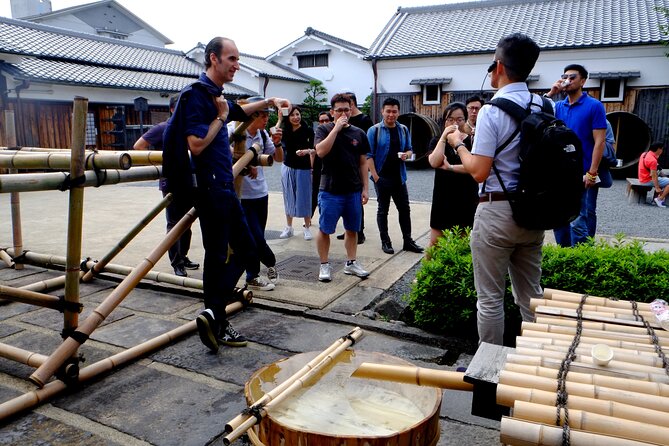
The tour lasts approximately three hours and involves a small amount of walking. Comfortable shoes are a good idea, especially if you are fitting the tour into a day of sightseeing around southern Kyoto.
You start at 697 Motozaimokuchō in Fushimi Ward and end at 271-1 Kurumamachi. Since hotel pickup and drop-off are not included, allow time to reach the first address and plan your route onward from the second.
The experience accepts mobile tickets and is near public transportation. Confirmation is provided when you book. Availability is limited, with a maximum of 12 people, so popular dates can fill several weeks ahead.
Japan’s legal drinking age is 20. Anyone under 20 receives non-alcoholic drinks instead. There is an especially important restriction for transportation: for safety and legal reasons, alcohol is not served to anyone arriving by car or bicycle, and no refund is provided if that prevents you from joining the tasting.
The experience requires good weather and a minimum number of participants. If the operator cancels for poor weather or because the minimum group size is not met, you are offered another date or experience, or a full refund.
Your own cancellation policy is strict. The booking is non-refundable and cannot be changed for any reason, so check your schedule before paying.
Who should book this sake tour
I would choose this for a first sake experience, especially if you have found Japanese menus confusing or have only tried one or two familiar brands.
It also suits people who enjoy food pairing. The otsumami help you understand sake as part of a meal, not just as a standalone drink. Cooks and food-focused visitors may find the brewing process and flavor comparisons particularly useful.
This is a good choice for couples, small groups, and solo visitors who like guided learning. The small group limit gives you a better chance to ask questions than a large bus tour would.
You may want to skip it if you are looking for an active brewery-floor visit, a full meal, or a short tasting with minimal explanation. Non-drinkers can attend only if they have a reservation, and they will receive non-alcoholic drinks. Children and anyone arriving without a reservation cannot simply join at the last minute.
My verdict on the Fushimi sake afternoon
Book this tour if you want to understand what you are drinking, not just sample it. The museum gives you cultural and brewing context, while the tasting lets you test that knowledge against a wide range of sake and food.
The best payoff comes after the tour, when you face a sake list and know how to begin. At the same time, remember the practical limits: transport is your responsibility, lunch is not included, the production area is off-limits, alcohol rules are firm, and cancellations are not refundable.
For a visitor curious about sake, the combination of Fushimi setting, museum admission, 10 samples, otsumami, and a certified sommelier makes the $84.89 price reasonable. I would book early, eat first, wear comfortable shoes, and arrive ready to take notes.
FAQ
How long does the sake tour last?
The experience lasts approximately three hours. It includes about 90 minutes at the Gekkeikan Okura Sake Museum and about 90 minutes for the guided sake tasting and food pairing.
Where does the tour begin?
The tour begins at 697 Motozaimokuchō, Fushimi Ward, Kyoto, 612-8043, Japan.
Where does the tour finish?
The tour ends at Kyoto Insider Sake Experience, 271-1 Kurumamachi, Fushimi Ward, Kyoto, 612-8365, Japan.
How many sakes will I taste?
The tour includes 10 carefully selected sakes chosen by a certified sake sommelier. Some sessions may include more than 10 samples.
Is food included?
Traditional otsumami snacks are included as sake pairings. You are advised to eat lunch or brunch before the tour because the snacks are not presented as a full meal.
Can vegetarians join the tasting?
Yes. A vegetarian option for the snacks is available. Tell your guide on site that you need the vegetarian option.
Can people under 20 participate?
People under 20 may attend only with a reservation and will be served non-alcoholic drinks. Japan’s legal drinking age is 20.
Can I drink sake if I arrive by car or bicycle?
No. Alcohol is not served to anyone who arrives by car or bicycle for safety and legal reasons. Non-alcoholic drinks are available, but no refund is provided if you cannot take part in the sake tasting.
More Food Tours in Kyoto
- Kyoto Nishiki Market Food and Culture Walking Tour
★ 5.0 · 412 reviews - Kyoto: Gion Food Tour 13 Dishes at 4 Eateries
★ 5.0 · 408 reviews - 1.5-Hour Kyoto Insider Sake Experience with 7 Tastings & Pairings
★ 5.0 · 297 reviews - Kyoto: Insider Sake Experience with 7 Tastings and Snacks
★ 5.0 · 266 reviews
More Breweries in Kyoto
- Kyoto: Fushimi Sake Brewery Tour – 18 Tastings in 2.5 Hours
★ 4.7 · 36 reviews - KYOTO Sake Tasting Tour at Local Breweries(tasting fee included)
★ 5.0 · 16 reviews - Japanese Sake Breweries Tour in Kyoto Fushimi
★ 4.3 · 13 reviews - Kyoto Sake Brewery Tour with Lunch
★ 4.5 · 12 reviews
Recently added around Kyoto
- Higashiyama | Kyoto: Sakura Season Private Rickshaw Tour★ 5.0 · 3 reviews
- Kyoto Kimono Rental CHAMATSU|Kimono/Yukata Rental FamilyPlan★ 5.0 · 3 reviews
- Kyoto: Half-Day Private Guided Tour to the Old Town of Gion★ 4.4 · 3 reviews
- Nara Private Customizable Half Day Tour★ 5.0 · 3 reviews
- Nara: Essential Private Tour with Deer Park and Temples★ 5.0 · 3 reviews
- Kansai Region Hiking Adventure in Nara Kobe Kyoto and More★ 5.0 · 3 reviews
- Full Day Nara Deer, Temple, Shrine, Activities & Tea Ceremony★ 5.0 · 3 reviews
- Hiking Tour for Sacred Sites in Kyoto with a Guide★ 5.0 · 3 reviews
Kyoto Sake Brewery Tours, compared.
Arashiyama Bamboo, Temple, Monkeys, or Secret Sake Brewery
Read our review →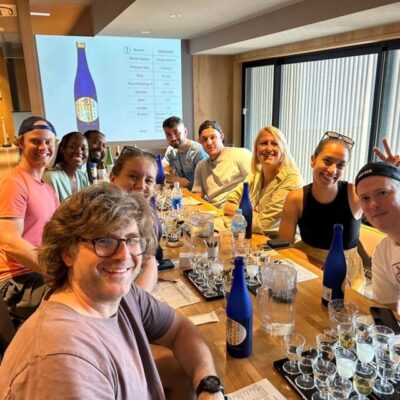
Insider Sake Brewery Tour with Sake and Food Pairing
Read our review →
Fushimi Sake Brewery Tour – 18 Tastings in 2.5 Hours
Read our review →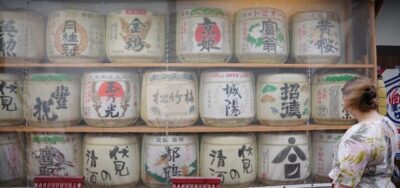
Browse the lists this tour appears in