
REVIEW · KYOTO TRADITIONAL MUSIC EXPERIENCES
Kyoto: Japanese Koto & Shamisen Concert and Koto Class
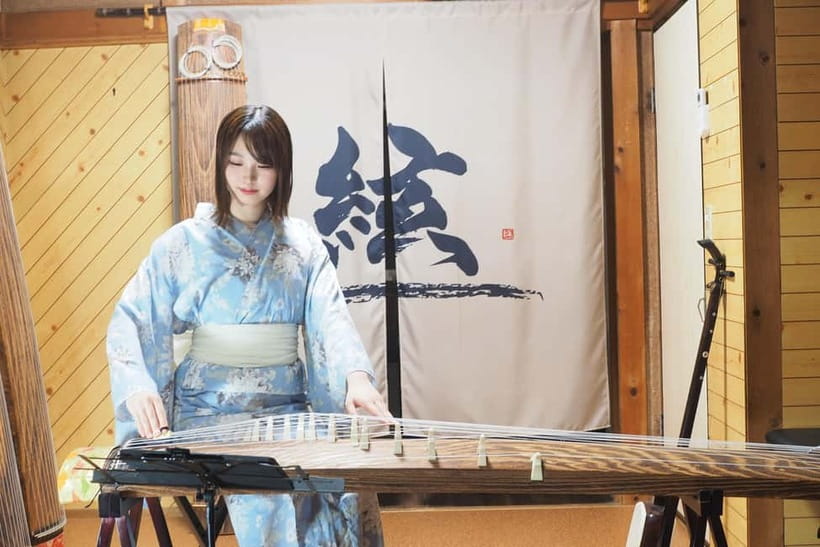
Kyoto’s traditional music feels most immediate in a small home, not a grand theater. Here, you sit close to professional musicians, hear the koto and shamisen in a changing program of classical, contemporary, and original pieces, then try the koto yourself.
I like the homey setting, which feels more personal than a formal cultural show, and I like the chance to ask direct questions and learn a simple piece with a professional. The main drawback is finding the small house in a residential alley, especially after dark. Give yourself extra time and check the meeting details carefully.
In This Review
- Key Points
- A Small House With a Big Sound
- The Opening: Instruments, Notation, and Context
- A Concert That Moves From Classical to Contemporary
- Questions, Photos, and a Personal Exchange
- Your First Koto Lesson
- Why the $38 Price Makes Sense
- Who Will Get the Most From This Experience
- Planning Your Visit Around the Neighborhood
- Should You Book the Koto and Shamisen Experience?
- FAQ
- How long does the koto and shamisen experience last?
- What instruments will I hear?
- Can I play the koto myself?
- Is the experience suitable for beginners?
- Is the experience available in English?
- What is included in the $38 price?
- Can I cancel or pay later?
Key Points
- Koto and shamisen up close: Hear both instruments played by professionals, with different techniques and tones explained along the way.
- A real hands-on lesson: At the end, you try the koto yourself with guidance from an instructor.
- Classical to contemporary music: The program can include traditional pieces, vocals, modern works, and original compositions.
- Small Kyoto home setting: The old house offers a quiet, informal alternative to a temple concert or large performance hall.
- Personal conversation: A close-up question period lets you ask about the instruments, music notation, and performance.
- Good value at $38: You get a concert, cultural introduction, lesson, instrument use, instruction, and photos in one short session.
A Small House With a Big Sound
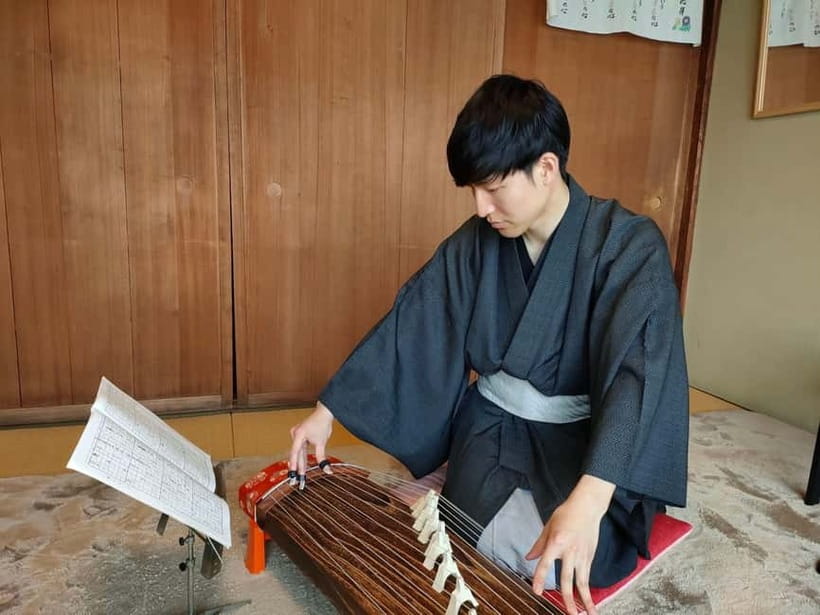
The first surprise is the setting. This is not a concert in a famous temple, a polished hotel room, or one of Kyoto’s traditional townhouses set up for tourists. It takes place in an old, small Japanese house in a residential area, with a warm atmosphere that feels closer to visiting a Japanese family than attending a formal show.
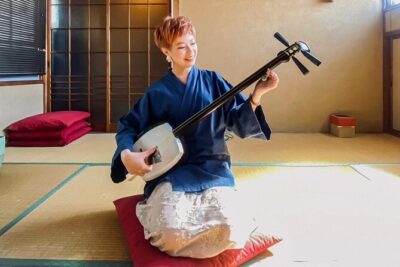
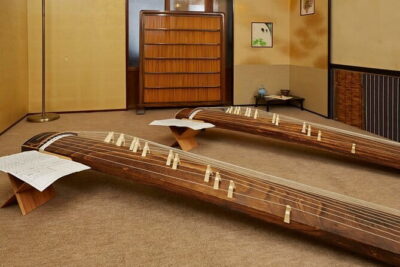
That intimacy matters. The koto is a long zither with strings stretched across a wooden body, while the shamisen is a three-stringed instrument played with a large plectrum. From a seat close to the musicians, you can see how their hands work and hear the difference between a soft plucked phrase and a sharper, more forceful attack.
The room is small enough that the music does not feel distant. It also means this is not the place for an audience seeking a grand stage production, elaborate lighting, or a large ensemble. You are coming for direct contact with the instruments and the people who play them.
The meeting point can vary by booking option, so read the confirmation closely. One useful warning is that the house can be difficult to spot in a residential alley, and the lane may be dark in the evening. I would not arrive at the last minute. Late arrivals may shorten your session.
More traditional music sessions:
- Kyoto: Nishiki Market Tea Ceremony with Koto Performance
★ 4.8 · 294 reviews - TAIKO, Japanese Drum Experience from Kyoto
★ 5.0 · 86 reviews - Shamisen Experience in Kyoto 【Private】
★ 5.0 · 82 reviews
The Opening: Instruments, Notation, and Context
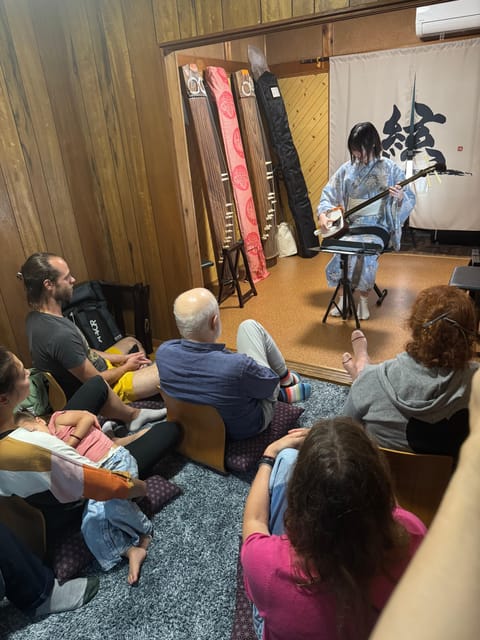
The program begins with a short introduction to the koto and shamisen. You learn what makes these instruments different and get a basic look at their place in Japanese music.
The introduction also covers their unusual sheet music. This is valuable because the notation does not look like the staff notation most Western musicians know. Seeing how music is written helps you understand what the performer is reading and why the playing technique can seem so precise.
The English and Japanese support makes the experience accessible to beginners. You do not need to know Japanese music, read music, or play an instrument. The instructors explain the basics before asking you to try anything.
I especially like this order. If you began with a lesson, you might focus only on plucking the strings. Hearing the instruments first gives you a clearer idea of what skilled playing can produce. You can then listen for those techniques when the performance starts.
The presentation is brief rather than a long lecture. That keeps the focus on the music, which is the right choice for a session lasting about one hour to 100 minutes.
A Concert That Moves From Classical to Contemporary
The performance is not limited to one narrow style. You might hear classical pieces, contemporary compositions, and original works. Some traditional pieces include vocals, adding another layer to the sound of the koto and shamisen.
The program changes depending on the season or the performer. That gives the experience some variety, but it also means you should not book it expecting one fixed list of songs. If you have a particular work in mind, you can ask about it when you book or during the question period, though the supplied information does not promise requests.
Aoi is one of the performers associated with the experience. Her koto playing and singing have been singled out for their control, feeling, and strong vocal projection. Another performer, Kyoko, has also been praised for superb playing and for making the lesson more interesting by encouraging personal ideas during the practice.
The music can shift in mood. Traditional pieces may include voice and a more formal feel, while contemporary works can bring more energy. That range is useful for first-time listeners because it prevents the koto from seeming like a single-sound instrument.
You may also notice different timbres created by changes in technique. The strings can sound delicate, bright, forceful, or deep depending on how they are played. From a seat near the performer, those changes are easier to hear than they would be in a large hall.
The concert is the heart of the experience, and the musicianship is a major reason to book it. This is not simply a demonstration in which an instructor plays a few notes before handing you the instrument. You receive a proper live performance first, then a chance to understand it through practice.
Questions, Photos, and a Personal Exchange
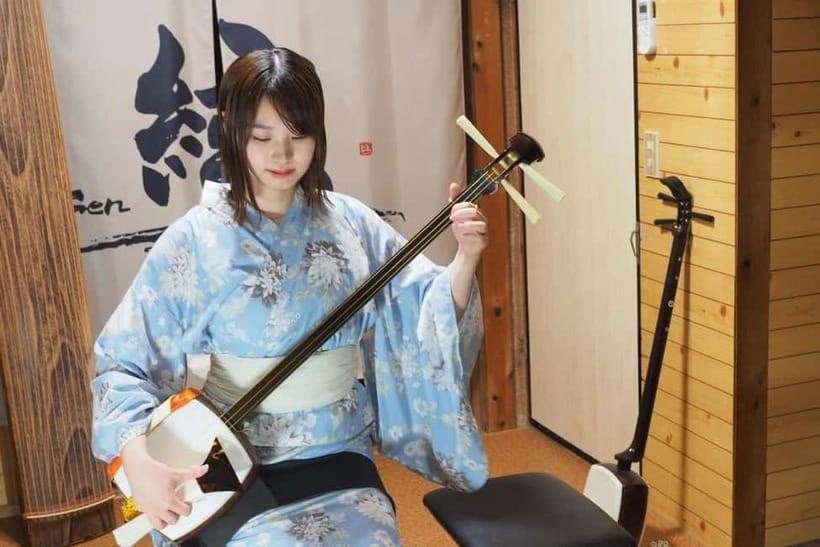
After the music, you have time for a close question-and-answer session. This is one of the strongest parts of the format because you can ask about what you have just seen rather than listen to a prepared speech.
You can ask about the instruments, the techniques, the music notation, or the performer’s work. The conversation is held close to the instrument, making it easier to point to a string, plectrum, or playing method as the explanation unfolds.
This is also a good moment to ask about the differences between the koto and shamisen. They are both traditional Japanese instruments, but they produce very different sounds and require different physical approaches. A direct explanation helps turn a pleasant concert into a more lasting cultural lesson.
Photo-taking is included, and photos of your experience are provided. That is a thoughtful extra, especially because the final lesson gives you something worth recording. One participant even received a birthday song during the session, showing that the small format can allow for personal touches when the occasion comes up.
Do not expect a long professional photo shoot. Think of it as simple documentation of your visit and your first attempt at playing.
A few more Kyoto experiences worth comparing
- Kyoto: Traditional Concert at Townhouse or Bathhouse
★ 4.9 · 224 reviews - Concerts Played with Traditional Instruments in Kyoto
★ 5.0 · 50 reviews - Traditional Concert in Public bath near Kyoto Station
★ 5.0 · 5 reviews - Private Japanese music concert
★ 5.0 · 4 reviews
Your First Koto Lesson
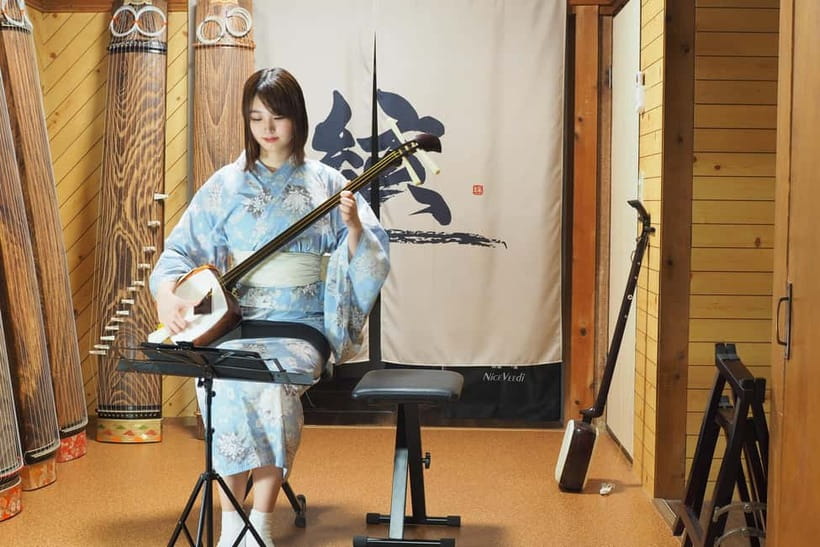
At the end, you take your turn at the koto. The instructor provides the instrument, materials, and tools, then guides you through a simple piece.
This part is beginner-friendly by design. You are not expected to master the instrument in one sitting. The goal is to feel how it responds, learn a few basic techniques, and understand the physical work behind the performance you have just watched.
The lesson can be surprisingly approachable. A short session will not make you a koto player, but it can give you a clear sense of the instrument’s layout and the coordination required to create a clean sound. You may also have a chance to play alongside the performer after learning the basics.
The encouragement is important here. People who describe themselves as having no musical ability have still found the instruction patient and supportive. The teachers can help with technique and guide you through the piece without making the class feel like an audition.
If you already play music, you may want to use the question period and lesson to compare the koto with instruments you know. One musician who attended was allowed to try personal ideas during the lesson, which made the practice feel less rigid.
Families can enjoy this part together, but the age rules matter. Children under two are not suitable, and the booking information also lists children under three and under four as unsuitable, along with babies under one. The safest approach is to confirm the age requirement for your particular option before booking.
Why the $38 Price Makes Sense
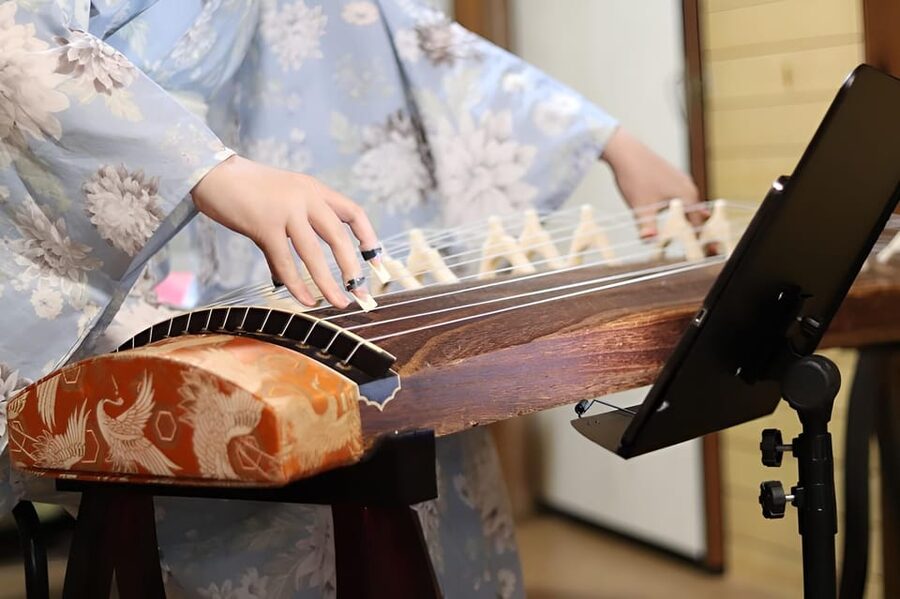
At $38 per person, this experience offers more than a short concert. The price includes the performance, a cultural introduction, use of the koto, necessary materials and tools, instructor guidance, the question period, and photos.
That is strong value if you want a cultural activity with both watching and doing. A concert alone might suit you better if you prefer to sit quietly, but the class gives the session a clear second half and makes the experience more memorable.
The private or small-group format also helps justify the price. You are not one face in a large audience. You have room to ask questions, see the instrument closely, and receive direct instruction.
There are limits. Transportation, food, drinks, souvenirs, and extra koto accessories are not included. You are paying for the music and lesson, not a full evening package. The duration is also compact, at roughly one hour to 100 minutes, so anyone seeking a full-day cultural program should pair it with another Kyoto visit.
The session works especially well as part of a day in western or central Kyoto. Arashiyama is about 25 minutes away by train and on foot, with Saiin Station serving as a useful transfer point between the Hankyu and Randen lines. Nijo Castle is about 20 minutes away by train and on foot. Kinkakuji takes roughly 20 to 25 minutes by bus and on foot from the Nishioji Sanjo bus stop, while Nishiki Market is about 25 minutes away by train and on foot.
These travel times are approximate, so allow room for walking and transfers. Still, the location makes it practical to combine the music session with sightseeing rather than treating it as a separate trip across Kyoto.
Who Will Get the Most From This Experience
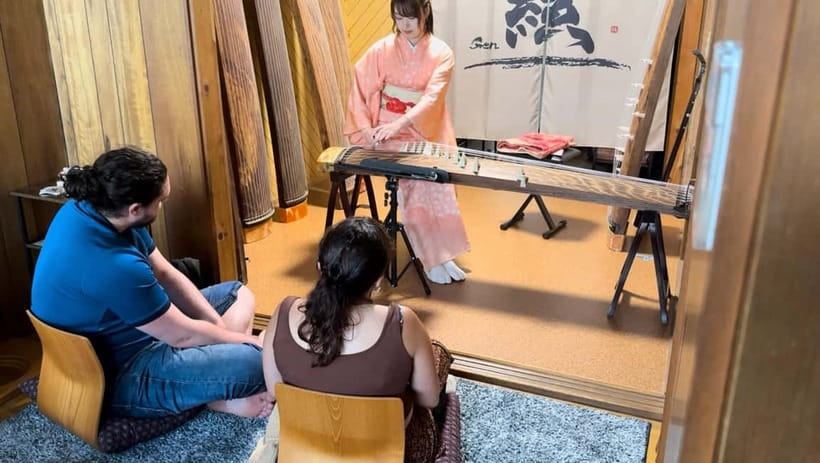
I would choose this for anyone who wants a cultural activity that feels personal rather than polished for a large crowd. It suits first-time visitors who want an introduction to Japanese instruments without needing prior knowledge.
It is also a good match for:
- Families with children who meet the age requirements
- Couples looking for a quiet evening activity
- Music lovers and amateur performers
- Visitors interested in Japanese traditions beyond temples and gardens
- People who prefer small groups and direct conversation
- Anyone who wants to try an instrument rather than only watch a show
The private option can be especially useful for families or small parties. You can ask questions at your own pace and give each person more time with the instrument.
I would hesitate if you dislike sitting on or near the floor, though the supplied information does not specify the seating arrangement or physical setup. If you have physical limitations or allergies, tell the organizer ahead of time. Also consider the late-arrival rule. A small house and a fixed concert start do not leave much room for catching up.
Planning Your Visit Around the Neighborhood
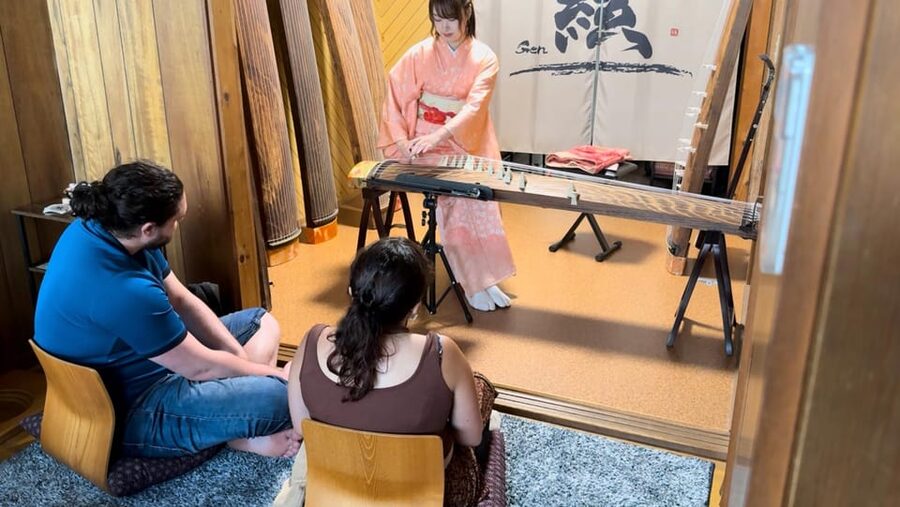
You do not need a meal or special equipment for this experience. Transportation is not included, and the exact meeting point depends on the option you select.
Because the house sits in a residential area, use the directions carefully. A taxi can make arrival simpler, though you should still confirm the address and entrance. If you walk from public transport, leave extra time to identify the correct small house. In the evening, the alley may be poorly lit, and you may need to wait outside until shortly before the performance begins.
This is not a criticism of the experience itself, but it is a practical distinction between a home concert and a major Kyoto venue. Large attractions have obvious entrances and signs. A private house may not.
The flexible booking terms help with a busy Kyoto schedule. You can cancel up to 24 hours in advance for a full refund, and the reserve-now, pay-later option lets you hold a place without paying immediately. Check availability for the starting time that works with your sightseeing plans.
English and Japanese are offered. The experience can be private or arranged for a small group, depending on the option.
Should You Book the Koto and Shamisen Experience?
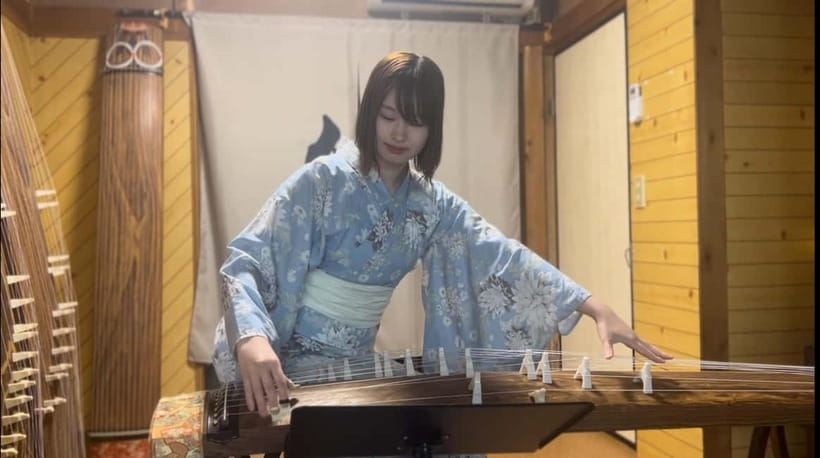
I would book this if you want to hear excellent musicianship, speak directly with the performer, and try a traditional instrument in a relaxed setting. The combination of concert and lesson gives you both appreciation and participation, while the small house keeps the mood friendly and personal.
At $38, the package is particularly appealing for music lovers, families, and curious first-time visitors. The main cautions are the modest setting, possible difficulty finding the house, and short duration. If you prepare for those points, this is a memorable way to add living Japanese music to a Kyoto itinerary.
FAQ
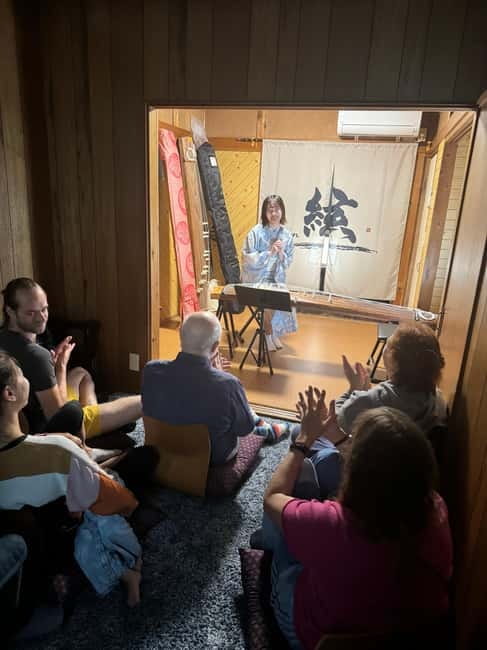
How long does the koto and shamisen experience last?
The experience lasts between one hour and 100 minutes. Starting times vary, so check availability when choosing your date.
What instruments will I hear?
You will hear the traditional Japanese koto and shamisen played by professional musicians.
Can I play the koto myself?
Yes. At the end of the program, you can try playing a simple piece on the koto with guidance from a professional instructor.
Is the experience suitable for beginners?
Yes. The session includes an introduction to the instruments and their sheet music, followed by guided practice. No previous musical experience is required.
Is the experience available in English?
Yes. The listed languages are English and Japanese.
What is included in the $38 price?
The price includes the concert, cultural introduction, necessary materials and tools, use of the koto, instructor guidance, a private or small-group session depending on the option, and photos of your experience.
Can I cancel or pay later?
You can cancel up to 24 hours in advance for a full refund. A reserve-now, pay-later option is also available, so you do not have to pay at the time of booking.
More Workshops in Kyoto
- Kyoto: 45-Minute Tea Ceremony Lesson Experience
★ 4.3 · 2,378 reviews - Kyoto : Chopsticks Making Workshop in Gion with Engraving Option
★ 5.0 · 958 reviews - Kyoto: Samurai Sword Class by Experts in Traditional Arts
★ 4.9 · 657 reviews - Kyoto: Ramen Cooking Class at a Ramen Factory with Souvenir
★ 4.9 · 532 reviews
Recently added around Kyoto
- Higashiyama | Kyoto: Sakura Season Private Rickshaw Tour★ 5.0 · 3 reviews
- Kyoto Kimono Rental CHAMATSU|Kimono/Yukata Rental FamilyPlan★ 5.0 · 3 reviews
- Kyoto: Half-Day Private Guided Tour to the Old Town of Gion★ 4.4 · 3 reviews
- Nara Private Customizable Half Day Tour★ 5.0 · 3 reviews
- Kansai Region Hiking Adventure in Nara Kobe Kyoto and More★ 5.0 · 3 reviews
- Full Day Nara Deer, Temple, Shrine, Activities & Tea Ceremony★ 5.0 · 3 reviews
- Nara: Essential Private Tour with Deer Park and Temples★ 5.0 · 3 reviews
- Hiking Tour for Sacred Sites in Kyoto with a Guide★ 5.0 · 3 reviews
Kyoto Traditional Music Experiences, compared.
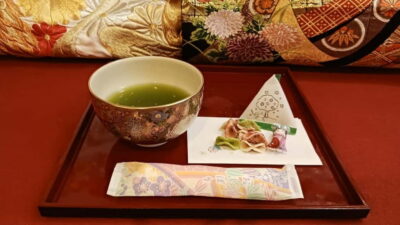
Nishiki Market Tea Ceremony with Koto Performance
Read our review →

Private Koto Lesson in Kyoto with a Professional Koto Performer
Read our review →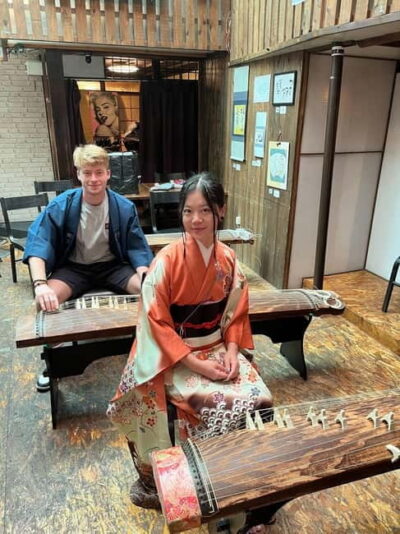
Browse the lists this tour appears in