
REVIEW · KYOTO TRADITIONAL MUSIC EXPERIENCES
TAIKO, Japanese Drum Experience from Kyoto
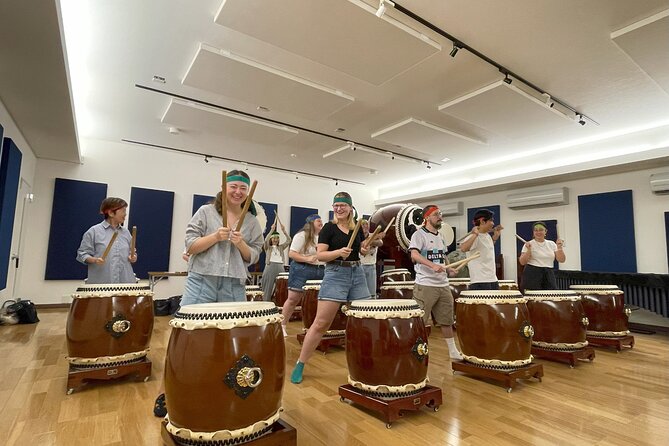
The best part of this Kyoto activity is simple: you do not just watch Japanese culture, you make a loud, physical attempt to take part in it. At a professional taiko studio near Takatsuki, you learn basic drum movements, play a short piece with your group, and finish in traditional costume.
I especially like the small-group format, which gives you useful access to the instructor, and the trip’s mix of drumming, history, and calligraphy. English-speaking guides such as Michiko, Kumi, Akemi, and Akiko help keep the lesson clear. The main drawback is the strict meeting time. Kyoto Station is huge, and late arrivals cannot be accommodated.
In This Review
- Key points to know before booking
- Why this taiko lesson feels different from sightseeing
- Meeting at Kyoto Station and reaching Takatsuki
- Writing your wish on a hachimaki
- The professional demonstration sets the pace
- Learning the basic taiko movements
- The final group performance and costume photograph
- What the 115.62 dollar price includes
- Timing, fitness, and practical planning
- Who will enjoy this Kyoto activity most
- Is the strict meeting time worth the trouble?
- Should you book the taiko experience?
- FAQ
- How long does the taiko activity take?
- Where do I meet the guide?
- How do I reach the taiko studio?
- Do I need previous musical or taiko experience?
- Can children participate?
- What happens if I need to cancel?
Key points to know before booking
- A 12-minute JR train ride leads to a professional taiko studio near Takatsuki, followed by a short taxi transfer.
- The lesson is built for beginners, with basic movements adjusted to your ability and fitness level.
- Aoi and other professional instructors provide a powerful demonstration before you pick up the drumsticks.
- You write a personal wish in simple calligraphy on a hachimaki, then wear it for the session and final photograph.
- The experience lasts about two and a half hours, including transport from and back to Kyoto Station.
- The group can include up to 15 people, and children under seven cannot participate.
Why this taiko lesson feels different from sightseeing
Kyoto offers plenty of temples, gardens, and cultural displays. Those are worthwhile, but they put you on the outside looking in. This taiko lesson asks you to use your arms, follow a rhythm, and make a little noise. That physical effort is what makes the activity memorable.
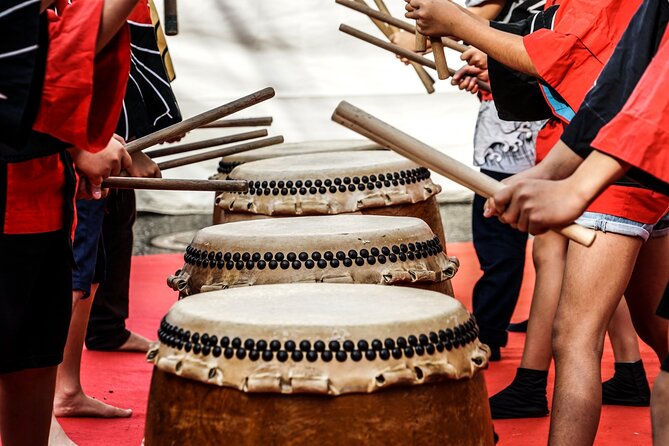
Taiko means Japanese drum, but this is not a casual attempt to tap out a beat on a small instrument. The session takes place at a professional taiko studio, where the drum has presence and volume. Even before you play, a demonstration by a professional instructor gives you a clear sense of the skill involved.
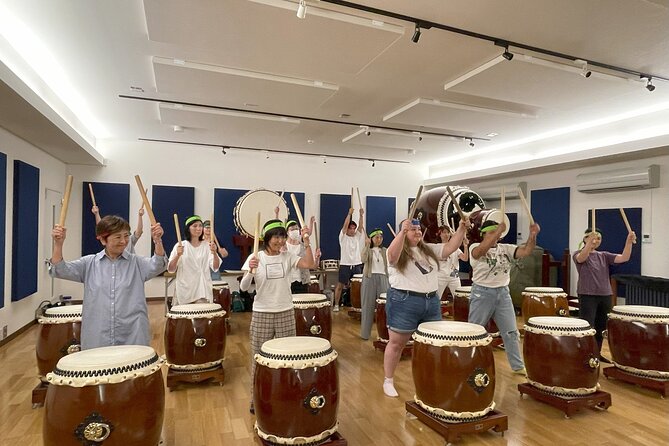
The lesson does not expect musical training. You learn by watching, copying, and repeating. The process is broken into basic movements, so you can participate even if you cannot read music or have never held drumsticks. One participant who already liked drums enjoyed recognizing musical measures, while several others had no musical background and still kept up.
That balance is important. You get a real introduction to the instrument without being pushed into a difficult performance. At the same time, the final group piece gives the class a proper goal.
More traditional music sessions:
- Kyoto: Nishiki Market Tea Ceremony with Koto Performance
★ 4.8 · 294 reviews - Shamisen Experience in Kyoto 【Private】
★ 5.0 · 82 reviews - Kyoto: Japanese Koto & Shamisen Concert and Koto Class
★ 4.9 · 31 reviews
Meeting at Kyoto Station and reaching Takatsuki
Your day begins at Kyoto Station, where you meet the guide 15 minutes before the scheduled start. The meeting point is near the Central Exit, not the Shinkansen Central Ticket Gate. This distinction matters. Kyoto Station can feel like a small city, and a last-minute search for the right exit can cost you the entire activity.
I would arrive early enough to locate the Central Exit before meeting time. If you get turned around, ask station staff for the central exit and make clear that you do not mean the Shinkansen central ticket gate. The operator cannot wait for late arrivals because the group must catch a particular train.
From Kyoto Station, the route takes you by JR train to Takatsuki Station. The stated ride is about 12 minutes, though the precise timing can vary with the train schedule. A taxi then takes you to the studio. The taxi arrangement costs about 2,000 yen and can carry four people, while the one-way JR ticket is included.
This shared transfer is a practical part of the package. A direct taxi from Kyoto would take more than an hour and cost much more, especially if traffic slows the road. The train and taxi combination is faster and keeps the journey manageable.
The guide also makes the ride useful. Kumi has shared information about the towns and sights along the route, while Michiko has helped participants get acquainted with the local area and the plan for the day. The transfer is not a guided tour of Kyoto, but it gives you a little context before the lesson begins.
Writing your wish on a hachimaki
At the studio, the first creative task is simple calligraphy. You write a wish on a hachimaki, the traditional Japanese headband. You do not need advanced calligraphy skills. The appeal is personal rather than technical: you choose a wish, put it on the headband, and then wear it while drumming.
This small detail adds meaning to the session. You are not simply borrowing a costume for a photograph at the end. The headband becomes something you have made during the activity. Several participants particularly liked the combination of writing kanji and learning the drum rhythms.
If you are bringing children, note the age rule before booking. Children under seven are not allowed to participate. Older children have taken part successfully, and the basic, active format can work well for families with children who can follow instructions and stay engaged.
The professional demonstration sets the pace
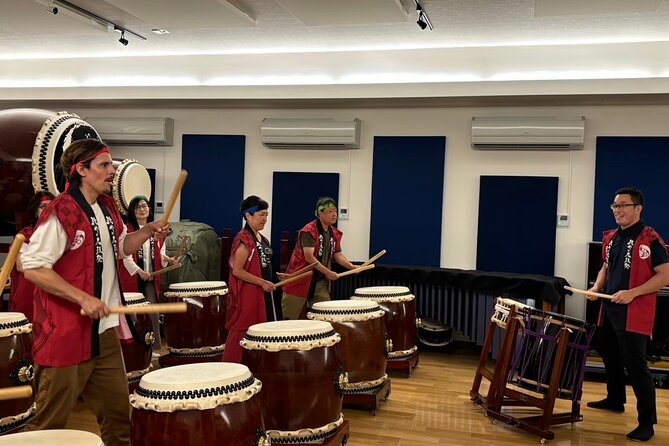
Before your own lesson begins, a professional drummer performs. This is a smart part of the schedule because it shows what taiko can sound like when the movements are precise and powerful.
The demonstration has been described as one live drummer performing with a recorded drummer on screen on one occasion. The result was still impressive, but you should understand that the format may not always be a two-person live performance. The key point is that you see a skilled presentation before trying the basics yourself.
Aoi has been praised for both her drumming and her instruction. Other professional teachers, including Mr. Sakurai, have been described as patient and encouraging. The demonstration can make the instrument seem intimidating at first, but the teaching that follows brings the activity down to a manageable level.
I like this contrast. You first see the high standard, then learn that the beginner pattern is within reach. It gives the class energy without making you feel that you are expected to perform like a professional.
A completely different side of Kyoto:
- PERFECT KYOTO 1-Day Bus Tour
★ 5.0 · 13,518 reviews - Kyoto: Fushimi Inari, Kinkakuji, Bamboo Grove 1 Day Bus Tour
★ 4.8 · 4,316 reviews - Kyoto: Tea Ceremony in a Traditional Tea House in Kiyomizu
★ 4.9 · 3,519 reviews - Kyoto Geisha Walking Tour: Gion District & Hidden Gems
★ 4.7 · 3,273 reviews
Learning the basic taiko movements
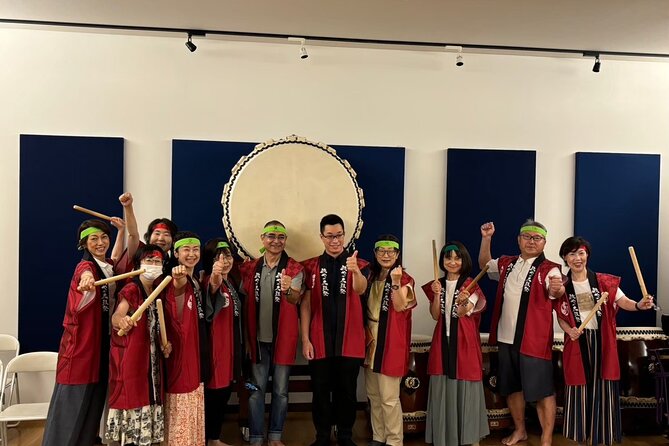
The main lesson teaches the body position, arm movements, and simple rhythms needed to play. The instructor demonstrates each part and gives you time to copy it. The guides help translate explanations into English, with Michiko, Kumi, Akemi, Akiko, and other English-speaking hosts mentioned as guides on different sessions.
The teaching is adjusted to your skill and fitness level. That does not mean the activity is passive. Taiko uses your arms, shoulders, and upper body, and sustained playing can become a good cardiovascular workout. You should be ready to stand and move through repeated patterns, though the supplied information does not specify how long you will be standing at each stage.
The sound is part of the fun. A large Japanese drum has a physical force that you do not get from watching a video. Each successful rhythm gives immediate feedback, and the group’s combined sound makes even a simple piece feel like a performance.
You may need a little patience at the start. The instructions involve timing and coordinated movements, so the first attempts can feel awkward. The class is designed for beginners, and the instructors are described as supportive, but you still need to listen carefully and accept that the rhythm may take a few tries.
The final group performance and costume photograph
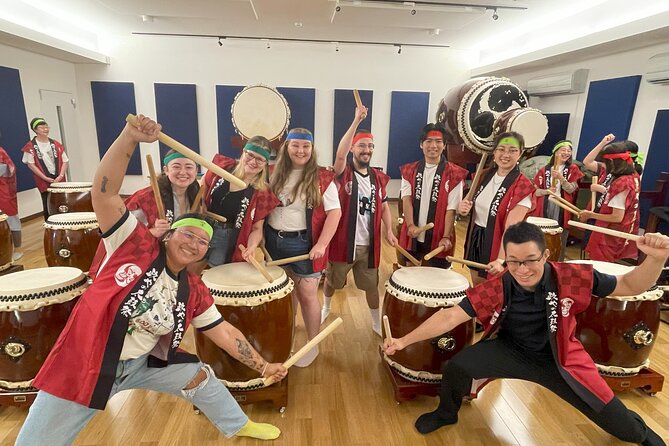
The lesson ends with the class playing a simple piece together. This is not a concert audition. It is a short shared performance that lets you use the movements you have just learned.
Group playing is a good fit for first-timers because you are not left alone to carry the whole piece. You follow the instructor and the other participants, then hear the result as a group. The final recital also gives the lesson a satisfying finish rather than ending with an isolated practice drill.
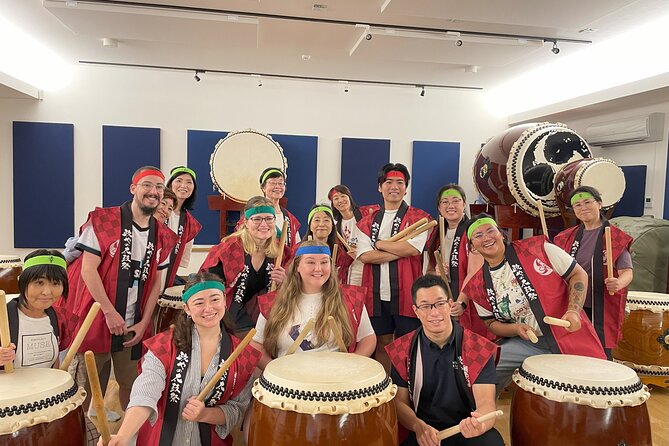
Afterward, you take a commemorative photograph wearing traditional clothing, including a happi coat and hachimaki. The photograph is a useful souvenir because it records both parts of the activity: the cultural setting and your own participation.
The costume is not the main reason to book this tour, but it rounds out the day. You have learned about taiko, played the instrument, created the headband, and then marked the occasion with a group photo.
What the 115.62 dollar price includes
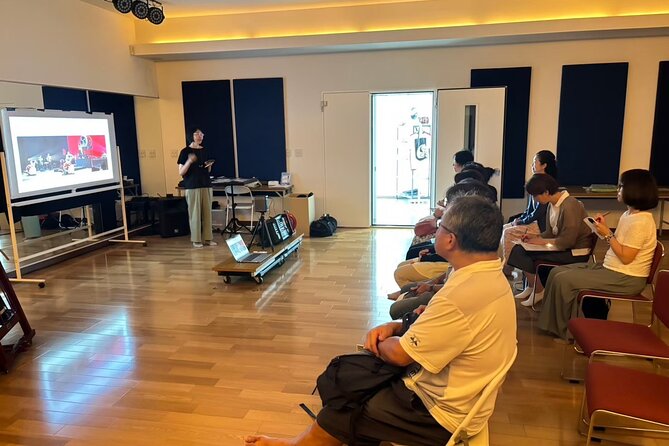
The listed price is $115.62 per person. It includes the taiko lesson, an English-speaking guide, a taiko instructor, the hachimaki, the one-way JR ticket to Takatsuki, and car transfers to and from the studio. The taxi cost is described as about 2,000 yen for up to four people.
For a two-and-a-half-hour activity with organized transfers and professional instruction, I find the price reasonable if you want an interactive cultural lesson rather than a short photo stop. You are paying for teaching, equipment, transport coordination, interpretation, and a structured class.
The value is strongest if you actually participate. Observers who do not drum must pay 9,000 yen per person in cash at the studio. You should notify the operator in advance if someone in your party plans only to watch, since transportation may not be arranged without notice.
The activity also has a maximum group size of 15. That is not an extremely small class, but it is limited enough to support instruction. The supplied information highlights small-group access, and the direct help from the instructor and guide is a meaningful part of the price.
Some dates may not accept a booking for just one person. On those days, a solo participant may need to reserve and pay for two places. Check this point before finalizing your plans.
Timing, fitness, and practical planning
The listed duration is about two hours and 30 minutes, but you should allow two and a half to three hours from the start at Kyoto Station until your return. Train schedules can shift the exact timing.
Do not schedule a temple visit, meal reservation, or long-distance departure too tightly afterward. Leaving the class early is not recommended, so allow extra time beyond the advertised duration.
Most people can participate, and no previous drumming experience is required. Still, this is an active lesson rather than a seated talk. If you have concerns about standing, repeated arm movements, or general fitness, keep that in mind before booking. The instructor can tailor the lesson to your ability and fitness level, but the information does not promise specific medical accommodations.
The experience uses a mobile ticket, and booking confirmation is provided at the time of reservation. Free cancellation is available up to 24 hours before the start time. Changes or cancellations inside that window are not refunded, and the operator notes that poor weather can lead to a new date or a full refund.
Who will enjoy this Kyoto activity most
I would choose this for you if you want a cultural activity that is active, social, and easy to understand in English. It works especially well for people who have already seen several temples and want to do something with their hands.
It is also a good choice for:
- Families with children aged seven and older who enjoy music and movement
- Couples looking for a shared activity rather than another sightseeing stop
- First-time visitors who want an introduction to Japanese tradition without specialist knowledge
- Drum fans who want to try a Japanese instrument in a professional studio
- Anyone visiting Kyoto or Osaka who can spare the half-day timing around the train transfer
I would hesitate if you dislike group activities, need a completely flexible schedule, or want an advanced taiko workshop. The lesson is beginner-friendly and built around a shared final piece, not private coaching or a long technical course.
Is the strict meeting time worth the trouble?
Yes, if you prepare for it. The train connection is central to the plan, so lateness is not a minor inconvenience. Even a phone call will not make it possible for the group to wait, and no refund is issued for missing the start.
Kyoto Station is the main practical challenge. Arrive early, find the Central Exit, and keep the guide’s meeting instructions at hand. Once you meet the guide, the rest of the transportation is arranged for you.
This strict timing also explains why a direct taxi is a poor substitute. The route to Takatsuki is designed around the JR train, and driving from Kyoto can take more than an hour with a higher fare and possible traffic delays.
Should you book the taiko experience?
Book it if you want to leave Kyoto with more than photographs of temples. You will learn a basic skill, hear a professional performance, write a wish on a hachimaki, and take part in a short group recital. The English-speaking guides and patient instructors make the activity accessible, while the studio setting gives it more substance than a quick cultural demonstration.
The price is easiest to justify when you value organized transport and hands-on instruction. Just arrive early at Kyoto Station, allow three hours in your schedule, and remember that observers pay separately in cash.
For a first taiko lesson, this is a strong pick. It is lively, physical, and friendly to beginners, with enough cultural background to make the drumming feel connected to Japan rather than tacked onto a sightseeing day.
FAQ
How long does the taiko activity take?
The activity lasts about two hours and 30 minutes, including transport. You should expect to return to Kyoto Station about two and a half to three hours after the scheduled start.
Where do I meet the guide?
You meet at Kyoto Station near the Central Exit in Higashishiokoji Kamadonocho, Shimogyo Ward. This is not the Shinkansen Central Ticket Gate. You should arrive 15 minutes early.
How do I reach the taiko studio?
You take a JR train from Kyoto Station to Takatsuki Station, a ride of about 12 minutes, followed by a taxi to the studio. A one-way JR ticket and car transfers to and from the studio are included.
Do I need previous musical or taiko experience?
No. The class is designed for all levels, including first-timers. The instructor teaches basic movements and techniques and adjusts the lesson to your skill and fitness level.
Can children participate?
Children under seven years old are not allowed to participate. The maximum group size is 15 people.
What happens if I need to cancel?
You can cancel up to 24 hours before the start time for a full refund. Cancellations or changes made less than 24 hours before the activity are not refunded. If poor weather causes the operator to cancel, you will be offered another date or a full refund.
Recently added around Kyoto
- Higashiyama | Kyoto: Sakura Season Private Rickshaw Tour★ 5.0 · 3 reviews
- Kyoto Kimono Rental CHAMATSU|Kimono/Yukata Rental FamilyPlan★ 5.0 · 3 reviews
- Kyoto: Half-Day Private Guided Tour to the Old Town of Gion★ 4.4 · 3 reviews
- Nara Private Customizable Half Day Tour★ 5.0 · 3 reviews
- Kansai Region Hiking Adventure in Nara Kobe Kyoto and More★ 5.0 · 3 reviews
- Full Day Nara Deer, Temple, Shrine, Activities & Tea Ceremony★ 5.0 · 3 reviews
- Nara: Essential Private Tour with Deer Park and Temples★ 5.0 · 3 reviews
- Hiking Tour for Sacred Sites in Kyoto with a Guide★ 5.0 · 3 reviews
Kyoto Traditional Music Experiences, compared.
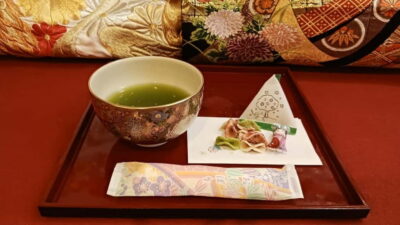
Nishiki Market Tea Ceremony with Koto Performance
Read our review →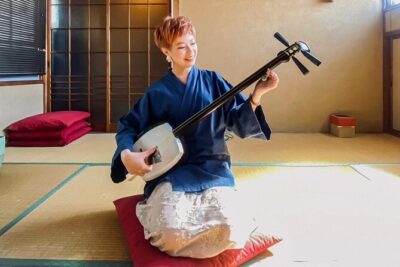
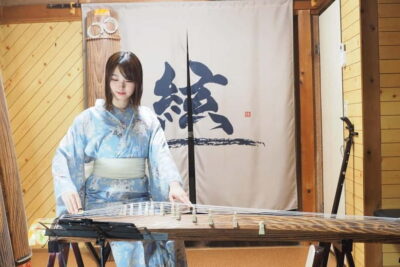

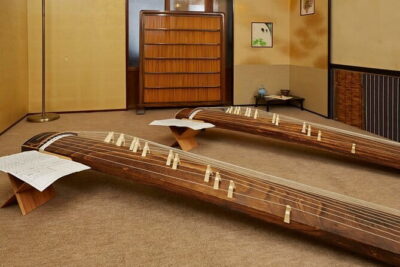
Private Koto Lesson in Kyoto with a Professional Koto Performer
Read our review →
Browse the lists this tour appears in