
REVIEW · CONCERTS
Private Japanese music concert
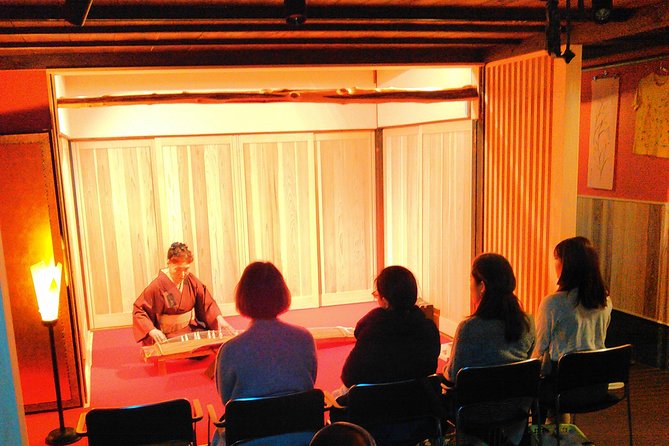
The best part of this Kyoto experience is its scale. Instead of watching traditional music from the back of a hall, you sit close to a performer inside a renovated Kyomachiya townhouse and hear the koto and kokyu at arm’s length. The setting feels local and personal, not staged for a large crowd.
I like two things in particular: the chair seating, which makes the hour easy on your back, and the chance to learn about the instruments rather than simply listen. Families may also appreciate the interactive finish, when children have been encouraged to try the koto. The main consideration is that the concert lasts about one hour, so it is a focused music experience, not a broad cultural tour.
In This Review
- Key points at a glance
- Music inside a renovated Kyoto townhouse
- What you hear: koto and kokyu
- The one-hour format and how it unfolds
- A private concert without a grand concert hall
- Why the $57.23 price can make sense
- Who will get the most from this experience
- Finding Kyomachiya Kiotto in Nakagyo Ward
- What the experience feels like for families
- The personal touch after the music
- Booking, cancellation, and useful limits
- Should you book the Kyoto koto concert?
- FAQ
- Where does the private Japanese music concert take place?
- How long does the experience last?
- How much does the concert cost?
- Are group discounts available?
- Which instruments are performed?
- Is the concert held in a traditional Japanese building?
- Do I sit during the concert?
- Can children try the instruments?
- Is the venue near public transportation?
- Can I cancel for a full refund?
Key points at a glance
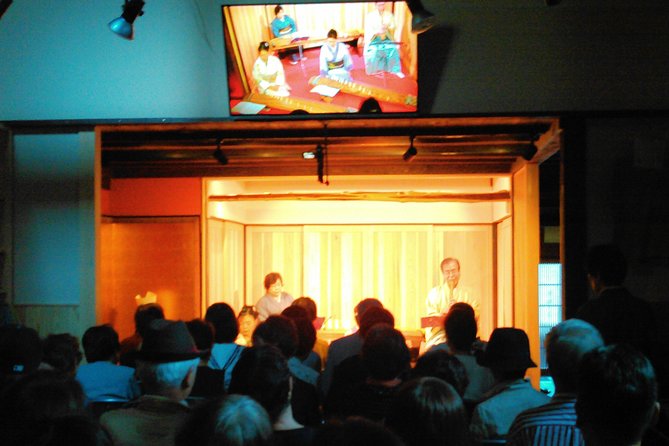
- Private music in a Kyoto machiya: Hear the performance inside a renovated traditional townhouse rather than in a large concert venue.
- Two traditional instruments: The program centers on the koto, a Japanese harp, and the kokyu, a bowed Japanese instrument.
- Close-up setting: You sit in a chair near the performer, making it easier to see the strings, body, and playing technique.
- A chance to play: The experience may include an opportunity to try the instruments, especially appealing for children and curious first-time listeners.
- One-hour format: The compact length fits neatly into a Kyoto sightseeing day without taking over your schedule.
- Good value for a private session: At $57.23 per person, the price makes the most sense if you value personal attention and a small-scale cultural encounter.
Music inside a renovated Kyoto townhouse
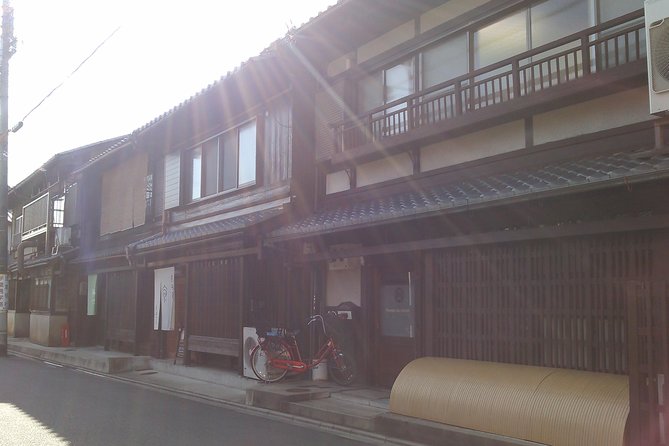
Kyoto has no shortage of cultural performances, but many are built for an audience of dozens or hundreds. This one takes place at Kyomachiya Kiotto, a renovated Kyomachiya at 9-10 Mibu Hinokicho, in Nakagyo Ward.
A machiya is a traditional Kyoto townhouse, usually recognized by its narrow frontage and long interior arrangement. Here, the building itself helps shape the mood. You are not entering a concert hall designed to separate the stage from the audience. You are sitting in a historic-style local house where the instruments are close enough to study.
I like that the setting does not compete with the music. There are no large visual effects or complicated production elements listed. The appeal is the sound of the instruments, the room, and the person performing just for your group.
The townhouse setting also gives the hour a sense of place. You could hear a koto in many settings, but hearing it in a Kyoto house connects the music with the city’s older architectural character. It is a small detail, yet it helps the experience feel tied to Kyoto rather than portable from one destination to another.
A few more Kyoto experiences worth comparing
- Kyoto: Traditional Concert at Townhouse or Bathhouse
★ 4.9 · 224 reviews - Concerts Played with Traditional Instruments in Kyoto
★ 5.0 · 50 reviews - Kyoto: Japanese Koto & Shamisen Concert and Koto Class
★ 4.9 · 31 reviews
What you hear: koto and kokyu
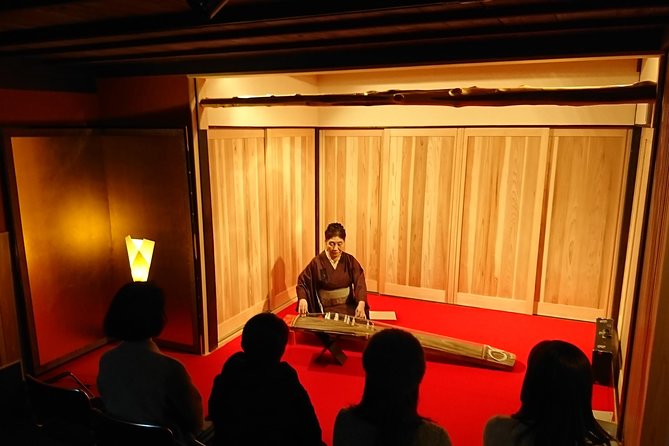
The main instrument is the koto, often described as a Japanese harp. It is a long stringed instrument with a distinctive shape and bright, ringing tone. The strings are plucked, producing music that can sound delicate, precise, and spacious.
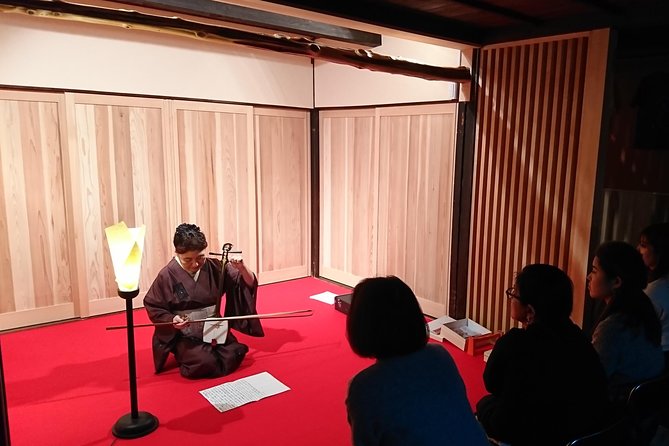
The kokyu adds a different color. It is a traditional Japanese bowed instrument, and its sound comes from drawing a bow across the strings. Hearing the koto and kokyu together gives you a better sense of the range within traditional Japanese music than a program devoted to only one instrument.
The performance is presented by a musician who works as an assistant teacher at Kyomachiya Kiotto. The available information does not provide the performer’s name, so you should not expect a named celebrity concert. The emphasis is on skilled playing, explanation, and direct contact with the instruments.
That is important for first-time listeners. Traditional music can seem unfamiliar if you are expected to sit quietly without context. Here, the format allows room for explanation and conversation. One especially memorable session included discussion of the instruments, a chance for the family to play the koto, and conversation with the teacher and master koto player.
The one-hour format and how it unfolds
The plan is simple. You arrive at Kyomachiya Kiotto, are welcomed, and settle into a chair. The performer then presents the private live performance, with the koto and kokyu as the central instruments.
The hour is not divided into several sightseeing stops. This is one location and one concentrated activity. That simplicity is useful after a full day of temples, gardens, and crowded streets. You do not need to keep moving or follow a guide through a long route. You can sit down and pay attention.
The program also allows you to see the instruments up close. From a distant stage, you may hear the sound without understanding how it is made. In this room, you have a better chance to watch the hands, strings, bow, and body of each instrument as the music is played.
The available details do not specify an exact set list or a minute-by-minute schedule. That means the balance between performance, explanation, conversation, and hands-on playing may vary. If you want a formal concert with a fixed program, this may feel less predictable. If you prefer a personal introduction, that flexibility is part of the appeal.
A private concert without a grand concert hall
The word private matters here. The performer plays just for your group, creating a very different relationship between musician and audience. You are not one face in a darkened room. You are close enough to listen carefully and, when invited, ask questions or take part.
That arrangement can be especially useful if you are new to Japanese instruments. You can notice details that might disappear in a large venue, such as how the sound changes with the pressure of the bow or the way a plucked string continues to ring.
I also think this format works well for mixed-age groups. Adults can appreciate the musical craft, while children have a concrete activity to look forward to if they are allowed to try the instruments. One family session included children being encouraged to play, with both the musicians described as kind and friendly. That hands-on moment can turn a polite performance into something children remember.
Still, private does not automatically mean highly personalized in every case. The information confirms a private performance, but it does not specify the maximum group size or the exact amount of playing time offered to each person. If the chance to play is your main reason for booking, regard it as part of the possible program rather than a guaranteed extended lesson.
A completely different side of Kyoto:
- PERFECT KYOTO 1-Day Bus Tour
★ 5.0 · 13,518 reviews - Kyoto: Fushimi Inari, Kinkakuji, Bamboo Grove 1 Day Bus Tour
★ 4.8 · 4,316 reviews - Kyoto: Tea Ceremony in a Traditional Tea House in Kiyomizu
★ 4.9 · 3,519 reviews - Kyoto Geisha Walking Tour: Gion District & Hidden Gems
★ 4.7 · 3,273 reviews
Why the $57.23 price can make sense
At $57.23 per person, this is not the cheapest hour you can spend in Kyoto. You are paying for more than a seat at a public performance. The price covers a private setting, a performer, access to traditional instruments at close range, and the possibility of conversation and hands-on participation.
The value depends on how you travel. If you only want background entertainment, a public show may offer better value. If you have already seen Kyoto’s major temples and want a quieter cultural encounter, this price is easier to justify.
For a family, group discounts may improve the cost. The exact discount is not provided, so check the price shown for your party before booking. Since the session is private, the price may also feel more reasonable when shared by several people who want the same activity.
I would compare it with the cost of a standard one-hour attraction in Kyoto. This experience offers no transport, meal, or long sightseeing route. Its value comes from access and intimacy. You are buying a close look at Japanese music in a setting that a large public event cannot easily provide.
Who will get the most from this experience
I would recommend the concert to several kinds of visitors:
- First-time listeners of Japanese music: The close setting and explanations can make the koto and kokyu easier to understand.
- Families with older children: The chance to try the instruments adds an active element to a listening program.
- Couples and small groups: A private concert creates a calm shared activity without the noise of a large attraction.
- Culture-focused visitors: You get traditional music, a Kyoto townhouse, and direct contact with a local performance setting.
- Visitors with a tight schedule: One hour is easy to fit between other Kyoto plans.
It may be less suitable if you want a full afternoon of entertainment or a broad introduction to many Japanese art forms. You will not be touring several sites, watching multiple performances, or taking a long lesson based on the information available.
The chair seating is another practical plus. Kyoto sightseeing often means hours on your feet, and a comfortable seated activity can provide a welcome pause. The experience is also listed as suitable for most people, near public transportation, and open to service animals.
Finding Kyomachiya Kiotto in Nakagyo Ward
The venue is Kyomachiya Kiotto, at 9-10 Mibu Hinokicho, Nakagyo Ward, Kyoto City. It is near public transportation, but the supplied details do not name a specific station, route, or walking time.
Use the exact address when planning your day. Kyoto has many narrow streets and similarly named areas, so it is wise to confirm the map location before setting out. The venue provides a Google Maps link, which should help you check the route from your hotel or earlier sightseeing stop.
Because the concert begins at a set time, avoid treating it like a drop-in attraction. Build in some margin for finding the townhouse. The booking information says confirmation is received within 48 hours, subject to availability, so it is sensible to have the confirmation details in hand before finalizing your day’s route.
The average booking lead time is nine days. That is not a required advance period, but it suggests that planning ahead is sensible, especially if your Kyoto dates are fixed or you need a particular time.
What the experience feels like for families
Music performances can be difficult family activities when children must sit silently for a long time. This concert has a useful advantage: the instruments are close, and children may be invited to try them at the end.
The koto is visually interesting even before a child touches it. Its long body and many strings make it unlike most Western instruments that children know. The kokyu adds another point of curiosity because it is played with a bow.
I would still prepare younger children for a listening session first. The duration is about one hour, and the program is centered on live music. The hands-on portion is a bonus, not a substitute for the performance.
For adults, the family-friendly tone does not appear to take away from the musical quality. The available comments describe accomplished playing and a pleasant afternoon, while also noting that the musicians were warm with children. That balance is useful: you can enjoy the concert as music, and your children can connect with it through participation.
The personal touch after the music
Conversation is one of the strongest reasons to choose this format. The hour can include discussion of the instruments and time with the teacher and performer. That gives you a chance to ask about what you have just heard rather than leaving as soon as the final note ends.
One particularly personal meeting included an exchange involving a visitor’s poem. Details like that show how a small room can encourage a more human encounter than a large scheduled show. You should not expect every session to unfold in exactly the same way, but the setting allows room for conversation.
Noriko at Heartland Japan is associated with introducing the experience, and one visitor specifically expressed thanks for that introduction. The on-site performance itself is connected with Kyomachiya Kiotto. If you need help before arrival, keep those names and the venue name available in your booking information.
Booking, cancellation, and useful limits
The price is $57.23 per person, with group discounts available. A mobile ticket is offered, so you can keep the admission details on your phone rather than needing a printed voucher.
Confirmation arrives within 48 hours of booking, subject to availability. The experience can be canceled for a full refund if you cancel at least 24 hours before the start time. Cancellations made less than 24 hours before the start time are not refunded, and changes inside that window are not accepted.
Service animals are allowed, and most people can participate. No specific accessibility measurements or seating restrictions are provided, so contact the provider if your needs go beyond ordinary chair seating.
The activity lasts about one hour. Since the venue and program details are compact, I would pair it with nearby plans rather than build an entire day around it.
Should you book the Kyoto koto concert?
Book it if you want a quiet, personal introduction to Japanese music and value the setting as much as the performance. The combination of koto, kokyu, chair seating, a renovated Kyoto townhouse, and possible hands-on playing gives the hour a clear identity.
I would especially choose it for a family, a small group, or anyone who has already seen the major sights and wants something more personal. The $57.23 cost is fair when private attention and close access matter to you, though it is harder to justify if you only want a brief musical sample.
Before booking, check the time, confirm the map, and understand that the exact balance of playing, explanation, and instrument practice may vary. If those limits suit you, this is a thoughtful way to hear traditional Japanese music in a setting that feels connected to Kyoto.
FAQ
Where does the private Japanese music concert take place?
The concert takes place at Kyomachiya Kiotto, located at 9-10 Mibu Hinokicho, Nakagyo Ward, Kyoto City.
How long does the experience last?
The concert lasts approximately one hour.
How much does the concert cost?
The listed price is $57.23 per person.
Are group discounts available?
Yes. Group discounts are listed as an available feature, though the exact discount amount is not provided.
Which instruments are performed?
The performance features the koto, a Japanese harp, and the kokyu, a traditional bowed Japanese instrument.
Is the concert held in a traditional Japanese building?
Yes. It takes place in a renovated Kyomachiya, or traditional Kyoto townhouse.
Do I sit during the concert?
Yes. The experience provides chair seating so you can listen comfortably.
Can children try the instruments?
Children may be encouraged to try the instruments after the concert. The available information describes children playing the instruments, but it does not guarantee a specific amount of practice time for every session.
Is the venue near public transportation?
Yes. The venue is described as being near public transportation, though a specific station and walking time are not provided.
Can I cancel for a full refund?
Yes, if you cancel at least 24 hours before the experience start time. Cancellations made less than 24 hours in advance are not refunded, and changes inside that period are not accepted.
Recently added around Kyoto
- Higashiyama | Kyoto: Sakura Season Private Rickshaw Tour★ 5.0 · 3 reviews
- Kyoto Kimono Rental CHAMATSU|Kimono/Yukata Rental FamilyPlan★ 5.0 · 3 reviews
- Kyoto: Half-Day Private Guided Tour to the Old Town of Gion★ 4.4 · 3 reviews
- Nara Private Customizable Half Day Tour★ 5.0 · 3 reviews
- Kansai Region Hiking Adventure in Nara Kobe Kyoto and More★ 5.0 · 3 reviews
- Full Day Nara Deer, Temple, Shrine, Activities & Tea Ceremony★ 5.0 · 3 reviews
- Nara: Essential Private Tour with Deer Park and Temples★ 5.0 · 3 reviews
- Hiking Tour for Sacred Sites in Kyoto with a Guide★ 5.0 · 3 reviews
Concerts, compared.
Concerts Played with Traditional Instruments in Kyoto
Read our review →
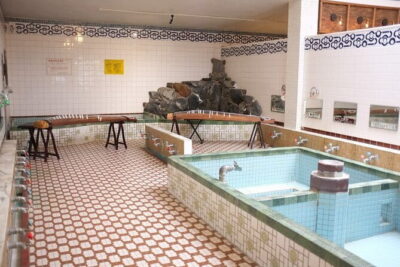
Traditional Concert in Public bath near Kyoto Station
Read our review →Browse the lists this tour appears in