
REVIEW · KYOTO TRADITIONAL MUSIC EXPERIENCES
Shamisen Experience in Kyoto 【Private】
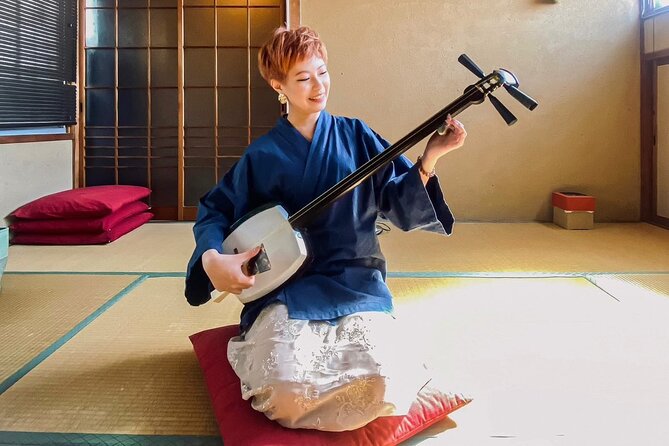
The best part of this Kyoto lesson is that you do not just watch Japanese music being performed. You sit down with a three-stringed shamisen, learn the basics, and finish by playing a traditional song with professional musician Jack. That hands-on ending gives the experience a real sense of purpose.
I like two things right away: the private format, which lets Jack adjust the lesson to your pace, and the relaxed tea break, which gives you time to ask questions about the instrument and Japanese music. The main consideration is price: at $99.10 per person for about 90 minutes, this is a special-interest activity rather than a cheap way to fill an hour.
In This Review
- Key points to know before booking
- Why a shamisen lesson belongs in your Kyoto plans
- Meeting Jack at Shamisen Dojo
- Getting comfortable with the instrument
- Learning a traditional Japanese melody
- The tea break and conversation
- The final jam with Jack
- What the $99.10 price gets you
- Who will enjoy this private Kyoto activity
- Practical details that affect your decision
- My advice on booking the shamisen lesson
- FAQ
- How long does the shamisen experience last?
- Where does the lesson take place?
- Where does the activity end?
- Is the lesson private?
- Is previous musical experience required?
- Is the lesson conducted in English?
- Who teaches the lesson?
- Is Japanese tea included?
- Are left-handed players able to participate?
- What is the cancellation policy?
Key points to know before booking

- Private lesson with Jack: Your group receives the teacher’s full attention rather than sharing the room with a large class.
- English instruction: The lesson is designed for English-speaking beginners, with clear guidance on posture, tuning, and technique.
- Play a traditional song: You work toward a real musical result, then join Jack in a short jam using traditional Japanese scales.
- Japanese tea included: The break adds an easygoing chance to talk with Jack, who is also the owner and a professional player.
- Left-handed players are covered: Lefty shamisen are available, so you do not have to force yourself into an awkward position.
- A small souvenir comes with the lesson: You leave with a physical reminder of the session, not only a few photographs.
Why a shamisen lesson belongs in your Kyoto plans
Kyoto can fill your days with temples, gardens, markets, and crowded lanes. All of that is worthwhile, but a private music lesson changes the rhythm of your sightseeing. Instead of moving from one famous place to the next, you spend 90 minutes making something with your own hands.
The shamisen is a traditional Japanese three-stringed instrument. Its long neck and square-bodied shape make it unlike a guitar, and the playing method takes some getting used to. You use a large plectrum, known as a bachi, and the sound has a crisp, percussive quality.
You do not need to play another instrument. The teaching is built for first-time players, but it also has room for people who already have musical experience. One person used the lesson to learn tuning, posture, seating, and basic playing as preparation for studying a shamisen at home. That makes the class useful for more than a one-time holiday activity.
I especially like the way this lesson connects technique with culture. You are not simply shown a traditional object and asked to admire it. You learn how the instrument is held, how its sound is produced, and how musical phrases fit together.
More traditional music sessions:
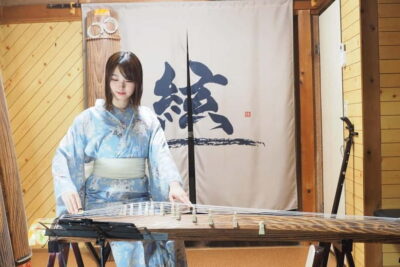
- Kyoto: Nishiki Market Tea Ceremony with Koto Performance
★ 4.8 · 294 reviews - TAIKO, Japanese Drum Experience from Kyoto
★ 5.0 · 86 reviews - Kyoto: Japanese Koto & Shamisen Concert and Koto Class
★ 4.9 · 31 reviews
Meeting Jack at Shamisen Dojo
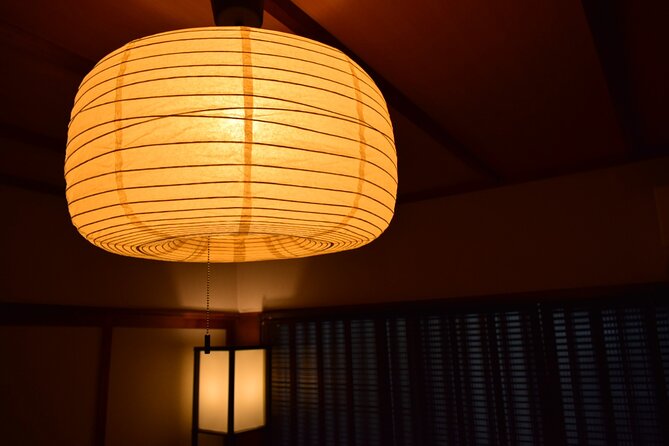
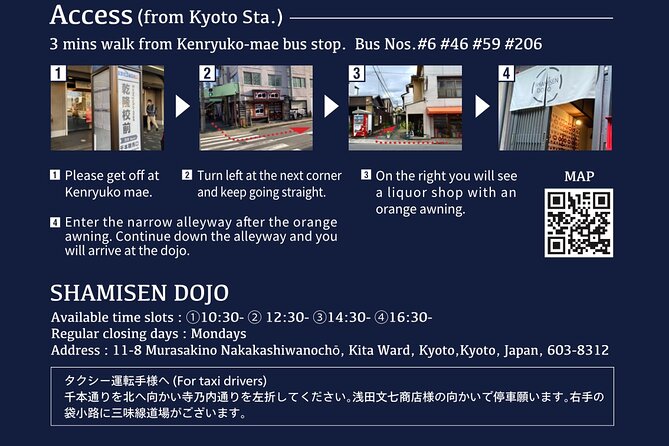
The lesson begins at Murasakino Nakakashiwanocho in Kyoto’s Kita Ward, postal code 603-8312. The activity ends back at the same meeting point. The location is described as being near public transportation, but you should check your route carefully before setting out because the information provided does not specify a particular station or walking time.
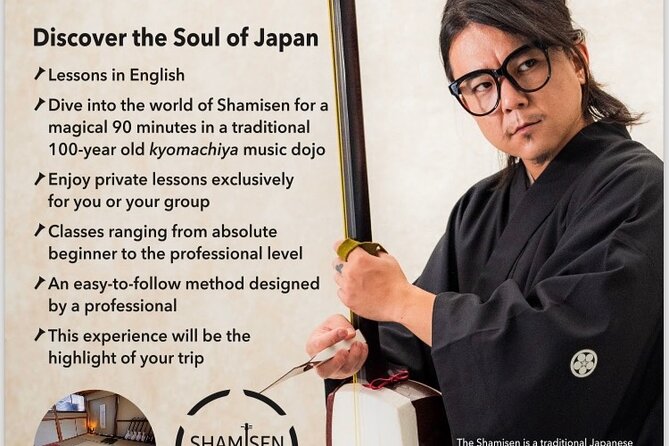
Jack is both the owner and a professional shamisen player. The lesson is conducted in English, which is a major reason this activity is useful to international visitors. A music lesson can become frustrating when instructions about hand position and timing are difficult to follow, so clear communication matters here.
You can expect a personal welcome rather than a large tour-class setup. Since this is a private activity, only your group participates. That matters most if you are shy about making mistakes, traveling with children or family, or booking as a couple and want the lesson to match your pace.
The private setting also gives you a chance to ask questions that might be skipped in a large class. You can ask about the instrument, traditional scales, or the practical details of playing. Jack’s personality is part of the appeal: the lesson is meant to include relaxed conversation, not only formal instruction.
Getting comfortable with the instrument
The first part of the class focuses on foundations. You learn how to sit and hold the shamisen properly, then work on the basic movements needed to produce a clean sound. These details may sound simple, but they are important. An unfamiliar instrument can feel awkward if your posture is wrong or your hands are placed poorly.
Tuning is also covered. For a beginner, learning how the shamisen is prepared gives you a better sense of the instrument as a working musical tool. You are not merely handed a ready-to-play object. You begin to understand what has to happen before a performance or practice session.
The lesson is structured so that a complete beginner can take part without feeling left behind. Jack can slow down, repeat a technique, or offer more detail when you need it. At the same time, people with some musical background can ask for extra help and move beyond the simplest exercise.
One useful detail is the availability of left-handed shamisen. If you play left-handed, mention it when arranging the session or at the start of the lesson. You will not need to pretend that the standard setup feels natural.
Learning a traditional Japanese melody
After the basic instruction, you work toward a traditional Japanese song. This gives the lesson a clear goal. You are not spending the entire session on isolated exercises with no sense of where they lead.
The song is taught at a beginner-friendly level, but the exact pace can depend on your group. Some people may pick up the patterns quickly, especially if they already play music. Others may need more time to coordinate the bachi, strings, posture, and rhythm.
That variation is another reason the private format is valuable. Jack can offer extra guidance instead of moving on because a whole class is ready. One person who had prior shamisen experience found that Jack even added more advanced material than normally included. That suggests the class is not locked into one rigid script.
You should still keep your expectations sensible. Ninety minutes will not make you a shamisen performer. You will, however, learn the basic physical approach and get the satisfaction of playing a recognizable traditional melody. For many people, that is the right balance for a holiday activity.
A few more Kyoto experiences worth comparing
- Fushimi Inari Hidden Hiking Tour (Private Option Available)
★ 5.0 · 1,750 reviews - Private Kyoto Tour with a Local, Highlights & Hidden Gems, Personalised
★ 5.0 · 1,543 reviews - Kyoto 6hr Private Tour with Government-Licensed Guide
★ 5.0 · 1,369 reviews - 10 Must-see Spots in Kyoto One Day Private Tour (up to 7 people)
★ 5.0 · 1,108 reviews
The tea break and conversation
Japanese tea is included during the lesson. It is a modest detail, but it improves the pace of the session. Learning a new instrument takes concentration, and the tea break gives you a natural pause before the final playing section.
This is also the time to talk with Jack in a less formal way. Since he owns the facility and performs professionally, he can connect your questions to his own work with the shamisen. The information provided emphasizes relaxed conversation, so you should feel free to ask questions rather than treating the break as dead time.
I like this part because it keeps the activity from feeling like a fast demonstration. You are given time to breathe, talk, and think about what you have just learned. The tea also gives the experience a distinctly Japanese touch without turning it into a staged ceremony.
Do not book this expecting a full tea ceremony. The inclusion is a tea break within a music lesson. Its value is in the pause and conversation, not in a long formal ritual.
The final jam with Jack
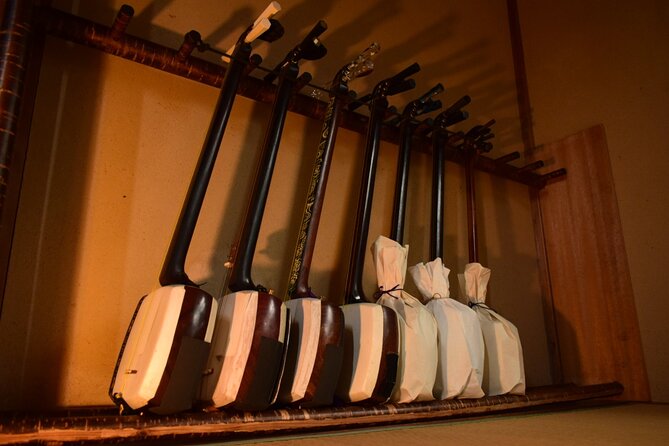
The high point comes near the end, when Jack accompanies you using traditional Japanese scales. You are encouraged to play melodies and express yourself rather than simply repeat a short technical drill.
For a beginner, playing alongside a professional can feel both exciting and forgiving. Jack supplies the musical support while you try the patterns you have learned. If your timing is not perfect, the session still has the shape of a real musical exchange.
This final jam is what gives the class its strongest cultural connection. You are using a traditional instrument in a traditional musical framework, but the activity remains accessible to someone who has never touched a shamisen before.
People with musical experience may get more freedom during this section. If you already play guitar, violin, or another instrument, tell Jack what you know. The teaching can include extra detail when appropriate, and one participant received advanced instruction beyond the standard beginner material.
At the same time, you do not need to be musically inclined to enjoy the finish. The class is intended for beginners, and the point is to try something unfamiliar with guidance. You are not auditioning.
What the $99.10 price gets you
At $99.10 per person, the lesson costs more than a quick group demonstration. The value comes from the private instruction, English-language teaching, access to the instrument, tea, the final jam, and the souvenir.
I would judge the price by comparing it with the kind of day you want in Kyoto. If you are looking for the least expensive activity possible, this is not the obvious choice. If you want a personal cultural lesson that you can remember and talk about afterward, the cost is easier to justify.
A private class also changes the value for couples, families, and small groups. You are not paying to sit quietly in a room while someone else receives the teacher’s attention. Jack can focus on your hands, answer your questions, and adjust the pace for your group.
The souvenir adds a small extra benefit, though it should not be the main reason to book. The lasting value is the skill and memory of playing the instrument yourself.
I would also consider the timing. The activity lasts about an hour and a half, so it fits neatly into a Kyoto day without taking over the whole schedule. The experience can also work well when rain makes outdoor sightseeing less pleasant, as one participant found.
Who will enjoy this private Kyoto activity
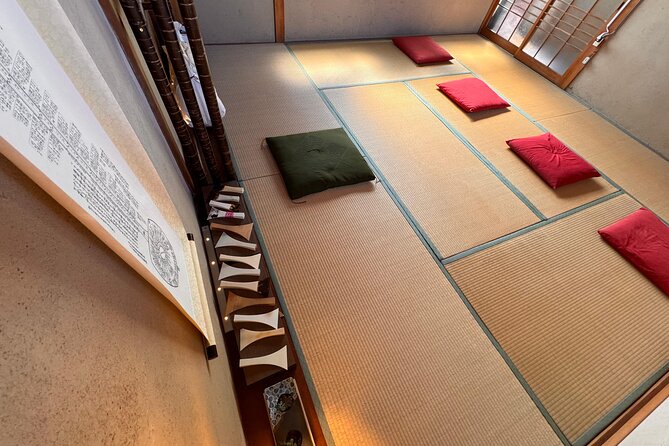
I would recommend this lesson most strongly to:
- First-time players who want a clear, friendly introduction
- Visitors interested in traditional Japanese culture beyond temples and food
- Couples or families who prefer a private activity
- Musicians who want a short introduction to a very different instrument
- Left-handed players who need a suitable setup
- People seeking an indoor option for a rainy Kyoto day
It is also a good choice if you want to return home with a story that is more specific than I visited another shrine. You can say you learned to tune and play a shamisen, performed a traditional melody, and joined a professional musician for a short jam.
The activity may be less suitable if you want a full performance by an expert. Jack does play professionally, but the focus is teaching you. You will hear and play music, but this is not primarily a concert.
It may also disappoint anyone hoping to become proficient in a single sitting. The class gives you an introduction and a practical starting point. Continued playing would require practice after the lesson.
Practical details that affect your decision
Confirmation is provided when you book, and mobile ticketing is available. Most people can participate, and the activity is near public transportation. The meeting and ending point are the same, at Murasakino Nakakashiwanocho in Kita Ward.
This experience is often reserved well ahead of time, with bookings averaging about 35 days in advance. That does not guarantee that every date fills early, but it is a useful warning if your Kyoto schedule is fixed. I would reserve before your trip rather than assume you can arrange it at the last minute.
Free cancellation is available if you cancel at least 24 hours before the start time. A cancellation made less than 24 hours before the activity is not refunded, and changes inside that window are not accepted. The cut-off follows Kyoto local time, so keep that in mind if you are booking from another time zone.
Bring curiosity and patience more than musical skill. The most useful preparation is simply to arrive ready to listen closely and try the movements Jack shows you.
My advice on booking the shamisen lesson
Book this if you want a private, hands-on way to meet Japanese culture in Kyoto. The strongest reasons are Jack’s personal instruction, the English-language format, and the final chance to play alongside him. The tea break and souvenir are pleasant extras.
I would skip it only if your budget is tight, your schedule is packed, or you mainly want to watch a professional performance. For everyone else, this is a focused 90-minute activity with a clear result: you learn the basics, play a traditional song, and leave with a better feel for one of Japan’s distinctive instruments.
FAQ
How long does the shamisen experience last?
The activity lasts approximately 1 hour and 30 minutes.
Where does the lesson take place?
It starts at Murasakino Nakakashiwanocho, Kita Ward, Kyoto, 603-8312, Japan.
Where does the activity end?
It ends back at the same meeting point.
Is the lesson private?
Yes. Only your group participates in the private activity.
Is previous musical experience required?
No. The curriculum is designed for beginners, including people playing the shamisen for the first time.
Is the lesson conducted in English?
Yes. The experience is taught in English.
Who teaches the lesson?
Jack teaches the lesson. He is the owner of the facility and a professional shamisen player.
Is Japanese tea included?
Yes. The lesson includes a Japanese tea break and relaxed conversation with Jack.
Are left-handed players able to participate?
Yes. Left-handed shamisen are available.
What is the cancellation policy?
You can cancel at least 24 hours before the start time for a full refund. Cancellations or changes made less than 24 hours before the start time are not accepted, and the payment is not refunded.
Recently added around Kyoto
- Higashiyama | Kyoto: Sakura Season Private Rickshaw Tour★ 5.0 · 3 reviews
- Kyoto Kimono Rental CHAMATSU|Kimono/Yukata Rental FamilyPlan★ 5.0 · 3 reviews
- Nara Private Customizable Half Day Tour★ 5.0 · 3 reviews
- Kyoto: Half-Day Private Guided Tour to the Old Town of Gion★ 4.4 · 3 reviews
- Kansai Region Hiking Adventure in Nara Kobe Kyoto and More★ 5.0 · 3 reviews
- Full Day Nara Deer, Temple, Shrine, Activities & Tea Ceremony★ 5.0 · 3 reviews
- Nara: Essential Private Tour with Deer Park and Temples★ 5.0 · 3 reviews
- Hiking Tour for Sacred Sites in Kyoto with a Guide★ 5.0 · 3 reviews
Kyoto Traditional Music Experiences, compared.
Nishiki Market Tea Ceremony with Koto Performance
Read our review →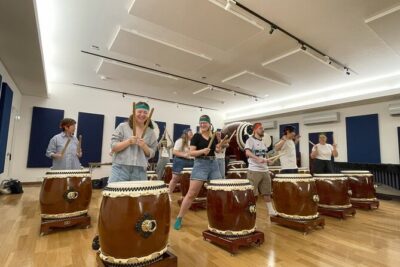

Private Koto Lesson in Kyoto with a Professional Koto Performer
Read our review →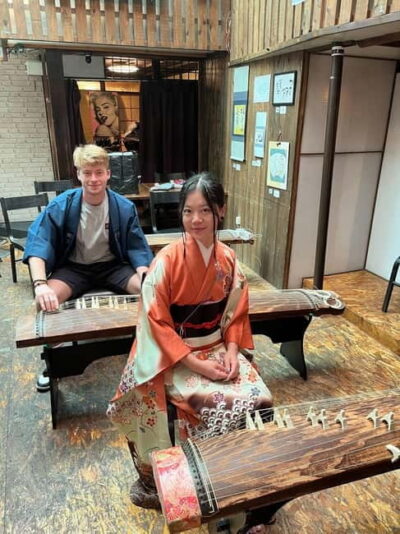
Browse the lists this tour appears in