
REVIEW · CONCERTS
Kyoto: Traditional Concert at Townhouse or Bathhouse
Kyoto’s traditional music is at its best when you can sit close enough to see each pluck, pause, and finger movement. This small concert places you in either a traditional townhouse for a solo program or a former bathhouse hall for a larger duet performance. I like the clear bilingual explanations and the chance to ask questions directly. I also like that the music includes classical pieces, newer works, and singing rather than presenting one narrow slice of Japanese culture.
The main drawback is that the two venues offer very different schedules and moods. The townhouse is held almost every day but seats only about 11 people, while the bathhouse program is offered irregularly on Mondays and can hold about 30. The meeting point also changes with your booking, and several people found the townhouse a little hard to locate.
In This Review
- Key points to know before booking
- A small Kyoto concert with a big sense of place
- Choosing between the townhouse and bathhouse
- What happens during the 45 to 105 minutes
- The music: traditional, modern, and personal
- The workshop is worth adding if you like to participate
- Why the small group matters
- Price, timing, and fitting it into Kyoto
- Who will enjoy this most
- Cancellation and booking details
- FAQ
- How much does the Kyoto traditional concert cost?
- How long does the activity last?
- Which venues can I choose?
- How many people fit in the townhouse?
- How many people fit in the bathhouse hall?
- Is a koto workshop included?
- What instruments might I hear?
- Is the activity suitable for beginners?
- Is bathing included at the bathhouse venue?
- Can I cancel if my plans change?
- Should you book it?
Key points to know before booking
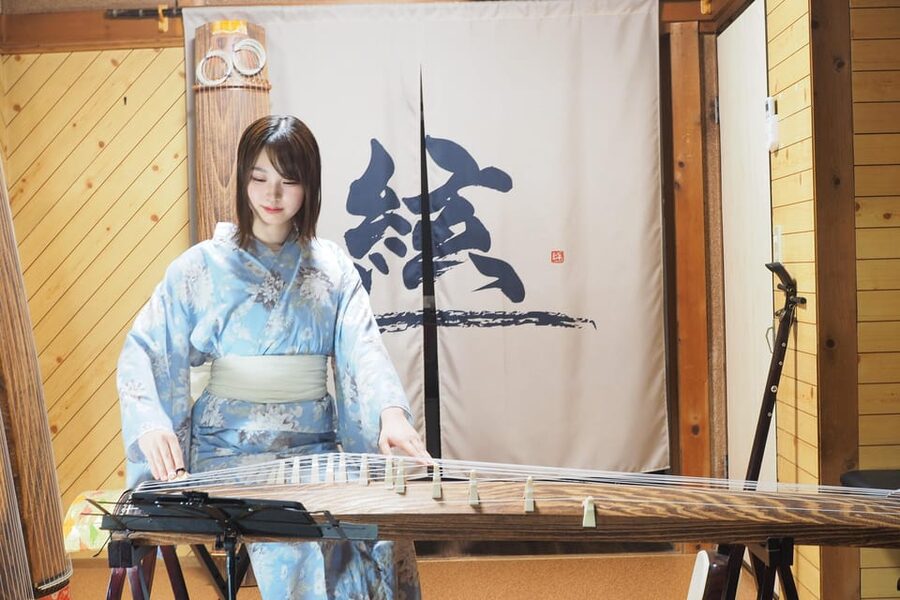
- The townhouse is the intimate choice: Expect a living-room setting with cushions or chairs and room for about 11 people.
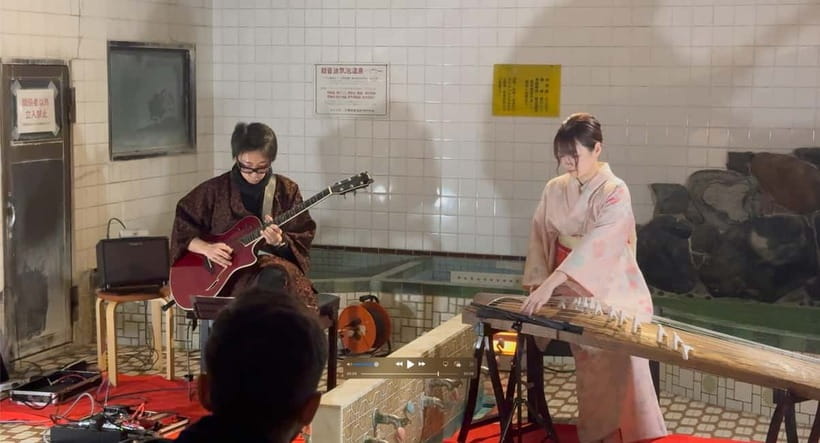
- The bathhouse gives the music more echo: Tiled walls create a broad, ringing sound for koto duets and mixed-instrument programs.
- The program lasts 45 to 105 minutes: The concert itself runs about 25 to 30 minutes, with explanations, questions, photos, and an optional 35 to 40-minute workshop.
- The music changes by performer: Programs may include koto, shamisen, singing, classical pieces, contemporary works, and original compositions.
- The workshop is only at the townhouse: You can try basic koto techniques and play a short phrase with guidance.
- It is made for beginners: Commentary is given in Japanese and English, and no prior knowledge of Japanese music is needed.
A small Kyoto concert with a big sense of place
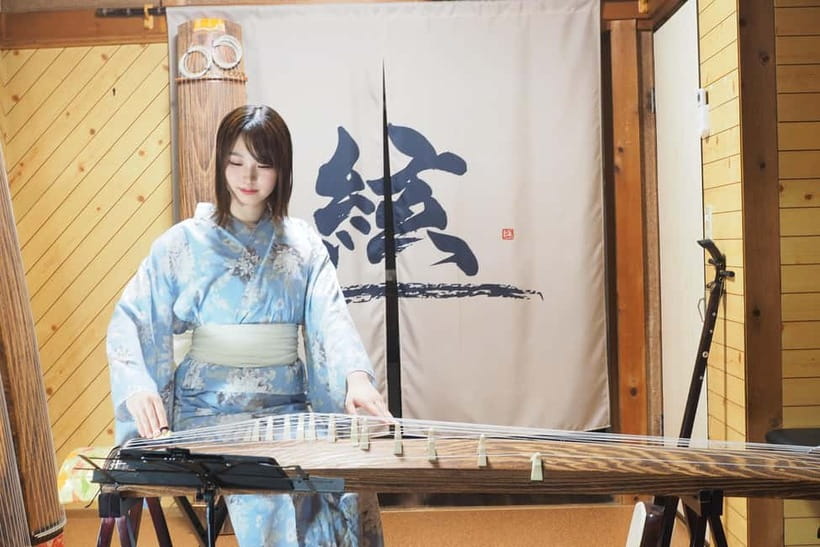
Many Kyoto visitors spend their cultural hours in temples, gardens, and museums. Those places matter, but music gives you a different way to meet Japan. Here, the focus is not a stage spectacle or a large cultural show. It is a close look at instruments, sound, and the people who play them.
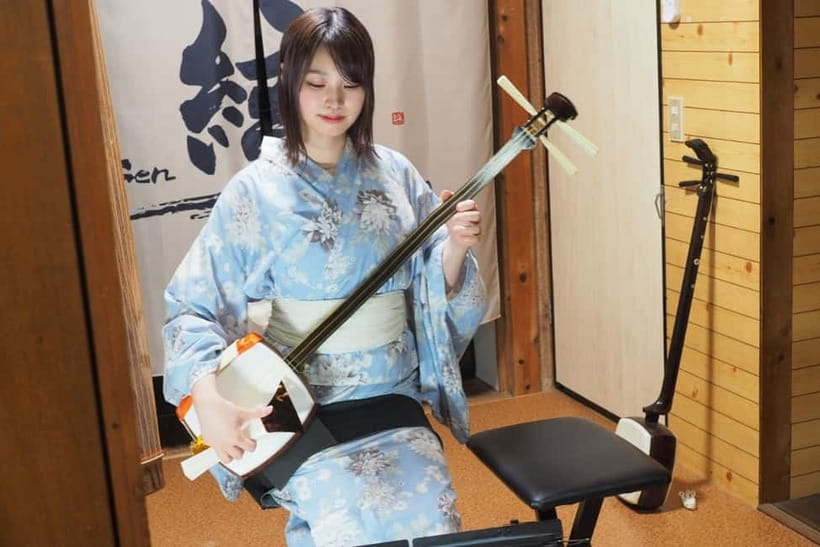
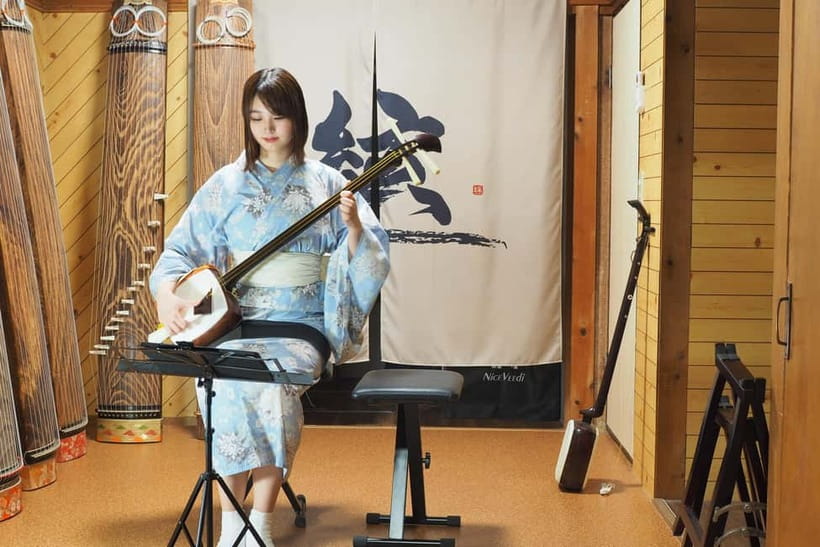
The koto is a long, zither-like instrument with movable bridges and strings plucked with picks. The shamisen is a three-stringed instrument with a sharper, more percussive voice. During the introduction, the host explains the instrument parts, materials, playing methods, and Japanese musical notation. That short lesson helps you listen with more care once the concert begins.
The format is bilingual in Japanese and English. Hosts have included Gen, Shohei, Samuel, Sofia, and Shima, while musicians have included Furan, Kyoko, Aoi, and other professional performers. Names and performers can change, so your exact program will depend on the date you choose.
I especially value this kind of introduction because traditional music can feel remote if you do not know what to listen for. Once you understand how the strings are set up and how the notation works, the performance becomes less like a distant cultural display and more like a conversation.
A few more Kyoto experiences worth comparing
- Concerts Played with Traditional Instruments in Kyoto
★ 5.0 · 50 reviews - Kyoto: Japanese Koto & Shamisen Concert and Koto Class
★ 4.9 · 31 reviews - Traditional Concert in Public bath near Kyoto Station
★ 5.0 · 5 reviews
Choosing between the townhouse and bathhouse
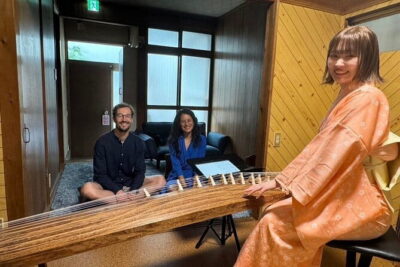
The traditional townhouse is the safer choice if you want a quiet, personal evening. With space for roughly 11 people, it feels more like entering a Japanese home than attending a formal concert hall. The small room lets you see the performer’s hands and hear small changes in tone.
The solo program usually includes four or five pieces. The selection can range from Japanese classical music to contemporary works, with sample titles such as Kajimakura, Chidorino Kyoku, and Kaede no Hana. Some musicians also sing, adding another layer to the performance. Since each artist chooses a program to fit their own style, you should expect the repertoire to rotate by performer and season.
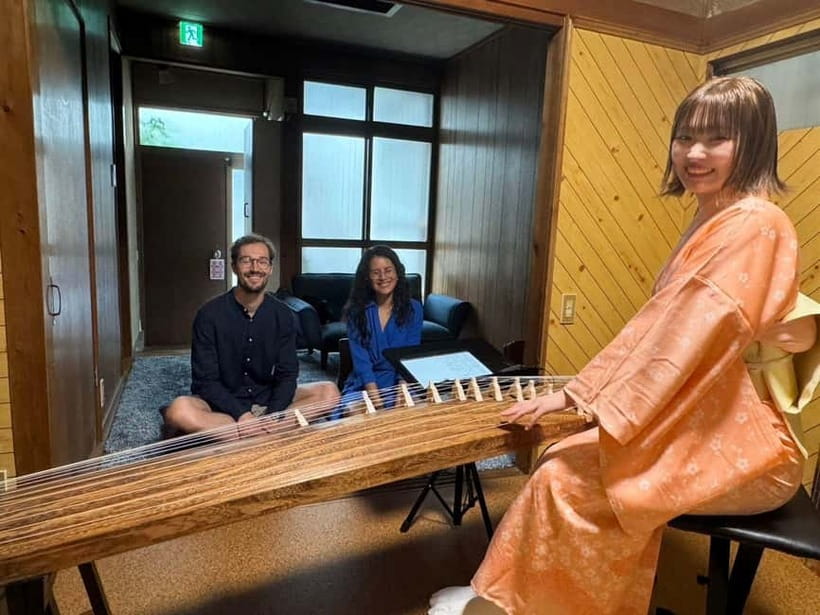
The townhouse has a practical advantage, too: the hands-on koto workshop is offered here. After the concert and questions, you can sit at a sanitized instrument, learn how to position yourself, pluck the strings, and attempt a short phrase. The session lasts about 35 to 40 minutes and is designed for beginners. You will not become a koto player in one afternoon, but you will understand the instrument in a way that simply watching cannot provide.
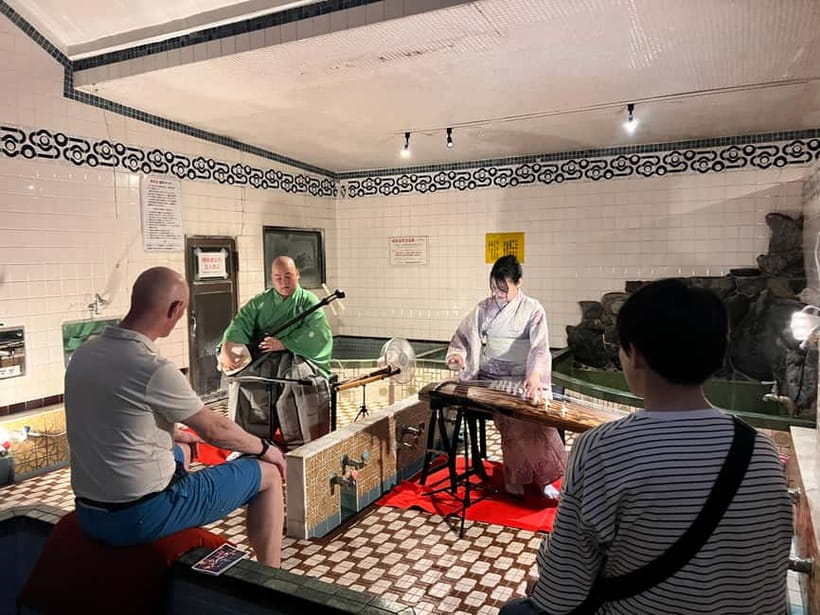
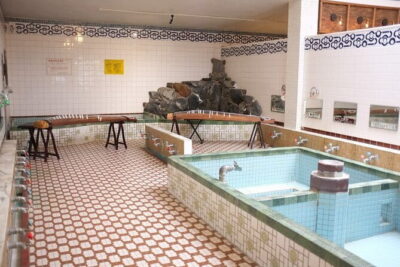
The historic bathhouse hall offers a different sound. It has tiled walls and natural reverberation, giving the music a fuller, more enveloping quality. Instead of only a solo performance, the program pairs koto with another instrument. Possible combinations include shamisen, shakuhachi, taishōgoto, flute, and guitar.
This program also includes four or five pieces, excluding the opening presentation. The changing pairings make it a good pick if you enjoy musical contrast. A koto and shamisen duet should have a different energy from koto and shakuhachi, while a guitar pairing may connect traditional Japanese sound with a more modern style.
The tradeoff is scheduling. The bathhouse concert is offered irregularly on Mondays, so you need to check the calendar rather than assume it will be available during your stay. Also, despite the name, this is not a bathing visit. Bathhouse facilities, food, drinks, and bathing are not included.
What happens during the 45 to 105 minutes
The shorter version begins with check-in and seating, usually taking about five to 10 minutes. In the townhouse, seating may be on cushions or chairs. In the bathhouse, you sit in rows. Venue etiquette is explained at the start, which is useful if you are unfamiliar with entering a traditional Japanese building.
Next comes the instrument presentation, lasting around 10 to 15 minutes. You learn how the koto and shamisen are made, how players use picks, bridges, and strings, and how Japanese notation differs from Western sheet music. This is not a long lecture. It is a practical guide to the sounds you are about to hear.
The concert itself runs about 25 to 30 minutes. Commentary is included between pieces, so you receive some context without losing the musical flow. The program may move between classical and contemporary material, and the performer may show different techniques on both instruments.
After the music, allow five to 10 minutes for questions and photographs. This is one of the strongest parts of the format. You can ask about the pieces, the instruments, the performer’s training, or the meaning behind a song. You also have time to meet the musician instead of simply applauding and leaving.
If you choose the townhouse workshop, add another 35 to 40 minutes. That brings the total visit toward the longer end of the 45 to 105-minute range. Check the starting time and selected option carefully, especially if you are connecting this with a timed temple or train visit.
The music: traditional, modern, and personal
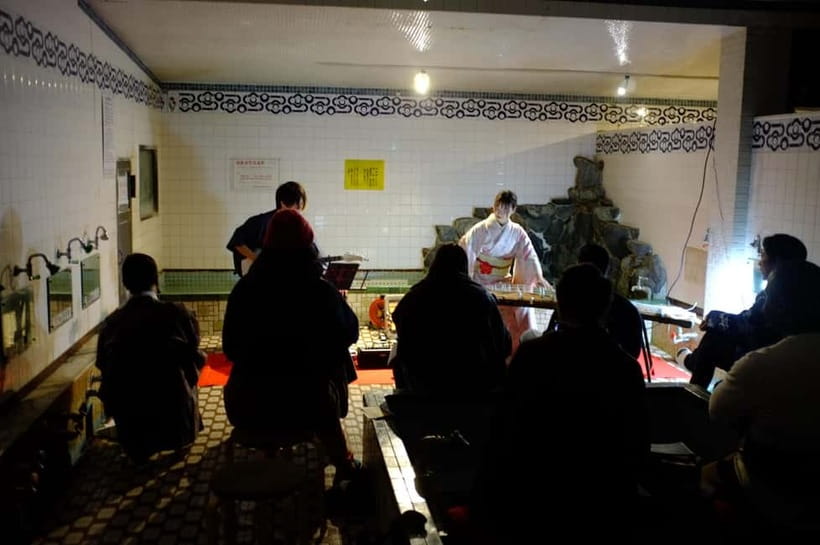
The program is not a museum piece performed behind glass. The artists bring their own taste and technical strengths to the selection. You may hear old Japanese ballads alongside newer arrangements, and you may hear a performer sing while playing.
That variety is important. One concert attendee wished for more shamisen, while the public program they attended included three koto pieces and one shamisen piece. If you are mainly interested in the shamisen, check the description of your chosen session rather than assuming equal time for both instruments.
The music can be peaceful, but it is not always soft. Koto playing can shift from delicate, bell-like notes to forceful runs and strong rhythmic attacks. The shamisen has a more pronounced snap and edge. In the bathhouse, the tile surfaces should make these contrasts even more noticeable.
At the townhouse, the closeness changes how you listen. You can follow the performer’s hands and see the physical effort behind what may sound effortless. The small room also makes the performer’s voice and expression part of the event.
At the bathhouse, the sound has more room to travel. A duet can feel more dramatic there, particularly when the instruments answer one another. The setting is less private than the townhouse, but it may suit you better if you prefer a concert atmosphere with a larger audience.
A completely different side of Kyoto:
- PERFECT KYOTO 1-Day Bus Tour
★ 5.0 · 13,518 reviews - Kyoto: Fushimi Inari, Kinkakuji, Bamboo Grove 1 Day Bus Tour
★ 4.8 · 4,316 reviews - Kyoto: Tea Ceremony in a Traditional Tea House in Kiyomizu
★ 4.9 · 3,519 reviews - Kyoto Geisha Walking Tour: Gion District & Hidden Gems
★ 4.7 · 3,273 reviews
The workshop is worth adding if you like to participate
The optional koto workshop is not a token photo opportunity. You are shown how to sit, how to pluck, and how to approach a short musical phrase. The instruments are sanitized, and guidance is provided throughout.
Several visitors especially valued being able to play alongside the musician, including families with children old enough to follow instructions. One participant noted that the instructor gave extra help to their son. That makes the workshop a good choice for curious first-timers, not just musicians.
The workshop also explains why the koto deserves respect. Its simple appearance hides a great deal of control. Small changes in finger pressure, pick angle, and bridge placement affect the tone. Even producing a short phrase gives you a better sense of the performer’s skill.
The workshop is only available with traditional townhouse bookings. If you want both the bathhouse acoustics and the chance to play, you would need to see if separate dates are available during your Kyoto stay.
Why the small group matters
The townhouse capacity is about 11 people, and private or small-group bookings may be available. With seven or nine people, the room can feel almost like a private salon. If the entire booking is yours, the question period becomes especially relaxed and personal.
Small numbers also make the explanations easier to follow. You can ask a question without speaking over a crowd, and the host can involve the audience when demonstrating an instrument or notation. The setting is informal, so do not expect the polished distance of a major concert hall.
That informality is usually a strength, though the opening presentation may feel slightly awkward depending on the host and group. The tone is friendly rather than formal. If you want a grand, highly staged performance, this may feel too modest. If you want direct contact with musicians, it is exactly the point.
The bathhouse can hold around 30 people, so it offers less personal space but more acoustic effect. It is the better match for a larger group or for anyone drawn to unusual architecture and ensemble performance.
Price, timing, and fitting it into Kyoto
At about $32 per person, the townhouse concert is good value if you treat it as both a performance and a cultural lesson. You receive a live concert, bilingual commentary, a Q&A, time for photos, and, if selected, the workshop. A 45-minute concert-only visit is a compact way to add music to a busy Kyoto day. The longer version gives you more direct participation.
The price is less about duration than access. You are paying for professional musicians, a small audience, and a setting where you can ask questions. For comparison, a short public show with little explanation might take less time but tell you far less about the instruments.
The activity fits well around several major sights. From the area near Saiin, Arashiyama takes about 25 minutes by walking to Saiin Station, traveling by Hankyu to Katsura, and transferring to the Randen Line. Nijō Castle is about 20 minutes away, making it a sensible pairing before or after the concert.
Kinkaku-ji is listed at about 20 minutes by bus from Nishioji Sanjō, followed by a short walk. Nishiki Market is about 25 minutes away by direct Hankyu service to Karasuma or Kawaramachi. Build in extra time for finding the venue, especially for the townhouse, since the entrance can be away from the usual sightseeing routes.
Do not plan around the wrong meeting point. The location varies by option, and the townhouse may not look like a concert venue from the street. Use the exact address and booking instructions you receive. One useful practical trick from a past visit was entering the latitude and longitude when the written address proved difficult to find.
Who will enjoy this most
I would recommend the townhouse to:
- First-time visitors who want a clear introduction to Japanese instruments
- Couples and families who prefer a calm, small-group setting
- Music lovers who want to see technique close up
- Anyone interested in trying the koto
- Visitors with a flexible evening, since townhouse sessions are held almost every day
I would point you toward the bathhouse if you care most about acoustics, duet arrangements, or an unusual venue. It also makes sense for visitors who prefer a slightly larger audience and a more conventional concert layout.
This is not the best pick if you need a fully scheduled, fixed-format event every day. The bathhouse dates are limited, and the performer and repertoire change. It is also not designed for babies under one year old.
English is supported, but the activity is not an English-only concert. The music and much of the atmosphere are shared across languages, while commentary is provided in Japanese and English. That balance works well for an international audience.
Cancellation and booking details
You can cancel up to 24 hours before the start time for a full refund. A reserve-now, pay-later option is also available, which helps if your Kyoto plans are still moving around.
Check the selected venue, start time, group type, and workshop option before paying. Transportation is not included, and neither are food, drinks, or bathing. The meeting point changes according to the venue.
FAQ
How much does the Kyoto traditional concert cost?
The listed price is $32 per person.
How long does the activity last?
The full duration ranges from 45 to 105 minutes. The concert portion lasts about 25 to 30 minutes, and the optional koto workshop adds about 35 to 40 minutes.
Which venues can I choose?
You can choose a traditional townhouse or a historic bathhouse hall. The townhouse offers solo performances, while the bathhouse offers solo and duet programs.
How many people fit in the townhouse?
The traditional townhouse holds approximately 11 guests.
How many people fit in the bathhouse hall?
The historic bathhouse hall holds approximately 30 guests.
Is a koto workshop included?
The hands-on workshop is optional and available only with traditional townhouse bookings.
What instruments might I hear?
You may hear koto and shamisen, along with instruments such as shakuhachi, taishōgoto, flute, guitar, and other instruments in the bathhouse duet program.
Is the activity suitable for beginners?
Yes. Most participants have little prior knowledge of Japanese instruments, and the bilingual introduction explains how the instruments, notation, and repertoire work.
Is bathing included at the bathhouse venue?
No. The bathhouse refers to the historic hall setting. Bathing, food, drinks, and entry to bathhouse facilities are not included.
Can I cancel if my plans change?
You can cancel up to 24 hours in advance for a full refund. Reserve now and pay later is also available.
Should you book it?
Book the traditional townhouse if you want the most personal version, a near-front-row view of the musician, and the chance to play the koto yourself. It is the strongest choice for a first introduction and for anyone who prefers a quiet, reflective setting.
Choose the bathhouse hall if you can match its limited Monday schedule and want broader acoustics or a duet with another instrument. Either way, this is a thoughtful addition to Kyoto: short enough to fit between major sights, but substantial enough to give traditional music a human face.
Recently added around Kyoto
- Higashiyama | Kyoto: Sakura Season Private Rickshaw Tour★ 5.0 · 3 reviews
- Kyoto Kimono Rental CHAMATSU|Kimono/Yukata Rental FamilyPlan★ 5.0 · 3 reviews
- Kyoto: Half-Day Private Guided Tour to the Old Town of Gion★ 4.4 · 3 reviews
- Nara Private Customizable Half Day Tour★ 5.0 · 3 reviews
- Kansai Region Hiking Adventure in Nara Kobe Kyoto and More★ 5.0 · 3 reviews
- Full Day Nara Deer, Temple, Shrine, Activities & Tea Ceremony★ 5.0 · 3 reviews
- Nara: Essential Private Tour with Deer Park and Temples★ 5.0 · 3 reviews
- Photo Shoot with a Private Vacation Photographer in KYOTO, JAPAN★ 5.0 · 3 reviews
Concerts, compared.
Concerts Played with Traditional Instruments in Kyoto
Read our review →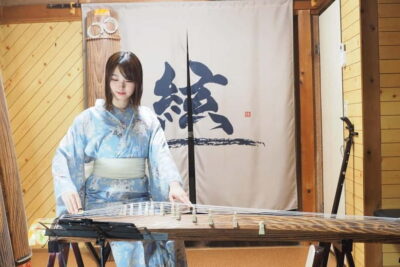
Traditional Concert in Public bath near Kyoto Station
Read our review →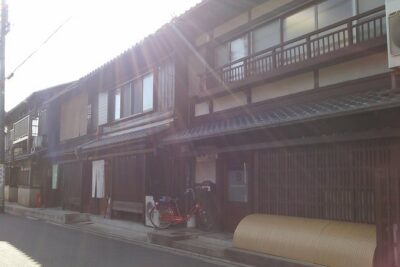
Browse the lists this tour appears in