

REVIEW · KYOTO TRADITIONAL MUSIC EXPERIENCES
Shamisen Discovery in Kyoto 【Group】
A shamisen lesson gives you something most Kyoto sightseeing cannot: a chance to make the sound yourself. In a 60-minute class with Jack, an instructor with more than 20 years of experience, you learn how this three-stringed Japanese instrument is held, played, and heard in traditional music.
I like the tiny group size, capped at five, because you get real help instead of watching from the back. I also like the mix of structure and play: you learn a scale, then use it in a free session and a jam with Jack. The main limitation is the short length. You will get a lively introduction, not a full course in shamisen.
In This Review
- Key points
- A 60-minute introduction to shamisen in northern Kyoto
- Meeting the instrument before you play
- Learning basic form, bachi control, and sound
- From a first scale to a real song
- The jam session with Jack
- Photos, tea, and a gentler finish
- What the $65.89 price includes
- How to fit the dojo into a Kyoto day
- Who will enjoy this most
- The strongest reason to book
- Things to consider before booking
- Should you book the Shamisen Discovery in Kyoto?
- FAQ
- Where does the shamisen lesson take place?
- How long is the experience?
- How many people can join the class?
- Is the experience suitable for beginners?
- Is a shamisen provided?
- Are left-handed players accommodated?
- Are photos included?
- Are drinks included?
- Is private transportation included?
- Can I cancel for a full refund?
Key points
- A rare hands-on Kyoto activity: You hold and play a traditional Japanese instrument rather than only seeing one in a display.
- Small groups make a difference: The maximum is five people, allowing Jack to correct your posture and playing technique.
- You can make music in one hour: The lesson includes basic scales, free playing, and a guided jam session.
- Tea, coffee, and photos are included: You leave with a simple keepsake photo and a pleasant break during the lesson.
- Left-handed players are covered: Lefty shamisen are available, so you do not have to reverse the basic setup.
- A good fit for mixed skill levels: People with no music background and experienced musicians can both take part.
A 60-minute introduction to shamisen in northern Kyoto
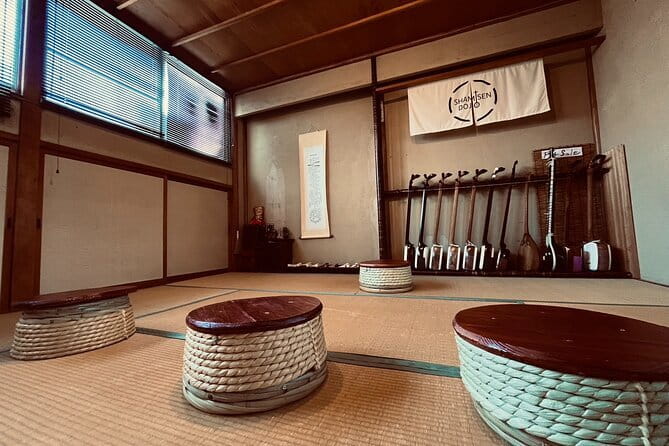
This experience takes place at Shamisen Dojo in Murasakino Nakakashiwanocho, in Kyoto’s Kita Ward. The activity starts and ends at the same meeting point, and it is near public transportation. Private transportation is not included, so you need to make your own way there.
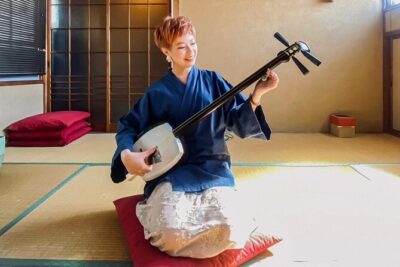
The setting is important. This is not a stage show or a quick photo stop where you pose beside an instrument. You receive a rental shamisen and use it throughout the lesson. For an hour, the focus is on making a basic sound, learning simple patterns, and getting a feel for the instrument in your hands.
The class is offered to a maximum of five people. That limit is one of the strongest features of the experience. A large workshop can leave beginners waiting for help, but a five-person class gives Jack room to watch how you hold the shamisen and bachi, the traditional plectrum, then offer corrections.
The lesson is suitable for adults, children, individuals, couples, families, and friends, as long as the participants can take part in a basic music class. Most people can participate. You do not need to arrive with previous shamisen training.
More traditional music sessions:
- Kyoto: Nishiki Market Tea Ceremony with Koto Performance
★ 4.8 · 294 reviews - TAIKO, Japanese Drum Experience from Kyoto
★ 5.0 · 86 reviews - Shamisen Experience in Kyoto 【Private】
★ 5.0 · 82 reviews
Meeting the instrument before you play
The class begins with an introduction to the shamisen. You learn about its different types and basic history before moving into technique. This short explanation gives the playing lesson some context, so the instrument feels like more than an unfamiliar prop.
The shamisen is a stringed Japanese instrument with a distinct tone. It is played with a bachi rather than being plucked only with the fingers. For a first-time player, the shape of the instrument and the motion of the right hand may feel unusual. Jack’s opening explanation helps you understand what you are holding before you try to produce a sound.
The pace appears designed for beginners, but musicians will not be left with nothing to do. People who play another instrument can focus on the scale, rhythm, and tone. In a one-hour session, experienced players may also enjoy comparing the shamisen’s technique with the instruments they already know.
One practical point is worth noting: the instrument is rented for the session, so you do not need to arrange one in advance. You can choose the shamisen you like for the photo session, while the class itself gives you time to become familiar with the instrument you are using.
Learning basic form, bachi control, and sound
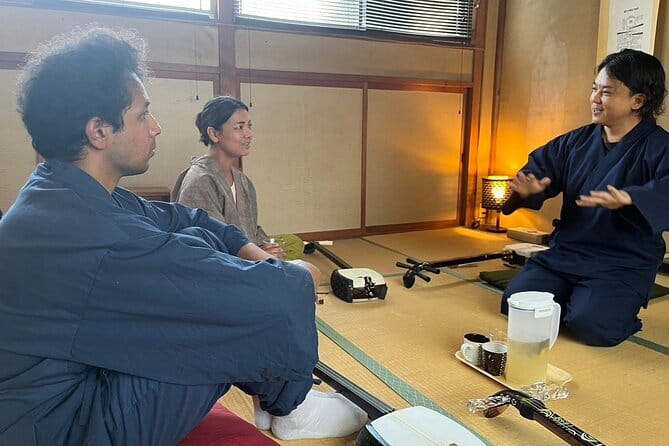
The next part covers how to hold the shamisen and bachi correctly. This may sound simple, but posture and hand position matter on an instrument with a technique that is new to most people. Early guidance can save you from spending the whole class fighting the instrument.
Jack teaches basic playing methods and introduces one shamisen scale. The class may also include several Japanese scales, depending on the group and pace. That flexibility is useful because a complete beginner may need more time with the first notes, while a musician may be ready to move on quickly.
The instructor’s teaching style is a major part of the value. Jack has more than 20 years of experience, and the class is structured around direct guidance rather than a fixed lecture. He can adjust the session to the people in front of him, helping beginners step by step while giving more confident players room to experiment.
You should not expect polished concert technique after an hour. You should expect to understand the basic hand positions, play a simple scale, and recognize how the shamisen produces its characteristic sound. That is a sensible goal for a short cultural activity.
From a first scale to a real song
The most satisfying part comes when the lesson shifts from instructions to music. You get free time to play the shamisen and try the sounds you have learned. This is where the session becomes less like a demonstration and more like a personal music workshop.
The free playing period also keeps the class relaxed. You can test a note, repeat a pattern, or experiment with a melody without the pressure of performing for an audience. If you are nervous about musical ability, this matters. The point is to make sound and enjoy the process, not to pass an audition.
Some participants have been able to play through a song by the end of the hour. That result will depend on your pace, musical background, and the group’s needs, but it shows what the class is aiming for. Even if you do not complete a song, you should have a basic scale and a few techniques to take away.
Musicians may find this section especially rewarding. The lesson has enough room for people who already understand rhythm and pitch to pick up the patterns quickly. At the same time, Jack’s guidance makes the experience approachable for someone who has never played a string instrument.
A completely different side of Kyoto:
- PERFECT KYOTO 1-Day Bus Tour
★ 5.0 · 13,518 reviews - Kyoto: Fushimi Inari, Kinkakuji, Bamboo Grove 1 Day Bus Tour
★ 4.8 · 4,316 reviews - Kyoto: Tea Ceremony in a Traditional Tea House in Kiyomizu
★ 4.9 · 3,519 reviews - Kyoto Geisha Walking Tour: Gion District & Hidden Gems
★ 4.7 · 3,273 reviews
The jam session with Jack
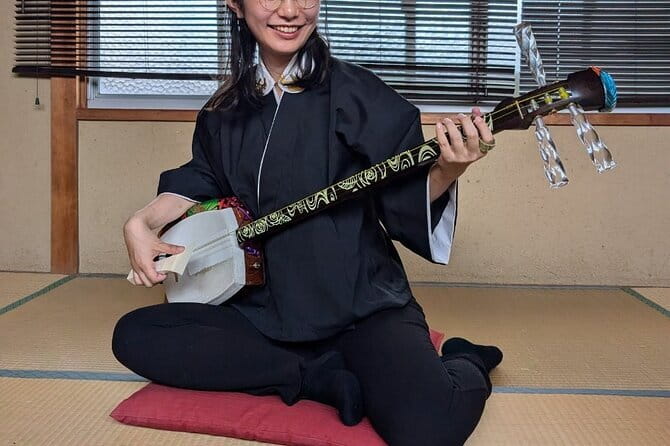
The class finishes with a jam session. Jack provides accompaniment while participants create melodies freely. This is a smart way to close the lesson because it turns the earlier material into something social and musical.
You do not need to invent a complex composition. The idea is to use the scale and sounds introduced during the class, then respond to the accompaniment. You might play a short phrase, repeat a pattern, or simply follow the rhythm. The session gives you a taste of how a shamisen can function in a traditional music setting.
This is also the point where the small group matters most. With only a few people, the session can feel personal rather than chaotic. You get a chance to play, listen, and react. Friends or family members can make this more fun, especially if everyone enjoys music and does not mind laughing at a few imperfect notes.
The experience includes an introduction to the five signature sounds of Japan, adding another cultural layer to the jam. The exact balance between teaching and free playing can vary with the group, but the format clearly favors participation over passive listening.
Photos, tea, and a gentler finish
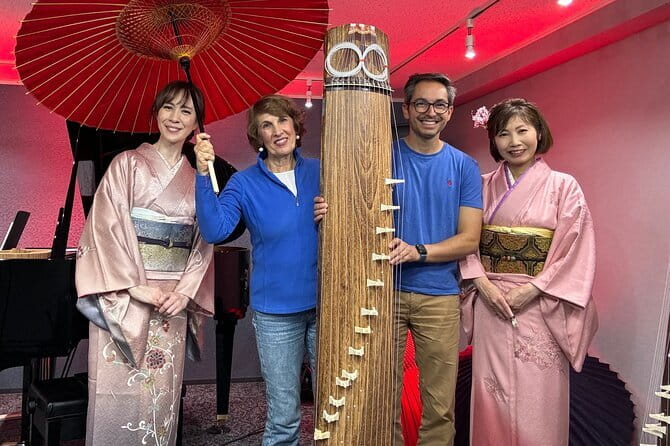
A photo session with the shamisen is included. You can hold the instrument you like and have the instructor take photos of you playing. This is a useful extra because it records the activity without turning the entire class into a photo opportunity.
Coffee and tea, including green tea, are also included. The drink is a small detail, but it helps the hour feel welcoming and gives you a brief pause during the lesson. You should still arrive hydrated, especially if you have spent the morning walking around Kyoto.
The photo and tea elements also make the activity work well for people who are not serious musicians. Someone in your group may be eager to play, while another person may be more interested in Japanese culture and the photo. Both can find something worthwhile here.
What the $65.89 price includes
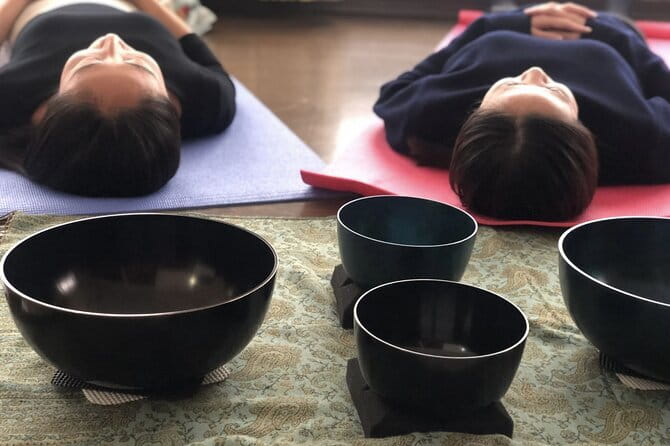
At $65.89 per person, this is not the cheapest one-hour activity in Kyoto. The value depends on what you want from your day.
The price includes the shamisen rental, instruction, photo session, and coffee or tea. You are paying for access to an authentic instrument, a professional teacher, and a small class rather than simply paying for admission to a cultural site. The five-person maximum makes the cost easier to justify because the instruction is more personal than a large group workshop.
I would compare this price with the cost of another short, hands-on cultural activity, not with a free temple visit. Kyoto has many places where you can see traditional arts, but far fewer where you can handle an instrument and make music with an instructor.
The value is strongest for couples, siblings, friends, and parents with older children who want a shared memory. It is also appealing for musicians, since you can learn a Japanese instrument and explore its scales rather than only taking a general cultural class.
The value is weaker if you want a long technical lesson or hope to become proficient in shamisen during one visit. The class is an introduction. If you become serious about continuing, a longer lesson may suit you better. Jack has also offered follow-up online lessons to people who purchased a shamisen, but that is not part of the standard booking described here.
How to fit the dojo into a Kyoto day
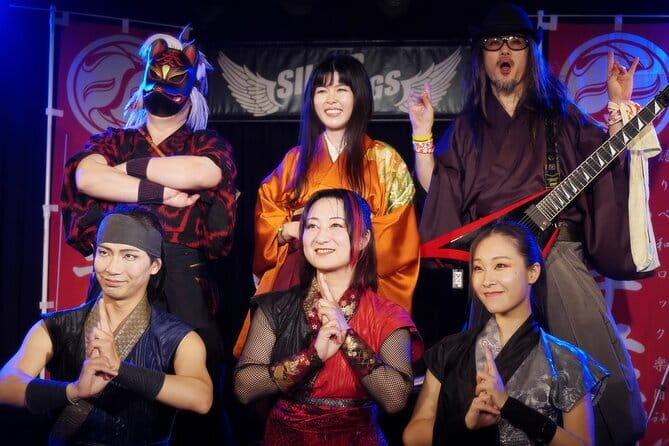
The meeting point is in northern Kyoto, in Kita Ward. You need to plan transportation yourself, since private transfers are not included. The activity ends where it begins, so you can continue sightseeing afterward without arranging a separate drop-off.
A practical pairing is a visit to Kinkaku-ji, the Golden Pavilion, earlier in the day, followed by the shamisen lesson. The class location and your transport time still need checking before you commit to the sequence, but the two activities make a logical cultural day in northern Kyoto.
Because the class lasts about an hour, it is easy to fit around other plans. Give yourself enough time to reach the meeting point and avoid booking something immediately afterward if you do not know the local transport route. A late arrival could cut into a short lesson, and every minute matters in a 60-minute class.
The experience is booked, on average, 25 days ahead. That suggests you should reserve early if your Kyoto dates are fixed, particularly because the class accepts no more than five people. Confirmation is provided at booking, and the ticket is mobile.
Who will enjoy this most
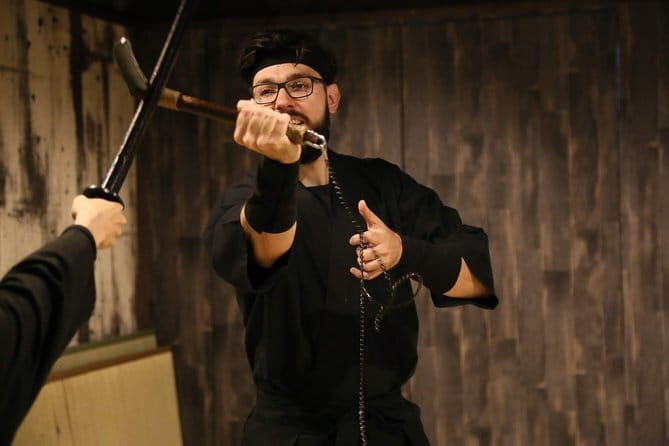
I would recommend the class most strongly to people who enjoy active cultural experiences. You are not simply watching an expert demonstrate the shamisen. You are asked to hold it, practice it, and use it in a group session.
It suits:
- First-time players who want a friendly introduction
- Musicians curious about Japanese scales and technique
- Couples or siblings looking for a shared Kyoto activity
- Parents traveling with older children
- Visitors who want a break from temples and crowded sightseeing areas
- Anyone interested in traditional Japanese music
It may be less suitable for someone who wants a quiet, private lesson. The booking is for a group, with up to five participants, so you share the instructor’s attention. It is also not the best choice for a person who wants a full technical course, since the scheduled session lasts only one hour.
Solo participants are welcome, but bringing a friend can make the free playing and jam more enjoyable. A group of people who already know one another may also feel more comfortable experimenting together.
The strongest reason to book
The strongest reason to book is the combination of personal instruction and immediate participation. Jack explains the instrument, helps you hold it properly, teaches a scale, and then gives you a chance to create your own melody with accompaniment. That arc makes the hour feel like a complete introduction rather than a collection of unrelated activities.
The instructor’s personal attention is another major plus. He has been praised for adapting to different levels, from people with no string-instrument experience to accomplished musicians. That does not guarantee the same result for every group, but it indicates that the class is not built around a rigid, one-speed script.
I also appreciate that left-handed players are not treated as an afterthought. Lefty shamisen are available, which removes a practical concern for people who would otherwise struggle with a standard setup.
Things to consider before booking
Keep your expectations realistic. You will learn the basics, but you will not master the shamisen in an hour. The experience works best when you treat it as a first meeting with Japanese music, not as a replacement for a multi-session course.
Think about the location and timing, too. The dojo is in Kita Ward, not at a central sightseeing landmark, and transportation is your responsibility. The class is near public transportation, but you still need to allow time to reach the meeting point.
Finally, note the cancellation rule. You can cancel for a full refund up to 24 hours before the local start time. Cancellations or changes made less than 24 hours in advance are not accepted for a refund.
Should you book the Shamisen Discovery in Kyoto?
Book it if you want to do something hands-on, enjoy music, and value a small class over a large cultural show. At $65.89, the rental instrument, one-on-one help within a five-person group, tea or coffee, photos, scale practice, and jam session make the price reasonable for a focused Kyoto activity.
Skip it if you need a private lesson, a longer course, or a central meeting point with transportation included. For most people who want a memorable introduction to a Japanese instrument, though, this is a smart one-hour addition to a Kyoto itinerary.
FAQ
Where does the shamisen lesson take place?
The activity starts and ends at Murasakino Nakakashiwanocho, Kita Ward, Kyoto, 603-8312, Japan.
How long is the experience?
The course lasts approximately 60 minutes.
How many people can join the class?
The activity has a maximum of five participants.
Is the experience suitable for beginners?
Yes. The class is designed as an introduction and includes basic information, playing techniques, and one shamisen scale.
Is a shamisen provided?
Yes. A rental shamisen is included in the price.
Are left-handed players accommodated?
Yes. Left-handed shamisen are available.
Are photos included?
Yes. The experience includes a photo session with the shamisen you choose, and the instructor can take photos of you playing.
Are drinks included?
Yes. Coffee, tea, and green tea are included.
Is private transportation included?
No. Private transportation is not included. The meeting point is near public transportation.
Can I cancel for a full refund?
Yes. You can cancel at least 24 hours before the local start time for a full refund. Cancellations or changes made less than 24 hours before the start time are not accepted for a refund.
Recently added around Kyoto
- Higashiyama | Kyoto: Sakura Season Private Rickshaw Tour★ 5.0 · 3 reviews
- Kyoto Kimono Rental CHAMATSU|Kimono/Yukata Rental FamilyPlan★ 5.0 · 3 reviews
- Kyoto: Half-Day Private Guided Tour to the Old Town of Gion★ 4.4 · 3 reviews
- Nara Private Customizable Half Day Tour★ 5.0 · 3 reviews
- Kansai Region Hiking Adventure in Nara Kobe Kyoto and More★ 5.0 · 3 reviews
- Full Day Nara Deer, Temple, Shrine, Activities & Tea Ceremony★ 5.0 · 3 reviews
- Nara: Essential Private Tour with Deer Park and Temples★ 5.0 · 3 reviews
- Hiking Tour for Sacred Sites in Kyoto with a Guide★ 5.0 · 3 reviews
Kyoto Traditional Music Experiences, compared.
Nishiki Market Tea Ceremony with Koto Performance
Read our review →
Private Koto Lesson in Kyoto with a Professional Koto Performer
Read our review →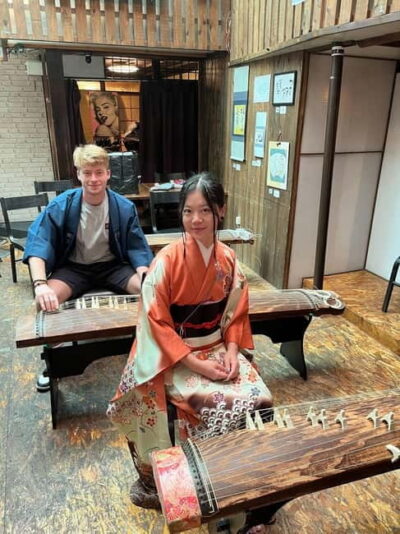
Browse the lists this tour appears in