
REVIEW · KYOTO TRADITIONAL MUSIC EXPERIENCES
Private Koto Lesson in Kyoto with a Professional Koto Performer
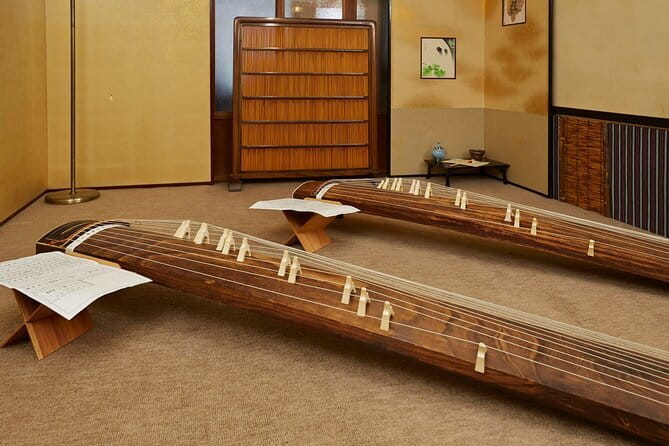
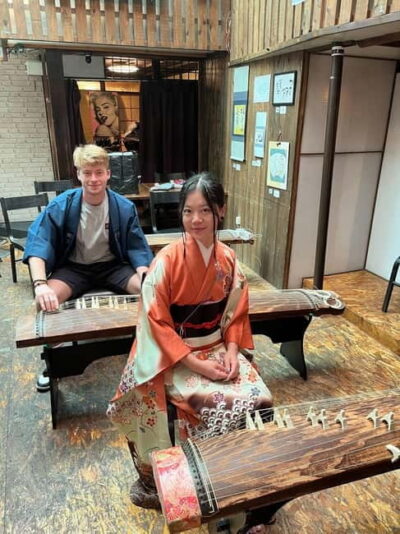
The most interesting part of this Kyoto experience is that you do not just watch a traditional instrument being played. You sit down with a professional koto performer and learn enough technique to play Sakura, one of Japan’s best-known traditional songs. The lesson also explains the koto’s role in formal Japanese ceremonies.
I like the private format, since only your group takes part, and I like that the $60 price includes the instrument, lesson, music notation, taxes, and fees. The main consideration is the fixed meeting point in northern Kyoto, since private transportation is not included and the experience ends where it begins.
In This Review
- Key Points at a Glance
- A Kyoto Music Lesson With Real Hands-On Time
- What Happens During the 80-Minute Lesson
- Why the Private Format Helps
- A Patient Teacher Makes the Difference
- The Tea Break and Performance
- The $60 Price and What It Covers
- Getting to Soushunan in Kamigyo Ward
- Who Will Enjoy This Most
- Booking and Cancellation Advice
- Should You Book This Koto Lesson?
- FAQ
- Where does the private koto lesson take place?
- How long does the experience last?
- What song will I learn?
- Is the lesson private?
- Are children allowed to participate?
- Is the koto provided?
- Is transportation included?
- Can I cancel for a full refund?
Key Points at a Glance
- Play Sakura yourself: The lesson is built around learning a traditional Japanese song, not simply listening to a demonstration.
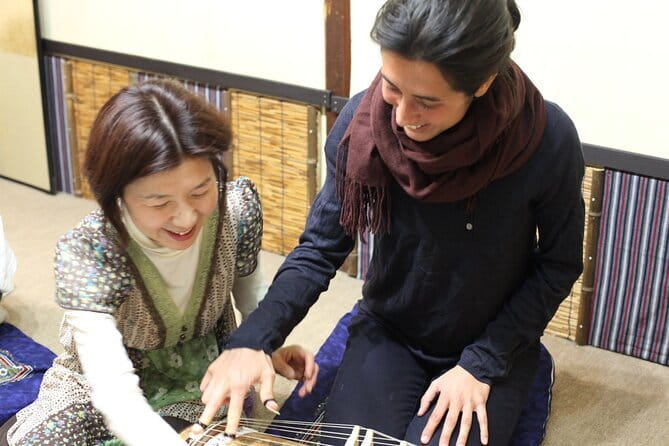
- Learn from a working performer: The owner is a professional koto player who teaches both technique and the tradition behind the instrument.
- Private group setting: Only your party participates, making this a good choice for families and small groups.
- Suitable for many ages: The activity welcomes everyone from three-year-old children to elderly participants.
- Tea and a performance follow: After playing, you can take a tea break and enjoy your teacher’s own koto performance.
- One clear price: The $60 fee per person includes koto use, instruction, music notation, taxes, and other listed fees.
A Kyoto Music Lesson With Real Hands-On Time
Many cultural activities in Kyoto ask you to watch, listen, or dress up. This one asks you to play. That difference matters. The koto is not treated as a museum object here, but as a living instrument that you can try under careful instruction.
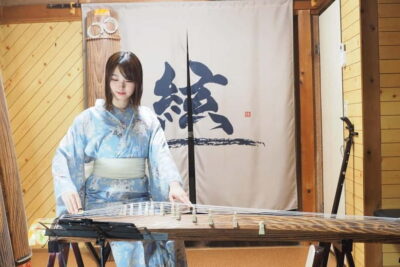
The koto is a traditional Japanese string instrument associated with formal ceremonies and classical music. You do not need to arrive with musical training. The lesson supplies the instrument and notation, while the teacher guides you through the process of making music.
The goal is modest but satisfying: learn enough to play Sakura. That gives the lesson a clear shape. You are not left wondering what you are supposed to achieve during the 80 minutes, and you have a familiar Japanese melody to take away from the experience.
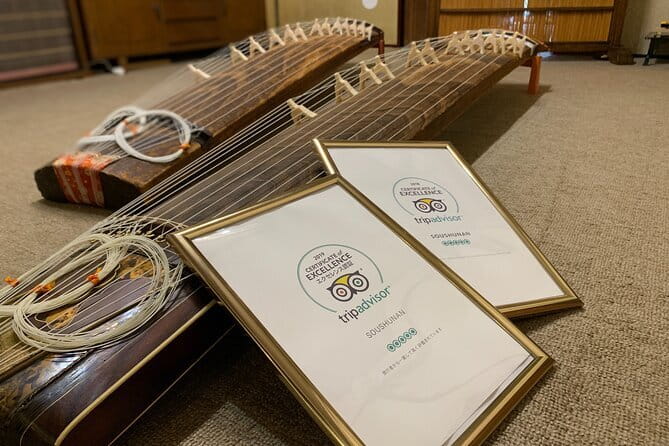
The activity takes place at Soushunan, at 288-2 Higashishinmeicho in Kyoto’s Kamigyo Ward. The official address also gives the name in Japanese as 箏春庵. Because the location is a set meeting point rather than a hotel pickup service, you will need to make your own way there. Public transportation is nearby, but transportation to and from the lesson is not part of the price.
More traditional music sessions:
- Kyoto: Nishiki Market Tea Ceremony with Koto Performance
★ 4.8 · 294 reviews - TAIKO, Japanese Drum Experience from Kyoto
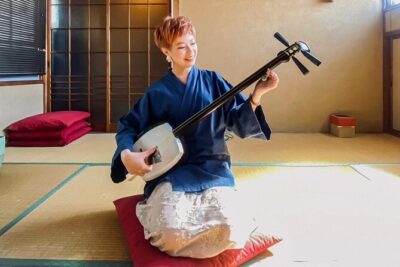
★ 5.0 · 86 reviews - Shamisen Experience in Kyoto 【Private】
★ 5.0 · 82 reviews
What Happens During the 80-Minute Lesson
Your experience begins at the meeting point, where the equipment for the lesson is ready. The price includes use of the koto and the music notation, so you do not need to rent an instrument or buy teaching materials separately.
The opening portion introduces the instrument and its place in Japanese culture. The teacher explains the history and tradition connected with the koto while helping you get started with playing it. The cultural background is useful because it shows why the instrument matters beyond the mechanics of plucking strings.
Next comes the practical part. With guidance from the professional performer, you work through the basics needed to play the melody. The teacher’s role is especially important here. A koto may look simple from a distance, but producing a song requires coordination, and a patient instructor can correct you as you go.
The lesson focuses on Sakura. That familiar tune is a good choice for a short session because it gives you a specific musical target. You are not expected to become an accomplished koto player in one visit. Instead, you get a genuine first experience and the satisfaction of playing part of a traditional Japanese song yourself.
A child can take part alongside adults. The teaching has been effective for young students, including a son who worked hard and mastered Sakura during the lesson. That makes this a practical family activity, especially if you want something that parents and children can do together rather than split up for separate age groups.
The experience finishes with a tea break and a performance by the teacher. This closing section changes the pace. After concentrating on your own playing, you can sit back and hear what the instrument sounds like in expert hands. It also gives you a better sense of the distance between a beginner’s first notes and a professional performance.
The listed duration is approximately one hour and 20 minutes. That is long enough for instruction, practice, cultural explanation, and the closing performance without taking up an entire day of sightseeing.
Why the Private Format Helps
Only your group participates in this activity. That is more than a marketing detail. A private lesson lets the teacher adjust the pace to your party instead of moving through a fixed demonstration for a large room.
This is useful for families with different ages and abilities. A three-year-old may need a lighter introduction, while an older child or adult may want more time with the melody. The supplied information does not promise a custom song or advanced instruction, but the private format should make it easier for the teacher to respond to the people in front of them.
It also gives you a quieter setting for questions. If you want to understand the instrument’s ceremonial role or ask about the notation, you can do so without worrying about a large class waiting behind you.
The private setup is not automatically better for everyone. If you enjoy the energy of a large group, meeting other participants, or a cheaper shared class, this may feel more contained. You are paying for personal attention and a reserved experience, not for a full afternoon of entertainment.
A Patient Teacher Makes the Difference
The teacher’s quality is central to this activity. The owner is a professional koto performer, and the experience is designed around learning directly from an expert rather than following a recorded lesson.
The teaching style is described as kind and patient, which is exactly what a beginner needs. One young student was able to play some recognizable pieces by the end of the lesson, eventually mastering Sakura. That does not mean every participant will reach the same point, but it shows that the lesson is structured to produce a real result within a short time.
You should still set sensible expectations. This is an introduction, not a professional music course. The available details do not specify advanced levels, instrument construction workshops, or a take-home practice instrument. The strength here is the guided first encounter, with a professional showing you how the music works and helping you play it yourself.
For children, patience matters even more than technical detail. The stated age range begins at three, so the activity is open to very young participants. At that age, the experience may be more about touching the instrument, following directions, and enjoying the sound than completing the entire melody. Older children and adults are more likely to handle the full lesson independently.
More workshops and classes in Kyoto:
- Kyoto: 45-Minute Tea Ceremony Lesson Experience
★ 4.3 · 2,378 reviews - Kyoto : Chopsticks Making Workshop in Gion with Engraving Option
★ 5.0 · 958 reviews - Kyoto: Samurai Sword Class by Experts in Traditional Arts
★ 4.9 · 657 reviews - Kyoto: Ramen Cooking Class at a Ramen Factory with Souvenir
★ 4.9 · 532 reviews
The Tea Break and Performance
The tea break is a small but important part of the experience. It gives you time to pause after the lesson and makes the activity feel like a cultural visit rather than a quick music class.
You also get to hear the teacher perform. This is where the koto’s sound can be appreciated without the distraction of trying to read notation or coordinate your hands. I like this balance: first you make an honest attempt, then you hear the instrument played at a professional level.
The performance also puts your own progress in context. Even if you manage only part of Sakura, you will have a better understanding of the skill involved after hearing an accomplished player. The contrast can be encouraging rather than discouraging, since the lesson is about participation and cultural contact, not perfection.
The available information does not specify the length of the performance or the type of tea served. You should treat it as a pleasant closing feature, not as a separate concert or full tea ceremony.
The $60 Price and What It Covers
At $60 per person, this experience offers a fair amount for a short private cultural activity. The price includes all fees and taxes, koto instrument use, and the lesson itself. Music notation is also available for the session, and the tea break and teacher performance are part of the stated experience.
That matters in Kyoto, where an apparently low activity price can sometimes grow after equipment hire or admission fees. Here, the main costs are bundled into one figure. You can compare the price against the 80-minute duration and the fact that your group has private instruction.
The value is strongest if you want active participation. If you only want to hear traditional Japanese music, a concert or performance may make better use of your money. If you want to try the instrument, understand its role, and leave having played Sakura, the lesson offers more than a standard sightseeing stop.
The price is per person, so calculate the total for your group before booking. Private transportation is not included, and you must reach Soushunan independently. Those are the two practical costs or arrangements most likely to affect your budget.
Getting to Soushunan in Kamigyo Ward
The meeting point is Soushunan, 288-2 Higashishinmeicho, Kamigyo Ward, Kyoto, 602-8162, Japan. The activity ends back at this same meeting point.
The location is near public transportation, which helps, but the information provided does not identify a particular train or bus route. Check the address carefully before leaving and allow enough time to reach the appointment. A mobile ticket is provided, which is useful for keeping your booking details on your phone.
Because there is no private transportation, this is easiest for people already planning time in northern or central Kyoto. You may find it less convenient if your hotel or sightseeing plans are far across the city. The lesson itself is not a walking tour, so you do not gain additional neighborhood sightseeing as part of the booking.
Confirmation arrives within 48 hours of booking, subject to availability. Since this experience is often reserved well in advance, planning ahead is sensible. The average booking lead time is 57 days, a useful signal that you should not wait until the last minute if your Kyoto dates are fixed.
Who Will Enjoy This Most
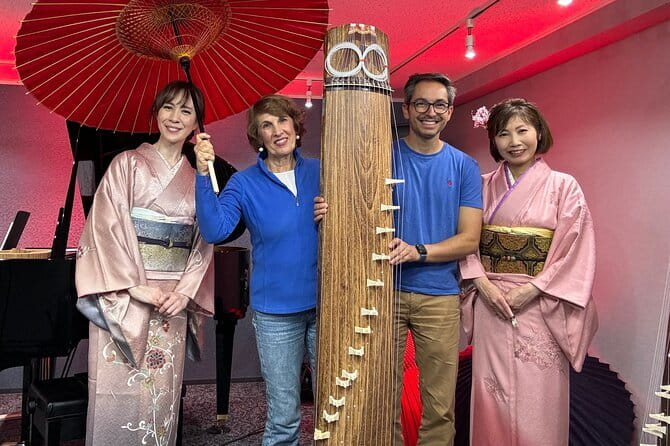
I would recommend this lesson to families, couples, and small private groups looking for an activity that feels specific to Japan. It is especially suitable if you want to do something hands-on between temple visits and do not need a full-day program.
It also suits beginners who may feel nervous about musical ability. The teacher provides the instrument and notation, and the lesson is built for a wide age range. You do not need to bring equipment or prepare a song in advance.
Children can take part, but parents should consider the child’s attention span. The stated minimum age is three, so young children are welcome, but the experience still involves instruction and concentration. A child who enjoys music, imitation, or trying unfamiliar objects is likely to get more from it than a child who wants constant movement.
Older adults can participate as well, making this a good multigenerational choice. Everyone in the group can try the same instrument, then share the tea break and performance afterward.
You may want to choose another activity if you need wheelchair-specific information, hotel pickup, or an open-ended schedule. Service animals are allowed, most people can participate, and the location is near public transportation, but the supplied details do not give further information about accessibility features.
Booking and Cancellation Advice
The experience offers free cancellation if you cancel at least 24 hours before the local start time. Canceling less than 24 hours in advance means the amount paid is not refunded, and changes made within that period are not accepted.
That policy is fairly simple, but the fixed timing matters. Coordinate your Kyoto sightseeing plans before booking so you are not crossing the city at the last minute. Since confirmation is subject to availability and may take up to 48 hours, reserve with enough time to adjust your schedule if needed.
The mobile ticket makes it easier to keep the booking on hand. You should still save the meeting address and allow extra time for the journey, since no transport is provided.
Should You Book This Koto Lesson?
Book it if you want to make music, not just observe Japanese culture. The private lesson, professional teacher, supplied equipment, clear goal of playing Sakura, and closing performance create a well-shaped 80-minute experience.
I especially recommend it for families and small groups. The broad age range and patient instruction make it possible for a child and an adult to share the same activity, while the private setting keeps the pace manageable.
Skip it if your priority is a large-scale concert, a full tea ceremony, or a sightseeing tour with transportation. This is a focused lesson at one location. At $60 per person, it earns its value through personal instruction and participation, not through a long list of stops.
For most visitors who want a personal connection with traditional Japanese music, Soushunan offers a practical and memorable way to begin.
FAQ
Where does the private koto lesson take place?
The lesson takes place at Soushunan, 288-2 Higashishinmeicho, Kamigyo Ward, Kyoto, 602-8162, Japan.
How long does the experience last?
The lesson lasts approximately one hour and 20 minutes.
What song will I learn?
The lesson teaches you to play Sakura, a traditional Japanese song.
Is the lesson private?
Yes. Only your group participates in this private activity.
Are children allowed to participate?
Yes. The experience welcomes participants from three years old through elderly adults.
Is the koto provided?
Yes. Koto instrument use is included, along with the lesson and music notation needed for the activity.
Is transportation included?
No. Private transportation is not included. The meeting point is near public transportation, and the activity ends back at the meeting point.
Can I cancel for a full refund?
Yes, if you cancel at least 24 hours before the experience’s local start time. Cancellations made less than 24 hours before the start time are not refunded, and changes within that period are not accepted.
Recently added around Kyoto
- Higashiyama | Kyoto: Sakura Season Private Rickshaw Tour★ 5.0 · 3 reviews
- Kyoto Kimono Rental CHAMATSU|Kimono/Yukata Rental FamilyPlan★ 5.0 · 3 reviews
- Kyoto: Half-Day Private Guided Tour to the Old Town of Gion★ 4.4 · 3 reviews
- Nara Private Customizable Half Day Tour★ 5.0 · 3 reviews
- Full Day Nara Deer, Temple, Shrine, Activities & Tea Ceremony★ 5.0 · 3 reviews
- Nara: Essential Private Tour with Deer Park and Temples★ 5.0 · 3 reviews
- Kansai Region Hiking Adventure in Nara Kobe Kyoto and More★ 5.0 · 3 reviews
- Hiking Tour for Sacred Sites in Kyoto with a Guide★ 5.0 · 3 reviews
Kyoto Traditional Music Experiences, compared.
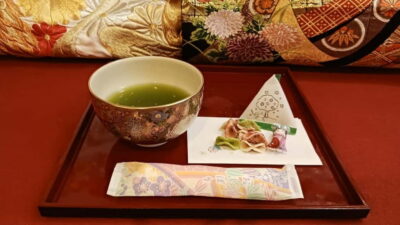
Nishiki Market Tea Ceremony with Koto Performance
Read our review →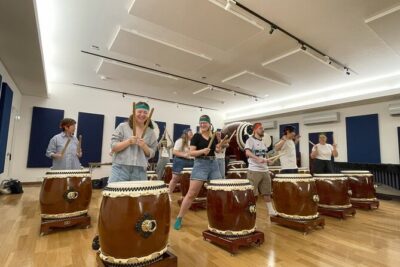

Browse the lists this tour appears in