
REVIEW · GION GEISHA DISTRICT TOURS
Kyoto Evening Gion Food Tour Including Kaiseki Dinner
Kyoto’s evening magic begins on foot. You cross the Kamogawa River, pass locals relaxing beside the water, slip into Pontocho, and then wander Gion’s wooden lanes before sitting down to a 10-course kaiseki dinner. I like the way the meal gives the walk a clear purpose, rather than leaving you with a few disconnected tastings.
I also like the small group, limited to 10 people, and the guides’ personal approach. Guides such as Yoshiko, Sae, Thomas, and Akari have been praised for explaining geisha culture, food, and Kyoto customs in clear English. The main drawback is the price: at $276 per person, you need to value the guided access and cultural explanation, not just the food.
In This Review
- Key points to know before booking
- From the Kamogawa River to Kyoto after dark
- Pontocho’s narrow lanes and old entertainment culture
- Gion Shirakawa and the wooden lanes of Gion
- What the geisha explanation adds
- The 10-course kaiseki dinner
- Why the small group matters
- Food needs, weather, and practical comfort
- Who gets the best value from this Kyoto evening
- Should you book the Kyoto Gion food tour?
- FAQ
- Where does the tour start?
- Where does the tour end?
- How long does the experience last?
- What is included in the price?
- Are hotel pickup and transportation included?
- Can dietary requirements be accommodated?
- Is the tour suitable for children?
- What happens if I need to cancel?
Key points to know before booking
- A river-to-Gion route: Cross the Kamogawa, stroll its evening terraces, then enter Pontocho and Gion on foot.
- A full kaiseki meal: The dinner includes 10 courses, green tea, dessert, and one drink.
- Small group format: The maximum is 10 people, and some departures may feel nearly private.
- Strong guides: Yoshiko, Sae, Thomas, Tomas, Zae, Akari, Bernard, Rosalia, Russ, G, and Sabreena are among the named guides associated with this experience.
- A walking-heavy evening: You need a good level of physical fitness, and weather can affect the route.
- A costly but convenient package: The guide, cultural walk, dinner, and included drinks are bundled together, but hotel transfers and extra food or drinks are not.
From the Kamogawa River to Kyoto after dark
The meeting point is the Japan Kanji Museum and Library in Gionmachi Minamigawa. The start time is 5 pm, a useful hour in Kyoto. You have daylight for the first part of the walk, then watch the old districts take on their evening mood as the tour continues.
The first major landmark is the Kamogawa River. You cross the bridge and walk near the long line of riverside terraces. These terraces are part of everyday Kyoto life, not simply a photo stop. Your guide can point out how locals use the riverfront as a place to sit, eat, talk, and slow down.
I like this opening because it gives you a sense of Kyoto’s geography. The river separates and connects several important areas, and crossing it on foot makes the transition feel real. You are not simply dropped at a restaurant in Gion. You see how the city changes block by block.
The route includes some food tastings before dinner. Exact samples can vary, but the experience has included Kyoto treats such as matcha cookies and items from a plum shop. These stops are small, yet they help you notice the way local food shops fit into the neighborhood.
Do not treat this as a full street-food crawl. The main food event is the evening meal, and the tastings are supporting stops along the walk. If you arrive hungry, that is sensible. If you need a large dinner, also keep in mind that some portions in a formal multicourse meal may be delicate rather than hefty.
More evenings in Gion:
- Kyoto Geisha Walking Tour: Gion District & Hidden Gems
★ 4.7 · 3,273 reviews - Kyoto: Gion Magical Night Walking Tour with Geisha Trivia
★ 4.9 · 2,393 reviews - Kyoto: Gion Geisha District Walking Tour – Stories of Geisha
★ 4.7 · 2,187 reviews
Pontocho’s narrow lanes and old entertainment culture
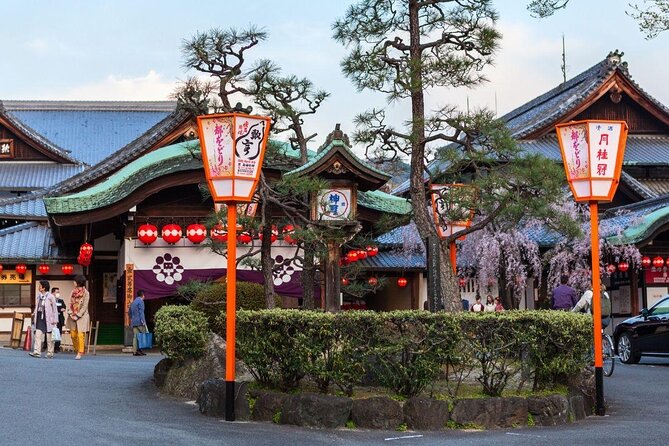
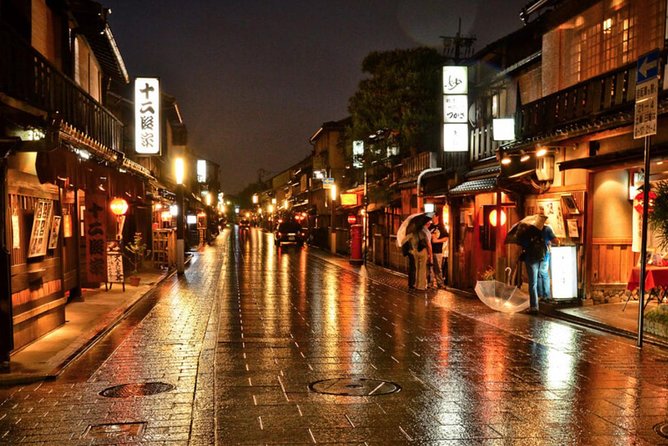
From the river, the route continues toward Pontocho. This narrow district has long been linked with geisha entertainment and teahouses. Its lanes are especially atmospheric after dark, with old-style buildings and discreet restaurant entrances.
Your guide explains the difference between the area’s public streets and its invitation-only establishments. That context matters. Pontocho can look like a row of attractive doorways, but you will not automatically walk into every restaurant or tea house you see.
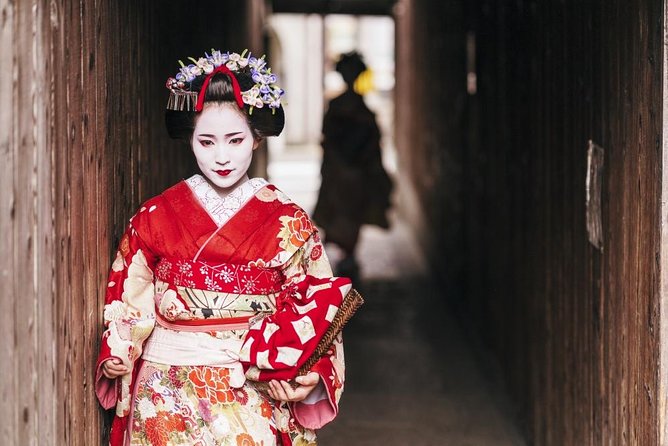
You might also spot geisha or maiko moving between appointments. Guides have helped people notice them without turning the moment into a chase. That is important in Gion and Pontocho, where respectful observation matters. You should keep a reasonable distance and follow your guide’s lead.
Pontocho is also one of the places where the tour’s value depends heavily on the guide. A quiet lane does not explain itself. Guides such as Thomas, Tomas, Sae, and Yoshiko have been praised for making the setting understandable, including the geisha system, local customs, and the role of traditional entertainment districts.
The route does not promise a geisha sighting, and you should not book it for that single possibility. Think of any glimpse as a bonus. The reliable part is the walk, the setting, and the explanation.
Gion Shirakawa and the wooden lanes of Gion
The tour then reaches Gion, Kyoto’s best-known traditional entertainment district. The walk includes Gionmachi, Gion Shirakawa, Gion Corner, Tatsumi Daimyojin Shrine, Tatsumi Bridge, and Hanamikoji Street. Some of these are brief orientation stops rather than long visits.
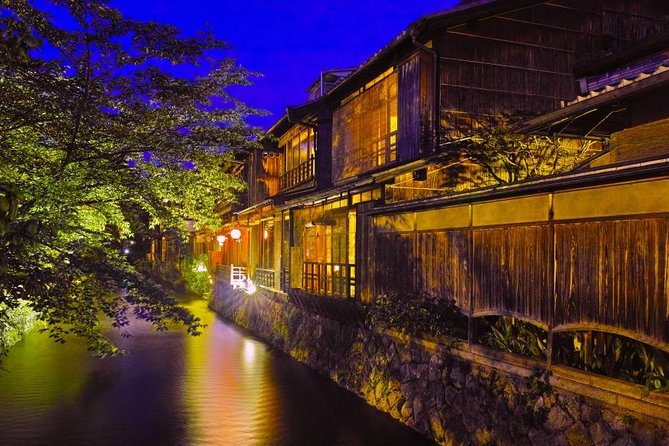
Gion Shirakawa is one of the prettiest sections of the route. The neighborhood follows the Shirakawa waterway and includes preserved wooden buildings, lanes, and bridges. It offers the kind of quiet visual detail that is easy to miss if you only visit Gion’s main road.
At Tatsumi Bridge, you get a particularly good sense of the district’s scale. The old buildings and narrow streets are close together, so a guide helps you understand what you are seeing rather than simply taking another night photograph.
Hanamikoji Street gives you a broader view of Gion. It is a main route through the district, while nearby alleys show a more intimate side of the area. I like the contrast between the two. You see the public face of Gion and then the quieter lanes where traditional wooden architecture is easier to appreciate.
The itinerary also lists Yasaka Pagoda and Hōkanji Temple, Kyomizu Temple, and the Statue of Izumo-no-Okuni. The actual route can change because of restaurant schedules, public holidays, weather, or other conditions. Consider these places part of the planned area rather than guaranteed long stops.
The guide’s storytelling is the real draw here. Several guides have been praised for explaining maiko and geiko life without turning the evening into a lecture. A good guide will give you enough background to understand the buildings, clothing, work, and social rules, while keeping the walk moving.
What the geisha explanation adds
Gion is easy to photograph and easy to misunderstand. The words geiko and maiko refer to different stages and roles within Kyoto’s traditional entertainment world, and the district’s teahouses are not simply tourist restaurants.
A local guide gives you a framework for reading the streets. You learn why some establishments are private, how entertainers move between appointments, and why the wooden architecture remains important to the district’s identity.
This portion also helps set expectations. You are walking through a working neighborhood, not a theme park. You may see a maiko or geiko, but you may also see only closed doors, restaurant staff, local residents, and ordinary evening activity.
That mix is part of the appeal. I would choose this tour if you want cultural context and a respectful introduction to Gion. I would not choose it if your main goal is guaranteed access to a geisha performance or an exclusive teahouse.
More kaiseki dinners:
- Maiko Night Performance with Kaiseki-style Kyoto cuisine Dinner
★ 4.0 · 9 reviews - Kyoto: Kaiseki Reservation at Hanasaki Manjiro
★ 4.8 · 6 reviews - Kyoto: Kaiseki Dinner at a Historical Townhouse
★ 4.5 · 4 reviews - Kyoto:Seasonal Kaiseki Reservation at Hanasaki Nishiki
★ 5.0 · 3 reviews
The 10-course kaiseki dinner
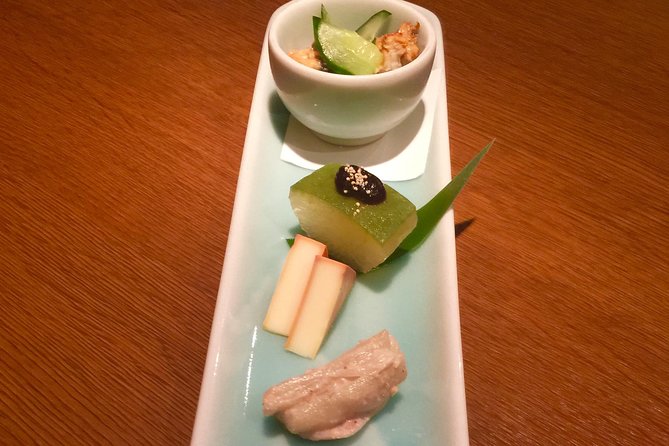
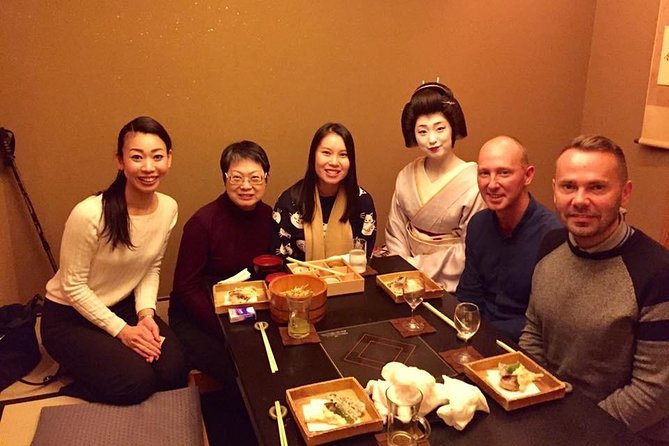
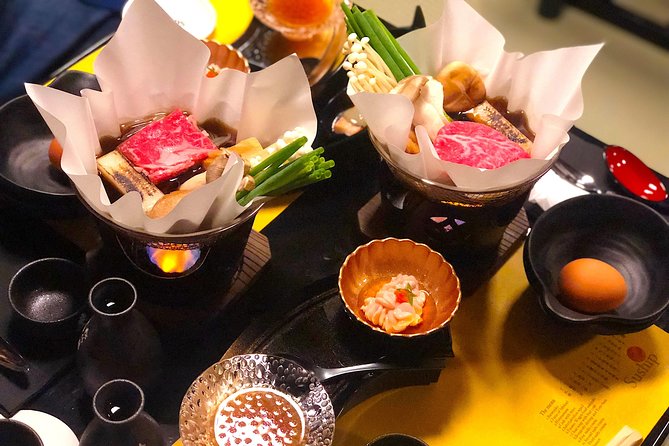
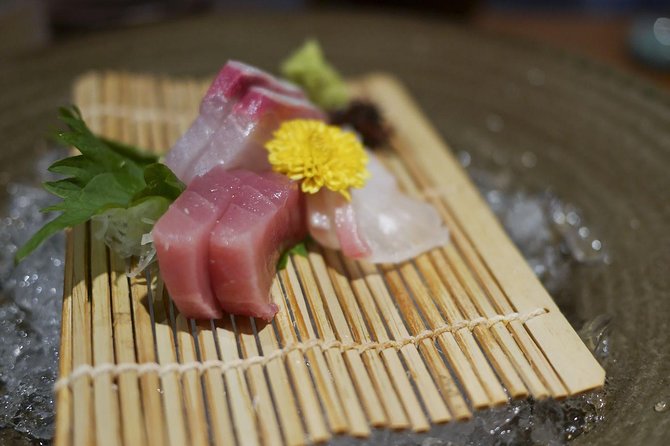
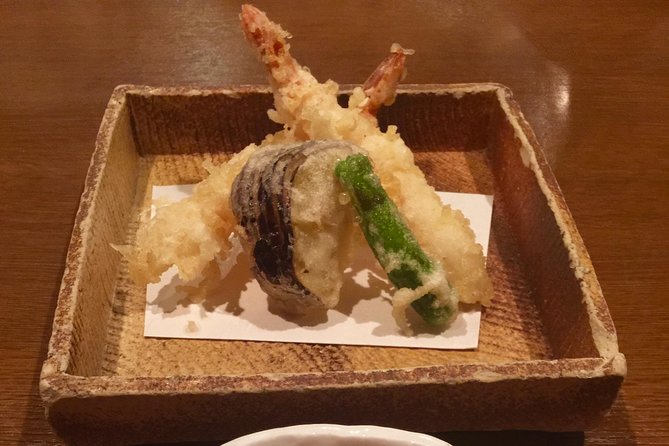
The evening ends at a restaurant in the Pontocho area, with the listed endpoint at Pontocho Idumoya, 173-2 Kashiwayacho. The dinner includes 10 courses, green tea, dessert, and one drink.
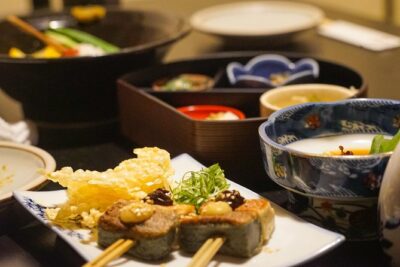
Kaiseki is built around seasonal ingredients, careful presentation, and a balanced progression of flavors. The meal is not just a pile of dishes. Each course forms part of a sequence, and your guide explains the tradition as you eat.
This explanation is one of the strongest reasons to book the tour instead of arranging a formal dinner on your own. Kaiseki can be unfamiliar, especially if you do not know what to expect from the order, portions, or presentation. A guide can explain what is being served and how the meal fits Japanese culinary culture.
The food has received mixed reactions, which is worth taking seriously. Some people describe the dinner as varied and delicious, with a traditional setting and enough food to justify arriving hungry. Others expected higher quality and larger portions for the price, especially after having outstanding kaiseki meals elsewhere in Kyoto or Tokyo.
That difference may come down to your benchmark. If you compare this with a top-end kaiseki restaurant, the $276 package may feel expensive. If you compare it with a private evening that combines a guided Gion walk, food samples, cultural interpretation, and a multicourse dinner, the price is easier to defend.
You receive one drink, green tea, and dessert. Additional drinks and food cost extra. The listed inclusions do not say that transportation, hotel pickup, or hotel drop-off are covered, so plan to reach the meeting point and leave the endpoint on your own.
Why the small group matters
The maximum group size is 10. That is small enough for questions and easier movement through narrow lanes. It also helps the dinner feel more personal than a large bus-based sightseeing outing.
Some departures have been especially intimate, with only one family or a couple on the walk. That is not guaranteed, but it shows why the group limit matters. A small group gives your guide more room to adjust explanations and respond to food concerns.
Guides have also stayed engaged during dinner, answering questions about Kyoto, Japanese food, and local customs. This is useful if you have already spent several days in Japan and have a list of questions ready.
The experience can work for families, too. Children must be accompanied by an adult, and a passport information copy is required for children age 10 and above. One family appreciated the guide’s patience with a baby, but the walk still lasts about three hours and requires solid fitness. Young children may find the late meal or long walk tiring.
The minimum drinking age is 21. If you do not drink, the included beverage should not be the reason to book, since the meal and cultural walk remain the main parts of the experience.
Food needs, weather, and practical comfort
The tour is listed as friendly to vegetarian, pescatarian, and gluten-free diets. You should provide those details when booking and confirm them with the operator, since the meal is fixed in style and restaurant substitutions may be needed.
The walk requires a strong physical fitness level. You cross the river, cover several Gion neighborhoods, and move through streets and back alleys before dinner. Wear comfortable shoes. The tour does not list hotel transportation, so add your journey to and from the meeting points when planning the evening.
Weather can affect the outing. Rain has not prevented every departure from being enjoyable, but the experience requires good weather and may be canceled if conditions are poor. If that happens, you are offered another date or a full refund.
The route and restaurant can also change because of schedules, holidays, weather, and other unforeseen conditions. That flexibility is practical, but it means you should not assume every listed landmark will receive equal time.
Free cancellation is available up to 24 hours before the 5 pm start time. Changes or cancellations inside that window are not accepted for a refund. Same-day booking is available, although the tour is commonly reserved well ahead, and solo travelers are asked to email the operator.
Who gets the best value from this Kyoto evening
I would recommend this experience most strongly to a first-time visitor who wants an organized introduction to Gion and a formal Japanese meal without having to decode the evening alone.
It also suits you if:
- You want cultural explanation along with sightseeing.
- You enjoy small portions served across many courses.
- You are curious about geiko, maiko, teahouses, and Kyoto’s traditional arts.
- You prefer walking to riding between dinner and sightseeing stops.
- You want a guide who can answer questions during the meal.
- You can handle three hours of walking and a relatively late dinner.
I would hesitate if your priority is fine-dining quality above all else. The meal may be satisfying, but the price leaves little room for disappointment if you are comparing it with elite kaiseki restaurants.
I would also hesitate if you want a short food crawl with lots of casual tastings. This is primarily a Gion cultural walk followed by one substantial, formal dinner. The early samples are extras, not the center of the evening.
Should you book the Kyoto Gion food tour?
Book it if you want Gion explained, not merely photographed. The route links the Kamogawa River, Pontocho, Gion Shirakawa, Hanamikoji Street, and nearby shrines with a meal that gives the evening structure.
The strongest part is the combination of a small group and a good guide. Names such as Yoshiko, Sae, Thomas, Akari, Bernard, and Rosalia appear among the guides associated with the experience, and the best evenings depend on that personal storytelling.
At $276, this is not a bargain dinner. It is a packaged cultural evening. If you would otherwise struggle to choose a kaiseki restaurant, understand the courses, or find the quiet lanes of Gion, the convenience may be worth the cost. If you already know Kyoto’s geisha districts and have a restaurant reservation in mind, spend the money on the meal you most want and explore Gion independently.
FAQ
Where does the tour start?
It starts at the Japan Kanji Museum and Library, 551 Gionmachi Minamigawa, Higashiyama Ward, Kyoto, at 5 pm.
Where does the tour end?
It ends in the Pontocho area, with the listed endpoint at Pontocho Idumoya, 173-2 Kashiwayacho, Nakagyo Ward, Kyoto.
How long does the experience last?
The tour lasts approximately three hours.
What is included in the price?
The price includes a local guide, a 10-course dinner, green tea, dessert, and one drink.
Are hotel pickup and transportation included?
No. Hotel pickup, hotel drop-off, and transportation costs are not included.
Can dietary requirements be accommodated?
The tour is listed as vegetarian, pescatarian, and gluten-free friendly. Restaurant or route changes may occur when needed.
Is the tour suitable for children?
Children must be accompanied by an adult. A passport information copy is required for children age 10 and above.
What happens if I need to cancel?
You can cancel at least 24 hours before the start time for a full refund. Cancellations or changes made less than 24 hours before the start time are not accepted for a refund.
More Dining Experiences in Kyoto
- Private Dinner with a Geisha
★ 5.0 · 65 reviews - Kyoto: Maiko Dinner in Traditional Restaurant and Tour
★ 4.8 · 55 reviews - Kyoto: Lunch or Dinner with Maiko
★ 4.2 · 52 reviews - Private Dinner with Maiko and Geiko in Kyoto
★ 5.0 · 28 reviews
More Dinner Experiences in Kyoto
- Kyoto Gion Cultural Walk & Geisha Show with Dining Options
★ 5.0 · 518 reviews - Kyoto Gion Cultural Walk & Geisha Show with Dining Options
★ 5.0 · 483 reviews - Dinner with Maiko in a Traditional Kyoto Style Restaurant Tour
★ 5.0 · 175 reviews - Kyoto: Geisha Dinner & Gion Cultural Walk
★ 5.0 · 73 reviews
Recently added around Kyoto
- Higashiyama | Kyoto: Sakura Season Private Rickshaw Tour★ 5.0 · 3 reviews
- Kyoto Kimono Rental CHAMATSU|Kimono/Yukata Rental FamilyPlan★ 5.0 · 3 reviews
- Kyoto: Half-Day Private Guided Tour to the Old Town of Gion★ 4.4 · 3 reviews
- Nara Private Customizable Half Day Tour★ 5.0 · 3 reviews
- Kansai Region Hiking Adventure in Nara Kobe Kyoto and More★ 5.0 · 3 reviews
- Full Day Nara Deer, Temple, Shrine, Activities & Tea Ceremony★ 5.0 · 3 reviews
- Nara: Essential Private Tour with Deer Park and Temples★ 5.0 · 3 reviews
- Hiking Tour for Sacred Sites in Kyoto with a Guide★ 5.0 · 3 reviews
Gion Geisha District Tours, compared.
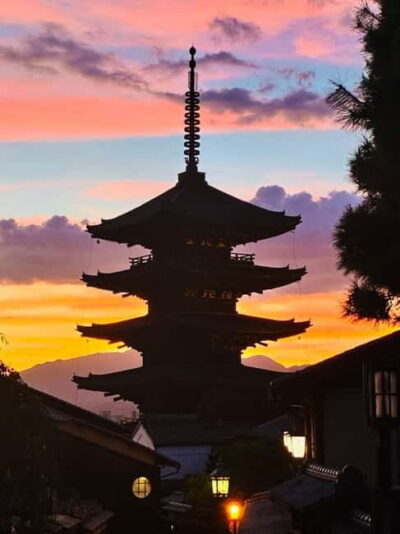
Kyoto Geisha Walking Tour: Gion District & Hidden Gems
Read our review →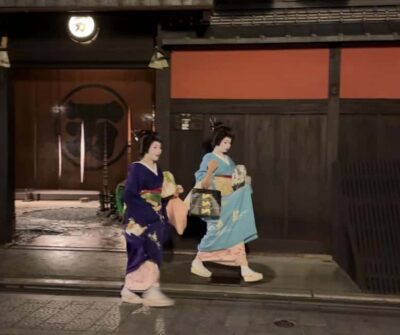
Gion Magical Night Walking Tour with Geisha Trivia
Read our review →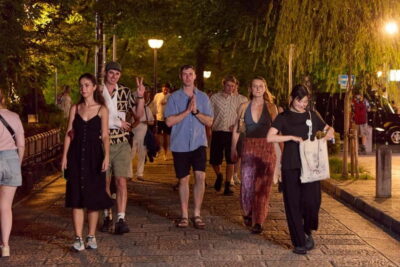
Gion Geisha District Walking Tour – Stories of Geisha
Read our review →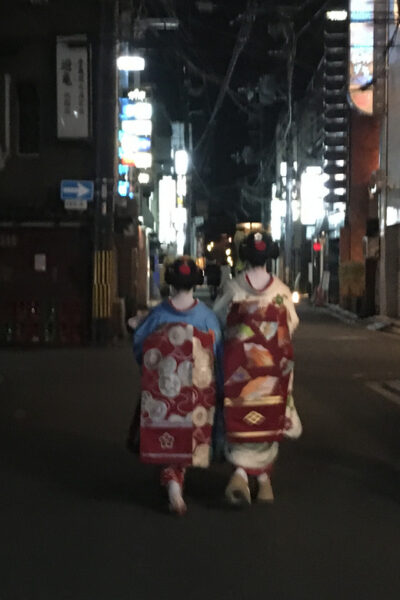
Best of Kyoto: Gion, Geisha, Pagodas & Cobblestones
Read our review →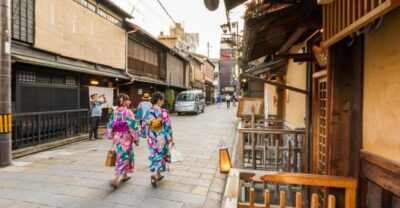
Kyoto Night Foodie Tour in Gion (9+ dishes + 6 Sake tastings)
Read our review →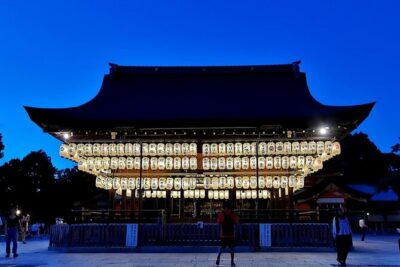
Kyoto Gion Geisha District Walking Tour – The Stories of Geisha
Read our review →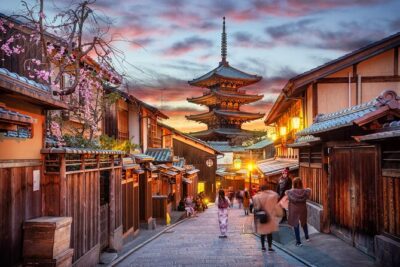
Kyoto Gion: 2-Hour Geisha Culture & History Walking Tour
Read our review →Browse the lists this tour appears in