
REVIEW · GION GEISHA DISTRICT TOURS
Kyoto Gion Cultural Walk & Geisha Show with Dining Options
Kyoto’s Gion district is much easier to understand after you have walked its lanes with a guide who can explain the difference between geiko, maiko, Kabuki, Shinto, and Zen. The highlight comes later: a 45-minute meeting and show with an apprentice geisha, including a dance performance and time for questions.
I like the thoughtful route, which links Gion’s theaters, shrines, streets, and temples instead of treating the district as a backdrop for photographs. I also like the small group, capped at nine, and the guides’ strong personal touch. Ken, Kenta, and Akari are praised for explaining customs clearly, translating during the meeting, and making solo visitors feel included.
The main consideration is value if you choose a dining option. Some meals are described as excellent and generous, while one diner found the food too limited for the price. The walk also includes several stops, so it is not ideal if you have leg problems.
In This Review
- Key points to know before booking
- Why the Gion walk matters before the show
- From Izumo-no-Okuni to the roots of Kabuki
- Gion Shirakawa and Tatsumi-jinja Shrine
- Hanamikoji Street and the chance of seeing a maiko
- Kennin-ji and Zenkyo-an, a quieter side of Gion
- Meeting an apprentice geisha over tea, food, and questions
- Dining options and what the price really buys
- What the small group changes
- Timing, walking, and useful planning advice
- Who will enjoy this Gion experience most
- Should you book the Kyoto Gion Cultural Walk and Geisha Show?
- FAQ
- How long does the Gion cultural walk and show last?
- What does the geisha meeting include?
- Is the guide available to translate during the maiko meeting?
- What is the maximum group size?
- Is dinner included?
- Is a tip for the apprentice geisha included?
- Where does the tour begin?
- Can I cancel for a full refund?
Key points to know before booking
- The maiko meeting is the main event: You watch one or two dances, enjoy tea or a meal depending on the option selected, and ask questions.
- The walk gives useful context: Gion makes more sense after seeing Minamiza Theater, Gion Shirakawa, Hanamikoji Street, and nearby religious sites.
- Guides shape the experience: Ken, Kenta, and Akari are especially praised for translation, cultural explanation, and warm group hosting.
- The group is small: A maximum of nine people makes it easier to ask questions and hear the guide.
- Plan for roughly three hours: The walk lasts 1.5 to 2 hours, followed by a 45-minute geisha meeting and show.
- Dining is the one variable: Check exactly which food option you are booking, since the meal affects the value more than any other part of the experience.
Why the Gion walk matters before the show
A geisha performance can be pretty but puzzling if you arrive without context. This experience handles that problem well by putting the walking tour first. You learn how Kyoto’s entertainment districts developed, then meet a maiko with enough background to understand what you are seeing.
The terms matter. In Kyoto, geiko is the local word commonly used for a fully trained geisha, while maiko refers to an apprentice. The experience focuses on the apprentice, so you are not simply watching a costumed performer. The guide explains the customs, training, clothing, and working world connected with the art.
The route also corrects easy misunderstandings. Guides such as Akari and Kenta are praised for explaining the culture with care and for separating old myths from the life of geiko and maiko today. That is a worthwhile part of the tour. Gion can otherwise feel like a pretty collection of wooden facades and closed doors.
The walk lasts 1.5 to 2 hours, with a maximum group size of nine. That is enough time for questions without turning the outing into a long lecture. You should expect a steady walk through central Gion, with several short stops rather than one extended visit at each site.
More evenings in Gion:
- Kyoto Geisha Walking Tour: Gion District & Hidden Gems
★ 4.7 · 3,273 reviews - Kyoto: Gion Magical Night Walking Tour with Geisha Trivia
★ 4.9 · 2,393 reviews - Kyoto: Gion Geisha District Walking Tour – Stories of Geisha
★ 4.7 · 2,187 reviews
From Izumo-no-Okuni to the roots of Kabuki
The meeting point is the Statue of Izumo-no-Okuni near Kawabatacho. This opening stop introduces Kabuki and its surprising beginnings. Today, Kabuki is performed by men, but the early form began with women. That detail gives the entire evening a useful starting point because it shows how Japanese theater has changed over time.
The stop lasts about 15 minutes and has no admission charge. It is brief, but it helps connect Gion’s entertainment culture with the wider story of performance in Kyoto.
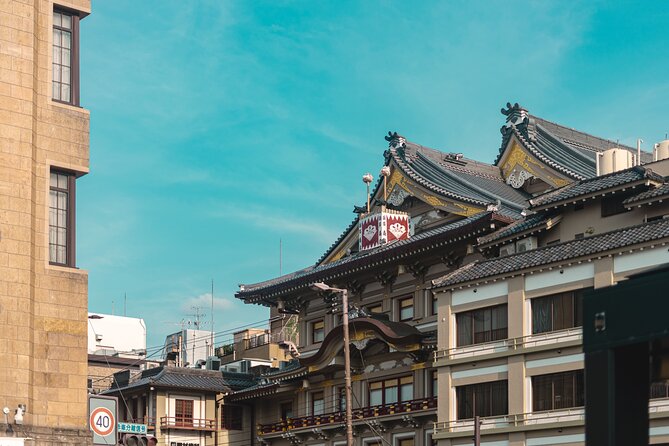
Next comes Minamiza Theater, one of the city’s most important Kabuki landmarks. You look at the building’s architecture and hear about the unusual connection between Kabuki and virtual reality. The stop is about 10 minutes, also without an admission charge.
Do not expect an interior theater tour here. The point is the outside view, the building’s place in Kyoto, and the guide’s explanation. If you have little interest in theater, this may feel like a quick orientation stop. If you enjoy performance traditions, it adds a useful layer before the maiko show.
Gion Shirakawa and Tatsumi-jinja Shrine
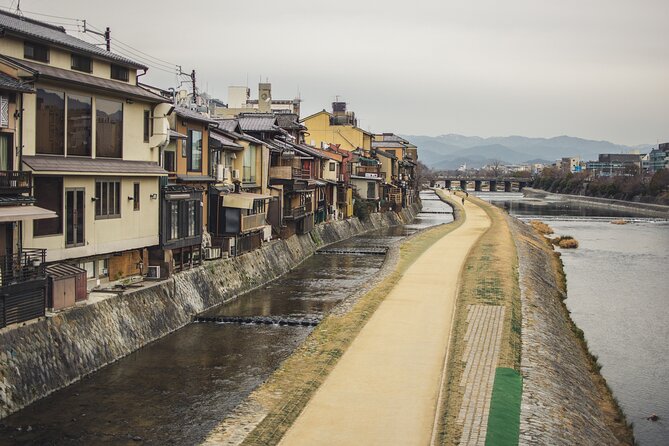
Gion Shirakawa is often the prettiest section of the route. The old-style buildings, riverside setting, and traditional theaters create the Kyoto scene many people hope to find. The stop lasts around 15 minutes, giving you time to look closely while the guide explains how the geisha district works.
This is also the part where visitors are most tempted to treat Gion like a film set. I would keep your camera ready but your manners sharper. The experience is built around understanding the people and traditions of the district, not chasing photographs of women in elaborate dress.
At Tatsumi-jinja Shrine, the subject shifts to Shinto, Japan’s native religion. The guide explains the idea of many kami, or spirits and gods, including the traditional saying that Japan has eight million gods. The stop lasts about 15 minutes and has no admission cost.
This pairing works nicely. Gion Shirakawa shows the district’s public face, while Tatsumi-jinja gives you a small religious site where local belief remains part of the neighborhood. You get a better sense of why shrines, theaters, restaurants, and houses of entertainment sit so close together.
Hanamikoji Street and the chance of seeing a maiko
Hanamikoji Street is Gion’s main thoroughfare and another place where you might see a geiko or maiko walking between appointments. The stop takes about 10 minutes.
The wording matters: seeing one is a possibility, not a promise. You should never book this tour simply to chase a street sighting. The arranged meeting later in the evening is the dependable part of the experience, while Hanamikoji provides a look at the setting where this traditional culture operates.
Your guide can also explain how to behave if a geiko or maiko passes by. The district is a working neighborhood, and respectful distance matters. This is one reason a guided walk is more useful than wandering alone with a list of famous streets.
The route’s short stops also keep the pace moving. You do not spend 20 minutes at every corner, and that helps the evening fit within roughly three hours. On the other hand, anyone wanting long photography sessions may find the schedule brisk.
A few more Kyoto experiences worth comparing
- Kyoto Gion Cultural Walk & Geisha Show with Dining Options
★ 5.0 · 518 reviews - Dinner with Maiko in a Traditional Kyoto Style Restaurant Tour
★ 5.0 · 175 reviews - Kyoto: Geisha Dinner & Gion Cultural Walk
★ 5.0 · 73 reviews - Private Dinner with a Geisha
★ 5.0 · 65 reviews
Kennin-ji and Zenkyo-an, a quieter side of Gion
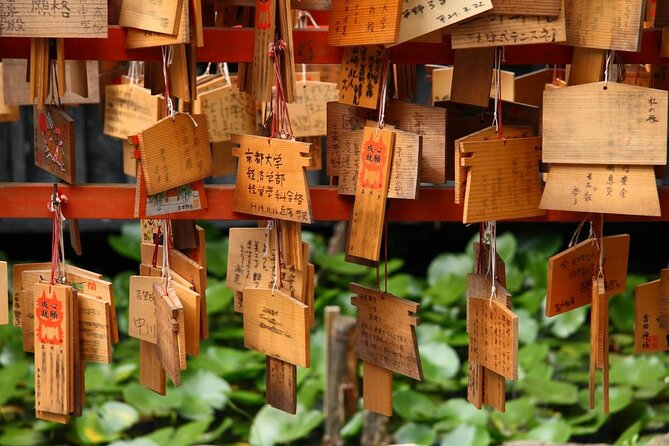
Kennin-ji Temple brings Zen Buddhism into the discussion. Built in 1202, it is one of Kyoto’s important Zen temples and gives the guide a chance to explain how Zen differs from Shinto and how both traditions appear in everyday Japanese life.
Admission to Kennin-ji is not included, so check the arrangement for your date and budget for a possible extra cost. The stop is listed at about 15 minutes. That is enough for an introduction, but not enough for a full temple visit.
The final stop is Zenkyo-an, also called Marishitendo, a Kennin-ji subtemple in Gion. It is known for boar guardians and associations with luck and safety. Like Kennin-ji, admission is not included, and the planned visit is about 15 minutes.
These temple stops make the route more than a geisha-themed stroll. You see how entertainment, religion, theater, and neighborhood life overlap in Kyoto. Still, if your main goal is temple architecture, this tour only offers a short introduction. You would want a separate visit for a slower look.
Meeting an apprentice geisha over tea, food, and questions
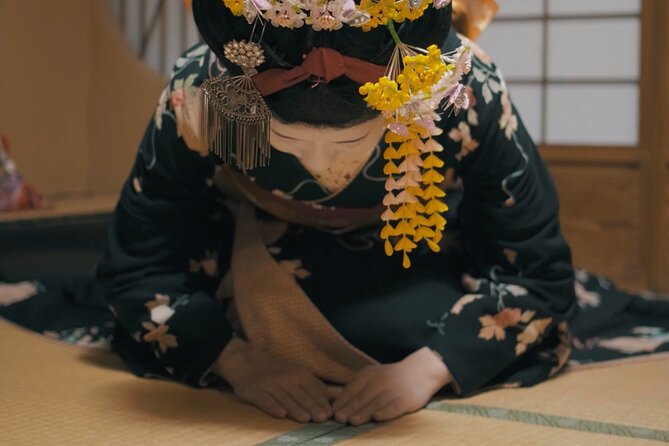
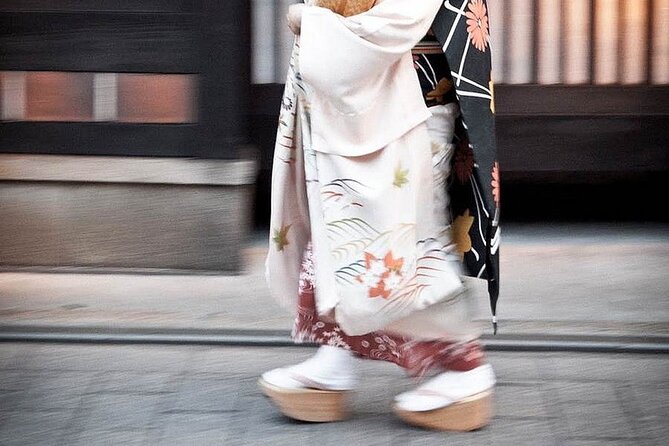
After the walk, the experience moves to the 45-minute geisha meeting and show. An apprentice geisha performs one or two dances, and you have a chance to ask questions. The guide acts as host and interpreter, which is especially useful because it lets you ask more direct questions than you might manage alone.
The performance is short enough to remain focused. You are not attending a full evening at a major theater. Instead, you get a more personal encounter with an apprentice, followed by conversation. The question-and-answer period is often the most revealing part because it lets you ask about training, daily life, traditions, and the meaning behind the performance.
Guides named in the feedback include Ken, Kenta, and Akari. Their roles go beyond leading the walk. They explain the background, translate questions and answers, help with photographs, and keep the meal or tea portion moving. Akari is also praised for making a solo visitor feel included, while Kenta is noted for carefully explaining the culture and interpreting the meeting.
One practical point: the tip for the maiko is not included. Plan for that extra expense so you are not caught off guard at the end.
Dining options and what the price really buys
The stated price is $121.37 per person. For a three-hour outing, that is not a cheap neighborhood walk. The value depends on how much you want the arranged maiko meeting, the translation, and the meal or dining option.
If you only want to see Gion’s streets, you can do that for far less on your own. What you cannot easily arrange yourself is the combination of a small-group cultural walk, an apprentice performance, and a structured question-and-answer session. That is where the cost is concentrated.
Food quality appears to vary by selected option and personal expectations. Some accounts describe a high-quality, delicious meal with plenty of choices, including a family-style dinner that handled dietary restrictions thoughtfully. Another account found the included meal too small and felt the added cost was not justified.
My advice is simple: treat dinner as a bonus, not the reason to book. Check whether your chosen package includes lunch, dinner, tea, or another format, and do not assume every version offers the same amount of food. If you have a large appetite, eat a light snack beforehand. That protects you from the one clear value complaint without spoiling the evening.
What the small group changes
The maximum group size is nine. That number matters during the maiko meeting because a large crowd could make personal questions and translation feel awkward. With fewer people, you have a better chance to hear the answers and take part in the conversation.
A small group also helps on Gion’s narrower streets. The guide can keep everyone together without the long pauses common on big bus tours. Ken and Akari are praised for checking on individuals, helping with photographs, and responding to questions rather than rushing through a script.
The tradeoff is that the group may feel more exposed during quiet moments or formal parts of the meeting. You are participating in a cultural exchange, not watching a stage show from the back row. That is a benefit for curious visitors, but it may not suit someone who prefers to remain anonymous.
Timing, walking, and useful planning advice
The activity lasts about three hours. The walking portion takes 1.5 to 2 hours, followed by the 45-minute meeting and show. Since the route has several stops, wear comfortable shoes and allow enough energy for the full evening.
The experience is near public transportation, and the starting point is the Statue of Izumo-no-Okuni in Kawabatacho, Higashiyama Ward. It ends at a different location, so check the final meeting information before setting a dinner reservation or arranging a late train.
The tour is not recommended for people with leg problems. That warning makes sense given the length of the walk and the number of stops. The experience also requires good weather, and poor conditions can lead to a new date or a full refund. Cancellations made at least 24 hours before the start time receive a full refund, while later cancellations and changes are not accepted.
The mobile ticket is convenient, but the most important preparation is still practical: arrive at the correct statue, keep your phone charged, and leave room in your schedule after the tour in case the ending location is not close to where you began.
Who will enjoy this Gion experience most
I would choose this tour if you want cultural explanation rather than a quick photo walk. It suits first-time visitors to Kyoto who want a clear introduction to Gion, theater, Shinto, Zen, and geiko culture in one evening.
It is also a strong choice for solo visitors and small family groups. The guides make a point of including individuals, and the translation removes much of the uncertainty that can make a formal cultural meeting hard to follow.
You should think twice if your priority is a large meal, a full temple visit, or a long stage performance. The food may not satisfy every appetite, Kennin-ji and Zenkyo-an receive brief stops, and the dance portion lasts only part of the 45-minute meeting.
The experience has a 5 out of 5 rating from 483 reviews and a 99 percent recommendation rate, but those figures should not replace your own priorities. The strongest praise centers on the guides, the chance to speak with a maiko, and the respectful explanation of traditions. Those are the reasons to book.
Should you book the Kyoto Gion Cultural Walk and Geisha Show?
Book it if meeting an apprentice geisha and asking questions sounds more valuable to you than simply watching a performance. The walk gives the evening structure, while the guides provide the cultural context that makes the show easier to understand.
I would select it early in a Kyoto stay. The route can help you read Gion more thoughtfully for the rest of your visit, and the guides offer a useful introduction to customs that are easy to misunderstand. Just confirm the dining package, prepare for a fair amount of walking, and remember that the maiko tip is extra.
If you want a personal, carefully explained encounter with Kyoto’s geiko and maiko traditions, this is a strong choice. If you mainly want dinner or temple sightseeing, spend your money elsewhere.
FAQ
How long does the Gion cultural walk and show last?
The experience lasts approximately three hours. The guided walk takes about 1.5 to 2 hours, followed by a 45-minute meeting and show with an apprentice geisha.
What does the geisha meeting include?
The meeting includes an apprentice geisha dance with one or two songs, plus an opportunity to ask questions.
Is the guide available to translate during the maiko meeting?
Yes. The guide helps interpret the conversation and questions during the meeting.
What is the maximum group size?
The group is limited to a maximum of nine participants.
Is dinner included?
Dining depends on the option selected when booking. Some versions include a meal, while the experience information also describes tea and the performance. Check the exact package details before paying.
Is a tip for the apprentice geisha included?
No. A tip for the maiko is not included in the price.
Where does the tour begin?
The tour begins at the Statue of Izumo-no-Okuni in Kawabatacho, Higashiyama Ward, Kyoto.
Can I cancel for a full refund?
Yes, if you cancel at least 24 hours before the experience start time. Later cancellations and changes are not accepted. If poor weather or an insufficient minimum group causes cancellation, you are offered another date or a full refund.
More Walking Tours in Kyoto
- Night Walk in Gion: Kyoto’s Geisha District
★ 4.5 · 2,003 reviews - Kyoto Gion Geisha District Walking Tour – The Stories of Geisha
★ 5.0 · 1,441 reviews - Nishiki Market Brunch Walking Tour (7 Tastings + Brunch)
★ 5.0 · 1,355 reviews - Kyoto Arashiyama Walking Tour: Bamboo, Monkeys, Gardens & Secrets
★ 5.0 · 1,216 reviews
More Dining Experiences in Kyoto
- Kyoto Evening Gion Food Tour Including Kaiseki Dinner
★ 5.0 · 62 reviews - Kyoto: Maiko Dinner in Traditional Restaurant and Tour
★ 4.8 · 55 reviews - Kyoto: Lunch or Dinner with Maiko
★ 4.2 · 52 reviews - Private Dinner with Maiko and Geiko in Kyoto
★ 5.0 · 28 reviews
Recently added around Kyoto
- Higashiyama | Kyoto: Sakura Season Private Rickshaw Tour★ 5.0 · 3 reviews
- Kyoto Kimono Rental CHAMATSU|Kimono/Yukata Rental FamilyPlan★ 5.0 · 3 reviews
- Kyoto: Half-Day Private Guided Tour to the Old Town of Gion★ 4.4 · 3 reviews
- Nara Private Customizable Half Day Tour★ 5.0 · 3 reviews
- Kansai Region Hiking Adventure in Nara Kobe Kyoto and More★ 5.0 · 3 reviews
- Full Day Nara Deer, Temple, Shrine, Activities & Tea Ceremony★ 5.0 · 3 reviews
- Nara: Essential Private Tour with Deer Park and Temples★ 5.0 · 3 reviews
- Hiking Tour for Sacred Sites in Kyoto with a Guide★ 5.0 · 3 reviews
Gion Geisha District Tours, compared.

Kyoto Geisha Walking Tour: Gion District & Hidden Gems
Read our review →
Gion Magical Night Walking Tour with Geisha Trivia
Read our review →
Gion Geisha District Walking Tour – Stories of Geisha
Read our review →
Best of Kyoto: Gion, Geisha, Pagodas & Cobblestones
Read our review →

Kyoto Night Foodie Tour in Gion (9+ dishes + 6 Sake tastings)
Read our review →
Kyoto Gion Geisha District Walking Tour – The Stories of Geisha
Read our review →
Kyoto Gion: 2-Hour Geisha Culture & History Walking Tour
Read our review →Browse the lists this tour appears in