
REVIEW · GION GEISHA DISTRICT TOURS
Private Dinner with a Geisha
Kyoto’s geisha world is usually kept behind closed doors, but this evening gives you a rare look inside. You walk through Gion with an English-speaking guide, then meet a maiko or geiko over a traditional dinner, with conversation, music, dance, and games translated for you.
I especially like the thoughtful introduction in Gion and the chance to ask direct questions about training, dress, daily life, and traditions. Guides such as Mia and Mie are praised for making the evening clear, warm, and fun, even for teenagers. The main caution is the fixed Japanese menu: it can be excellent, but it may be a poor fit for picky eaters or anyone with dietary restrictions.
In This Review
- Key points to know before booking
- Why this Kyoto evening feels different
- Meeting in front of Minamiza at 5 pm
- Walking through Gion with Mia or Mie
- Entering a private Japanese restaurant or tea house
- Conversation, dance, shamisen, and traditional games
- Comparing the dinner choices and the price
- Who will enjoy this most
- Practical advice for making the evening work
- Should you book Private Dinner with a Geisha?
- FAQ
- Where does the experience begin?
- How long does the evening last?
- What does the walking portion include?
- Is dinner included?
- Are drinks included?
- Can children join?
- Can I cancel or change my booking?
Key points to know before booking
- Gion comes first: The 5 pm meeting begins near Minamiza Kabuki Theatre, followed by a guided walk through Kyoto’s historic geiko district.
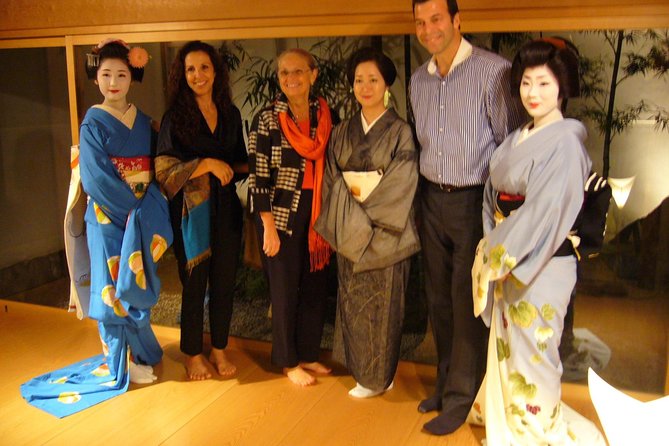
- The conversation is the heart of the evening: Your guide translates questions and answers about maiko and geiko life, training, clothing, and customs.
- Expect live entertainment: A maiko or geiko may dance, sing, play traditional instruments, and lead simple games.
- Dinner options vary: Choices can include a casual meal, half kaiseki, full kaiseki, or a private tea house experience.
- Drinks are not always included: Sake and beer come with the private tea house option, while other choices charge separately.
- Plan well ahead: The experience costs $381.49 per person, is often booked 38 days in advance, and cannot be refunded or changed.
Why this Kyoto evening feels different
Many cultural activities show you a performance from a respectful distance. This one adds the unusual chance to sit with a maiko or geiko and speak through a guide. That personal exchange changes the evening from a stage show into a conversation about a demanding traditional profession.
You may hear about the years of study, the rules around kimono and hair, the difference between a maiko and a geiko, and the path from apprentice to established artist. One guide, Mia, had herself trained toward becoming a geiko, giving her a particularly personal understanding of the work. Other guides, including Mie, are praised for clear English and an easy sense of humor.
I would approach this as a cultural meeting, not as a costume photo opportunity. The women who take part are professional performers and hosts, and the activity provider makes respectful behavior a condition of participation. That is reasonable here. You should ask questions politely, listen carefully, and treat the setting as a working cultural space rather than a themed attraction.
The experience is private in the sense that only your booked group participates in the activity. Dining arrangements can vary by option, so read the exact choice at checkout. Some schedules and rooms may feel more intimate than others.
More evenings in Gion:
- Kyoto Geisha Walking Tour: Gion District & Hidden Gems
★ 4.7 · 3,273 reviews - Kyoto: Gion Magical Night Walking Tour with Geisha Trivia
★ 4.9 · 2,393 reviews - Kyoto: Gion Geisha District Walking Tour – Stories of Geisha
★ 4.7 · 2,187 reviews
Meeting in front of Minamiza at 5 pm
The meeting point is in front of the main gate of Minamiza Kabuki Theatre, facing Shijo Street, at 198 Nakanocho in Higashiyama Ward. This is a useful starting point because Minamiza is a major landmark and the location is near public transportation.
Your guide meets you at the prearranged time and sets the tone for the evening. Since the dinner takes place later, wear comfortable shoes for the walk through Gion. You will finish back at the restaurant or tea house, which is also listed as the end point of the activity.
The scheduled start is 5 pm, and the total duration is approximately three and a half hours. The walking portion and dinner event together take about three hours in the detailed schedule, so allow some flexibility. Dinner service, conversation, and entertainment do not always run like a tightly timed theater program.
Walking through Gion with Mia or Mie
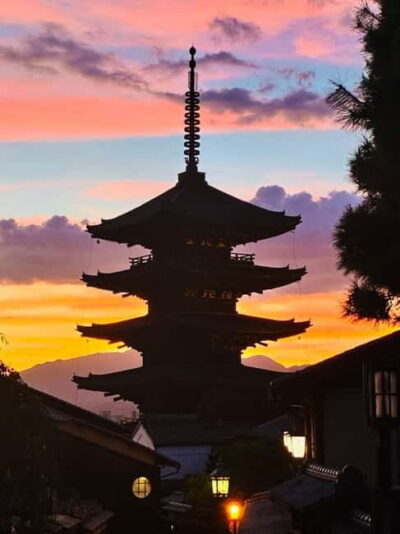
The first substantial part is a guided walk through Gion, Kyoto’s famous geiko district. You pass traditional wooden houses and learn how the area functions, along with the difference between public assumptions about geisha and the realities of their work.
This introduction matters. Without it, a short performance can be pretty but hard to understand. With it, you have a better sense of why the clothing, makeup, music, and manners carry meaning.
The guides are one of the strongest parts of the experience. Mia is repeatedly praised for her humor, warmth, and strong command of geiko culture. Mie is also described as friendly, clear, and particularly good at preparing families for the meeting. One family with teenagers found that the walk held their attention because the guide answered questions without making the subject feel like a lecture.
The walk also gives you a chance to ask basic questions before entering the dining room. If you are shy about speaking with a maiko or geiko, use this time to ask your guide what is appropriate. Prepare a few questions in advance. Curiosity about training, daily routines, performance, and traditional dress is more useful than asking for personal details that may be intrusive.
One practical concern is group size. The activity is presented as private, but some dining arrangements have involved larger groups, and one account describes difficulty hearing the guide during a bigger walk. Ask for clarification if group size is important to you, especially if you are comparing the private tea house choice with a less expensive dinner option.
Entering a private Japanese restaurant or tea house
After the walk, you go to a Japanese restaurant or tea house. The room is traditionally styled, and the meal is served while the maiko or geiko joins your group.
The setting is an important part of the value. You are not simply watching a short dance in a hotel ballroom. You are seated in a traditional Japanese dining space, where food, conversation, and performance are woven together. The room may not be large, so the atmosphere can feel close and personal. That also means there may be limited space for a full dance performance.
The exact meal depends on the option selected. Choices described for this activity include a casual dinner, half kaiseki, full kaiseki, and a private tea house experience. Kaiseki is a traditional multi-course meal, often built around seafood, fish, vegetables, and carefully arranged seasonal dishes. The meal can include several courses of tempura, seafood, and vegetables.
A half kaiseki meal may be enough food for many people. If you choose the full version, expect a longer, more elaborate dinner rather than a quick meal before the entertainment. The food is part of the cultural experience, but it should not be your only reason for paying the price.
Several accounts describe the meal as delicious and beautifully traditional. At the same time, the fixed menu has caused problems for some diners. Traditional dishes may include raw fish, seafood, shellfish, and flavors that are unfamiliar. One person found the food barely edible and felt the dinner lasted too long. Another had a poor experience after eating raw fish.
My advice is simple: tell the operator about dietary requirements when booking, but do not assume every request can be handled. The menu may be fixed, and communication about food preferences has not always been reliable. If you are vegan, vegetarian, allergic to seafood, or a very cautious eater, contact the provider before committing. Since the experience is non-refundable and cannot be changed, this is not a minor detail.
A few more Kyoto experiences worth comparing
- Kyoto Gion Cultural Walk & Geisha Show with Dining Options
★ 5.0 · 518 reviews - Kyoto Gion Cultural Walk & Geisha Show with Dining Options
★ 5.0 · 483 reviews - Dinner with Maiko in a Traditional Kyoto Style Restaurant Tour
★ 5.0 · 175 reviews - Kyoto: Geisha Dinner & Gion Cultural Walk
★ 5.0 · 73 reviews
Conversation, dance, shamisen, and traditional games
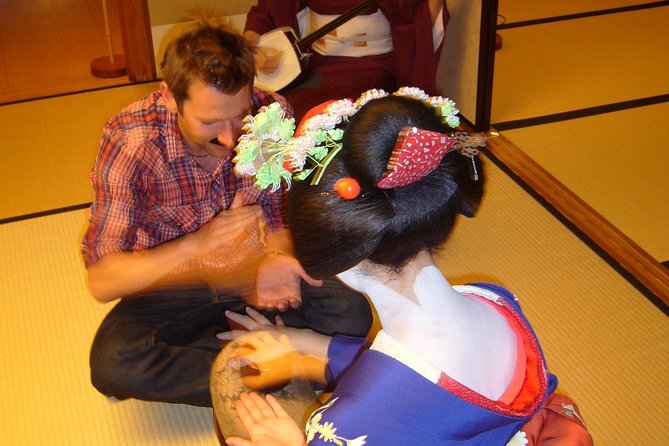
The maiko or geiko is the main reason to book. During the meal, she may answer questions through your guide, share details about her life and training, and explain elements of her clothing and appearance.
The conversation can be surprisingly personal in the best sense. You might ask how a kimono is put on, how hair and ornaments are managed, what studies are required, or what daily life is like on the path toward becoming a geiko. One young maiko discussed her goals and interests, while another answered questions about her work and ambitions.
The performance usually includes traditional dance. Depending on the evening, you may also hear singing or shamisen music, a traditional Japanese string instrument. Games are another common part of the gathering. These can be simple drinking games or other traditional entertainment that encourages everyone to take part.
This is not necessarily a long formal concert. In one dining room, the performance space was small and the dance brief. Another evening included two maiko and one geiko, but that was described as unusual. You should expect a special personal appearance with entertainment, not a guaranteed full-length stage production.
That distinction helps set the right expectations. The real value is the combination of access, conversation, and performance. If you want a polished theater show with a large stage, this is the wrong choice. If you want a close look at an old Kyoto tradition and the chance to speak with one of its practitioners, it is much more compelling.
Photography is part of some gatherings, and families have taken pictures during the event. Still, follow your guide’s instructions and ask before photographing. Respectful conduct matters more than collecting a large number of images.
Comparing the dinner choices and the price
At $381.49 per person, this is a major splurge. You are paying for a private arrangement, an English-speaking guide, a restaurant or tea house setting, dinner, and the time of a professional maiko or geiko. The price also reflects the difficulty of arranging access to a private cultural setting that is not normally open to the public.
The cost makes more sense for a special occasion, a family trip, or someone with a serious interest in Japanese culture. It is harder to justify if you mainly want an inexpensive dinner or a quick photo with a performer.
The private tea house option is the clearest choice for someone seeking the most intimate version of the experience. Drinks are included with that option, specifically sake and beer, while drinks are available for purchase with other dinner choices. The legal drinking age in Japan is 20, so underage participants should not expect alcohol.
A half kaiseki dinner may offer a sensible middle ground. It provides a traditional meal and the geiko or maiko program without requiring the longest or most elaborate menu. The casual dinner may suit families and people who care more about the meeting than the food. Check the inclusions carefully because the names and benefits of the choices differ.
Group discounts are available, but the activity is often booked well ahead, with an average lead time of about 38 days. I would not leave this until the last week of a Kyoto trip, especially if you need a particular date or have food requirements.
Who will enjoy this most
I would recommend this for adults, older children, and teenagers who can sit through a formal meal and show respect in a traditional setting. Families have enjoyed it, and guides have made the subject accessible to younger participants. Children must be accompanied by an adult.
It suits you especially well if you:
- Have a strong interest in Japanese culture and traditional arts
- Want conversation rather than only a performance
- Enjoy trying a formal, unfamiliar meal
- Are comfortable with a fixed menu
- Value a private setting and an English-speaking guide
- Are marking a birthday, anniversary, or once-in-a-lifetime trip
I would think twice if you need a fully adaptable menu, dislike raw fish or seafood, or want a casual evening with flexible timing. The event can also feel long if you are not interested in the dinner itself.
The experience provider reserves the right to refuse service if participants do not treat the traditions properly. Take that seriously. Dress neatly, arrive on time, avoid loud or careless behavior, and listen to your guide.
Practical advice for making the evening work
Bring questions. The conversation is one of the best parts, and you may freeze in the moment if you arrive with nothing in mind. Ask about training, the difference between maiko and geiko, traditional dances, the shamisen, and the practical details of kimono and hairstyle.
Tell the operator about dietary needs at booking, then confirm them again if possible. The supplied information says to advise the provider in advance, but fixed menus have not always accommodated restrictions. If your diet is strict, get a clear answer before paying.
Allow more than three hours. The advertised duration is approximately three hours and thirty minutes, while the detailed walk and party schedule totals about three hours. Conversation and meal service can affect the finish time.
Do not book this only for the food. The meal can be excellent, but quality and suitability depend on the restaurant, menu, and your taste. The maiko or geiko meeting, translated conversation, and live arts are the central reasons to spend the money.
Finally, remember that the cancellation policy is strict. The booking is non-refundable and cannot be changed for any reason, so confirm your date, party size, dietary needs, and preferred dinner option first.
Should you book Private Dinner with a Geisha?
Yes, if you want a rare, respectful introduction to Kyoto’s geiko and maiko traditions and you are willing to pay for access that is not normally available. The strongest parts are the Gion walk, the guides, the direct conversation, and the intimate performance.
I would choose the private tea house option for the fullest evening, provided the cost fits your budget. Choose a half or casual dinner if you want the cultural meeting but less food or a shorter commitment.
Skip it if food restrictions make a fixed kaiseki menu risky, or if your main goal is a large, polished dance show. For the right person, though, this can be one of Kyoto’s most memorable evenings, not because it offers a spectacle, but because it lets you meet the person behind the tradition.
FAQ
Where does the experience begin?
It begins at 5 pm in front of the main gate of Minamiza Kabuki Theatre, facing Shijo Street, at 198 Nakanocho in Kyoto’s Higashiyama Ward.
How long does the evening last?
The approximate duration is three hours and thirty minutes. The detailed schedule describes about three hours for the Gion walk and private dinner event.
What does the walking portion include?
Your English-speaking guide leads you through Gion, a historic geiko district with traditional Japanese houses, and explains the culture, history, and traditions connected with maiko and geiko life.
Is dinner included?
Yes. Dinner is included, with options that may include a casual meal, half kaiseki, full kaiseki, or a private tea house experience.
Are drinks included?
Drinks are included only with the private tea house option. With other options, drinks are available for purchase.
Can children join?
Yes, children may participate, but they must be accompanied by an adult. The activity is suitable for most participants who can take part respectfully.
Can I cancel or change my booking?
No. The experience is non-refundable and cannot be changed for any reason after booking.
More Dining Experiences in Kyoto
- Kyoto Evening Gion Food Tour Including Kaiseki Dinner
★ 5.0 · 62 reviews - Kyoto: Maiko Dinner in Traditional Restaurant and Tour
★ 4.8 · 55 reviews - Kyoto: Lunch or Dinner with Maiko
★ 4.2 · 52 reviews - Private Dinner with Maiko and Geiko in Kyoto
★ 5.0 · 28 reviews
Recently added around Kyoto
- Higashiyama | Kyoto: Sakura Season Private Rickshaw Tour★ 5.0 · 3 reviews
- Kyoto Kimono Rental CHAMATSU|Kimono/Yukata Rental FamilyPlan★ 5.0 · 3 reviews
- Kyoto: Half-Day Private Guided Tour to the Old Town of Gion★ 4.4 · 3 reviews
- Nara Private Customizable Half Day Tour★ 5.0 · 3 reviews
- Kansai Region Hiking Adventure in Nara Kobe Kyoto and More★ 5.0 · 3 reviews
- Full Day Nara Deer, Temple, Shrine, Activities & Tea Ceremony★ 5.0 · 3 reviews
- Nara: Essential Private Tour with Deer Park and Temples★ 5.0 · 3 reviews
- Hiking Tour for Sacred Sites in Kyoto with a Guide★ 5.0 · 3 reviews
Gion Geisha District Tours, compared.
Kyoto Geisha Walking Tour: Gion District & Hidden Gems
Read our review →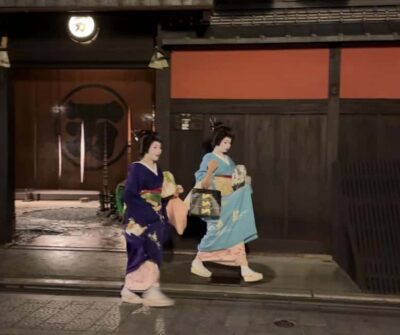
Gion Magical Night Walking Tour with Geisha Trivia
Read our review →
Gion Geisha District Walking Tour – Stories of Geisha
Read our review →
Best of Kyoto: Gion, Geisha, Pagodas & Cobblestones
Read our review →

Kyoto Night Foodie Tour in Gion (9+ dishes + 6 Sake tastings)
Read our review →
Kyoto Gion Geisha District Walking Tour – The Stories of Geisha
Read our review →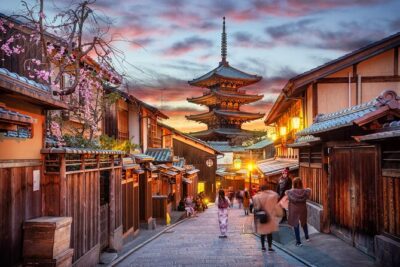
Kyoto Gion: 2-Hour Geisha Culture & History Walking Tour
Read our review →Browse the lists this tour appears in