
REVIEW · GION GEISHA DISTRICT TOURS
Dinner with Maiko in a Traditional Kyoto Style Restaurant Tour
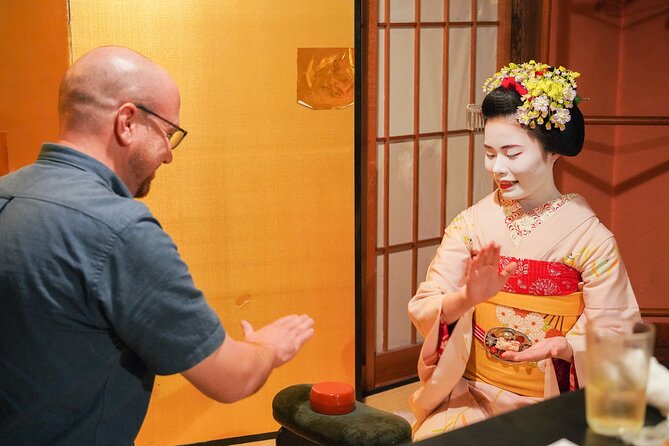
The most unusual part of this Kyoto evening is the private time with a maiko, a geisha apprentice. You do not simply watch a staged dance from a distance. You sit in a traditional restaurant, ask questions through your guide, enjoy dinner, and see the maiko perform dances and games connected with her work.
I like the small maximum of seven people, which gives the evening a personal feel. I also like the opening walk through Gion, where your guide points out details such as a local school timetable that is easy to miss when you explore alone. The drawback is the seating: if you are placed at the far end of the room, your view of the dance may be partly blocked.
In This Review
- Key points at a glance
- Why this Gion evening feels different
- Starting beside the Izumo-no-Okuni statue
- Moving from Gion streets to a private room
- What you eat during the 2-hour-40-minute dinner
- Meeting the maiko: conversation, games, and dance
- The short walk after dinner
- Is $299.95 a fair price?
- Who should book this experience?
- Booking details worth noticing
- Should you book the Gion maiko dinner?
- FAQ
- Where does the tour begin?
- Where does the tour end?
- How long does the experience last?
- How many people can join?
- What age is required?
- Is the tour suitable for people with mobility problems?
- Can I request a special meal?
- What happens if the weather is unsafe?
- Can I cancel for a full refund?
Key points at a glance
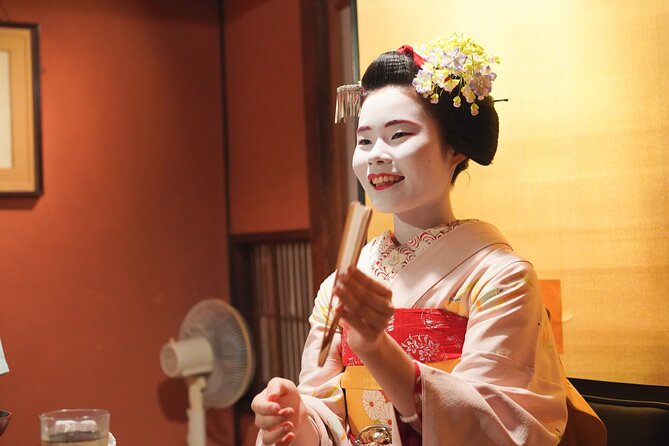
- A maiko joins your private dinner: You have time for questions, translated conversation, traditional games, and a dance performance.
- Gion comes first: The 40-minute walk helps explain the wooden machiya houses, customs, and geisha district before dinner.
- A multi-course Japanese meal: The dinner can include around nine small traditional dishes, with alcoholic and nonalcoholic drinks available.
- Guides make the exchange work: Guides including Hikari, Josh, and Peco have helped guests ask questions and understand the answers.
- Small-group format: The maximum is seven people, a useful size for conversation in a private room.
- Plan for a walking evening: The tour lasts about 3 hours and 30 minutes and is not recommended if you have mobility problems.
Why this Gion evening feels different
Kyoto offers plenty of cultural shows, but this experience combines several pieces into one evening. You begin outdoors in Gion, then move into a private dining setting, where the maiko is not just a performer on a distant stage. She answers questions, plays traditional games, and demonstrates dance.
That difference matters. Geisha culture can seem mysterious from the outside, and it is easy to reduce it to costumes and photographs. A good guide gives you a clearer picture of the training, manners, artistic skills, and work involved. The guide also translates, so you can ask about the maiko’s life and career choice without needing Japanese.
The tone is refined but not stiff. The best moments come from the simple exchange: you ask a sincere question, the guide translates it, and the maiko answers. Some guests have spent more than an hour with her. Others found the conversation less substantial and felt the evening focused more on performance and games. Go expecting a carefully arranged cultural encounter, not an unrestricted private interview.
More evenings in Gion:
- Kyoto Geisha Walking Tour: Gion District & Hidden Gems
★ 4.7 · 3,273 reviews - Kyoto: Gion Magical Night Walking Tour with Geisha Trivia
★ 4.9 · 2,393 reviews - Kyoto: Gion Geisha District Walking Tour – Stories of Geisha
★ 4.7 · 2,187 reviews
Starting beside the Izumo-no-Okuni statue
The meeting point is the Statue of Izumo-no-Okuni in Kawabatacho, in Kyoto’s Higashiyama Ward. The statue is near public transportation, but arrive early. The tour starts on time, and a late arrival can disrupt a small group more than it would on a large bus tour.
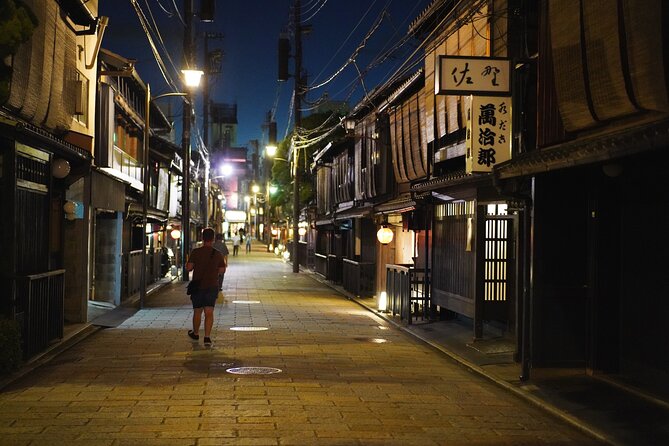
Your guide leads the first portion through Gion for about 40 minutes. This is not meant to be a full neighborhood tour. Instead, it gives you a useful introduction to the district before the dinner begins.
Gion is known for its traditional wooden machiya houses and preserved streets. The appeal is not one grand monument. It is the way the streets, entrances, lanterns, and old buildings create the setting for Kyoto’s traditional arts. Your guide may point out small details that you could easily pass without noticing, including a school timetable in the neighborhood.
That kind of observation is one of the walk’s strengths. You get context for the district rather than simply being led from the meeting point to the restaurant. Your guide can also explain the etiquette of moving through Gion, a place where residents, businesses, and cultural performers share narrow streets.
Keep your expectations measured. The walk is short, and the main event is the dinner. If you want a long architectural tour or several historic sites, book a separate Gion walk. Here, the neighborhood stroll works best as a scene-setter.
Moving from Gion streets to a private room
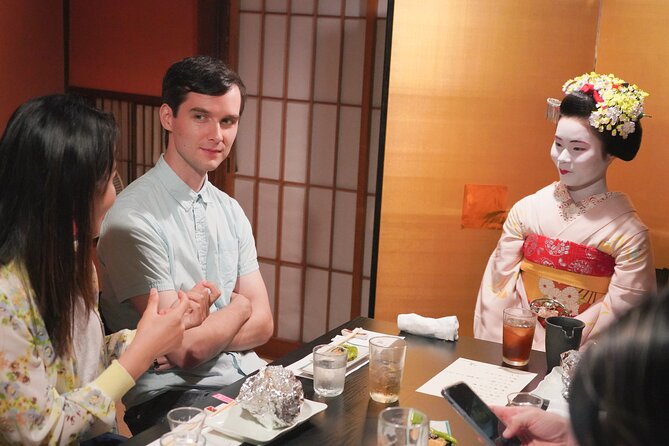
After the walk, you spend about 2 hours and 40 minutes at a Kyoto restaurant or traditional teahouse. The setting is private and intimate, with only your group and the maiko’s scheduled appearance.
The room is part of the experience. A traditional restaurant setting makes the dinner feel connected to the world you have just heard about in Gion. It also gives you a quieter place to eat and ask questions than a public show would.
The small group helps here. With no more than seven participants, you have a better chance to hear the translation, take part in a game, and ask something of your own. The evening is not designed for a large audience. It feels closer to a hosted cultural meeting.
There is one practical concern: seating. A participant reported that people at the far end could not see the maiko clearly during the dance because others were in the way. This is especially important if you are deaf or rely on a clear view to follow the program. At the start, look at the room layout and politely ask the guide about sightlines if needed. The available seating may still limit what can be changed.
What you eat during the 2-hour-40-minute dinner
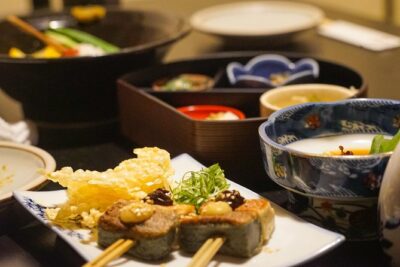
The meal is one of the main reasons the price can make sense. The food is not simply a snack served before a show. The evening can include about nine small traditional dishes, giving you a chance to try a sequence of Japanese flavors and presentations.
Several descriptions praise the dinner as delicious and top-notch. Another gives a more moderate assessment, calling the food okay while still enjoying the overall evening. That range is worth noting. Food tastes are personal, and the menu is part of a cultural dinner rather than a restaurant visit chosen solely for culinary reputation.
You should expect multiple courses rather than one large plate. Small dishes let you sample unfamiliar foods without committing to a single item. They also suit the pace of the evening, since the meal unfolds alongside conversation and performance.
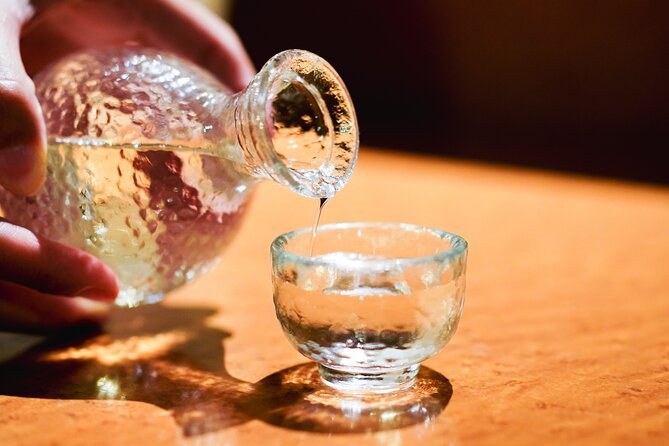
Drinks include alcoholic and nonalcoholic choices. Options mentioned include wine, sake, plum wine, tea, beer, and other beverages. Free-flowing drinks are included according to the experience details described by participants, but you should still check the current booking terms if drink service is important to your budget.
Tell the operator about dietary requests or allergies at least one day before the tour. Requests made on the day cannot be accommodated, and allergy-free meals or substitutions are not guaranteed because the food is prepared in kitchens the operator does not control. If you have a serious allergy, this limitation deserves careful thought before you pay.
A few more Kyoto experiences worth comparing
- Kyoto Gion Cultural Walk & Geisha Show with Dining Options
★ 5.0 · 518 reviews - Kyoto Gion Cultural Walk & Geisha Show with Dining Options
★ 5.0 · 483 reviews - Kyoto: Geisha Dinner & Gion Cultural Walk
★ 5.0 · 73 reviews - Private Dinner with a Geisha
★ 5.0 · 65 reviews
Meeting the maiko: conversation, games, and dance
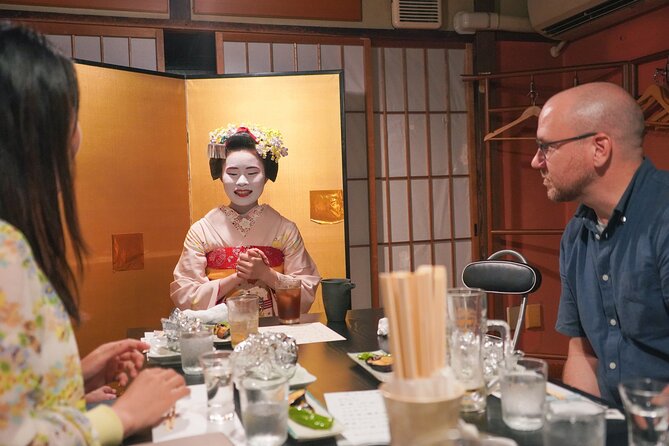
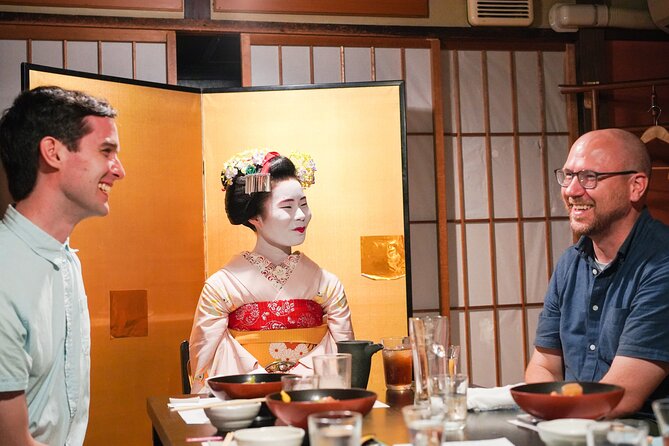
The maiko is the heart of the evening. You can ask about her life, training, work, and reasons for choosing this path. Your guide translates the exchange, making it possible to have a more direct conversation even if you speak no Japanese.
Guides such as Hikari, Josh, and Peco have received particular praise for making people comfortable and explaining the cultural background. Hikari, in particular, has been described as bringing positive energy even during heavy rain. Peco was noted for her enthusiasm, while Josh helped make the Gion walk and dinner memorable.
Guide quality matters here more than it would on a simple sightseeing walk. The guide has to translate accurately, explain unfamiliar customs, keep the conversation moving, and make sure everyone gets a chance to participate. A quiet group may need encouragement to ask questions. A talkative group may need gentle guidance so the maiko is not surrounded by one person’s conversation.
The exchange is not guaranteed to become a long personal discussion. One account found the maiko very young and felt the conversation was limited, with more emphasis on the performance and traditional games. That is a fair warning. You should arrive curious and respectful, but not expect the maiko to reveal private details or speak continuously for your group.
The dance is elegant and highly anticipated. It gives you a direct look at one of the arts maiko train to perform. Because this is a live cultural presentation in a small room, the viewing angle can shape your experience. Ask about seating early, especially if everyone in your party needs a clear view.
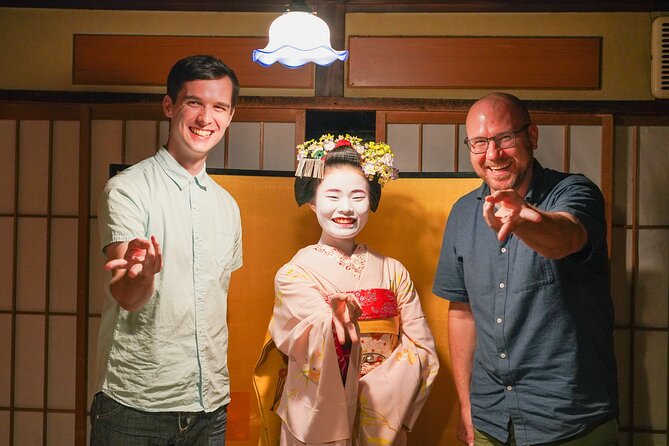
Games add a lighter touch. They make the meeting less formal and give you a way to interact without forcing a serious question-and-answer session. The balance of food, talk, games, and dance is what gives the evening its rhythm.
The short walk after dinner
After the meal and performance, the experience ends with a 10-minute walk through Kyoto at night. The tour ends at the restaurant area in Gion rather than returning you to the original statue.
That arrangement is simple, but it affects your plans. You will need to make your own way back to your hotel or the next stop. Gion is near public transportation, though the exact route will depend on where you are staying.
The final walk is not a second sightseeing tour. Think of it as a calm transition after dinner, with the daytime noise softened by the evening. If you have a late reservation, train connection, or timed attraction afterward, leave extra room. The total duration is approximately 3 hours and 30 minutes.
Is $299.95 a fair price?
At $299.95 per person, this is a costly evening. You are paying for more than dinner, but the value depends on how much you want this particular access and setting.
The price includes a small-group guide, a Gion orientation walk, a private dining setting, a multi-course meal, drinks, interpretation, and the maiko program. Comparable pieces booked separately could still add up, but the main value is the arranged meeting. This is not an ordinary restaurant reservation that you could easily reproduce on your own.
I would consider it good value for a first-time Kyoto visit if geisha culture is high on your list and you want a guided explanation rather than a quick street sighting. The private format also suits couples, friends, and older teenagers who enjoy food and cultural programs.
I would hesitate if your main goal is fine dining, a long historical tour, or a guaranteed close-up view of every dance movement. The meal receives strong praise overall, but not every description treats it as the star. You are paying primarily for the complete cultural evening.
The group limit of seven improves the value. A large room with dozens of people would make the same price feel much less appealing. Here, the chance to ask questions and receive translation gives the event a personal edge.
Who should book this experience?
I would recommend it to you if you:
- Want a respectful introduction to maiko and geisha arts
- Enjoy trying several Japanese dishes in one meal
- Prefer a small group to a large cultural show
- Are comfortable walking through Gion and standing or sitting for several hours
- Can participate in an evening intended for people aged 15 and older
- Value conversation and explanation as much as photography
It is especially suitable for families with teenagers. Participants have found that even younger members of a group enjoyed the evening, but children under 15 and babies are not allowed. If you are traveling with younger children, the operator recommends arranging a private tour instead.
You should think twice if you have mobility problems. The tour includes neighborhood walking and is not recommended for people who have difficulty walking. A private tour may be the better option, though you should confirm what adjustments are possible.
Summer and winter also require planning. Kyoto can reach about 40°C in summer and drop to about -5°C in winter. Wear suitable clothing and shoes, and do not assume the evening will feel mild simply because dinner takes place indoors. The tour may be canceled for unsafe weather.
Booking details worth noticing
Confirmation is sent at booking, and the tour uses a mobile ticket. The group maximum is seven people, so punctuality matters. The experience is popular, with more than five bookings reported in the previous week, but that does not guarantee availability on your dates.
The cancellation information needs careful attention. The stated policy allows a full refund when you cancel at least 24 hours before the start time. The tour notes also say free cancellation or rescheduling is available up to seven days before the tour. Since those time limits do not match, check the exact terms shown for your selected booking before finalizing your plans.
Dietary requests must be sent at least one day ahead. The operator cannot promise allergy-free food, restrictions, or substitutions. That is a meaningful limitation, not a footnote, if your diet is strict.
Should you book the Gion maiko dinner?
Book it if you want a polished, intimate evening built around Kyoto’s traditional performing arts. The strongest parts are the small group, the guide’s interpretation, the private meal, and the rare chance to ask a maiko about her work before seeing her dance and play games.
Do not book it expecting an unstructured personal friendship or a luxury tasting menu. The conversation may be brief, and your view of the performance depends partly on where you sit. Still, for a visitor who wants more than a glimpse of Gion’s geisha district, this offers a thoughtful way to learn, eat, and watch a living art form in a traditional setting.
FAQ
Where does the tour begin?
The tour begins at the Statue of Izumo-no-Okuni in Kawabatacho, Higashiyama Ward, Kyoto.
Where does the tour end?
The tour ends at the restaurant in Gion. It does not return you to the starting statue.
How long does the experience last?
The full experience lasts approximately 3 hours and 30 minutes. The Gion walk takes about 40 minutes, the dinner and maiko program about 2 hours and 40 minutes, and the final walk about 10 minutes.
How many people can join?
The tour has a maximum of seven participants.
What age is required?
Participants must be at least 15 years old. Small children and babies are not allowed, even when accompanied by parents.
Is the tour suitable for people with mobility problems?
It is not recommended for people with mobility issues because the experience includes walking. The operator recommends a private tour if you have difficulty walking.
Can I request a special meal?
You must send dietary requests or allergy information at least one day before the tour. Requests made on the tour day cannot be accommodated, and allergy-free meals, dietary adjustments, or substitutions are not guaranteed.
What happens if the weather is unsafe?
The tour may be canceled if weather conditions are unsuitable for safety reasons. Kyoto can also be very hot in summer and very cold in winter, so dress accordingly.
Can I cancel for a full refund?
The stated cancellation policy allows a full refund if you cancel at least 24 hours before the start time. The tour information also refers to free cancellation or rescheduling up to seven days before the tour, so check the exact terms attached to your booking.
More Dining Experiences in Kyoto
- Kyoto Evening Gion Food Tour Including Kaiseki Dinner
★ 5.0 · 62 reviews - Kyoto: Maiko Dinner in Traditional Restaurant and Tour
★ 4.8 · 55 reviews - Kyoto: Lunch or Dinner with Maiko
★ 4.2 · 52 reviews - Private Dinner with Maiko and Geiko in Kyoto
★ 5.0 · 28 reviews
Recently added around Kyoto
- Higashiyama | Kyoto: Sakura Season Private Rickshaw Tour★ 5.0 · 3 reviews
- Kyoto Kimono Rental CHAMATSU|Kimono/Yukata Rental FamilyPlan★ 5.0 · 3 reviews
- Kyoto: Half-Day Private Guided Tour to the Old Town of Gion★ 4.4 · 3 reviews
- Nara Private Customizable Half Day Tour★ 5.0 · 3 reviews
- Kansai Region Hiking Adventure in Nara Kobe Kyoto and More★ 5.0 · 3 reviews
- Full Day Nara Deer, Temple, Shrine, Activities & Tea Ceremony★ 5.0 · 3 reviews
- Nara: Essential Private Tour with Deer Park and Temples★ 5.0 · 3 reviews
- Hiking Tour for Sacred Sites in Kyoto with a Guide★ 5.0 · 3 reviews
Gion Geisha District Tours, compared.
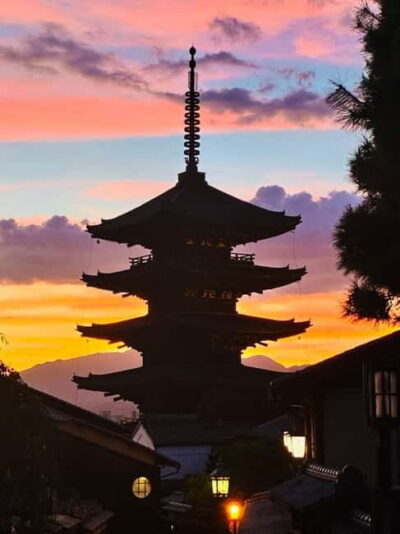
Kyoto Geisha Walking Tour: Gion District & Hidden Gems
Read our review →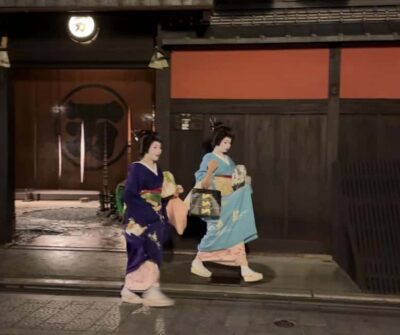
Gion Magical Night Walking Tour with Geisha Trivia
Read our review →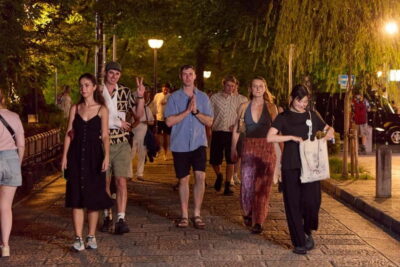
Gion Geisha District Walking Tour – Stories of Geisha
Read our review →
Best of Kyoto: Gion, Geisha, Pagodas & Cobblestones
Read our review →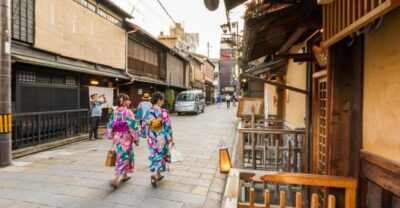
Kyoto Night Foodie Tour in Gion (9+ dishes + 6 Sake tastings)
Read our review →
Kyoto Gion Geisha District Walking Tour – The Stories of Geisha
Read our review →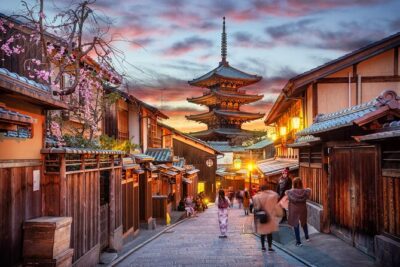
Kyoto Gion: 2-Hour Geisha Culture & History Walking Tour
Read our review →Browse the lists this tour appears in