
REVIEW · KYOTO NINJA EXPERIENCES
Authentic Ninja Weapon Forging Experience in Kyoto
The most unusual part of this Kyoto activity is simple: you do not just pose with a ninja weapon. You help turn steel into one. At Atelier NIN, you suit up in a blacksmith’s samue, heat metal in an 800°C furnace, hammer it, sand it, engrave it, darken it, and polish it for the trip home.
I like the hands-on steelwork and the personal finish. You choose from three shuriken shapes or a kunai, then add a kanji character to make the piece yours. I also like the friendly, high-energy instruction from Taka and the other craftsmen. The main thing to consider is the price, $151.92 per person, especially since some of the shaping is prepared in advance and the physical work may feel brief to anyone expecting a full blacksmithing course.
In This Review
- Key points at a glance
- Turning Kyoto steel into a ninja souvenir
- Wearing samue at Atelier NIN
- Choosing a shuriken or kunai
- Heating steel in an 800°C furnace
- Shaping the weapon with files and a belt sander
- Adding kanji to make the piece yours
- Learning how ninja tools were used
- Blackening and polishing the finished weapon
- How much work do you really do?
- Who will enjoy this Kyoto workshop?
- The location and timing need a little planning
- What the praise gets right, and where to stay realistic
- Booking, cancellation, and practical details
- Should you book the Atelier NIN experience?
- FAQ
- Where does the ninja weapon forging activity begin and end?
- How long does the experience last?
- Do I need previous blacksmithing experience?
- Which weapons can I make?
- Is the finished weapon packed for the journey home?
- What is the cancellation policy?
Key points at a glance
- Heat real steel at 800°C: You take part in the dramatic core of the forging process, with staff controlling the hot-work stages.
- Choose your own weapon: Pick one of three shuriken styles or a kunai, with the kunai sometimes available for an additional 3,000 yen.
- Wear the part: A samue uniform and tenugui head wrap turn a workshop visit into a proper ninja craftsman session.
- Finish it personally: You shape, sand, engrave, blacken, and polish your weapon before packing it in a clean box and bag.
- Good for families and first-timers: No previous metalworking skill is needed, and easier sharpening options help people with less stamina.
- Allow time for the trip: The studio is in Yase, away from central Kyoto’s main sightseeing routes, so check the public transport connection and keep a taxi app ready.
Turning Kyoto steel into a ninja souvenir
Kyoto has no shortage of temples, gardens, tea houses, and old streets. This workshop gives you a different kind of connection to the city. You leave with an object you helped make, not just another photograph or shop purchase.
The activity lasts about two and a half hours. That is long enough to give the process some shape, but not so long that you lose an entire day of sightseeing. You move through several stages, each with a clear purpose: prepare, forge, refine, personalize, protect, and polish.
I would describe the finished item as a display souvenir rather than a toy. It is a real metal object, and you should handle and transport it with care. The clean box and bag provided at the end are useful, especially if you still have several days of Japan travel ahead.
More ninja experiences:
- Skip the lines Basic Ticket at SAMURAI NINJA MUSEUM KYOTO
★ 4.5 · 632 reviews - Ninja 1-hour Hands-on Lesson by Japanese master in Kyoto -Entry
★ 5.0 · 489 reviews - Kyoto: Ninja Weapon Forging Experience
★ 4.8 · 478 reviews
Wearing samue at Atelier NIN
Your first step is changing into samue, the traditional work clothing associated with craftsmen. A tenugui is wrapped around your head, giving the session a theatrical touch without turning it into a costume show.
This small ritual matters. You are not standing at the edge of a workshop while someone else works. You are being prepared to take part, and the uniform helps separate this activity from an ordinary souvenir-making class.
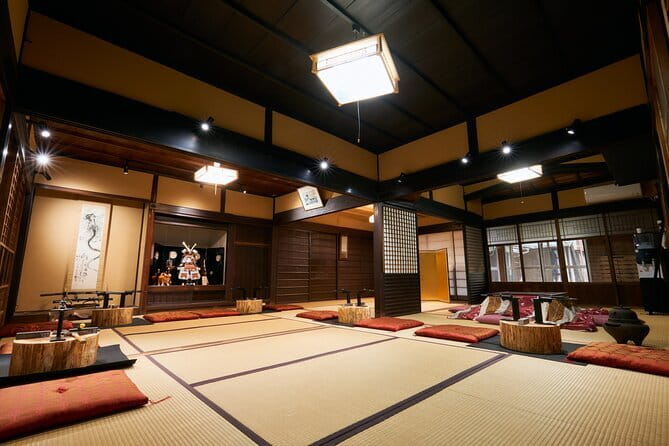
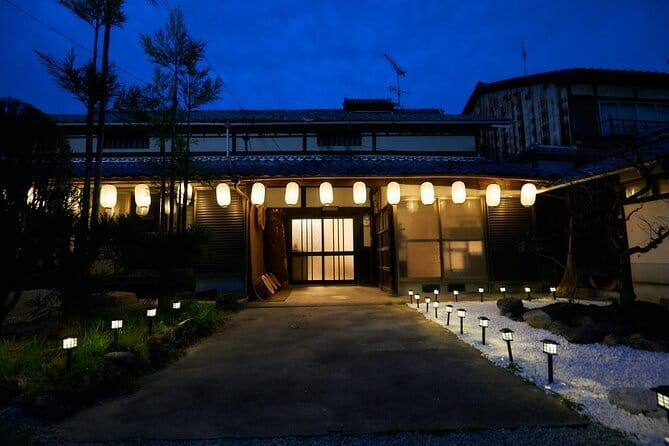
The studio is at 168-1 Yasenosechō in Sakyo Ward, in the Yase area of Kyoto. It is near public transportation, but the location is off the usual central Kyoto path. Directions may require careful attention, and a taxi can be useful if your connection is unclear.
Plan this as a destination in its own right. Do not squeeze it between two appointments in Gion or Arashiyama without checking the travel time. The activity returns to the same meeting point, so you do not need to arrange a separate end location.
Choosing a shuriken or kunai
The choice of weapon gives the workshop a personal starting point. You can select one of three shuriken styles, each with a different outline, or choose a kunai.
Shuriken are the compact throwing tools most people picture when they hear the word ninja. The different styles let you choose a shape that appeals to you rather than receiving an identical object to everyone else.
The kunai has a more substantial shape and is especially popular with families and groups of friends. The activity information presents a kunai as one of the available choices, while booking details should be checked carefully because some participants were charged an additional 3,000 yen for that option.
If you are booking for several people, decide in advance if everyone wants the same style. That makes the selection stage quicker and avoids surprise if the kunai carries a supplement on your date.
Heating steel in an 800°C furnace
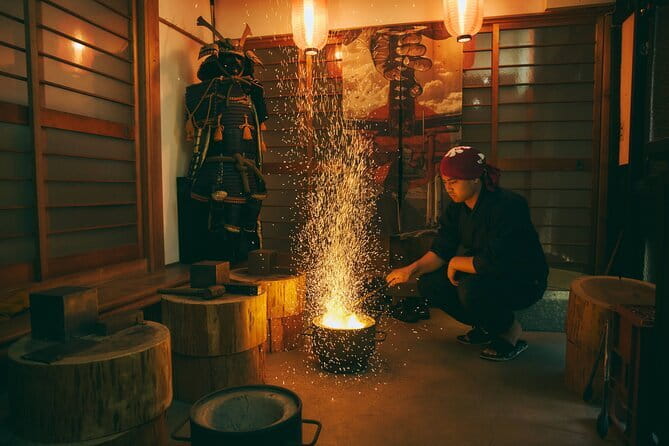
The central moment is the forge. Your metal is heated in a furnace reaching 800°C, then brought out for hammering while it is hot. You will see sparks and feel the force of the process, but the craftsmen guide the work closely.
You do not need metalworking experience. The staff show you how to use the hammer and how to strike the piece safely. Specialized tools, including hammers and files, are provided for the session.
This is the part that makes the workshop feel more authentic than a simple craft class. You are handling steel and learning how heat changes its shape. At the same time, keep your expectations realistic. One participant felt that the weapon arrived partly sharpened and that the hammering amounted to only a few strikes for the photograph.
That criticism is useful. The session is an introduction to forging, not a complete apprenticeship in traditional swordsmithing. Staff handle the stages that require greater control, while you take part in the visible and meaningful steps.
A completely different side of Kyoto:
- PERFECT KYOTO 1-Day Bus Tour
★ 5.0 · 13,518 reviews - Kyoto: Fushimi Inari, Kinkakuji, Bamboo Grove 1 Day Bus Tour
★ 4.8 · 4,316 reviews - Kyoto: Tea Ceremony in a Traditional Tea House in Kiyomizu
★ 4.9 · 3,519 reviews - Kyoto Geisha Walking Tour: Gion District & Hidden Gems
★ 4.7 · 3,273 reviews
Shaping the weapon with files and a belt sander
After forging, you refine the metal. Files are available for sharpening and shaping, and a professional belt sander is used to smooth and sharpen the piece.
This stage may require moderate physical effort. You are working with metal, not soft clay, and the activity recommends a moderate level of fitness. It is not presented as an intense workout, but people with limited stamina should expect to ask for help.
The staff can offer easier sharpening options that involve less manual work. That makes the activity workable for a wider range of ages and abilities, although you should still be comfortable standing and handling tools during the session.
The shaping stage also reveals how much help you are receiving. Some people will enjoy taking their time with the lines and symmetry. Others will prefer the craftsmen to correct the shape so the finished item looks neat. Taka has been especially helpful when a kunai needed to become more symmetrical, a small detail that can make a big difference in the final result.
Adding kanji to make the piece yours
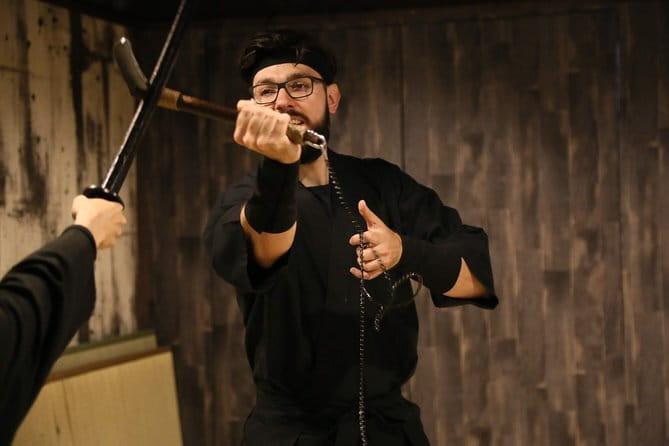
Once the basic shape is ready, you choose a kanji character for engraving. Staff engrave it onto the weapon, giving the souvenir a personal mark.
This is one of the strongest reasons to choose the workshop over buying a finished ninja replica. The shape may come from a set of available designs, but the character makes the item specific to your visit.
Take a moment when choosing the kanji. If you are unsure about the meaning or appearance of a character, ask the staff before engraving begins. The information supplied for the activity confirms that staff select and engrave the character with precision, but it does not provide a full list of choices.
For families, this can be a nice point of difference. Each person can select a separate character, creating a set of related souvenirs without making them identical.
Learning how ninja tools were used
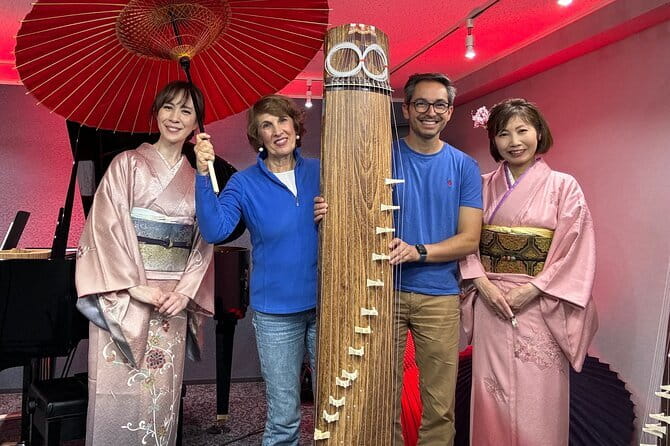
The workshop includes a session about ninja history, weapons, and secret techniques. This gives context to the metal in front of you.
The talk is not just filler while the steel cools. It helps explain why shuriken and kunai have different shapes and purposes, and it adds a cultural layer to the practical work. You are learning about the object as a tool, not simply making a piece of themed merchandise.
The quality of the explanation depends partly on the pace of the group and the staff member leading your session. Most instruction is described as clear and engaging, with English good enough for participants to follow the work and safety guidance. One person found some directions vague at times, so do not hesitate to ask for a demonstration if you are unsure.
The staff’s enthusiasm is a major part of the atmosphere. Taka and the other craftsmen keep the mood lively and encourage photographs during the dramatic steps. This helps groups relax, though anyone hoping for a quiet, formal smithing lesson may find the energy a little high.
Blackening and polishing the finished weapon
The dark finish comes next. You apply a special solution that protects the metal and gives it an authentic black appearance.
This step is practical as well as visual. The coating helps protect the steel, while the dark surface makes the shuriken or kunai look closer to the ninja tools described during the history session.
Finally, you polish the weapon. The surface gains some shine, and the piece looks finished rather than workshop rough. The sequence gives you a satisfying sense of progress: the item changes from plain metal to a shaped, marked, protected keepsake.
At the end, the weapon is placed in a clean box and bag. Several participants were able to put the boxed item into checked baggage for the journey home. You should still confirm current airline and airport rules before flying, since the weapon is a metal object even when safely boxed.
How much work do you really do?
The wording handmade ninja weapon may lead you to imagine that you complete every stage from a raw bar of steel. That is not quite the right expectation.
You take part in the key actions: heating, hammering, shaping, sanding, engraving selection, blackening, and polishing. Skilled staff supervise the hot and technical work, and some pieces may already be partly prepared before your session.
That division is sensible for safety and timing. A two-and-a-half-hour class with first-time metalworkers cannot include every slow step of professional forging. It also means the experience works for teenagers, families, and people who want a memorable activity without signing up for a full-day course.
The trade-off is value. At $151.92 per person, you are paying for instruction, equipment, studio time, the finished weapon, personalization, and the novelty of a Kyoto activity that few other visitors can match. If your main goal is to learn advanced blacksmithing, the price may feel high. If you want a guided cultural activity and a substantial souvenir, the cost is easier to justify.
Who will enjoy this Kyoto workshop?
I would recommend it most strongly to people who want a break from temple visits and a hands-on activity with a clear result at the end.
It suits:
- Families with older children and teenagers
- Couples looking for a shared souvenir
- Groups of friends who enjoy playful, active activities
- First-time metalworkers
- Visitors interested in ninja culture beyond films and costumes
- Anyone who prefers making something to simply buying it
The activity has worked well for families with children aged 12 and 15, and for 18-year-olds who wanted a distinctive experience. It is not limited to adults, but younger children may need more help with the tools and physical stages.
You should also consider your energy level. Moderate fitness is recommended, and the workshop involves standing, hammering, filing, and handling metal. The easier sharpening choices help, but this is still more active than a seated craft lesson.
The location and timing need a little planning
The studio is in Yase, in Sakyo Ward, north of the busiest central areas. It is near public transportation, yet the setting is described as off the beaten path, and the directions may not be detailed enough for a rushed arrival.
I would allow extra time to find the studio. Keep the address saved in your phone, and have a taxi app available as a backup. This is especially sensible for a family group carrying bags or for anyone traveling on a tight schedule.
The tour ends where it begins. That is convenient, but it also means you should think about what you want to do afterward in the same general area. Do not assume you will finish beside Kyoto Station or in central Gion.
The maximum group size is 25 people. That is not a private lesson, but the staff work directly with participants during the tool stages. If your priority is very quiet, one-to-one instruction, ask about the group arrangement before booking.
What the praise gets right, and where to stay realistic
The strongest part of this activity is the combination of fun and real participation. The staff are friendly, energetic, and patient. The atmosphere is designed to keep you engaged, with action photographs during the forging stages and plenty of encouragement when you are learning unfamiliar motions.
The finished souvenir is another major strength. A boxed shuriken or kunai with a kanji engraving has more meaning than a mass-produced item from a tourist shop. You can point to the hammer marks, the shape you helped refine, and the character chosen during the session.
The education also adds value. You hear about the purpose of the weapons and the ninja tradition while working on the metal, so the session is not only a photo opportunity.
Still, the experience is not perfect for everyone. Some instructions can feel vague, and the workshop’s lively style may not suit people seeking a slow, quiet lesson. The most important limitation is the amount of work you personally complete. Staff must prepare and finish some parts, so the word forging should be understood as guided participation.
That balance does not make the activity poor. It simply helps you book it for the right reason. You are buying a memorable introduction to forging, not professional training.
Booking, cancellation, and practical details
The price is listed at $151.92 per person, with free cancellation available up to 24 hours before the local start time. Canceling within 24 hours or changing the booking during that period does not qualify for a refund.
Confirmation is provided when you book. Specialized tools and the craftsman uniform are included, along with a box and bag for carrying the finished item. Private transportation is not included.
Bring comfortable clothing under the samue and plan for a moderate amount of physical work. The activity is not described as wheelchair accessible, so anyone with mobility concerns should confirm suitability before booking.
Should you book the Atelier NIN experience?
Book it if you want a memorable Kyoto activity where you take part in making a real metal souvenir. The combination of samue clothing, hot steel, hammering, kanji engraving, and the final dark finish gives you plenty to remember after the temples blur together.
I would especially choose it for a family, a group of friends, or a visitor who has already seen Kyoto’s classic sights and wants something different. Taka and the other craftsmen add warmth and energy, and beginners can take part without previous skill.
Think twice if you want a long, technical blacksmithing course or if $151.92 feels too steep for a guided activity with some pre-shaped work. Also check the kunai surcharge, transport route, and baggage rules before you commit.
For the right audience, this is one of Kyoto’s more distinctive souvenirs: not just a ninja-themed object, but a piece you helped heat, hammer, shape, mark, protect, and polish.
FAQ
Where does the ninja weapon forging activity begin and end?
It begins at studio NIN, located at 168-1 Yasenosechō, Sakyo Ward, Kyoto, 601-1254, Japan. The activity ends back at the same meeting point.
How long does the experience last?
The experience lasts approximately 2 hours and 30 minutes.
Do I need previous blacksmithing experience?
No. The activity is designed for beginners, and skilled craftsmen teach you how to heat, hammer, shape, and finish the metal.
Which weapons can I make?
You can choose from three shuriken styles or one kunai. Some booking information indicates that choosing a kunai may require an additional 3,000 yen, so confirm the current price when booking.
Is the finished weapon packed for the journey home?
Yes. A clean box and bag are provided for taking your finished weapon home. Some participants have placed the boxed item in checked baggage, but you should confirm current airline and airport rules yourself.
What is the cancellation policy?
You can cancel for a full refund up to 24 hours before the experience start time. Cancellations or changes made less than 24 hours before the start time are not accepted for a refund.
Recently added around Kyoto
- Higashiyama | Kyoto: Sakura Season Private Rickshaw Tour★ 5.0 · 3 reviews
- Kyoto Kimono Rental CHAMATSU|Kimono/Yukata Rental FamilyPlan★ 5.0 · 3 reviews
- Kyoto: Half-Day Private Guided Tour to the Old Town of Gion★ 4.4 · 3 reviews
- Nara Private Customizable Half Day Tour★ 5.0 · 3 reviews
- Kansai Region Hiking Adventure in Nara Kobe Kyoto and More★ 5.0 · 3 reviews
- Full Day Nara Deer, Temple, Shrine, Activities & Tea Ceremony★ 5.0 · 3 reviews
- Nara: Essential Private Tour with Deer Park and Temples★ 5.0 · 3 reviews
- Photo Shoot with a Private Vacation Photographer in KYOTO, JAPAN★ 5.0 · 3 reviews
Kyoto Ninja Experiences, compared.
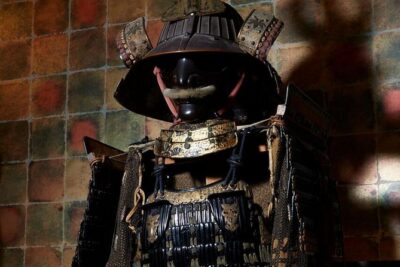
Skip the lines Basic Ticket at SAMURAI NINJA MUSEUM KYOTO
Read our review →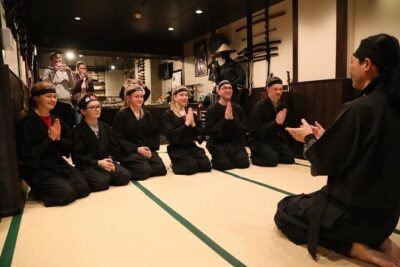
Ninja 1-hour Hands-on Lesson by Japanese master in Kyoto -Entry
Read our review →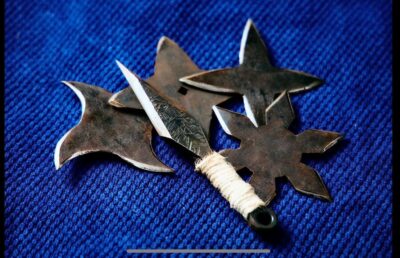
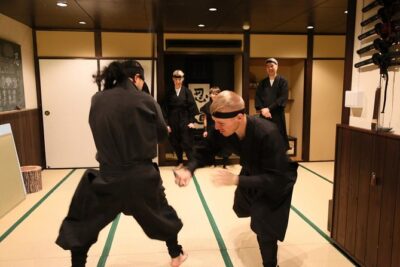
Ninja 2-hour Hands-on Lesson by Japanese master in Kyoto -Medium
Read our review →
Kyoto Sword Experience – includes Museum Ticket/Ninja Experience
Read our review →
Ninja Experience (Family Friendly) at Samurai Ninja Museum KYOTO
Read our review →
Forge Your Own Ninja Weapon with Japanese Tin Casting
Read our review →Browse the lists this tour appears in