
REVIEW · NARA DAY TRIPS
Nara: Cultural Heritage Tour by Rickshaw
Nara’s great sights are spread through quiet parkland, temple grounds, and old streets. This private rickshaw ride gives you a comfortable way to connect them, with a local guide explaining what you are seeing rather than leaving you to wander past another wooden gate. The gentle deer near Mt. Wakakusa and the huge Buddha at Todaiji provide the main drama.
I like the choice of three routes, from a focused 70-minute ride to a longer heritage outing with sake. I also like the private format, since you can ask questions, pause for photos, and adjust the focus to temples, statues, deer, or old-town streets. The main consideration is physical comfort: rickshaws are narrow, and the ride is not recommended for people with back problems or pregnant women.
In This Review
- Key points at a glance
- Starting beside Todaiji Temple
- The 70-minute Mt. Wakakusa and deer ride
- The 130-minute Buddhist statue route
- The 190-minute heritage route with sake
- What the private format adds
- Rickshaw size, children, and comfort
- Is $77 per person good value?
- Who should choose this Nara ride?
- Final verdict: choose your route before you book
- FAQ
- Where does the Nara rickshaw tour meet?
- How long is the tour?
- What languages does the guide speak?
- Is the rickshaw private?
- How many adults fit in one rickshaw?
- Can young children ride?
- Do children need to pay the full fare?
- Are temple admission fees included?
- Are food and drinks included?
- Is the tour suitable for people using wheelchairs or strollers?
Key points at a glance
- Three different routes: Choose 70 minutes for Mt. Wakakusa and deer, 130 minutes for Buddhist sculpture, or 190 minutes for temples, Naramachi, and sake.
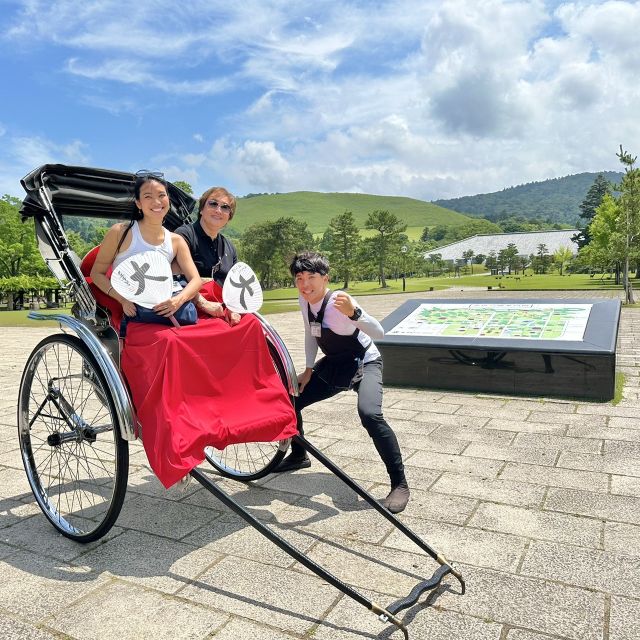
- A private ride: You share the rickshaw only with your own party, with up to two adults per vehicle.
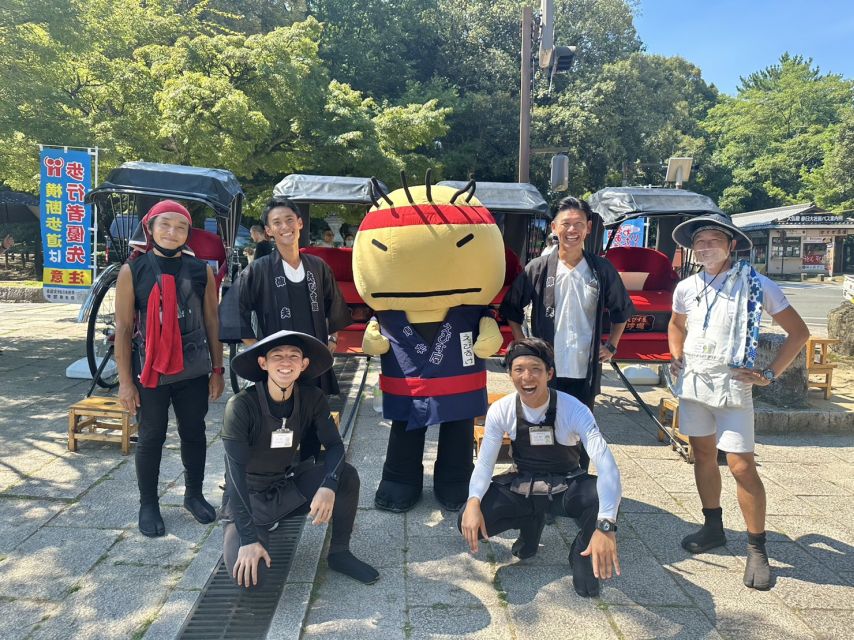
- A strong guide element: English- and Japanese-speaking guides explain Nara’s sights, with Ricky singled out as an especially good guide.
- The deer experience varies by location: Deer near Mt. Wakakusa are described as gentle, while those by Todaiji can be pushy.
- Important timing note: The activity details list both 70 to 130 minutes and a 190-minute option, so confirm the exact route and duration when booking.
- A practical family option: Children age five and under can ride on an adult’s lap, and the rickshaw is wheelchair- and stroller-friendly.
Starting beside Todaiji Temple
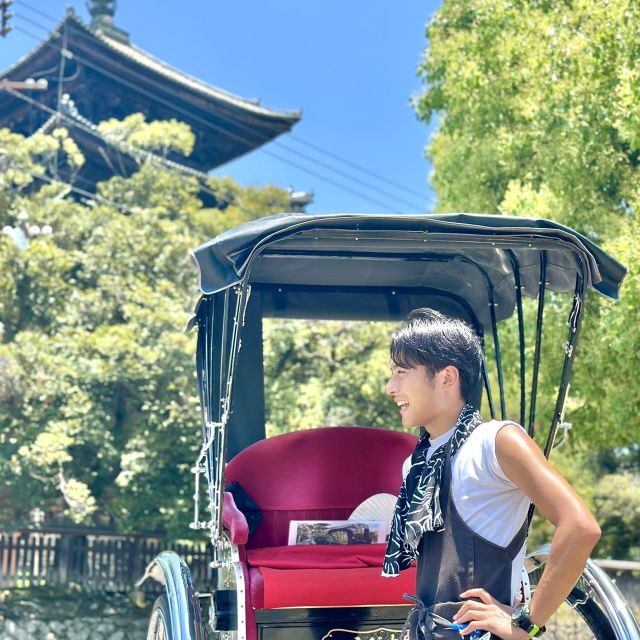
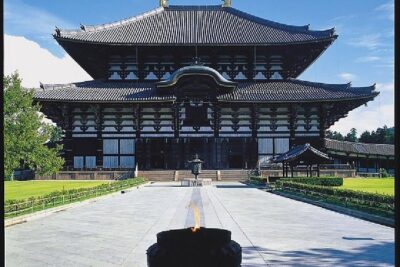
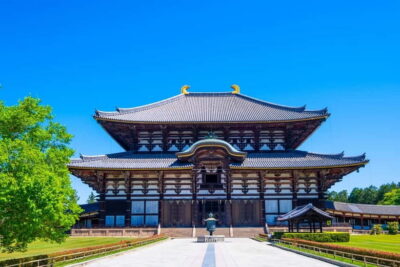
Your guide meets you just outside the intersection near Todaiji Temple, although the exact meeting point can change with the route you choose. That is a sensible part of Nara for a rickshaw departure. Todaiji is one of the city’s essential sights, and its Nandaimon Gate gives you an immediate sense of the scale and age of the place.
The temple is home to the Daibutsu, the enormous bronze Vairocana Buddha. The ride does not automatically include admission to the temple halls, so you should think of the rickshaw as a guided sightseeing experience around and between the major sights, not as an admission ticket. Temple entrance fees are separate.
Your guide handles the movement through Nara while you watch the scenery from a low, open seat. That changes the pace of a visit. You are not rushing from one stop to the next, and you can ask why a gate, statue, or shrine matters. A private guide is especially useful here because Nara’s religious sites can blur together when you see several in one morning.
More day trips to Nara:
- World Heritage Kyoto & Nara Uji Authentic Matcha Experience
★ 5.0 · 1,573 reviews - Nara Half Day Trip Walking Tour (Private Option Available)
★ 5.0 · 937 reviews - Nara Early Morning Tour (Kyoto or Osaka Departure Available)
★ 5.0 · 676 reviews
The 70-minute Mt. Wakakusa and deer ride
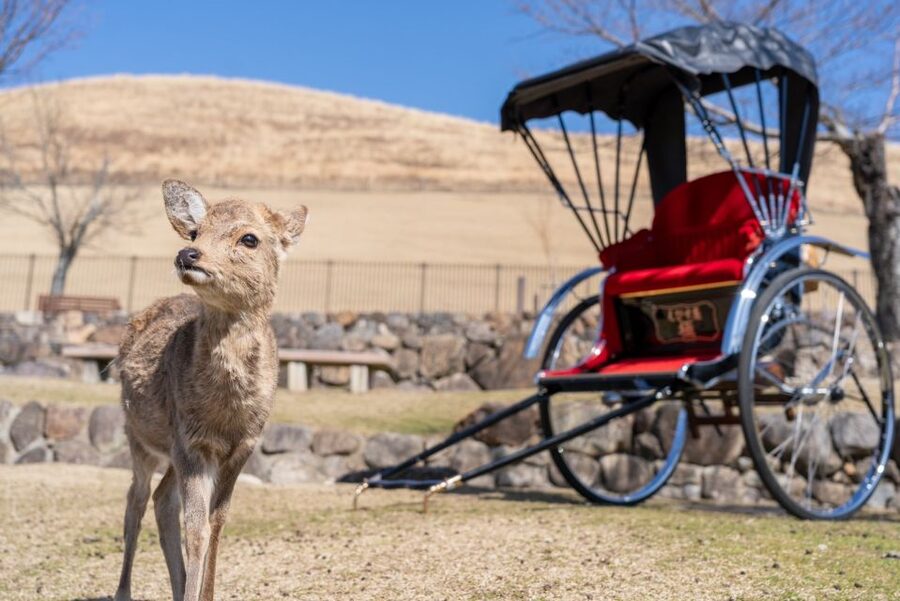
The shortest route leaves the main temple area and heads toward Mt. Wakakusa, a grassy hill that gives Nara a different face. Instead of focusing on carved gates and Buddhist halls, this option brings you into open greenery with views toward the city on clear days.
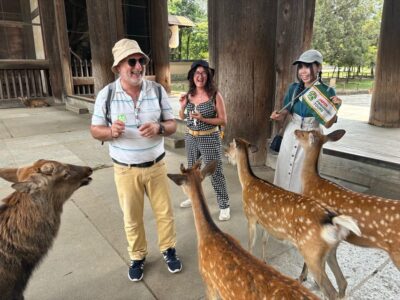
You receive deer biscuits from the rickshaw company and can feed the deer near Mt. Wakakusa. This detail matters. The deer are a major part of Nara’s appeal, but their behavior can change depending on where you meet them. The deer around Mt. Wakakusa are described as gentle, while the deer near Todaiji can be more forceful when they expect food.
I would choose this route if you want a simple first look at Nara, especially with children or limited time. It combines a ride, a view, and a close encounter with the deer without asking you to commit to a long temple program. The tradeoff is that you will not get the full Buddhist art or old-town experience.
The 70 minutes also goes quickly. You will have time for stops and photographs, but not for a broad survey of Nara’s major heritage sites. If Todaiji, Kasuga Taisha, and Naramachi are all on your must-see list, choose a longer option or visit those places separately.
The 130-minute Buddhist statue route
The middle option is designed for people who care about Japanese Buddhist sculpture. Your guide takes you through several important halls and explains the work of the sculptors, including the celebrated artist Unkei and the tradition of statue making associated with Nara.
The route includes Kofukuji Temple’s National Treasure Hall, Tokondo Hall, and Chukondo Hall, followed by Todaiji Temple’s Nandaimon Gate. This is a more focused cultural program than the deer ride. You are not simply checking off famous buildings. You are using the rickshaw and guide to understand why the statues are important.
Kofukuji is particularly valuable for this kind of tour because its halls hold Buddhist images with different expressions, poses, and levels of detail. A guide can point out features you might miss when viewing the sculptures alone. The supplied information promises detailed explanations, and the guide’s role is the main reason to choose this route rather than simply walking from temple to temple.
The National Treasure Hall requires an admission fee, which is not included. That extra cost is worth keeping in mind when you compare the total price with the advertised $77 per person. The same applies to any other temple admission on your chosen route.
This option suits adults, older children, and anyone who wants cultural context. It may be less appealing if your priority is feeding deer or seeing the old merchant streets of Naramachi. You can ask about customizing the route, but the exact stops should be confirmed before you set out.
The 190-minute heritage route with sake
The longest experience is listed as a 190-minute, or 3-hour-and-10-minute, route. It combines two of Nara’s best-known heritage sites, Todaiji Temple and Kasuga Taisha Shrine, with a ride through Naramachi and a stop at a traditional sake brewery.
Todaiji offers the monumental side of Nara. Kasuga Taisha gives you a shrine setting, with a different religious tradition and atmosphere. Seeing both in one private outing helps you compare the city’s Buddhist and Shinto heritage without having to plan the route yourself.
Naramachi adds a change of scale. This old town area retains its historic streetscape, so the ride can show you more than the headline monuments. You are looking at the older urban fabric of Nara, not just its grand temples. That makes this route the most varied choice.
The sake stop is another clear advantage for adults. Nara is described here as the birthplace of Japanese sake, and the tour includes samples at a traditional brewery. You can also buy a bottle to take home. Snacks and drinks beyond the stated tasting are not included, so do not expect a full meal.
This route gives you the best overall introduction, but it requires the biggest time commitment. It is also the option most likely to feel costly if you are mainly interested in a quick ride and deer. The finish is generally back at the starting point, though the end location can be adjusted by discussing it directly with your guide.
More rickshaw rides:
- Kyoto: Arashiyama Customized Rickshaw Tour & Bamboo Forest
★ 5.0 · 432 reviews - Kyoto Arashiyama Rickshaw Tour with Bamboo Forest
★ 5.0 · 354 reviews - Kyoto Rickshaw Tour
★ 5.0 · 210 reviews - Kyoto: Private Rickshaw Tour of Gion and Higashiyama Area
★ 5.0 · 144 reviews
What the private format adds
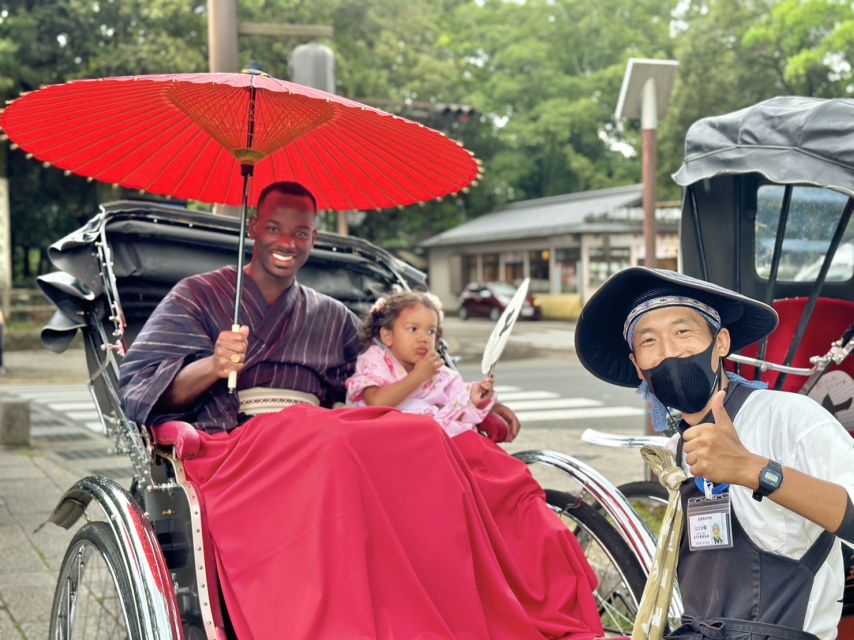
A private rickshaw is not the same as joining a large sightseeing bus. Your group gets the guide’s attention, and the route can be adjusted around your interests. If you want more explanation at a temple, extra photographs, or a different balance between heritage sites and scenery, you can ask.
The activity includes photo stops at scenic and highly photographed spots. That is useful in Nara, where the best image is often about position and timing rather than simply pointing a camera at a famous building. Selfie sticks are not allowed, so bring a standard camera or use your phone without one.
The guide is central to the value. The company provides English- and Japanese-speaking guides, and Ricky is specifically praised as an excellent guide. That gives you a helpful name to request if the booking system allows it, though guide assignment is not guaranteed in the information provided.
A private ride also means you avoid the awkwardness of trying to keep a large group together around deer, temple gates, and narrow streets. You can concentrate on the view and conversation. The downside is price: $77 per person is more reasonable when you share a rickshaw with another adult and use the guide for a longer cultural route. It is less of a bargain for a solo rider on the shortest option.
Rickshaw size, children, and comfort
Each rickshaw can carry up to two adults. The vehicle is only 21.1 inches, or 74 centimeters, wide, so two adults may find the seats close. If you value personal space or have a larger build, booking individual rickshaws may be more comfortable.
Children age six and over pay the adult rate. Up to two children age five and under can ride with two adults, but they must sit on an adult’s lap. If a five-year-old uses one of the two seats rather than sitting on a lap, that child must be booked as a full-fare adult.
The rickshaw is wheelchair- and stroller-friendly, which makes it more usable for families than you might expect. Still, the activity is not recommended for people with back problems, and pregnant women should not book it. The guidance also says it is not recommended during the first 16 weeks of pregnancy, while the suitability notice broadly lists pregnant women as not suitable. If this applies to you, treat the warning seriously and ask the operator before booking.
Is $77 per person good value?
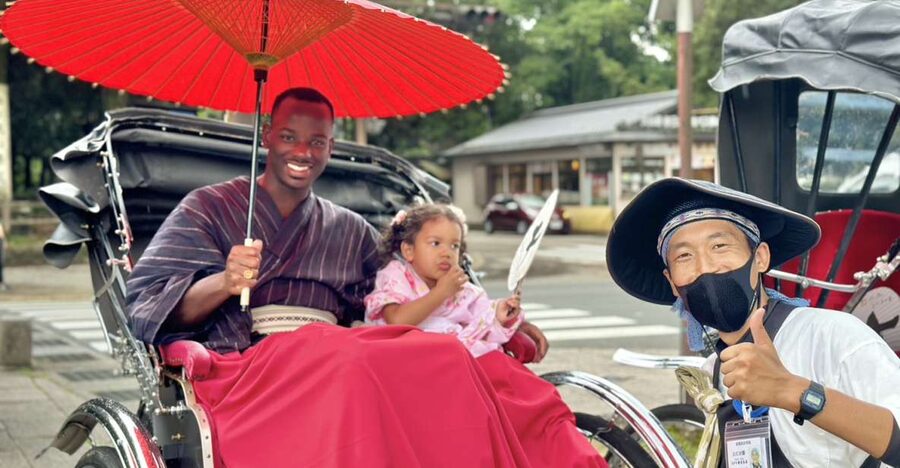
The price makes the most sense when you measure it against what is included: a private vehicle, a local guide, flexible sightseeing, and photo stops. You are not paying only for transport. You are paying for someone to connect Nara’s temples, statues, deer, and streets into a readable visit.
The 70-minute option offers the clearest value for a short stop in Nara. You get the hill, deer biscuits, and a private ride, but admission fees, snacks, and drinks remain extra. The 130-minute statue route is likely the better value for culture-minded visitors because the guide’s explanations are central to the experience.
The 190-minute route gives you the most variety, including sake tasting and the old-town ride. For a first visit, that breadth can justify the higher overall time commitment. If your day already includes detailed temple visits, the shorter deer route may be enough.
You can reserve now and pay later, which helps if your Japan schedule is still shifting. Cancellation is free up to 24 hours before departure for a full refund. Check the start times and meeting point for your selected route, since those details vary.
Who should choose this Nara ride?
I would recommend it to you if you want an easy introduction to Nara without arranging every temple stop yourself. It is also a good choice if you enjoy asking questions, taking photos, and moving at a slower pace than a standard group tour allows.
Families may prefer the 70-minute route because it has a clear focus and includes deer feeding. Adults interested in art and religion should look closely at the 130-minute Unkei route. Couples and small groups with a half day available will get the broadest experience from the 190-minute heritage and sake option.
You should think twice if you want to spend hours walking independently inside temple grounds. Admission is separate, the rickshaw itself is narrow, and the shortest route cannot cover every major sight. People with back problems and pregnant women should avoid it.
Final verdict: choose your route before you book
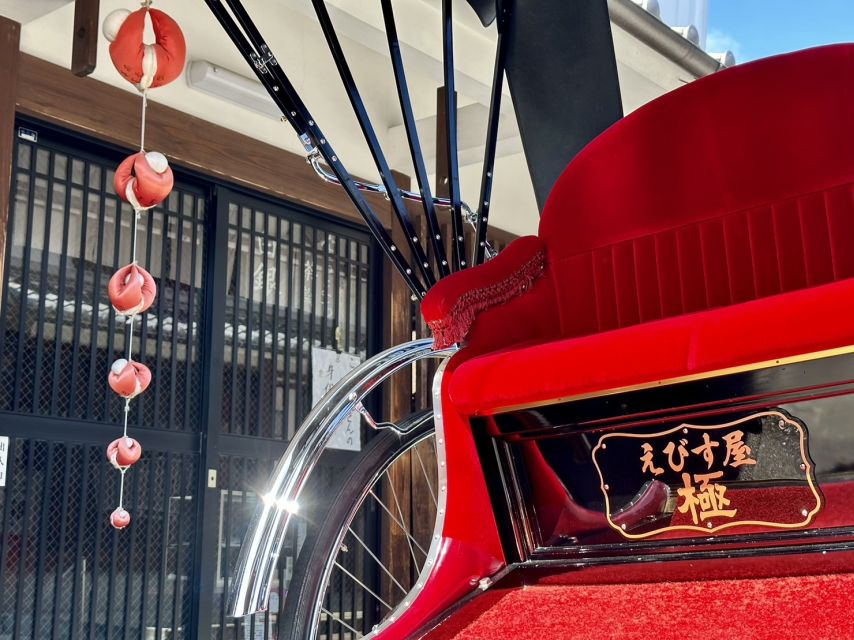
This is a strong way to organize a first look at Nara, mainly because the private guide makes the city easier to understand. The short route is about scenery and deer, the middle route is about Buddhist art, and the long route is about heritage, old streets, and sake.
Book it if you want personal attention and a flexible ride, and if the $77 price fits your budget. For the best value, pick the route that matches your real interest instead of automatically choosing the longest one. Ask about the exact meeting point, final stop, guide assignment, and the 190-minute duration before paying, since the published timing also lists only 70 to 130 minutes.
FAQ
Where does the Nara rickshaw tour meet?
The guide meets you just outside the intersection by Todaiji Temple, but the exact meeting point may vary depending on the route you book.
How long is the tour?
The available options are listed as 70 minutes, 130 minutes, and 190 minutes. The activity details also describe the duration as 70 to 130 minutes, so confirm the selected route and timing when booking.
What languages does the guide speak?
Guides speak Japanese and English.
Is the rickshaw private?
Yes. This is a private group experience, so you ride with your own party rather than a shared public group.
How many adults fit in one rickshaw?
A maximum of two adults can ride in one rickshaw.
Can young children ride?
Up to two children age five and under can ride with two adults, but they must sit on an adult’s lap. Children age six and over pay the adult price.
Do children need to pay the full fare?
If a five-year-old uses one of the two rickshaw seats instead of sitting on an adult’s lap, that child must be booked as an adult and pay the full fare.
Are temple admission fees included?
No. Admission fees to temples are not included in the tour price.
Are food and drinks included?
Snacks and drinks are not included. The 190-minute route includes sake samples at a traditional brewery, and you may purchase a bottle separately.
Is the tour suitable for people using wheelchairs or strollers?
The tour is wheelchair- and stroller-friendly. It is not recommended for people with back problems or for pregnant women.
More History Walks in Nara
- Nara: Bike Tour in Ancient Capital UNESCO World Heritage
★ 5.0 · 43 reviews - Nara World Heritage PRIVATE TOUR
★ 4.5 · 15 reviews - Nara: UNESCO Heritage Sites & Deer Park Tour with Pro guide
★ 4.5 · 10 reviews - Nara Heritage Walkabout from Nara Park to Todaji-ji temple
★ 5.0 · 5 reviews
Recently added around Nara
- Nara Private Customizable Half Day Tour★ 5.0 · 3 reviews
- Full Day Nara Deer, Temple, Shrine, Activities & Tea Ceremony★ 5.0 · 3 reviews
- Nara: Essential Private Tour with Deer Park and Temples★ 5.0 · 3 reviews
- Discover the Essence of Nara Ink Through Your Senses★ 5.0 · 3 reviews
- Private Journey in Nara’s Historical Wonder★ 5.0 · 3 reviews
- Nara:Private Tea Ceremony(Max 5 ppl) -Master Matcha Making-★ 5.0 · 3 reviews
- Nara Takayama Tea Whisk Craft and Tea Culture Experience★ 5.0 · 3 reviews
- Nara: Half-Day Private Tour of 4 Must-See Spots & Deer Park★ 5.0 · 3 reviews
Nara Day Trips, compared.
World Heritage Kyoto & Nara Uji Authentic Matcha Experience
Read our review →
Kyoto/Osaka: Nara, Fushimi Inari Taisha, Arashiyama Bus Tour
Read our review →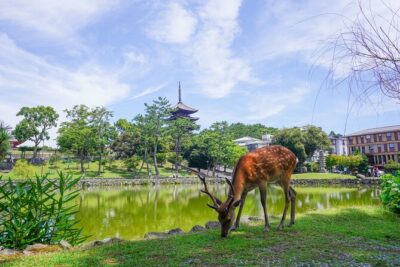
Nara Half Day Trip Walking Tour (Private Option Available)
Read our review →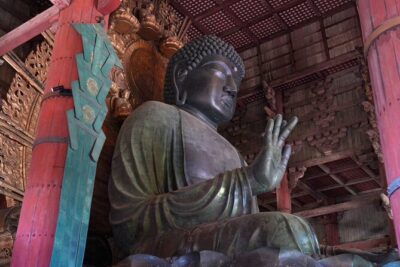
Nara Early Morning Tour (Kyoto or Osaka Departure Available)
Read our review →
Kyoto/Osaka: Kinkakuji, Bamboo Forest, and Nara Deer Park
Read our review →Browse the lists this tour appears in